
Translated material
Clerics, cubes, managers. Why the worlds of dragons and magic are structured like the modern West
Leonid Moizhes
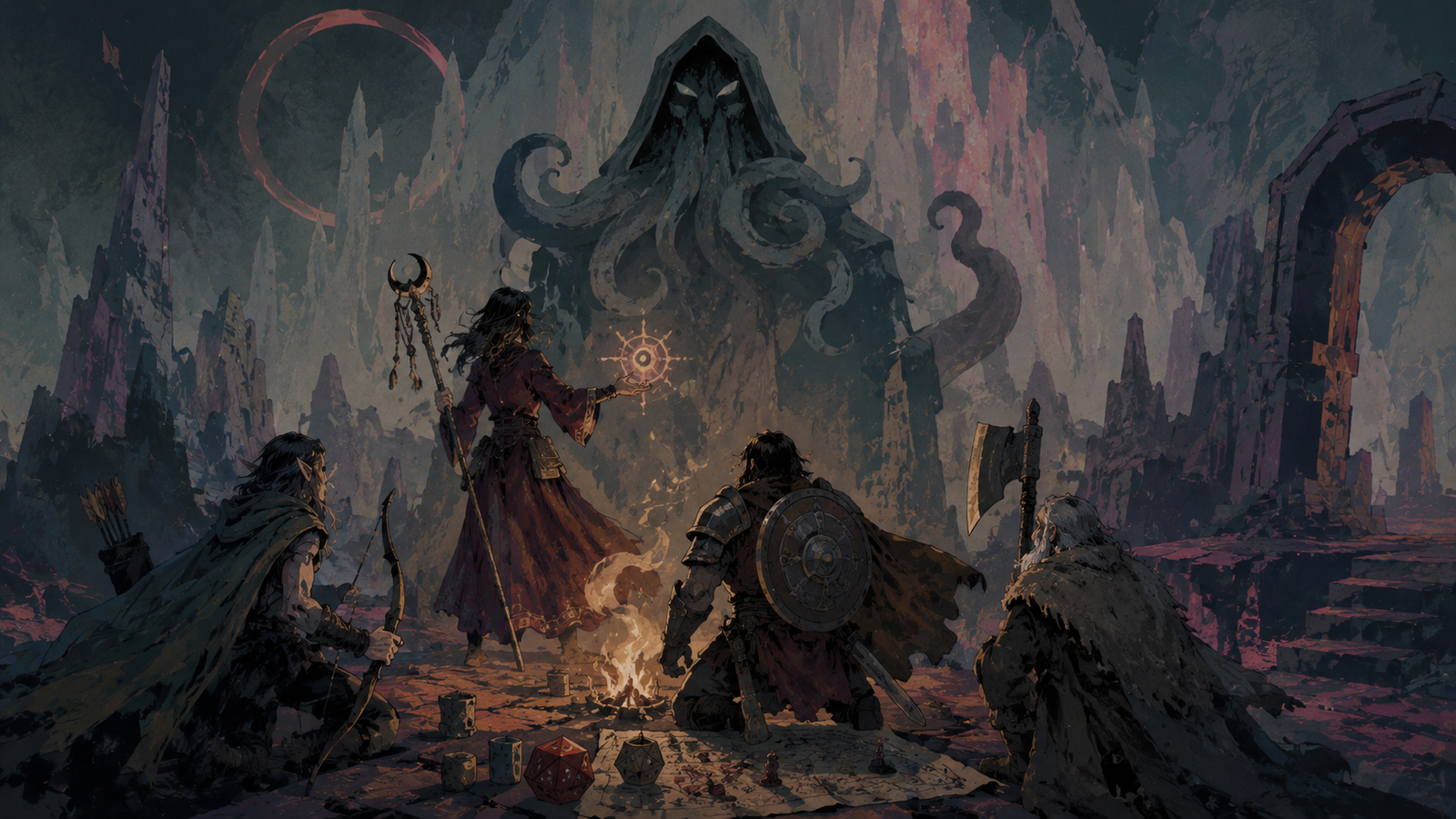
Orcs teach Protestantism. Religious scholar Leonid Moizhes traces the history of tabletop role-playing games - from 19th-century Prussian war simulators to Dungeons & Dragons, Vampire: the Masquerade and Monsterhearts - and shows that games about elves, cultists and vampires have long been a way to model religion, morality and even human identity.
D&D grew out of the Kriegspiel, a system of officer training where dice rolls were meant to teach one to live within controlled randomness. One of its creators was Jehovah's Witness Gary Gygax - and this can still be felt: almost every religion in the game is structured like American Protestantism - with an active god, individual morality and professional priests. Even magic here is subject to market logic: spells have a monetary value, and the world is described in terms of parameters, resources and efficiency. The more free a role-playing game seems, the more often a very familiar world is revealed within it - with capitalism, management and the morality of the modern West. You choose a character. The world inside the game has already chosen you.
People have been playing role-playing games forever. The first instances of our ancestors taking temporary roles for fun are likely older than our species. Children have portrayed adults or animals throughout human history, and adults themselves have done the same in tournaments and masquerades. One of the early game researchers, Roger Caillois, identified as one of the four main types of games built around mimesis, that is, copying. Not all such games are role-playing in the full sense, but their proliferation shows that we enjoy the very change of identity, the game transformation that allows us to briefly be someone else. Or, more precisely, from the opportunity to briefly add one more to the polyphony of roles that we already follow in everyday life.
In the 20th century, the love for role-playing games reached a new level. From the sexual sphere, where softened morals made it possible to openly talk about the desire to act out a particular scenario with a partner, to the research of psychologists like Jacob Moreno, who considered the possibility of playful change of identity in controlled conditions as a way of psychological help, role-playing games penetrated into all areas of life. And this is not surprising, because throughout the 20th century we became increasingly aware that our “serious” identities are themselves a game.
Where our ancestors saw inviolable biological or metaphysical categories of gender, sex, race, nationality, religious affiliation, we increasingly understand that we are dealing with something constructed - but no less real.
Game and social reality mix, highlighting each other's interesting features. And nowhere is this more evident than in the field of tabletop role-playing games - a specific entertainment industry that originated in the United States in the 70s of the last century.
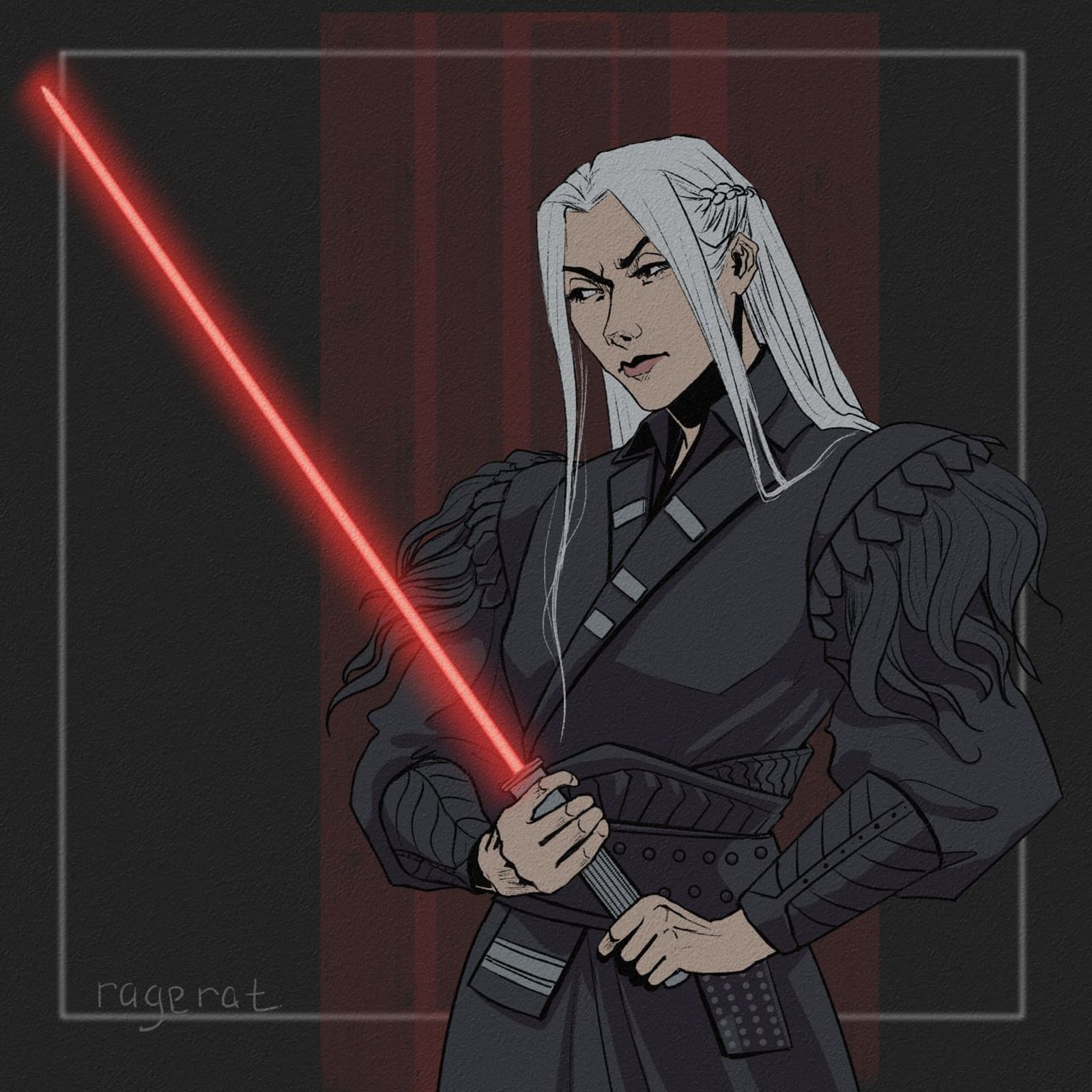
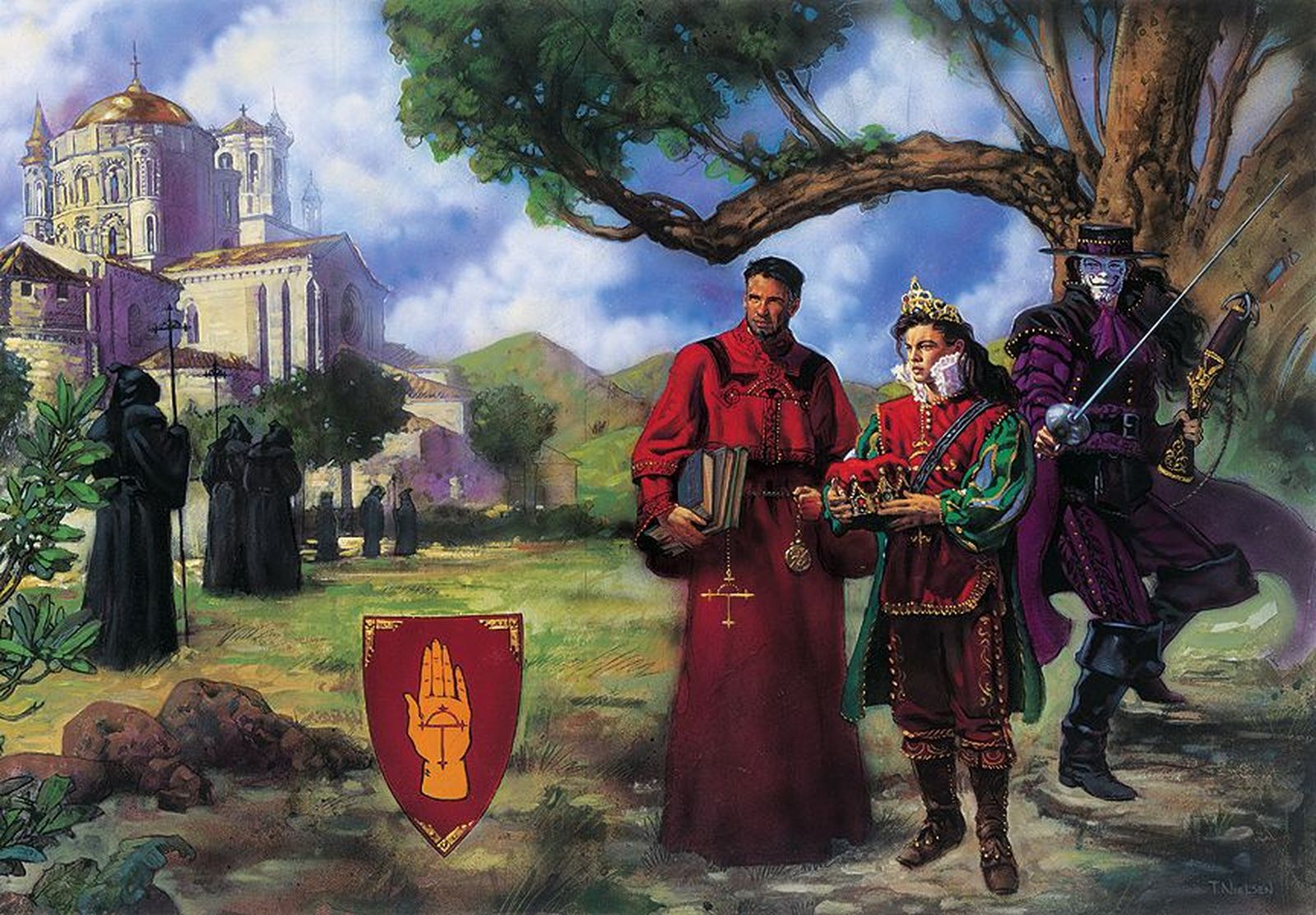
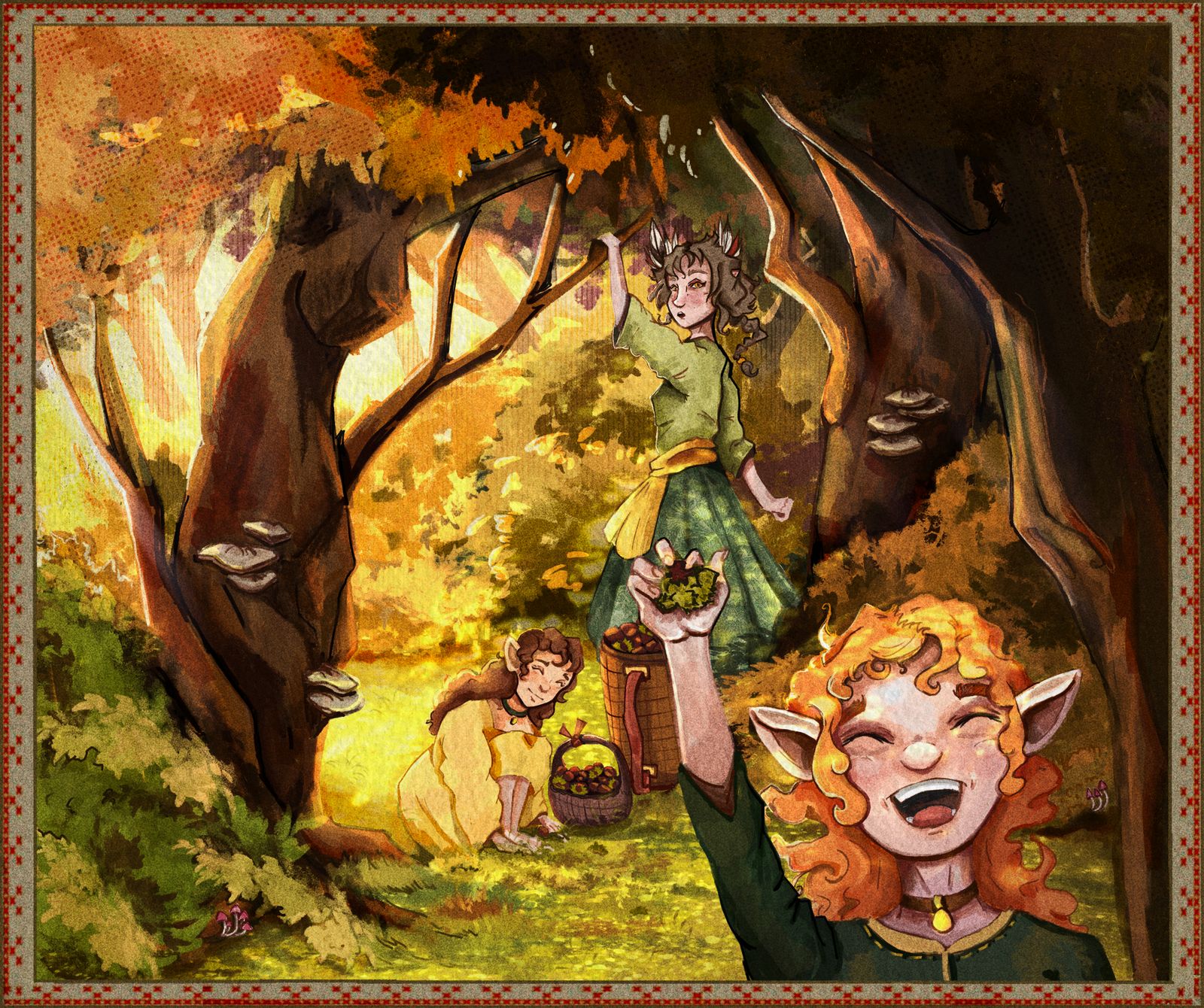
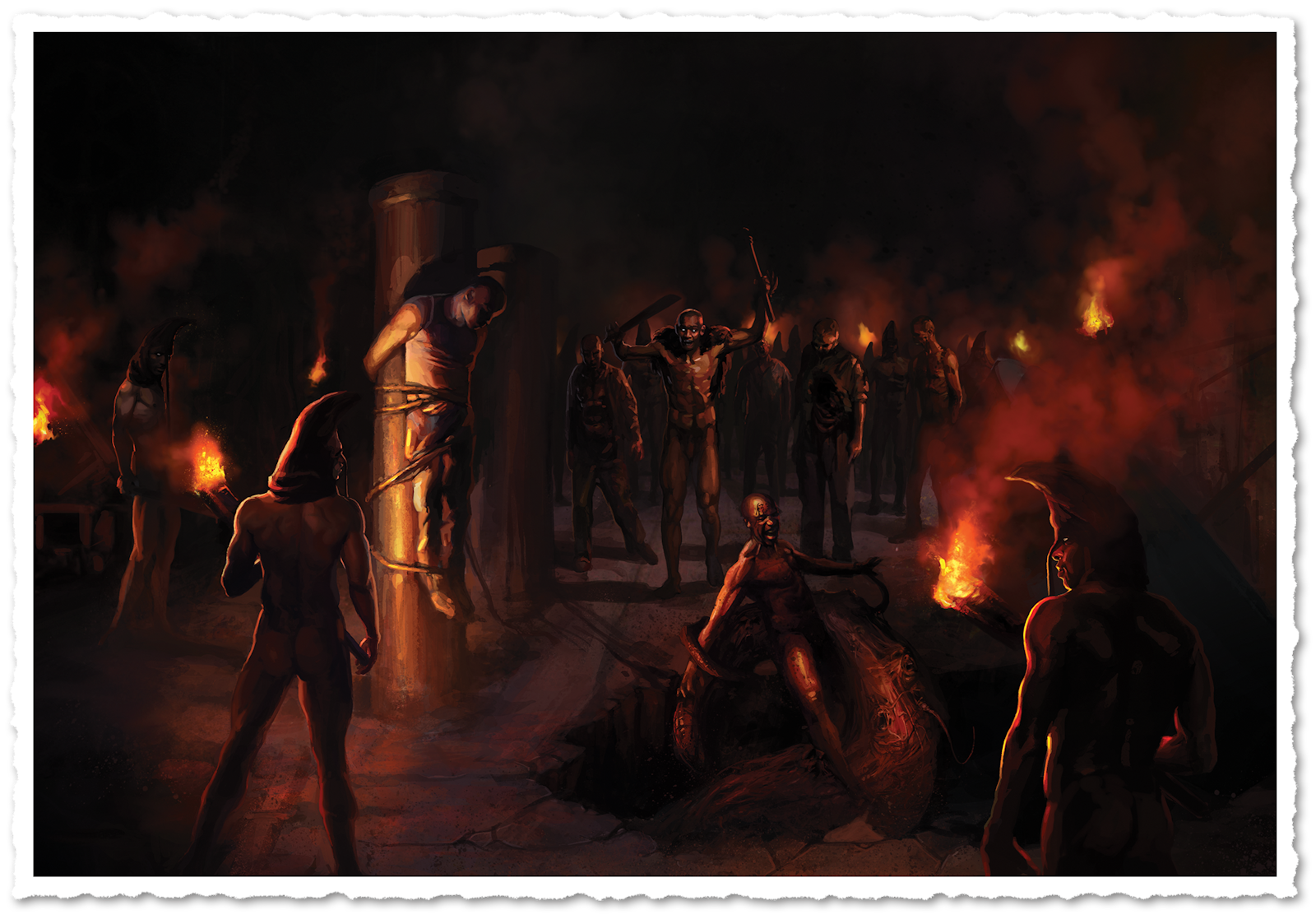
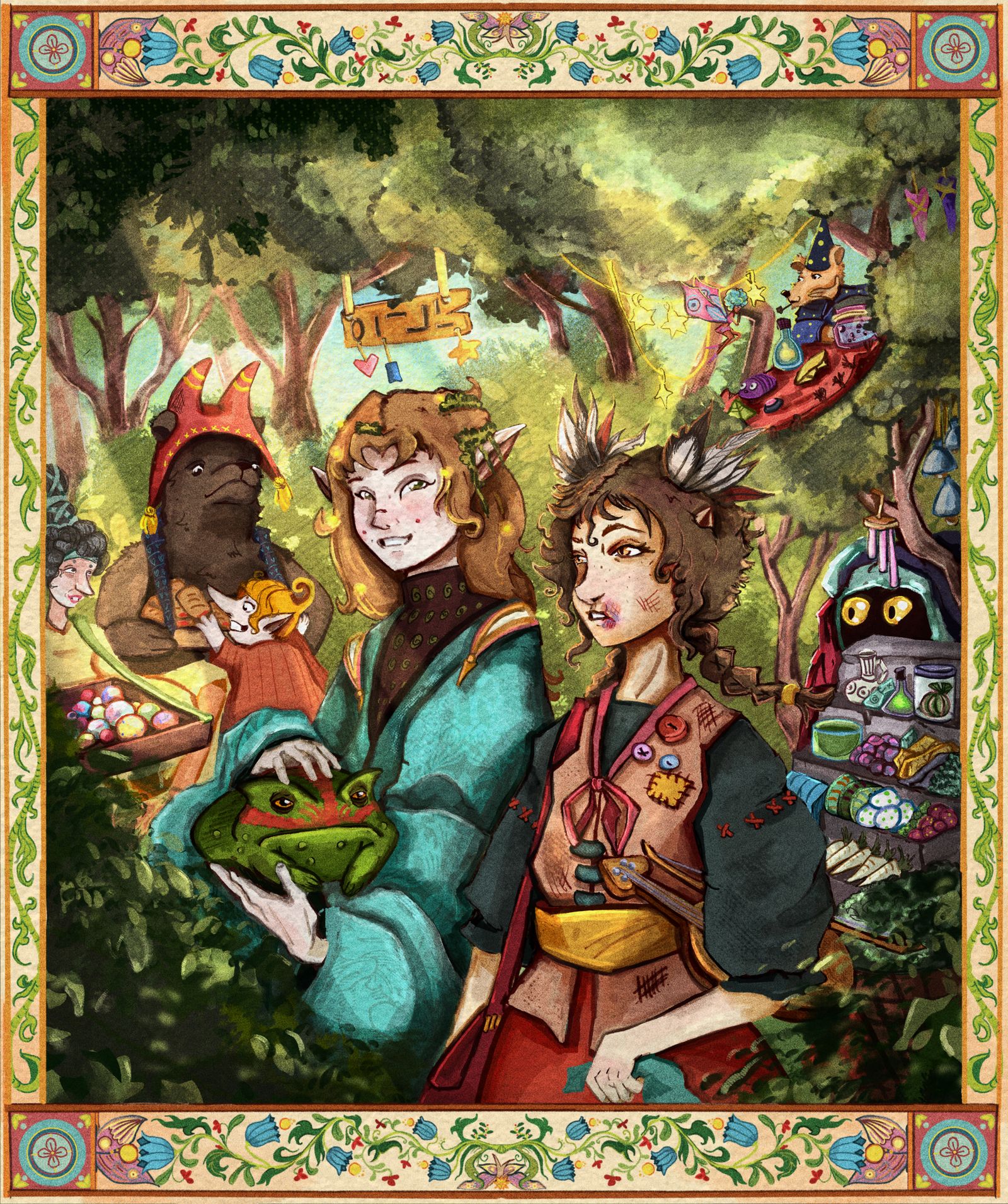
I myself am a religious scholar by training and have been researching for several years what tabletop role-playing games tell us about religion, modern society and our own identity. And to make it easier for you to see me in this text, as illustrations I use not only official illustrations, but pictures that my friends ordered or drew themselves for my games.
War games
At the end of the 18th and beginning of the 19th centuries, European states were faced with the question of how best to train their rapidly expanding officer corps. Prussia showed the greatest interest in this, where the modern practice of military exercises has developed, designed to solve this problem. But training exercises alone are expensive, and a number of military theorists have begun to look for ways to use games depicting battles for training. Taking the idea of chess, popular among European aristocrats since the Middle Ages, as a basis, theorists like Georg Venturini and Johan Christian Hellwig proposed their own rules that would reflect changes in military affairs since the days of the Indian Gupta Empire, which inspired the original game.
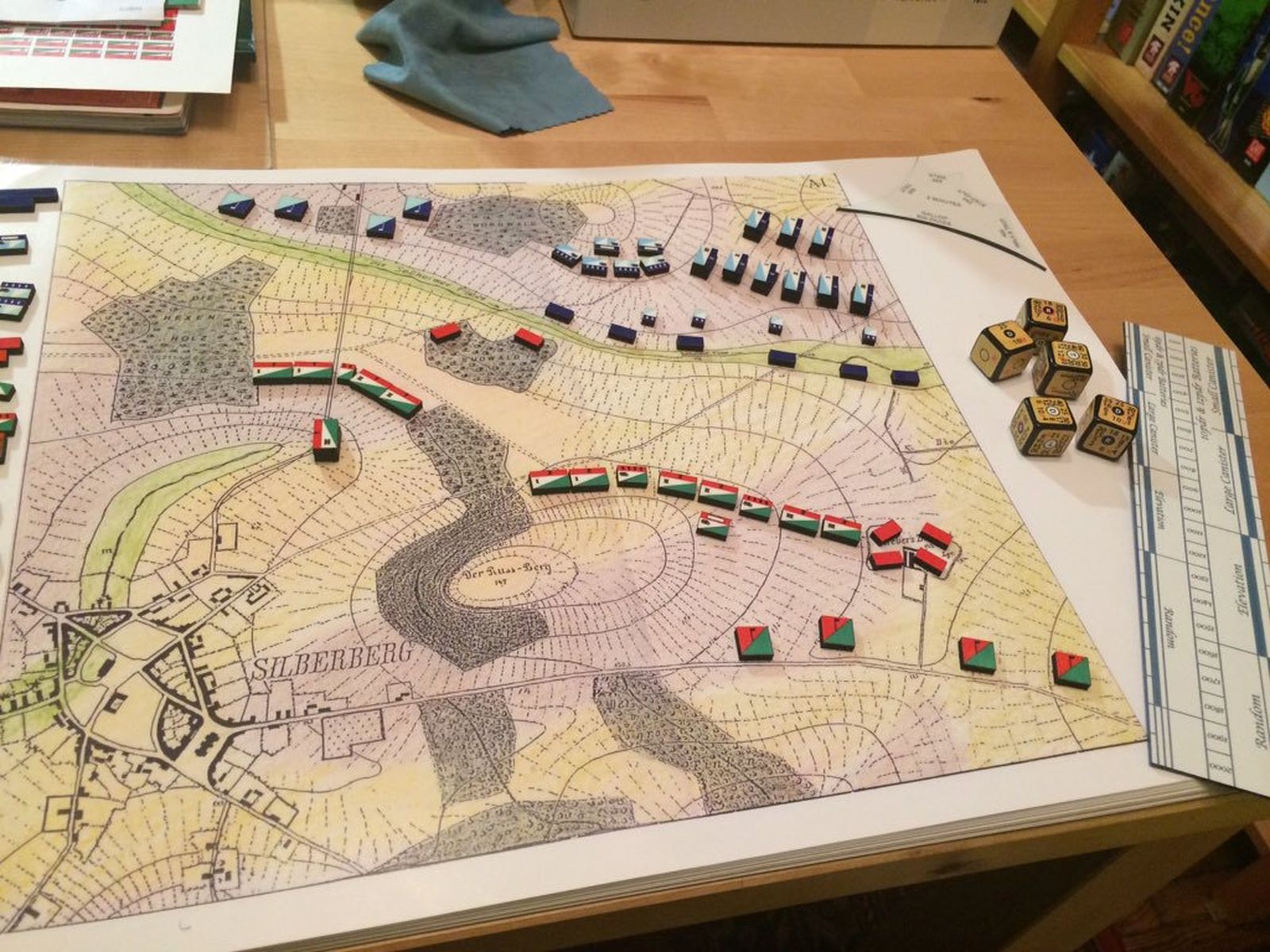
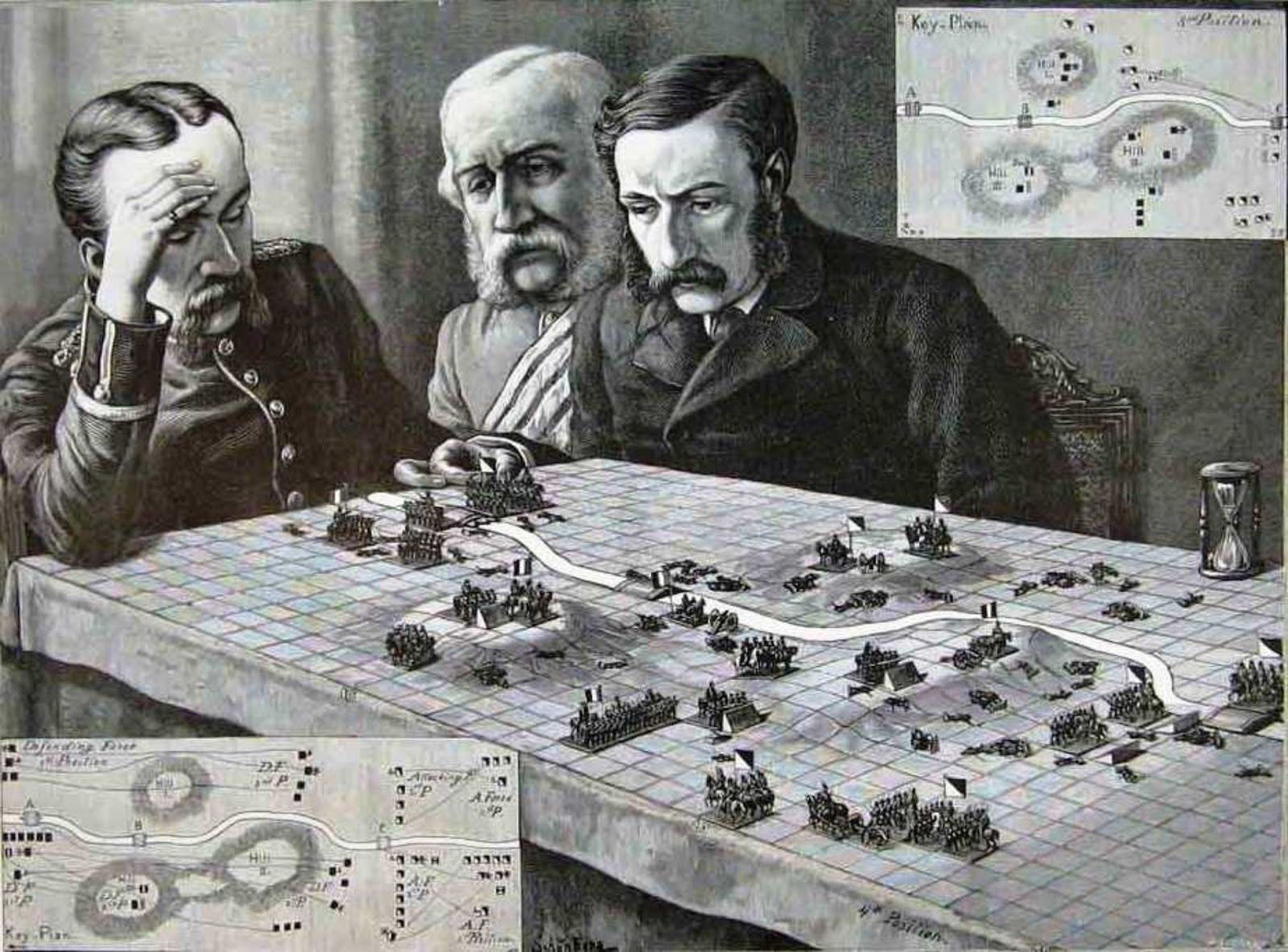
The greatest success was achieved by Georg von Reiswitz and his son, also Georg von Reiswitz. The elder von Reiswitz had the opportunity to present the project to the Prussian kings back in the 1810s, but then, to put it mildly, there was no time for that - the officers gained experience on the real battlefields of the Napoleonic Wars. But Reiswitz Jr. showed a modified version of the game in 1824 and achieved royal recognition. The game, now known as Kriegspiel (“war game”), became part of the training of Prussian military officers. And after Prussia's success in the war with France several decades later, many states copied the Prussian approach to military training, and Kriegsspiel spread throughout the world, reaching, in particular, the United States. There, already in the 20th century, von Reiswitz's legacy, among other things, influenced the entertainment industry.
His design tried to simulate the speed of movement of battalions, the effect of the landscape, the hierarchy of commanders, even the “fog of war”. But for role-playing games, the approach to randomness turned out to be most important. When the battalion opened fire on the enemy, the referee would choose one of the six-sided dice included with the game, which the player would roll. On the sides of the dice there were results that determined, using a special formula, how many enemy soldiers the volley would kill. At the same time, the ratios of numbers on the sides differed for different cubes, and the judge chose a specific cube based on the recommendations proposed in the rules, as well as his own combat experience - it was understood that a more experienced officer who acted as a mentor should judge the game.
Were you able to open fire at close range on an enemy without cover? Get a die where even a side with minimal possible losses will cause at least some damage, and if you are lucky, a volley will lead to monstrous imaginary losses. Did you open fire from a long distance on enemies hiding in the forest? Here is a die that can easily result in a result that ensures minimal losses for the enemy - but what if you get lucky and the result turns out to be better?
The element of controlled randomness was fundamental to von Reiswitz. It had to show, on the one hand, the limitations of control on the part of the commander. In a real battle, the success of a salvo is influenced by thousands of factors - light, weather, the condition of the weapon and, of course, the properties of each soldier, from personality to physical condition at the time of the shot. The commander cannot not only control, but even know them all. But it can influence certain factors, increasing the likelihood of success. The commander is also not immune from the fact that luck will smile on the enemy and mix up all plans, which means he must be ready to react to the situation changing by chance. These were the skills officers were taught, and these were what von Reisswitz and his colleagues brought to the game.
Dungeon Conquerors
Already in the 20th century, through American versions of the Kriegspiel, their idea penetrated among lovers of entertaining wargames, devoid of claims to pedagogical value, but much more fun. Specific mathematical principles changed. Forced to use standard hexagons with numbers more often, “wargamers” often resorted to simpler schemes than tables and von Reisswitz formulas. Roll the dice, add a certain number to the result, and remove as many enemy soldiers as the total. Roll a certain number of dice, removing one enemy soldier for every five and six you roll. Roll a few dice, add up the result, and if the total is above a certain number, sink the ship.
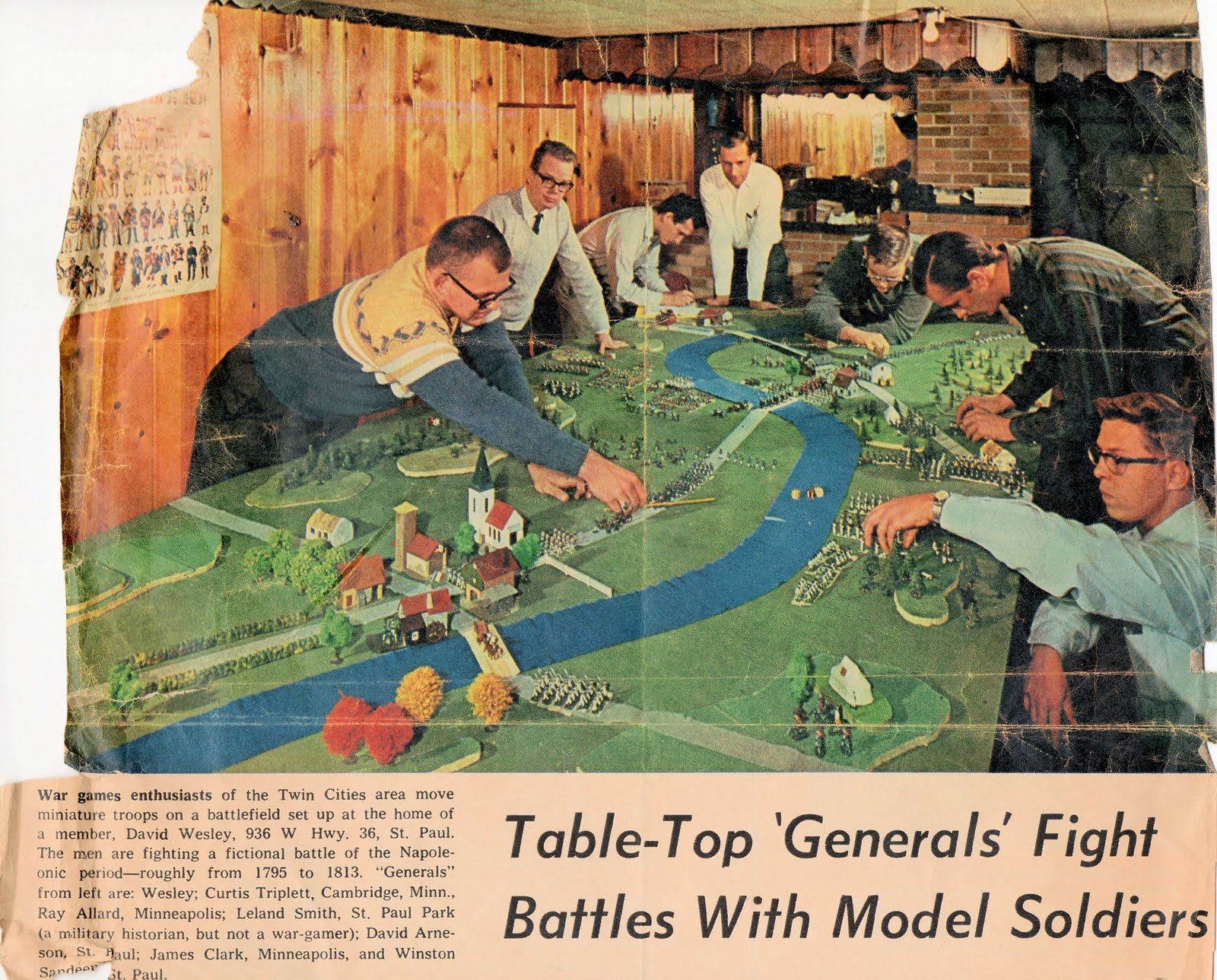
A lot of specific approaches had already been invented by the 70s, but the principle of controlled uncertainty remained unchanged. Wargamers came up with the idea of parameters, numerical indicators that characterize individual units. Some parameters work simply - for example, speed determines the distance that a unit will cover per turn, health points determine how many attacks it will withstand. But most were built into the dice roll. The parameters were the numbers that players added to the dice, or those above which they needed to roll for an attack to be successful.
Having different parameters for different warriors made armies more diverse and made it easy to introduce new types of soldiers while remaining within a single system. These principles formed the basis of Dungeons and Dragons, created by Gary Gygax and Dave Arneson.
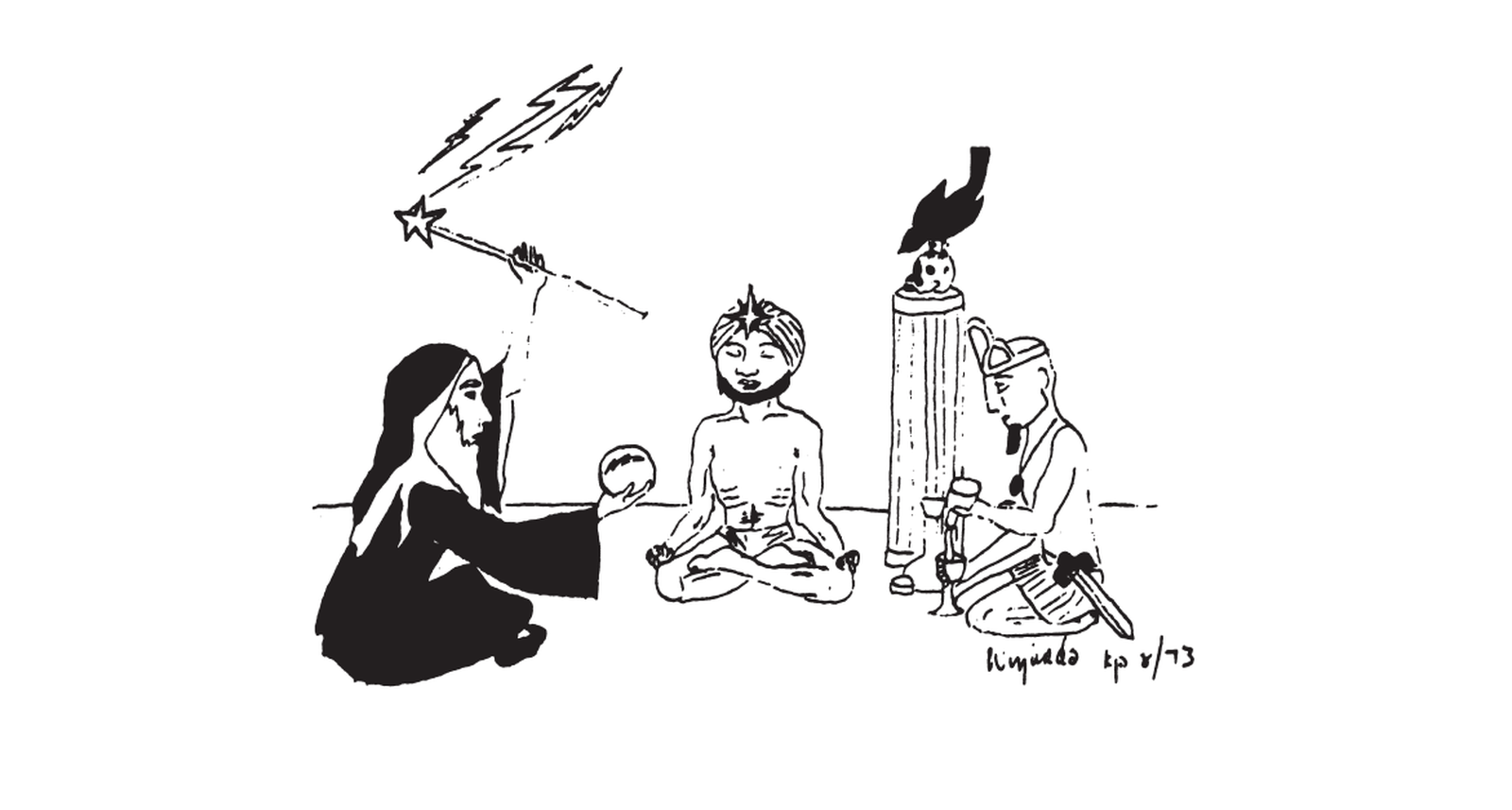
Entire volumes are devoted to the history of the origins of D&D, most notably the excellent Playing at the World by Jon Peterson. The main thing is that the commercial release of D&D in 1974 marked the birth of a new hobby. The game developed as a variation on a wargame, where each player had one key warrior, his alter ego, who belonged to one of three classes - Warrior, Mage or Priest. By dealing with opponents, alter egos received experience points, which allowed them to increase their level - this gradually increased their parameters, health points, and in the case of the Priest and, especially, the Wizard, it opened up access to additional actions - spells.
Many spells fit into the logic of the battle - they caused damage or restored health points, and temporarily increased parameters. For the convenience of their use, precise maps and clear mathematical descriptions of the radii and shapes of the effects of spells were often used, which made it possible to determine which goblin the flames of the fireball would reach and which would have to be finished off with a sword. Other spells helped in the exploration of the dungeon in search of treasure - the main goal of the game early on. Unlike most wargames of the time, almost everyone in the party acted as a team, challenging monsters and traps. They, in turn, were led by the leader, also known as the Dungeon Master.
At first, no special identification with the “main” character was intended. Players easily recruited mercenary squads that took part in campaigns, and just as easily lost “basic” heroes from a successful enemy attack or an undetected trap. The players changed the situation. Already in the mid-70s, many D&D consumers were looking for in this game not just an unusual wargame, but a role-playing game. California was especially notable, where D&D fell into the hands of the Society of Creative Anachronisms, a group of fans of costume role-playing games. Many of them liked the idea of strict mathematical rules in simulating a fantasy world, but as a complement to, not a replacement for, their usual entertainment of taking on the role of an inhabitant of a fictional universe inspired by fantasy and historical literature.
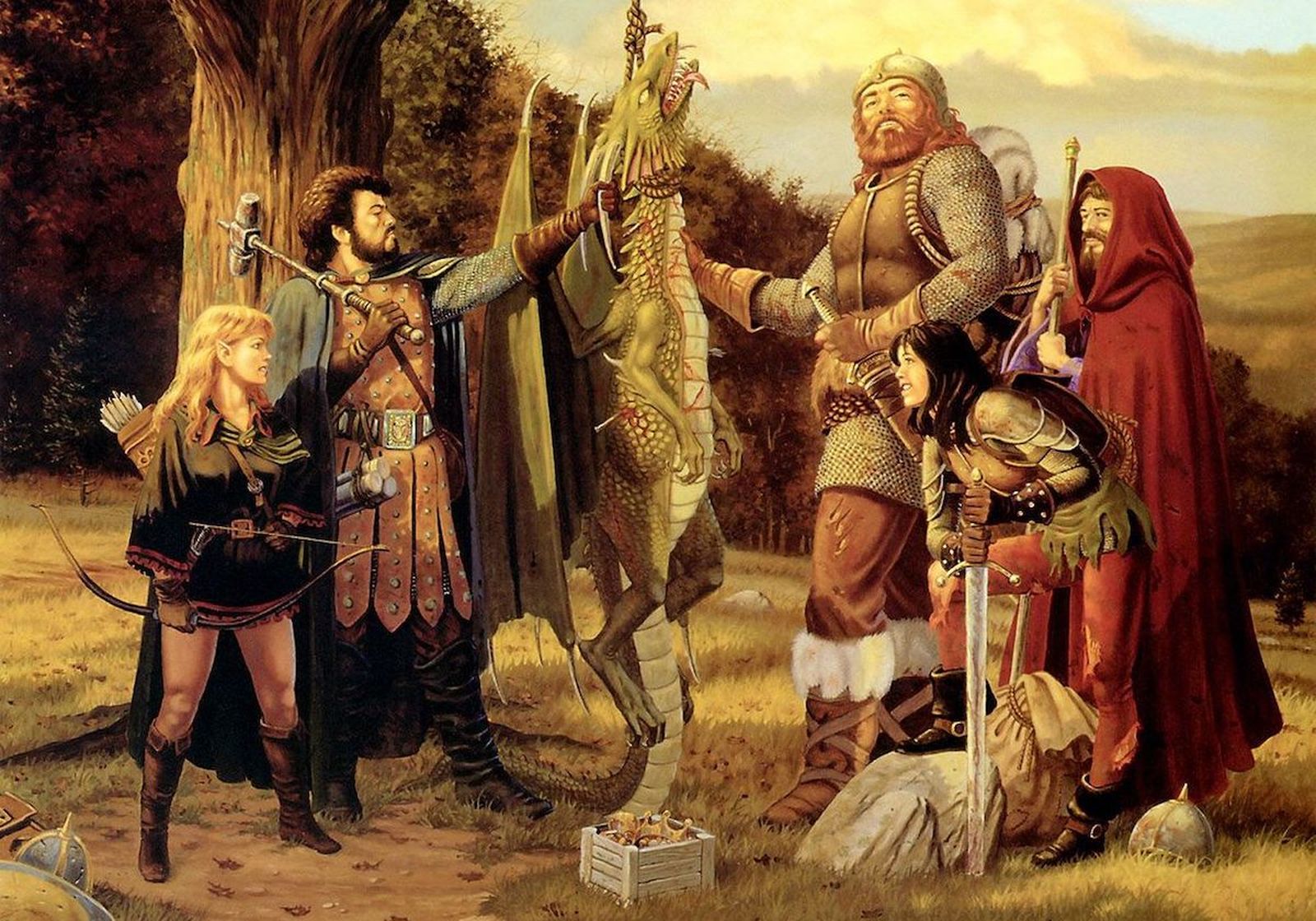
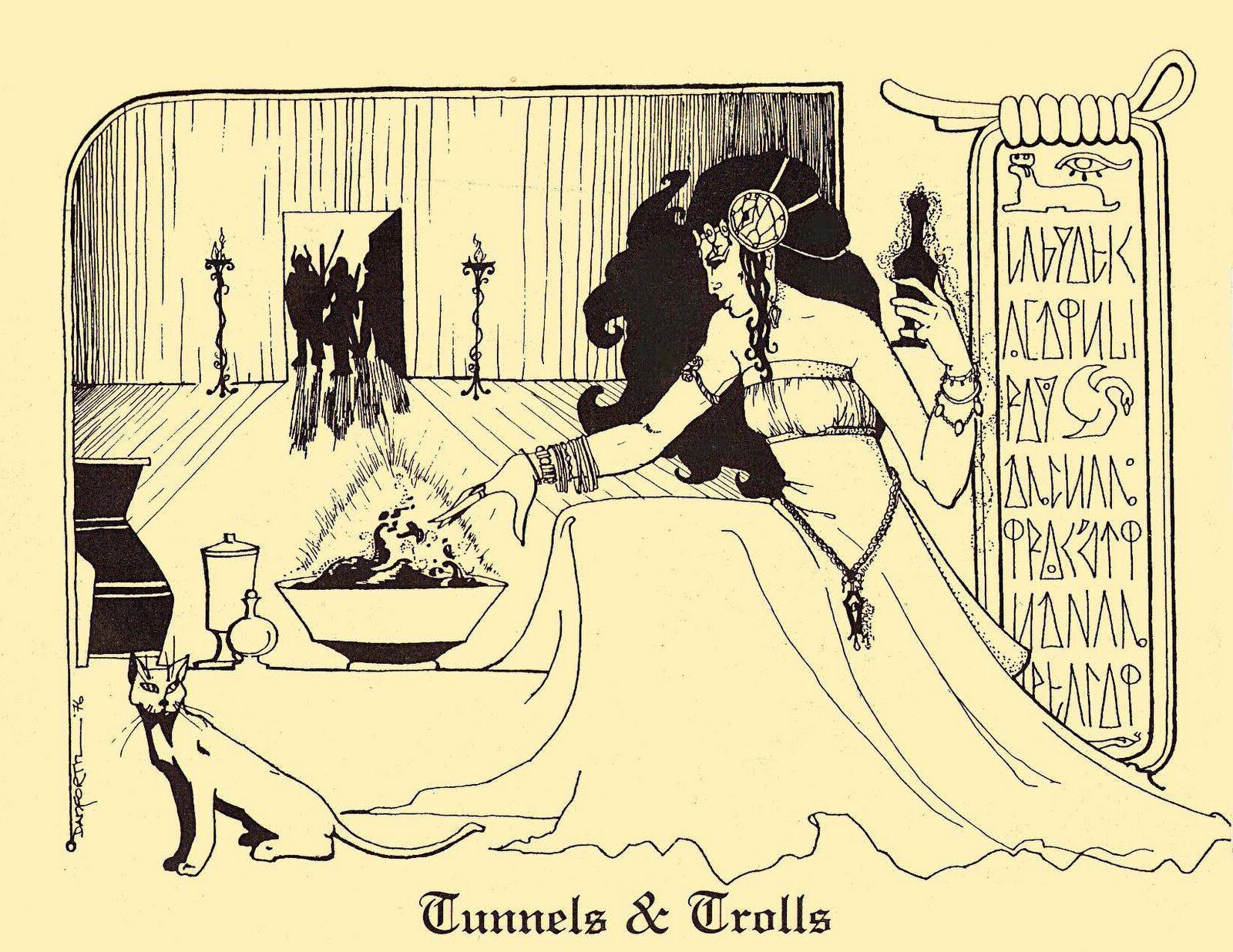
Because game mechanics are difficult to patent, alternatives quickly began to emerge for D&D. At first, they were born from players’ attempts to correct some of the ideas of Gygax and Arneson that seemed unsuccessful to them, or to expand the game. Gradually, the number of corrections and additions grew, amateur developers put things in order - and were tempted to publish the resulting development. Already in 1975, for example, the independent project Tunnels and Trolls was released, and by the end of the 70s a relatively small but quite vigorous industry had developed in the United States. Separate studios began to emerge in other countries. The creation of new games began purposefully - from a clear concept to a specific implementation.
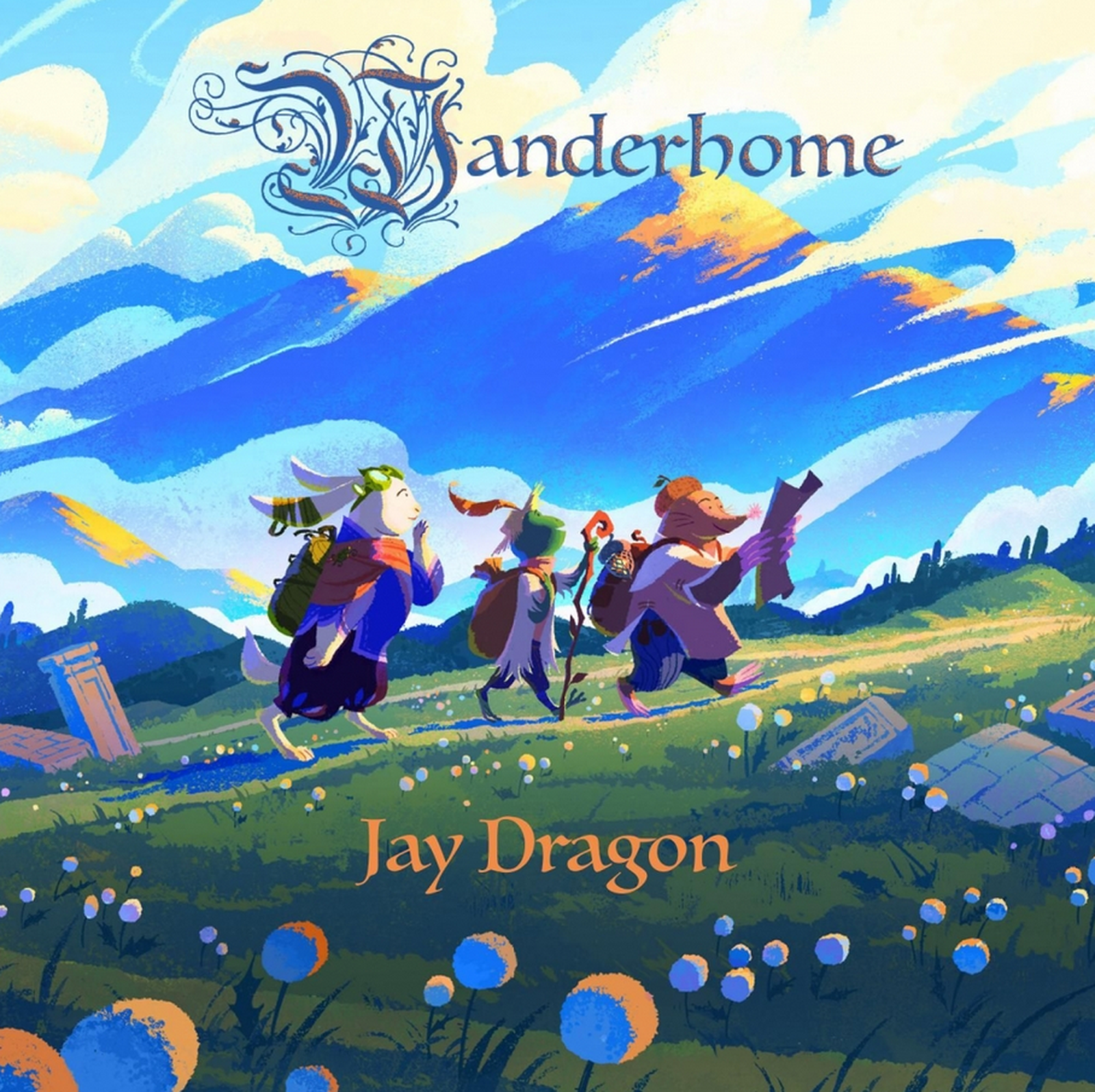
The developers actively experimented with aesthetics. Fantasy remained mainstream at least until the 90s, and by and large until today. But the growing industry quickly spawned games in the style of space opera, post-apocalypse, superheroes, even the adventures of intelligent rabbits in the spirit of "The Hill Dwellers."
The approach to depicting reality that von Reiswitz had come up with a century and a half earlier seemed suitable for everything! The details changed, but the idea of simulating an imaginary world through numbers, specific abilities and, most importantly, controlled randomness remained unshaken.
Anatomy of a Hero
Throughout its more than half a century of history, tabletop role-playing games have evolved and changed. But still, in the mainstream industry, and even in most independent, experimental projects, there are several key elements that go back to the early years of the industry. This is, first of all, randomness, but also the idea of parameters, resources and abilities.
One player takes on the role of a leader, controlling most of the game universe and its inhabitants, while the rest create characters and directly control only them, or, in extreme cases, their immediate environment and servants. Most often, even control over such assistants is determined by the logic of the game universe - simply put, you can give an order on behalf of a character and expect that it will be carried out, but you cannot control a subordinate directly.
A significant part of the game looks like a dialogue between the participants - the players describe what their characters do and say, and the host describes what the characters see around them, how other characters react to their actions, and so on.
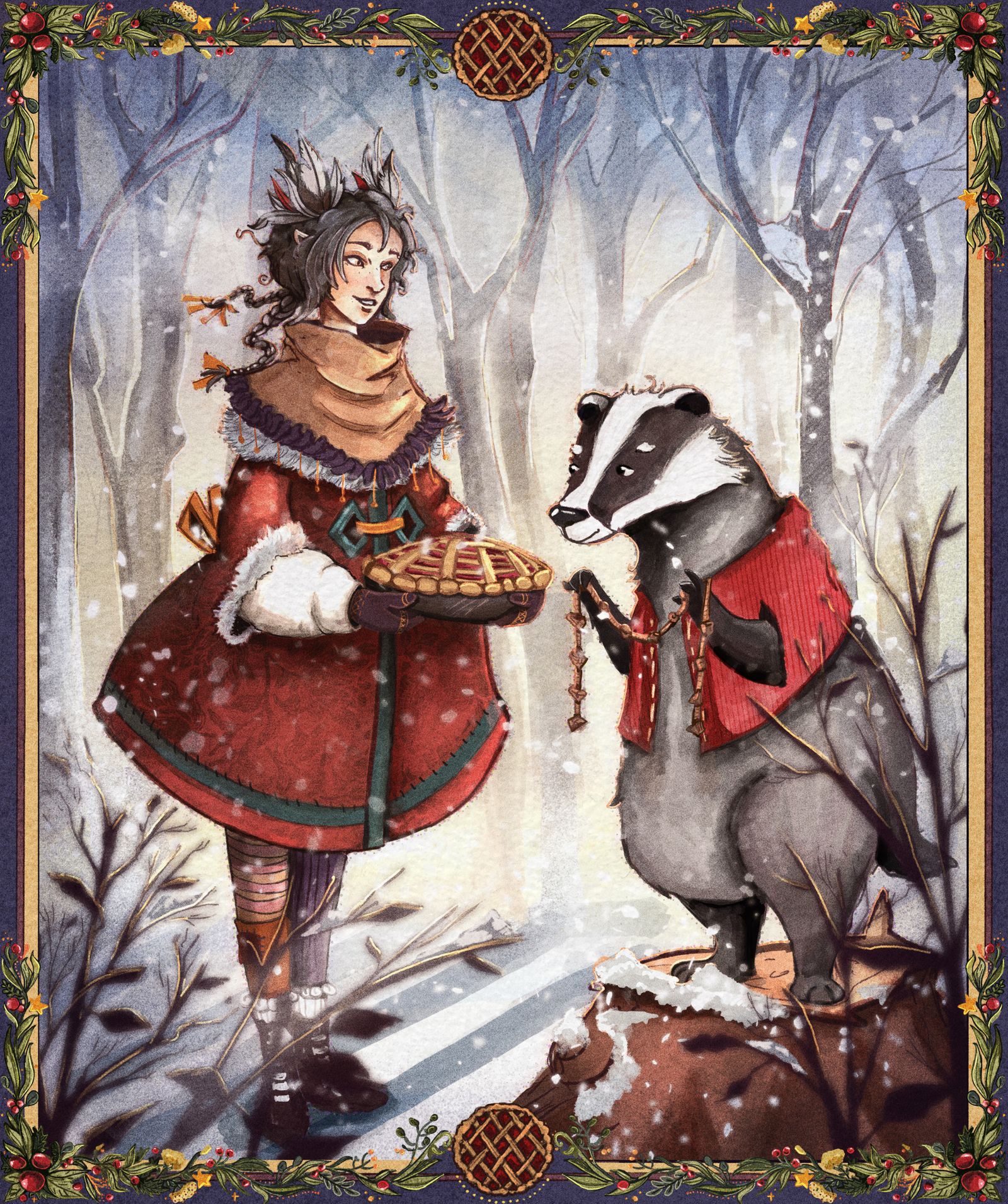
Different groups of players and game rules require different approaches. In some places, the process is close to improvised theater - the players try to speak “on behalf of” the characters, changing intonations and facial expressions, and the dialogues themselves and detailed descriptions of the game spaces take a lot of time. In some places, the process is more reminiscent of a board game - participants rely on location diagrams, moving tiles along them to represent characters, describe the characters' remarks, focusing on goals, and often resort to rules to solve problems. Most of the hobby lies between these “poles.”
There are many other differences in approach. Thus, the attitude towards jokes or leaving the role for the sake of meta-commentary about what is happening varies greatly, the strictness of leading to players remembering and recording facts about the world and the plot. Proponents of different approaches like to pick each other's bones when discussing how to play the game “correctly,” but in reality it is more about different styles, the differences between which only become problems if the participants approach the game with different expectations.
But this free format is structured by rules - game mechanics that are used to advance and develop the story, resolve controversial situations and regulate what the character can and cannot do. The rules are based on randomness, which is constantly and “seamlessly” connected with the history jointly created by the participants, and in two ways - at the “input” and at the “output”.
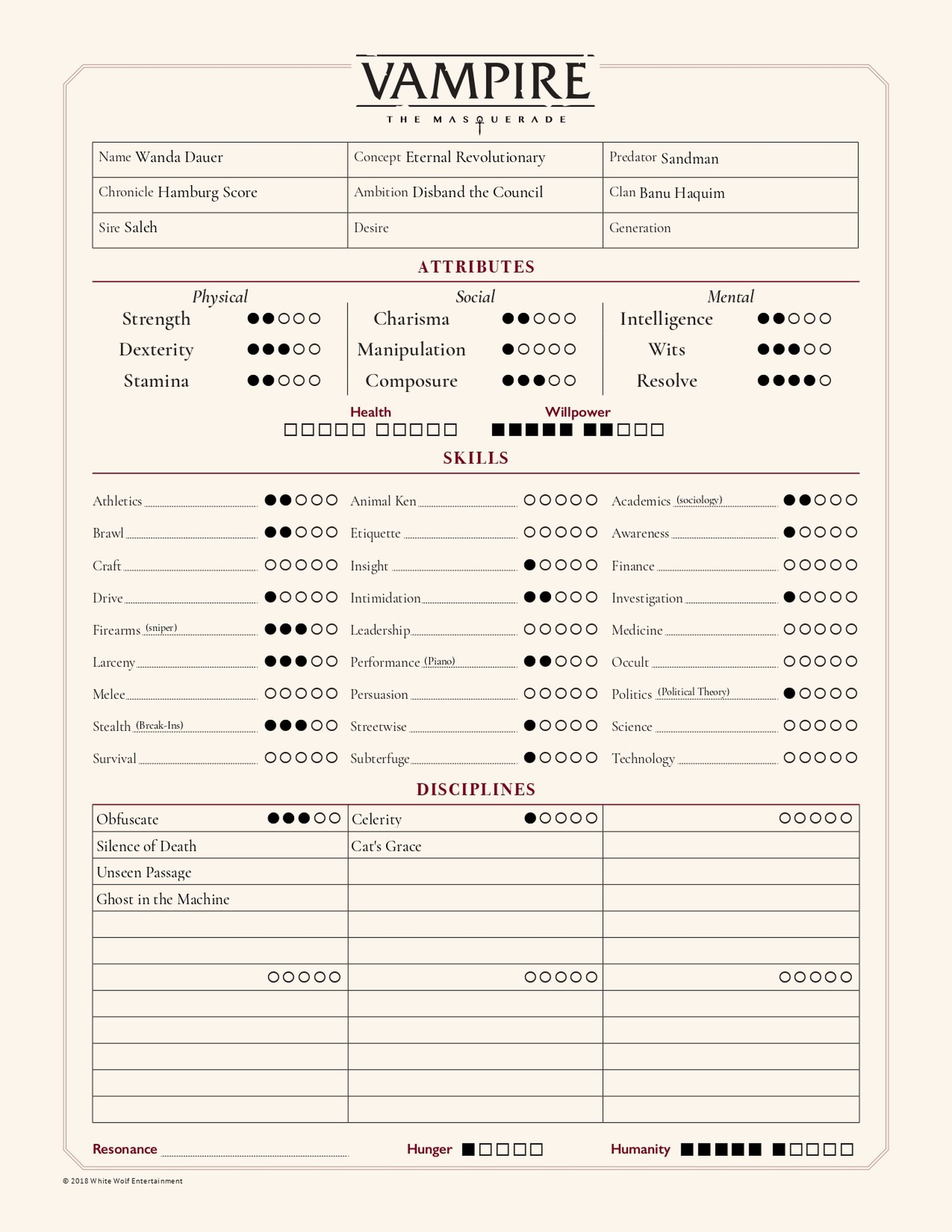
For example, your character is trying to convince a merchant to sell him a weapon cheaper, but the merchant refuses. Theoretically, the player and the presenter can resolve the situation simply by acting out the dialogue and listening to the arguments, but most often the dice will come into play - the player will have to roll the dice, which will determine whether he succeeded in his endeavor or not. This roll is influenced by what happens in the story - the GM can lower the target number to roll or otherwise increase the chance of success to reflect successful arguments. And the result of the throw, in turn, requires changing the situation in the game world - the merchant will act in one way or another depending on the result. This flow of story into mechanics and back again forms the dynamics of the game.
Specific rule systems organize the process in different ways. The form of checks may change. In some places you roll several dice to get the desired result, in others you need to roll less than the target value on one die, in others you need to roll more. Naturally, each approach also implies its own logic of reward or punishment on the part of the leader, changing the chances of success. It can also change how the result of the roll affects the story. In the first tabletop role-playing games, the scheme was binary: you either got what you wanted or you didn’t, and the host came up with additional details at his own discretion.
Subsequently, subtleties arose. Critical successes or failures imply that a particularly unlikely dice result results in exceptionally (un)good consequences. Some games use gradations of success - in the example above, such a system would allow us to determine not only whether the hero deserves a discount, but also what kind of discount, from a minor 5% to receiving the goods for free, depending on the result of the roll. In the 2000s, the idea became widespread that failure should not leave a character where he was, but should change the situation and advance the plot, albeit in an undesirable direction. The only thing that remained unchanged was the mixture of randomness and factors under the player’s control.
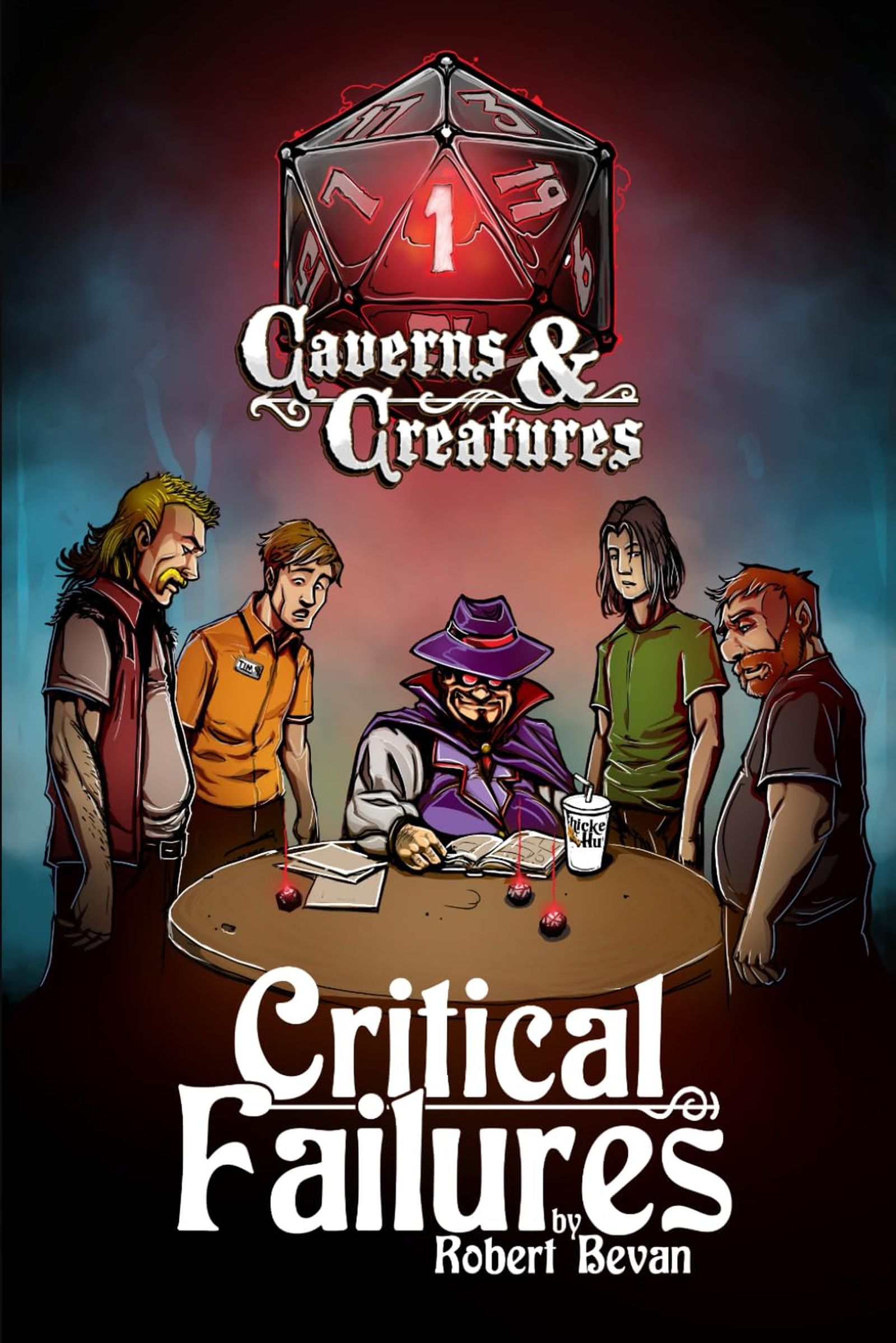
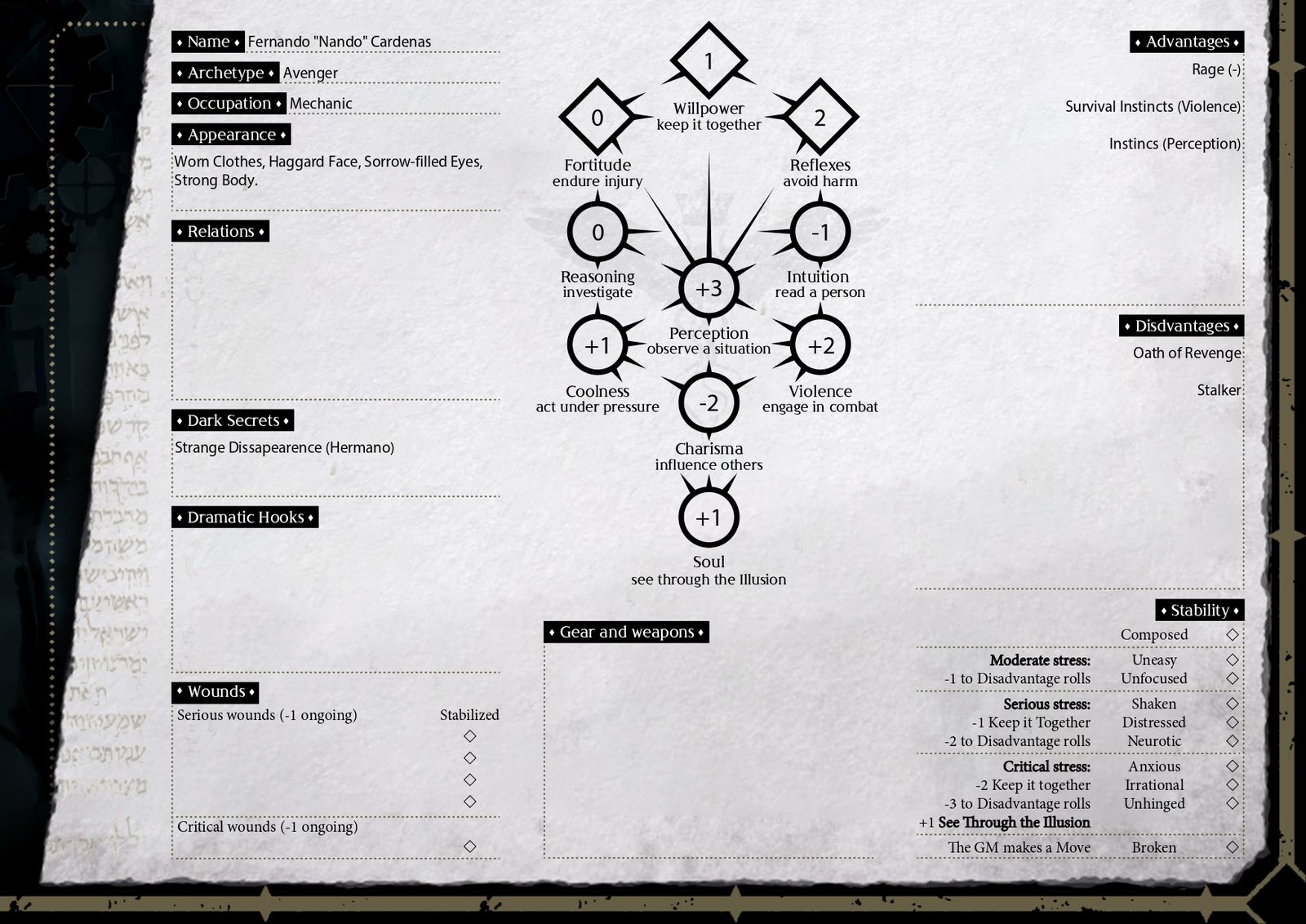
Moreover, among these factors there are not only situational considerations like what your character said or did, but also fixed parameters of the hero, which affect the roll in situations that seem relevant to the parameter. So, strength increases the chances of success if the hero lifts weights or fights in close combat, dexterity helps with hacking, charisma comes in handy in a conversation with our old friend the merchant. Option lists vary from game to game, reflecting the themes of specific rule systems and the conflicts intended by the developers. Thus, in the gothic game about vampires Vampire: the Masquerade, external beauty was highlighted as its own parameter, emphasizing the diversity of social situations and the importance of aesthetics. The list of parameters often includes not only broad concepts like strength and dexterity, but also specific skills - shooting a pistol, intimidating, steering a boat, following tracks, and so on.
The parameters that influence checks are supplemented by resources—calculable indicators, whose value constantly changes during the game. Some, like health, track a character's proximity to death or exit from the story for some other reason. Others are spent on performing special actions, such as casting a spell or activating special abilities. Many games are experimenting with the creation of non-standard resources, the rules for obtaining and spending which force players to create situations specific to the game - for example, in the case of Vampire: the Masquerade, obtaining human blood.
In general, the further we went, the more diverse board games became, capturing many styles, from horror to children's cartoons. Some developers created and detailed their own imaginary universes, with detailed history, geography, and political structure. Others suggested playing genres, such as superheroics, without describing their own worlds. But different types of stories required different rules, especially in the context of abilities—modifications to the rules available to individual characters that provide additional abilities or change an existing system in specific circumstances. Abilities represent spells, psychic abilities, cybernetic implants, or simply unique talents that allowed, for example, to use one parameter where all the characters would use another, or to gain additional advantages when performing a specific task.
All this creates a dual situation of obvious freedom and hidden restrictions. On the one hand, the game gives you the freedom to create stories within the logic of a certain world or genre. To put it extremely simply, in D&D you need to play as fantasy heroes, in other games - as detectives, mercenaries in a cyberpunk setting, vampires hiding in human society, and so on. The description of the world and the rules provide the “stage” where the stories created by the participants themselves unfold. Sometimes the presenter prescribes the basis of the story, and the players follow it, like characters in a video game with a branching plot. Sometimes we are talking about pure improvisation on the part of the host, when the outcome of one scene, created by the actions of the players and the rolls of the dice, determines the beginning of the next. In any case, such freedom is captivating - and creates the feeling that there is endless space for players to experiment with who they can play as.
In addition to the obvious restrictions, the rules of the game and the descriptions of the world also include many hidden restrictions, reflecting not so much consciously solved game design tasks as the personal ideological attitudes of the developers that seeped into their project.
So, D&D does not just imply a fantasy setting and heroic stories, but, for example, includes a capitalist, monetary economy. Money serves as a universal measure of everything - status, opportunity, success. Prices for magical components are included in spell descriptions, giving the currency a literally metaphysical status. Likewise, combat in D&D is structured in a certain way, rewarding teamwork, careful calculation, and situational pragmatism—a legacy of the game's wargaming roots. It's easy to see that, no matter how we feel about both settings, these are very particular ideas, markedly different, for example, from the way the world works or violence in most fantasy literature, especially those written before the triumphant success of D&D.
Half a century of experiments
I won’t deny myself the pleasure of recalling a few favorite or simply typical games to show how diverse this hobby is.
Dungeons and Dragons (1974) . Legendary D&D has remained a top seller, at least in the US, and most likely around the world, for most of the industry's history, and is unlikely to lose its position in the coming years. Built around the idea of classes, familiar to many from video games, and the special role of combat in the plot, D&D has long become a segment of popular culture in its own right, whose success often overshadows the very existence of alternatives.
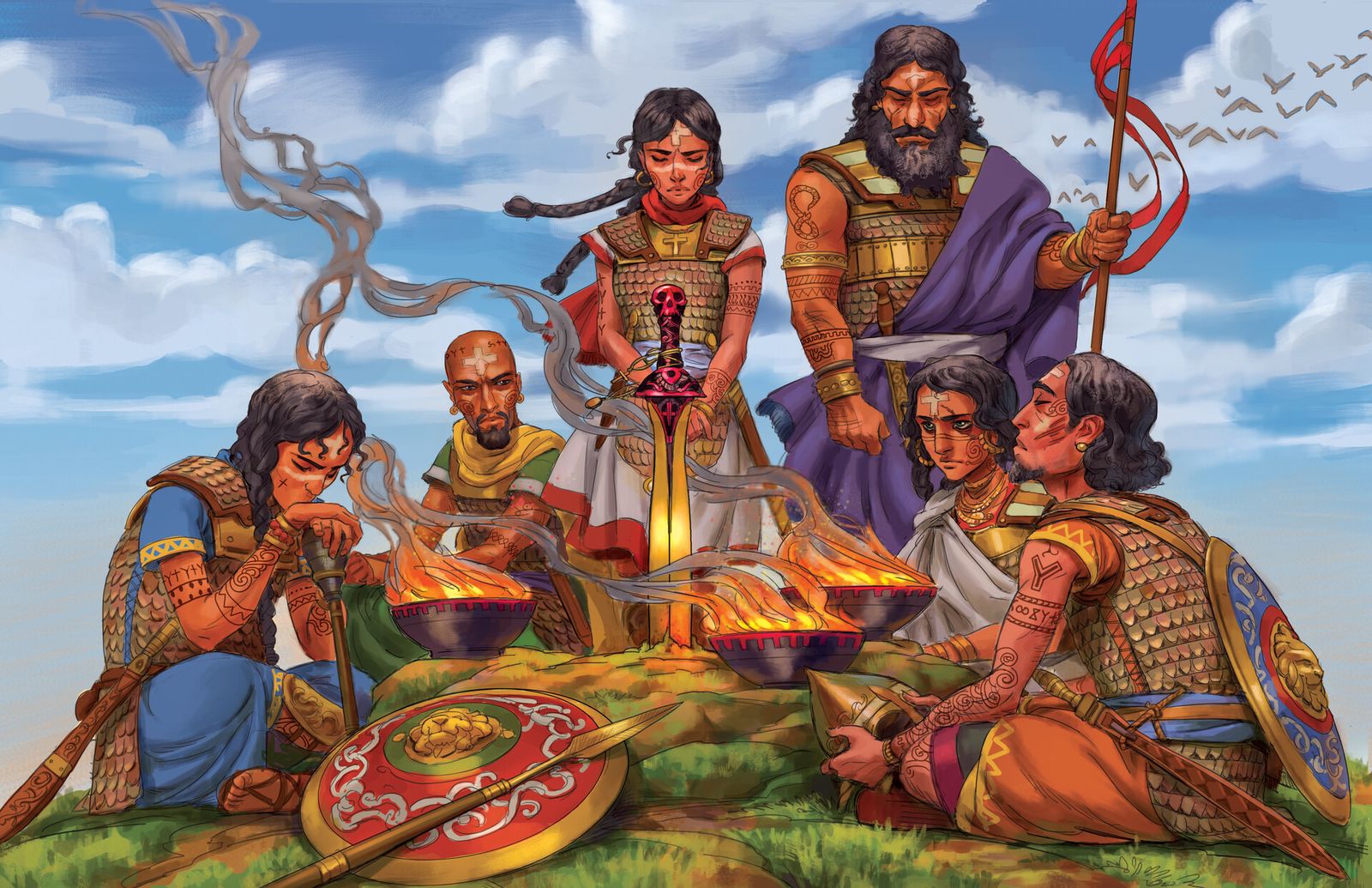
RuneQuest (1978) . Once one of D&D's competitors in the realm of fantasy role-playing games, RuneQuest relied on integrating characters into the game universe, paying more attention to their social status, religious views and political situation in the world as a whole. He also tries to immerse players in the specific worldview of the heroes, inspired by the epic tales of the Iron Age.
Call of Cthulhu (1981) . Based on the books of H. P. Lovecraft and his successors, this game turned out to be a landmark for the industry, as one of the first truly successful projects built around investigations rather than battles. It also tried to not just rely on horror visuals, but to scare players. Due to the quirks of economics and history, for many countries, for example, for Poland or Japan, it was Call of Cthulhu that turned out to be the “default” tabletop role-playing game.
Cyberpunk (1988) . Collecting all the clichés of the genre, as well as the fantastic action films of the 80s, this project received a rebirth with the release of the video game Cyberpunk 2077, based on its rules and universe. Tough and provocative, Cyberpunk anticipated the turn of the industry that took place in the 90s towards crude social criticism, dark aesthetics and gloomy plots.
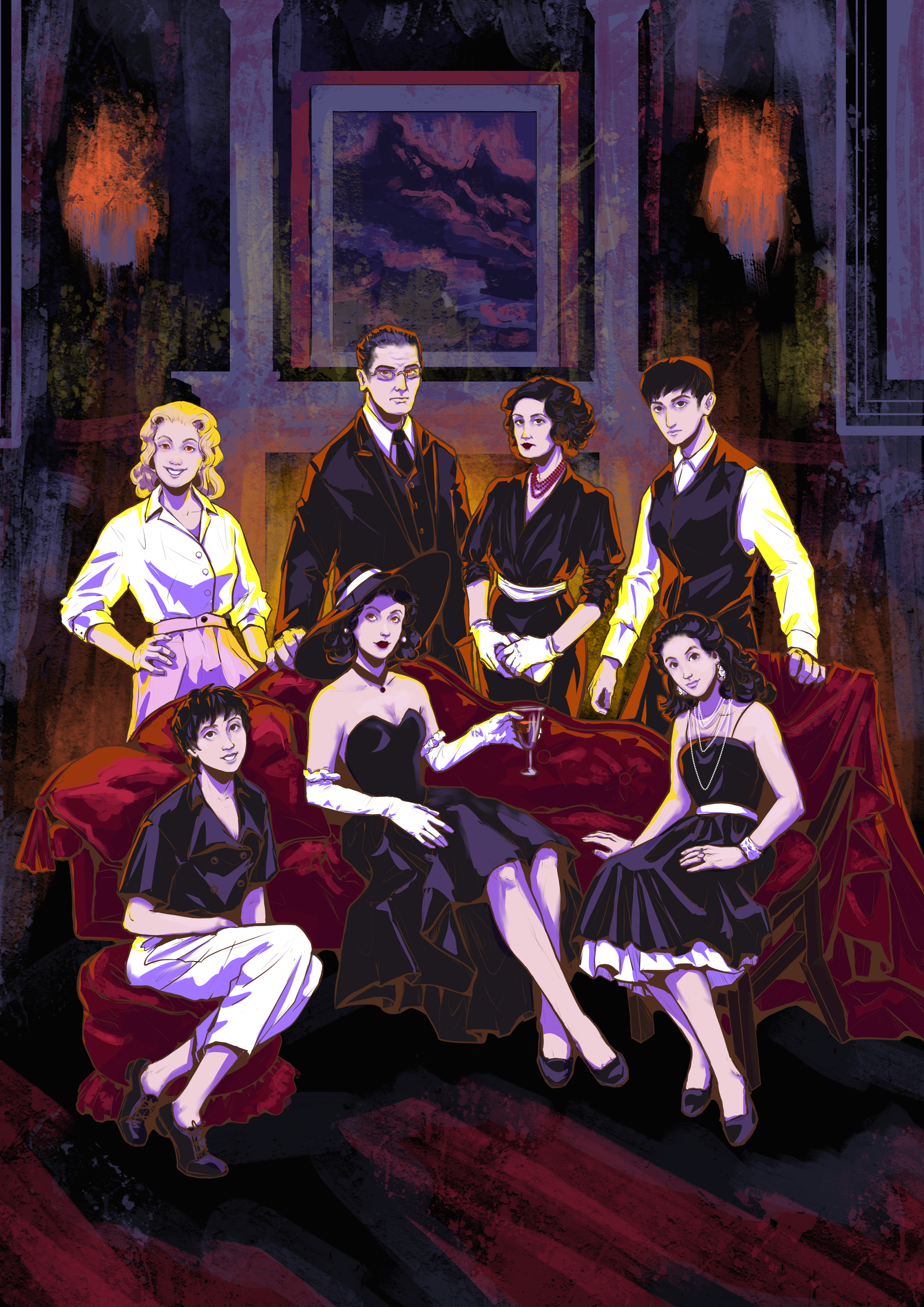
Vampire: the Masquerade (1991) . One of the few games that, albeit very briefly, shook the throne of D&D. Masquerade puts players in the role of vampires hiding among humans in a world that looks like a darker version of Earth. Much more focused on socio-political conflict than many of its competitors, as well as putting a heavy emphasis on atmosphere, Masquerade spawned a huge franchise and influenced the game design of many projects.
Deadlands (1996) . An alternate history game that combines Western aesthetics with mysticism: Native American spirits, the devil playing cards for souls, vengeful gunslingers returning from the grave. The game formed the basis of the Adventurer's Diary - a universal system of rules, claiming that on its basis you can play any adventure stories in general, from space opera to hard-boiled detective stories. Specifically, Deadlands inspired the Russian project “Red Lands,” which is already based on the Eastern genre.
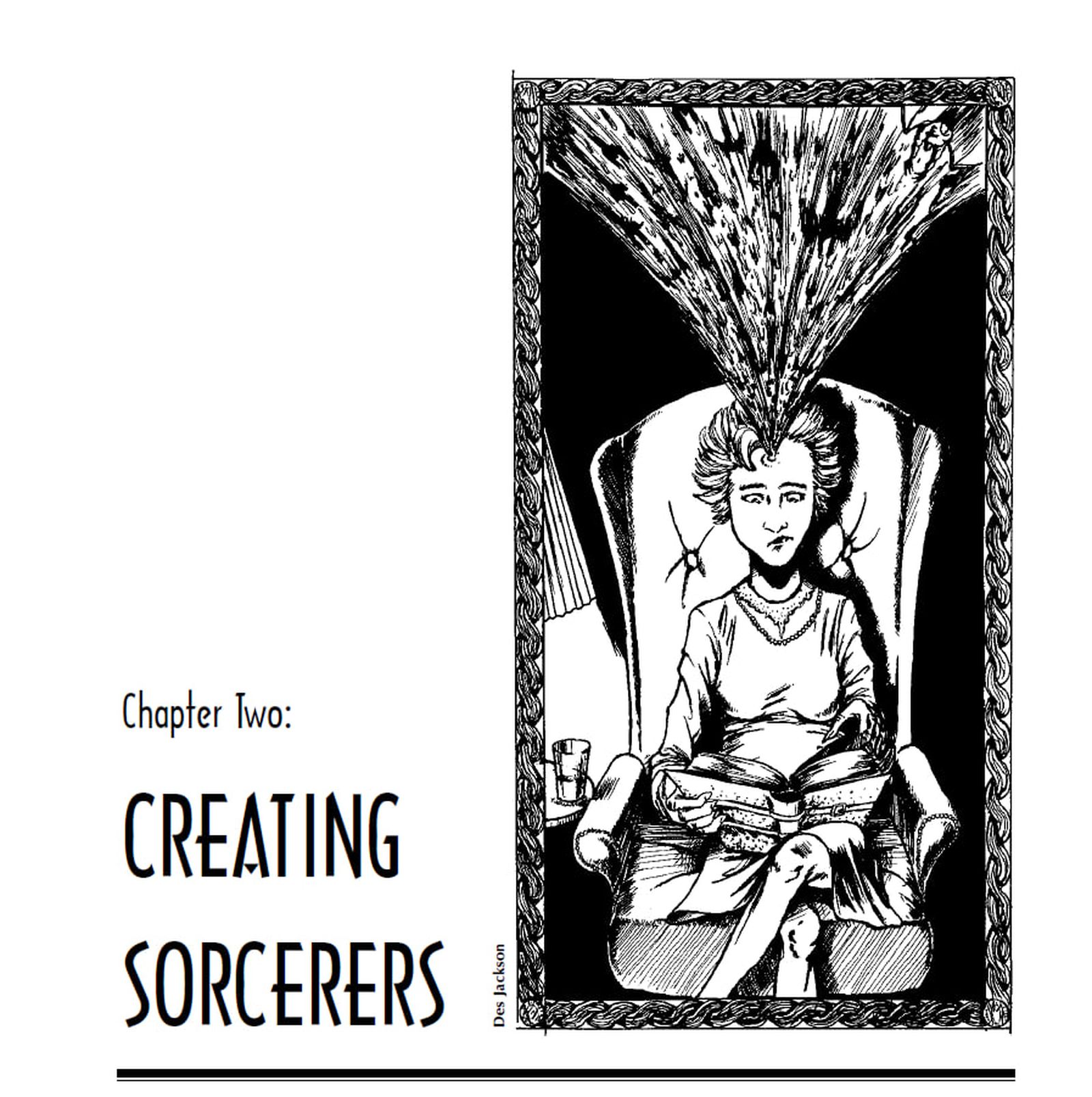
Sorcerer (2001) . This project illustrates the specifics of the indie segment of the industry in the “zero” years, when games built around an extremely narrow theme were rapidly gaining popularity. Specifically, in Sorcerer, players will play the role of wizards making deals with demons - neither at the level of rules, nor at the level of describing a fantasy universe, the project is not suitable for anything else, but it copes with the stated task perfectly.
FATE (2003) . Another "universal" rules system, not tied not only to any specific universe, but even to any genre, FATE is an attempt to give players more control over the story, not directly determined by the actions of the characters. Using a special in-game resource, party members can introduce facts into the game world “bypassing” the narrator. And one of the ways to get this resource is for the characters to get into troubles invented by the players themselves at the start, which turns the development of the plot into a separate game, depending on the rules to the same extent as on the dialogue of the participants.
Monsterhearts (2012) . The game is built around the image of teenage supernatural beings who build romantic and sexual relationships with each other. Monsterhearts has exceptionally simple rules and a clear focus. This project is distinguished by its greater attention to LGBTQ+ people and, more broadly, queer theory, marking a significant change in the demographics of players compared to the 70s: this process has been in full swing since the 90s, but in the 10s it became especially noticeable.
Mutants: Year Zero (2014) . A typical example of a project that, on the one hand, moves away from the frankly wargame elements of older games, on the other hand, eschews dashing experiments with rethinking the role of the leader in the spirit of FATE and some indie projects. Thanks to this, the game from the Swedish studio Free League, and the subsequent projects of the same team, serve as a good entry point into the hobby.
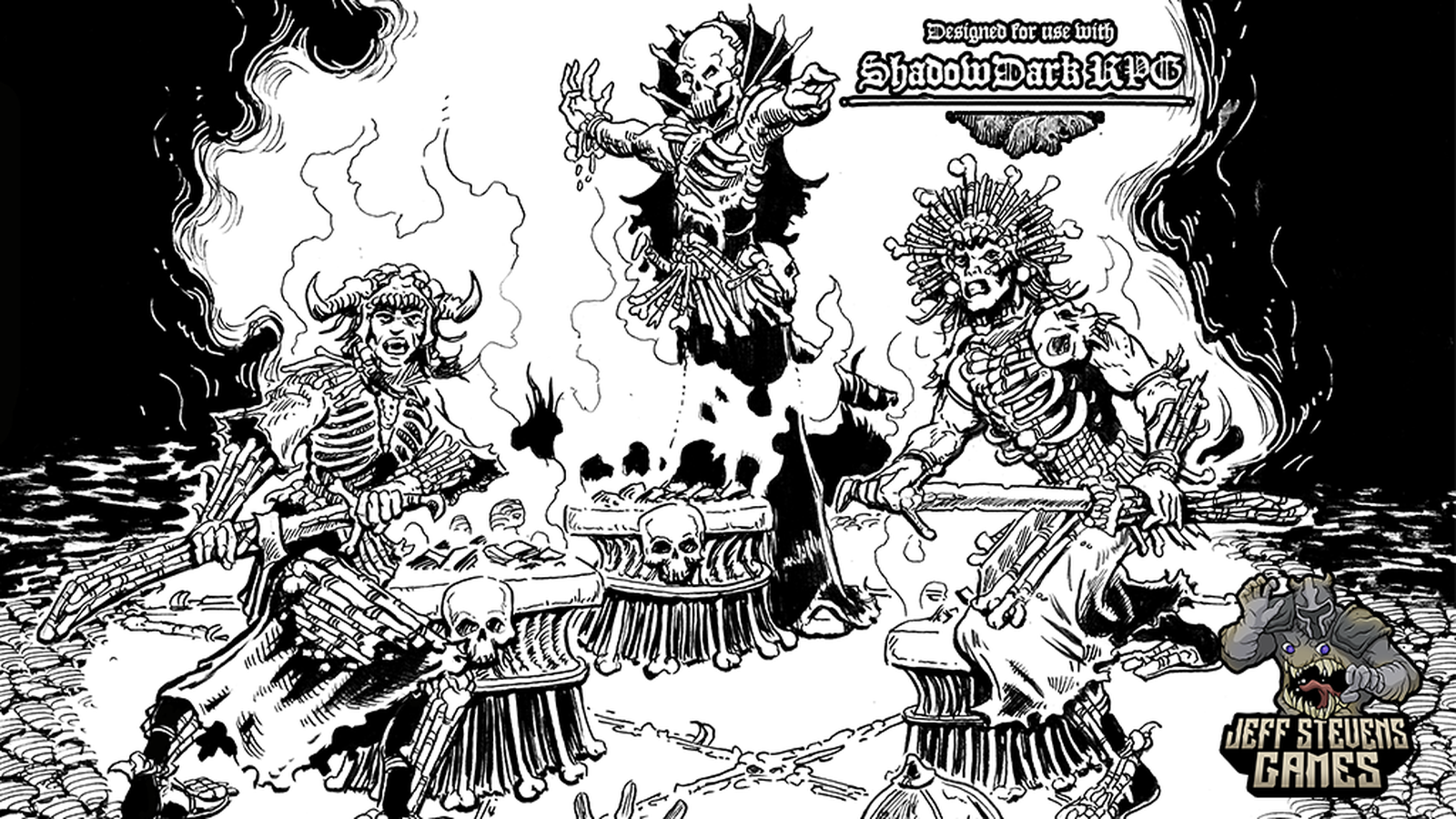
Shadowdark (2023) . Since the '00s, there has been a growing desire among players to go "back to the roots" and play D&D the way they thought it was played in the '80s, with minimal rules outside of combat, a greater focus on randomness in story-building, and the ability to easily lose a character due to a couple of bad decisions. By the 1920s, this school of thought had become an important movement within the industry, defining projects like Shadowdark.
Games to find yourself
It is clear that for most people, tabletop role-playing games have been and continue to be a form of entertainment. Some people like to solve problems by coming up with successful combinations of parameters or ingenious approaches to problems that arise. For some, create stories together or follow where the leader leads them. For some, this is primarily a social hobby, a reason to be with friends, joke and laugh. But what I love most about tabletop role-playing games is that they provide new experiences that stay with us long after the game is over.
When discussing this, it is important not to go to extremes. Stories about players who lost touch with reality, could not distinguish themselves from the characters, and so on, are urban legends that became popular in the United States in the 80s in the wake of the so-called Satanic Panic: the conservative part of American society looked everywhere for signs of an ominous conspiracy threatening children and adolescents. But we also shouldn’t deny that the experience we get at the game is psychologically real: when we get angry, it’s “real” anger, when we get upset, it’s “real” sadness, and so on.
A number of researchers, such as Sarah Bowman, a psychologist and researcher of tabletop role-playing games, write about the possibility of exploiting this effect, combining modern game design and experiments dating back to Moreno. But even on an everyday level, it's easy to see that tabletop role-playing games provide many emotional experiences that are difficult and dangerous to experience in everyday life. For some, this may be the experience of giving orders or receiving them. Experience of sacrifice, voluntary or involuntary. An experience of recklessness. Experience of conflict escalation. By creating a relatively safe space where players behave in a way that feels right to them, games allow them to try approaches that would normally be considered inappropriate and would probably never occur to them.
Individual experiences easily add up to higher-level identity experiments. What does it feel like to be bossy? Aggressive? Generous? Soft? While everyone may have their own blind spots, tabletop RPGs actually allow you to do two separate but related things. Firstly, to make decisions in a different logic than we usually do, and secondly, to do this within the framework of social interaction, and not detached reasoning.
This leads to the possibility of experimenting with formally accepting other identities: a different gender, race, social class. It is clear that tabletop role-playing games from the very beginning allowed you to try yourself in the role of an elf or a gnome. But as developers paid more attention to creating fictional worlds, rules and advice that emphasized the specific psychology of the characters, experiments with identity became more noticeable.
Already playing as the conventional barbarian Ulric, who is only interested in gold and booze, provides experience that the player is usually deprived of, even if Ulric’s global psychology is not sufficiently developed to allow one to talk about a game identity. But already in RuneQuest, the game creators put a lot of effort into explaining to players the peculiarities of the worldview of the inhabitants of their universe. Call of Cthulhu, at the rules level, provided tools for players to take on the roles of mentally damaged people - an admittedly problematic concept, but potentially interesting. In Vampire: the Masquerade, each player character is a creature with severe addictions and problems with aggression, a fact that the game explicitly states and constantly emphasizes at the rules level, forcing players to confront usually suppressed aspects of their personality.
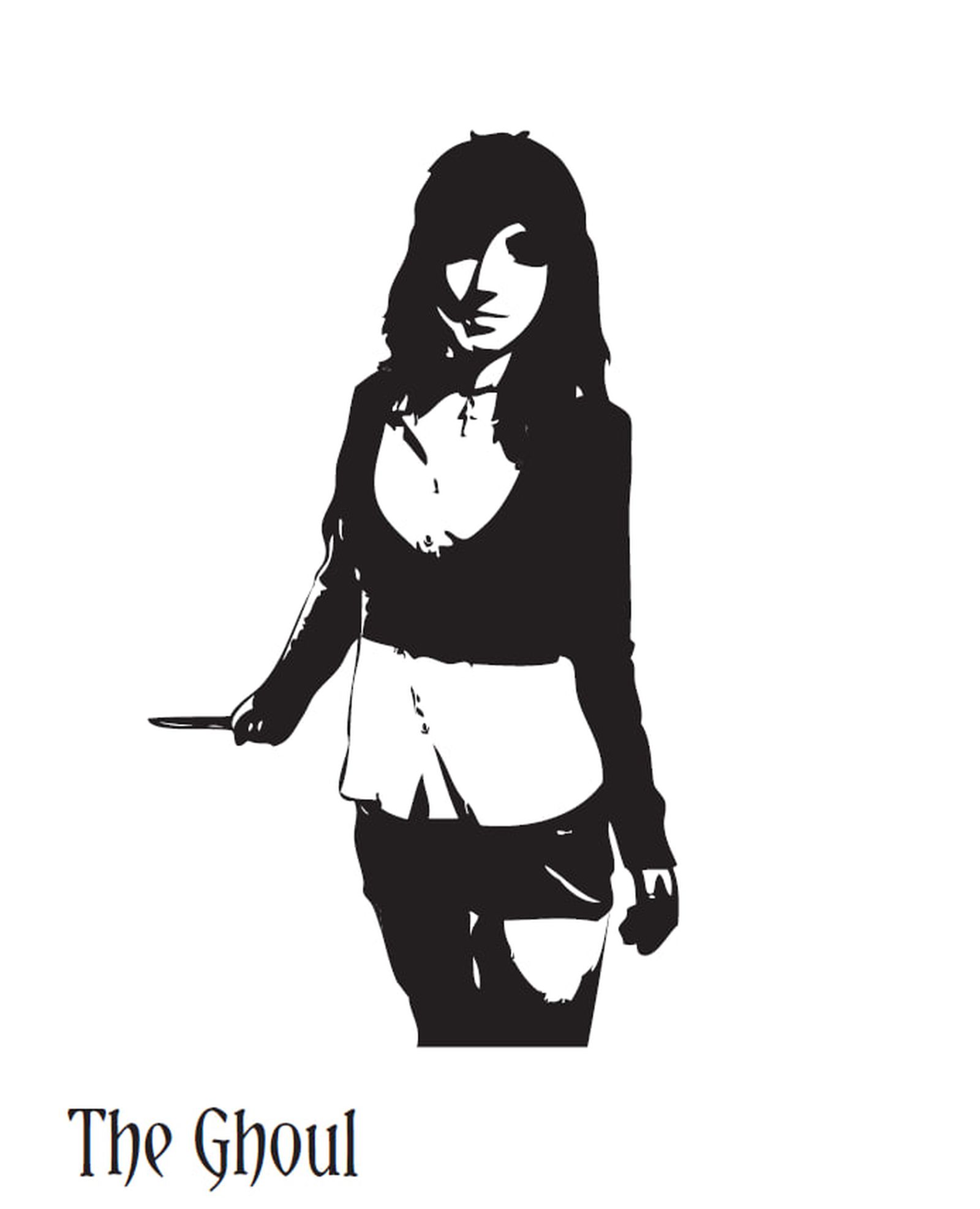
Monsterhearts, in turn, emphasizes the performative, artificial nature of gender and sexual identity, and does so twice. You play as teenagers who are just coming to terms with their sexuality, and the rules of the game are designed so that characters can find people of different genders attractive, but leave it up to the players to choose how the characters make sense of these feelings, reproducing the back-and-forth between psychological, hormonal and cultural factors at the rules level. But what is more important is the need to accept the role of not just someone of a different gender and orientation, but someone whose orientation is being formed, forcing you to think about this process and realize how not straightforward it is.
But ultimately, any tabletop RPG is only as much an experiment in identity as you take it seriously. The very process of character creation and subsequent roleplaying involves the need to answer the question: what does it mean to “behave like my character”? But this character could easily be very different from me. What does it mean to “be a woman” and how should the behavior of the heroine I play be different from mine? How should playing as a character born in the 18th century differ from playing as our contemporary? Or, what has always interested me as a religious scholar, how to play a character of a different faith?
The role of religion
Religion has been heavily represented in tabletop role-playing games since their inception. In D&D there were demons, angels, secret cults, temples of many deities, and among the first three classes there was a priest. Subsequently, religious motifs arose again and again in almost any aesthetics. The personal views of the creators of D&D played a role in the beginning of this process - Gygax and Arneson were both believers, and Gygax, a Jehovah's Witness, even sang in the church choir. В дальнейшем личный фактор потерял актуальность — среди разработчиков первого ряда появлялись и христиане, и атеисты, и представители других религий, и даже, как минимум, один шаман. Тем не менее, сюжеты о взаимодействии с религиозными организациями или с персонажами, объектами и идеями, очевидно заимствованными из религиозной образности, до сих пор чрезвычайно популярны. Это взаимодействие далеко не всегда мирное — «культист» служит одним из типовых противников в настольных ролевых играх — но просто забыть об этой сфере в играх непросто.
А это означает, что множество игроков, пусть и не серьёзно, но пробует на себе непривычные для себя религиозные идентичности. Речь не столько о принадлежности к конкретным выдуманным или реальным традициям в рамках игры. Куда важнее возможность попробовать другой стиль (анти-)религиозного поведения. Неверующий игрок может поиграть за верующего. Кто-то, для кого религия строится вокруг этических установок — за последователя традиции, где на первом месте стоит соблюдение ритуалов. Религиозный игрок может взять роль скептика или воинствующего атеиста. Последовательный монотеист — почитателя множества богов. Пацифист — воинственного религиозного фундаменталиста.
Я использую определение религии, предложенное исследовательницей Биргит Майер,
специфическая для людей система идей и практик, соотнесенных с областью неэмпирического, или запредельного, которая становится доступной для наших органов чувств только посредством медиации .
Взгляд на религию как на систему практик, а не только верований, как на что-то, что человек делает, важен для настольных ролевых игр. Ведь они в несерьёзной, иногда даже комедийной форме предлагают «делать» религию иначе, чем обычно. Даже если человеку кажется, что его персонаж и он сам разделяют религиозные взгляды, структура многих игр с повсеместным присутствием религии, в том числе в сферах, порождающих конфликт, потребует действовать более последовательно, ярче проявляя собственные взгляды. А в процессе они могут, во-первых, осмысляться, а во-вторых, меняться.
Речь, опять-таки, не о том, что люди начинают следовать традициям, которые увидели в игре, — хотя, конечно, всякое бывает. Куда важнее другие потенциальные эффекты. Ларс де Вильдт и Стеф Ауперс, пара исследователей религиозного в видеоиграх, обратили внимание на то, что опыт на «ролевых», подразумевающих отыгрыш, серверах World of Warcraft подталкивает игроков к большей широте взглядов в религиозной сфере, причём с обеих сторон спектра. Религиозные люди начинают лучше понимать атеистов, атеисты — верующих. И это звучит довольно логично.
Каким бы несерьёзным ни были обстоятельства получения опыта, он остаётся с нами. Настольные ролевые игры отличаются от книг, фильмов, комиксов и множества других форм высказывания тем, что не просто дают информацию, но предлагают действовать самим, поставить себя на место другого, а это расширяет восприятие — важная вещь в современном мире.
Помимо прочего, это всё напоминает, что человек — это не просто мозг, который в одностороннем порядке контролирует наше поведение на основании постоянного анализа. Мы — это ещё и речь, и тело, контакт с другими людьми, и зачастую первичными могут быть наши действия, под которые подстраивается мышление, а не наоборот. И хотя забывать об анализе мышления не стоит, игры напоминают про важность действий и сиюминутных переживаний, которым мы часто уделяем слишком мало внимания.
Правила, свобода и ограничения
Но тут мы опять-таки наталкиваемся на сложную ситуацию с тем, что игры одновременно обеспечивают свободу, и ограничивают её. Самое главное, они совершенно не нейтральны в идейном плане, закладывая определённые картины мира, которые лежат в основе создаваемых на основе их правил историй, через описание выдуманных вселенных и игровую механику. D&D даёт отличный пример. На первый взгляд, игра строится вокруг образов фэнтези первой половины и середины XX века — книг Говарда, Толкина, Лейбера, Муркока, Вэнса. Во многом она черпает привлекательность из ссылок на этот жанр и сопутствующую ему образность.
Но стоит приглядеться ближе, и можно заметить, что игра на самом базовом уровне правил построена вокруг сражений. Все классы имеют ту или иную роль в бою, количество заклинаний, предназначенных для «боевого» применения, непропорционально по сравнению с любыми другими и так далее. Описание конкретных миров, в свою очередь, не предшествует, а подстраивается под эту механику — можно придумать любую вселенную, пока в ней присутствует место для сражения, и любого персонажа, пока мы будем понимать его роль в битве. Это значит, что D&D плохо подходит для того, чтобы поиграть за кого-то вроде Фродо или Бильбо, при всём многообразии ссылок на породившие их книги. Причём игра устроена так, что мы далеко не сразу заметим этот факт, скрытый множеством возможностей, которые нам представить, если мы соглашаемся принять неявную, но последовательную логику D&D.
Но это только верхний слой имплицитных ограничений. Специфический подход к симуляции сражений подразумевает и специфический подход к симуляции мира. Вселенные, созданные для игр по D&D, оказываются чрезвычайно материалистичными, несмотря на обилие магии — правила требуют, чтобы мир игры строился вокруг ясных числовых показателей, исчисляемых параметров и понятных иерархических классификаций. Добавьте к этому уже упомянутую повсеместность капитализма — в данном случае служащего просто частной формой исчисляемости, — и можно заметить, что игра куда сильнее ограничивает идентичности, которые в ней можно опробовать. Ты можешь быть эльфом, орком или гоблином, варваром или волшебником, но твой персонаж всё равно вписан в капиталистическую экономику, а мир вокруг тебя всё равно отражает самые оптимистически-позитивистские представления об устройстве реальности времён Просвещения. Просто с драконами.
Кто-то разделяет такую картину мира, кто-то нет. Но важно помнить, что механика настольной ролевой игры накладывает незаметные ограничения на то, какую идентичность вы сможете воплотить в процессе игры. И показательно, что самая популярная игра в мире последовательно перестраивает фэнтезийные и мифологические образы так, чтобы основы той картины мира, которую вокруг которой они выстраиваются, оказывалась максимально приближен к современной повседневности, причём повседневности белого человека среднего класса с Запада — основного потребителя этих игр.
Этот подход заметен и в контексте религий. На эстетическом уровне D&D поддерживает возможность включить практически любую религиозную традицию — от вариаций на авраамические религии до культов кровавых богов или поклонения зловещему белому кроту. Но если присмотреться к правилам внимательно, легко заметить, что всё это эстетическое многообразие построено вокруг сквозной схемы, которая подразумевает очень конкретное понимание того, что религия такое.
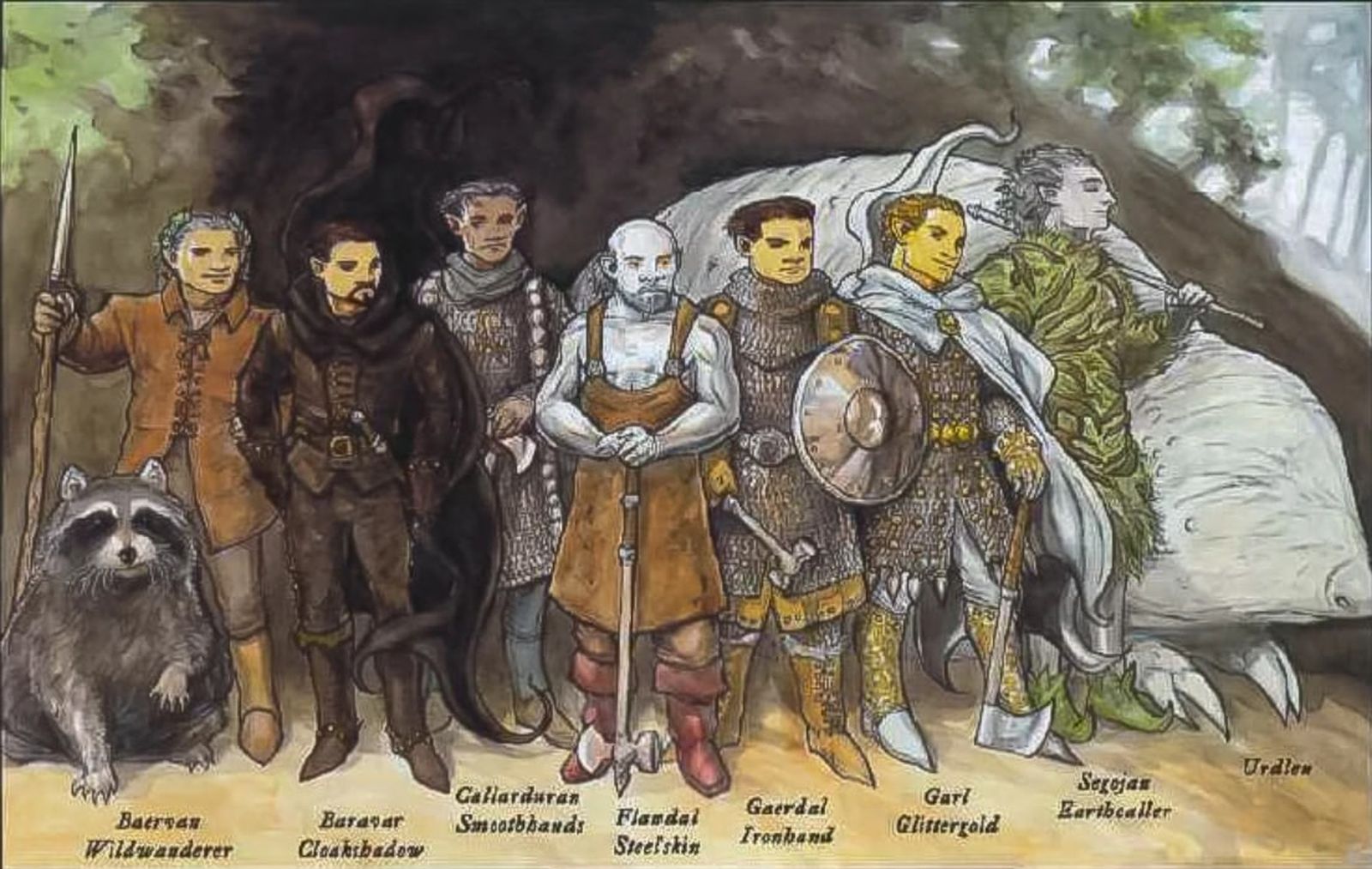
Религия в D&D, во-первых, теистична — в центре любой традиции стоит существо, неважно, реальное или выдуманное с точки зрения мира игры, но, по мнению верующих, достаточно активное. Во-вторых, она сконцентрированы на этике — вышеупомянутое существо имеет мнение о том, как его последователи должны себя вести на индивидуальном уровне, надзирая и наказывая как при жизни, так и, особенно, после смерти. В-третьих, религия лишена анимистического пласта — множества духов, которые, с точки зрения верующих по всему миру, окружали их на протяжении большей части истории. Хотя в D&D присутствуют дриады, сатиры и феи, они оборачиваются просто типом существ, лишённым связи с ритуалами или бытовыми практиками. Наконец, начиная с появления класса жреца, религия в D&D профессионализирована, организована вокруг людей, связавших свою жизнь с отправлением религиозного культа и соблюдением этических норм.
Любой, кто знает историю религии, легко заметит, что эта схема описывает подавляющее меньшинство религий — зато очень хорошо отражает религиозную картину в США во второй половине XX века, с её характерной «ярмаркой религий», ориентацией на мнение Иисуса по поводу повседневных дел и профессиональными пасторами. В эту логику встраиваются образы, отсылающие к языческим традициям античности, средневековому христианству, закрытым религиозным общинам XX века и многому другому. Вся схема черпает убедительность из того, что задаваемое ей понимание религии, тот самый игровой опыт верующего, соответствует уже существующим ожиданиям игроков. И таким образом она подкрепляет эти ожидания.
При кажущемся многообразии, игра исключает возможность по-настоящему оценить разнообразие религиозного поведения в жизни — или, кстати, в фэнтезийной литературе, где писатели зачастую шли на куда более яркие эксперименты.
Понятно, что разработчики настольных ролевых игр, собственно говоря, не нанимались заниматься просвещением. Но кажется грустным и, до какой-то степени тревожным, тот факт, что медиа, обладающее потрясающим потенциалом, чтобы давать нам новый и необычный опыт, открывать наше восприятие для иных мировоззрений, рискует обернуться лишь ещё одним способом натурализации современности и её идейных установок как единственного возможного взгляда на общество, пространство — или религию.
И всё-таки…
Я уделил такое внимание D&D потому, что оно хорошо показывает, как такая, на первый взгляд, свободная и открытая для творчества вещь, как настольная ролевая игра, всё равно несёт на себе отпечаток идеологии. Это особенно важно, потому что непропорционально большое место, которое эта игра занимает в индустрии, превращает её в ориентир для тысяч игроков и разработчиков по всему миру. Но в то же время важно понимать, что на практике многие ведущие идут наперекор вписанным в правилам установкам и ограничениям, пытаясь, вопреки «сопротивлению материала» ввести что-то своё, точно также, как зрители или читатели книг или литературы могут присвоить маргинальные прочтения, идущие вразрез с мейнстримом. Но самое главное, важно помнить, что индустрия бесконечно разнообразна!
Может показаться соблазнительным сказать, что та картина мира, которую задаёт D&D, проистекает из самого формата настольных ролевых игр, из наличия правил и исчисляемых показателей. До какой-то степени это так — но именно что до какой-то степени. Уже много десятилетий в индустрии экспериментируют с тем, чтобы задавать более экзотические картины мира через иные подходы к правилам. Ресурсы, изменение значений которых зависит от интерпретации ведущим происходящего в сцене, а не от жёстко прописанных алгоритмов, приглашают участников к диалогу. Игры, которые отказываются от использования денег в выдуманном мире, дают игрокам опыт жизни в обществе с иным устройством экономики. Правила, отказывающиеся от того, чтобы классифицировать виды, к которым принадлежат игроки, подчёркивают загадочность, неописуемость или размытость собственных вселенных.
Наконец, существует множество проектов, дающих собственные, необычные взгляды на религию. От RuneQuest, где религия строится не вокруг этики, а вокруг ритуалов и мифов, до Vampire: the Masquerade, где религиозные группы в первую очередь отражают социальные объединения, а не последователей какого-то сверхъестественного существа. От игр в постапокалиптическом антураже, где игрокам самим предлагают попробовать себя в роли основателя новой традиции, до игр, где можно взять на себя роль духа или бога. Наконец, множество игр бросает вызов самой просвещенческой материалистической парадигме, давая опыт жизни в мире, который Макс Вебер называл «заколдованным» — мире, наполненном гибридами и собственной агентностью, а не просто обезличенной материей.