
Translated material
Violator of the moral health of society
Vladimir Khazan and Vladislav Rezvyy - about Boris Bozhnev
The personality of one of the most talented poets of the Russian emigration of the first wave, Boris Bozhnev, was surrounded by an aura of mystery even during his lifetime. The poet was so withdrawn and unsociable that sometimes even close friends lost contact with him for many years, and to this day there are many blank spots in his biography. Recently, the OGI publishing house published the book “Boris Bozhnev: Unpublished and Uncollected,” which not only fills numerous gaps in the poet’s biography, but also presents him as a striking phenomenon of the cultural life of the Russian emigration of the first half of the 20th century. We talked about the uniqueness of Bozhnev’s poetry, why Bozhnev was considered one of the “violators of the moral health of society” and why the poet turned out to be an outcast in the literary environment of Russian diaspora, with the editors of the publication - literary critic, Doctor of Philosophy, professor at the Hebrew University of Jerusalem Vladimir Khazan and literary critic, translator, employee of the Literary Department inheritance" IMLI RAS by Vladislav Rezvy.
All of us, since February 24, 2022, have found ourselves in the face of advancing barbarity, violence and lies. In this situation, it is extremely important to preserve at least the remnants of culture and support the values of humanism - including for the sake of the future of Russia. Therefore, the editors of Gorky will continue to talk about books, reminding our readers that there is still a place for thought and fiction in the world.
— Not so long ago, the OGI publishing house published a book you compiled, dedicated to the life and work of one of the best, but undeservedly forgotten poets of the first wave of Russian emigration, Boris Bozhnev. How would you introduce it to readers?
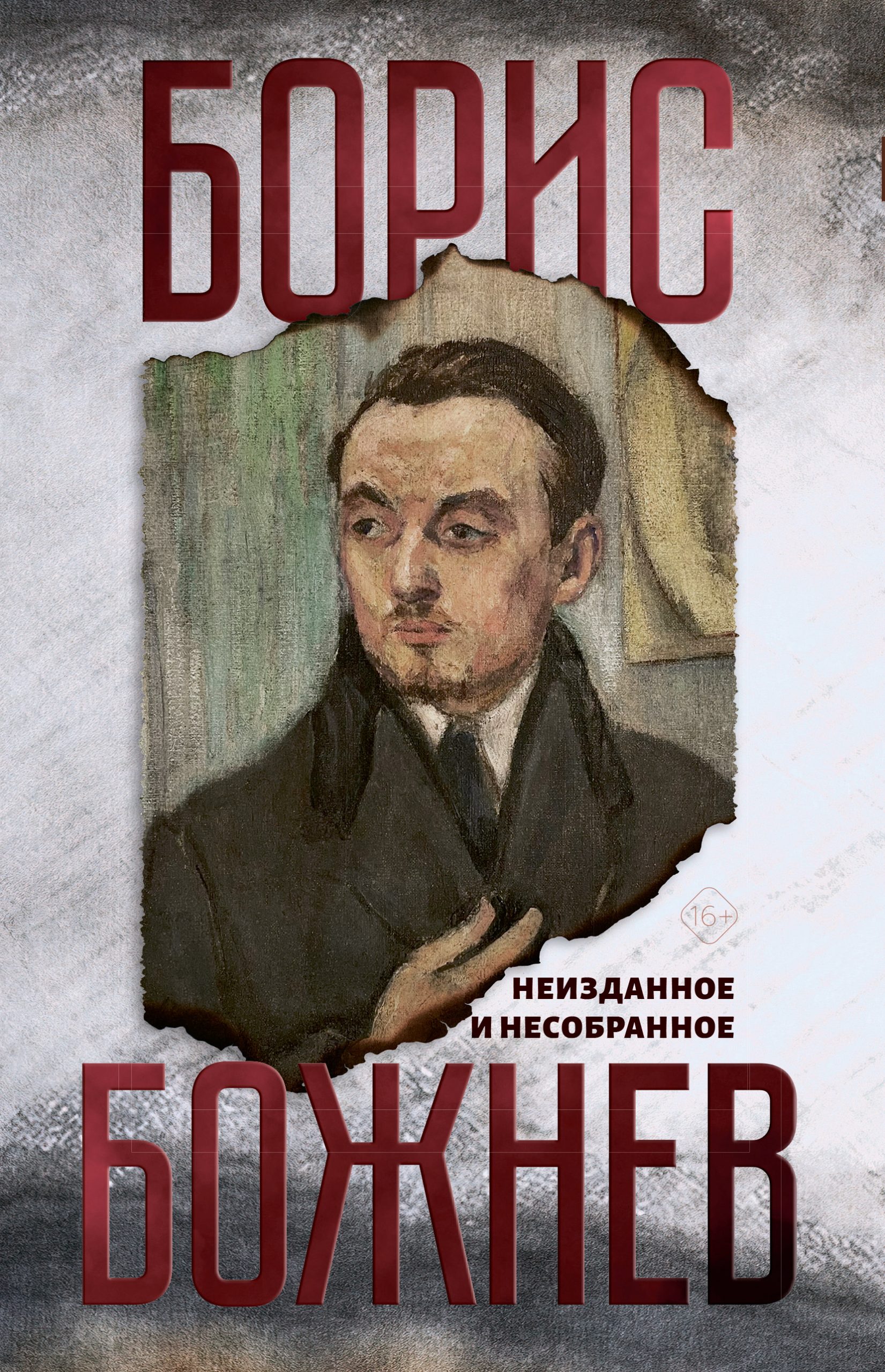
Vladimir Khazan: It seems to me that your words about “undeservedly forgotten poets” are, to one degree or another, applicable to almost all poets of the second generation of Russian emigration of the first wave. Perhaps a notable exception is Boris Poplavsky, who gained recognition during his lifetime. But this is a special case, almost the only one: here a completely extraordinary personality and artistic intuition, bordering on glimpses of genius, came together. As for many other poets from the so-called “unnoticed generation” (V. Varshavsky), to whom, you name it, would an adequate scientific study, a solid monograph be devoted (by “solidity” in this case I mean not volume, but quality), thoughtful and detailed commentary, as was done in relation to their senior colleagues in the creative workshop - Marina Tsvetaeva or Vladislav Khodasevich? Perhaps only V. Nabokov deserved this. Of course, I’m not comparing talents now, I’m not ranking names, we’re not talking about “first and last.” Among those who belong to the Bozhnev generation, born at the very end of the 19th or at the very beginning of the 20th century, there are at least a dozen and a half truly talented poets. So what? To which of them cannot the epithet “forgotten” be applied in one way or another? That is, presented with relative completeness to the reading public or studied by specialists with relative depth? I am deliberately sharpening the problem, distracting at the moment from the numerous wonderful publications of the last, say, 20–25 years, which have discovered and continue to discover names and events, everyday facts and existential processes of the “sunken Atlantis” called “Russian emigrant literature”. Its history is being written, as they say, before our eyes. In this series, I hope, will be the book we prepared, “Boris Bozhnev: Unpublished and Uncollected,” which was recently published by the OGI publishing house.
Vladislav Rezvy: Still, if a high-quality publication removes the epithet “forgotten” from the author, then among the poets of the first wave of emigration - the same age as Bozhnev (give or take 2-3 years) - for example, Alexander Ginger, Sofia Pregel, Dovid Knut, Nikolai Turoverov, Ivan Savin, known to us mainly as the author of historical novels, Antonin Ladinsky, who even left a very small poetic legacy Alexey Durakov and Leonid Eschin. By the way, I advise potential readers of our publication to turn to Ginger’s two-volume book “Poetic Obsession” (2016), which is easy to find online: the second volume contains Bozhnev’s letters to him - a very voluminous complex. We refused to reprint them (this would have been the third publication), since the already volume of material exceeded all expectations, but the abundance of references to them in our volume shows how significant this source is.
— When and under what circumstances did you become acquainted with the work of Boris Bozhnev? What impression did his texts make on you and why did they become one of the areas of your scientific research?
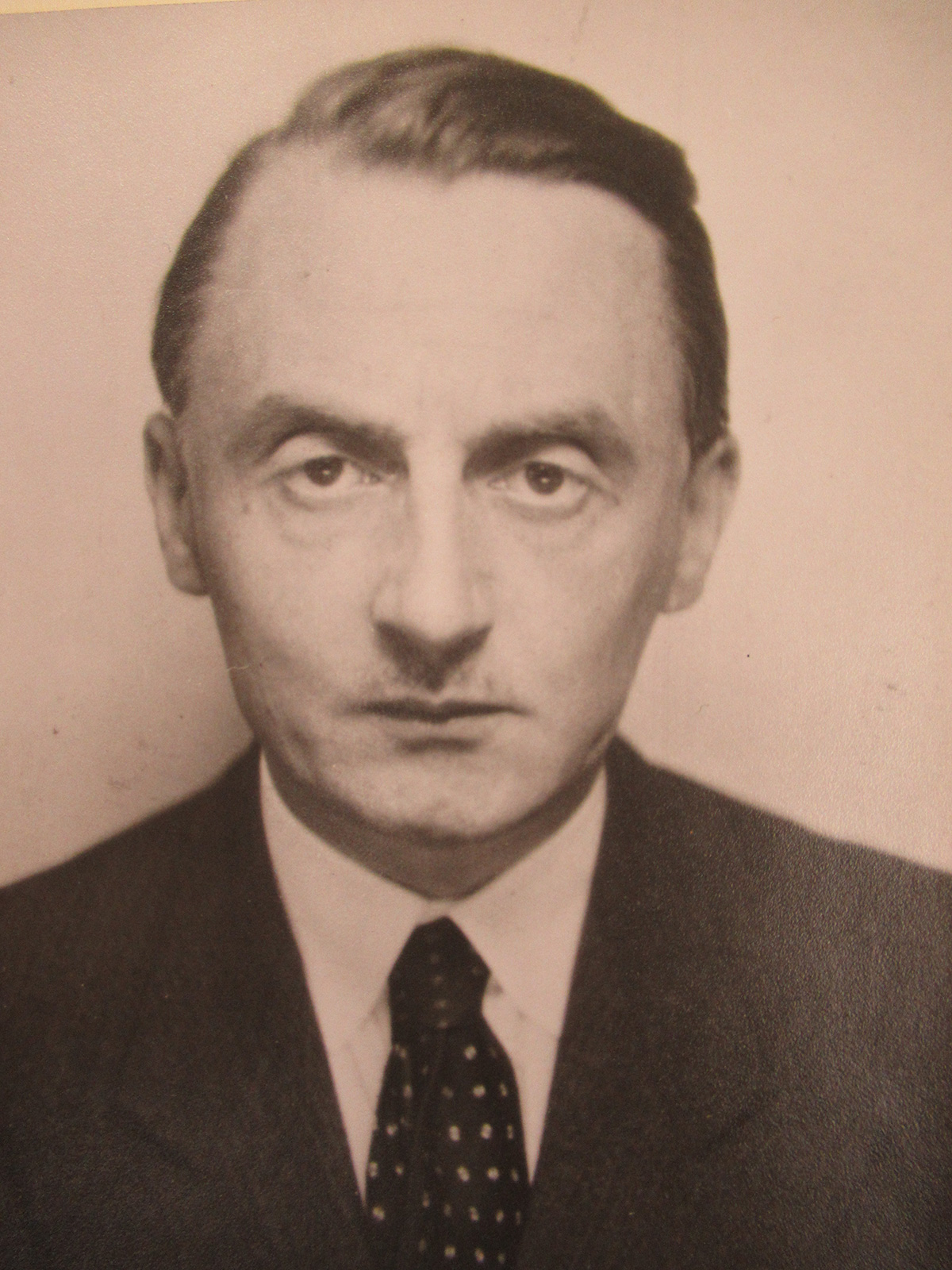
VH: For almost everyone - not only for modern ordinary readers, but also for Slavic scholars - Boris Bozhnev was discovered by Stanford University professor Lazar Solomonovich Fleishman, who, as stated in the preface to our book, “prepared and published, with an introductory article and comments, a collection of the poet’s poems, which is the most complete edition of his literary heritage.” This two-volume work, published in 1987–1989, became the starting point for the study of God (if we can talk about such a direction of scientific research). The poems of this poet, which began to appear in Russia from the mid-1990s of the last century - either in the form of selections in periodicals or in the form of collections - were, as a rule, simple reprints from a two-volume set compiled by L. Fleishman. Of course, this was far from a useless popularization work, since only a few lucky people were the owners of the treasured two-volume book, published in the USA and having a limited scientific circulation. However, there is no need to talk about any expansion of our knowledge about the poet’s biography and an increase in new information about his text corpus, which would have marked the 2000s. Perhaps the only exception in this regard was the work of the then doctoral student at Stanford University, Andrei Ustinov, a student of L. Fleishman. Recently, Russian researchers (N. Bakshaeva, K. Lvov) have discovered and published several new Bozhnev texts. I would like to hope that our book outlines some new perspective here, the establishment and development of which is a matter of the future.
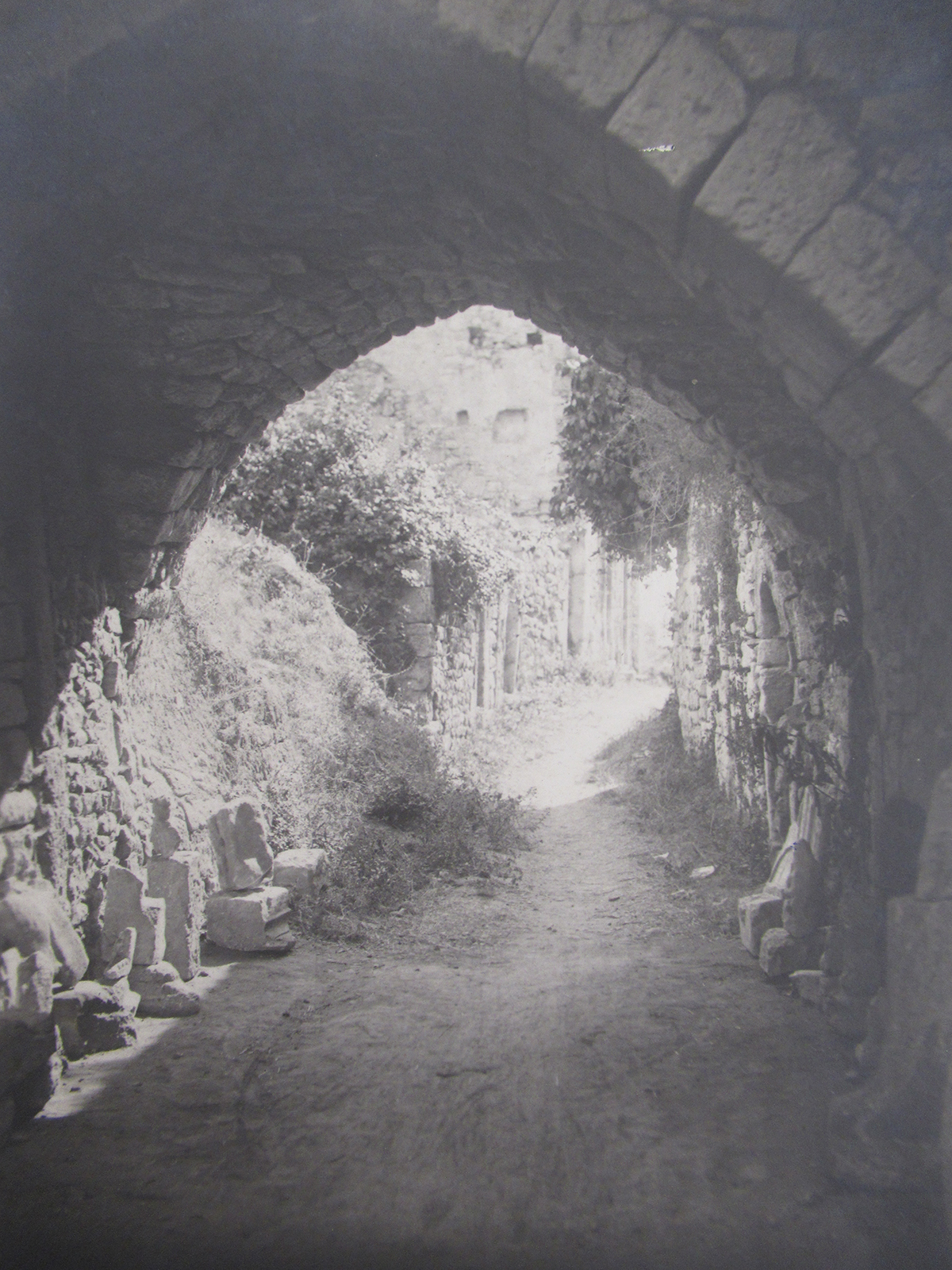
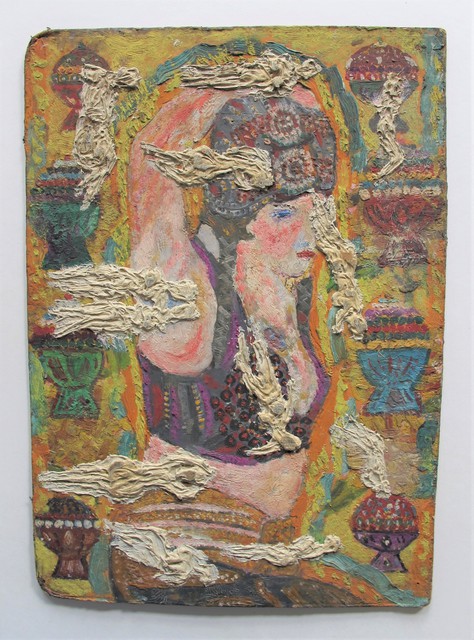
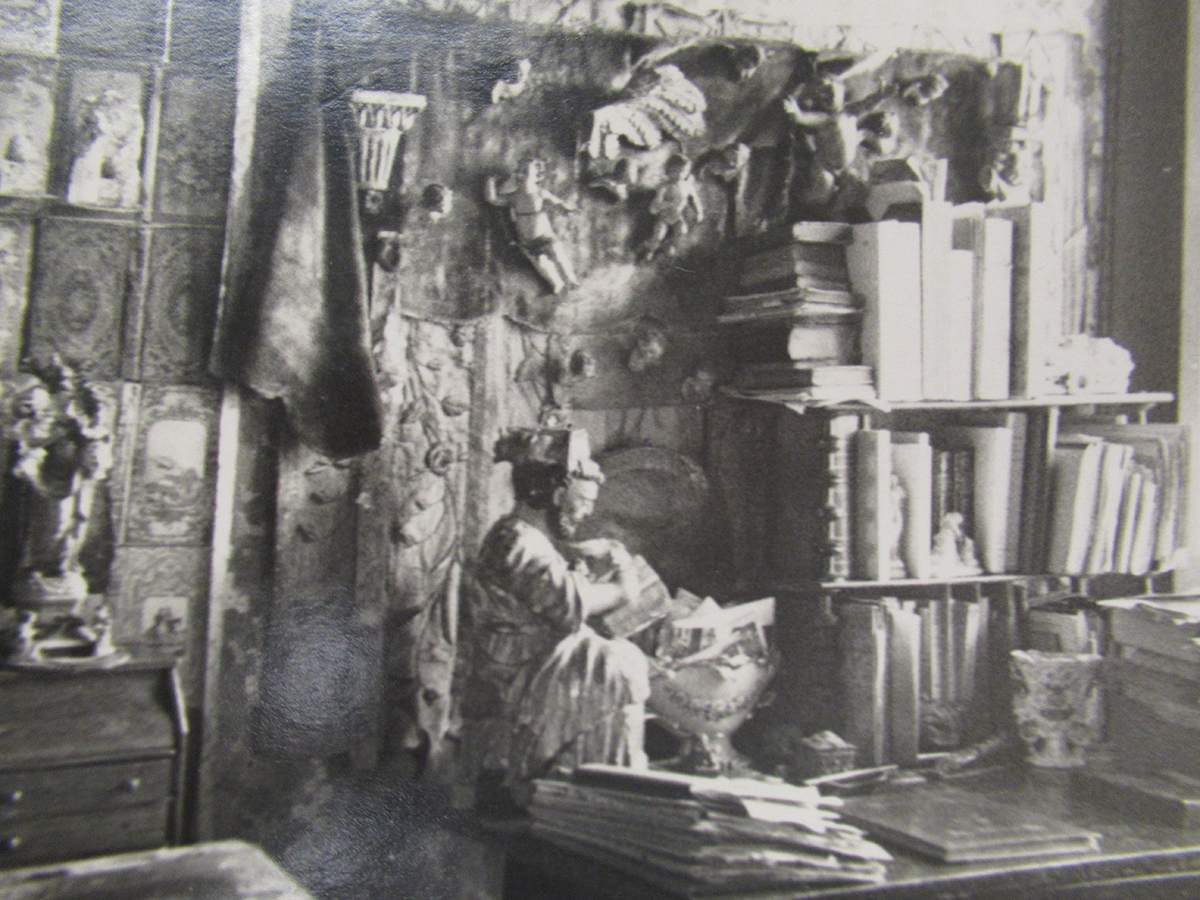
As for the first meeting with Bozhnev the poet, I think it happened in the mid-1990s, when I was working on compiling a two-volume collection of poetry and prose by the emigrant poet Dovid Knut. Of course, the first impression was very strong! There is the Kantian concept of the “thing in itself.” So, to paraphrase Kant, Bozhnev is a “poet in himself”: extreme dissimilarity from everyone else. Even in life he was a recluse, unsociable - our book says a lot about this. However, this is widely known even without us, and most importantly, it is quite noticeable in his poems. The poet, in some higher spiritual sense, is generally doomed to loneliness (remember the classic “I go out alone on the road”), but with Bozhnev, escapism, an escape into oneself becomes a kind of struggle for non-existence , to use the title of his first collection of poems. Perhaps no other Russian émigré poet's creative experiment would have experienced such an irresistible attraction to classical verse. If we can talk about the poetics of the avant-garde in relation to him, then this must be done with extreme caution, taking into account the peculiar Bozhnev poetic reality, which, of course, does not belong to any of the known movements of “left” art, be it futurism, surrealism, Dadaism, etc. In Bozhnev’s poetry, the concepts of “archaism” and “innovation” are presented in unusual combinations, angles and proportions, and, apparently, precisely this achieves its sharp originality, which I spoke about earlier. And one more significant, in my opinion, remark: the poems of poets, whose natural talent has manifested itself in various forms of art - painting, music, etc., cannot be considered only as poetry, that is, confined within the exclusively art of words. Bozhnev was one of the richly gifted artistic people with a keen sense of musical harmony, he was a connoisseur and collector of naive paintings - the collages he created, stored in French museums and art galleries, have the undoubted value of works of art; finally, his creative hobbies, not without a certain eccentricity, extended to such activities as collecting stones from destroyed medieval buildings and creating new decorative compositions from them - the Musée de Pierre - an open-air museum of stones (he did this in a house that he rented for many years in the village of Mane, located in Haute Provence in south-eastern France). I repeat, in order to penetrate deeper into Bozhnev’s artistic world, which sometimes seems quite strange, inexplicable and unusual, one cannot fail to take into account all the diverse material and spiritual elements that make it up.
VR: My acquaintance with Bozhnev took place thanks to my literary teacher Evgeniy Vladimirovich Vitkovsky, not only a poet, translator and science fiction writer, but also a researcher and publisher of forgotten and unknown Russian poets, including emigrants of the first and second waves. As a rule, I recognized the latter from the four-volume anthology “We lived then on another planet…” compiled by Evgeniy Vladimirovich (1994–1997). As I now understand, an important role was played by the fact that the selection of poems in it (subjective, of course) largely coincides with mine. At first I read selectively, focusing on more or less familiar names, until E.V. advised me to pay attention to Bozhnev, in whose selection, contrary to all considerations of volume, was included “ Oratorio for rain, male voice and fog .” This poem, of course, had a deafening effect on the fragile mind: a completely traditional form, multi-footed iambic lines - and elusive meanings, elusive associations. As a result, this thing is still much closer to me than “The Struggle for Non-existence” and even more so “The Fountain”; By the way, our book provides important details of the history of its creation. Somewhat later, I read the Stanford two-volume work and was very upset that it did not include the unfinished poems listed by L. Fleishman in the notes. In our edition this deficiency is filled to a certain extent. Of the seven unfinished poems, three turned out to be very fragmentary, more suitable for publication in a special edition. I would like to believe that they too will see the light of day sooner or later.
— The annotation states that the main goal of the publication is to expand the range of information about the biography of Boris Bozhnev and enrich the understanding of his creative heritage with new information. How can this book change our understanding of the poet’s life and work?
VH: I don’t know how to change it. In general, I am very wary—not to say skeptical—about the rather difficult, and perhaps even impossible, task of changing anything in the reader’s attitudes, but “expanding” and “enriching” is a completely legitimate, legitimate and achievable goal. Moreover, the book was originally conceived and created precisely for this purpose, since the material collected in it consists of new archival layers concerning, on the one hand, the biography of Bozhnev, and on the other, his unpublished poetic texts. That’s why it’s called “Unpublished and Uncollected.” The book consists of three sections, and none of them repeats what was known without us: the first contains poems and poems that, with a few and rare exceptions, have never appeared in print; the second introduces unknown letters from and to Bozhnev; the third consists of the memoirs of the poet’s wife E.M. Kaminer. Thus, the contents of the book exactly correspond to its abstract. Well, how the reader will react to the book is always a question that the author-compilers cannot answer. This case is no exception. I would like to believe, of course, that there will be interest.
VR: It is preferable, of course, for the potential reader to become familiar with Bozhnev’s Stanford two-volume work, which can now be easily found in free online access. It mainly represents works that the author, in one form or another, brought to print, i.e., allowed to float freely. In our edition, if we talk about the first, poetic section, there are many works that are unfinished or unfinished, which can cause bewilderment in an unprepared reader. This is especially true for poems that are listed as completed in the author’s List of Works of the 1940s, placed in the “Addenda” section (most likely, the author wished for it, but never recorded his poems on paper in their final form). When reading these texts, you should always remember what exactly is in front of your eyes - then you have a chance to look into the author’s creative laboratory, at least partially trace how he operated with the poetic fabric, and make very interesting observations.
— You mentioned archival discoveries. Please tell us which of them were the most significant for you - professionally and personally?
VH: The whole book, as I already said, consists of such mini-discoveries. Moreover, it is difficult to single out any “more” or “less” important ones - all of them, in my opinion, have the valuable property that until now they were not known, with the possible exception of several specialists who studied the Bozhnev archive at the Hoover Institute on War, Revolution and Peace, located on the territory of Stanford University in California. It is difficult to rank this massive corpus of texts in terms of significance, whether they are poems with which readers will become acquainted for the first time (among them there are both relatively completed texts and rough drafts that the author himself might not have published), or letters that fill biographical gaps and/or provide the key to understanding certain mysterious events in Bozhnev’s life. Perhaps the most - if this word is appropriate here - dramatic events accompanied the work on the book, when new archival materials were suddenly discovered at the layout stage. Why not break the layout for them and thereby increase the cost of the publication many times over? Here I would like to say kind words to the editor-in-chief of OGI Maxim Amelin, who already deserves them. But in a critical situation, when it was impossible to squeeze anything into the already edited and layout text, he - without any persuasion on our part, on his own initiative - made a courageous Solomon decision: to introduce a new, unplanned and, accordingly, greatly increasing the volume of the book section “Addenda” (“Additions”), without which it would have lost a lot. As an author, I am not new to the publishing business, and therefore I can testify with a high degree of responsibility: not every publisher, in a situation of intense competition between commercial gain and the interest of a book as a book, that is, something that is created for many centuries, would choose the latter with such unequivocal decisiveness.
VR: In general, the entire book is an archival discovery, because it is built, with few exceptions, on archival materials. I note that most of them are not in state storage, but in private collections, which, as a rule, are inaccessible to researchers. In the case of some collections, it is not known what is more surrounded by legends - the untold riches allegedly contained in them, or the obstinate disposition of their owners. We were lucky: Veniamin Maksovich Golubitsky not only provided the Bozhnev materials he had, but also in some way initiated the publication. Otherwise it simply would not have happened. I don’t dare to single out something most significant from the composition: everything is links of one chain, fragments of a huge fresco or mosaic.
— Bozhnev’s first collection of poems, to which the poet gave an almost programmatic title “The Struggle for Non-existence” (1925), aroused absolutely opposite opinions from “this is the only “master” among young Parisians, the most experienced and demanding among them” (G. Adamovich) to “powerless, sick, faceless Rozanovism, urinal poetry” (E. Znosko-Borovsky). Why did the collection receive such polar responses and what assessment of it is close to you?
VH: So much has been written about this discussion, and history, including the history of literature, has clarified so much about it that I personally would consider it completed and exhausted. I do not at all seek to impose my reception of Bozhnev, whether it concerns “The Struggle for Non-Existence” or his poetic legacy in general, but I only propose to proceed from the consideration that Bozhnev is a genuine poet. And even if someone doesn’t like his poems, at least some of them (for example, as a reader, not everything he wrote is equally close to me), this authenticity, which does not depend on individual reader tastes, or even on the harsh verdicts of authoritative critics, does not diminish. This is the only thing that I would suggest to the potential reader of our book to constantly “keep in mind” without falling into extreme assessments. (I will note in parentheses, by the way, that the leading critic of emigration you mentioned, Georgy Adamovich, one of the trendsetters of literary and public taste, did not always treat Bozhnev as favorably as in the case of his debut collection and book of poems “Fountain,” which he also liked; after the publication of Bozhnev’s poem “Silentium sociologicum” in 1936, he wrote in Parisian “Latest News” that “these are mostly smart, sophisticated literary exercises, they are hardly creativity”).
— Bozhnev’s second book, “The Fountain” (1927), was received more favorably by critics than the first, and generally received favorable reviews. Even such a demanding reviewer as Vladimir Nabokov admitted that in these poems “there is thought, singing, and integrity,” and “I don’t want to write about the shortcomings - these poems are so delightful.” Please tell us more about this collection and the works included in it. How can one explain his success?
VH: It doesn’t seem to me that the opinion of some critic, even one as “unquestioning” (in our eyes today) as Vladimir Nabokov, can be called “success”. Poetic fame, fame, popularity is an extremely capricious, unstable, one-minute thing. In conditions of emigration, when for the bulk of educated society spiritual food sharply gives way to concerns about material food, this, I would call it, “seraphism of success” becomes even more problematic. Bozhnev's "Fountain" is designed for a "refined" - in the absolutely positive sense of the word - reader. This is that very pure experiment within the classical poetic tradition that I spoke about earlier. Eighteen poems, enclosed in a single cyclic structure, moreover, published as a separate book and varying the traditional theme of the fountain for Russian poetry (Derzhavin, Pushkin, Tyutchev, etc.) - well, what could be more experimental and, how to put it more precisely, designed for “pure art”? This is not the scandalous “Struggle for Non-Existence” with its dangerous touch on those spheres of everyday life and existence that confuse literary critics, who demand naive chastity from poetry (by the way, in “Unpublished and Uncollected” the reader will find something much more “frank” than “urinal poetry”, according to E. A. Znosko-Borovsky). If we try to determine what ensured the “success” of “Fountain,” then, I think, first of all we should talk about the demonstration of the author’s poetic skill, his high verse technique, which was difficult to argue with even for those who, remembering Bozhnev’s previous collection of poems, classified him as “violators of the moral health of society.” Although for me personally, “Fountain” does not evoke a strong emotional reaction: these poems seem to me cold, like a fountain stream, and “heady”, too tightly tied to the abstract symbolism of the mentioned tradition.
— After the success of the first two collections—the controversial fame of “The Struggle for Nonexistence” and the approving reception of “Fountain”—first there was a ten-year pause, and then books followed that were met with almost complete silence from criticism. Could you tell us about this period in the poet’s creative biography?
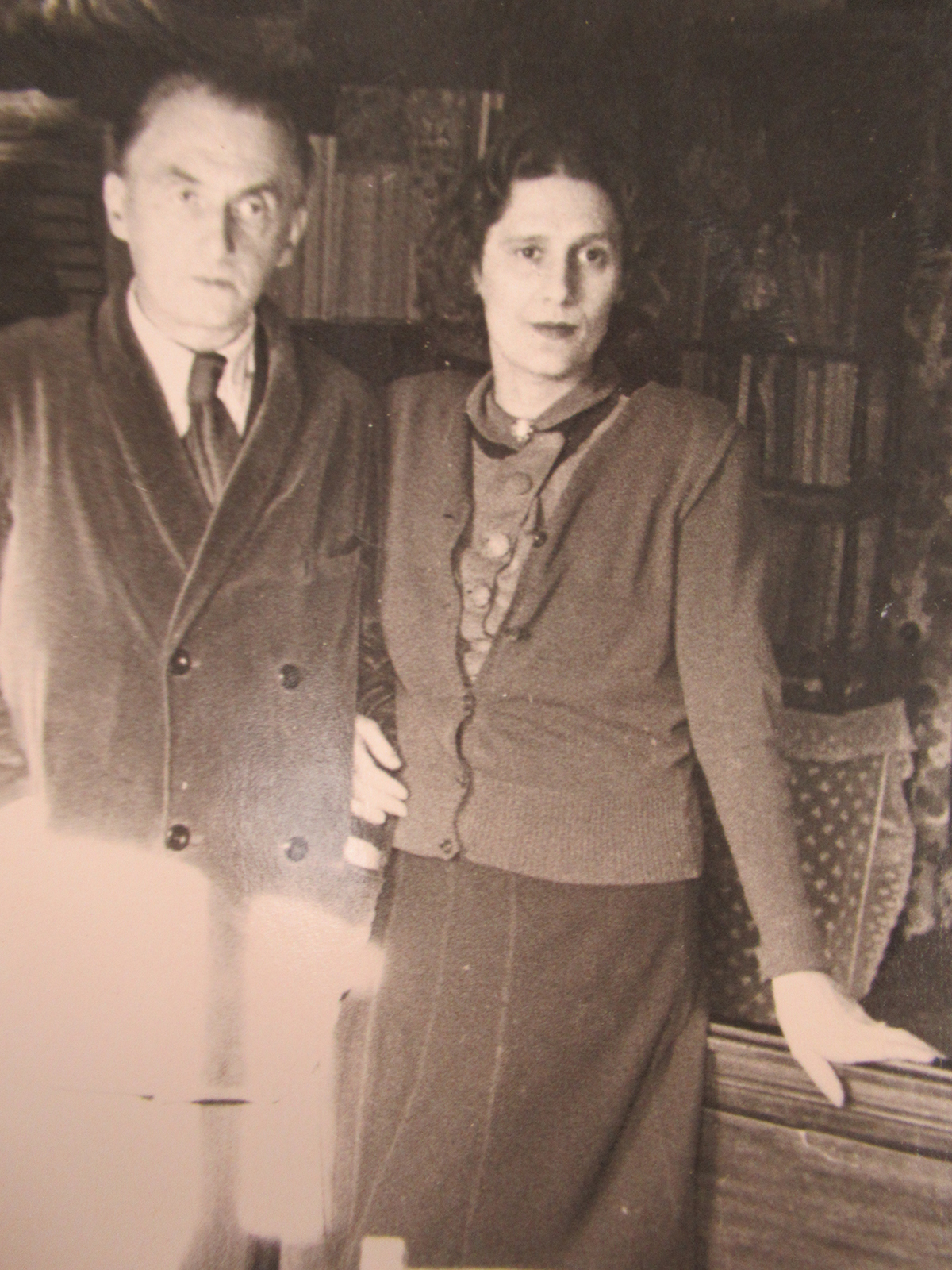
VH: The period you are asking about, and then the war and post-war years spent by Bozhnev in Marseille, where he settled in 1939, where he lived for three decades (almost twice as long as in Paris), where he died and was buried, are in a sense central to our book. This is how the material was arranged: the bulk of it - previously unknown letters, memoirs of Bozhnev's widow - falls precisely at this time. I think that everyone who is interested in the life and work of Bozhnev would be better off getting acquainted with both the letters and the memoirs directly and in the form in which they are presented in the book, especially since they are accompanied by detailed commentary, illustrative material, etc. A dry retelling will not help much here, because it will inevitably strive to recreate the general course of events, and God, as we know, is in the details. I will highlight only two, in my opinion, main lines that largely determined the biographical plots of Bozhnev’s “struggle for existence” at this time. Both are marked, I would even use a more decisive word - marked or, if you like, inspired by the presence of women: in the first case, Bozhnev’s close friend, Olga Eliseevna Kolbasina-Chernova (more than 80 of his letters to her are published in the book), and in the second, his wife Ella Mikhailovna Kaminer, whom he met in 1929.
By definition, there could be no reviews of the books that he published in an artisanal, “samizdat” way in Marseille: they were owned by a few people, mostly close to the author, who, as a rule, did not write reviews, and the possibilities of literary reviewing were sharply reduced after the war. But that’s not even the point: Bozhnev’s work itself in the 1940s–1950s changed its content configuration to such an extent and acquired such forms that it is difficult to imagine a literary critic, even one favorably disposed and disposed towards Bozhnev, who would be able to adequately respond to his writings, especially in a short review.
— According to the recognition of his contemporaries and according to the opinion that has already developed in our days, one of the most talented poets of the first wave of emigration, Boris Bozhnev, turned out to be an outcast in the literary environment of the Russian diaspora. What do you think could have caused this?
VH: It seems to me that the role of a voluntary outcast was highly consistent, on the one hand, with Bozhnev’s introverted character, and on the other, embodied in his eyes the mystical mission of a poet, more broadly, an artist, and even more broadly, a creator of spiritual values in general. This was, as it were, indicated to him from above, from divine heights, a form of fulfilling his earthly destiny, and no one did more to transform the romantic formula “the poet is a social outcast” into Bozhnev’s real fate than himself. This was a model of his creative behavior, which in its way became everyday, everyday behavior. It is extremely symptomatic that, having married E.M. Kaminer, he not only did not introduce her to anyone, but did not even show her to anyone. Reclusion became the norm of their family life. Even the poet’s close friends did not know about Kaminer’s existence, and she herself learned about what was happening outside the walls of their home, in the Russian emigrant colony, only from her husband’s stories. Despite the fact that they did not live on a desert island, but in Clamart, where many Russian emigrants settled, known to a more or less educated person (for example, Nikolai Berdyaev). Having lived with Bozhnev in Clamart for about ten years, Ella Mikhailovna did not meet anyone from his circle, which in itself is incredible, but directly follows from her memories, which are included in our book. This strange and inexplicable seclusion was mythologized by the couple to such an extent that, talking about their relocation in 1939 to Marseille, where no one knew them and they knew no one (it is almost certain that the initiator of the relocation was Bozhnev), Kaminer in his later memoirs paints an apocalyptic picture of the station crush and crowded trains leaving Paris, as if the Germans were already entering it (the occupation of the French capital would occur only a year later, on June 14, 1940). Witness to the events A.V. Bakhrakh rightly blamed Elle Mikhailovna for this (their brief correspondence is given in our book). But what in Bachrach’s memoirs would have been considered the mortal sin of deviating from historical truth, for Kaminer, who remained under the charm of her husband’s personality until the end of her life, including, of course, poetic charm, was fully consistent with the romantic content of Bozhnev’s biography.
— Alexander Bakhrakh, a critic and memoirist of the Russian diaspora who did not sympathize with the poet, once noted that although Bozhnev “was a cultured and well-read man, poetically educated and gifted,” he “somehow wasted his talent.” Do you agree with this statement?
VH: First of all, I do not entirely agree with your statement about the “critic and memoirist who did not sympathize with the poet” Alexander Bakhrakh. Since the book deals with this issue in detail, I will not comment on it here, but will only refer the interested reader to the appropriate pages. I will add to this that Bachrach wrote a completely positive review of Bozhnev’s “Fountain,” mentioned earlier (see: Days. 1928. February 5). As for the essence of the issue, for me any unambiguity when it comes to complex, multi-layered and contradictory phenomena is generally unacceptable. Bozhnev, both as a person and as a creative figure, who left behind a huge, truly not yet comprehended artistic heritage, refers precisely to this kind of phenomenon. The main goal of V. Rezvy’s and my work on the book we are talking about was, ultimately, precisely to promote this understanding. What came of it, and whether it happened at all, is, of course, not for us to judge, but for the reader.
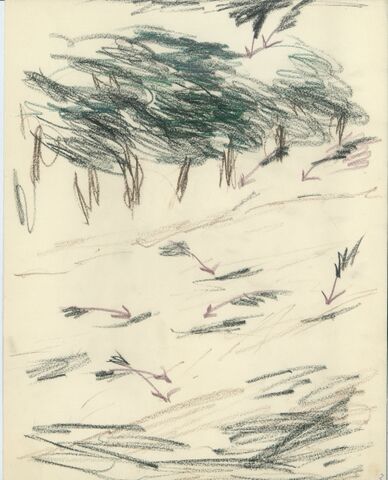
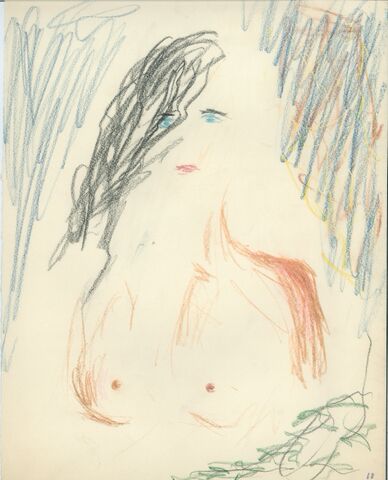
VR: Bakhrakh, as can be seen from the section dedicated to him, in his memoirs did not strive for either documentary accuracy or objectivity of assessments. Moreover, it is not entirely clear whether he became acquainted with Bozhnev’s work of the 1930s–1940s and whether he appreciated it. But if Bozhnev had wasted his talent, it is unlikely that we would have invested so much time and effort into a book of materials related to him, which is only a step towards understanding the Bozhnev phenomenon, and then only in its biographical and literary aspects. Unfortunately, the Museum of Naive Painting, lovingly collected by Bozhnev over many years, turned out to be scattered soon after his death, and there is no need to talk about the safety of the Museum of Stones. And although most of the famous drawings of Boris Borisovich himself are reproduced in our book, the hope for understanding Bozhnev as an artist and collector is vanishingly small, but it is difficult to part with it.