
Translated material
White hood or white powder?
The detention of Metropolitan Hilarion in the Czech Republic is a sensitive blow to the structures of the Russian Orthodox Church in the EU. What happened and what is the background

Metropolitan Hilarion. Photo: Sergey Karpukhin / TASS
A day after Metropolitan Hilarion (Alfeev) was detained near Prague, on the evening of May 25, the Russian authorities and the Moscow Patriarchate made up their minds and decided to take a position. Throughout the day, official news agencies broadcast neutral messages, the Russian Orthodox Church website was silent, and Dmitry Peskov stated that he “knows nothing.” Only at 18.49 did Maria Zakharova’s statement appear on the Foreign Ministry website: “On May 24, Metropolitan Hilarion (Alfeev) was detained in the Czech Republic on trumped-up charges... We regard this incident as a deliberate, orchestrated provocation aimed at denigrating both the Metropolitan himself and, in his person, Orthodoxy in principle, which has recently been under attack in the Czech Republic. We demand the unconditional immediate release of Metropolitan Hilarion and the end of the fabricated proceedings.” The Foreign Ministry promised to lodge a strong protest with the head of the Czech diplomatic mission in Moscow.
A little more than three hours later, at 22.05, the Synodal Department of the Moscow Patriarchate for interaction of the church with society and the media issued its press release. Oddly enough, it is less emotional than the Foreign Ministry’s statement: EU citizens (and in 2022 Hilarion received Hungarian citizenship) “must be protected from unlawful criminal prosecution. The actions of Czech law enforcement agencies raise reasonable questions among lawyers in terms of legality and due process. We call on the investigative and judicial authorities of the Czech Republic to ensure that all the rights of Metropolitan Hilarion are respected.” The document concludes with a promise on behalf of the Russian Orthodox Church to take “all measures provided by law to provide legal assistance to the specified cleric.” In a word, after some hesitation, Moscow decided not to surrender Hilarion.
UPDATED
On the afternoon of May 26, Metropolitan Hilarion and his driver were released from custody in the Czech Republic - without charges. And without restrictions: no deposit, no subscription, no travel ban. At the same time, as the Metropolitan’s telegram channel reported , the examination confirmed that the “white powder” found in Illarion’s car belongs to prohibited substances. The investigation into the case continues.
What happened
On Patriarch Kirill’s name day, May 24, Hilarion celebrated the liturgy at the Church of Saints Peter and Paul in Karlovy Vary, where he has been “retired” since December 2024, after his high-profile resignation from the department of Metropolitan of Budapest and Hungary. Accompanied by his personal operator, who also acted as a driver, he drove his own car towards Budapest. In the vicinity of this beautiful city, Hilarion has an estate that includes chambers with an area of 2360 square meters. meters.
However, they only managed to get to the outskirts of Prague - at some point, the metropolitan’s car was accompanied by two police cars, which forced him to stop at a gas station in the vicinity of the city of Kladno. Czech police officers checked the documents of the driver and Hilarion, and the latter was escorted to the store building while refueling.
At this time, four containers with an unknown white powder were removed from the trunk, the examination of which had not yet been completed at the time of writing this article.
After the containers were seized, the Metropolitan and the driver-operator were informed that they had been detained and were taken to the police station in the town of Kladno, where they were placed in custody.
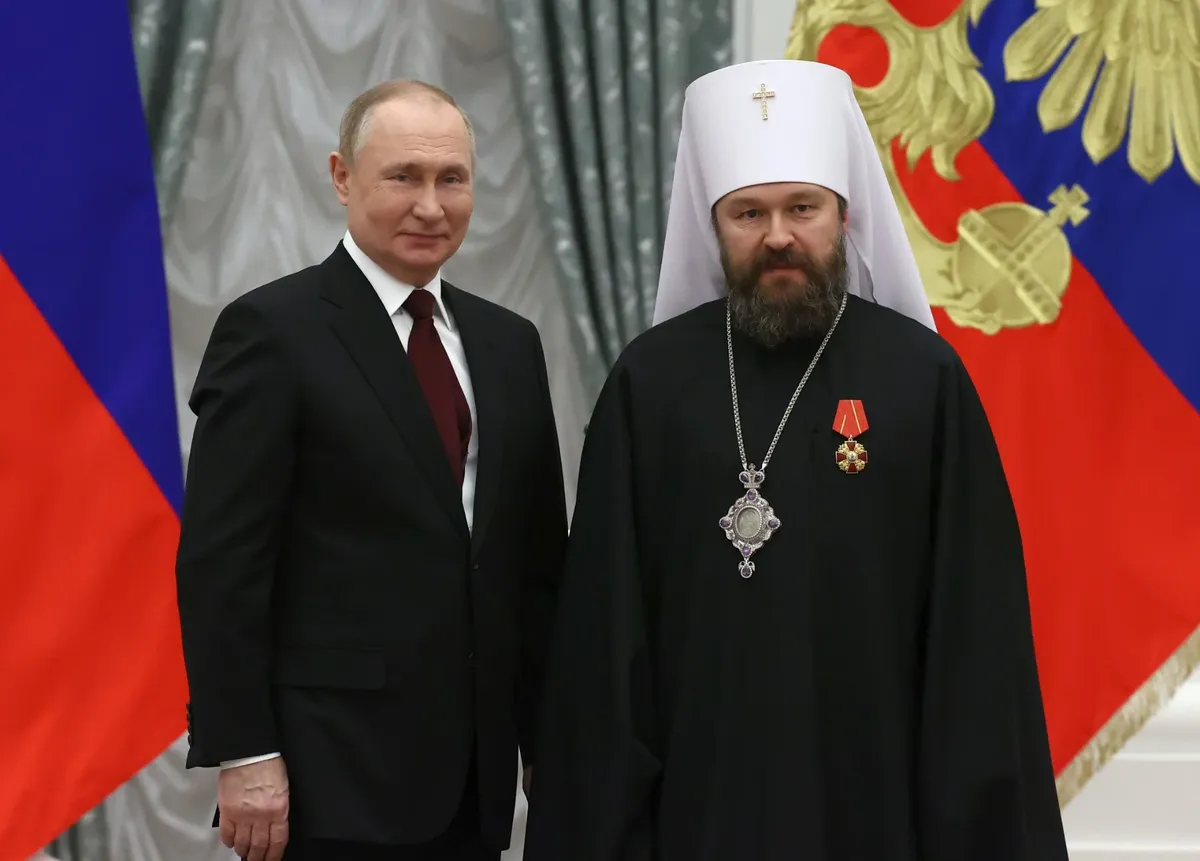
On the morning of May 25, the first message about what happened appeared on Hilarion’s official telegram channel with reference to the hierarch’s lawyer, Michal Pacovski. In the middle of the day, a comment was made by the prosecutor of the municipality of Kladno, who said that his department was interrogating two citizens detained the day before. The press secretary of the National Center for Drug Control of the Czech Republic, Lucy Šmoldasová, later added to this statement: “Based on an anonymous report of the transportation of drugs and psychotropic substances, we took action against a vehicle in the Central Bohemian region.” Authorities did not release the names of the detainees.
Later it became known from the lawyer that his clients were not fed immediately, and the interrogation on May 25 lasted about 8 hours without a break. Michal Pacovski lists the procedural violations that, in his opinion, were committed by the Czech police: the lack of clear reasons for stopping the vehicle and independent witnesses, selective inspection of only a certain segment of the trunk, non-allowance of the car owner for inspection and seizure of substances, uncertainty about the procedure for video recording of police actions...
According to the lawyer,
The police took a blood test from the metropolitan and his companion, which showed the absence of narcotic substances in their bodies. Hilarion declared his full readiness to cooperate with the investigation and added: “For me, as a clergyman, the very assumption of such a thing is absolutely false.”
His lawyer is seeking an independent examination of both the substance itself and all biological traces on its packaging, hinting that the containers were planted on the Metropolitan. “We ask representatives of the media and everyone who is monitoring the situation,” write representatives of the metropolitan, “to refrain from premature accusations, not to disseminate unverified information and to observe the principle of the presumption of innocence.”
Hilarion's official telegram channel has become very active, publishing materials about his services to the church and science, as well as photos of the metropolitan with celebrities - in particular, Viktor Orban and Pope John Paul II. The channel hints at the political motivation for the “persecution” of the hierarch: “His Russian origin, belonging to the Russian Orthodox Church and long-term connection with church structures involved in international contacts are increasingly being presented as grounds for suspicion.”
A few days ago, Novaya wrote about the high likelihood of trouble for Hilarion due to the departure from the political scene of his main patron outside Russia, Viktor Orban. But events are still developing according to a more severe scenario than we expected...
The background
Until June 2022, Hilarion’s career was only ascending. After Kirill was elected patriarch, he took his place as chairman of the Department for External Church Relations and a permanent member of the synod, and soon headed the main academic center of the Russian Orthodox Church - the Church-wide doctoral and postgraduate studies. Every year, several weighty books by Hilarion were published, his musical works were heard in the best concert halls, he hosted his own program on the All-Russian State Television and Radio Broadcasting Company and constantly received new titles and awards, including from the hands of Vladimir Putin. The Metropolitan's property also grew - apartments and cottages in Russia and abroad.
After the start of the SVO, his career took an unexpected turn: as Hilarion himself stated, in the new geopolitical realities he was unable to “fit into the turn of history.” The Patriarch sent him to the modest Budapest See, but this was not disgrace. Using his long-term friendship with Orban , the metropolitan obtained Hungarian citizenship in three months, which allowed him to effectively carry out various orders from Moscow on the territory of the European Union - in particular, to seek to block Hungary from adding the name of Patriarch Kirill to the sanctions lists.
The idyll collapsed in the summer of 2024, when a cell attendant, 20-year-old Japanese youth George Suzuki, who had escaped from the Metropolitan, published audio recordings of his confidential conversations with the Bishop and video recordings of filming in his bedroom, accusing Hilarion of sexual harassment.
The metropolitan’s apologists are trying to explain the “oddities” in the relationship between the bishop and his cell attendant by the secret use of psychotropic drugs, and to portray Suzuki himself as an “agent of enemy intelligence services.” But in the current context, versions of psychotropics are more likely to work against the metropolitan.
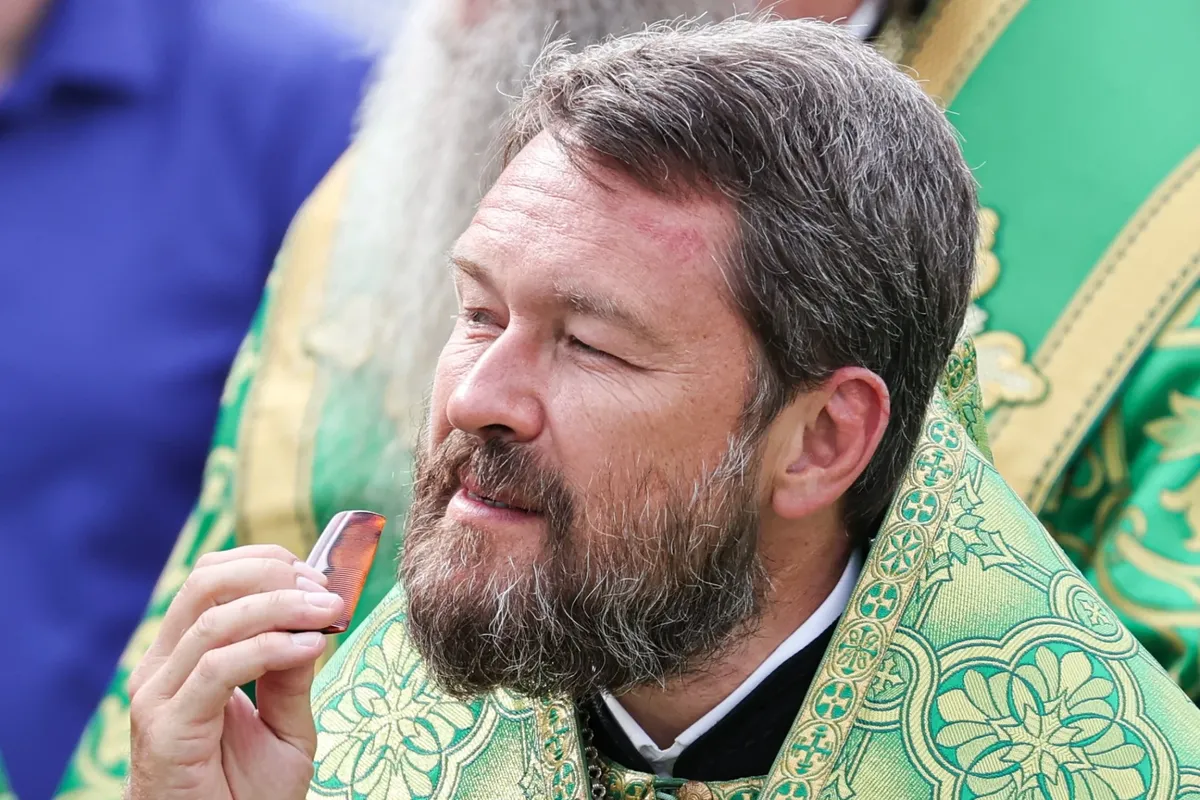
The publication of the “Suzuki tapes” led to Hilarion’s removal from the administration of the diocese, and then to “exile” to Karlovy Vary, where the Russian Orthodox Church metochion at the ancient Church of Saints Peter and Paul has operated since Soviet times. A source in the parish of this church told Novaya that the Metropolitan visits Karlovy Vary on a “shift basis”, on church holidays, preferring to live in his Hungarian and French estates. Despite the suspicions of the Czech authorities that Hilarion is too close to the Russian intelligence services, until now they have not particularly touched him. By the way, the nominal rector of the church in Karlovy Vary, Archpriest Nikolai Lischenyuk, was expelled from the Czech Republic back in August 2024 for “activities threatening national security.”
Trying to give the current incident a political character, Hilarion’s defenders write that the detention “was preceded by a long period of pressure on Metropolitan Hilarion and the Orthodox community in Karlovy Vary.” They say that Hilarion even received threats of physical violence, but for some reason he did not contact the police. At the end of last year, the popular Czech publication Deník N warned that the country’s authorities were preparing to add Hilarion to the sanctions list and drew attention to real estate transactions of the Russian Orthodox Church in the Czech Republic.
The Z-community also has its own complaints against Hilarion. And (almost) platonic love for George Suzuki is not the main one. As the ultra-right “Russian People’s Line”, loyal to the Russian Orthodox Church, writes ,
The main sin of the former “Minister of Foreign Affairs” of the Patriarchate was “kowtowing to the West,” namely, the refusal to “call Catholics heretics” and support for the idea of independence of Ukrainian Orthodoxy.
Just in mid-May, a lengthy interview appeared in the Ukrainian media with the new head of the Kyiv Patriarchate, Nikodim (Kobzar), who claims that in 2017 it was Hilarion who carried out the “secret reordination” of three bishops of the Kyiv Patriarchate near Moscow. Allegedly, this “canonical act” later made it easier for Ecumenical Patriarch Bartholomew to recognize the “schismatic” Orthodox Church of Ukraine from the point of view of the Russian Orthodox Church as legitimate and autocephalous. The “Russian People's Line” suggests that Hilarion was “planted with drugs so that he would snitch on the CIA about the internal situation in the Russian Church.”
By the blade
In the history of the Russian Orthodox Church there have been no precedents for the arrest of bishops on suspicion of possession or transportation of drugs. The closest person to such an arrest was the former Bishop of Cherepovets and Belozersk Flavian (Mitrofanov), now living in London. In February 2020, his apartment in St. Petersburg was searched, during which a drug laboratory was allegedly discovered. However, they decided not to stir up a scandal compromising the Russian Orthodox Church—Flavian was allowed to “go abroad,” and at the end of that year the synod quietly deposed him.
The story of 2016–2018 with the alleged smuggling of cocaine from Argentina to Russia “through diplomatic channels” received wider resonance. In that scandal, the names of certain Ivan Bliznyuk and Alexander Chikalo were mentioned - respectively, the chairman and deputy chairman of the Foundation of Orthodox Patrons in Latin America, which financed the parishes of the Russian Orthodox Church. This story is quite dark , but at one time it removed the taboo from discussing the topic “ROC and drugs.” If the Czech authorities arrest Metropolitan Hilarion, this topic will undoubtedly receive a new powerful impetus.
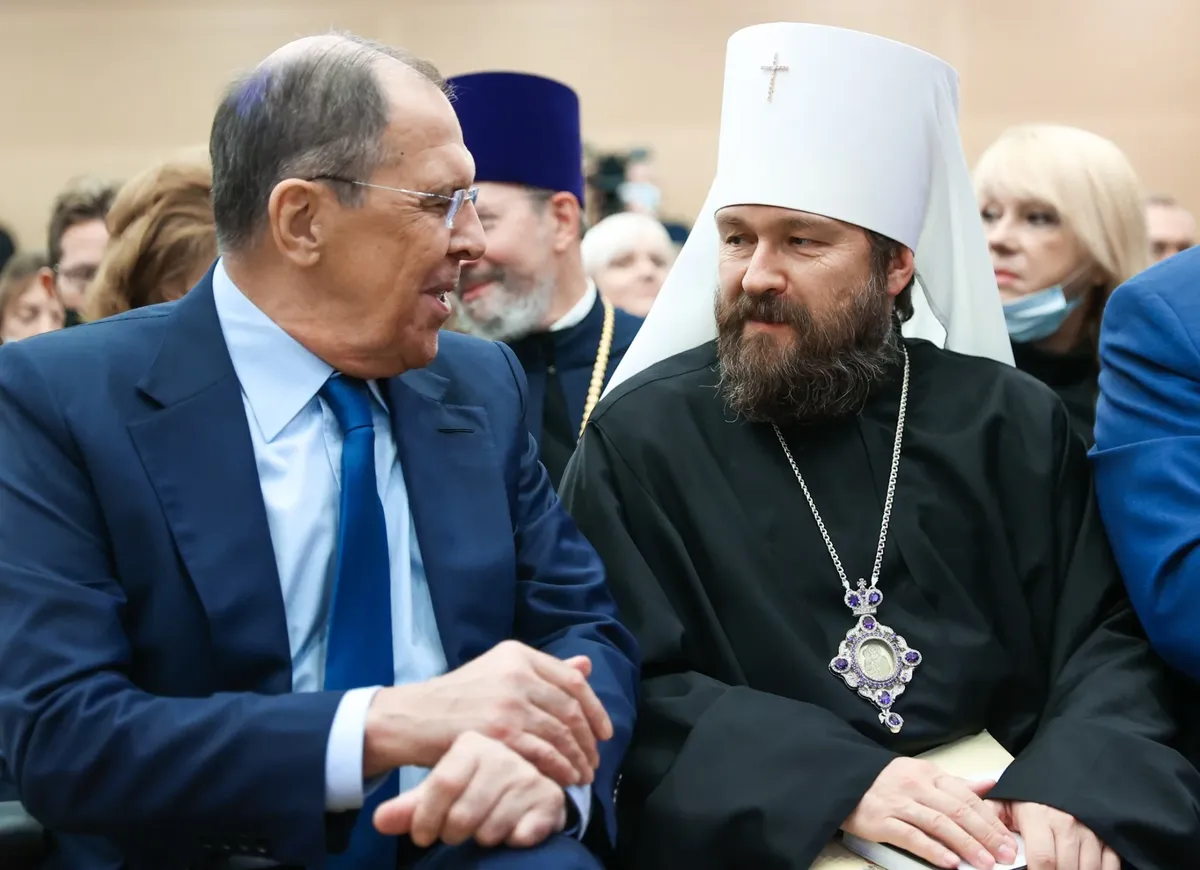
But no matter how this particular case develops, Western media, officials and even the Orthodox public are increasingly speaking about the destructive role of Russian Orthodox Church centers on the territory of states declared “unfriendly” by Russia. The point here is not only in spy scandals, in the work of intelligence agencies “under church cover,” which has almost become a Russian “traditional value.” Archpriest Andrei Kordochkin*, serving in the Patriarchate of Constantinople, priest Valerian Dunin-Barkovsky* and emigrant civil activists recently signed a petition against the activities of the well-known supporter of the North Military District, Metropolitan of the Russian Orthodox Church Mark (Golovkov), as the new Patriarchal Exarch of Western Europe with residence in Paris. “This appointment causes us not only moral indignation, but also serious public concern,” write the authors of the petition, recalling the facts of Mark’s participation in the blessing of weapons and the agitation of Russian citizens to participate in the SVO. The clergy and laity called on the French authorities to “conduct a legal assessment of the grounds for Metropolitan Mark’s presence in France, with particular emphasis on the possible risks that his presence may pose to public order.”
The structures of the Russian Orthodox Church in the West, especially hierarchs with an extensive political background, found themselves in a very ambiguous position with the beginning of the Northern Military District. Those of them who were parachuted into “enemy territory” after the forced curtailment of other formats of Russian presence abroad were literally walking on a knife’s edge. And in this context, it is difficult to deny a certain political background in Hilarion’s case, just as it is difficult to recognize him as an innocent victim. But the question of the nature and origin of the white powder in his car remains open...