
Translated material
Long road to money
Convicted billionaire colonel Zakharchenko is eager to join the Northern Military District. We tell you why he is not allowed to go into the trenches

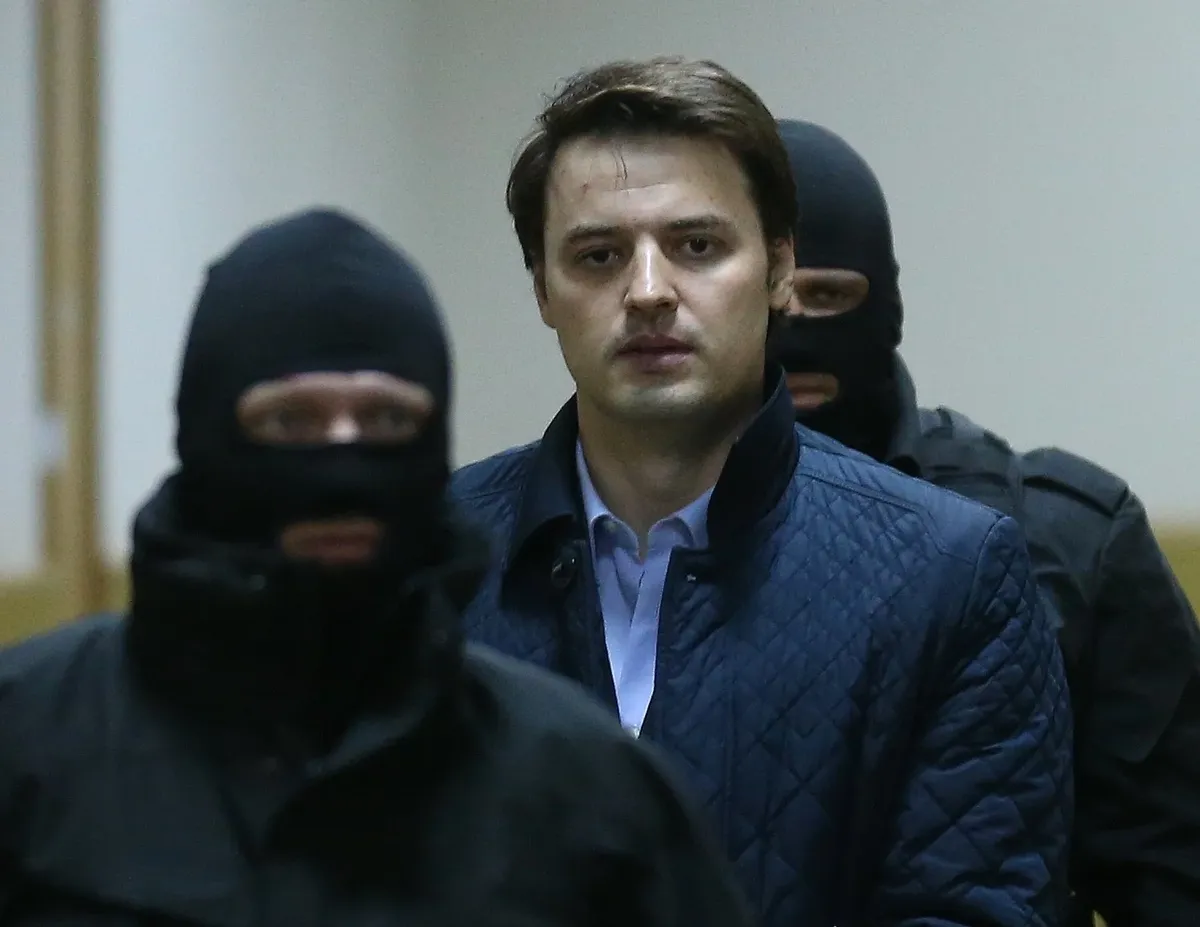
Dmitry Zakharchenko (center). Photo: Sergey Bobylev / TASS
Unattended cubic meters of cash
On June 3, the Presnensky Court of Moscow will consider the administrative claim of former Interior Ministry Colonel Dmitry Zakharchenko against the Russian Ministry of Defense. Zakharchenko has been trying to conclude a contract and send it to the Northern Military District zone for more than three years.
Zakharchenko is the same former police officer who was arrested almost ten years ago, on September 9, 2016. And during searches in the apartment of his sister Irina Razgonova on Lomonosovsky Prospekt, 342.3 million rubles, 1.6 million euros, 124 million dollars and a half-kilogram gold bar were found and seized.
And in the apartment registered to Zakharchenko’s mother, on Michurinsky Prospekt, on the same day, September 9, 600 thousand euros, 20 thousand dollars and 19.5 million rubles were seized.
The total amount of discovered and seized deposits of money amounted to about nine billion in ruble equivalent.
Initially, these cubic meters of money were recognized as material evidence. But a year later, on September 1, 2017, the decision to join them in the criminal case was canceled. Later the money was turned into state revenue. Almost as if they were ownerless, that is, no one's. And Dmitry Zakharchenko was tried twice for bribery. But not at all for the billions found in the apartments associated with him.
In two criminal cases, Zakharchenko was sentenced to 16 years in a maximum security colony, deprived of the rank of police colonel and a state award - the medal “For Distinction in the Protection of Public Order.”
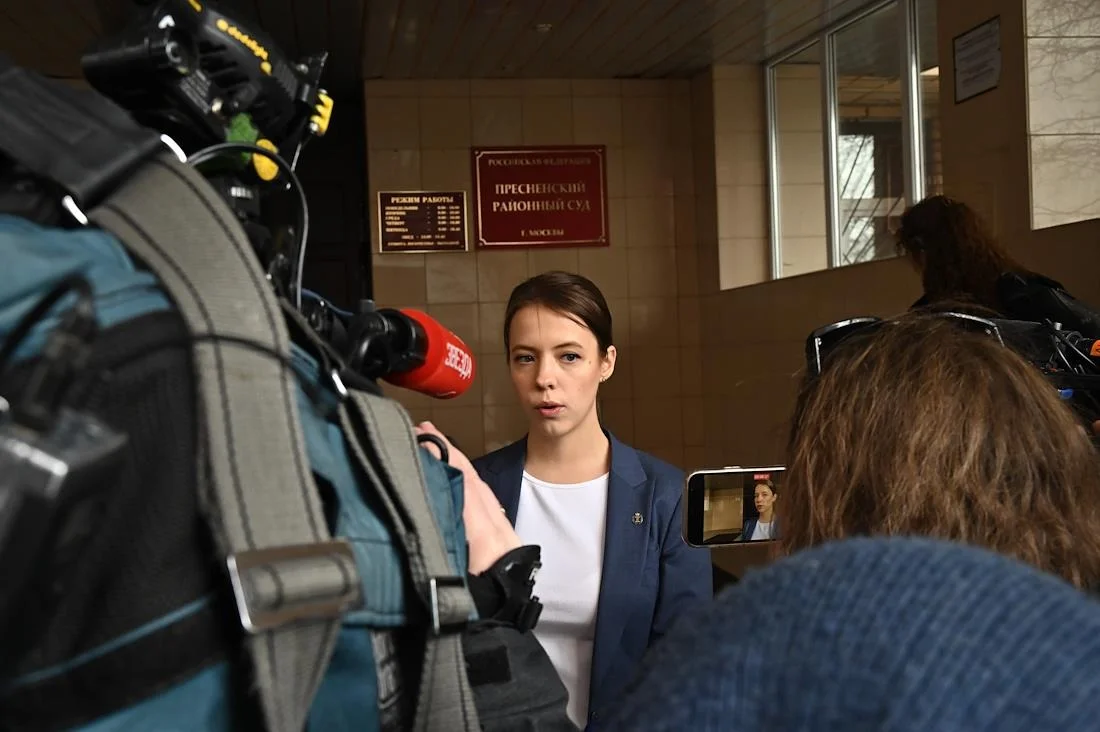
Almost two years ago, on July 25, 2024, during a break in the court hearing, when Dmitry Zakharchenko’s cassation appeal against the verdict of the Presnensky District Court of Moscow was being considered, the former colonel of the Ministry of Internal Affairs was indignant at the Higher Qualifications Service from a colony in Mordovia that he was not being taken on a special military operation:
“When the military registration and enlistment office employees came to the colony, they locked me in the industrial area and did not let me into the military,” Zakharchenko complained. At the same time, formally - according to the current legislation - the Ministry of Defense has no grounds for refusing to conclude a contract with the former colonel of the Ministry of Internal Affairs. In May 2024, the Ministry of Defense received a response to the appeal of lawyer Valeria Tunikova, in which they reported that the head of the selection point for military service in Samara was instructed to consider Zakharchenko’s candidacy for concluding a contract with him. At the same time, in 2024, the Office of the Federal Penitentiary Service for Mordovia reported that there were no obstacles from the colony to concluding a contract with Zakharchenko.
Two years have passed. From IK-5 in Mordovia, where the former policeman was serving his sentence, last year he was transferred to the Komi Republic, to correctional colony No. 49 in Pechora. But just as they didn’t take me to SVO, they still won’t take me. But the former colonel of the Ministry of Internal Affairs is so eager to go there that he filed an administrative claim against the Ministry of Defense.
Colonel's Good Appetite
Let's figure out why the Ministry of Defense, which massively recruits former criminals and even those against whom a criminal case has just been initiated, makes an exception specifically for Dmitry Zakharchenko. Moreover, such contracts are not unique. They were concluded by dozens of former officers of the Ministry of Internal Affairs and the Investigative Committee of Russia, former employees of the prosecutor's office and officials convicted of bribery. And Zakharchenko, let me remind you, was also convicted precisely for them.
On June 10, 2019, the Presnensky Court of Moscow sentenced Zakharchenko to 13 years in a maximum security colony for “being an official, he personally received a bribe in the form of the illegal provision of property services to him.”
The court found that over several years, Zakharchenko had a good time 66 times in restaurants of the La Maree chain. And when the waiters brought the bills, along with the money, the police officer allegedly provided a restaurant discount card with a 50% discount, issued to another person. The investigation never found the discount card itself; it disappeared into thin air. Nevertheless, the court considered it proven that over several years Zakharchenko underpaid restaurant bills by 2,949,754 rubles. And it was this amount that the court recognized as a bribe in the form of property services.
There was not a word in the verdict about the 9 billion found in apartments associated with the police officer.
Finding 9 billion and sentencing him to 13 years in a maximum security colony for good appetite seemed like a joke. And soon a new criminal case was opened. And again about bribes.
Banker in uniform
According to the plot of the second case, Zakharchenko, while still just a captain, from 2007 until his arrest in September 2016, received 150 thousand dollars a month for the general patronage of the criminal shadow banking industry, organized initially in the shadow of Incredbank, and then moved under the cover of the Novoye Vremya bank.
It must be said that the fugitive Russian banker German Gorbuntsov, who settled in London back in 2011, turned up very well here. Russia has put Gorbuntsov on the international wanted list in a criminal case related to the theft of assets of the founder of the Party company, billionaire Alexander Mineev.
A short digression: Alexander Mineev was shot dead in Korolev, near Moscow, on January 22, 2014. After the murder, a serious battle began for his assets. In Moscow alone, he owned two dozen large objects, including a shopping center and a car showroom on Kutuzovsky Prospekt, a shopping center on Taganka, and a shopping center “Europe” on Kaluzhskaya. In total, Mineev owned real estate with a total area of more than 60 thousand square meters. meters.
The shopping centers were registered to eighteen Russian companies established by offshore companies from Belize and the Seychelles. In turn, the only shareholder of these companies was the Hong Kong company Crazy Dragon, the ultimate beneficiary of which was Alexander Mineev.
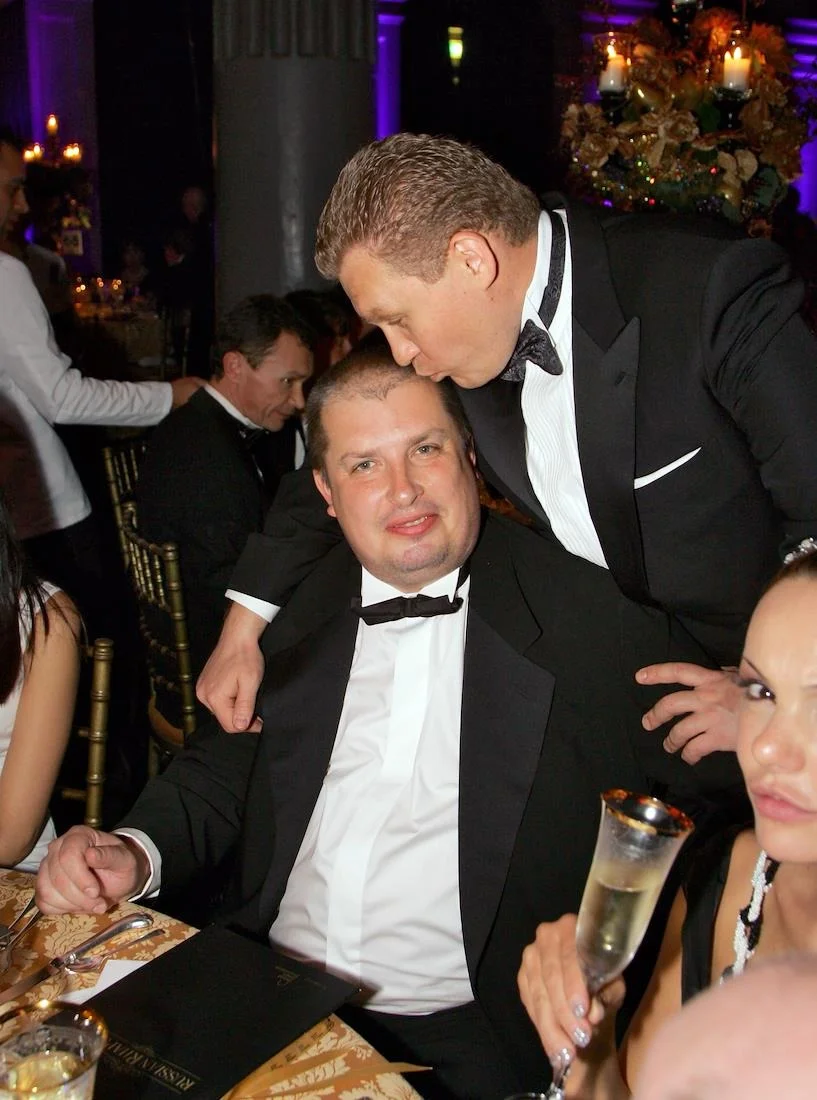
After the murder of Mineev, as a result of the implementation of a clever scheme, the Hong Kong Crazy Dragon came under the control of the Panamanian offshore FORUS Corporation. The investigation believes that the organizer and leader of the criminal group that carried out the raider attack and seizure of the Hong Kong company was German Gorbuntsov. In connection with this criminal case, he has been put on the international wanted list by Russia.
But this did not stop Gorbuntsov from becoming a serial witness in so-called “laundromat” cases - that is, in cases related to money laundering and transferring it outside the Russian Federation. For which several dozen owners, managers and ordinary employees of banks have already been convicted. And the foundation of all these criminal cases is the absentee testimony of German Gorbuntsov. Written and notarized in Cyprus.
In August 2022, I met with a fugitive banker in London and recorded a long interview with him. He also spoke about how his testimony was compiled, which formed the basis of almost all “laundromat” criminal cases.
“Before recording them, I talked with the investigator ten times,” admitted German Gorbuntsov. “Then the investigator said that this was all illegal, that my testimony needed to be certified through a lawyer, then it could be used in court.
But here's what's interesting. In none of these numerous “laundromat” cases, which were based on Gorbuntsov’s testimony in absentia, agreed with the investigator, Dmitry Zakharchenko is not only a defendant, he is not even in these criminal cases as a witness.
And this despite the fact that almost at the very beginning of the investigation into shadow banking activities, a document appeared in the criminal case materials, signed on July 22, 2019 by the deputy head of the “M” department of the FSB, General Sergei Demyanishnikov. This document is the “Resolution on the provision of the results of operational investigative activities to the body of inquiry, the investigator or the court,” in which some details of the work of the shadow part of the Novoye Vremya bank were revealed.
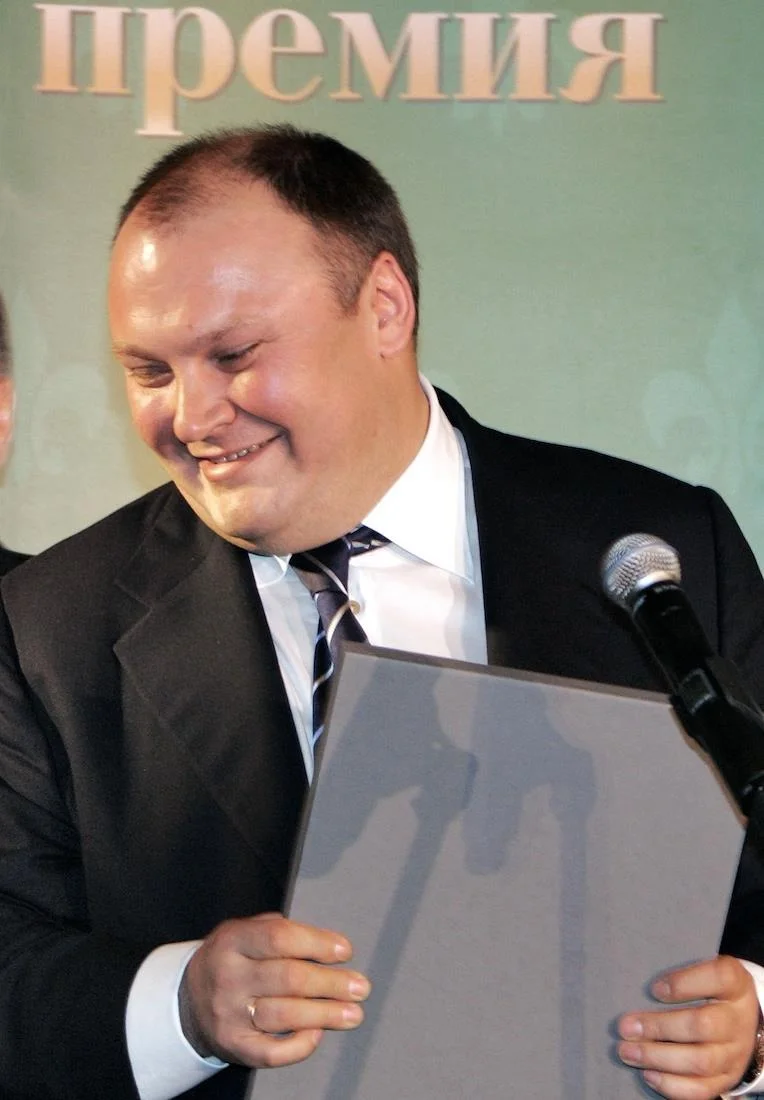
The bank was founded in 2008 by Ukrainian businessmen, among whom was Valery Razdorozhny. Later, Russians Ivan Stankevich and Dmitry Motorin appeared in the leadership of Novoye Vremya. So, in the document signed by Demyanishnikov, it is recorded that from 2012 to January 2019, profits from shadow banking activities, codenamed “Portal,” were distributed in the following proportion: Razdorozhny received 40%, Stankevich and Motorin 20%. And 20% of the profits from shadow banking went to Interior Ministry officer Dmitry Zakharchenko.
From this document it follows that Zakharchenko did not take bribes from bankers, but was their full partner and received a share of shadow banking activities. In December 2019, the already mentioned Gorbuntsov adhered to this version. In any case, in an interview with Forbes magazine, Gorbuntsov said : “Zakharchenko could receive money not for patronage, but as a full-fledged participant in the cash-out system.”
And another quote from the Forbes publication: “There was a system: powerful and complex, directly taking information from bank accounts and not inferior in complexity to banking programs. Hundreds of companies in Russia and abroad. Customer access, complex application systems,” Gorbuntsov describes the system in a conversation with Forbes. According to him, there was a whole network of cashing platforms, the transactions of which took place through an electronic system, and various banks participated in it. The site served “a lot of different streams.” Even Gorbuntsov had no doubt that Zakharchenko, as they say, “had his share.” It seems that this version was initially followed by the investigation.
We decided not to look into the “Portal”
On January 15, 2023, the Kommersant newspaper published a long interview with the deputy head of the Main Investigation Department of the Investigative Committee for Moscow, Vladimir Vazagov. The publication was called: “Dmitry Zakharchenko opened the “Portal” for the investigation.” And it began with these words: “How Colonel Dmitry Zakharchenko siphoned off billions to Ukraine...”
Everything seemed to be heading towards the fact that Zakharchenko would become a defendant in a criminal case under Article 193.1 of the Criminal Code (“committing currency transactions to transfer funds to the accounts of non-residents using forged documents”). With the addition of Article 210 of the Criminal Code - the creation and management of a criminal organization. But this scenario of events did not seem to suit someone very influential. Who, apparently, had serious concerns that in this case it would be necessary to understand and establish the origin and purpose of the deposits of billions discovered in apartments associated with Zakharchenko.
And the unwinding of this tangle could lead to very serious people. And it was decided not to delve into the origin of the billions. They were simply confiscated to the state. And Dmitry Zakharchenko was given the role of a seasoned bribe-taker who took big. Although the plot of the criminal case itself looks dubious.
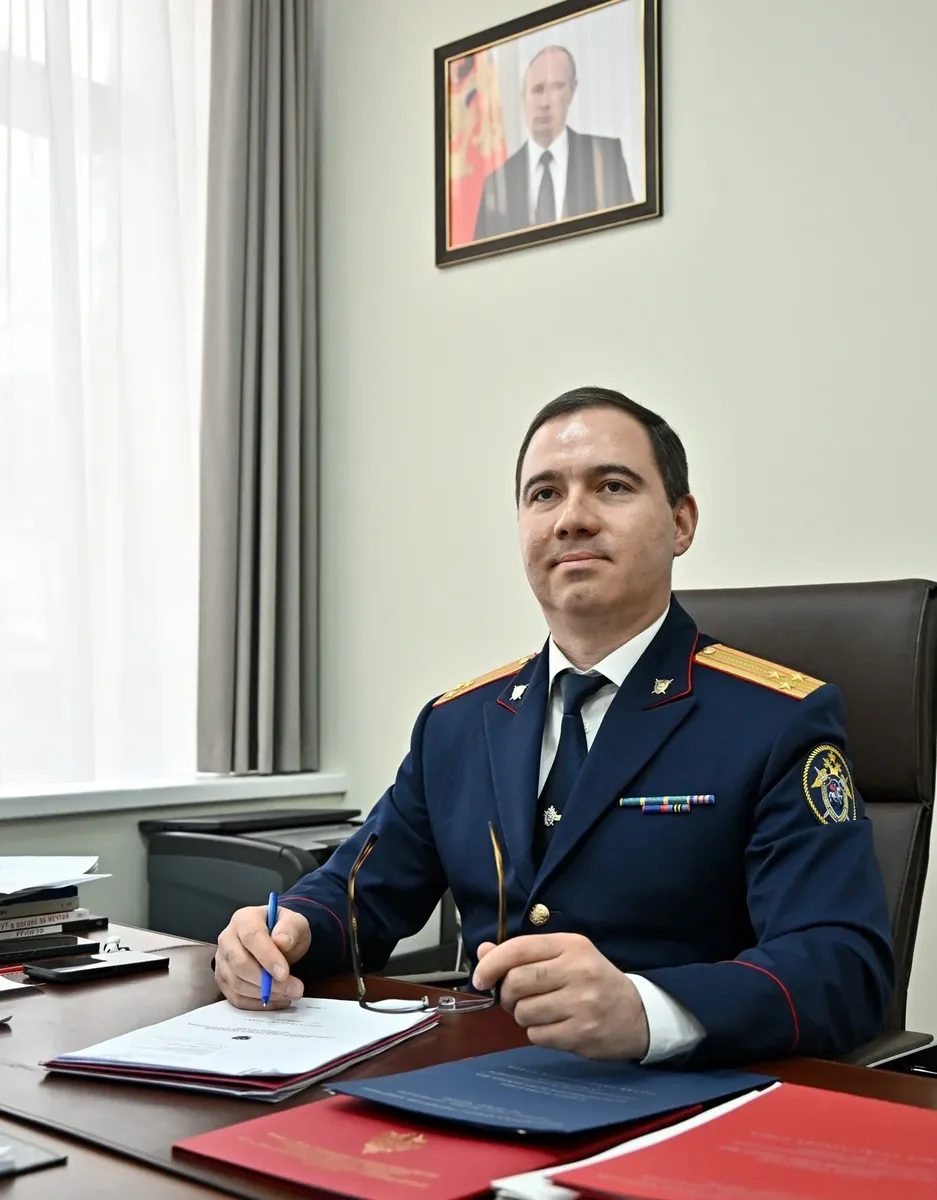
The fact is that back on July 9, 2013, Resolution No. 24 of the Plenum of the Supreme Court of the Russian Federation “On judicial practice in cases of bribery and other corruption crimes” was issued. This resolution explains in great detail that a bribe is a reward for actions or inactions that an official is obliged to perform without the criminal incentive of monetary gifts.
And in paragraph 4 of the resolution of the plenum it is stated that “...receipt by an official of remuneration for the use of exclusively personal relationships not related to his official position cannot be qualified under Article 290 of the Criminal Code of the Russian Federation.” For any federal judge from Kaliningrad to Vladivostok, the Resolution of the Plenum of the Supreme Court is a document of direct action and strict execution.
Police officer Dmitry Zakharchenko, in his official duties, dealt with crimes in the housing and communal services sector, then in the fishing industry and agriculture, then in the construction complex, then in the fuel and energy sector. That is, he had nothing to do with banking. And there was no way he could provide general patronage to crooked bankers.
Although, I repeat, according to information obtained by FSB operatives, Dmitry Zakharchenko was a full partner of the bankers. And following the norms of the resolution of the Plenum of the Supreme Court of Russia dated July 9, 2013, the court was obliged to either terminate the criminal prosecution of Zakharchenko for bribes, or return the case materials for further investigation. But the courts of both the first and appellate instances of cassation ignored the decision of the plenum.
“It turned out to be very useful for the bank”
Speaking about Dmitry Zakharchenko, one cannot help but say that he is an extraordinary person, not without talents. He graduated from school with a gold medal. At Kuban State University he studied and received diplomas simultaneously in two faculties - economics and history. He joined the tax police, and at the same time went to graduate school. In 2005, when he was 27 years old, he defended his PhD in economics.
By this time, he had transferred to the system of the Ministry of Internal Affairs, and soon after defending his dissertation, on April 28, 2005, senior lieutenant Dmitry Zakharchenko was transferred to operational work in Moscow, to the department of economic security of the Ministry of Internal Affairs. In 2013, he graduated in absentia from the Faculty of Law of the North Caucasus Academy of Civil Service, and just in time to receive his law degree, an order arrived to assign Dmitry Zakharchenko the shoulder straps of a lieutenant colonel. And just two years later, in 2015, when the officer turned 37 years old, he was awarded the rank of colonel ahead of schedule.
By that time, Zakharchenko had already settled down in Moscow, made acquaintances and began to work very closely with bankers. He turned out to be very useful to financial tycoons precisely because of his knowledge and extraordinary thinking. German Gorbuntsov also told me about this. In the already mentioned interview, he spoke about the circumstances of his acquaintance with Zakharchenko. That Zakharchenko was very useful to the banks that Gorbuntsov controlled.
— How did Dmitry Zakharchenko appear in your life? - I asked Gorbuntsov.
— Razdorozhny ( chairman of the board and main beneficiary of the New Time Bank. - I.M. ) arrived one day and called from the reception. And he says: “Hera, I’m here with one person. He will be very interesting to you. Let me come to you." “Well, come in,” I say. He came in and introduced me to Zakharchenko. I had no idea who Zakharchenko was...
— Well, then you and Dmitry Zakharchenko’s father flew to Switzerland to open a bank account for him, then flew to Cyprus.
“Yes, I flew, but that was later,” Gorbuntsov did not deny. — It was in the process.
- Why did you open accounts for him?
- The fact is that Zakharchenko was very useful for banks, because he sat with Motorin for hours and studied ( Motorin is a top manager of Incredbank, then the New Time Bank. - I.M. ). Motorin was then the deputy chairman of our bank. Zakharchenko taught Motorin how to answer requests correctly. Because half of the requests came from those who did not have the right to send them. He taught all this. Zakharchenko taught me to figure out where the custom request is.
— So you and Zakharchenko didn’t work particularly closely? — I clarify with Gorbuntsov.
- We talked to him. Occasionally. And Motorin just sat with him for hours. They sat, studied, studied.
— Why then did you fly to open an account or open a company in Cyprus, and not Motorin?
— Because at the bank, 80% of requests and checks simply went away. The relationship with Zakharchenko turned out to be very useful for the bank.
- That's understandable. Why did you fly to Switzerland to open an account, and not Motorin?
— When Motorin told me that Dima asked to open an account... No, not Motorin, but Stankevich, probably, said ( Stankevich is a top manager of Incredbank, later the bank “Novoe Vremya.” - I.M.) , I replied: “Let’s fly.”
- Couldn’t he fly himself?
— No, I couldn’t. To open an account in Switzerland, you need to have a recommendation and a relationship with the bank. They just don't open it like that.
— Didn’t Motorin and Stankevich have such relations in Switzerland?
- No, of course not.
Whatever one may say, even from the testimony of German Gorbuntsov, drawn up in absentia in Cyprus in agreement with the investigator and which he confirmed during an interview, it directly follows that Zakharchenko received remuneration from bankers for the use of his personal business qualities, and not his official powers.
Who let an officer with a “secret” go abroad?
Another important point. Dmitry Zakharchenko often flew abroad. The materials of the criminal case contain information about the police officer’s flights, for example, in April 2014.
On April 5, 2014, Zakharchenko flew from Vnukovo to Tel Aviv. On April 13, from the same Vnukovo I went to Munich. On April 28 I flew to Dubai. These were clearly not tourist trips. If only because each time Zakharchenko returned literally a few days later - and immediately flew abroad again.
It’s strange why neither the investigation nor the court raised the question: how did a lieutenant colonel (then) of the Ministry of Internal Affairs, who had a security clearance of Form No. 2, calmly cross the border? The fact is that, according to Article 24 of the Law “On State Secrets,” persons with access to classified information are restricted from traveling outside Russia. A foreign passport can only be issued to secret carriers with the approval of the FSB.
Moreover, in the spring of 2014, after Crimea, trips of Interior Ministry officers outside the country became even more complicated. Senior officers were given permission to leave personally by the Minister of Internal Affairs or his deputies. But these difficulties did not hinder Lieutenant Colonel of the Ministry of Internal Affairs Dmitry Zakharchenko.
What else is important. Dmitry Zakharchenko’s April voyages to Israel, Germany and the UAE in 2014 occurred at the same time when storm clouds gathered around the Main Directorate of Economic Security and Anti-Corruption of the Russian Ministry of Internal Affairs, and soon the thunder and lightning of a grandiose scandal erupted.
On February 14, 2014, the Investigative Committee of Russia opened a criminal case against senior management officials.
On February 21, 2014, by decree of the President of Russia, the head of the department, Lieutenant General Denis Sugrobov, was removed from his post.
On February 25, 2014, the deputy head of the department, General Boris Kolesnikov, was arrested.
Throughout March, arrests of officers from the Main Directorate of Economic Security and Anti-Corruption of the Russian Ministry of Internal Affairs continued.
- On May 7, 2014, Denis Sugrobov was also arrested.
Later, all those arrested were found guilty of creating a criminal community, numerous cases of abuse of power by inciting bribes and illegally lobbying the commercial interests of companies under their control.
And what about Lieutenant Colonel Dmitry Zakharchenko, who also served in this very Main Directorate of Economic Security and Anti-Corruption of the Russian Ministry of Internal Affairs? Nothing! At the height of the arrests of his colleagues in April 2014, he flies to Israel. He returns and immediately flies to Germany. Returns and heads to the United Arab Emirates.
What did Dmitry Zakharchenko do in Tel Aviv, Munich and Dubai? The materials of the criminal case, as well as the two verdicts against Dmitry Zakharchenko, do not answer this question. But two independent sources, one of which is associated with the Ministry of Internal Affairs, the second with the FSB, told me that during these trips Zakharchenko could open bank accounts. And huge sums could have been transferred to these accounts in Western banks operating in Tel Aviv, Munich and Dubai. Perhaps even significantly higher than the 9 billion in ruble equivalent discovered in September 2016 in apartments associated with Dmitry Zakharchenko.
I suspect that this money is still in foreign bank accounts. I assume that the operatives and investigators who handled the Zakharchenko case are well aware of this. That's why
The Ministry of Defense does not enter into a contract with the former colonel of the Ministry of Internal Affairs. The risk is too great that Zakharchenko will show up somewhere in another country...
Of course, there is an option to give the appearance of legality to the refusal to sign a contract. To do this, it is necessary to overturn the verdict in the second bribery case and give new impetus to the investigation into the role of the former colonel in the creation and operation of the so-called “Portal”. And since three of Zakharchenko’s accomplices, the organizers and leaders of this crime - Valery Razdorozhny, Ivan Stankevich and Dmitry Motorin - are outside Russia and are on the international wanted list, Dmitry Zakharchenko can be officially informed that due to the risk of his escape from the front line and reunification with his accomplices in the “Portal”, the Ministry of Defense cannot conclude a contract with him.
But such a scenario is unlikely. Because in this case, you will have to investigate the origin of cubic meters of money, almost ten years ago, in September 2016, found in apartments associated with a former colonel of the Ministry of Internal Affairs.