Belarus without VPN, with Zara and the KGB: why did Russians feel more comfortable there than at home? • Novaia vkladka • RIMA — Russian Independent Media Archive
Belarus without VPN, with Zara and the KGB: why did Russians feel more comfortable there than at home?
18+ This material (information) was produced, distributed and (or) sent by a foreign agent Media project “New Tab” or relates to the activities of a foreign agent Media project “New Tab” Author Nina Chertkova May 26, 2026 diaries read: 8 min.
I have been traveling to Belarus since my youth: my grandmother was born here, distant relatives live here, and it is also convenient to get here from Moscow and you can easily come here on the weekend. Now this country has become almost a symbol of freedom for some Russians: the Internet works fine there, there are stores of European brands and, in general, a calmer, friendly atmosphere. But I’m not very fascinated by this external well-being, and after the protests of 2020 and the stories of friends about how they ran away from riot police in Minsk and in what fear they lived for many months later, I especially can’t look at Belarus as a bastion of freedom. However, even with such introductory information, this country differs favorably from Russia in some ways.
In the “ Diaries ” section we publish author’s columns in which journalists share their own experiences. These are personal stories in which the nerve of time is felt. The time in which we all live now.
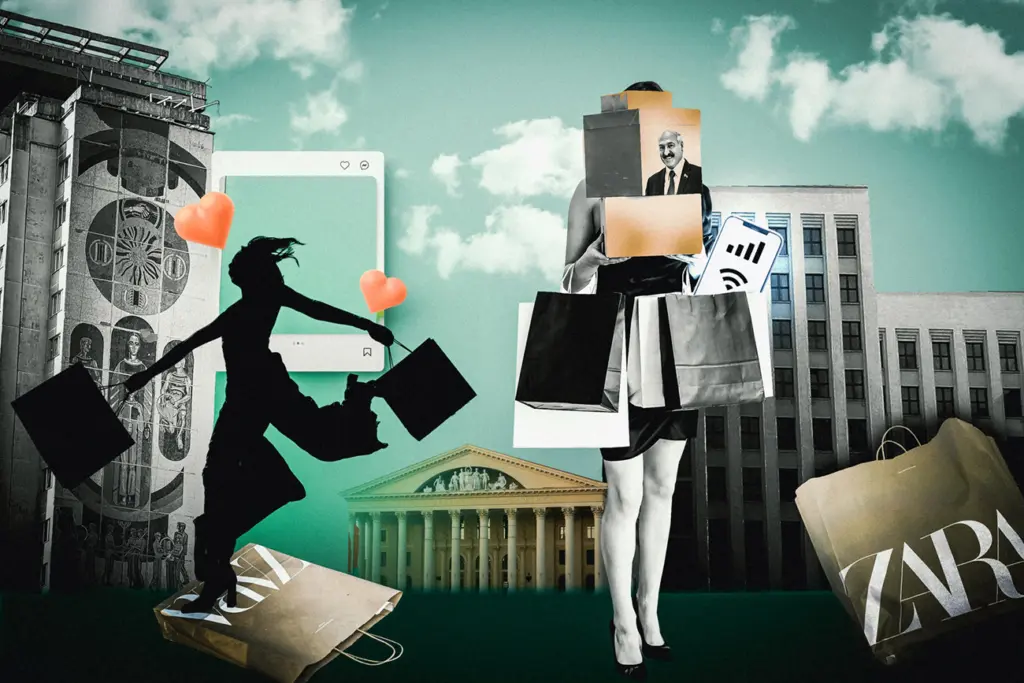
“Friends, if anything, in Belarus they sell alcohol 24/7, there is a legal casino, all social networks work and a VPN is not needed”; “7 hours on the train, and here we are shopping at Zara, Bershka, Stradivarius and having potato pancakes for breakfast”; “The same luxury trip for any Russian in 2026” - such reviews and ironic comments are increasingly being left on the Internet by Russians who travel to Belarus.
This year, the country has become the second most popular foreign destination for the May holidays for Russian residents. People go there to buy clothes and quality food, to walk around well-kept cities, and now they have added another “bonus” - mobile Internet without blocking.
I’ve been to Belarus ten times, and this year I also went there for a couple of days during the May holidays. We couldn’t find any decent hotels in the center of Minsk for less than ten thousand rubles per night: they were dismantled at the end of winter. The young man and I spent the night in more affordable Orsha, a city two hours away from Minsk by train.
Subscribe to the New Tab channel in Telegram. There we talk about how people, animals, and plants live in the regions of Russia
Probably, if you get to the territory of Belarus from the moon, it will seem that this is a very free country. The Internet is working, shopping is going on in stores, people are smiling.
Despite May Day, there were few people on the streets of Orsha. A slight revival was observed only at the market, where seedlings and a dozen varieties of potatoes for planting were sold. We went to a shoe store, I tried on several pairs of locally made shoes - each cost only about three thousand Russian rubles.
— Here, such shoes would cost twenty! Why can Belarusians sew shoes from genuine leather for reasonable money, but we cannot? - I was indignant.
People in Belarus seem calmer and more welcoming compared to Russia. No one is in a particular hurry or fuss. On the wild bank of the Dnieper, overgrown with cherry trees and dandelions, a drunk man approached us (and there were no drunks on the streets, despite the holidays). “Now he’ll ask for money or cigarettes,” flashed through my mind. But the man said hello and wished: “God bless you guys!”
My friend Pavel from St. Petersburg has felt a “breath of fresh air” in this country more than once: since 2022, he has visited a dozen Belarusian cities and believes that he can breathe more freely there. In Belarus now you really feel like this – at least in the physical sense.
The train stations can be accessed directly from the parking lot or from an underground passage. You won’t be forced to pile a heavy suitcase on the belt and shake out change from your pockets: there are no metal detectors or gloomy security guards here. In Moscow, if I go to the subway with a big shopper, I’m already shaking a hundred meters before the entrance: I know that a riot is about to begin. There is no such thing in Belarus. They don’t poke you in the face with a surveillance camera on every corner and don’t offer you payment using biometrics in supermarkets and cafes.
During our two days of travel we did not meet a single policeman. Pavel says: he is reassured that in Belarus they wear a different uniform and are called “police”. “It’s like it’s different already, they’re not like ours,” he explains.
There is no aggressive political PR on the streets in Belarus either. Even in the government quarter of Minsk next to the parliament there is no symbolism. In my opinion, there are fewer decorations for May 9 this year, although posters with the memorable date hang on the main streets. “Somehow there is less imposition on the street. The only propaganda is red and green flags, but they are not annoying, unlike banners with crazy amounts for concluding a contract [in Russia],” says Pavel and adds. — As I understand it, ordinary people in Belarus are still being fucked off. And our ordinary “outside politicians” are expected to go and die for the regime. It’s as if it’s enough to just be silent. Now it feels like freedom.”
In Belarus you can feel the closeness of Europe: there are five hundred Catholic churches in the country, and services are held there in Polish. And one day my friend Pavel heard how in the Minsk church they were praying for their neighbors, Russia and Ukraine, to come to their senses.
There were much more people on the streets in Minsk than in Orsha. It’s understandable - the capital. From the very morning, Russian tourists gathered in groups in the Old Town and followed the guides in a line. The line at the popular cafe of national cuisine “Vasilki” spilled out onto the street and curved into an alley - we had to eat potato pancakes elsewhere. Minsk was buried in flowering trees, bright red tulips bloomed near the luxurious KGB building on Independence Avenue.
I bought Belarusachka marmalade candies - this is my traditional gift from Belarus. On the box it is written: “agrestavy tsukerki ў shakaladze.” "Agrest" - gooseberries, "tsukerki" - sweets. I like the Belarusian language, and it’s great that now they are trying to revive it. In Minsk we saw posters in which the state calls on residents to remember “dear ones, svayo.” They are encouraged to speak their native language on Fridays, cook from local products and wear clothes from local brands. For almost a hundred years, the main language in the country was Russian: my Minsk grandmother, born in the late 1930s, knows fewer words in Belarusian than I do.
It was with my grandmother that I visited Belarus for the first time in the early 2000s. Then everything here seemed like something out of a good Soviet movie. Now I understand: after 20 years, cinema has not ceased to be Soviet, but has become more dull.
Clean streets, neat lawns, a calm environment - I really like all this in the first couple of hours. Then you catch the feeling: there is some kind of cardboard in it.
— On the streets everything is very clean and even, no stickers [on bus stops or the walls of houses]. But young people don’t particularly express themselves in any way, there are no nefors, this is how my boyfriend, who visited Belarus for the first time this spring, describes the atmosphere in Minsk.
A middle-aged tourist bus driver from Orel, with whom I talked in the evening in an Orsha hotel, has been taking tourists to Belarus for several years and believes that “there is more order here” and the roads are much better.
But no matter how hard you try, you won’t forget who is behind this “order.” Near the building of the Jesuit College in Orsha, we saw an information stand with historical information. In the adjacent paragraphs of the text, Emperor Napoleon and - suddenly - Alexander Lukashenko, who came here some year, are mentioned. There is also a mention of Lukashenko on the altar of the Holy Spirit Cathedral: under one of the icons there is a signature that this is a gift from the president. The spirit of Lukashenko hovers invisibly throughout Belarus, and it becomes alarming when one remembers the brutal crackdown on protests in 2020.
With the Belarusian KGB, near which the tulips are now blooming, I, one might say, have my own scores to settle: at the end of May 1945, my great-grandfather Ivan was arrested in Minsk. He was accused of treason and given ten years in the camps. My grandmother doesn’t know the details of this story, but several years ago I made a request to the KGB of Belarus. They told me that my great-grandfather “from the first days of the occupation” began to help the invaders and even once saved the life of a German driver. In the 1950s, my great-grandfather returned to Minsk without two fingers on his hand and died in the 1990s. I know that people living in the occupied territories were arrested in droves after the war. Was the great-grandfather really guilty? This is a secret: he was not rehabilitated, I was denied access to the case materials.
Follow New Tab on X (Twitter). There we write about how the regions of Russia live. We're still mumbling and swearing
A ten-minute walk from the KGB building lies Pishchalovsky Castle - a beautiful old building, which since its construction in the 19th century was a prison, and in the Soviet years it became pre-trial detention center No. 1. Over the past 30 years, about 400 people have been executed here, the last time in 2022. Belarus is the only country in Europe and the post-Soviet space where the death penalty still exists. Is it possible, knowing this, to enjoy drinking Aperol on the next street? Will the presence of Instagram (the activities of the company Meta, which owns Instagram, are prohibited in Russia) without a VPN overshadow this fact?
Not far from the execution prison is the Red Church of Saints Simeon and Helen. I always liked it: at Christmas the temple was decorated with live spruce branches, which gave off a breathtaking aroma. Since September 2022, the church has been closed, according to the official version - for repairs after a fire. However, many Belarusians believe that this is part of the repression: in the summer of 2020, protesters took refuge in the church.
The gigantic empty square in front of the Palace of the Republic evokes not a feeling of spaciousness, but a desire to shrink and disappear from view. I remember this place from the news. In 2011, a “silent revolution” took place in Belarus: people came here and silently clapped their hands without any slogans or posters. This is how they expressed their discontent in a country where it was impossible to speak loudly. After the summer of 2020, everything calmed down again.
On the way back at Minsk airport, Russian tourists buy cranberries in powdered sugar and Belarusian parmesan. Some rustle paper bags with recognizable inscriptions Stradivarius and Bershka. The aroma of perfume is in the air: this is also sold in Russia, but traditionally it seems that everything is better abroad.
Instead of the allotted hour, we were flying for almost two hours: the “Carpet” plan was introduced at Sheremetyevo and planes were temporarily not accepted at the airport. Upon arrival, my neighbor, looking at her mobile phone, is surprised:
— What about the Internet?
I explain that it is blocked for Russians returning from abroad - you need to wait for an SMS from the operator, follow the link, and the Internet will appear.
I would like to believe that someday the quality of life in Russia will increase so much that unblocked Internet and cheap clothes from the mass market will no longer be the limit of our dreams.

 Subscribe to the New Tab channel in Telegram. There we talk about how people, animals, and plants live in the regions of Russia