
Translated material
Fleeing from the protection of the Kremlin
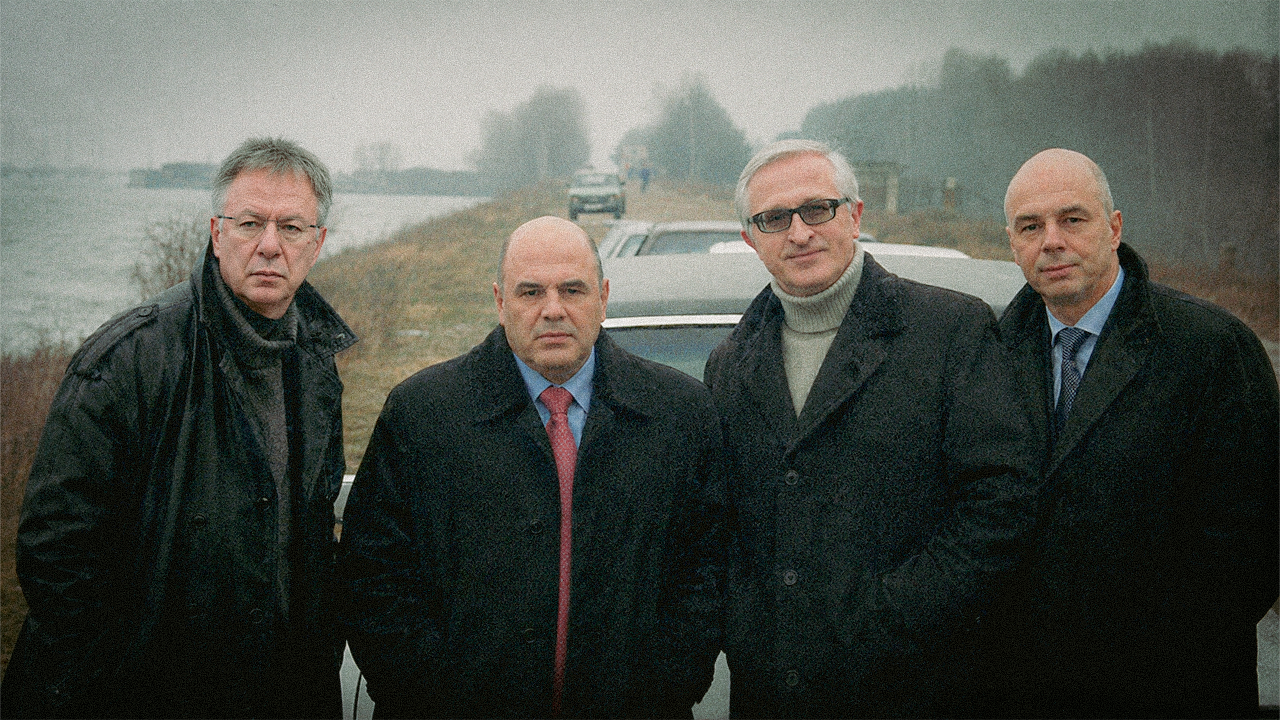
Entrepreneurs are leaving Russia, Shokhin will take care of those who remain
Billionaire Alexander Galitsky left Russia. This happened shortly after his fund Almaz Capital Partners was recognized as an “extremist association”, as well as the seizure of property worth 8 billion rubles from Galitsky.
According to The Bell, after the annexation of Crimea, Almaz Capital stopped investing in Russian projects and switched to Ukrainian ones. Almaz Capital Partners is an international venture fund headquartered in Silicon Valley.
Galitsky’s departure came as a surprise even to his team, writes RBC. It is known that the businessman left Russia through Belarus using a Dutch passport, despite interim measures.
Doing business in Russia is becoming increasingly difficult. Since 2022, after the departure of Boris Titov, the post of Commissioner for the Protection of the Rights of Entrepreneurs has remained vacant in the country.
And now the Kremlin has decided who will take the place of the business ombudsman. Vladimir Putin chose, apparently convenient for the system, Alexander Shokhin, the head of the Russian Union of Industrialists and Entrepreneurs (RSPP). As Dmitry Peskov noted, the authorities have a plan to reform this human rights institution.
We discuss why even the richest people cry in Russia in the “Facing the Event” program with sociologist Sergei Erofeev and the publication’s deputy editor-in-chief The Bell by Petr Mironenko.
Entrepreneurs are leaving Russia, Shokhin will take care of those who remain
by Radio Liberty Text copied width px height px The URL has been copied to your clipboard
No media source currently available
0:00 0:28:59 Download media file
On the eve of Alexander Galitsky’s departure from Russia, the Moscow City Court refused to overturn the decision to recognize his activities as extremist and confiscate property worth 8 billion rubles. In court, Galitsky denied financing the Ukrainian Armed Forces and called himself a “victim of a conspiracy” and a “patriot.” CNews sources say that before leaving Russia, Galitsky withdrew funds from his Gazprombank account every day.
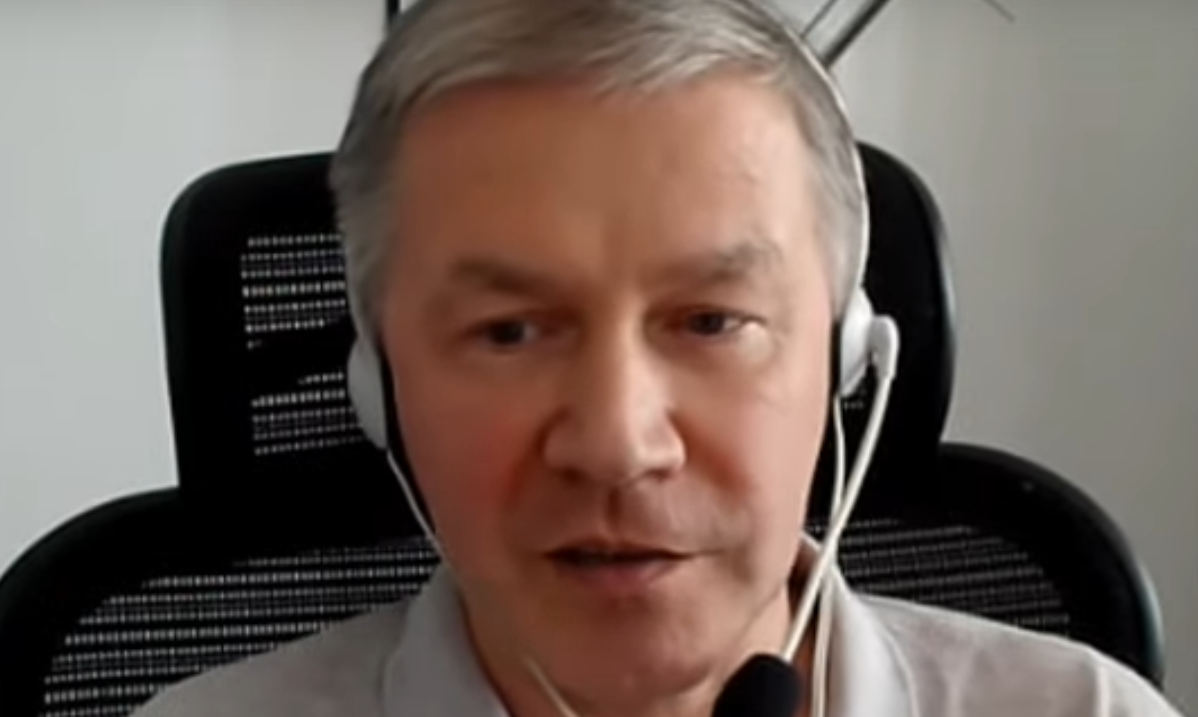
Sociologist Sergei Erofeev spoke to Radio Liberty about the political risks of entrepreneurs and the role of big business in modern Russia:
The system let Alexander Galitsky go because “concepts” work in it
- The system released Alexander Galitsky because “concepts” work in it. We must remember that what has emerged in Russia is not a simple capitalist state, but a mafia one. All assets in the country are very much controlled by the core of the mafia state. This core is the center of the concentric system. The closest ring of surroundings, the next ring and so on. Galitsky, like many other people incorporated into this system, belonged to one of these rings. Naturally, those who rule everything in this country have a certain scale. Some people can do both. The next person can only do one thing, while others can’t do anything at all. In the very center there are those who can do almost anything. But everything is possible only for one person, who is the very center of this mafia core and personifies an extremely personalized control system.
So, Galitsky had certain privileges and continued to have them even at a critical moment for himself, because, most likely, he was really allowed to leave and even take something with him. This fits into the framework of the concepts of “boy culture,” which is the underside of mafia control. As for the course towards the privatization of large Russian assets, Putin is playing a certain game here. The war against Ukraine is not just a war, it is a cognitive, information war. The propaganda system must do everything to create the impression that Putin is strong, that he is supported by his population, that his economy is, if not in excellent, then in quite decent condition. But at the same time, we also see that Putin is not doing well at all. He has very bad staffing at the front, there is a shortage of labor resources in the country, and there is a demographic decline that has not happened for a very long time. Of course, the economy is at risk.
All actions taken by the authorities are done in order to provide some kind of safety net, to manage to continue the war
All actions taken by the authorities are carried out in order to provide some kind of safety cushion, manage to continue the war and at the same time not plunge the country into the abyss of complete economic disaster. A lot is being done for the sake of this; it is precisely for this reason that business is not completely killed, although we constantly hear that business is now very bad. But the country, in principle, maintains the capitalist system. We must understand that the Putin regime is not ideological, and it does not carry out the experiments that were started in our country 100 years ago, after the October Revolution, when private property was radically eliminated.
Russia is a capitalist country where there is a cult of consumption for different concentric circles and for different segments of the population. When we hear about the nationalization of assets, we understand perfectly well that this is not at all the nationalization that the Bolsheviks were engaged in. This is a capitalist world, and whatever is done under the pretext of nationalization is done in the interests of the narrowest, most privileged circle of capitalists. Of course, there is not enough money in the country. But the very last money, if everything goes really badly, will serve the interests of the mafia core of this system, sociologist Sergei Erofeev is sure.
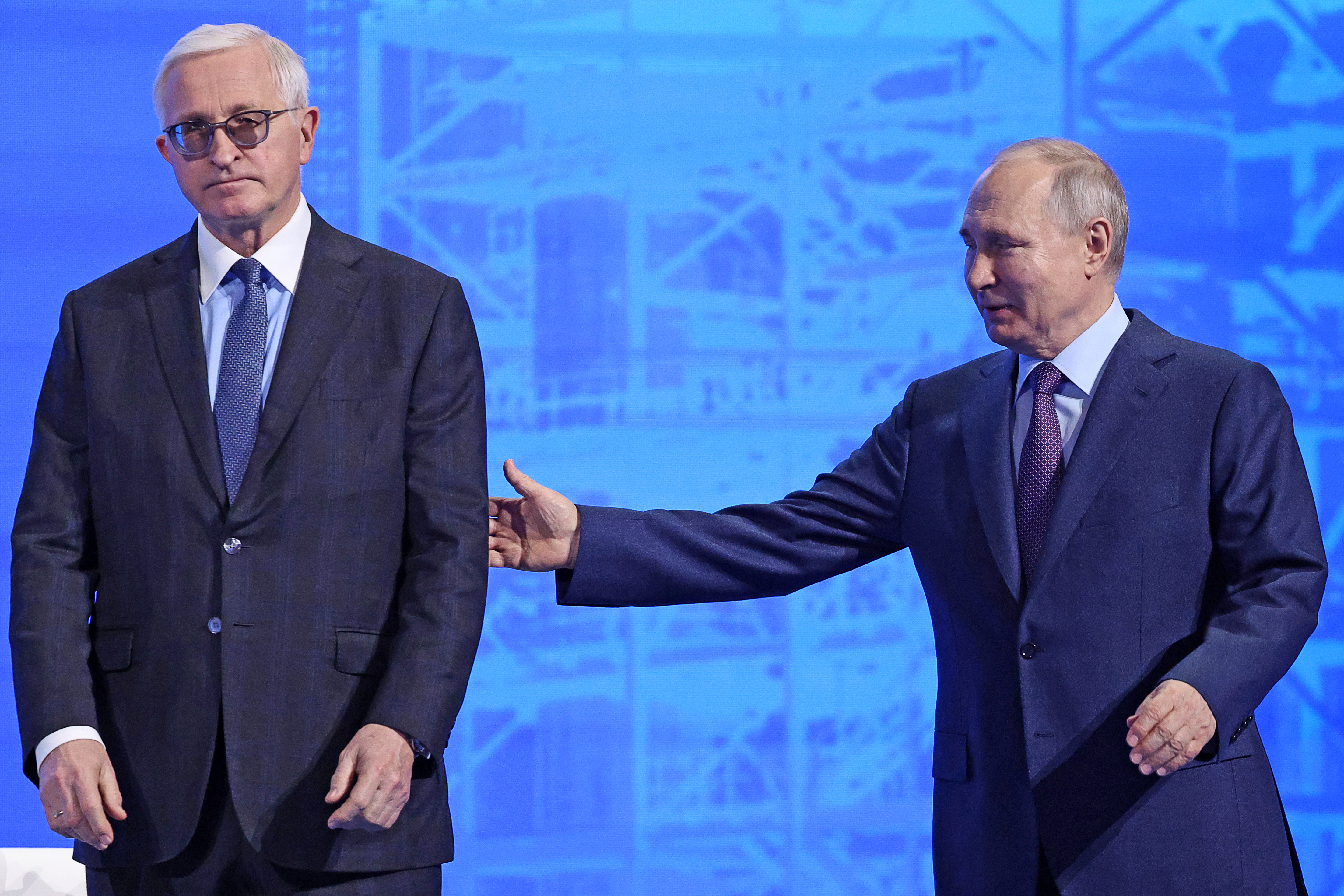
President of the Russian Union of Industrialists and Entrepreneurs (RSPP) Alexander Shokhin will become the new Commissioner for Entrepreneurs' Rights. At the same time, he will remain president of the RSPP. As Kremlin spokesman Dmitry Peskov said , Shokhin's new position will be more public than state.
What role does Alexander Shokhin play in the structure of the Russian economy, and how exactly will he protect the interests of large Russian businesses, says sociologist Sergei Erofeev :
Alexander Shokhin does not belong to the mafia core, but the mafia core cannot exist on its own
- Alexander Shokhin is one of the characteristic co-opted figures in this structure. That is, he does not belong to the mafia core, but the mafia core cannot exist on its own. It feeds on the juices of the inner circle, people like Shokhin, like big businessmen, because business in post-Soviet conditions can do what the state could not do in the Soviet Union: provide jobs, provide its employees with some kind of social guarantees, and so on. Shokhin belongs to this circle of co-opted people who know how to play both games. He is a man with rich experience, a man from the country's leadership in the 90s, just like Sergei Shoigu.
Without this capitalist economy, the Putin system will not survive
That is, these are people not from Putin’s inner circle, but Putin and the Putin system cannot do without them. Because they still guarantee some rules for running a capitalist economy. Without this capitalist economy, the Putin system will not survive. In principle, it exists under the conditions of some minimal democratic procedures, because without elections there was no Putin’s power, there is no and there will not be. And it cannot exist without capitalist social relations and the corresponding benefits that this brings to power. Putin's power cannot exist without boyish and mafia values. These are the supports for this system.
As for the request for rules from business, this is what began to appear
among ordinary urban people after the swamp protests of the early 2000s. People didn't just want something from the state, they wanted the state to work according to the rules. Of course, our business is much more organized, in some ways it is ahead of society in terms of organization, but in some things it lags behind. He agreed that a war had begun, although no one wanted this war, of course. Everyone was horrified by this and continues, basically, to lose significantly from this in a variety of ways. But the situation is becoming even more complicated, there is no progress at the front, the country remains isolated, taxes are rising, investments are becoming less and less, and so on. Here this business can also quietly moan that it is necessary to live “by the rules.” This was to be expected, Sergei Erofeev is sure.
Read Freedom on Telegram Make Freedom a priority source on Google  Install the Mobile application
Radio Liberty