
Translated material
“Significant event” or “imperial speech”? Controversy about Zvyagintsev's performance
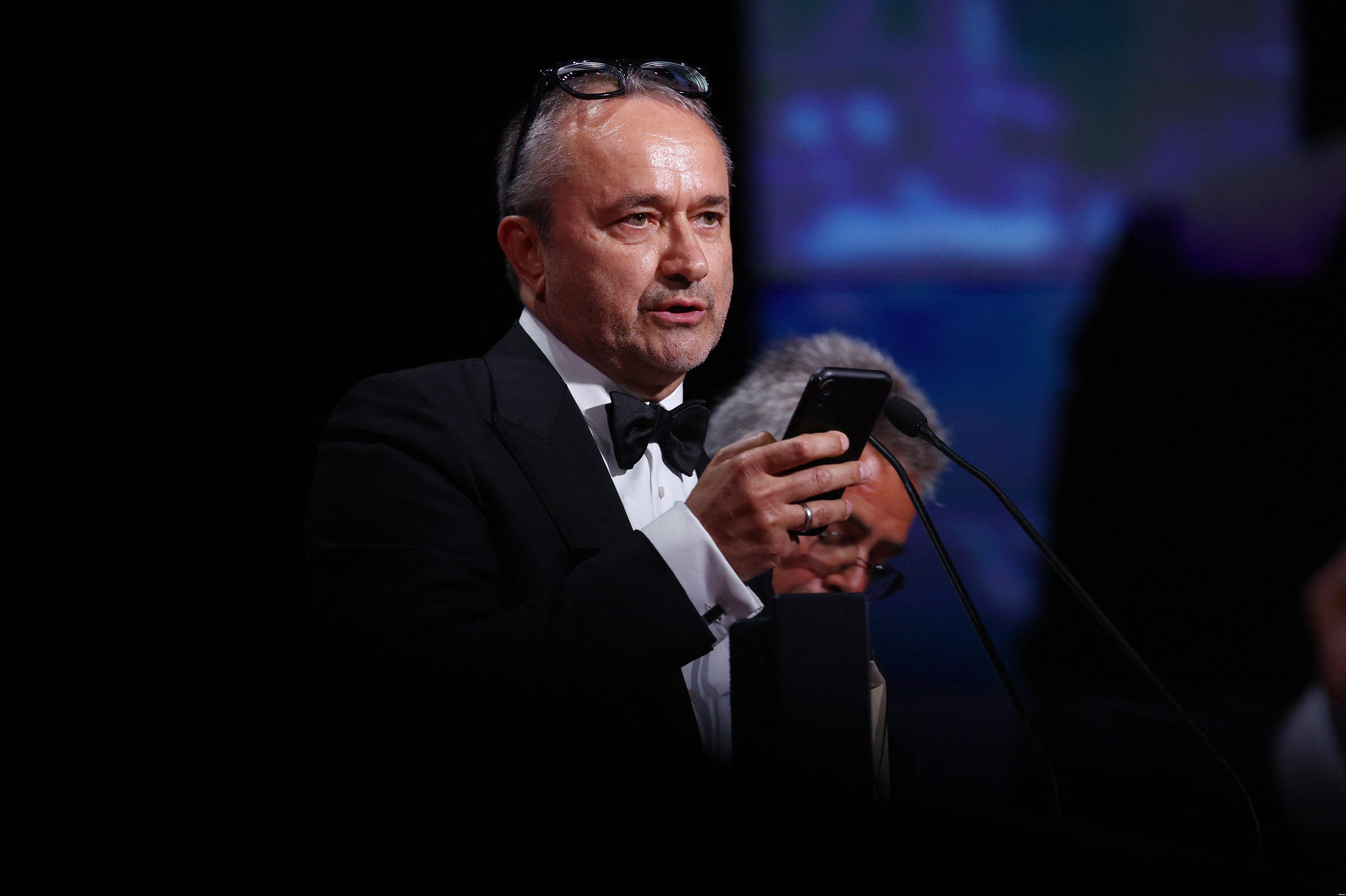
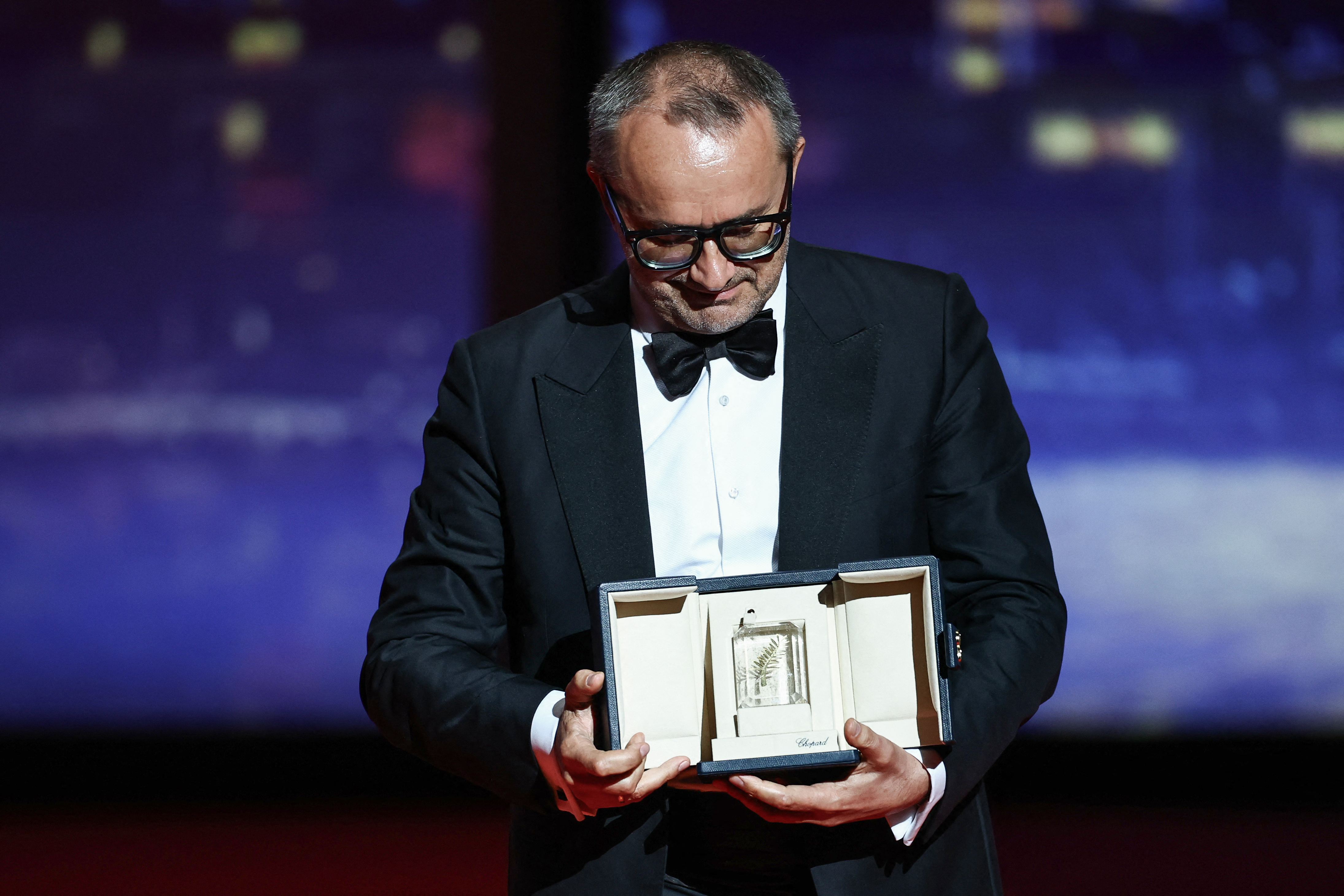
Following the film “Minotaur” by Andrei Zvyagintsev, social networks are discussing his speech when receiving an award at the Cannes Film Festival and the subsequent spat with Vladimir Putin’s press secretary Dmitry Peskov.
In his speech, Zvyagintsev appealed to Putin to “stop the massacre,” that is, the war against Ukraine. Peskov said that the director “does not have the right to vote” for such calls, since he did not condemn “the bloody massacre of the Kyiv regime in the Donbass.” Zvyagintsev accused Peskov of “driving away from the topic” and again repeated his call to Putin.
This story left no one indifferent: some fully support the director, others accuse him of treason, and others are outraged that Zvyagintsev’s appeal did not contain a word about the collective guilt of Russians for the war.
The swear word was replaced with asterisks by the editors. Some posts have been shortened.
A significant event that will go down in history. Already entered.
Pardon the pathos, but this is a rare case when it is justified.
The 79th Cannes Festival (for me, it seems, the 38th) turned out to be one of the most stressful and nervous. Because, as it turned out, despite my hardening, I still have a hard time with injustice, bullying and rudeness, even if they are not directed at me and my loved ones.
I don’t remember so much slop that poured down on one of the main laureates of the competition: never before, and here it is again. I'm afraid that if Zvyagintsev grabbed the Palme d'Or, it would lead to physical violence: words of hatred tend to materialize.
I’m not talking about professional propagandists and frustrated Zetniks like Olshansky: you wouldn’t expect anything else here. We are talking about those whom I considered intelligent people and even friends – at least on Facebook. Today there are a couple of dozen fewer of them: it was necessary to carry out a purge in the “harsh party ranks.” And not even out of principle, but out of disgust for uncleanliness.
As usual in such cases, there were also changelings. His colleague director X, who was already considered hopelessly mired in the fruitless struggle of “those who stayed” with “those who left,” found the strength to support Zvyagintsev. And colleague Y, to whom we once provided considerable assistance in a difficult situation, angrily called me to account: allegedly I made Zvyagintsev “white and fluffy,” while he... then followed the text in the genre of systemic nonsense.
The “Zvyagintsev complex” has haunted many filmmakers and some moviegoers for a long time, since the Venetian triumph of “The Return” in 2003. I won’t forget the upturned, mournful faces with which some of my fellow compatriots left the award ceremony. And one of them was so upset that she ran out of the hall in tears, right at the feet of those sitting in her row. Zvyagintsev did not belong in either the Moscow or St. Petersburg film environment; he was perceived as an upstart, who had flown into the normalized clan film industry from nowhere. His success was perceived jealously, each new picture was eagerly awaited, often with malicious joy. And each, as luck would have it, became another step on the ladder of success and world recognition. And his illness and magical “resurrection” became further proof of what seemed obvious to me from the very beginning: Andrei had a mission that he must fulfill.
Such people are always surrounded by mythology and fables. Let's leave aside the notorious "Russophobia". I will comment only on two erroneous opinions. First: Zvyagintsev is Tarkovsky’s epigone. Nonsense, the only thing that brings them together is that they both had their own mission. But here I’d better refer those interested in this topic to my book “Tarkovsky and We”, an entire chapter “Ivan’s (and Andreev’s) childhood. Tarkovsky and the “end of history” is dedicated to it.
The second typical mistake: Zvyagintsev “does not like people” - in contrast to those directors who love them very much (especially eating them for dinner). And I see that even in “The Minotaur” he sympathizes with the main characters (no matter how notorious conformists and depraved cynics they may be) who find themselves in the Cretan labyrinth. Not to mention sympathy for those who are deceived into joining the war. Well, as for the fact that the film is an anti-war statement, I will stand to the end, no matter what anyone and from what position challenges this.
With real friends - and not those illusory ones with whom you are friends in the virtual world - there may be different opinions and points of view on all sorts of occasions (even, scary to say, on Zvyagintsev), but with them we will never lose a common language.
Some commentators believe that Zvyagintsev achieved his main goal: they are confident that Putin heard his appeal.
Here they asked me to speak about Dmitry Peskov’s comment about Andrei Zvyagintsev’s statement at the Cannes Film Festival.
Let's put it in a context known to me.
1. President Putin was reported - and this is a fact.
2. TV channels received a “recommendation” to silence not only the Cannes speech, but also the fact that Andrei Zvyagintsev’s film “Minotaur” received the Grand Prix at the Cannes Film Festival - and this is also a fact.
President Putin was reported - and this is a fact
3. I absolutely disagree with Dmitry Peskov’s reasoning that since Zvyagintsev did not talk about the bombing of Donbass, he has no right to talk about “ending the massacre.”
No one has canceled freedom of speech.
Zvyagintsev’s speech is precise, correct and, I assure you, effective in the sense of getting to the point.
Putin's orderly Peskov said that he would not convey to his master the contents of Andrei Zvyagintsev's speech. ... It’s absolutely obvious that Putin knows about the award, and he got acquainted with Zvyagintsev’s speech, and even probably hissed something nasty with his crooked mouth.
The bulk of criticism against Andrei Zvyagintsev comes from Ukrainians and their most uncompromising supporters in the Russian emigrant environment.
... A passionate, outsider, or extremely infantile person could probably perceive this speech as a strong humanistic gesture.
I believe that this is not humanism, but a public demonstration of distorted imperial logic, which even those Russians who do not live in Russia and no longer depend on either the Kremlin or Russian reality are infected with. Even their protest against the war again turns into a request to the king.
First of all, I was shocked by the cynical formula about “on both sides of the contact line,” which actually turns Russia’s war against Ukraine into a symmetrical human tragedy without a clearly named aggressor.
Friends, good Russians, are you all right in your head? What are both sides? If this is still not clear from the example of someone else’s war, imagine it from the example of your own family. Before your eyes, your children are killed, your wives and mothers are raped, and a person with moral authority takes the stage in Cannes and says that you and the rapist - like two sides of one tragedy - equally dream that everything will finally end. How does it feel? Humanistic enough?
And no, this is not an innocent humanistic phrase, not a metaphor or a mistake. Andrey Zvyagintsev knows the value and meaning of words.
This is such a convenient form of blurring responsibility, when instead of Ukraine a geographical line appears, instead of a Russian attack there appears an abstract meat grinder, and instead of a political crime there appears a common pain in which everyone seems to be equally unhappy.
In such a construction, one can sympathize with everyone, but that is why it is impossible to say exactly who came to kill, who is defending, who is occupying, who is destroying and who is responsible.
Andrei Zvyagintsev really wanted to condemn the war, but structured his speech in such a way that everyone except Putin disappeared from it again.
He did not name the victim, but left the name of the one who kills.
He did not name the victim, but left the name of the one who kills
Ukraine has disappeared, Russian society has disappeared, the army has disappeared, the performers have disappeared, the propagandists have disappeared, those who remain silent, support, adapt and continue to live next to the crime have disappeared.
But the most important thing in his speech is that Putin in it is not the accused, but the last resort of mercy. That is why this speech does not destroy the vertical, but transfers it to the stage of the Cannes Film Festival. In this formula, it is “Mr. President of the Russian Federation” who is the center of war, death, hope, peace and the future.
Imagine that Charlie Chaplin in 1940 would have come out not with an appeal to people and soldiers, but with a request to “Mr. Reich Chancellor Hitler” to stop the massacre. Imagine that he would not name Nazism, would not name the victims, would not name the occupied countries, but would say that millions of people on both sides of the front simply want peace. This would not be art against tyranny, but a cultural capitulation to it.
Zvyagintsev’s words were not the speech of a free person against war, returning responsibility to people.
This is not even high civic courage, but a very convenient, very Russian prayer of an educated subject to the ruler with a request to be less cruel.
A real speech by a Russian director about the war against Ukraine should begin not with a request to the ruler, but with an acknowledgment of responsibility to Ukraine and an appeal to Russian society.
She would have to say that it is Russia that is waging war against Ukraine, that Ukrainians are not an abstract side of the contact line, that Russian culture has no right to hide behind subtle metaphors while the Russian army kills and people in Russia learn to live with crime as a background.
Protesting against violence cannot sound like a submission to the one who organized this violence. At the time of a historical crime, art should not beg the tyrant and murderer for humanity, but should return the name to the victim, responsibility to society, and truth to the crime.
Now we will watch live the imperial iconostatic egocentric culture in action:
how even from the most profound, hopelessly tragic, ruthlessly honest art, the Russian public of consuming everything in its favor will be able to make its own achievement, promote itself, throw a party and a holiday and hang another medal on its chest, although after such a film, it would seem, one can only sprinkle ashes on one’s head and be horrified by the minotaur in one’s own bathroom mirror.
And no one thought to just kneel
And say (...) that in a mediocre country
Even bright feats are only steps
Into endless abysses...
A country of facades, simulacra and parties for export. Where every tear of even your own child is not a reason for repentance and revision, but an asterisk on the fuselage.
And behind them is an abyss without a bottom.
“Only you can stop this massacre, Mr. President of the Russian Federation,” Zvyagintsev said from the stage during the award ceremony.
With his appeal to Putin at the Cannes Film Festival, without accusing him of anything, Zvyagintsev showed the obvious inferiority of the so-called “Russian liberals in exile.”
However, we have already seen this in the example of their “genius” I. Brodsky, whom many (and, unfortunately, not only of them) still pray to.
There were several explanations for such different reactions to Zvyagintsev’s speech.
And once again about Zvyagintsev’s speech. The difference in its perception between Russians and Ukrainians is very indicative.
For the majority of Russians who do not support the war, this is a bright and bold anti-war statement, an appeal appropriate for the Cannes stage, not a request, but a demand filled with unconditional dignity.
For most Ukrainians, this speech looks completely different. They note that Zvyagintsev politely refers to the dictator and war criminal as “Mr. President.” That he calls on Putin, who is not named, to end the massacre, without stipulating that he himself started it. That the mention of people “on both sides of the contact line” essentially equates the victim with the aggressor. From the Ukrainian point of view, this speech looks like a petition to the Tsar.
Just don't ask me how it really is. This is the case when “the matter itself” does not and cannot exist, because we are in the sphere of value judgments, and not verifiable facts. As they say, everyone chooses for themselves.
Friends, I thought a lot about Zvyagintsev’s speech in Cannes. He didn't say what he didn't say. And it’s strange that in 2026 someone still doesn’t understand this
— Andrei Zakharov (@skazal_on) May 24, 2026
Zvyagintsev, in my opinion, did well for speaking out against the war, but how clearly last night with the bombing of Kyiv demonstrated the futility of the demands of people of art addressed to Putin to stop this war. The punks from the back alley understand only the language of force, any words other than real threats to the punks - blah blah blah.
BUT - those who scold Zvyagintsev seem to forget that his speech is an appendix to an anti-war film, but its impact not on Putin, of course, but on the consciousness of viewers around the world can play an important role in shaping the opinion of this or that person (including a Russian) about the war.
Shame on Putin's state, glory to Ukraine!
I am very glad that Andrei Zvyagintsev made a film about Russia during the era of great evil. Until now, it seems, no one had dared, but he took it off. I hope that through the jammers and wheezing, Russians will have the opportunity to look into this mirror - and be horrified, as happened with all of Zvyagintsev’s films.
Beauty is in the eye of the beholder, so is love. There are many detailed, large-scale complaints about the wording of the director’s speech on the Cannes stage.
The wording is probably really not the best. But you cannot evaluate words by taking them out of the context of the individual. Andrei Zvyagintsev is one of the most consistent opponents of the Russian government and the Russian reality in which a person is squeezed between a difficult heritage, an unhealthy environment and his own weakness. Both in 2014 and later, Zvyagintsev spoke directly and clearly, both personally and in the language of art. For a filmmaker, this is quite courageous, because cinema is a dependent industry.
He made the last two films without Russian money, the first of them even when taking from the state was not considered shameful by the majority. For more than 10 years, Zvyagintsev received nothing from the state except hatred and obstruction. And this is clearly related to the clarity of his position as a citizen and artist.
For more than 10 years, Zvyagintsev received nothing from the state except hatred and obstruction
And should he be the one who is vehemently accused of currying favor with the authorities for using a neutral form of social politeness? Winston Churchill often used the address "Herr Hitler" ("Mr. Hitler") even in the early years of the war, when Britain was collapsing under Luftwaffe bombs. So what? Nothing.
Is it worth rushing to accuse this particular citizen of his unfortunate country of stroking the ego of a villain who is politely courted by the leaders of the most powerful countries in the world? One must think, not from a good life.
And the wording could be better, it can always be better. But when a Russian who is anti-war and uncompromisingly opposed to the authorities addresses the Russian authorities from a stage to which the attention of the press is riveted, this is not only a desire to once again attract the attention of the world, but also a cry from the soul. A cry of pain, helplessness and the inability to stop evil with words for more than 4 years. And all this with the awareness of involuntary involvement.
Do not judge strictly - God forbid anyone to end up in this place.
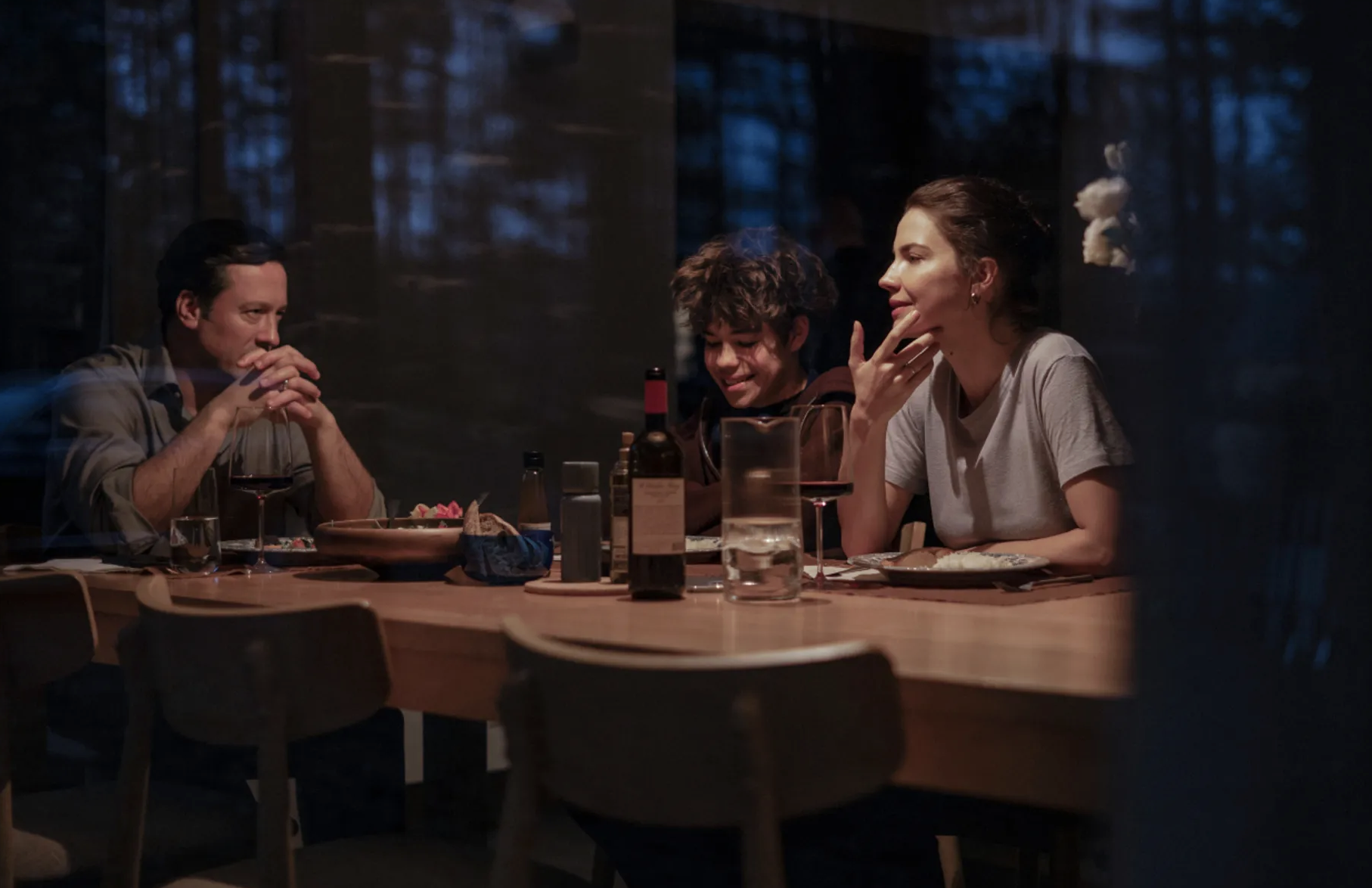
Some viewers really wanted Zvyagintsev to shout from the screen: “F*ck the war!” So that Ksenia Sobchak left the hall shocked and wrote a public “J’accuse” to her godfather all night. But this is not for Zvyagintsev. “Fuck war” in the Minotaur only the concrete pillar under the bridge screams, and even then “war” is crossed out. And for this scream Zvyagintsev needs faith in a person - at least through horror. Zvyagintsev doesn’t believe in people, although, judging by the panorama of SVOshnikov’s faces, for the first time he still regrets it. But nevertheless, he calmly and coldly pronounces his verdict:
You are rotten. You are moral slime. You turn everything into shit simply because it’s more convenient for you to live that way. Your diagnosis is shittyness.
About Zvyagintsev’s words from the Cannes stage: in my opinion, this is just the end of their conversation in Novo-Ogarevo. Zvyagintsev said that he was invited to see Putin immediately after his victory in Venice in 2003. And he talked with him for maybe an hour, as a sign, apparently, of some kind of respect and out of curiosity, which, in general, is normal in that situation. And then he offered a ride to Mosfilm and was clearly showing off when they arrived without traffic lights in a fantastic 10 minutes or so. A video of the director talking about this is somewhere on the Internet.
Well, now that conversation is over. Hence all the intonations, the concentrated personal message, and the entire choice of words that are understandable to that person - they are addressed to that interlocutor, to the memory of the conversation at close range. Traces of which should be in the memory of the permanent national leader.
There, after all, they had something about respect, personal, direct, “you’re cool and I’m cool,” that was the message, as far as I understood. And now the result has been summed up, very precisely, with dignity, in a targeted manner, personally, in person. If the video is shown to the recipient, the director's message will be delivered directly to his brain, with all the overtones that are important in this context.
It won't change anything by itself, of course. But he will knock out several boards from the rotten pedestal.
It's all Zvyagintsev's fault! Yes guys, keep up the good work. Переводите стрелки, направляйте эмоции, гнев на режиссера, который одним своим фильмом сказал миру больше, чем все ваши обвинительные говнопосты вместе взятые.
Ведь если бы он сказал в своей речи не "Господин президент", а "Х..ло бандитское" и так далее, не было бы сегодняшних страшных ночных атак на Киев, убитых, раненых, пропавших без вести людей, разрушенных домов и всего того ужаса, который происходит.
Когда же (никогда) вы научитесь критически мыслить и перестанете по любому поводу травить тех, кто хоть что-то полезное и важное делает…? Даже у взрослых людей, вполне осознанных и грамотных не хватает такта и понимания, что нужно беречь и поддерживать сегодня каждого человека, который открыто и честно высказал свою антивоенную позицию (а Звягинцев это сделал задолго до своей речи в Каннах).
То, что произошло сегодня ночью в Киеве, еще раз доказывает, что цивилизованный мир имеет дело с маньяком, убийцей, кровавым и беспощадным существом, и этого вурдалака восторженно поддерживают миллионы людей, и не только в России. Они готовы идти до конца и не жалеть ни своих ни чужих. В Европе и других странах тоже хватает умалишенных, которые говорят на языке первого канала, людей безнадежно пропитанных соловьевской пропагандой. Правда, как выяснилось, они любят березки и матрешки издалека, и почему-то из проклятой Европы и тд уезжать на великую Родину не хотят…
It's scary. Но еще страшнее становится, когда остатки, крохи культуры, совести, топчут своими белыми сапожками люди "исключительной правильности", эдакие моральные мерила современности, нихуя себе диванные герои с айфонами в руках!
Ребята, очнитесь. Герои – там, воюют, защищают Украину. Герои – мирные жители, которые живут под бомбами уже больше четырех лет полномасштабной войны. Герои – это врачи, пожарные, спасатели, учителя, водители, спортсмены, продавцы, тд, люди всех профессий, которые в это страшное время продолжают делать свое дело в своей стране, или просто живут, стараются выжить любой ценой. У них есть моральное право на любые эмоции по поводу и без, потому что каждый день они находятся в смертельной опасности, под бомбами. Они могут говорить, что речь Звягинцева не достаточно крепка и правильна, что можно было сказать так, а не иначе, потому что у них происходит ежедневный ад, про который невозможно не кричать во весь голос.
Но вы то, находясь на дистанции от взрывов бомб, в мирных, пусть и (возможно) очень трудных, но все же достаточно безопасных условиях, куда лезете со своими советами о том, как опальному и антивоенному режиссеру, уехавшему из России обращаться к Путину? Он обратился так, как решил, и на мой взгляд ясно, что в его речи не было ни поклона, ни просьбы, ни наивного желания умаслить диктатора.
В его речи не было ни поклона, ни просьбы
Вообще, Звягинцев в защите не нуждается. Человек, переживший кому, отъезд, с таким трудом снявший свой фильм, вызвавший долгие овации в Каннах, переживет и ваше прицельное говнометание. Речь о том, что сейчас нужно быть мудрее, объединяться в общей цели, искать любой повод для того, чтобы сохранить человечность, разум, свободу, наконец. А свобода не в безответственных выпадах, а в ответственности за каждое действие, слово, и наша личная свобода заканчивается там, где начинается свобода другого человека.
Лучше всего прямо сейчас подойти к зеркалу и повнимательней посмотреть себе в глаза. Там человек еще, или уже нет? Там все ответы.
Read Freedom on Telegram Make Freedom a priority source on Google  Install the Mobile application
Radio Liberty