
Translated material
Belated flowers
Moscow against Nikol Pashinyan. Election play with old political props and famous ending

Photo: Alexander Patrin / TASS
On the eve of the apricot season, Rosselkhoznadzor deprived Russians of not only Armenian apricots and peaches, but also other fruits and vegetables. As well as alcohol, including cognac. As well as Armenian sparkling water “Jermuk”. Armenian flowers have also become dangerous.
The sanctions, despite their massive scale, do not look crushing. This is not the first time that such measures have been taken against Armenia, both in relation to cognac and apricots. “Jermuk”, yes, was not banned. But despite the importance of the Russian market, Jermuk’s share on it is less than one percent. It’s about the same with the Vedi-Alco company, which came under sanctions: a Russian may not notice the loss of Armenian wine. And he is unlikely to remember the names of the now banned cognac producers - the Abovyan Brandy Factory and the Shahnazaryan Wine and Cognac House. The Armenian manufacturer and carrier have also long been accustomed to the closed border crossing on the Georgian-Russian border in Upper Lars, and not at all due to avalanche danger.
Formula of gas and formula of the world
In short, the sensations are much stronger than the real effect. And even the leader of the Armenian opposition Samvel Karapetyan, founder of the Russian financial and industrial group Tashir, warning Nikol Pashinyan against actions that he considers anti-Russian, admitted: “Jermuk is just the beginning.” That is, so far the Russian sanctions have not impressed even him.
Moscow has to measure its manifestations of discontent: the resource of pressure is limited both economically and politically. Moscow threatens Armenia with an increase in gas prices if it continues its course towards rapprochement with the EU.
But the limits of price maneuver are limited by the agreement valid until 2031, and a price increase is possible only within the framework of changing the price formula or discount system, that is, by about 10–12 percent. This is unpleasant from a consumer point of view, but even now Russian gas costs one and a half times more for a resident of Armenia than Azerbaijani gas for a resident of Georgia.
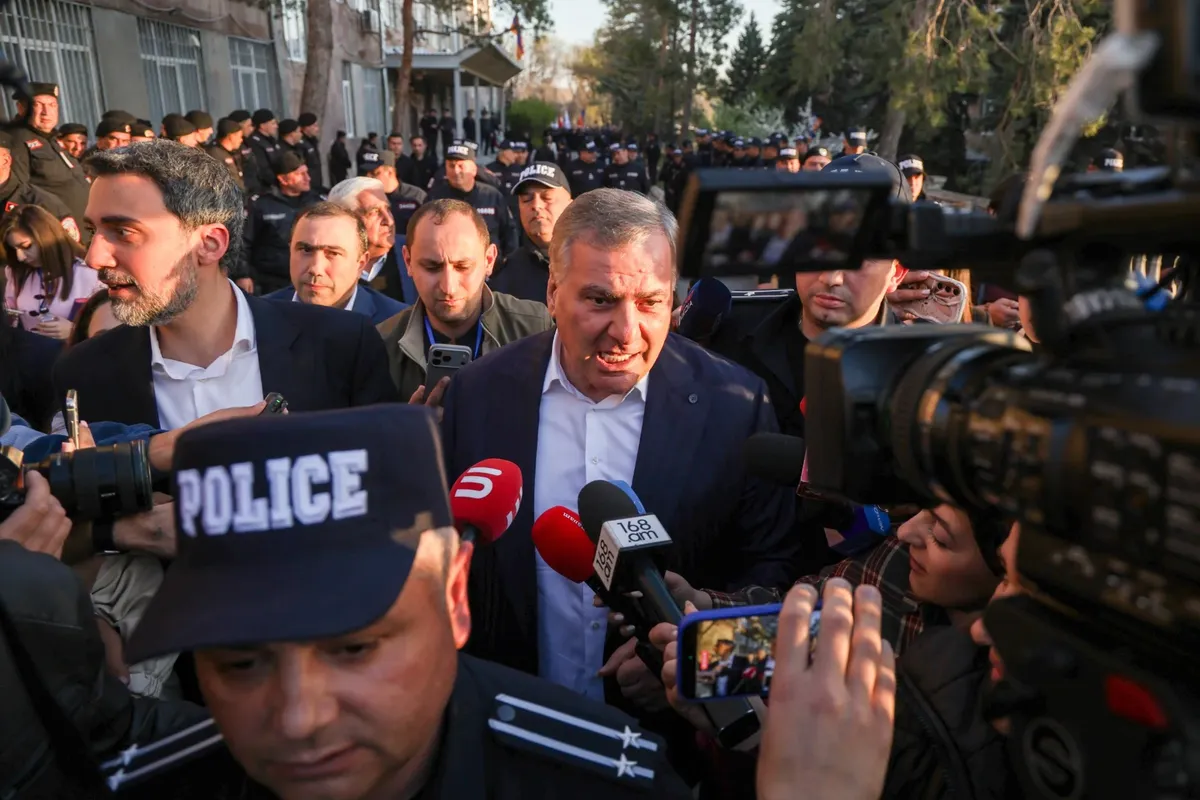
But there is one more reason, perhaps the most important. If Russia really wanted to influence voter sentiment, it would be logical to launch a campaign of bans and threats so that its results would become evident before the elections. But it seems that Moscow itself does not really believe that this is possible. First of all, because in fact, in these elections, the Moscow factor practically no longer works. As are the factors of Washington and Brussels.
To be fair, it is worth remembering that their importance was overestimated before, and not only in Armenia. Photos with Russian presidents and concerts of Russian stars have always been a tribute to the opinion of Moscow. She was flattered by this, and the loss of a candidate she supported was also always explained by mistakes or someone else’s machinations, and not by the fact that this friendship was not a guarantee of success.
In the current Armenian elections, there is only one motive - as long as there is no war. All the rest, no matter how they sound and no matter how independent they look, are just his interpretations.
Who did the grandfathers fight for?
Nikol Pashinyan, who lost the war, beat the opposition in the field of maintaining peace. He initially had a monopolist on it; the opposition forced out of it was forced to seek happiness in the topic of post-war capitulation. But even for those who agreed with this, peace was more important, and Pashinyan managed to string everything else onto this axis.
As a result, an essentially simple choice turned out to be almost a referendum on the country's civilizational structure. Pashinyan managed to rephrase the question of “peace or revenge” into a system of destruction of old and fundamental myths, including what was considered almost the axis of Armenianism, from Karabakh and the sacredness of Ararat to the church. And at the same time - “forever with Russia.” Those who are against Pashinyan are for a destructive tradition, and the only guarantee of peace and development is a complete rejection of all its components. The Western choice in this scheme becomes a continuation of the theme of peace, since those who are against it and, accordingly, for Karabakh and Moscow are for war.
In the end, the opposition has to define itself, and even those who yesterday were not seen as particularly Russophile, today hear quite pro-Moscow speeches from themselves, and the composition acquires final completion. Who will now figure out where the stories about Pashinyan’s grandfather’s collaboration with the fascists take their roots - in Armenia itself or in the offices of special Moscow archivists? Pashinyan himself is extremely cautious in his responses to Moscow, but the picture of positioning and demarcation that he would like to present to the voter is completed for him by others - opponents in Moscow and Yerevan, and partners in Washington and Brussels.
The choice for peace has been made. Sociology, no matter how you treat it in Armenia, has been giving Pashinyan such a margin of safety for many months now that it would seem that the degree of polemic can be lowered.
However, Pashinyan is increasing momentum so much that even the Office for Democratic Institutions and Human Rights (OSCE/ODIHR), which is loyal to him, is forced to admit: the election campaign in Armenia is taking place in conditions of sharp polarization. Pashinyan fills each link in this chain with details, sometimes devaluing the arguments that made it attractive.
Refusal from Karabakh as a guarantee of non-resumption of war turns into attacks on tens of thousands of residents who left it - in order to attract hundreds of thousands of those who previously did not have particularly warm feelings for the Karabakh people. Reasonable interest in the price of opium for the people turns into fabrication of criminal cases against Armenian priests. It is proposed to deal with those who are against the Western model in a completely eastern way, that is, in the case of Armenian geography, in a northern way. And Europe, forced to play along with Pashinyan in this situation, for many is already adding to the list of other compromised impulses.
But polarization, as a rule, works for the authorities - it allows them to dictate an agenda, which the opposition can only follow, and Pashinyan deepens the lines of division, and the opposition readily accepts this challenge. The intensity of the confrontation is such that more and more observers note with alarm that after the closure of polling stations, the intrigue will move to the streets. Opposition leaders at least do not dispel these fears, and expectations, as often happens, themselves also become an election parameter.
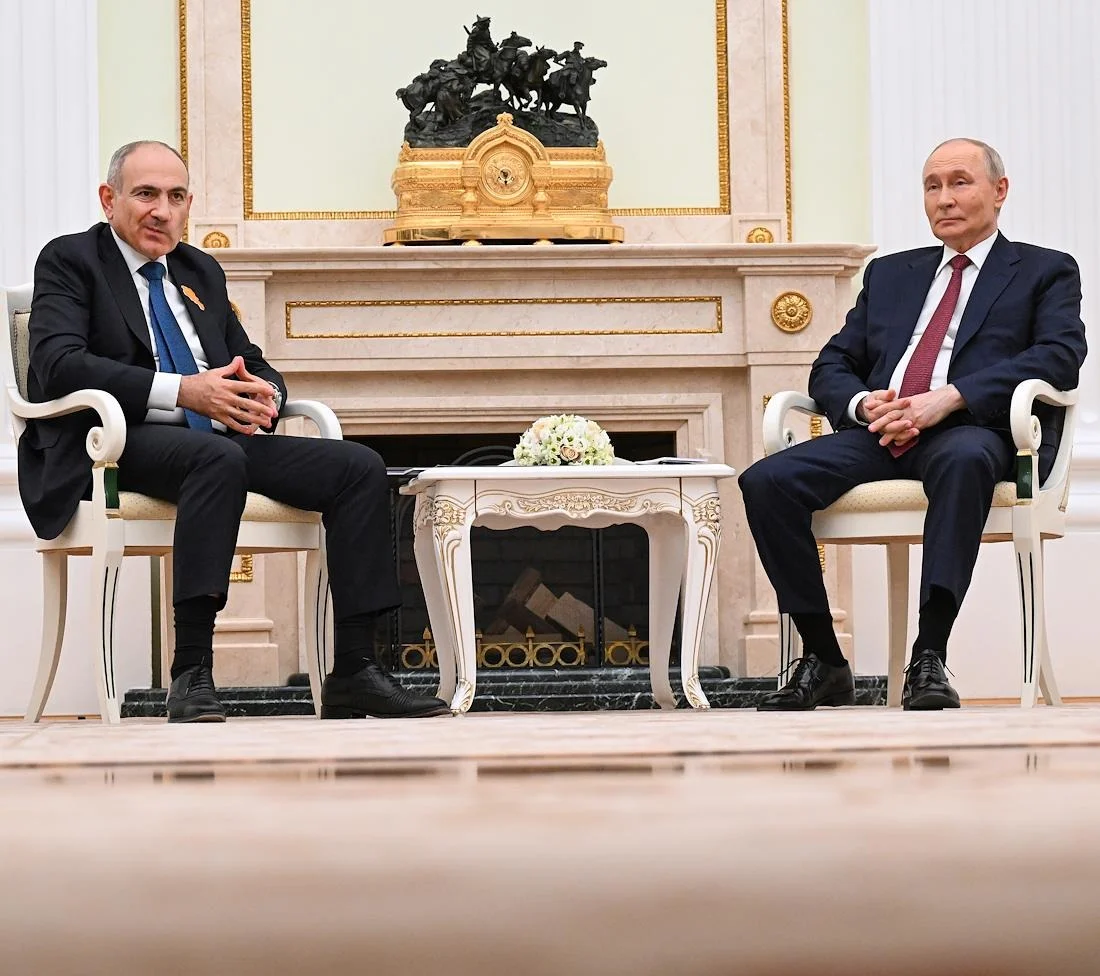
The main word of the Armenian election campaign is “betrayal.” Pashinyan, according to the opposition, is handing over the country to Turkey and Azerbaijan, which will populate Armenia with three hundred thousand of their compatriots any day now. The opposition, according to the authorities, is selling the country to Russia, which, in turn, betrayed Armenia in the war with Azerbaijan. The opposition is not just a “three-headed party of war” (meaning its vanguard Samvel Karapetyan, ex-president Robert Kocharyan and veteran of the political scene, leader of the Prosperous Armenia party Gago Tsarukyan). Now the authorities call it a “three-headed party of treason.” After a very timely material was published by a popular Russian-language publication about a Russian spy network in Armenia, the authorities began their own investigation. The Central Election Commission has already stripped one of the opposition leaders from Gago Tsarukyan’s party of parliamentary immunity in connection with a criminal case for treason.
And Moscow’s information attack on Pashinyan, organically fitting into this process, did not change anything new either in terms of content or, judging by the polls, in sympathies. The issue of war and peace did not turn out to be in Russia’s favor, and this did not happen today or yesterday. Pre-election in form, this attack is partly internal political in essence for Moscow. Moscow could not leave what was happening without a reaction, especially if it was Zelensky challenging Russia from Yerevan. But it is unlikely that after the elections, relations between Moscow and Yerevan will return to the closeness that gave life to the myth of strategic partnership. Not because of what was said in recent weeks - on the contrary, what was said was rather the result of a new state of relations, which has been achieved without permission over the past eight years.
Waiting room for the Secretary of State
Symbolic categories on the theme of eternal friendship and the last ally in the Caucasus no longer work even for the Russian average person. Control over the borders with Iran and Turkey without control over transport communications is also a thing in itself for Moscow. And, as it became clear long ago, she will no longer receive this control.
And the problem of communications is only becoming more acute. And now, a week and a half before the election denouement and three weeks after the big European summit, US Secretary of State Marco Rubio lands in Yerevan. The visit is extremely short, Rubio does not even leave the airport and does not meet with Pashinyan - only with his colleague, Ararat Mirzoyan, with whom he signs another framework agreement on strategic cooperation along the “Trump Route” (TRIPP). And at the same time, a document that raises simple strategic cooperation concluded with Rubio’s predecessor, Mike Pompeo, to the level of “comprehensive.” And at the same time, an agreement on rare earth elements, or, as said, critically important ones, which, if they exist in Armenia, are only as a by-product of the processing of copper and molybdenum. Ararat Mirzoyan promised that the final agreement on TRIPP would be signed in a few weeks. But the Minister of Foreign Affairs avoided questions about why the framework was signed in this case.
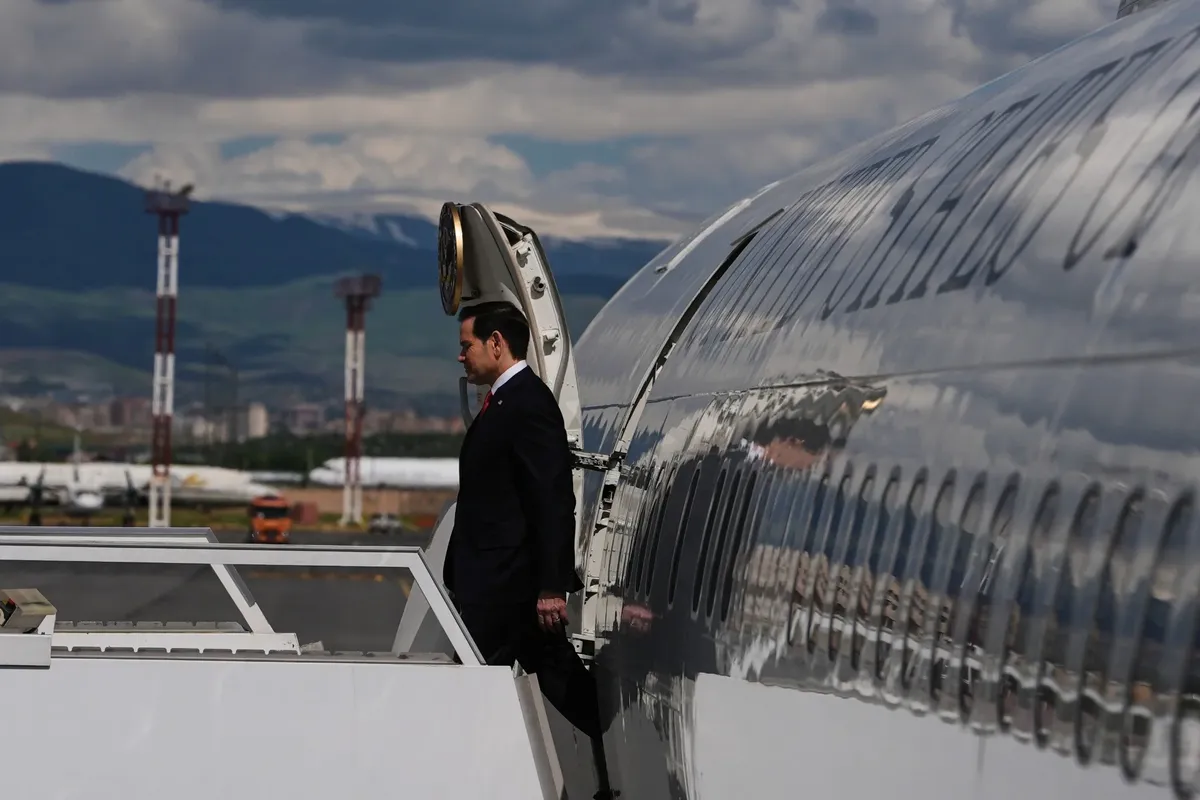
But Rubio’s landing in Yerevan is not only a symbol of election support. Of course, the war in Iran freed everyone from the need to feign active interest in South Caucasian projects. On the other hand, if Angela Merkel is right when she called Trump “a developer by nature” in her memoirs, then the TRIPP story confirms this rightness: everything for him begins with the acquisition of a plot. Whether something will be built on it - a casino or a highway of strategic importance - or whether it will turn out to be more profitable to resell it is unknown, but this uncertainty itself becomes a political factor.
On the eve of Rubio’s arrival, Pashinyan reported on the opening of a railway connection for the country with Turkey and Europe through Georgia. This statement did not add clarity to what is happening in the negotiations on the further development of communications through Armenia. But it made it clear that the topic still remains one of the central ones, and from a pragmatic point of view, much more interesting for Moscow than Zelensky’s demarche. It is unlikely that the Kremlin perceives the plans of Washington (as well as the European Union) with the drama that it demonstrates. Moreover, here too he was clearly counting on a deal in the “spirit of Anchorage”, and perhaps continues to count on it, since he has something to offer the Americans - infrastructure, primarily railways.
That is why the Kremlin is so sensitive to Yerevan’s announcements to revise the concession agreement, in which Armenia transferred the road to Russia until 2038. In practical terms, such a revision is impossible, and Pashinyan’s statement looks more like just another move in a global infrastructure game in which neither the rules nor the goals are clear. Including in negotiations with Moscow. But certainly not from the point of view of elections, the outcome of which is most likely clear. After them, the Russian list of claims, starting with flowers and gas and ending with Ukrainian allusions, will probably become shorter. But now it probably won’t disappear completely.