
Translated material
Where's the mug?
Why is Pushkin censored in textbooks, children’s literature is discussed in the Investigative Committee, and talking about death and nuggets is prohibited in cartoons

Photo: Moscow Agency
If Russians have any unconditional value left, it is children. Parents want to provide them with a happy and calm childhood, but the world is so turbulent and restless that there is increasing concern about children's well-being. It seems that children constantly need to be protected and saved from something. Lately they have been rescued from Pushkin, English children's books and even from photographers.
I will crush you... I will defeat you
Last fall, for example, parents were surprised to notice that in the new reading textbook for third-graders, the textbook stanza “Let’s have a drink, good friend...” from Pushkin’s poem “Winter Evening” was missing . The storm remained, the nanny remained, and the mug disappeared (details on the last page of this issue).
The desire of the textbook’s compilers to avoid an unpleasant conversation with third-graders about drinking out of grief and focus on describing the storm and the nanny is quite understandable. After all, they are not the first, and they are not the last. Although in Soviet textbooks - at least those that my generation studied with - Pushkin was not censored. The stanza remained in place and did not seem to motivate anyone to drink out of grief at such an early age. Many people later, of course, began to take part in the mug, but it’s unlikely because they read Pushkin in the third grade.
The last month brings news no less strange. For example, St. Petersburg customs officers detained a whole batch of books in foreign languages, among which they found “28 books with extremist content.” In a video published by the Federal Customs Service, customs officers show off their catch: children's books about Santa Claus, animals, the human body. And a storytelling guide for six-year-olds - My First Story Writing Book. I wasn’t too lazy, found a video demonstrating the pages of the book, and looked for extremism. So what do you think? Children are asked to come up with a dialogue between two dinosaurs, write a diary entry on behalf of an Egyptian pharaoh, a super-agent raccoon or Cinderella, imagine themselves in the forest and write down what it smells like and who might be hiding in the shadows. It seems to me that it’s time to involve the FSB here.
Seriously, the customs officers did not indicate which 28 books in a large batch of literature they considered extremist, but in the video the service employee so carefully lays out children's books and so intently photographs that very storytelling guide that you inevitably think that this is where all the extremism lies.
And as a result, it is not a specific publishing house or a specific book that comes under suspicion, but the foreign cultural environment as such: it turns out that among children’s books, under bright covers with cute animals, an insidious enemy is hiding.
Further - more: telegram channel “What is there, Moscow?” with reference to an unnamed dubbing editor, he reported that “Russian children’s cartoons have begun to be censored”: for cartoons 6+, words with a strong emotional connotation, related to the theme of cruelty and death, and Anglicisms are recommended for replacement. Examples are also given: “Don’t fail, but ran away,” “I won’t crush, but I will overcome,” “they didn’t die, but disappeared,” “they didn’t go missing, but disappeared somewhere,” “I didn’t lose consciousness, but I felt unwell,” “not nuggets, but cutlets.”
These are very interesting examples:
Not only foreign words (no trust abroad!), not only too harsh or too colloquial expressions (which, apparently, seem too rude), but also fear and pain are consistently removed from the language used with the child.
No physicality, no risk, no strong emotions. In no case is it about death.
It is not for nothing that one of the self-proclaimed experts in the field of children’s literature, Tatyana Tsvetkova, presenting, together with another such expert, Nikolai Nilov, last year a list of “destructive children’s books”, stated that death in conversations with children is a taboo and that conversations about it are imposed by Western liberal authors interested in reducing the planet’s population.
Investigator and detailer
But the fight against Pushkin’s mug, loss of consciousness, death and pain already goes beyond the primitive search for a fifth column among writers. The essence of the restrictions proposed here and there is almost always that a special sterile language is created for the child, which is absolutely inadequate for describing both the world around and the child’s experience. He is smooth, expressionless, emotionless. But adults can be calm: if there is no word, there is no phenomenon; what is not named does not exist. Why fight violence in school and society when you can simply stop a cartoon character from threatening others.
And it even seems to me that these are not new pedagogical guidelines, but pure reinsurance in the spirit of the times in case of denunciation: otherwise concerned citizens will report to, say, the Investigative Committee that the cartoons of such and such a studio speak to a child on destructive topics (death), with rude language (get out), promote a way of life that is alien to us (nuggets) - and prove that you are not an extremist.
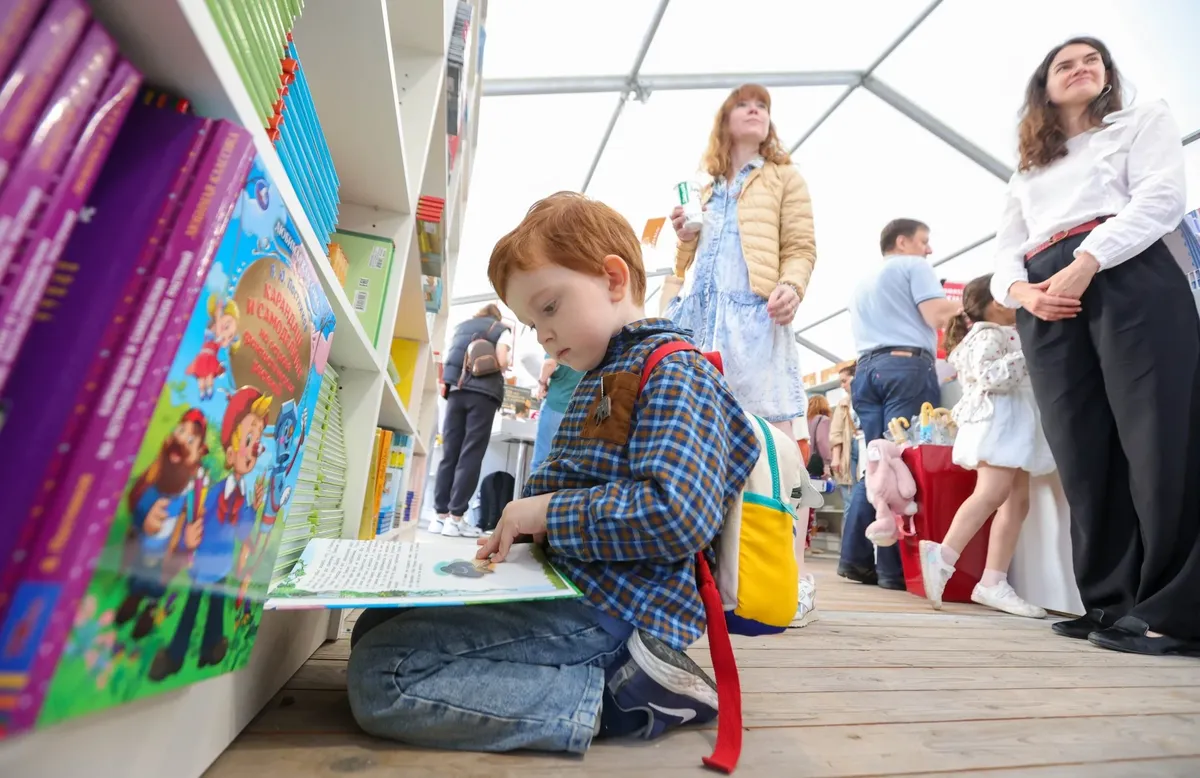
Otherwise, the Investigative Committee has already taken up the task of checking Grigory Oster’s “Bad Advice” for “dubious installations from a pedagogical point of view.” I started just recently, at the end of April. And this happened not just anywhere, but at a meeting of the Investigative Committee, where children's literature was discussed. Bastrykin himself ordered an inspection of Oster and the creation of a cultural council within the Investigative Committee. He has no other offenders for us.
However, the new censorship of children's literature is not so much ideological as sanitary. In children's literature, it is like bleach: it sterilizes, discolors, muffles odors, and destroys all living things. Because living things are dangerous because of their complexity. Actually, what is Pushkin’s “Winter Evening” about? About the fact that two people, young and old, sit together on an uncomfortable and dreary winter evening and are sad. It’s scary outside: the storm - “it will howl like a beast, then it will cry like a child.” But it’s not fun inside either: there’s poverty, melancholy, old age, and loneliness. And human warmth, which is what the poems are about. But throw away the mug, and with it the good friend of your poor youth, and your cheerful heart - and what remains is a simple and straightforward poem: a storm is howling outside, and here the nanny sings a song for me, that’s good, and there’s no need to be sad, and there’s nothing to think about.
“Bad advice,” born in an era of sudden and fleeting freedom, has become a symbol of trust in the child: they proceed from the fact that the child understands humor, sees the absurd, distinguishes between play and reality. That he knows how to play with prohibitions, and will not follow harmful advice, but will laugh at them. A huge part of children’s literature is based on this ability of the child - from the folk “a village passed a peasant” to Chukovsky’s “Confusion”, from Lewis Carroll to Spike Milligan (known to the Russian reader in the wonderful translations of Grigory Kruzhkov), from Kharms to Oleg Grigoriev.
But the new protective logic is depressingly serious. For guardians, a child is a blank slate. What he reads is what he will become.
He is so vulnerable and so suggestible that any careless word will, if not kill him, then make him a moral monster forever. The very presence in his field of vision of an incorrect model of behavior (“you better slow down for dad: dad is soft, he will forgive”) is dangerous - even as a joke. Therefore, it must be carefully protected from any complexity, any ambiguity, any game. And let him assimilate only with state-approved morality, written in plain text. And all this dangerous absurdity, an attack on foundations and values, would be better checked, limited, prohibited, removed from school libraries and not put on sale.
If “Bad Advice” becomes suspicious, then the problem is not ideology, but the fear that the child may uncontrollably interpret the texts and think about them independently.
And here modern guardians have rolled back not half a century ago, not to stagnation, where there was still a place for sane pedagogical thought, but for a hundred years, to the times of the struggle against Chukovism-Marshakovism, with the Oberiuts, with fairy tales - with everything that is not straightforward, not head-on.
Can't be called
During my Soviet childhood - despite all the strictness of ideological control - children's literature was not afraid of complexity, was not afraid of difficult topics. Even small children read Gaidar, Kassil, Kataev, and war stories. In literature there was orphanhood, hunger, war, loneliness, anxiety, despair, cruelty, and a premonition of disaster. This is also in foreign children's classics: Andersen, Astrid Lindgren, Tove Jansson, each reader himself will extend this list. But there was also quiet joy, and tenderness, and miracle, and mischief.
Children's literature has always helped children learn to live in a complex and not always joyful world. She not only armed him with simple rules (help the elders, wash your hands before eating), but also allowed him to break the rules and play with them. She did not isolate him from dangers - on the contrary, she frightened and tested him. Since ancient times, in fairy tales told to children, there has been a dangerous forest, monsters, witches, and cannibals. Children's literature was a space in which a child, if he was a prosperous child, first encountered fear, pain, loss, the complexity of the world, and the fact that irreparable things happen. And the current demands to check this and that for the presence of harmful attitudes no longer imply heroic overcoming of difficulties, but the complete exclusion of everything traumatic. So from all the literature you can only leave cardboard books in which cats goggle plastic eyes: they are certainly safe.
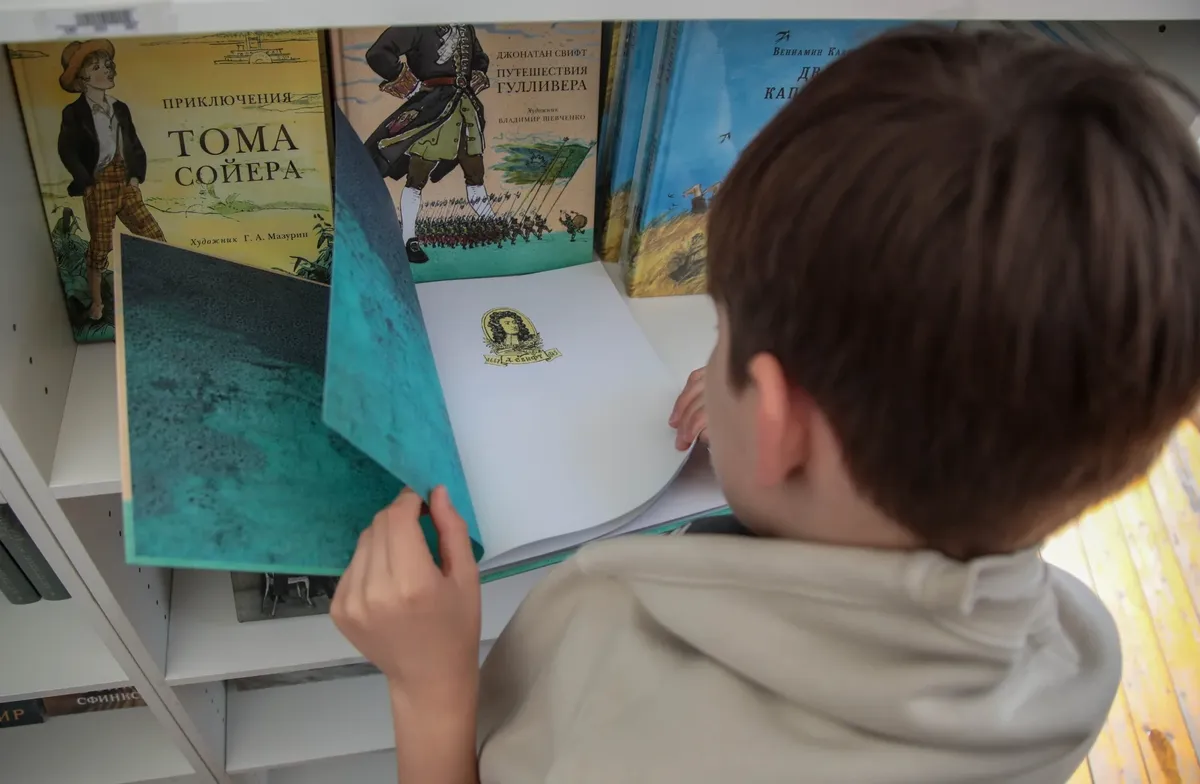
Modern cultural logic protects the child not so much from the cruelty and absurdity of the world, but from the words with which this cruelty or absurdity is described. And this logic is detrimental to the very child they are trying to save: he is deprived of the right to safely read about someone else’s experience without having to test it on himself. A ban on conversation does not relieve a child or adolescent from danger, curiosity, or temptation. He only leaves the child alone with what adults refuse to talk to him about.
One fifteen-year-old girl told me about ten years ago: “In order to satisfy my curiosity, I don’t want to try drugs, I just need to read how a person feels under their influence. But adults don’t trust me.” Then these words seemed simply too bold: well, it’s really impossible to discuss such topics in teenage literature (no, don’t ask me “why isn’t it possible”, this is not for me, this is for Bastrykin in his council on culture). Now, when not only the description of the action of psychoactive substances, but also their very names are erased from literature intended not for children’s, but for adult reading, when publishing houses have driven their lathered artificial intelligences half to death, looking for “drag” in “Dragunsky” - these words already smack of extremism and the article.
Literature that talks about complex, difficult, dangerous things does not advertise unwanted experiences: it provides a language for understanding them, a distance for reflection, and the opportunity to face someone else’s mistake without turning it into your own.
But in the new sanitary culture, it is no longer the call, nor the propaganda, nor the romanticization that becomes suspicious, but the very naming of a dangerous phenomenon.
This is practically ancient magic: “whoever remembers the wolf will see its tail.” "He who must not be named." As if the word is contagious, and silence protects against infection. But silence does not protect: it simply leaves conversations to those who are ready to conduct them - and if this is not parents, not school, not adults, not books - then this is the street, dark corners of the Internet and random unnecessary experience.
When adults call propaganda and prohibit the very word that names a phenomenon that frightens them (not even psychoactive substances, but death, for example), they are not protecting the child, but their own idea of a safe childhood. And ourselves: we did everything we needed to protect our children.
It’s easier for them to burn Labuba on a Maslenitsa bonfire than to accept that a child can associate himself not with a plush postcard bunny, but with this toothy monster.
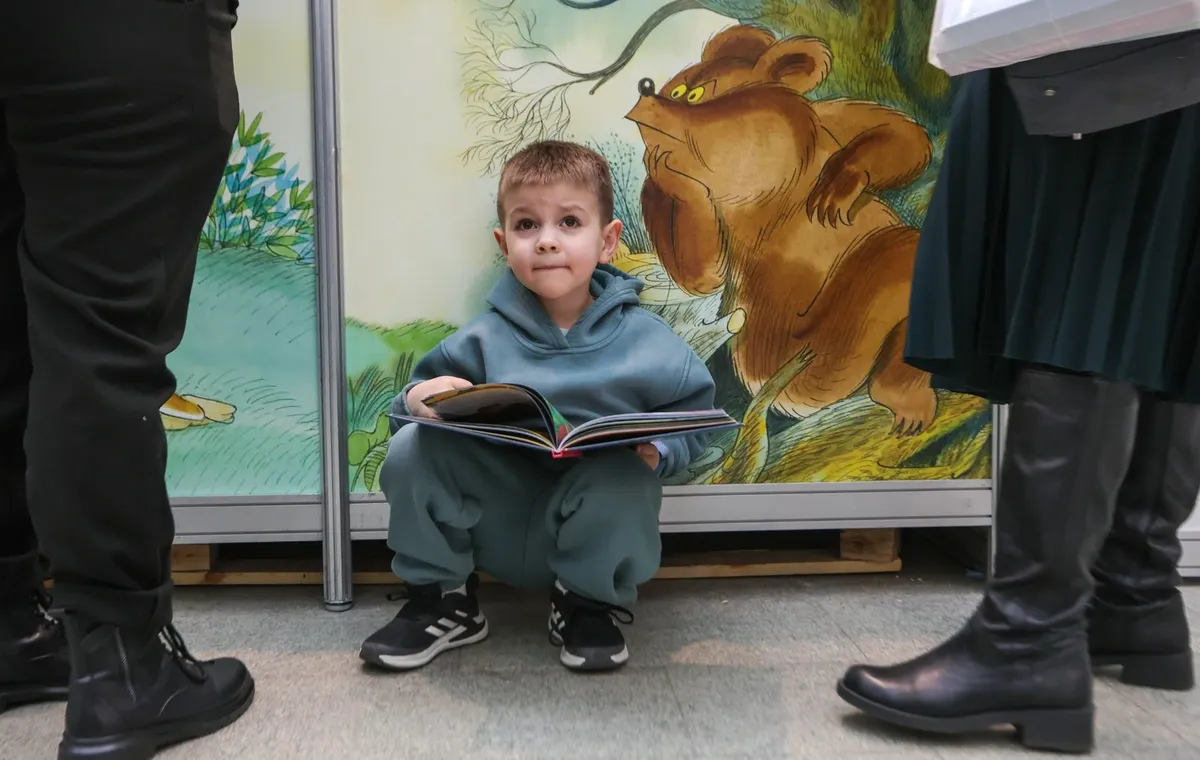
Meanwhile, it is important for a little person to try on not only goodness and usefulness, but also toothiness and strength (and who always tells a child “you need to be able to stand up for yourself” and “defend the Fatherland”; who will stand up for himself and protect others - a stuffed bunny, who himself is endlessly protected from fairy tales and toys?).
A child has aggression, and he needs to learn to recognize it in himself and regulate it safely for himself and those around him - and this is also done in a fairy tale, in a game, in trying on images of monsters, dinosaurs, monsters. The alternative to this is not a fabulously sweet child, completely devoid of aggression, but wild aggression, repressed, misunderstood, and not meaningful. It is then that it takes on its most destructive forms. And not when a child plays with Hagi-Wagi, who has already been safely forgotten, or with Labubu, who will be forgotten in a year or two. Then they will be replaced by a new toothy fluffy, and the adults will again rush to ban him and burn him.
The problem is not that the child has aggression, but that it is convenient for adults to pretend that children do not have it, that it all comes from somewhere outside, from treacherous foreign countries, from “Bad Advice,” from cartoons and books, from computer games, from “destructive” toys. And adults continue to ignore children’s anger until it explodes somewhere and echoes throughout the whole country. Then this child can be declared sick or criminal, isolated from society and again looked for who spoiled him - probably foreign curators in the telegram. Well, or Oster.
Need serenity
In our reality, the school is responsible for ideology, and censorship is responsible for moral panic. This censorship is not concentrated in a specific LITO or censorship committee - it is theoretically prohibited, but practically dissolved in thin air. It is completely dictated by anxiety: in conditions where not only children, but also adults are deprived of agency, parents cannot be trusted with the choice of toys and books. They cannot be trusted at all. It is not without reason that the first deputy chairman of the State Duma Committee on Family Protection, Issues of Paternity, Maternity and Childhood, Chairman of the “Council of Mothers” Tatyana Butskaya recently proposed introducing mandatory certification of photographers conducting photo sessions with newborns and the shooting conditions.
And here the stones began to cry out: the secretary of the general council of the United Russia party, Vladimir Yakushev, spoke out against the initiative: “Often, such ideas of deputies are perceived as outright stupidity and an attempt to interfere with living the way people are used to.”

The whole thing is sadly reminiscent of Ray Bradbury's Fahrenheit 451. But not by the fact that “wow, dystopia has arrived in Russia” - who will be surprised by dystopia in 2026. And the fact that the state is endlessly concerned about how children’s (still children’s, prepare for adults) literature does not cause discomfort to someone, does not talk about something too serious, too inconvenient. In Bradbury's book, Fire Chief Beatty explains to a doubting fireman the meaning of book burning: “We need serenity, Montag, calm. Away from everything that gives rise to anxiety. Into the oven! Funerals are depressing - they are a pagan rite. Eliminate funerals. Five minutes after death, the person is already on the way to the “big pipe”. The crematoria are serviced by helicopters. Ten minutes after death, a person is left with a pinch of black dust. Let us not mourn the dead. Let's forget them. Burn, burn everything. Fire burns brightly, fire cleanses.”
With adults, however, you also can’t talk about the disturbing and scary, hence all this “nekroyaz,” as defined by anthropologist Alexandra Arkhipova*: all these pops, smoke, flooding and other negative growth, including SVO.
Necrospeak for adults hides disaster and death. Sanitary children's language is part of the same necrospeak, the same culture of euphemism, where one cannot talk about pain, fear, complexity. The direct naming of reality is abolished, it is smoothed out, combed, enveloped. The event remains, the experience remains, but the word disappears. Everything remains unnamed - and as if it becomes something that has not been. “They didn’t die, but disappeared,” “not missing, but disappeared somewhere.” Is this about cartoons, and not about the whole country?
The new censorship wants smoothness, predictability, stability, emotional security, and straightforwardness from children's literature. In literature there is no longer room for inner work, doubts, complexity - it should be sterile, like the nursery of a young mother obsessed with disinfection.
The new censorship regulates not ideology, but intonation: it is forbidden to be too loud, too bright, it is forbidden to use bad words, it is forbidden to open the window. All you can do is bayushki-bayu and a sterilized bottle of boiled water.
But you can’t have a mug.
Where's the mug?
This material was published in the nineteenth issue of Novaya Gazeta. Magazine". You can buy it in the online store of our partners.