
Translated material
Aty-baty deputies
Hot pre-election summer for members of the special military. Who and how are they planning to recruit to power?

Photo: Moscow Agency
The inevitably approaching summer will definitely be hot for many participants in the special military. For those at the front, for the same reasons that arose five years ago, they are not going to go anywhere. Those who are no longer there will also have something to do: some will receive certificates and apply for benefits, others will receive treatment, try on prosthetics and undergo rehabilitation. Others will go as usual in search of adventures of varying degrees of severity on their own and others’ heads, so that with a high degree of probability they will go back to the army. And a small part will try to break through to where the president himself seems to have promised them and reserved seats - into power.
Ordinary, difficult military fate
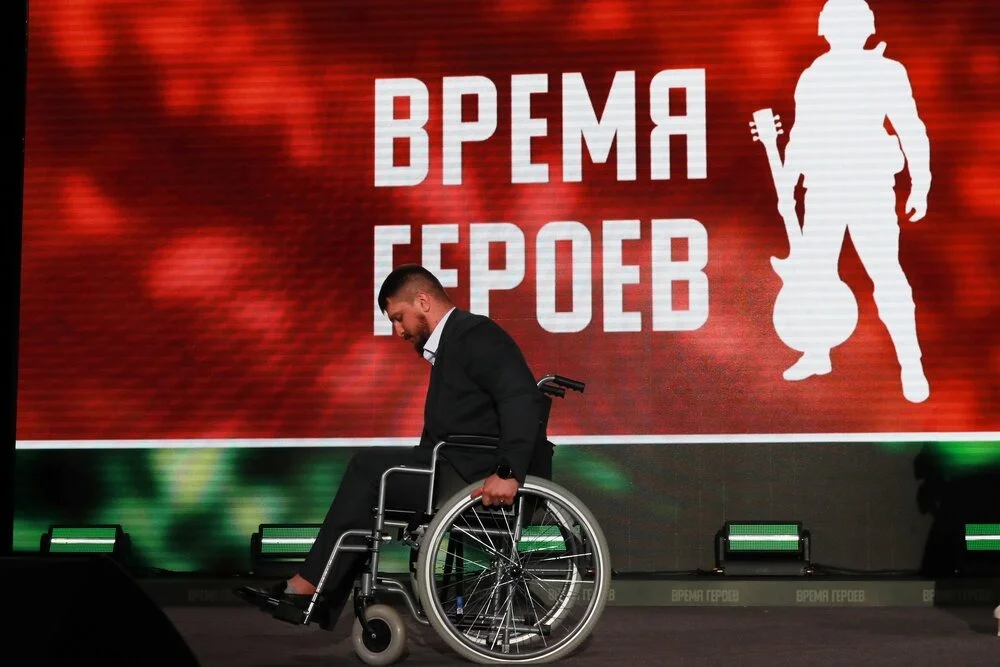
It would seem that the “Time of Heroes” program for the most advanced veterans and participants of the Northern Military District, which instantly arose immediately after one of the president’s public speeches in March 2024, has been working like clockwork for two years now. Plus, a host of regional programs for those who did not break through to the federal level blossomed around it. Reports of appointments of participants in these programs to a variety of regional and local positions are pouring in. However, all these positions, with very few exceptions, do not look all that impressive in terms of their real political or managerial potential.
Judge for yourself. This is who the participants in the “Time of Heroes” have become over the past couple of months: Deputy Director of a defense plant, Deputy Minister of Health of the Republic of Dagestan, Advisor to the Minister of Labor and Social Protection, Deputy Governor of the Bryansk Region, Minister of Youth Policy of the Samara Region, Acting Deputy Chairman of the Government of the Primorsky Territory, Deputy General Director of one of the Rosatom enterprises, Federal Inspector in the Kaluga and Rostov Regions, Deputy Governor of the Jewish Autonomous Region, Deputy Minister of Social Policy of Transbaikalia, Deputy Chairman of the Government of the Ivanovo Region, member of the Central Election Commission and a little more here and there on little things.
Most of the positions are deputies for someone at the regional level, mostly about something social and educational with rare inclusions of something in the public sector of the economy. On the one hand, it doesn’t seem to be impressive, and it has even become fashionable to laugh at this obvious trend, noting that all this fuss with veteran personnel programs is more like much ado about nothing. On the other hand, all these veteran personnel are now scattered across the country in an even layer, obviously with an eye to a certain future. To dry off and learn something.
And if we imagine that the one who plans all this does not mean the result of this or next year, but something closer to the turn of 2030 and beyond, then everything by that time may look different.
But to do this, none of these new appointees must screw up too much: either in terms of their immediate responsibilities, or in terms of habitual corruption or something similar to it, or simply in the way they behave in public.
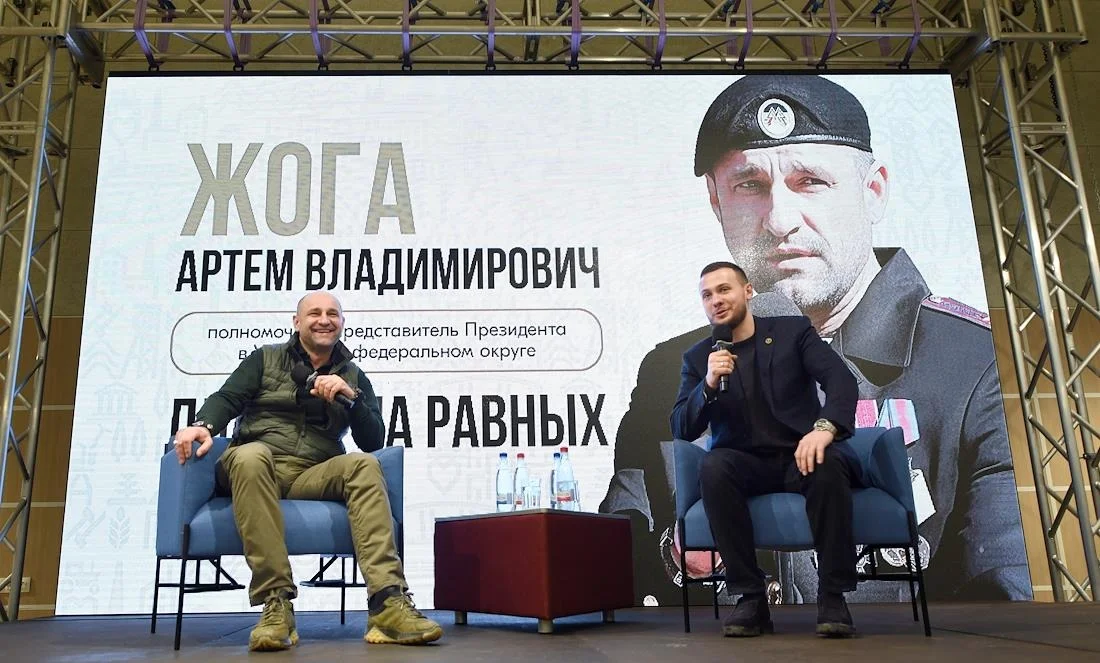
There weren’t many really major appointments of “Time of Heroes” graduates until this spring: Artem Zhoga quite predictably received an appointment to the not-so-dusty position of presidential representative in the Urals, Evgeny Pervyshev became the head of the Tambov region, and Alexey Kondratyev became a senator from Kurgan, plus Maria Kostyuk, who initially led the program itself, became the governor of the Jewish Autonomous Region.
Therefore, in April, messages were heard quite loudly that in a very “problematic” front-line region from various points of view, the Belgorod region, Alexander Shuvaev would be appointed to the place of Vyacheslav Gladkov, who was quite popular among Belgorod residents, and suddenly asked to resign. A hero of Russia and a holder of numerous orders, who all his life did nothing but fight in Georgia, then in Syria, then in Ukraine, got into the second stream of the “Time of Heroes” program and suddenly made such a rapid breakthrough.
It’s not very clear, however, what exactly his professional skills will help solve problems with the budget, power and heating outages, Internet blocking, refugees, displaced people, and the list goes on. But in the public it was said: a military man is needed in the region where he constantly flies (although it would seem more logical to send some super specialist in uniform to rebuild a border air defense system), and the matter was decided.
True, not right away.
Between the appearance of the first information about a possible appointment and the actual announcement of it, a certain pause arose, which was immediately filled with numerous rumors that the candidate was not liked by everyone at the very top, said something wrong somewhere, did not behave very well either at the bureaucratic screenings themselves, or when approaching them. But then this matter was swept, as usual, into a corner and under the rug, someone settled everything with someone, the decree was signed, and all that remained was to wish the Belgorod residents good luck, perhaps they will need it in additional quantities.
Maybe so that no one would think that that pause cast some kind of shadow on the graduates of the “Time of Heroes” program, or maybe it was a coincidence, but last week the president met with those who graduated from its first cohort. He had already met with them before, but now everything was especially solemn and loaded with meaning. After harsh words were addressed to Ukraine and its leaders, as well as a rather unexpected address to Ukrainian soldiers, the president voiced theses that were obviously important to him: that the country’s information space should be reliably protected from “some guy”; that the younger generation must be raised in the Youth Army, but with soul; about the need to avoid stereotypes in everything (hmm...); about the need to strengthen interethnic and interfaith unity; about the extreme importance of the development of new military technologies, and especially UAVs, and that both the presidential administration and he himself will in every possible way support the graduates of the program in the upcoming elections to the State Duma.
And as many as thirteen people from the first stream alone gathered to go there.
Pay off the first or second!..
This is the second important storyline connecting special military veterans and the authorities: who to select and allow to vote and in what quantity. A separate storyline began to spin here, obviously indicating that not everything is obvious and simple with this.
Several months ago, the news spread widely that the future composition of the State Duma would include one hundred deputies with experience in military operations. It’s interesting that some news agencies stated it exactly like that: “will be,” as if it wasn’t about something that should be decided on voting day. Although, by the way, what are we talking about...
But after some time, reports about the mass conscription of veterans as parliamentary candidates became a little quieter, and some of the more sarcastic observers began to increasingly ask the question:
Is it really such a reasonable idea to allocate as much as a third of parliament to people who, it’s not a fact, can be so easily controlled at all times and in everything?
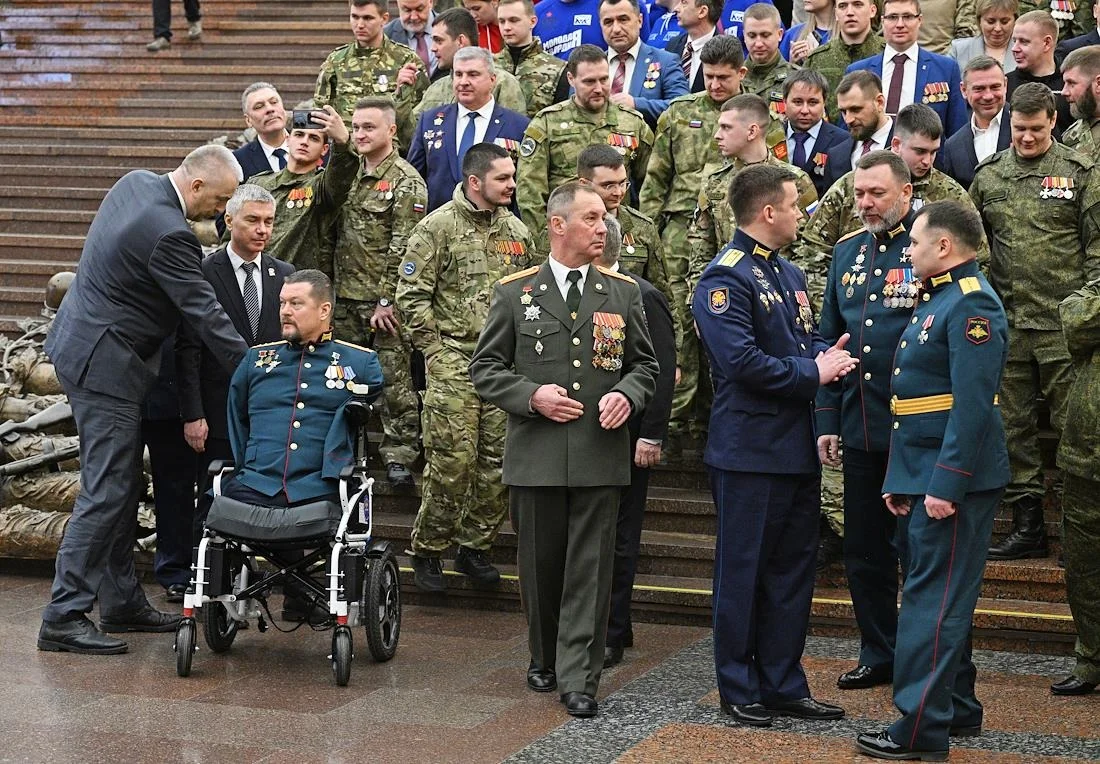
What if, regardless of which party they go to the polls and in which faction they find themselves, there arises there, within this entire parliamentary machinery, some kind of their own association, based on something more important to them than any lists - on military brotherhood? What if they have an opinion on some issues important to them that is perpendicular to the general line?
Apparently, these questions arose not only among observers and observers, and gradually the noise about a hundred future deputies with military experience began to fade away, and now statements are increasingly appearing that about seventy or so such people could happen.
Where will they come from?
Well, firstly, United Russia cheerfully reported that it already has more than six hundred special military participants in the State Duma primaries: some showed up on their own, some were nominated, some were persuaded.
The Communist Party of the Russian Federation currently has eleven veterans listed in its “People’s Deputy” program, and in general, it is expected to nominate about fifty such people from the party.
“New People” do not report anything specific about the participation of veterans from them, but they also do not deny that there will be such. Plus, they add that they will have candidates from among the volunteers helping the front.
If you put all this together, it turns out that there may well be more than fifty veteran deputies in the future composition of the State Duma: about twenty people from two streams of the “Time of Heroes” after the promise of presidential support will definitely be held, plus the same number from United Russia, from those who showed up relatively spontaneously through their primaries, a dozen from the communists and “New People”, plus a couple more from the LDPR and whoever else is there.
So everything will turn out exactly according to plan: quite noticeable, respectful of the status, a lot, but not too much so that possible collisions could occur because of this, which could cause unrest in the internal political section of the administration.
Plus, we should not forget that a wide stream of veterans will be called up for elections at lower levels - to city and regional parliaments, to local councils. This can be considered a guaranteed thing, because at the same recent meeting with graduates of the “Time of Heroes,” the president pointed this out exactly, saying that work at the municipal level is “probably the most difficult, most responsible area of work. But, of course, going through it in order to understand how it all works on earth is worth a lot.”
It can be considered a foregone conclusion that literally now those veterans who had recently planned to start working as an electrician or mechanic upon returning from the front will begin to be recruited into the lower authorities. They are already recruiting.
Not on the lists
It is clear that the Russian government generally faces an incredible task: to figure out how and what to do with all these hundreds of thousands of people with combat experience when they return from the front. They will inevitably return from there sooner or later, be it in the near future, in a year or in five. All military conflicts end sooner or later, even thirty-year and hundred-year-old ones. And all those who returned, so that they do not destroy the country into dust, must be employed, treated, minimally rehabilitated psychologically and built back into the fabric of society.
This task in itself is of gigantic proportions and with very vague prospects for a high-quality mass solution, but it obviously became more complicated after the president two years ago decided that he sees the participants of the SVO as the real new elite of the country, as opposed to those “who, without any merit to society, consider themselves some kind of caste with special rights and privileges, especially I mean those who in previous years lined their pockets through all sorts of processes in the economy of the 90s.” Of course, very, very many considered this both a signal and an indication to both build such a new elite and integrate into it.
Thus, four obvious directions arose for the creation of this new elite in uniform, which do not intersect with each other in any way and, obviously, are not friendly.
The first, “political technology”, is understandable and familiar to the presidential administration. This is how “Leaders of Russia” and similar programs have already been built: you select those whom you yourself consider the best among those who fit a carefully written profile, where loyalty and controllability are at the center, you polish them with programs that have long been worked out by the Presidential Academy with a bunch of fashionable features and excellent funding, and present them to the world as a beautifully packaged, combed elite with predetermined properties. In the world of methodological political technology, this is a win-win option. This is exactly how Time of Heroes and its regional offshoots work.
But the problem is that the military themselves, those at the front, do not necessarily consider those selected for the program to be the true ones, their real heroes, their elite. They have their own internal table of ranks, their own potential contenders for positions in power. And their list to occupy the most prominent places in the current and certainly in the future elite of the country may turn out to be both very extensive and impressive in terms of military merit. But the central requirements may be something other than administration-driven loyalty. It may well turn out that representatives of this army flow into the elite will follow their own paths, from those very lower lists (the second direction), which will be quite difficult to centrally direct and control. After all, it is quite difficult to put obvious obstacles to honored veterans supported by army solidarity.
And then there are those who are rushing up the career-elite ladder from the Z-community (third), which also considers itself quite worthy: they volunteer, and go to the front, and sometimes even take up arms, and they certainly create the necessary propaganda and information noise - and therefore believe that they have the right to claim a place under the elite sun. True, precisely because of the noise and lack of controllability, they have recently tried to tighten the wick by all means. But they have the potential to make a splash and try to squeeze in at least somewhere: they tirelessly generate even cannibalistic meanings, while meanings are in demand by many, real front-line soldiers listen to them, they have acquired connections in the administrative, army, and media environment and have created their own network of influence.
Another direction of flowing into the new elite can well be considered ours, completely Russian: in it, ordinary officials are slowly moving up the career ladder in the right direction, who quickly realized that in order to have a comfortable future and succeed, they need to go to the front for a short time.
No, not into attack aircraft and not directly into the trenches, but somewhere in relative proximity to the front line, but where it is relatively safe. Or maybe further away from it, from this line, the main thing is to get on the orders and lists, get the necessary documents and become a veteran. It turns out perfect: your traditional career path is with you with all the necessary skills and connections, and to it what now opens many doors and opportunities is the credentials of a combat veteran. Then, exactly as the president promised: straight into the new elite, even through elections, even through the same “Time of Heroes” program, even immediately through a quiet appointment to a new, higher position, or anywhere, all roads are open. For some reason, it seems that this particular direction will be the most effective in the part that concerns real local positions. You can't drink hardware experience away.
One way or another, all this veteran whirlwind is now with us for a long time. There will be new high-profile and inconspicuous appointments, there will be clashes of interests, there will be election speeches and posters, there will be a quiet behind-the-scenes struggle for positions and influence.
Yes, and even if they were, what now. The main thing is that the source of uninterrupted supply of this personnel reserve to the country is finally closed, so that the *** ends... However, it may well happen that if the power is oversaturated with people with military experience, who know for themselves what such experience can give and how intoxicating it is, such power may eventually want to continue. To want new fronts and new veterans. Or, on the contrary, having experienced what you had to endure, you want something “strange”, something different.