
Translated material
Zhestkommunkhoz
Bodaibo as a diagnosis: Russia’s housing and communal services are worn out, it can’t be worse - it’s already worse

Photo: Oleg Kharseev / Kommersant
Some of the State Duma deputies wanted to ask the Ministry of Construction for a report on why everything was so tragically bad. But that was not the case. Their own colleagues killed the initiative in the bud. Utilities love silence. The housing and communal services system today is not only tariff robbery. The consequences of its collapse are human tragedies. What else needs to happen for there to be at least some kind of reaction with real action? We are talking about a reaction at the very top - where a systemic approach and radical measures throughout the country are possible.
When a person dies due to a burst pipe or a falling icicle, this is not a tragic accident. This is savagery, which is natural in the existing communal collapse. Roofs are collapsing, pipes are bursting, ice is killing - and no one is really responsible? Meanwhile, every emergency has direct and specific culprits. Or the principle of heating our homes works here: supply heating only when the standard temperature has lasted a strictly certain number of days, and not an hour earlier. Are there any standards for an adequate response? 10 accidents across the country - we sit straight, everything is within the margin of error, 50 - we tense up a little, so what?
It’s even easier to assign nature as the main culprit and shift all responsibility to force majeure circumstances.
Emergency events now include the usual frosts in winter and annual ice drift in the spring, snowfall beyond the usual norm and an unexpected thaw. What happened suddenly is immediately classified as a cataclysm.
If we look at the facts, it turns out that the critical threshold for a proper response has not yet been reached? In any case, no commissions (government or with special status and powers) have visited the long-suffering city of Bodaibo, which has been in a fever almost non-stop since the beginning of the year. And in this situation, how can we understand what happened at the plenary session of parliament in February, when many accidents had not yet happened?
And literally the following happened:
deputies of the Communist Party faction submitted to the State Duma a draft protocol instruction directly related to a series of tragedies in the housing and communal services system. However, the parliamentary majority even blocked the request for information to the relevant department - that is, the Russian Ministry of Construction.
If it is not obvious to anyone that what is happening in this area is already somewhere beyond good and evil, we can list specific and only recent tragedies that were widely covered in the media.
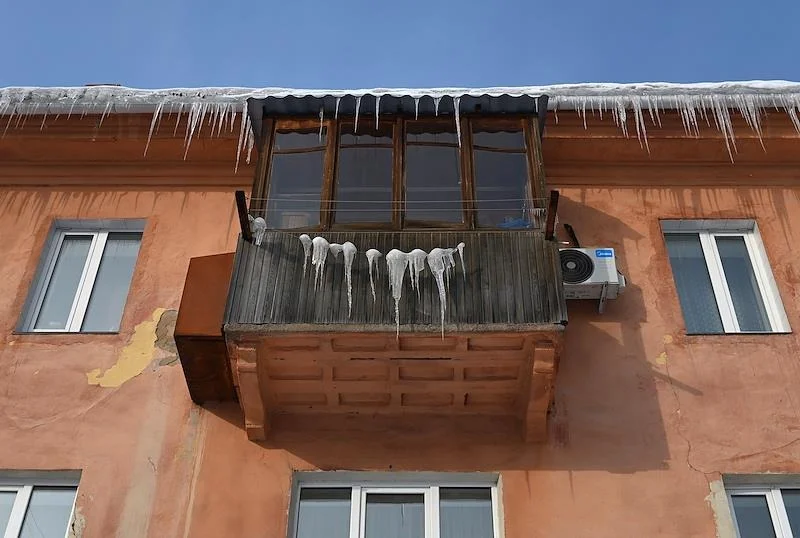
In Moscow, on Shchelkovskoye Highway, a teenager died as a result of snow falling from a canopy over a balcony during a sharp thaw.
In the capital Chertanovo, a hot water pipe burst in a residential building. The pensioner walked into his own entrance and was literally boiled alive in the boiling water that poured on him.
In Stupino , near Moscow, a 10-year-old girl was hospitalized with a fracture of the thoracic spine after ice fell on her.
In Nizhny Novgorod, ice falling from a roof killed a 19-year-old girl, and her friend was seriously injured. Here, a block of ice fell on a group of children, injuring six schoolchildren.
Five children in Lyantor , Khanty-Mansiysk Autonomous Okrug, were covered in snow that fell from the roof of an indoor hockey court. A 13-year-old boy died on the spot, another child was taken to intensive care. The children were simply passing by the sports facility when the snow mass suddenly cleared from it.
In the Tambov region, a pensioner was killed by the entrance canopy of a hospital, a social infrastructure facility, that collapsed under the weight of uncleaned snow.
In Sergiev Posad, Moscow Region, ice fell on a gas fitting, which led to an explosion of the gas tank.
In Obninsk , Kaluga Region, a man received severe burns in his own bathroom—boiling water suddenly came out of the shower instead of warm water. The victim died in the hospital. At the same time, his neighbors repeatedly contacted the management company with complaints about thermal regulation problems. Appeals were consistently ignored.
Add to the above Shelekhov, Taishet and Bodaibo. This winter, the Irkutsk region generously supplied news portals with emergency reports. Fortunately, there were no casualties. But in severe frosts, three large cities in the region were left without hot water and heating.
In the spring, a large-scale accident occurred at a sewer collector in Engels , Saratov region, and a water pipeline in Tula was damaged.
Three dozen apartment buildings in Biysk and almost 900 buildings in Rubtsovsk , Altai Territory, where serious problems occurred on the main pipeline, were left without heat in February due to a pipeline break.
Berdsk and Novosibirsk found themselves without heating in winter...
These are only major incidents. And not everyone gets on the federal agenda. Although local reports could greatly “bloom” it. Little things, relatively speaking, make me no less feverish. But neither together nor separately does all this cause much concern at the top.
Returning to the draft protocol instruction, we note that it contained a very specific and obvious requirement:
“Instruct the State Duma Committee on Construction and Housing and Communal Services to request summary information from the Russian Ministry of Construction on tragic incidents in 2025–2026. in the public utility system of Russia and the measures taken by the Ministry to prevent them, increase efficiency and responsibility in the activities of management and resource supply organizations. Familiarize the State Duma deputies with the information.”
It is unlikely that anyone will delude themselves about the measures being taken. But I would like to know about the responsibility that the perpetrators bore. Surprisingly, there was no talk about creating a special commission to investigate the causes of accidents, or about carrying out any labor-intensive activities. Parliamentarians only hoped to receive consolidated data from the relevant department, request a report on the measures taken, and then discuss their effectiveness and timeliness. All this, we add, is solely within the scope of our own powers. The issue of infrastructure maintenance itself was raised in the order as a systemic one.
However, the initiators of the appeal were asked to come to the mentioned committee for clarification as a matter of routine. Literally this proposal from the head of the committee sounded like this:
“The Ministry of Construction has repeatedly reported on measures to tighten responsibility for preparing for winter, to increase control over the activities of management companies and resource supply organizations, both during government hours in the State Duma and at meetings of our committee.”
Colleagues were asked to come in person - they would, they say, be told everything without any instructions. A counter question: where should we, voters who really want to know about strict responsibility and increased control, turn? We don’t see all this in everyday life, so let them at least tell us that control and responsibility in our housing and communal services exist as a genre. Who should we contact personally, which office should we go to?
After the proposal to obtain the requested information behind the scenes, the protocol order was nevertheless put to a vote. 79 deputies (17.6%) were in favor. There were no abstentions or speakers against. But the most striking thing is that 371 deputies (82.4%) did not vote at all. Thus, the decision was not made due to the lack of the required number of votes.
Almost four hundred people’s deputies do not see the point in a systematic analysis of the critical situation in the housing and communal services sector, they do not notice the collapse in which we live.
One of the initiators of the protocol order said that its meaning was extremely simple: to obtain from the relevant ministry a report on tragedies that have already become a systemic phenomenon. In addition, I quote , “to demand intervention in the situation in the housing and communal services sector of the Ministry of Construction, which is responsible, among other things, for this entire system.” And curious objections immediately followed: the ministry is not responsible for specific incidents and actions of owners. As a result, an essentially procedural issue - the adoption of a protocol order obliging the relevant committee to request information from the Ministry of Construction and familiarize deputies with it - turned into a discussion about whether the parliamentary majority is ready to recognize the systemic nature of the housing and communal services crisis, demand a strict public report from the Ministry of Construction and take responsibility for its political consequences.
Meanwhile, things are not getting any better on earth. The Bodaibo administration published the results of a water quality test in the centralized water supply system. Rospotrebnadzor and the Center for Hygiene and Epidemiology in the Irkutsk Region came to the conclusion that the water in the city does not meet hygienic standards for microbiological indicators and is unsuitable for consumption. We are talking about samples taken on May 18. Officials did not specify when the water would return to normal. This means that kindergartens and schools remain closed for now.
According to some reports, the city administration is going to resend the water for analysis. At the same time, the authorities claim that the Rosa water intake station is operating as normal. Partial water supply, of course, was restored four days after the accident. But the water coming out of the taps was dirty. On May 18 it was turned off again. At the time of delivery of the material, water was delivered to the population in tanker trucks.
It’s hard to imagine how much patience Bodaibo residents have.
Indeed, in addition to all their considerable troubles, they also received a refusal to massively recalculate payments for housing and communal services after the accident. Although it seemed that this was the most logical and necessary step.
Moreover, it had to be done proactively - without any demands or appeals from residents. Now it turns out that the city authorities are ready to recalculate only on individual applications, as the telegram channel “BS I Bodaibo City” wrote about. And they will definitely not count or return the money spent on purchased water to anyone. And this is tens of thousands of rubles for one family.
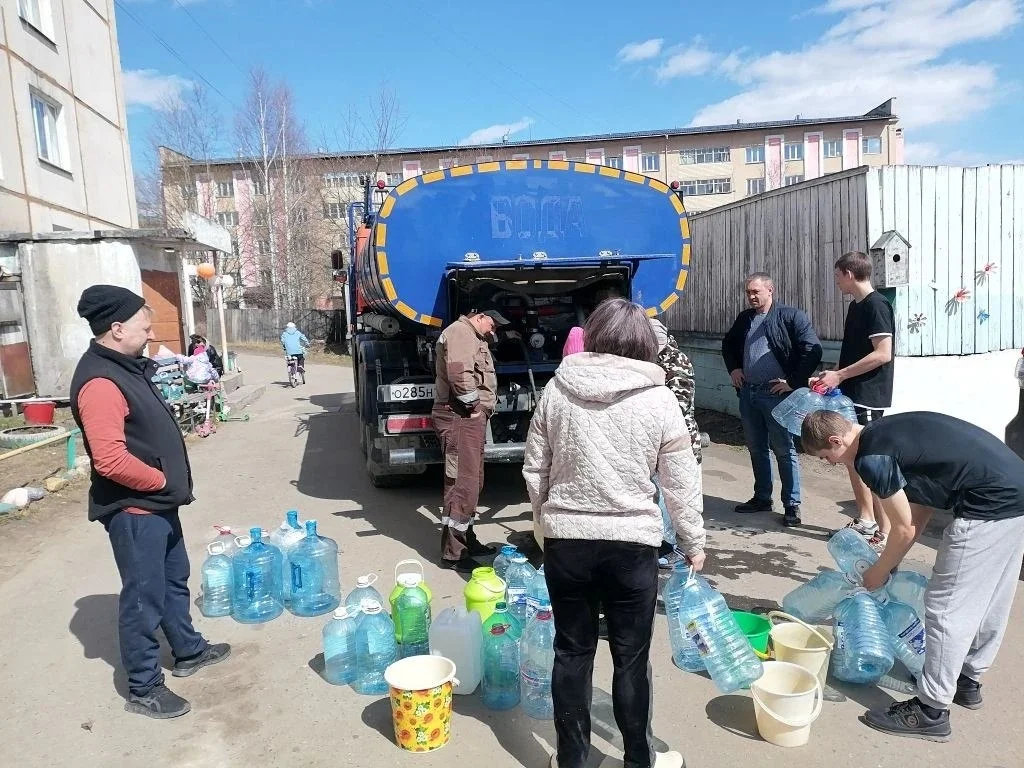
But the department of Rospotrebnadzor for the Irkutsk region was concerned with the recommendation to the residents of Bodaibo. Experts asked to use only bottled or boiled water for drinking. Moreover, it is recommended to store it after cooling for no longer than a day. In addition, citizens were reminded that they should follow the rules of personal hygiene and seek medical help at the first signs of an intestinal infection. How simple and reasonable it is to advise the obvious. And you can’t find fault: it’s just care.
By the way, we managed to contact a person who lived in Bodaibo at the end of the last century. I will quote the key phrase of our correspondence: “In Bodaibo, back in the 70s, rusty water always ran from the tap, so they only drank boiled water.” More than half a century has passed.
Housing and communal services are being digitalized with gusto. They claim that they will reform. And in a separate Bodaibo, the water is boiled before drinking. Nothing has changed.
Except that gold mining enterprises in the “golden capital” of Siberia have all become private, without exception. And somehow they are not doing well with social responsibility. Of course, they can provide a generator to help when things get really bad in the city, but spending millions on maintaining the communal system - here, excuse me: where are the housing and communal services and where are the gold miners. The question remains: does anyone at all care about the fate of this farm in principle?