
Translated material
Childhood dreams of a techno-oligarch. A bright future through the eyes of Musk
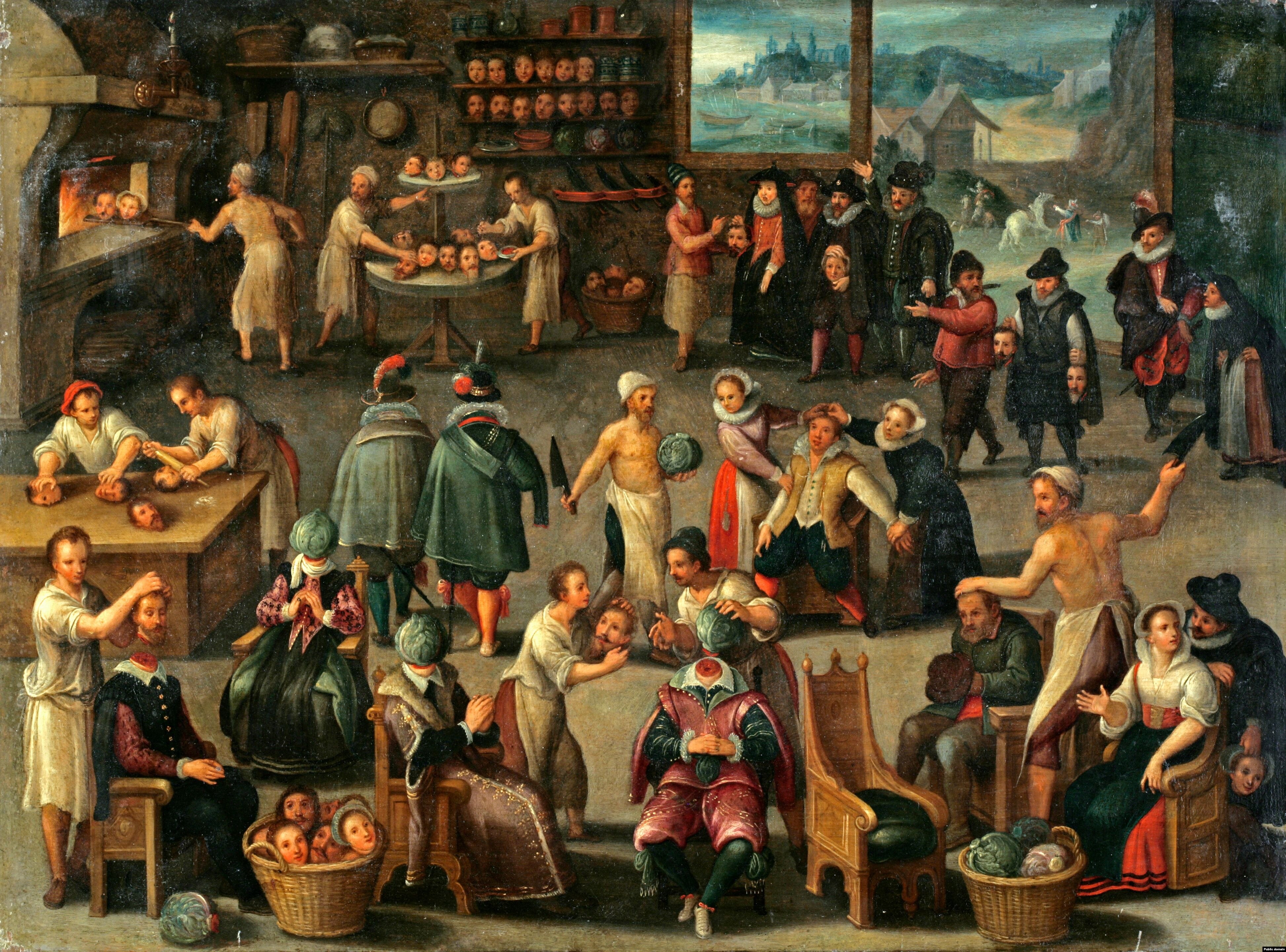
Not a day goes by without us hearing some news about Elon Musk. Given his status, this is not surprising. Another thing is strange: these news most often talk about his eccentric antics. But what is really in his head?
Dreamers with billions
On March 28, 1978, a pleasant and well-known baritone - it was the voice of actor Peter Jones - read the following text on the BBC:
Once upon a time, in the misty haze of ancient times, in the great and glorious days of the former Galactic Empire, life was vibrant, eventful and generally tax-free. Mighty starships cruised between exotic luminaries in search of adventure and profit in the most remote corners of the Galaxy. In those days the spirit was brave, the stakes were high, men were real men, women were real women, and the little furry creatures from Alpha Centauri were real little furry creatures from Alpha Centauri. And everyone dared to challenge unknown horrors, to accomplish great things, to boldly split infinitives in a way that no one had ever split before (a parodic reworking of a quote from the Star Trek series: “To boldly go where no one has gone before.” In English, the construction to boldly go is a split infinitive. It is considered grammatically controversial. - RS) - this is how the Empire was created. Many, of course, became fabulously rich. This was considered quite natural and not at all shameful, because no one was truly poor then - at least no one worth talking about. And for these super-rich merchants, life eventually became quite boring; it seemed that none of the worlds where they settled fully suited them: either the climate in the evening became somehow incorrect, then the day turned out to be half an hour longer, or the sea was the wrong shade of pink. Thus, the conditions arose for an amazing new industry - the creation of luxury planets to order...
This was the third episode of the BBC radio series "The Hitchhiker's Guide to the Galaxy", from which its author Douglas Adams later made a science fiction novel, and then a series of novels that made him famous. The episodes began at 10:30 pm London time, when it was already 11:30 in the South African capital Pretoria. But the seven-year-old boy who lived there, forgetting about sleep, listened in fascination to the story about the cosmic future of mankind. Most likely, he could not appreciate the author’s poisonous sarcasm: later, as an adult, he admitted that he suffered from Asperger’s syndrome, and such people do not understand humor. He was suppressed by an overbearing father, he was a victim of school bullying, but in his dreams, alone with the radio, he was free, brave and daring. The boy's name was Elon Musk. He has become the richest man in the world and now wants to equip a backup planet in case of any global catastrophe on Earth.
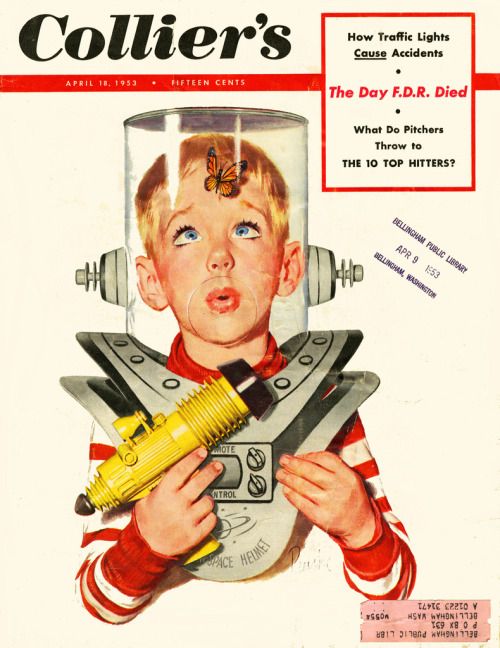
Perhaps this is the problem of all techno-oligarchs - or rather, our problem with techno-oligarchs. They took the books they read in childhood too seriously. And the films seen. Amazon founder Jeff Bezos is such an avid Star Trek fan that, when he became rich, he bought a model of the starship from the series at a Christie's auction and placed it at the headquarters of his space company. He “begged for years” to the Paramount studio to give him at least a tiny role in it, but always with words and in a key episode that would not be cut out during editing. In the end, he was heavily made up and filmed in the film "Star Trek: Infinity" as an alien who utters exactly two words. Bezos did not rest on this either, and in October 2021, he launched the actor playing Captain Kirk, 90-year-old William Shatner, into space on his Blue Origin ship.
I am a utopian anarchist
Another of their favorite blockbusters is Iain Banks' Culture saga. Bezos bought the film rights to the first novel in the series, but two years later the deal was terminated. The heirs stated that the time was not right for the project. Mark Zuckerberg recommended Banks' novel The Gambler as a must-read. And Musk once wrote in X:
If you're wondering, I'm a utopian anarchist best described by Iain Banks.
There's some kind of mistake here. How can billionaires like the society invented by Banks? In an interview, he was told that, according to critics, his Culture (the name of the civilization he invented) embodies the American libertarian ideal. “Really?” Banks wondered. “What detail, the absence of private property or money in the Culture novels, have these people overlooked? The Culture are hippie communists armed with super-powerful weapons and harboring a deep distrust of both Marketolatry and Greedism.” And he added that he despises American libertarianism, if only he understands it correctly.
Apparently, the whole point is that Banks came up with a world controlled by supercomputers, whose intelligence has long surpassed the capabilities of the human brain. This is a society of abundance, where disease and distance are defeated and there is no government - there is only an adhocracy, temporary unions of artificial intelligence to solve specific problems.
There is a supercomputer in "Hitchhiker's Guide". It is asked the "Ultimate Question about Life, the Universe and Everything Else" and after endless deliberation the AI gives a meaningless answer: "42". But artificial intelligence is incapable of making mistakes. This means that it is not the answer that is wrong, but the question. Musk is convinced that this is exactly the case:
If I had to describe my philosophy, I would call it the philosophy of curiosity. Around the age of twelve, I actually experienced an existential crisis: what is the meaning of life? Isn't this all pointless? Why not just commit suicide? Why exist at all? I read religious texts. I read philosophical books. And this reading, especially the works of German philosophers, frankly speaking, drove me into deep depression. How could it be otherwise when you read Schopenhauer or Nietzsche as a teenager? (Nietzsche is depressing reading? Hmm. - V.A.) But then I read The Hitchhiker's Guide to the Galaxy by Douglas Adams - a book that is a philosophical reflection dressed in the form of humor. And the main point Adams made there was that we don't really even know what questions to ask... Once you get the question right, the answer is actually easy to find.
This is what we are told when the AI gives an incorrect or nonsensical answer: you have phrased the question incorrectly.
The supercomputer's answer to the Main Question. Fragment of the film "The Hitchhiker's Guide to the Galaxy". Directed by Garth Jennings. 2005.
Difficult childhood
The complex of the Messiah, who cherishes the secret hope that one day he will save the world
We were all fond of science fiction as children. But the techno-oligarchs, it seems, never grew up and turned into an eternal child - puer aeternus, one of the Jungian archetypes. It was studied in most detail by Jung's student Marie-Louise von Franz. “As a rule,” she says , “Puer men experience difficulties in matters of social adaptation. Sometimes one can observe a kind of asocial individualism: being a special person, I do not consider it necessary to adapt to society, because this is impossible for such a modest genius as me, and so on.” Such self-identification, quite naturally, leads “to typical pathological delusions of grandeur.” At the same time, “such a man experiences mortal fear in those situations that require taking responsibility for something. He experiences horror at the thought of having to bind himself with promises, remain forever within the earthly boundaries of space and time, and ultimately turn out to be an ordinary real person.” And finally, “to one degree or another, the neurosis described is accompanied by a complex of a savior, or a Messiah, who cherishes the secret hope that one day he will save the world.”
In this portrait it is difficult not to see a collective image of a techno-oligarch. Their childhood passion turned into their mission. They believe in their utopia. To be convinced of their infantilism, just read “The Techno-Optimist Manifesto” by Marc Andreessen. This is a text written by a fifth grader, although the author is 54 years old and a venture capitalist. It, of course, contains Orwell, Thomas More, again Nietzsche, whom the author calls the enemy of techno-optimists, although Friedrich had no idea about AI, and even Alexandre Kojève, but this is a naive disguise. Peter Thiel and Alex Karp, being philosophers by training, camouflage themselves much more thoroughly (it seems that Andreessen took the name Kojève directly from Thiel’s article ).
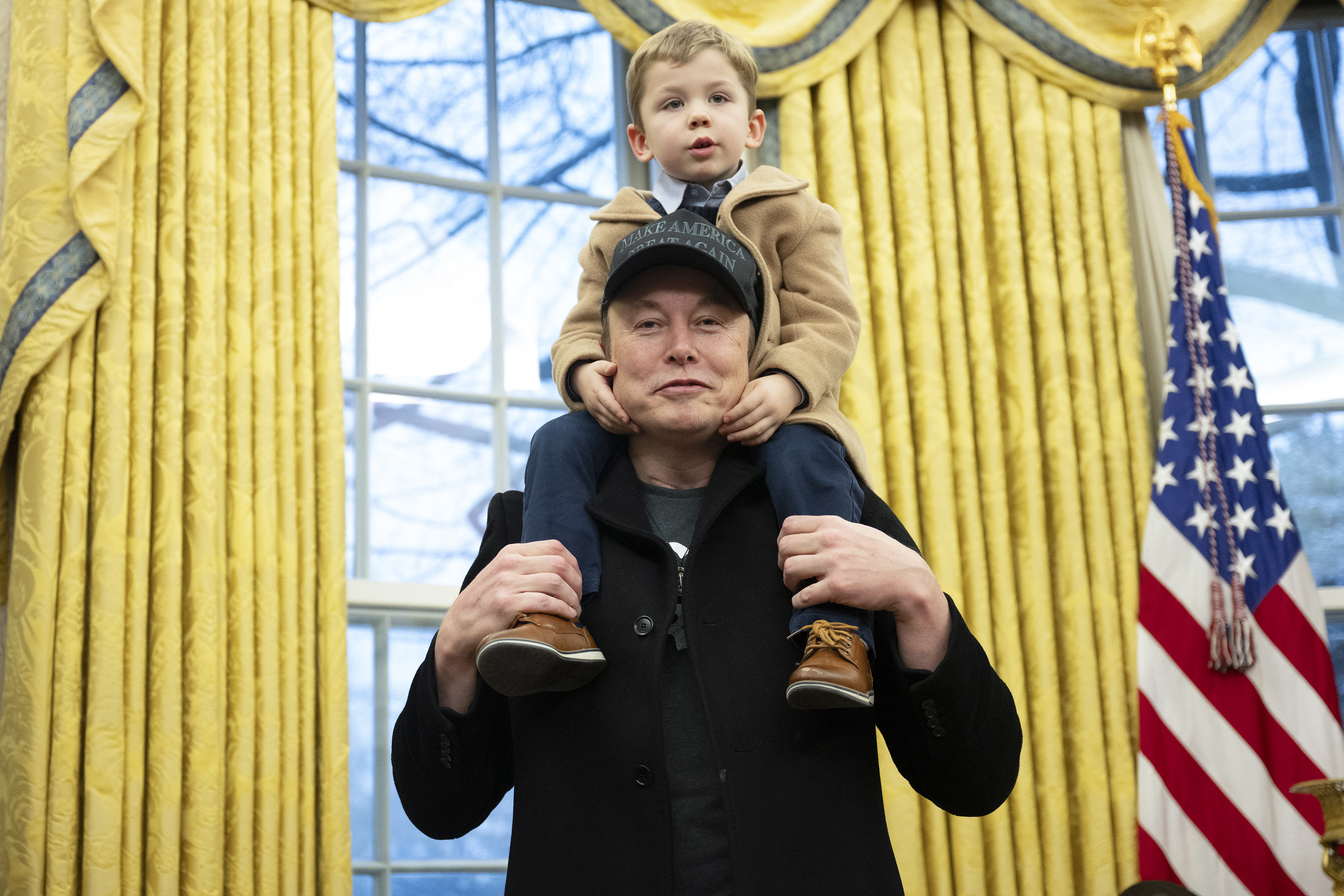
But the most striking embodiment of the eternal child is, of course, Elon Musk. His grimaces, grimaces and jumps, his inability to behave appropriately to the situation, his school jokes (he once declared in court under oath that he considered them funny), his habit of carrying his young son with him everywhere, as if he were a teddy bear that gives the child a feeling of comfort and security, his stumbling, clumsy speech... Why is he like this?
In search of an explanation, it is useless to read his mother May's book - it is pure sugar syrup. By the way, Asperger's syndrome is a self-diagnosis; no doctor has ever diagnosed it in Musk. Perhaps he read somewhere that children with autism are akin to geniuses. Musk came out in May 2021 on the comedy show Saturday Night Live. He reported this as if it were his great personal achievement, and the public reacted accordingly.
In fact, I'm making history tonight as the first person with Asperger's syndrome to host an SNL show. (Applause.) Or at least the first one to openly say so. (Applause.) So today I will make every effort to maintain eye contact with the participants. But I'm already doing pretty well with the human imitation mode. (Applause.)
Without a doubt, this text was composed for him by some professional humorist - he himself never speaks so coherently and with such self-irony.
Look, I know I say or write strange things sometimes, but that's just the way my brain works. To anyone I may have offended, I just want to say one thing: I have reinvented electric cars and I am sending people to Mars on a rocket. Did you seriously think that I would also be just a normal, calm guy?
And then his mother appeared in front of the camera, and a sparkling dialogue took place between them (while they play their roles disgustingly):
“ Ma, remember when I was 12, I made my own video game called Glastar , about a spaceship fighting aliens?”
- I remember. You were also paid $500, but you were too young to open a bank account, so I had to open one for you.
- Well, yes. I wonder what happened to this account.
- Yes, it doesn’t matter. You turned this space video game into reality.
“ Unless, of course, you think that reality could be a video game and we’re all just computer simulations played by a teenager on another planet.”
The relationship with my father is much worse. The testimonies of Elon himself and his father Errol fundamentally contradict each other. Parents often deny their guilt to their children. But children often lie and make up sad stories about their childhood sufferings. Let's open Walter Isaacson's book "Elon Musk", the author of which is inclined to his son's version.
As a child in South Africa, Elon Musk learned what suffering was and learned to survive in such conditions.
When he was twelve years old, he was taken by bus to a wilderness survival camp known as Veldskool. “It was like a paramilitary version of Lord of the Flies,” he recalls. Each child was given small portions of food and water, and they were allowed — indeed, encouraged — to fight for it. “Bullying was considered a virtue,” says his younger brother Kimbal. The older children quickly learned to hit the younger ones in the face and take things from them. Elon, who was small and emotionally awkward, was bullied twice. He ended up lost ten pounds.
However, on the Internet you can find quite positive and even enthusiasticmemories of the Veldskool camps. Most likely, Isaacson, according to the Musk brothers, is exaggerating. Elon was often beaten by his classmates at school.
But those scars were nothing compared to the emotional wounds inflicted by his father Errol Musk, the engineer, rogue and charismatic visionary who terrorizes Elon to this day...
Neither Elon nor Kimball communicate with their father anymore, they believe that he is crazy for claiming that Elon provoked the attack, because his offender was eventually sent to juvenile prison. The brothers call their father an incorrigible liar, who constantly peppers his stories with fabrications, sometimes specially verified, and sometimes completely divorced from reality. They compare him to Dr. Jekyll and Mr. Hyde. One moment he is affable and friendly, but the next he is ready to engage in merciless bullying for an hour or more.
My father had an Encyclopedia Britannica and a Rolls-Royce
Let's assume this is all true. But why did 10-year-old Elon, two years after his parents divorced, want to live not with a sweet and gentle mother, but with a cruel and unfair father? (And a couple of years later, Kimball did the same.) May Musk explains it simply: “His father had the Encyclopedia Britannica, which I couldn’t afford. And he had a computer, which was a rarity at that time.” A complete set - 30 volumes - of the Encyclopedia Britannica cost then about one and a half thousand dollars. Isaacson motivates this decision in much the same way, only he adds a gold-colored Rolls-Royce Corniche convertible. But if you turn again to the book of Marie-Louise von Franz, you can find out that the “eternal child” is characterized by a strong dependence on the mother. “He always yearns for a mother woman who will open her arms to him and satisfy his every need.” Young Elon sought to get rid of this addiction. All this is just the ABC of Jungianism.
Down with empathy
Childhood traumas, real and imaginary, left deep scars in Elon’s soul. One of the consequences of a “difficult childhood” is its relationship to empathy. He considers it a "fundamental weakness" of Western civilization. This vulnerability is being manipulated by the enemies of the West. He continued his invective in the Oval Office, in the presence of President Trump:
The fundamental moral flaw of the left is to sympathize with the criminals rather than the victims. They feel sorry for the criminals, but show absolutely no sympathy for the real victims.
And on my blog :
Beware of misuse of empathy. Empathy is good and correct when it is thoughtful (deep), but can be destructive for civilization if it is simply a reaction to a stimulus (superficial). For example, freeing a repeat violent offender may feel good at first (shallow empathy for the criminal), but it is wrong if that person later harms or kills innocent victims, as there should be deep empathy for future victims.
And recently he began aggressively promoting the book of Canadian professor Gad Saad, “Suicidal Empathy: Dying to Be Kind.”
In fact, it is clear that the argument about sympathy for the criminal and indifference to his victims is a demagogic device, one of the manifestations of Godwin’s law : no matter what they argue about, sooner or later they will talk about Hitler and Nazism. This is what is called “the last argument of kings,” when there is nothing else to cover. Historical experience shows that ruthlessness towards criminals, real or perceived, is not necessarily accompanied or explained by sympathy for their victims. The lack of direct correlation is confirmed by studies by psychologists.
Forward to the merger
Apparently, Musk does not see any value or need in empathy - not for himself personally, but for humans as a species. Musk's Neuralink project, which began as a purely medical project (in January 2024, the company successfully implanted a microchip in the brain of the paralyzed Nolan Arbo), has today turned into one of the flagships of transhumanism - the idea of improving the human race by merging man with machine. For Silicon Valley leaders, it's a done deal. OpenAI CEO Sam Altman wrote back in 2017:
The merger process has already begun, and we have been in it for several years now. Our phones control us and dictate what we do and when; social media feeds determine our emotional state; search engines decide what we think about. The algorithms that make all this work are no longer within the power of any one person to comprehend...
The differences between us and bonobos are hardly worthy of serious discussion
Unless we destroy ourselves first, the emergence of superintelligent AI, genetic enhancement, and the creation of brain-computer interfaces are all inevitable. To think that we will never create something more intelligent than ourselves is to show limited imagination and human pride. Наше чувство собственной значимости настолько зиждется на нашем интеллекте, что мы склонны воспринимать его как нечто уникальное и исключительное, а не просто как качество, лишь немного превосходящее интеллект всех прочих животных в рамках единого эволюционного континуума. Возможно, ИИ будет испытывать схожие чувства и отметит, что различия между нами и бонобо едва ли заслуживают серьезного обсуждения.
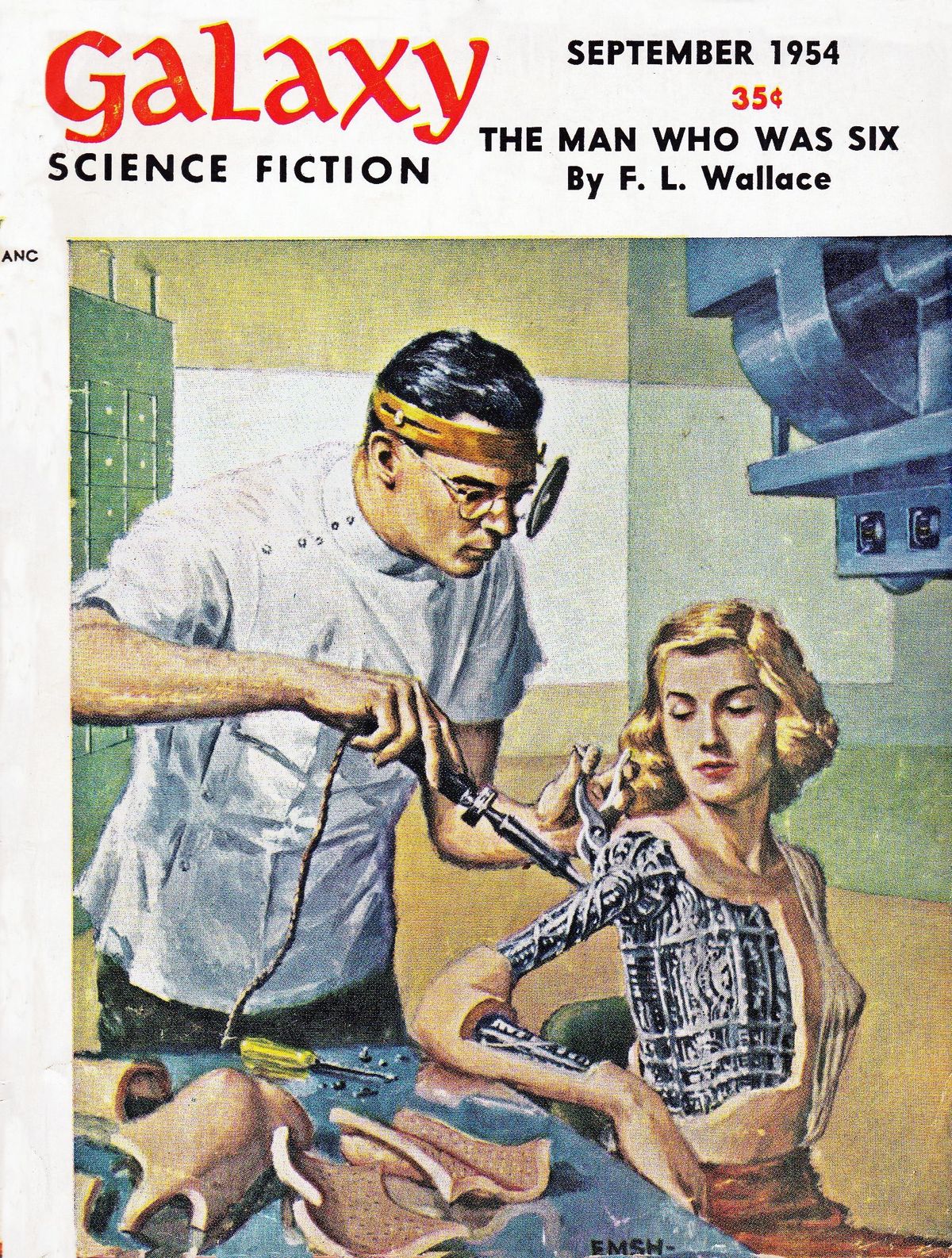
Может быть, это просто эпатаж или троллинг. Не может же живое существо, каким, по-видимому, все же является Сэм Альтман, не сознавать необходимости эмоциональной жизни ("я жить хочу, чтоб мыслить и страдать"), не понимать, что человек – существо иррациональное, действующее в том числе на основании своей интуиции, инстинктов, предчувствий, наконец. Что он может и должен ошибаться и тем самым приобретать опыт, без которого он улицу перейти не сможет. Но мы говорим на разных языках. Они уже все решили за нас. На днях в Politico появилась статья со зловещим подзаголовком "Надвигается битва – и не только за неприкосновенность частной жизни, но и за будущее человеческого рода".
Интерфейс "мозг – компьютер" (BCI) существует и в менее интрузивных формах, чем микрочип, сказано в ней. "Носимые на теле устройства, такие как умные очки, фитнес-браслеты или гаджеты для отслеживания уровня стресса, уже получили широкое распространение. Эти продукты приносят производителям прибыль не только благодаря тому, сколько людей их покупает, но и благодаря чрезвычайно ценному товару – нейронным данным потребителя". Эти данные могут быть использованы для чего угодно, от целевой рекламы до манипулирования поведением людей.
But this is just the beginning. Politico цитирует статью главы компании Anthropic Дарио Амодеи, написанную в январе этого года, в которой говорится:
Я убежден: мы вступаем в своего рода обряд инициации – бурный и неизбежный процесс, который станет проверкой того, кем мы являемся как биологический вид. Человечество вот-вот обретет власть, масштабы которой практически невозможно вообразить; и совершенно неясно, обладают ли наши социальные, политические и технологические системы достаточной зрелостью, чтобы распорядиться ею.
Ди Скотт Феникс, основатель стартапа по созданию ИИ Vicarious, который финансировали Маск и Цукерберг, выступая в этом месяце на конференции TED в Ванкувере, заявил , что не за горами то время, когда вы решите вживить себе в мозг микрочип.
Кто-то, с кем вы работаете, получит его первым. Вы продержитесь некоторое время, как это было со смартфоном. Но в конце концов сдадитесь.
Brave New World
Отрасль BCI стремительно развивается. В 2023 году объем глобального рынка нейротехнологий составлял 15 миллиардов долларов. В 2032 году, по прогнозам, он достигнет 55 миллиардов. Когда в разработки вкладываются такие средства, доводы этики должны просто умолнуть.
Какая в таком случае польза от людей?
Илон Маск говорит о грядущем слиянии человеческого мозга с искусственным интеллектом много и охотно. Мы, как правило, не слушаем длиннейшие подкасты, в которых участвуют техноолигархи, и напрасно. В августе 2024 года исследователь Массачусетского технологического университета Лекс Фридман (уроженец города Чкаловск в Таджикистане – тогда он носил имя Алексея Александровича Федотова), послушав в своем подкасте речи Маска, воспевающего ИИ, спросил его: "Возникает вопрос сверхразумного вида существ: какая в таком случае польза от людей?". "Думаю, есть основания рассматривать людей как источник воли, – ответил Маск. – Воли и цели". And he explained:
Если рассматривать человеческий разум... По сути, в нем есть примитивные, лимбические элементы – те, что есть даже у рептилий. И есть кора головного мозга – та его часть, что отвечает за мышление и планирование. Так вот: кора гораздо умнее лимбической системы, и все же она по большей части служит именно ей... Просто уму непостижимо, какой колоссальный объем вычислительных ресурсов люди тратят на попытки заняться сексом... Ради этого простого – и, если рассуждать абстрактно, довольно абсурдного – действия, каковым является секс, кора головного мозга задействует огромные вычислительные мощности, пытаясь найти способ его осуществить.
Отметим, что Маск пользуется устаревшими научными данными: у рептилий нет лимбической системы, которая у млекопитающих продуцирует эмоции, привязанность и заботу о потомстве. Слушаем дальше:
– В основном у секса нет никакой иной цели, кроме гедонистической. Это своего рода наслаждение – или как угодно это назовите, – выброс дофамина. Ну, бывает, сексом занимаются ради продолжения рода, но для современного человека это в основном вид отдыха. И вот ваша кора головного мозга, которая гораздо умнее вашей лимбической системы, пытается угодить этой самой лимбической системе, поскольку та жаждет секса или вкусной еды, или чего-нибудь еще в таком роде. И все это дополнительно усиливается за счет третичной системы – вашего телефона, ноутбука, айпада и тому подобного – словом, всех ваших вычислительных устройств... Так что на самом деле вы уже киборг...
– Получается, вычислительные мощности, созданные нами, тоже в этом участвуют.
- Yes. Гигаватты вычислительной мощности уходят на то, чтобы переспать с кем-нибудь... Здесь возникает фундаментальный вопрос: в чем смысл жизни? Зачем вообще что-либо делать? И если наша простая лимбическая система служит источником воли к действию – воли, которая затем проходит через кору головного мозга, а оттуда поступает на наш третичный вычислительный уровень, – кто знает, возможно, при благоприятном сценарии ИИ будет просто стремиться сделать человеческую лимбическую систему счастливой.
Интересно, какая часть триединой системы "отвечает" за любовь? Но этого слова просто нет в лексиконе Маска. От Лекса Фридмана не отделаешься эффектными фразами-мемами. Он сам эксперт и ставит вопрос ребром: "Большую часть своей жизни – как отмечал Дэнни Канеман – мы проживаем в своих воспоминаниях, а не в реальном настоящем. (Это грубый пересказ концепции Дэниэла Калемана, Нобелевского лауреата, одного из освоположников бихевиористской экономики. – В. А.) Мы накапливаем воспоминания и словно заново переживаем их у себя в голове. И речь здесь идет именно о счастливых моментах. Если же рассматривать нашу жизнь в целом, то именно воспоминания о таких счастливых моментах приносят нам наибольшее количество счастья". Маск мгновенно отвечает:
Тот факт, что ваше прежнее тело дезинтегрировано, не имеет никакого значения
Yes. Ну, то есть, кто мы такие, как не наши воспоминания? И что такое смерть, как не утрата памяти, не потеря информации? Если представить – ну, если провести мысленный эксперимент: если бы вас безболезненно дезинтегрировали, а мгновение спустя вновь собрали воедино – ну что-то вроде телепортации. При условии, что никакой информации при этом не теряется, тот факт, что ваше прежнее тело было дезинтегрировано, не имеет никакого значения.
Вот куда он гнет. И уверен, что "это не так уж далеко – лет 10-15".
В октябре того же 2024 года Маск повторил рассуждение о том, что мы фактически уже киборги, в подкасте Джо Рогана. "Стало быть, вместо того чтобы заменить нас, это радикально изменит наши возможности?" – спросил его подкастер. "Да, – ответил Маск. – Это позволит любому желающему обрести сверхчеловеческие когнитивные способности – любому, кто этого захочет. Это не вопрос платежеспособности, поскольку ваш потенциал заработка после такой процедуры станет неизмеримо выше".
Дальнейший разговор с неизбежностью вышел на тему биологической смерти:
– ...А затем люди сами смогут решить: хотят ли они сохранить свое биологическое "я" или нет. Думаю, скорее всего, они предпочтут сохранить именно биологическое "я".
– В противовес сценарию в духе Рэя Курцвейла, когда люди загружают себя в компьютер?
– По сути, в любой момент можно будет сделать слепок (snapshot) вашего сознания и перенести его в компьютер. И если ваше биологическое тело погибнет, вы, вероятно, сможете просто загрузить этот слепок в новый носитель – буквально.
В этом месте Рогану стало не по себе или он правдоподобно сыграл тревогу:
– Передай-ка мне виски. У нас тут уже полное безумие творится. Это становится просто абсурдом.
– Проваливаемся в кроличью нору.
Птичку жалко
Стоит процитировать Рэймонда Курцвейла – футуролога, на которого ссылался Роган. Вот отрывок из его видеовыступления на международном конгрессе "Глобальное будущее 2045", состоявшемся в Нью-Йорке в июне 2013 года:
Если бы нам была доступна лишь радикальная продолжительность жизни, мы бы глубоко заскучали, нас охватила бы глубокая экзистенциальная тоска – нам просто нечего стало бы делать, иссякли бы новые идеи. Однако именно этого и не произойдет. В дополнение к радикальному продлению жизни нас ждет и радикальное расширение жизненного опыта: нам откроются миллионы виртуальных миров для исследования, и мы буквально расширим возможности нашего мозга... Мы будем становиться все более небиологическими существами – вплоть до того момента, когда небиологическая составляющая начнет преобладать, а биологическая утратит свою прежнюю значимость. Более того, эта небиологическая – машинная – часть станет настолько мощной, что сможет полностью смоделировать и постичь свою биологическую половину. Поэтому, даже если биологическая часть исчезнет, это не будет иметь никакого значения, поскольку небиологическая часть к тому моменту уже полностью ее освоит. У нас также появятся небиологические тела. Мы сможем создавать тела с помощью нанотехнологий; мы сможем создавать виртуальные тела в виртуальной реальности – реальности, которая будет ощущаться столь же подлинной, как и реальный мир, поскольку эти виртуальные тела будут проработаны и детализированы ничуть не хуже тел настоящих. У нас будет множество различных способов создания тел. Тело нам действительно необходимо: ведь наш интеллект изначально ориентирован на взаимодействие с физической оболочкой. Однако эта оболочка вовсе не обязана быть тем хрупким биологическим телом, которое подвержено бесчисленному множеству сбоев и недугов.
Существует распространенная точка зрения, что все эти любомудрые рассуждения – просто блеф с целью привлечения инвестиций и государственного финансирования. Есть также мнение , что бум ИИ-технологий – очередной финансовый пузырь, который скоро лопнет. Но Маск – идеалист и, скорее всего, верит в то, что говорит. Может, туда человечеству и дорога, в конце концов. Вот только птичку жалко: зачем он заменил ее на бессмысленный Х?
Read Freedom on Telegram Make Freedom a priority source on Google  Install the Mobile application
Radio Liberty