“Brides of Christ”: how society humiliates women with disabilities - even when it “wants to help” • Novaia vkladka • RIMA — Russian Independent Media Archive
“Brides of Christ”: how society humiliates women with disabilities - even when it “wants to help”
18+ This material (information) was produced, distributed and (or) sent by a foreign agent Media project “New Tab” or relates to the activities of a foreign agent Media project “New Tab” Author “Reporter stories” May 29, 2026 read: 12 min.
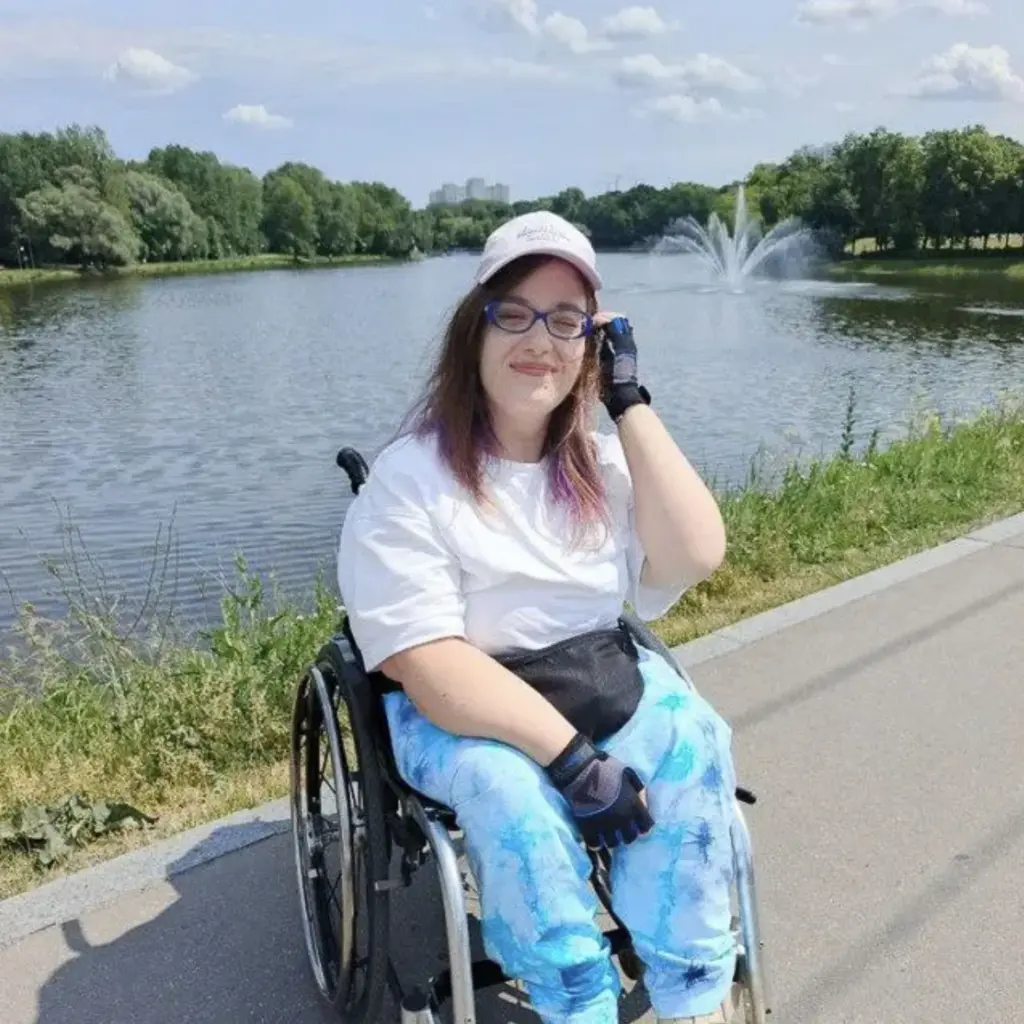
One day, a man approached Evgenia Panfilenko and began stroking her head while she was waiting for her husband near the store. Evgenia moves in a wheelchair, and cases when they begin to feel sorry for her or force help on her are not uncommon. Although such relatively minor stories do not make the news, they largely determine the quality of life of women with disabilities. More precisely, this is true for both sexes, but women’s problems are also multiplied due to traditional gender stereotypes. The everyday life in which they live is woven from tactlessness and violation of personal boundaries. “Reporter Stories” looked into how this manifests itself. "New Tab" reprints this material in full.
Optimus Prime
“Fuck, a little boy ran up and said, looking at me: this is Optimus Prime! They haven’t called me that before)"
It all started with this tweet, which one day accidentally appeared on my timeline. I looked at the young girl on the avatar and, out of curiosity, went to her page to understand what she had in common with the transformer Optimus Prime 1 and why there were so many likes on the tweet. Pretty soon I realized what was going on: the author of the tweet moved in a wheelchair. Three years ago she could walk, but now her myelopathy 2 and polyneuropathy 3 are progressing, and the doctors’ forecasts, apparently, are not optimistic.
Girl 4 herself told subscribers about all this in an open Twitter, in which, among other things, she described various cases of communication with certain people, familiar and not so familiar. Some of the entries were funny, like the entry about Optimus Prime or this one: “I’m sitting calmly, not touching anyone near the “No Parking” sign, waiting for my mother to come back from the store, and some man passing by says: “Are we breaking the rules?” The mood was lifted then.”
But most of these stories turned out to be not funny at all. For example, a story about how a random person began to give her advice that supposedly should have helped her get back on her feet, although with her diagnosis this is impossible. Or how she sent a psychologist, who for some reason decided to assure her that the girl would certainly start walking. Or how she cried for half a day when someone sent her an article about an equestrian competition because it mentioned a horse she herself had once ridden. But what struck me most was the story about a rather specific female experience: how her brother’s friend once invited her on a fake date, but in reality he simply lured her out of the house to mock and humiliate her.
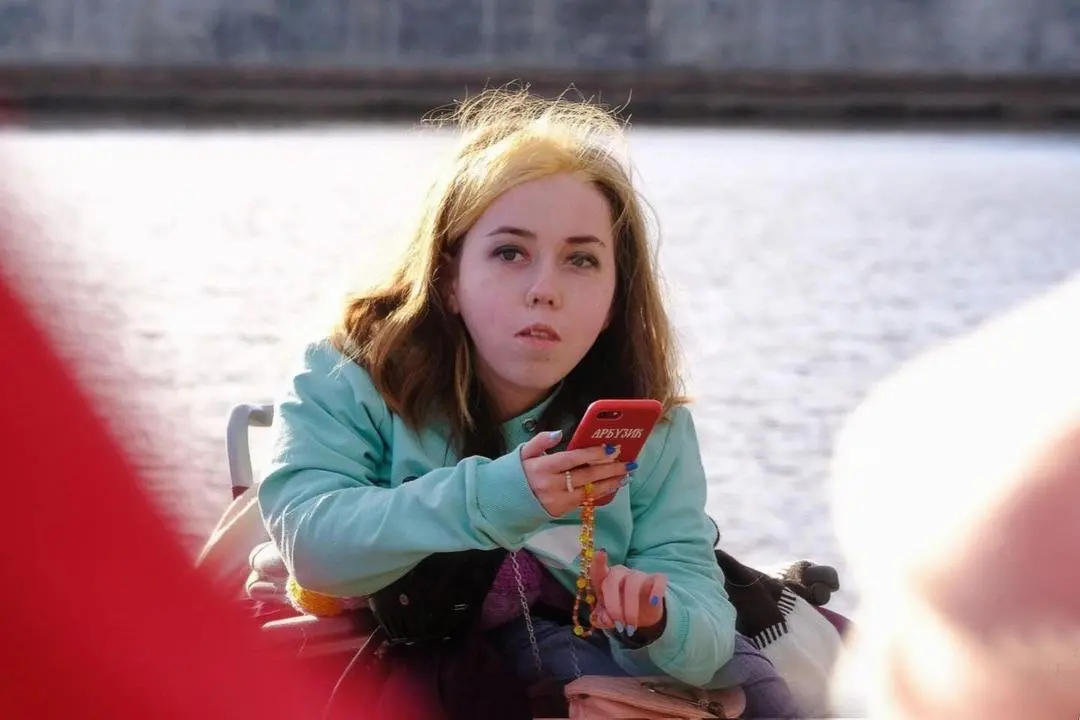
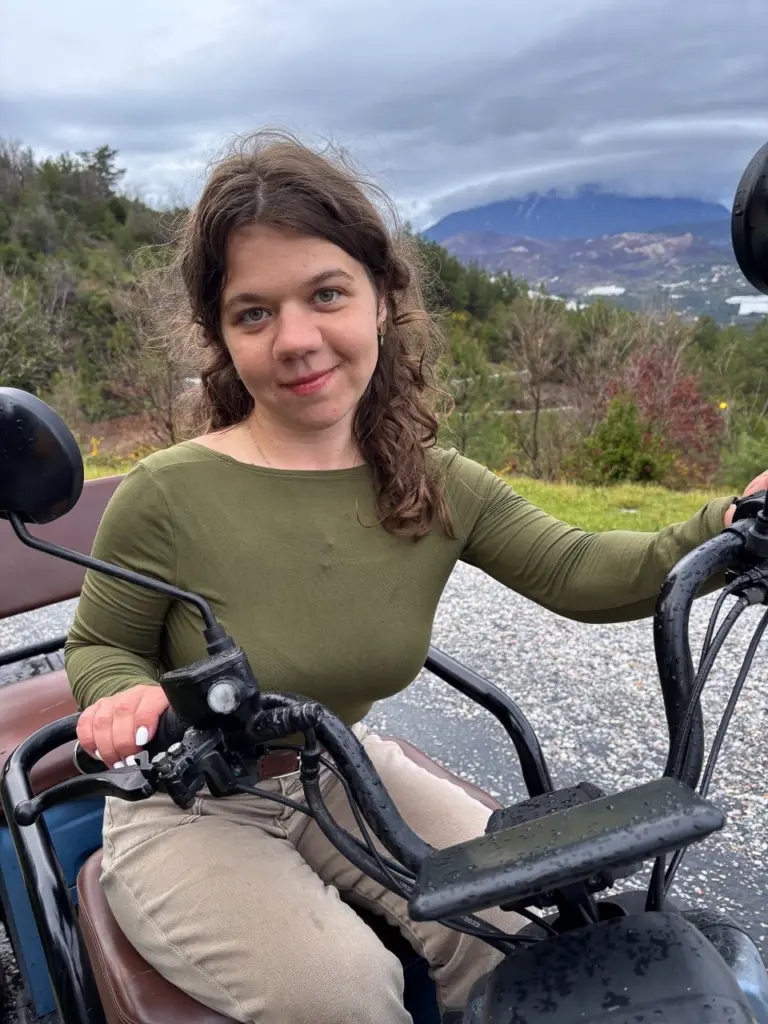
Evgenia Panfilenko says that there was “a lot of cringe” in her life, and other girls who move in strollers could well subscribe to this phrase
Until that moment, I somehow hadn’t really thought about the fact that in addition to the egregious episodes of physical and psychological violence from both strangers and loved ones that women with disabilities are subjected to, there is also this all: everyday experiences associated with humiliation, advances, or unwanted attention. The cumulative effect of these daily situations results in stress that not everyone, even a physically healthy person, can withstand.
This is well known to the participants of “ Invagirls, ” a community that residents of different Russian cities organized eight years ago, using three words as a slogan: “Women, disability, feminism.”
They came together because neither the femme nor the disability communities highlighted specific aspects of the lives of those who belong to these two groups equally. An early community post said: “We can’t run, we can’t scream, we can’t leave our homes because our benefits and medications depend on the region in which we live. We are tied to a place more than any other, we are tied to our rapists.”
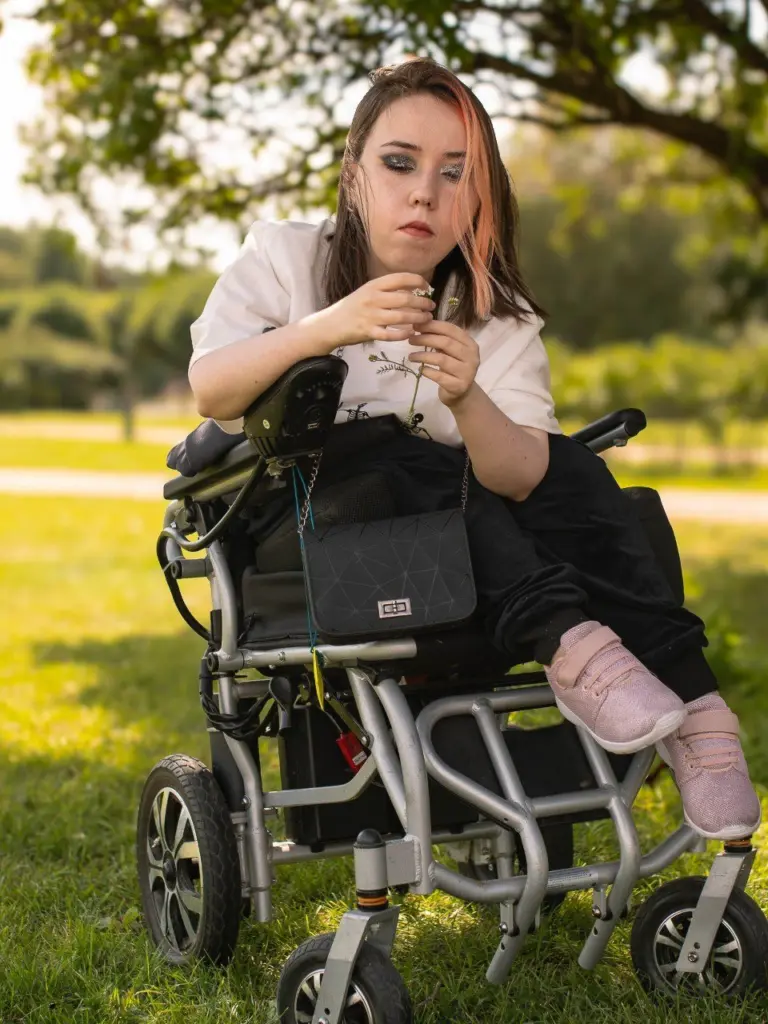
“How is it that a disabled person refused to communicate! Ungrateful!" - this is how Evgenia describes the logic of thought that makes many people violate the personal boundaries of girls
At the end of 2025, the organization Equality Now published a report according to which women with disabilities (in Central Asia, but there is no reason to think that things are radically different here) are at increased risk of sexualized violence, and rapists go unpunished. At the very beginning of the report it is directly stated that the reason for this is, among other things, “harmful stereotypes.”
So in this story I was not interested in acts of violence, but in things that, on the one hand, seem more “light” and sometimes even funny (like unnecessary attention or ridiculous compliments), and on the other hand, become the foundation on which violence ultimately rests, since they feed delusions. Any cringe, in short.
Unsolicited help
“There was a lot of cringe in my life,” this is how Evgenia Panfilenko, moderator of the Invagirls support chat, begins her story. “For example, there was a woman who spent fifteen minutes asking where my parents were and in what accident they died. After all, if I’m walking alone in a wheelchair, obviously my parents died in an accident and I’m the only one who survived. And I was just walking!
Such unhealthy interest from God knows who can await a person with a disability, regardless of gender. But for women there are a lot of additional “bonuses”. For example, some people are sure that women in wheelchairs simply need to give a piece of their warmth and affection.
— There was a story where I just stood at the store, waiting for my husband, since the store was inaccessible to me. A man silently approached me and began stroking my head,” recalls Evgenia. “I moved half a step back, he came closer and did it again. I backed away again. He looked at me as if I was the most terrible and ungrateful person, and silently left.
A separate category are drunks. They are often sure that a person in a wheelchair needs to communicate with them and, moreover, this is a kind of privilege, says Evgeniya:
“Once a drunk man accosted my husband and me, saying he wanted to talk to us and make friends. In response to our refusal, he called us assholes, and some other unpleasant word. From the series “How is it that a disabled person refused to communicate! Ungrateful!".
It is especially difficult for women to protect themselves in such situations.
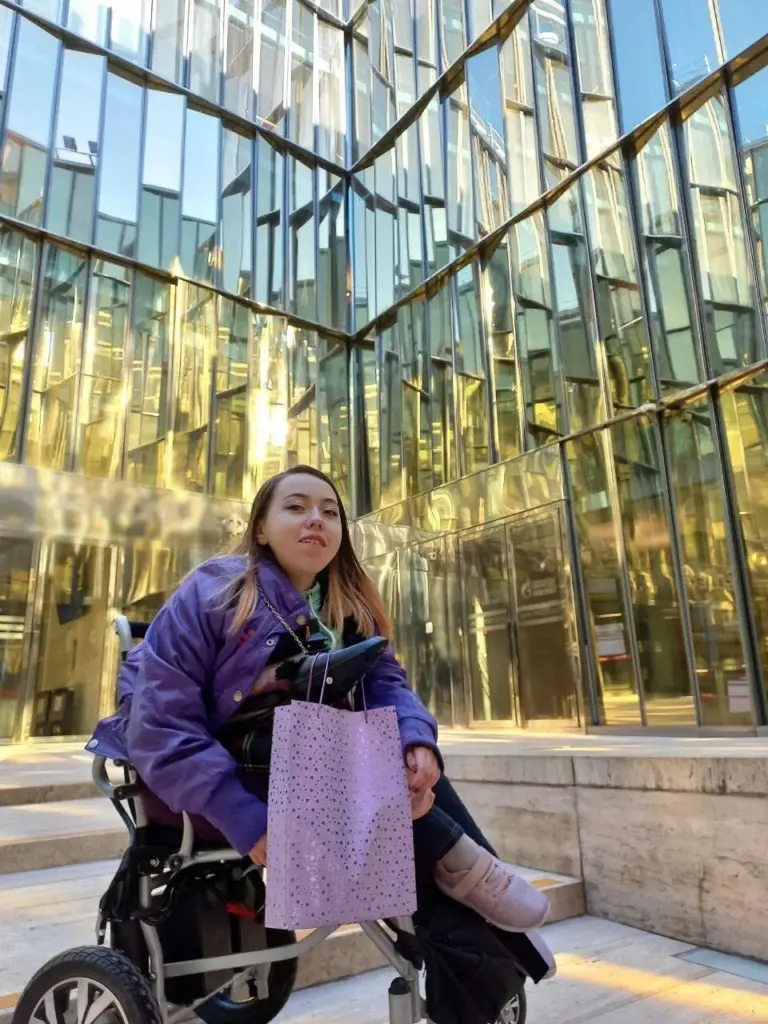
“Once a man almost dropped me from a ramp” - Maria Neupokoeva describes a typical result of unsolicited help from someone unknown
“If we, for example, make a cartoon or some kind of infographic where we show how many pats on the head a girl who moves in a stroller gets in a month - God, there won’t be any hair left on her head,” exclaims Alena Levina, one of the founders of the community. - Hey, you're not the first person who wants to come up and pat you on the head and say something like, “You're so strong, you're holding on.” Not the first, but the thousandth!
Alena has progressive muscular dystrophy, she moves in a wheelchair and often faces a variety of unpleasant situations. Alena notes that it can be difficult to trace the line beyond which obsessive care somehow in itself develops into harassment.
One day she was waiting for her bus at the bus stop. A stop, according to her, is always a point of stress, because you never know how the driver will react to a person in a wheelchair. Some people silently act according to the instructions and help people get on the bus into a space for wheelchair users, while others start to get confused. Previously, there were more of the latter, but for each such smart guy, Alena wrote a complaint to Mosgortrans. Now drivers have become much more diligent than ten years ago.
One day a bus pulled up to the stop, and a man standing next to him began to ask if Alena needed help. When it turned out that she did not need not only help, but also this route, the man struck up a long and painful conversation with her, for some reason immediately offering to go to the seaside on vacation together. Alena already barely remembers how he switched to intrusive proposals, so she cannot say exactly what he had in mind - either a spontaneous romance, or a spa treatment.
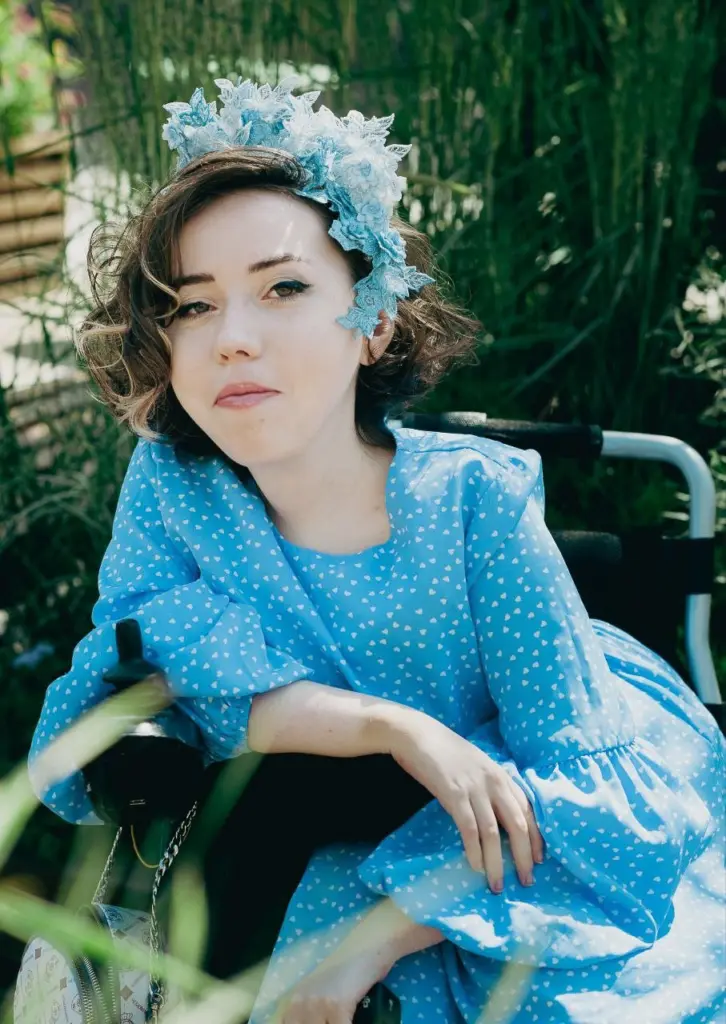
“Often believers say about girls with disabilities that she is a pure angel,” notes Ira Kutilina, implying that this is the same bad stereotype as the others
Treatment advice is generally a common unsolicited suggestion that girls in wheelchairs often hear. Especially, for some reason, from taxi drivers. Alena’s colleagues tell this, and she herself once ran into a taxi driver who said that she definitely needed to go to some doctor to whom he was taking a paralyzed relative, after which she got up and went.
“Here you are stuck in a Moscow traffic jam for two hours, all this time they are telling you about someone’s miraculous cure, but you can’t do anything,” Alena sighs.
You can avoid being stuck in traffic jams in a taxi, but move along the sidewalk in the thick of the crowd, but here the costs are, perhaps, even greater:
“When I walk at my own pace (being in a wheelchair) and don’t seem to interfere with anyone, there will still be people who, in order to move faster, push me forward, holding the handles of the wheelchair,” says an active subscriber of Invagirls, Muscovite Maria Neupokoeva. - Well, or they run to help, without asking either. One time a man almost dropped me off a ramp and told me not to be afraid. Because supposedly he knew how to operate a wheelchair. As a result, an emotional residue remains. At the same time, sometimes, when you share your indignation even with someone close to you, you can hear something like: “Well, they wanted to help, why are you so unsociable?”
Ira Kutilina’s friend was once called the “bride of Christ”
Maria has lived in Moscow for many years and constantly travels by public transport - no one has ever thought to ask her questions about independence. Until one day she called a taxi to meet a friend in the city center. The arriving taxi driver decided to give Maria a lecture that she should not travel unaccompanied, that she should call a taxi for people with special needs, and that in principle he did not take such orders.
“As a result, we somehow got there, I later wrote a complaint against him in support of the service, and they gave me a promotional code for a thousand rubles for the next trip,” recalls Maria. - That is, I paid for being scolded by the taxi driver for my own independence.
The most heavenly paradise
In such inappropriate attacks, people reveal their views on what place, in their opinion, should be given to people with disabilities in this world. They also often have an opinion about the other world. And women are destined for a separate corner in it - as obviously immaculate.
“Religious stereotypes are a completely different story,” laughs the head of the Invagirls psychological service, Ira Kutilina, who herself moves in a wheelchair. — Believers often say about girls with disabilities that she is a pure angel who has never done anything bad in her life. As if the very fact of disability elevates her - no vices for you, not even unclean thoughts. A close friend of mine had a related example of maximum cringe: she was once called “the bride of Christ.” Apparently, due to the fact that she cannot do or think anything bad, she should automatically end up in the most heavenly paradise.
“The most stereotypical thing is the vision of a person with a disability as a person suffering,” sums up psychologist Daria Krayukhina
The “purity” attributed to women with disabilities results in stereotypes about sexual experience, says Evgenia Panfilenko. There is still a myth that if you are in a stroller, then you do not need sex and are not interested. And if you are a woman, then you are ready for any sex. And this means that you may be subject to unwanted attention from men who also consider themselves almost benefactors (“at least you’ll sleep with someone”).
And if the right of a woman with a disability to full sex is still allowed, then it is better not to get pregnant after that:
“This is a myth: “Don’t give birth, don’t produce disabled people,” formulates Evgenia Panfilenko. “But not all diagnoses are inherited, and a woman has the right to give birth if she sees fit.
Man Suffering
However, it cannot be said that nothing is changing for the better.
“My first posts on social networks on the topic of disability appeared in 2014,” says Evgenia. — Then the response was different: often positive and supportive, but there were a lot of haters and simply incompetent questions. Now I notice that new readers don’t ask stupid questions or give unsolicited advice, because awareness has grown exponentially. The more information there is in the media, cinema, and the Internet, the better this matter will go.
Invagirls psychologist Daria Krayukhina sees the reasons for this in social attitudes: people with disabilities almost always and everywhere became victims of segregation to one degree or another. Today, in countries with developed accessibility, they are more visible simply because they can appear in public spaces with greater comfort:
“And then everyone can watch and see that these are the same people, that these are people with families, people who go about their normal business.”
At the same time, Daria emphasizes that people with disabilities are still underrepresented not only in public spaces, but also in culture, for example, in theater and cinema. More precisely, there are few examples when the plot is not built around the hero’s disability. Try to immediately recall examples when such a person would play just an ordinary character. Here you go.
“At first, the image and perception of disability is formed due to culture (mass culture, first of all), and only then, when we grow up, it becomes a political issue for us,” Alena Levina is sure.
According to Daria, people with disabilities are not properly represented in culture, which is no less important than, for example, in public spaces
“The most stereotypical thing is the vision of a person with a disability as a person suffering,” says Daria Krayukhina. “It’s common to think that these people want to get better more than anything else in the world, and we should feel sorry for them.” And such a compassionate attitude is a kind of virtue. It seems to me that this is clearly present in our culture.
According to Lyovina, unsolicited pity for people with disabilities is just one part of a large spectrum of unwanted models of attitude towards them. The other part of this spectrum is the one that is less often talked about and often even considered adequate: admiration and exaltation. Although, modulo, it is almost the same thing.
There is an excellent meme video about this in the Invarearls community. In it, people in wheelchairs are complimented for their singing, for their hair, but the king of all compliments still receives “audience applause”: “If I were you, I’d already die.”
Ira Kutilina notes that a girl with a disability is often considered dependent by default
“There is a stereotype that a person with a disability is an inspiration and motivator for others,” says Alena, “but most people I know are not trying to inspire and motivate anyone, they just cope with their problems, that’s all.”
Ira Kutilina cites the example of the series “Clinic,” where one of the characters, a black surgeon, suddenly turns out to be an employee appointed to personify inclusion in the institution:
“They put him on billboards, they make publications with him, but he doesn’t like it, because all his life he’s been dragged here and there just because he’s dark-skinned. It’s the same with us. There are many blogs of women with disabilities, in which they appear as ideal mothers who manage to both work and engage in social activities, and this really looks beautiful, but does not always reveal real problems to people.
Notes
The main character of most animated series, comics, films, books and video games about transforming robots. ↩︎
Myelopathy is a complex of spinal cord dysfunctions that occur due to inflammation, trauma, vascular abnormalities, or tumors. ↩︎
Polyneuropathy is a disease in which many peripheral nerves are simultaneously affected. As a result, signals from the brain to the body and back are disrupted, leading to muscle weakness, numbness, tingling and pain, most often starting in the toes and hands. ↩︎
She refused to communicate with the RI journalist. ↩︎