
Translated material
ICE in karma
Buryat lama, who requested political asylum in the United States, faces deportation to Russia

Baldan Bazarov. Photo: social networks
(18+) THIS MATERIAL (INFORMATION) IS PRODUCED, DISTRIBUTED AND (OR) SENT BY FOREIGN AGENT NOVASHOV ANDREY VALERIEVICH OR CONCERNES THE ACTIVITIES OF FOREIGN AGENT NOVASHOV ANDREY VALERIEVICH.
At the end of April, the ICE migration service arrested the Buryat lama Baldan Bazarov, who emigrated to the United States in 2022 and requested political asylum. Human rights activists and a journalist familiar with Baldan told Novaya about the life of the lama, who went against the grain, in Russia and the United States, and about what is now happening to opposition Russians in migration prisons - detenshens.
“The Motherland asks: shoot!”
“Bad Buryat is Good” is the name of the play, which in 2024 was included in the shortlist of the independent drama festival “Lyubimovka”. It was written by journalist Karina Pronina (media publication “People of Baikal”*). The play, which reflects on what happened to the Buryats after February 2022, has three main characters. Tsyren, a contract soldier in the Russian army, is a collective image. One of the prototypes was a Buryat who took part in hostilities on the territory of Ukraine and burned in a tank back in 2014. The same one that Novaya Gazeta wrote about and who was visited in the hospital by Joseph Kobzon, who during his visit, in front of journalists’ cameras, said the famous phrase that became a meme in Buryatia: “Are you Buryats? How glad I am!”
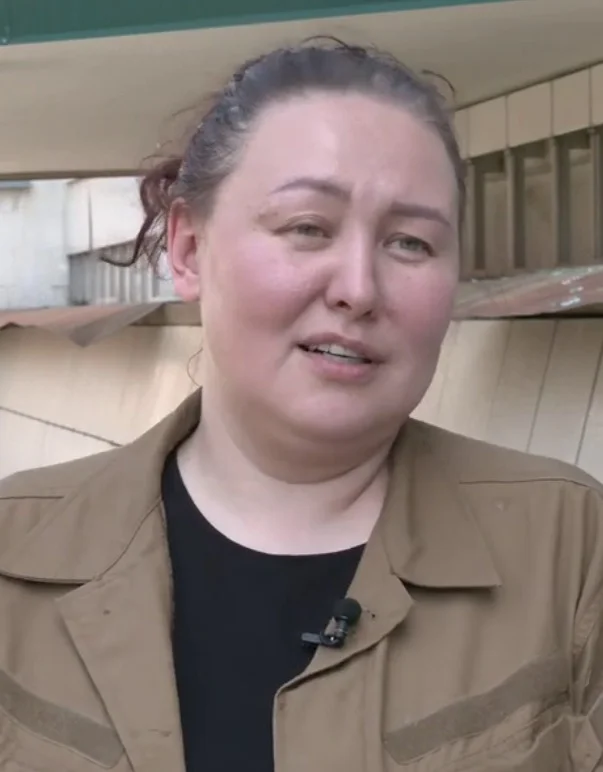
The other two characters are real people. Coach Ayuna Morozova is from Kharkov. Born in Irkutsk. Her father is Ukrainian and her mother is Buryat. In March 2022, a missile hit the building where she was located. Ayuna received serious injuries, spent many hours under the rubble and only miraculously survived. A lot was written about her then. She told journalists that not all Buryats are supporters of military action. But by 2024, when Karina Pronina interviewed her for the play, Ayuna had already become disillusioned with the Russians and, in particular, with the Buryats, and wanted nothing to do with them.
The third hero is Baldan Bazarov. “A Buddhist lama from Buryatia, after the beginning of ***, he left Russia for the USA,” it is said about him in the list of characters. The same Baldan who has been sitting in an American immigration prison in Denver since the end of April 2026.
The play “Bad Buryat is Good” was written using the verbatim technique. Baldan Lama's remarks are his direct speech. This is what he told the author of the play:
“If a person is a Buddhist, he must initially understand that war is bad. Buddhists are reborn, and there is no country where we cannot be reborn. Therefore, residents of Buryatia can easily be born in Ukraine (...)
In any case, murder is a sin. This man was good before [partial] mobilization - he didn’t lie, he was an excellent family man, he worked well, he helped everyone. And so he, so responsive, was called by his homeland, he responded and went. They gave him a machine gun - his homeland asks him to shoot, kill. He is like a sympathetic person - he shoots and kills. Such a person has good previous karma, but he fucking ruined it. In the future life, perhaps he will be killed. Even if he is born in a good family, he will definitely have problems because his karma is spoiled.
Recently, a minter from the Ivolginsky datsan died. He made Buddha statues. This is the most godly deed, he earned karma and was in the heart of Buryat Buddhism. He went to *** and was immediately killed. How could this be?
(...) Our lamas read a daily prayer for all living beings - from hell creatures to heavenly creatures. There are ants, cockroaches, and fleas... I ask them: have you already crossed out Ukrainians from this list?”
The official position of Russian Buddhist leaders is completely different. The mentioned Ivolginsky datsan is located near Ulan-Ude and is the center of the Traditional Sangha of Russia, to which Baldan Lama belonged. In the summer of 2023, a conference was held in the Ivolginsky datsan, at which the head of the Sangha Damba Ayusheev stated:
“Our Buddhists today are fighting for the Russian world, for the Slavic world, in order to preserve their Mongolian peace. And when the country is in a difficult situation, our Buddhists, including [military] units from Buryatia, worthily defend the interests of our country against all of Europe and the West. We are proud of this."
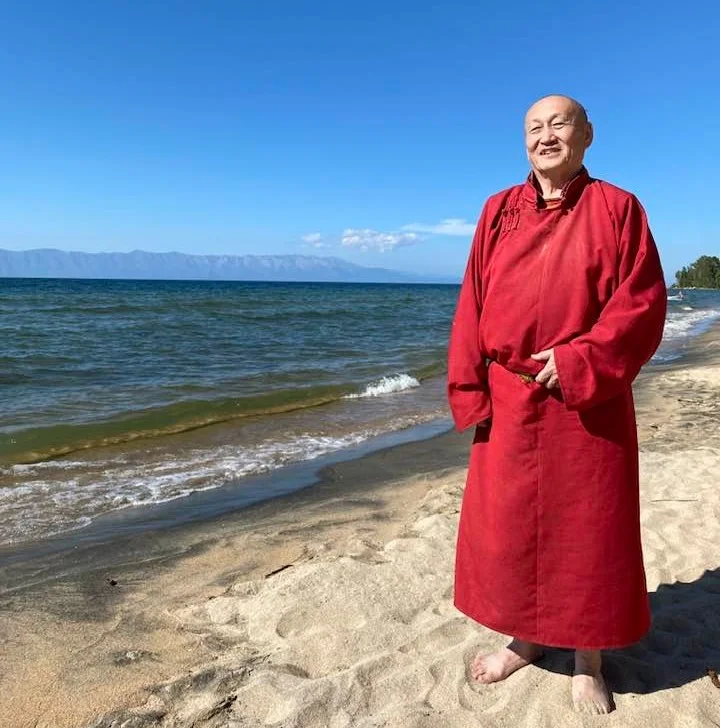
Russian lamas bless the participants of the North Military District before being sent to the front, and hold prayer services in the combat zone. In Buryat datsans, as in Orthodox churches, they weave camouflage nets and sew equipment for the military.
There are several Buddhist communities independent from each other in Russia, but only two lamas are known who openly spoke out against the SVO. These are the Buryats Baldan Bazarov and the former Supreme Lama of Kalmykia Erdni Ombadykov, who left his post, emigrated and was declared a “foreign agent” in Russia.
“It was very difficult for Baldan Lama to take the position he took.
The problem is that, unfortunately, the XIV Dalai Lama ( spiritual leader of the followers of Tibetan Buddhism - Ed. ) did not speak out definitely (...) [regarding the fighting in Ukraine]. He had a streamlined statement in February 2022 about “world peace” and that Buddhists are for non-violence.
But there were no specifics, and this is very sad, because the authority of the Dalai Lama is very high among Russians professing Buddhism - Kalmyks, Tuvans, Buryats. We have repeatedly tried to contact the Dalai Lama through his representatives, but there has been no response. As my colleague says, the absence of an answer is also an answer,” Buryat activist and journalist Alexandra Garmazhapova* told Novaya. — Buddhist lamas are actively involved in propaganda. Buryats whose relatives are in the northwestern region go to datsans and shamans to find out about the fate of loved ones, pray for the missing, hang a Buddhist symbol on a tree, and order a prayer service. Prices for such services, excuse the rudeness, have increased greatly. Shamans and lamas profit from this.
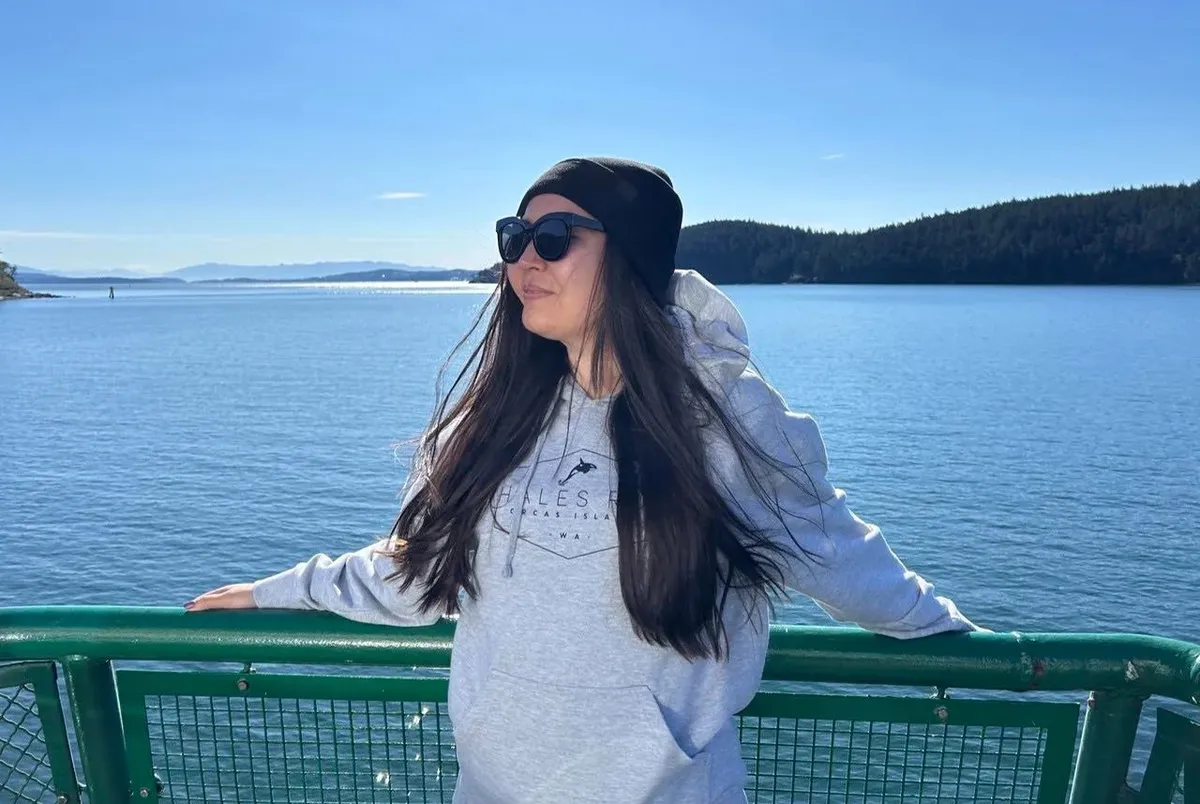
Like Karina Pronina, Alexandra Garmazhapova communicated with Baldan only via video call. They met in 2023.
— With his facial expressions, intonations and accent, he reminds me of my dad, so I have a warm relationship with him. He gives the impression of a kind and caring person. When I ask emigrants whether they would like to return to Russia, almost everyone answers in the affirmative, saying that they miss the cities in which they lived. And Baldan Lama replied that he would not want to be in the company of people who supported (....) [military actions]. This was an honest and direct answer,” says Alexandra.
Archpriest Andrei Kordochkin* has been corresponding with Baldan Lama since November last year.
— We discussed possible programs for the demilitarization of religion in Russia. This is a question that concerns not only Orthodoxy, but also Buddhism,” he told Novaya. And he reminded that in Russia, official representatives of Islam, Judaism, Protestantism and the Old Believers are also in favor of what is happening. According to Kordochkin, one of the reasons is that loyalty to the regime is well monetized.
“It seems to me that at the moment in Russia the Roman Catholic Church has not taken the path of serving the authorities. Of course, in all traditional religions there is opposition, but for obvious reasons we cannot see or hear it. Having become visible, the oppositionists will be forced to emigrate or end up in prison, explains the archpriest.
From datsan to truck
Journalist Karina Pronina asked Baldan Lama for comments even before she decided to write the play, and continued to call him before Bazarov’s arrest. She knows more about him than other interlocutors.
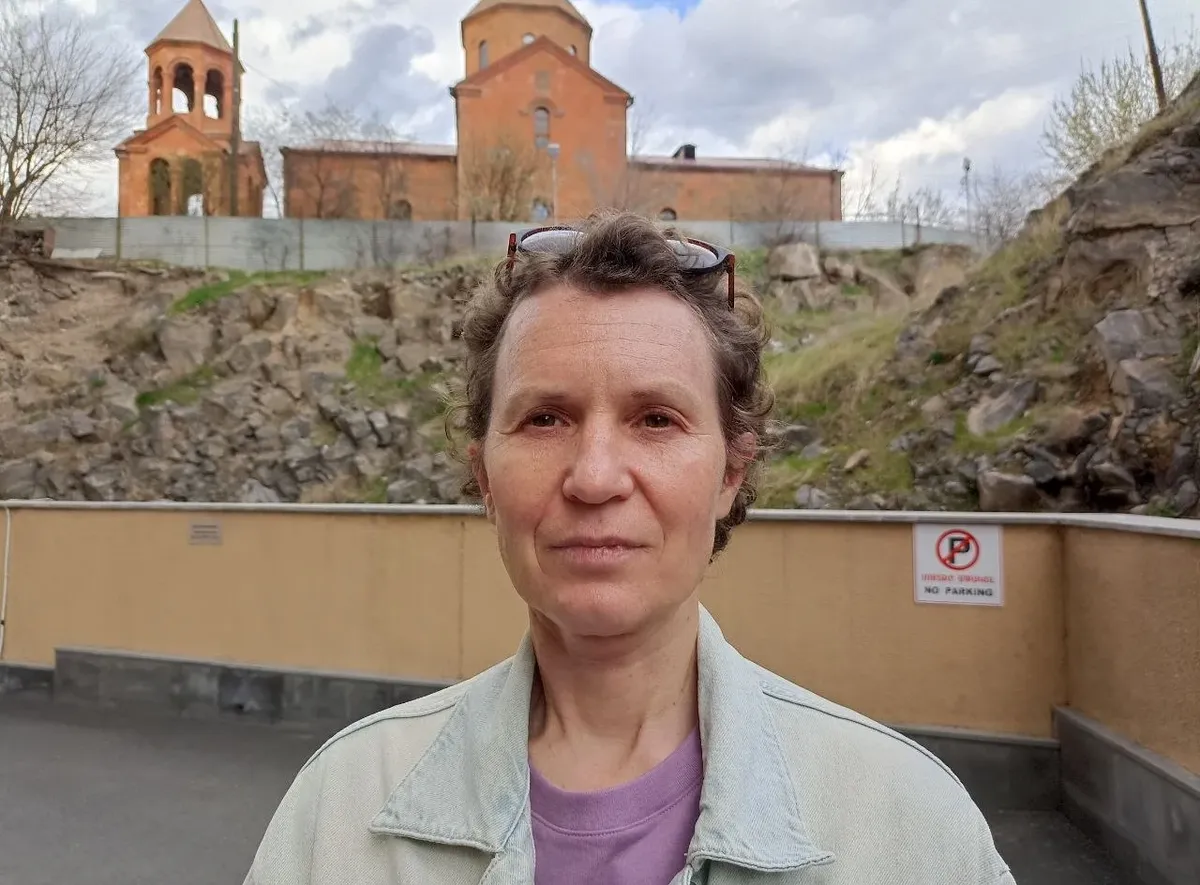
Before emigrating, Baldan Bazarov was the rector of a datsan in the village of Kyren, Tunkinsky district of Buryatia.
— I’ve been to the village several times. This is a large regional center. A typical Buryat village is quite large. There are several schools and a hospital there. The places are picturesque. There is a river nearby. There are mountains around the village. It is colder there in winter and hotter in summer than in the region as a whole. In Buryatia, the majority of the population is Russian, but there are areas where mostly Buryats live. Tunkinsky district is just like that. Residents were and are engaged in hunting and cattle breeding, go for wild garlic, mushrooms and nuts, Karina tells Novaya.
The villagers go to both lamas and shamans. However, this is typical for all of Buryatia.
Baldan Bazarov was born sixty-five years ago not far from the places where he later became rector - in the village of Mondy near the Mongolian border. His grandfather, who was repressed in the 30s, was also a lama. The family spoke Buryat; Baldan only learned Russian at school.
After serving his military service, he entered the Pedagogical Institute in Ulan-Ude to become a primary school teacher. But he didn’t finish college and went to study at the Buddhist University in Ulaanbaatar. There his classmate was the above-mentioned Damba Ayusheev. Returning to Buryatia, Baldan Bazarov was a full-time lama of the Ivolginsky datsan for several years.
Karina Pronina notes that, in addition to Buddhism, the Buryat language has always been important for Baldan. According to information that Karina cannot now verify with the lama himself,
While studying in Mongolia, he wrote a letter to Ronald Reagan in which he urged the US President not to spend money on the arms race, but to send it to Buryatia so that Buryat could finally be taught there.
Karina managed to talk with a relative of Baldan, who said that since childhood he was not like everyone else, and was acutely worried about any injustice.
Unlike most lamas, Baldan was interested in politics, and has been an oppositionist since at least 2014. He disagreed with the authorities regarding his position on Crimea. Before the State Duma elections, he distributed leaflets in which he called for voting for any party except United Russia. The police came to his datsan for clarification. Baldan simply kicked them out. It could have ended in a criminal case, but it turned out okay.
The lama told Pronina about what happened to him after February 2022 in an interview for a documentary play:
“When the *** started, I didn’t feel anything good. I wanted to go to Ukraine (...). I did not intend to shoot, I wanted to help the captured Buryats. But it turned out that Russians, and especially Buryats, are not advised to go there. My friends asked high-ranking people for me, but they said no, we don’t allow Russians in. They wrote to me - don’t poke your nose in here, here comes the ***, they will kill a Russian, especially a Buryat, without any regrets.
Many in Buryatia supported this ***. (…) Every day I faced this. A believer comes to the datsan and says - we are doing everything right there. Sometimes I even had to argue with them.
I left Russia at the beginning of March 2022. First to Mongolia, then to Istanbul, then to Mexico. In June, he crossed the border in the city of Reynosa. A Christian priest helped us cross the border. In the United States, I went to a cafe and drank Coca-Cola there.”
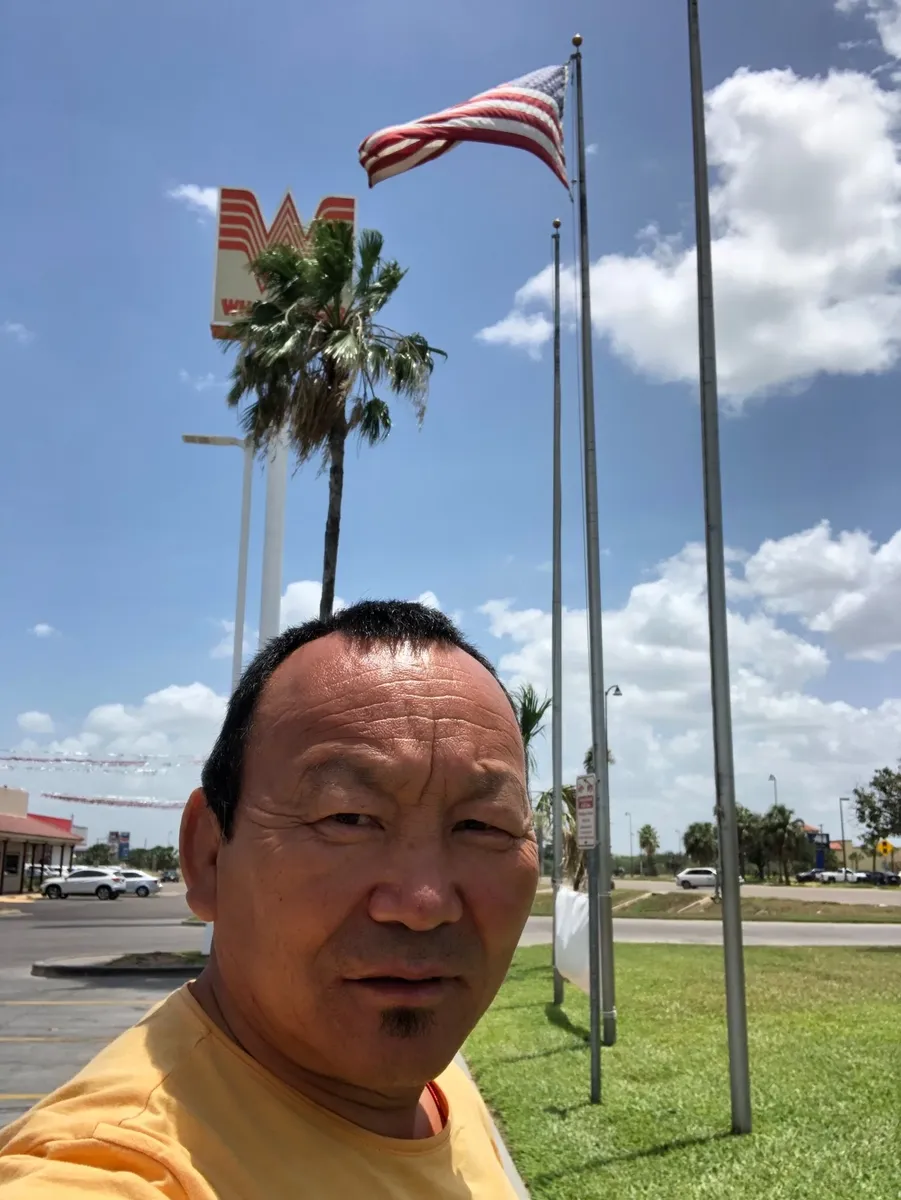
In Buryatia, Baldan had a successful career. He is the rector of a large datsan, who has earned the respect of the parishioners. He did not agree on political views, but was friends with his former classmate Ayusheev - in fact, the head of the Buryat Buddhists. After Baldan’s emigration, Ayusheev, loyal to the authorities, speaks sarcastically and derogatorily about his former friend. Baldan Bazarov even sympathized with Ayusheev. He believed that he was forced to say nasty things about anti-war Buddhists, and admitted that he did not know what he would have done in his place.
In the USA, Baldan requested political asylum. He worked as a hotel cleaner and courier.
“Then I realized that I wanted something more.” Went to New York to get a driver's license and become a truck driver. As far as I know, in the USA such a profession is a fairly high level for an emigrant. He probably had a driver’s license in Russia, I don’t know for sure. It took him several months to get his license in New York. At that time I lived in a refugee camp, almost at the airport,” Karina Pronina tells Novaya.
Bazarov managed to find a job as a driver. In April, US Immigration and Customs Enforcement (ICE) officers detained him during a regular flight in Wyoming.
Fellow countrymen - representatives of the Buryat diaspora in the USA - communicate with Baldan, who was imprisoned. The Novaya correspondent tried to write to them, but they did not answer. Karina Pronina suggests that the lawyers forbade them to communicate with the press. As far as Karina knows, an acquaintance of Baldan visited him in prison. This acquaintance would probably have let human rights activists know if something terrible had happened to the llama.
"Protection, not expulsion"
Dmitry Valuev, the president of a non-profit organization that provides Russians with human rights assistance, is ready to help Baldan Lama.
According to Dmitry, the situation in which Baldan found himself is, unfortunately, typical. At the same time, he clarifies that, contrary to popular belief, Russian pacifists in the United States began to be sent en masse to emigration prisons not under Trump.
“In mid-2024, the Biden administration made a targeted decision on Russian emigrants and emigrants from several countries of the post-Soviet space - Armenia, Georgia, Uzbekistan - that citizens of these countries crossing the American border and requesting political asylum should be placed en masse in emigration prisons,” explains Dmitry Valuev.
There was no official justification, but in 2024, Russian intelligence agents posing as refugees and ethnic Uzbeks with Russian citizenship associated with ISIS were arrested on the US-Mexico border.
“For any state, the issue of national security is a priority over human rights,” says Valuev. — When Trump came, he tightened the screws, changed migration policy in relation to everyone, he did not specifically single out Russians. But Trump closed the border. He began to actively arrest refugees within the country.
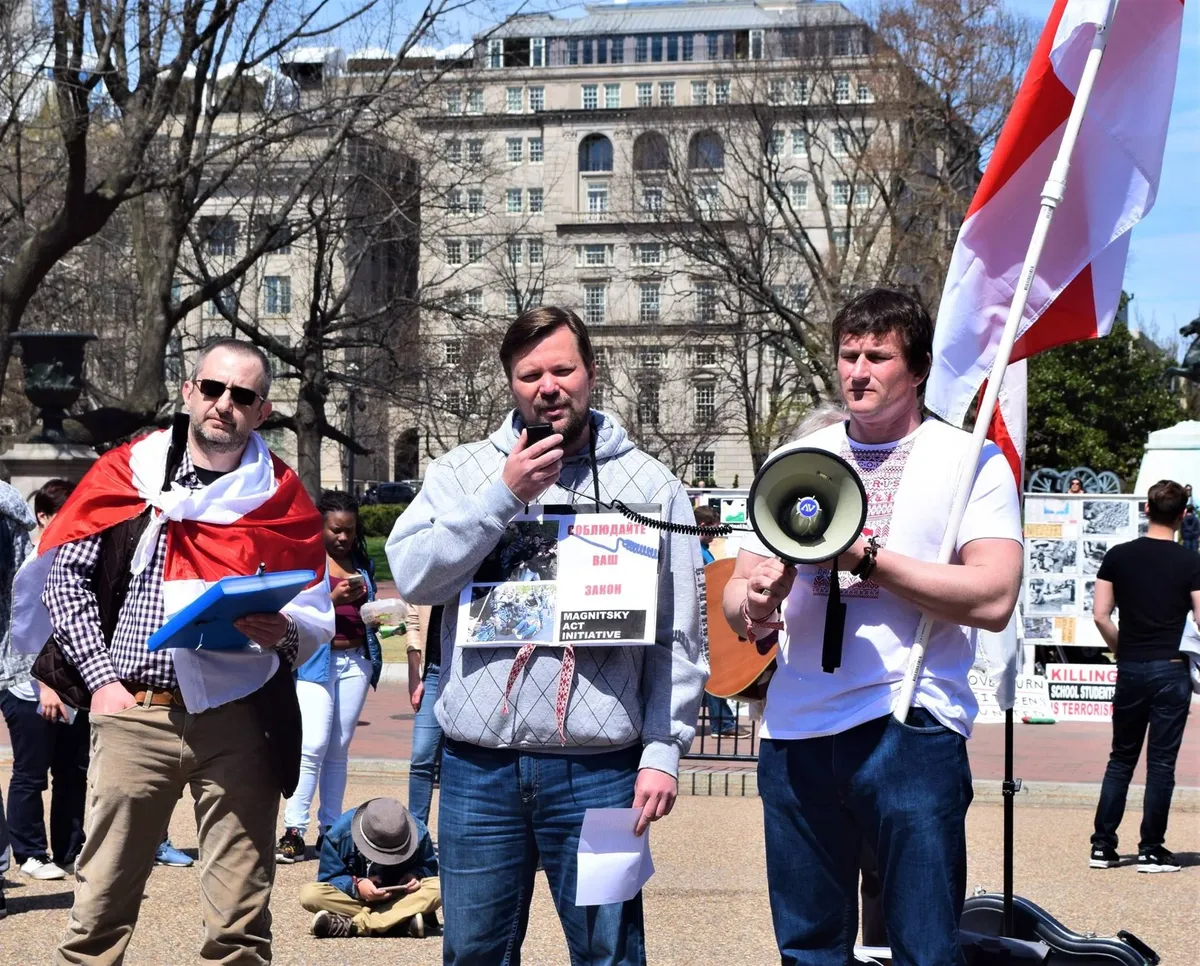
As Valuev explains, emigrants to the United States often become truck drivers, so there are many representatives of this profession among those arrested.
Over two years, about 150 cases of arrested Russians passed through Russian human rights activists in the United States. The very first one is a pacifist from Yakutia. He spent six months in prison. Now he is free, has the opportunity to work, but the US authorities are still considering the issue of granting him political asylum.
Fifteen hundred cases can be divided into three approximately equal parts. The first have already achieved political asylum, the second are still in detention and are awaiting an appeal, and the third have been deported to Russia.
As Dmitry explains, the chances are higher for those who seek help in time. The lawyers that human rights defenders find need time to prepare for the process; they need to collect and translate documents into English. It is easier to achieve political asylum for those who remain free.
- I’ll give you one example. Anton, like many others, asked for asylum on the border with Mexico. Back in 2024, he was sent to prison. Anton has a strong case. He is a supporter of FBK***, investigated corruption at the local level and was persecuted for this in Russia. Anton collected documents while in emigration prison. The emigration judge refused him because he considered that Anton had taken too long to prepare for his trial. The first appeal was also lost. Now Anton’s case is in federal court, which, I hope, will make a positive decision. Anton knew nothing about our organization; he contacted us only after he received a refusal,” says Valuev.
Anton is still in migration prison. As Dmitry Valuev explains, the conditions of detention differ in different cubs. In some places, emigrants with political cases are kept separately from those who committed real crimes in the United States; in others, everything is mixed up. In prisons, food rations, length of visits and the attitude of guards towards prisoners vary.
“We can say that in almost all migration prisons there is an acute issue with medical care. It is assumed that the person will stay there for several weeks, then he will either be released or deported. Therefore, the only medications are painkillers or antidepressants. But there are Russians who have been in such prisons for one and a half to two years. We have a ward in California whose fate we are very concerned about. He is informed that he has fluid in his brain. He faints and cannot walk. Several times he was sent to the hospital, but then returned back to prison. He is not receiving proper treatment. His life is in danger. We are now approaching Congress on this issue. A Russian woman is being held in Arizona who uses crutches to get around due to arthritis. She has been in cubhood for two years now. In the same state, we have a ward of ours who underwent two heart surgeries in prison. They operated on him in the hospital, but then sent him back to prison,” says Dmitry.
According to Dmitry Valuev, American officials, on whose decisions the fate of anti-war Russians depends, often have a vague idea of the scale of repression in Russia and consider only media figures—Kara-Murza*, Khodorkovsky*, Kasparov*—as oppositionists.
The rest are just a gray mass for them. They simply do not believe that there are thousands of Russians in need of political asylum today.
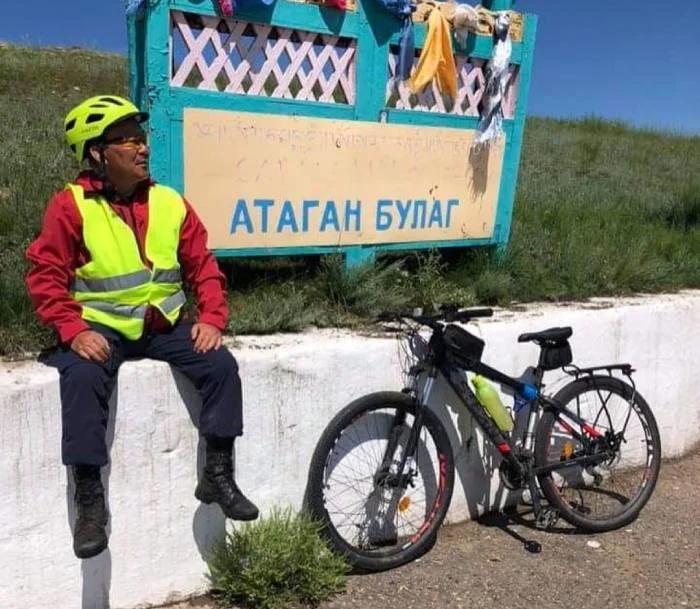
“The case of the anti-war lama Baldan Bazarov illustrates this situation well,” says Valuev.
Дмитрий считает, что лидеры российской оппозиции должны развеять это заблуждение и помочь принимающим странам выработать критерии, которые помогут отличить политэмигрантов от тех, кто таковым притворяется.
Балдан Базаров давал интервью «иноагентским» и «нежелательным» СМИ, снимался в видеороликах, не скрывал своей позиции по поводу СВО. Депортация в Россию для Балдана Базарова наверняка обернется уголовным делом и огромным сроком.