
Translated material
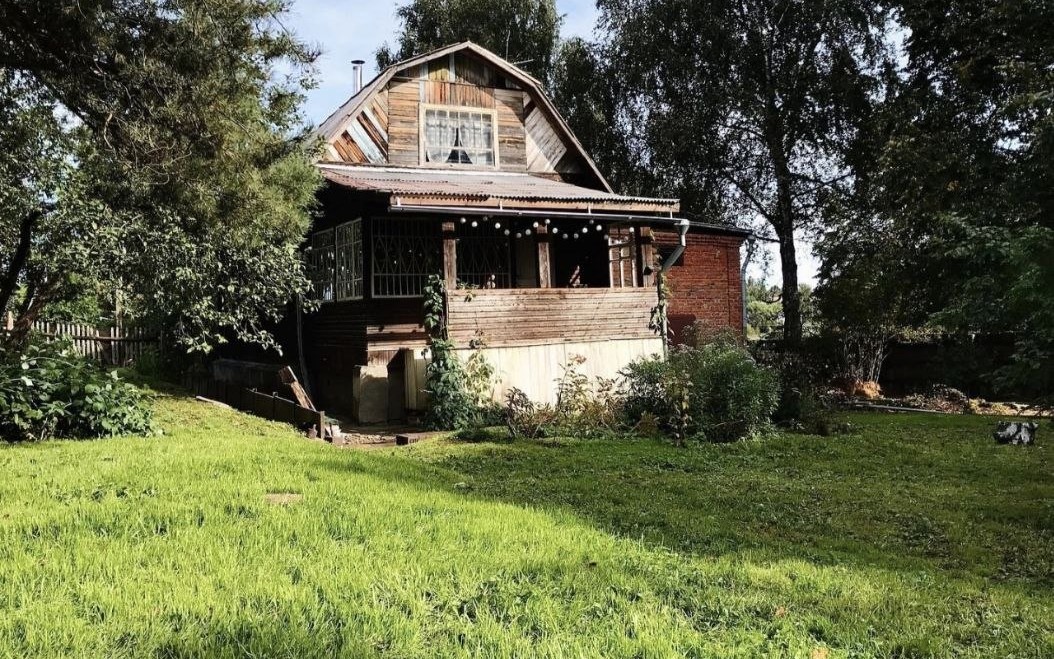
House made of sleepers. Lera, 32 years old, Sverdlovsk region
Why do millennials buy country houses and dream of moving to the countryside?
There are dozens of stories on social networks about young people buying a house in the village and excitedly beginning to invest money, time and effort into it. "Devil" talked to people who got involved in this adventure. They talked about why they decided to buy a village house, what surprises they encountered along the way, and what living outside the city gives them.Two-thirds of Russians want to have their own dacha or plot of land , according to the results of a survey by VTsIOM. Most often, millennials look at a house in the village. VTsIOM distinguishes younger millennials (born between 1992 and 2000) and older ones (1982-1991) - that is, people who are now from 26 to 44 years old.
The authors of the survey explain that there are various reasons behind this desire: the cost of apartments in the city is unaffordable for most young people; the ability to work remotely from anywhere where there is Internet access; tired of noise and bustle. Interest in country life is also spurred by the fashion for rural aesthetics. But reality, as a rule, is very different from the beautiful picture.
“People don’t fully understand the specifics [of rural life], but they are charged with images from [social networks],” says photographer and author of the book “Kratov’s Dachas” Fyodor Savintsev. “Many people think: “I’ll buy a house for little money and that’s it.” But then a million pitfalls arise, and people have never encountered construction.” Savintsev calls country life an attempt to ground himself and get away from city stress:
“For some, country life is an opportunity to relax, for others it’s just hype, for others it’s everyday life. And with age comes the desire for autonomy, and country life gives a feeling of imaginary freedom.”
In his opinion, dacha aesthetics acquired a special role for today’s city dwellers when the pandemic began: many were then saved by the freedom of village life.
At the same time, it is necessary to separate the dacha and the village, Savintsev adds, the first is more about recreation, the second is about everyday life and permanent life. “A house in the SNT Gardening Non-Profit Partnership , a house in an old dacha village and a house in a village where there is a form of village life - all these places are different. Summer residents treat strangers calmly, do not gossip and lead a measured country life. And the residents of the village, for whom these places are ancestral, are very jealous of everything. This is a miniature fractal of the city.”
House made of sleepers. Lera, 32 years old, Sverdlovsk region
I was born in the city of Ivdel in the north of the Sverdlovsk region and lived there until I was 18 years old. I remember the taiga, the mountain river, nature. I knew every neighbor by name in my three-story house, and I spent a lot of time with my dad in the forest and fishing.
Then I went to study in Yekaterinburg: the big city attracted me. But after six months I began to feel uncomfortable. I didn't understand why. I moved around the city a lot, tried different areas and houses.
In 2019, I planted the entire balcony with plants, I missed nature so much. My husband and I already had an apartment in Yekaterinburg, but we wanted a house and a plot of land. Then there was no such opportunity, so we sold the apartment and bought another one - larger and in a green area. It didn't help.
Then we realized that we were passionate about the idea of living outside the city. After 2020, this became possible: working remotely and the apartment no longer held us.
We started going to look at plots and houses, but nothing responded to me at all. Cottage communities with high fences made of corrugated sheets seemed uncomfortable. I liked the old village houses more - there was an atmosphere of real life there. I also wanted the site to be near a pine forest - my grandmother lives near a cedar forest, and I remember that smell.
We found our house by accident. We went to look at a completely different house 40 minutes from Yekaterinburg, but it was too expensive: it cost more than two million rubles, and we wanted to spend it at one and a half. The realtor said, “There is another house on this street.”
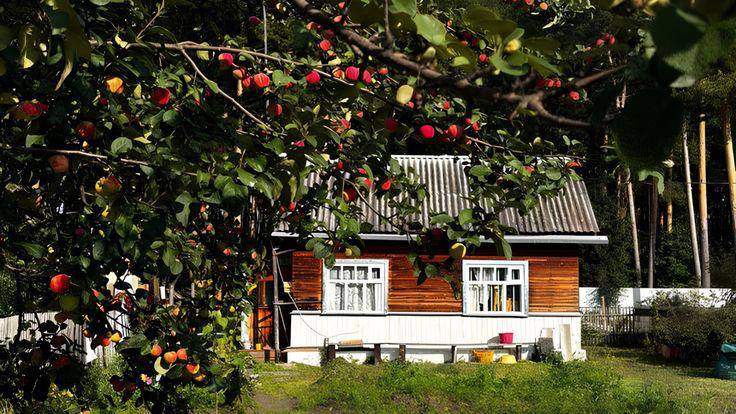
It was a house with an area of 28 square meters, with a stove. It was very clean there, there was a pine forest nearby. We liked everything, everything looked great. But when we opened the walls of the house, it turned out that part of the supports were made of railroad ties with creosote . A toxic, oily liquid with a pungent odor obtained from wood or coal tar. It protects wood from rotting, which is why railway sleepers are also impregnated with it . They wrote to me on social networks that such a house will live for another 500 years, but it is a carcinogen! The danger is in the fumes: when the house heats up, you breathe in a toxin. In the summer we would smell it, but in the winter it was incomprehensible.
In winter it is generally dangerous to buy a house: you cannot see the site, there may be high groundwater. There was a mountain of garbage on our site - we removed four cars and paid 40 thousand rubles for it.
I couldn’t find any information on the Internet about what to do if your house is made of sleepers. Experts came and said: “This is demolition.” We came up with a temporary solution: we lined the walls with material, like in a bathhouse. It turns out to be such an isolated cocoon, it is safe for health.
At first I was upset, but now we look at it as a cool experience. Guys who found themselves in this situation began writing to me, asking for advice.
My greatest fear in my new life was my neighbors. What will they be like? What if they like to listen to music loudly? At first, the neighbors were skeptical about us: “You’ll have fun, make a lawn and only grill kebabs.” But now they see how we work and constantly give us some seeds and treat us with vegetables.
Dacha is our family hobby. We like to create our own place with our own hands. Now we have a life inside a dream. Yes, it can be difficult psychologically and physically. Sometimes you sit sad, tired, a neighbor comes to you with a joke, and you already think: “Well, okay, everything will be resolved.” The neighbors really helped us in the first year, when I was worried that I had bought a house made of sleepers and felt deceived.
Now I firmly answer that I do not regret buying this house. This is the best investment you could have.
64 strawberry bushes. Daria, 32 years old, Chelyabinsk region
I have never lived outside the city, but I wanted the children to be closer to nature and spend more time in the fresh air. A year ago, my youngest, third daughter was born, and it was as if a switch had clicked: I realized that I wanted to buy a dacha.
It took us a long time to find a suitable home. Some dachas ended up being seized, others simply weren’t suitable. In October, I bought myself a cross stitch: a wooden house, and a large lilac bush growing nearby. Two months later, the husband says: “Let’s go, I’ll show you the dacha.” We arrive in the village, and there is this house with embroidery! We immediately realized that this was fate. My husband has not seen this embroidery.
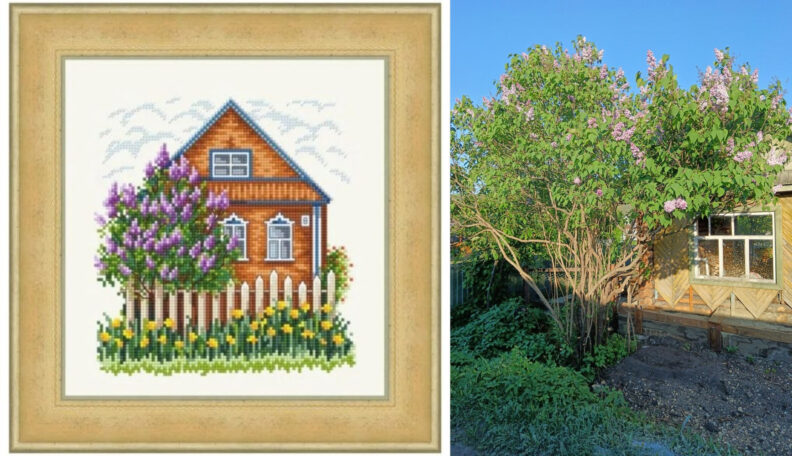
We bought the house in winter; the snowdrifts were waist-deep. Everything seemed more or less nothing. And in the spring it turned out that there was water in the basement; we drained it for four hours. The lower logs in the frame rotted, we had to break everything, raise the house on jacks, roll out the lower logs, and roll up new ones. Now we have a log house, the foundation has been poured, the underground floor has been filled. There is nothing left of the previous house.
Everyone hopes to find something inexpensive and that everything will be very good inside. But few people are ready for the fact that everything will have to be rebuilt.
My husband does everything with his own hands. We have a tractor, trailers, carts. We sawed the floor boards ourselves: my husband’s parents have their own sawmill. It turned out cheaper than buying ready-made boards.
The dacha is my outlet. I like being there even now, when we are in devastation. There I throw out all the negative energy that I accumulate with three children. At the dacha I can be with myself, self-actualize, turn off my thoughts. I dig in the ground or paint something and don’t think about everyday life. For me, this is an opportunity to relax and work with my hands.
In our SNT, many young people from Yekaterinburg and Chelyabinsk buy houses. It seems to me that people are tired of people and city noise. In the current situation, I want to have an island of stability where I can do whatever I want and feel calm.
I screamed that I would never plant anything. As a result, yesterday I planted 64 strawberry bushes, 19 tomatoes, two beds of potatoes, carrots and beets. And we also got five chickens.
The dacha is literally a 10-minute walk from our apartment, where we moved because of my husband’s work. My husband and I decided that first we would try to build a high-quality small house, put the area in order, and then we’ll see.
Turn off the alarm. Natasha, 33 years old, Moscow region
We purchased a dacha in December last year. I nurtured this idea for a couple of months, warmed up my husband little by little, and monitored advertisements on Avito. The budget did not allow us to build a house: it was difficult, expensive, and time-consuming. We decided to take a ready-made one.
We went to three or four viewings. We were looking for an area with greenery, so that there was a forest nearby. As a result, we found an area where we looked at each other and immediately realized: “Yes, this is it, I want to stay here.” The house has a very beautiful veranda with panoramic windows, pleasant SNT, can be reached by train: we don’t have a car.
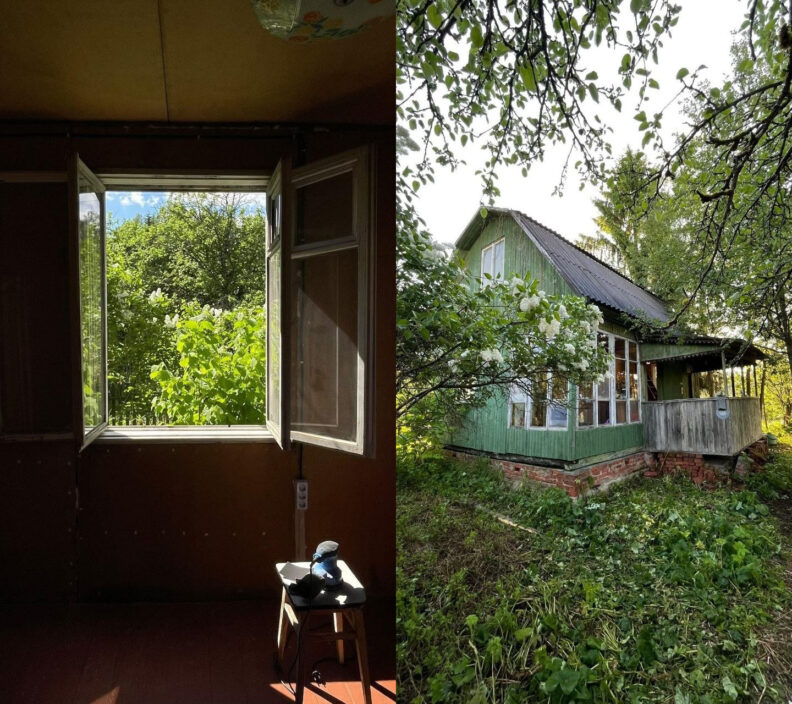
We didn't find any surprises in the house. All the small flaws were shown to us during viewing. We have already installed water, installed a dry closet, and changed all the wiring. There is always work on the site. My husband likes to buy different equipment, fix it, and set it up. From Thursday to Sunday we are there: clearing the site, restoring the house. I want to try carpentry and work with wood.
Many people say that a dacha appears with age, they say, they are drawn to the earth. For me it’s the opposite: the dacha is about childhood.
In the summer I spent two months with my grandmother in a village in the Bryansk region. I was never forced to work there, so for me the dacha is synonymous with the word buzz. Go to the lake, ride bikes, build huts, light a fire.
I like physical work. Working in the fresh air is grounding. The concrete mixer of thoughts that are constantly in your head is turned off - from the political situation to “what to cook for dinner.” You spend your energy on creative work, not on anxious thoughts. I highly recommend it to all anxiety sufferers.
Even before the purchase, my husband and I agreed that if the dacha was not a pleasure, we would sell it. What's the point of spending money, energy and time if you don't enjoy it? But we were delayed, and so far the flight is normal.
A childhood dream. Natalya, 37 years old, Rostov region
I have very warm memories from childhood, when we went to my grandfather’s dacha, where there were currants, cherries, and cherries. The dacha seemed like something magical, and I was always drawn to nature. Over the past few years, the idea of a summer house has become an obsession. I decided it was time to act.
Two months ago I bought an almost empty plot of land, overgrown with rose hips and old cherries. The only thing there is a small iron container for inventory.
My boyfriend and I are working on the dacha. He also loves nature and working with his hands. Without his help it would have been much more difficult for me. I know a lot of girls who do everything alone, but it would be hard for me to do it alone. The guy does the electrical and water, I am responsible for the beauty, selection of plants, search for materials.
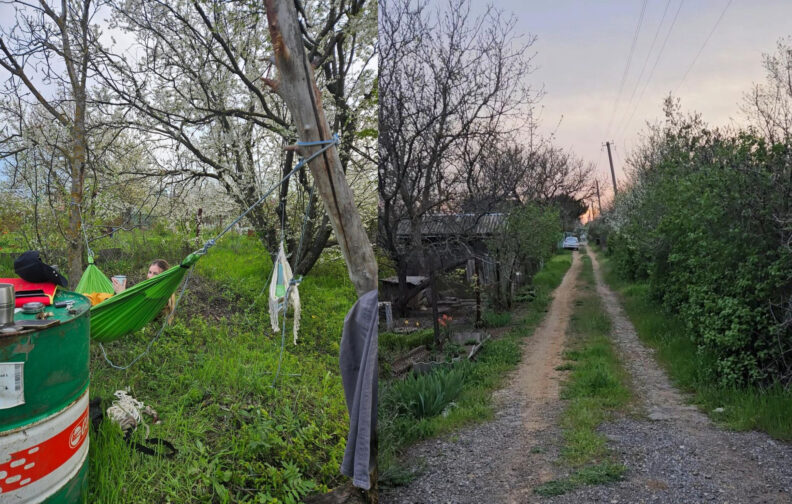
The idea of recycling is close to me; I constantly find what can be made from old bricks or natural materials. We made a small area from the remains of the bricks on the site, installed water, and placed a washbasin on the street. Or wooden pallets: they can be disassembled, sanded, coated with oil. An unnecessary tree, if you tweak it a little, looks beautiful and stylish. I am close to the philosophy of the art of small steps: a little bit of this, a little bit of that.
Our SNT has electricity, water, and Internet access. Various technologies have appeared - for example, beautiful solar-powered lanterns. A toilet on the street doesn’t scare me: I had a millennial childhood, my grandmother had one at her dacha. So this is something familiar and familiar.
The dacha for me is a canvas and a field for experiments, where I can realize my ideas that are out of place in the city.
You can recall old techniques such as adobe buildings . Adobe is a building material made of clay, sand, water and straw. Adobe houses were traditionally built, including in the south of Russia - it is quite possible to build a small summer house from alternative materials with your own hands. It’s easier and cheaper than doing something thoroughly and contacting someone.
I also have a vital need to connect with nature and escape from the city for a day or two to recuperate, breathe fresh air and listen to silence. I live in Rostov-on-Don, but in the future I would like to move to the dacha for the summer. My work is remote, related to handmade: I make glass beads to order.
In addition to this, I do a lot with my hands: weave macrame, rugs, panels. I would like to fill the dacha with such details. Everything should be natural, warm, handmade, homemade. I like vintage Soviet dishes, household items from a bygone era. I would like to decorate my dacha with them so that it evokes nostalgia and warms my soul.
I want to create a place of attraction where you can invite friends, have a tea party with a samovar, or sit by the fire. Now there is nowhere to spend the night there, we arrive one day. But in the evenings it’s so beautiful there: the sunset, the birds singing, that you don’t want to leave.
Investment project. Ksenia, 34 years old, Moscow region
My husband and I dreamed of a space in which we would be our own masters, where no one would dictate to us. In 2019, we had about 400 thousand rubles - there was not enough money for the down payment on an apartment, and we began to think about where to invest it.
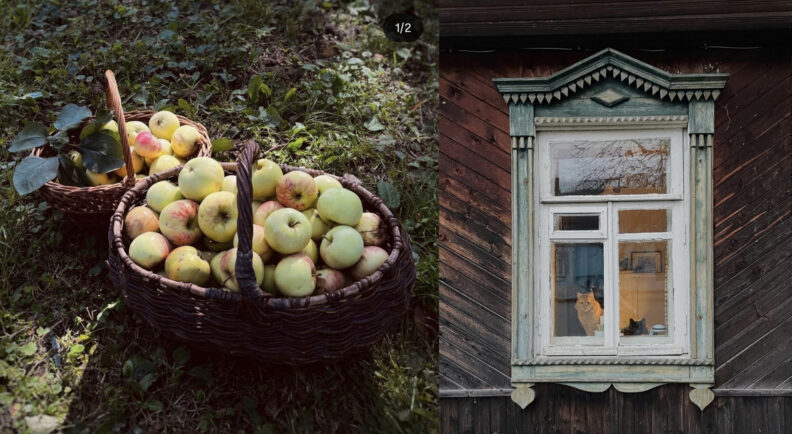
We thought that we should just buy land. Then - that at least a change house is needed. But my appetite grows while eating, so I started looking at home. Suddenly we came across a house made of logs, with platbands and a veranda - a rustic classic. That day we looked at five houses. One smelled of mold, another had a leaking roof.
And in this house it was warm, cozy and dry, although no one had lived there for several years. We realized that there was no point in looking at other options. This is a small village not far from Moscow, not on the highway, there are only 50 houses, there are few permanent residents.
For us it was an investment project. We decided that this house would be our capital: either we would stay in the village, or it would become our down payment for further moves.
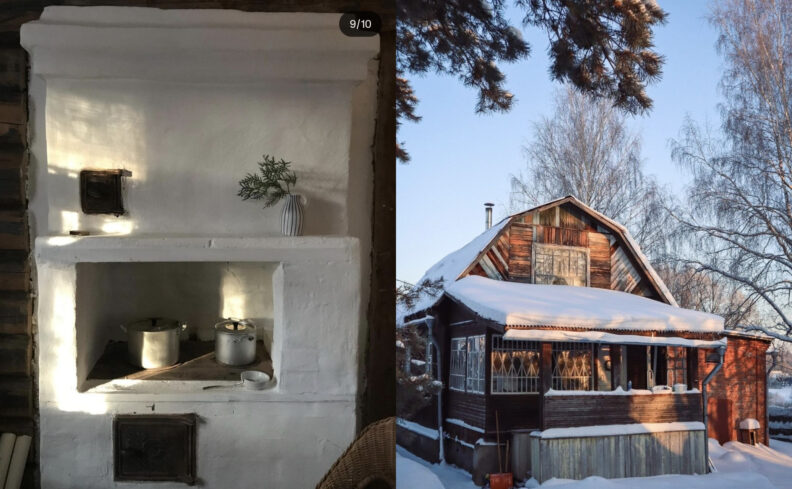
When the pandemic and remote work began, we packed our things, took the cats and left for the village. Over the summer, they dismantled the site, installed water and fiber optics into the house, installed sewerage and heating. We did not treat this house as a dacha - we saw it as a home for our family.
Moscow is putting a lot of pressure on us. For a city dweller, the intimate zone ends with his doormat. You leave the apartment and that’s it.
Outside the city, you have more power over your own life. You go out onto the porch and look - this is your land, birds are jumping on it, bugs are crawling. You don’t feel like you’re in a concrete box; your intimate zone is slowly expanding.
We went out from the site onto the street: “Oh, the public well is leaking, we need to fix it.” Or: “We need to write to the city services, they cleaned the road poorly.” In the village you begin to perceive the environment not as hostile, but as part of your world.
When the war began in 2022, my husband left literally one day. I walked around our house for a long time. There was a very depressing feeling, as if someone had died. My husband’s unread book with a bookmark and his tools remained on the table. It seems to me that I have experienced a little of what widows experience.
A few months later I left too. When we realized that we would not return to Russia, we decided to sell the house. It was hard to accept this fact. We thought of this place as our family nest , in which we would give birth to children, and we invested a lot of emotional and physical strength there.
But we wanted the house to continue to bring warmth and light to people. New owners periodically send us photos of the house, but it’s hard to look at them.
This house has given us a lot. He tested the strength of my relationship with my husband, gave us so many pleasant impressions, helped during difficult pandemic times and gave us the opportunity to start the next chapter of our lives.