
Translated material
“I decided to take a break and quit the race”
“Many people decide to close their business and go to work where they can earn more.”
“In recent months we have been doing business parkour: we constantly look around and quickly analyze what we can rely on,” Anatoly Yudin, co-owner of the Moscow chain of nail salons Milky, describes the state of the beauty industry.
His business is more than ten years old, and at the beginning of 2026 he first experienced a sharp drop in revenue - compared to January last year, it fell by a quarter. “It was so sensitive that for the first time in 10 years the thought appeared in our heads that we might have to close,” the entrepreneur recalls.
Until January 2026, beauty salons with revenues of up to 60 million rubles operated under a patent - that is, they annually paid the Federal Tax Service a fixed amount, and not a percentage of income. This amount varies in different regions. For example, a salon with revenue of up to 60 million, which in Moscow would pay 300 thousand rubles, in St. Petersburg will pay 210 thousand, and in Barnaul - only 70 thousand.
In 2026, tax reform came into force in Russia: the maximum income threshold for those wishing to work under a patent was reduced to 20 million per year. Many beauty salons no longer meet this limit. Because of this, they had to switch to other taxation systems, payments for which are directly dependent on income.
“We used to pay 150 thousand rubles a year, now it’s more than 200 thousand a month,” says Miri, who owns the Moscow color studio AVE beauty. She has been working as a hairdresser since the mid-2010s and opened her own salon in 2020.
According to Miri, some of her colleagues tried to circumvent the restriction and fragmented the business in order to remain on the patent. But she herself did not do this. “The tax office is also not stupid, it will figure out who you allocated your massage parlor or something else to,” explains Miri. “We decided that it would be easier to overpay: if they get caught [fragmenting], the charges will be enormous.”
Her salon calculated that they could maintain net profit at last year’s level only if they doubled revenue. “We are trying to swim out, but we are still floundering,” the entrepreneur complains. In April 2026, it remained in the red by 350 thousand, although in mid-spring 2025 it was in positive territory by almost 200 thousand.
Bereg's interlocutors say that the changes in recent months have hit the industry harder than quarantine restrictions during the coronavirus pandemic. “Then there was a feeling that this would end,” recalls Anatoly Yudin. “Now there is no such feeling.”
“During Covid, even if it was small, there was still at least some support for small businesses from the state,” says Galina Polyakova, owner of Galka beauty studios in St. Petersburg. She has been in the industry for more than 15 years: she started as a master, opened a salon in 2017, and then two more.
“For many colleagues, it has become no longer viable to continue this business: they decide not to carry it on themselves, but to close down and go for hire,” continues Polyakova. “Now some craftsmen can earn more than an entrepreneur, who takes on greater responsibility and bears risks.” She herself is not ready to return to hiring. “This is a step that I went through many years ago,” explains Polyakova. “Plus, I’m 40 years old and neither my health nor my age allow me to work as a master.”
Since January 2026, VAT has increased by two percentage points, and housing and communal services have also become more expensive. All this affected the budget of beauty salons. “Landlords have raised fees because their tax burden has also increased. Suppliers have already revised their prices twice since the beginning of the year,” Polyakova lists.
In addition, banks began to increase the commission for acquiring , and from January 2026 this service also became subject to VAT. The costs again fell on the business. Galina jokes that the cashless payment terminal in her salon has become a full-fledged employee: he receives the same “salary” as an administrator. Customers are now asked to pay with cash or QR code whenever possible. It is impossible to completely remove the payment terminal: according to the law, only businesses with revenues of less than 20 million rubles per year have such an opportunity.
“We will try to promote new trends. Nowadays there is a trend towards naturalness”
The business began preparing clients for price increases for services in advance, in the fall of 2025. The first wave of price increases occurred at the beginning of winter. But it didn't help.
“In February, my husband and I received in total the same amount as one master receives,” says the founder of the St. Petersburg spa “Be” Natalya Kukolevskaya. Natalia's husband works as a massage therapist in their shared salon. The cost of their services increased by an average of 10%. “We didn’t have enough money to cover personal expenses, loans - it’s good that there was a safety net,” she adds. Now the entrepreneur is preparing for the fact that before the end of the year she will have to revise prices again.
In the Moscow chain Milky, in January, services increased in price by 20% - because of this, a third of clients immediately left. “Prices have risen sharply not only here [in the beauty industry], but everywhere in general. People chose the strategy of saving,” explains the founder of the network, Anatoly Yudin. “And those clients who used to go once every three weeks continue to go once every four to five weeks.”
The entrepreneur expects that with the beginning of the summer season, the demand for pedicures will traditionally increase, and with it, income. But when the season ends, businesses will face the same problems again.
The network has no plans to raise prices again. But Yudin does not rule out that if material suppliers and lessors do this again, salons will have no choice. “We understand that there are people who will definitely never come to us,” he says. “Our task is to reach a new audience that is leaving more premium salons.”
The owner of the Moscow color studio Miri also raised prices by 20%, but not at once, but in two installments - in November and May. “Sharply increasing the price is, of course, murder,” says the entrepreneur. “And we did well, it worked well.” One of the criteria for success is that clients, according to the entrepreneur, remain loyal. “People don’t go to cheaper salons, they say they want to come to us,” explains Miri. “Right now they don’t have the budget for it, but they say they will wait for the opportunity to [come back] to win.”
For salons that were experiencing difficulties even before the crisis, raising prices will not help, the founder of the Barnaul beauty studio, Ksenia Vasilyeva, is convinced. “If the salon has a small load , 20-30%, there is no point in raising the price,” she believes.
In addition to managing her salon, the entrepreneur advises other beauty businesses and is a member of the specialized committee of Support of Russia . According to her, few people can now afford to solve the problem by raising prices alone. “If we raise the price, it should be done in careful incremental steps, and maybe not for everything, but for some specific services,” says Vasilyeva.
To make price increases less painful, businesses are testing new discount programs. Spa owner Natalya Kukolevskaya, for example, introduced a subscription system: the client pays for five, 10 or 15 massage sessions in advance - and receives more favorable conditions than if he paid for them each time. The business, in turn, immediately receives money for operating expenses and can plan its budget more calmly.
The owner of a chain of nail salons, Yudin, came up with the idea of adding discounts to the “last minute windows” option: if one of the clients canceled or rescheduled his appointment in less than a day, you can take his place and pay up to 40% cheaper. The offer is only valid for those who have already visited the salon. The results are noticeable, Yudin assures: it is impossible to sign up for a manicure on the same day in three of the four salons of the network - all the places are occupied.
At the same time, entrepreneurs have reduced unnecessary expenses. Miri from AVE beauty, for example, closed a coffee shop that operated in the same space as the salon. And Anatoly Yudin refused the office and renting a warehouse where supplies of consumables were stored.
The founder of the Barnaul beauty studio, Ksenia Vasilyeva, says that instead of imported hair cosmetics, salons have begun to purchase Russian analogues. “If you are not a premium salon, but a “business” or “economy” salon, working for LʼOreal Professionnel or CHI, of course, is not advisable. We need to look for alternatives,” she explains.
Miri from the Moscow color studio also began collaborating with Russian manufacturers. “In terms of product quality, some of our brands are not inferior to serious foreign ones, and the terms of cooperation with them are much more pleasant, at least because they are not imported,” says the entrepreneur.
Also, beauty salons are refusing low-margin services, such as blonde dyeing. “The cost of the consumables for this service, the amount of time that the technician spends, and the cost that people are willing to pay, unfortunately, do not combine,” explains Miri.
She plans to reorient clients to simpler coloring techniques. “We will try to promote new trends through ‘bannedgram,’” she explains. — Now there is a trend towards naturalness, red shades. I think that now the entire industry will gradually slide into monochromatic coloring.”
“We have five clients at Max. And in total there are 2.5 thousand people in the database.”
Beauty salons are losing customers not only due to forced price increases, but also due to Internet blocking. WhatsApp and Telegram, which were the main channels of communication with clients, are now inaccessible without a VPN. There are gradually fewer stable VPN services, and businesses are practically cut off from clients. The Max messenger is not useful as a way to communicate with them.
“At Max we have five clients out of our entire base of 2,500 people,” says Miri. Other Bereg interlocutors from central Russia talk about similar dynamics. But in Barnaul, where Ksenia Vasilyeva works, clients still use the new messenger.
“People don’t like to answer phone calls and often don’t pick up. But carrier pigeons were canceled a long time ago,” complains Galina Polyakova. If clients cannot be reached by phone, they have to write SMS - all this increases the load on administrators who previously used automatic notifications via chat bots on WhatsApp and Telegram.
In addition, in Moscow and St. Petersburg there are still interruptions in cellular communications. “This is a disaster! - says Miri, whose salon is located in the very center of the capital. “They simply cut off our ability to exist, and such short-term disruptions still happen several times a week.”
To sign up for procedures, salons create personal accounts in CRM systems, where the client himself chooses the service, convenient time and specialist. But this format excludes operational planning, says Galina Polyakova: “An administrator can move someone’s record, select a more convenient window, or identify a client’s need. But here there is no such opportunity.”
Another disadvantage of CRM systems is that they do not protect against unfair competition. The owner of AVE beauty Miri says that “dead souls” sign up for her salon. “They block the registration from the masters so that no one can sign up and the salon is idle,” explains the entrepreneur. “Whoever thought of this is a genius.” My respect, hats off."
The salon team has learned to detect fake entries. “We now make sure to get all new clients through Getcontact ,” says Miri. — If the person is not there, we try to get through to him. Naturally, this never works out.”
“Now every step is like walking through a minefield. You need to not explode"
A noticeable expense item in the beauty industry in 2026 was marketing costs: businesses are forced to look for clients to replace those who cannot afford services at new prices. In addition, due to the ban on advertising on foreign social networks and instant messengers, primarily Instagram, as well as the recent blocking of Telegram, it has become more difficult to find clients.
“For the last eight years, we always had a little more clients than we could accept, so we did virtually no advertising,” says Moscow entrepreneur Anatoly Yudin.
Formally, businesses are not prohibited from talking about their services on Instagram. But where exactly is the line between information and advertising is not obvious. Ksenia Vasilyeva, who advises businesses in the beauty industry, says that her clients have already encountered troubles because of Instagram: “There were precedents when a simply funny video was perceived by inspection authorities as advertising. As a result, a person ends up with a lot of money. Now every step is like you’re walking through a minefield, and you have to not explode.”
The owner of a St. Petersburg chain of salons, Galina Polyakova, began testing advertising on VKontakte, but was left disappointed. “The cost of a client arriving at the salon turned out to be 8–9 thousand rubles,” she says. “This is simply wild for our industry, where the average bill is about 2.7 thousand.”
Polyakova returned to old methods of promotion - she began printing leaflets and hiring street promoters. For three hours of work, the promoter charges 4.5 thousand rubles, and you need to pay separately for the circulation of flyers. Nevertheless, such an advertising model is still more profitable than promotion on VKontakte, Polyakova believes.
Anatoly Yudin from Milky chose Yandex Direct as the main promotion channel. The service allows you to integrate advertising into Yandex search results and place banners in applications and on the corporation’s partner sites. Some salons attract new customers by holding offline events.
A new way of promotion, which several entrepreneurs told Bereg about, is working with maps (2GIS, Yandex Maps and Google Maps). This method of promotion is so popular that the services of geomarketers have begun to gain popularity in the advertising market. Their task is to ensure that the company’s card contains up-to-date information about services and prices; they also work with reviews on the cards and set up SEO keys .
The entrepreneurs interviewed by Bereg agree that there is no single solution that would allow their businesses to emerge from the crisis. “The planning horizon has been reduced to a couple of weeks,” says Anatoly Yudin. His team, the entrepreneur claims, tests up to 40 different ideas for business development every month. Previously, such involvement was not required.
“It’s like we’re at the Olympic Games, where if you’re burnt out, you decide to take a break, drink some water, you’re out of the race,” agrees Miri from a Moscow color studio. “You can [no longer] make decisions that will make you money right now.” You need to think more about what will bring you money later.”
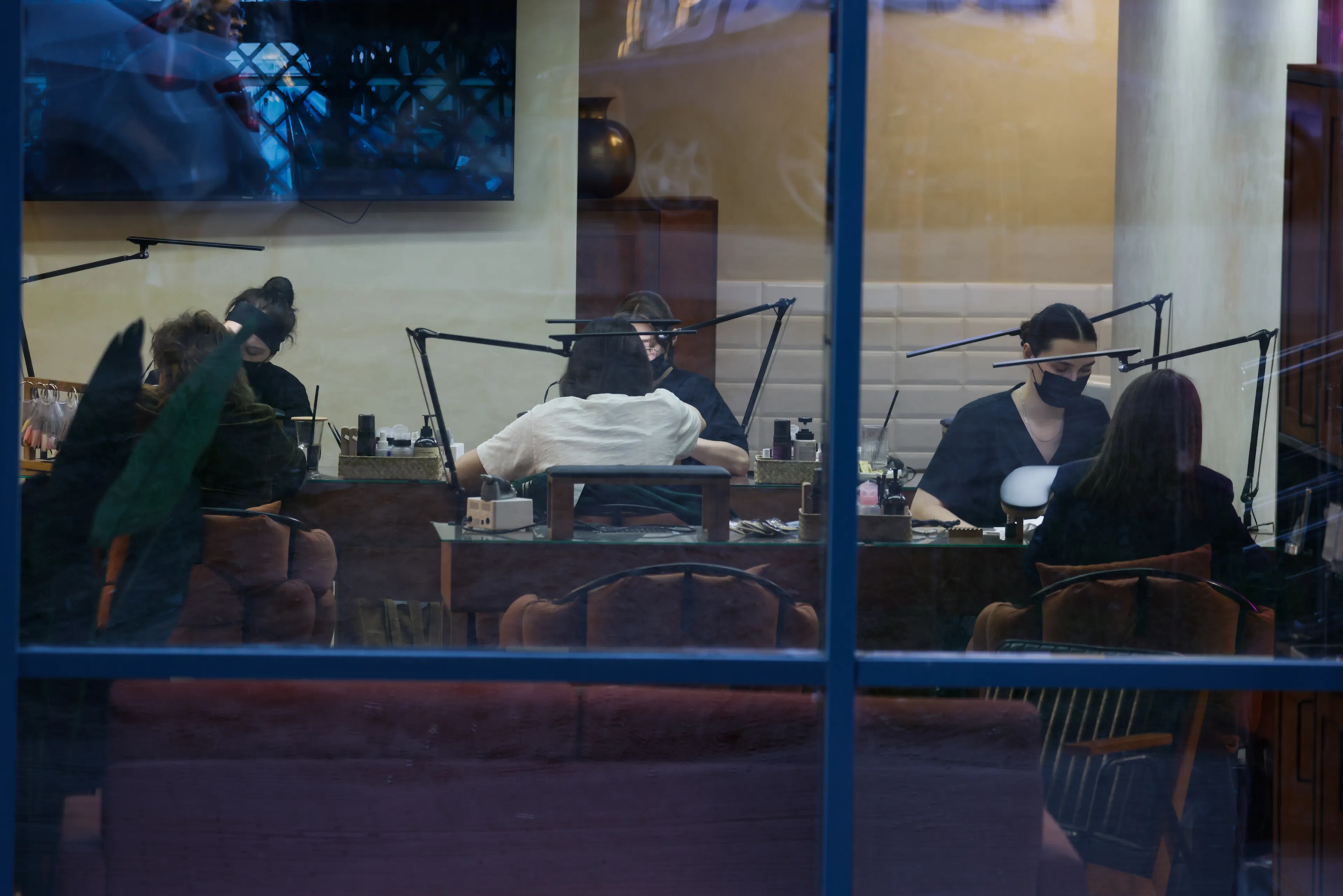
“If you do everything as the state suggests, the business owner will need to work somewhere else”
Due to tax increases in 2026, the Muscovite Miri had to lay off some of its employees and take on their responsibilities. The masters of her salon do not have a salary, everyone works for a percentage of the services performed, but the entrepreneur still has to pay taxes and insurance premiums on the amount. “We're back at the same point we were a few years ago, where we couldn't afford to hire people,” Myrie says.
The owner of a St. Petersburg salon, Galina Polyakova, admits that it has become more difficult for her to negotiate with masters about official employment. “Sorry, we’re going bankrupt,” she quotes them as saying. A person going through bankruptcy must actually live on a living wage - the rest goes to paying off debts. Galina Polyakova understands that this is another consequence of the crisis.
Some employees quit on their own and move to competitors who have not yet reached revenues of 20 million rubles a year, who can work on a patent with the same taxes. With a lower financial burden, they can keep prices down for clients and pay craftsmen more.
Others become private craftsmen and start working in beauty co-working spaces or at home. The latter are disparagingly called “burglars” in the industry. “They leave with the clients we brought to them,” explains Galina Polyakova. - And these clients are not free. We paid for them once.”
Seeing a drop in client traffic, salon employees believe that it is more profitable for them to work for themselves. But due to the crisis, some Russians are also refusing cheaper home-based services - gradually the client base is emptying and they have to replenish it on their own. Masters who have been self-employed for a long time have already realized this and have begun to return to salons for stability.
“If earlier [among applicants] it was difficult to find masters with extensive work experience, then in the spring girls began to come to us who had worked for themselves for many years and earned 200-300 thousand rubles a month,” says Natalya Kukolevskaya from the St. Petersburg spa space “Be”. Masseuses who came to get a job told Natalya that this year they experienced a “very strong drawdown” - in some months they earned less than 70 thousand rubles, which was no longer enough to live on.
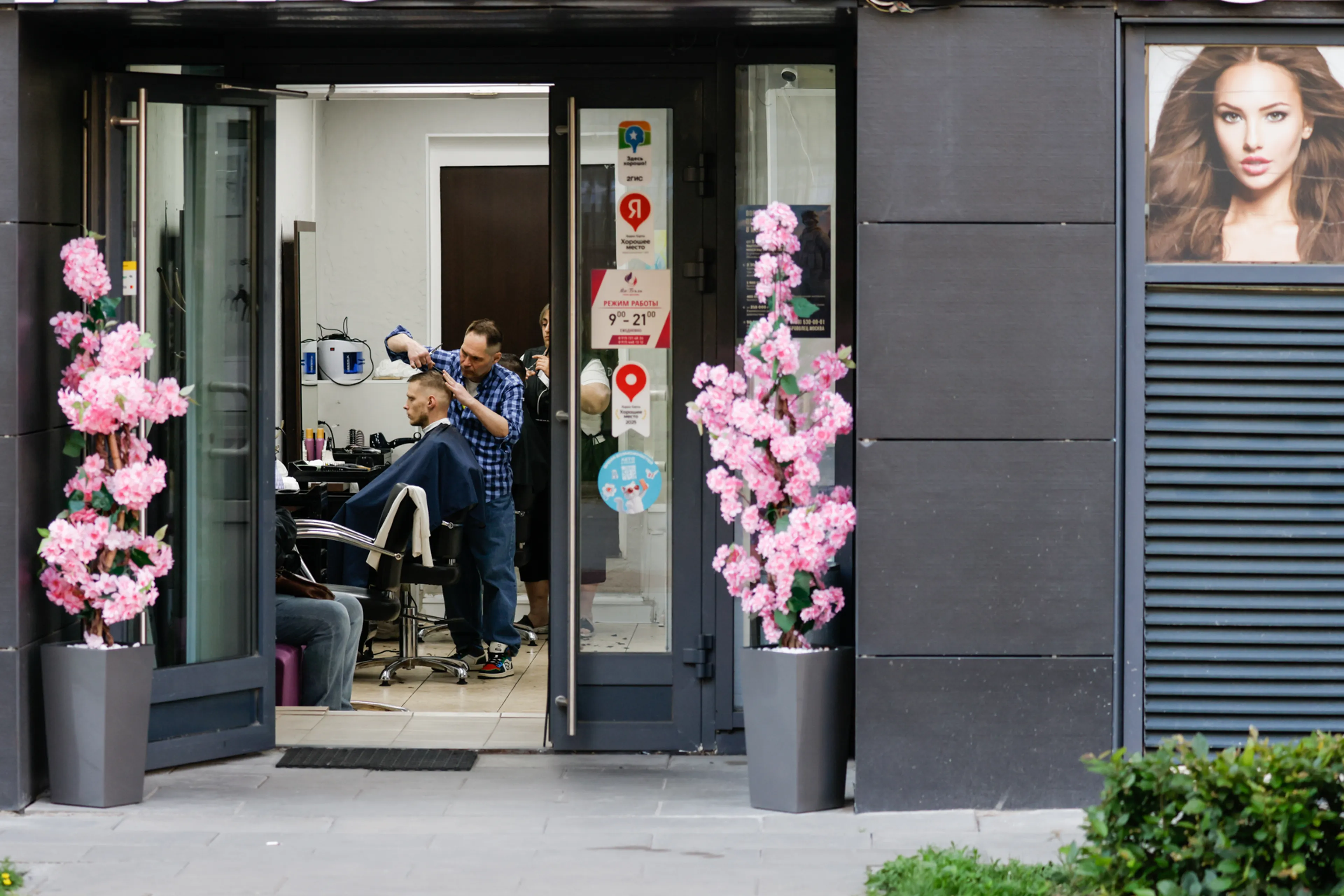
Anatoly Yudin from Moscow also notes that since the beginning of the year he has seen interest in employment among those who worked for themselves. “The most important issue now is the ability to attract new clients. But private craftsmen either don’t want to do this, or they can’t, because they lack knowledge in the field of marketing,” explains the entrepreneur. “It’s easier for them to go to the salon.”
Some specialists, according to Yudin, have begun to combine work in the salon with work at home - this way they provide themselves with a more stable income, while maintaining income from regular clients who would have to pay the same specialist more in the salon.
Yudin treats this combination, as well as working from home in principle, with understanding. After the announcement of the price increase, he and his team took an unpopular measure in the industry: to clients who could no longer afford a manicure in the salon due to the high cost, administrators began to give contacts of laid-off or resigned nail technicians.
At the same time, part of the industry continues to work “in the gray.” “People get jobs in salons—some full-time, some part-time, they receive the minimum wage, and the rest is in an envelope,” the owner of a small beauty salon tells Bereg on condition of anonymity. “If we do everything as the state proposes to us, then the business owner still needs to work somewhere else in order to earn money to pay all salaries and taxes.”
He argues that this is how most Russian business operates. It is impossible to verify his words. Entrepreneurs who agreed to talk with Bereg under their own name claim that all their employees have white salaries.
“There is no desire to get up in the morning, because you don’t know where it’s coming from. Including literally"
The tax reform, launched in January 2026, will also affect 2027: starting from the new year, the revenue limits for a business applying for a patent will become even smaller - from the current 20 million they will drop to 15.
At the end of 2027, the experiment with the automatic simplified taxation system (AUST) will end, according to which businesses with annual revenues of up to 60 million are exempt from paying VAT, insurance premiums for employees and filing reports. Officials are discussing the possibility of lowering limits here too - the threshold could drop to 20 million per year.
«Мы прекрасно понимаем, что государству нужны деньги. The same support measures for SVO participants cost money. But this needs to be done in slightly different ways,” says the founder of the Barnaul beauty studio, Ksenia Vasilyeva. — Смысл резать курицу, которая несет тебе яйца? In the meantime, this is exactly what is happening.”
“I’m always for a positive attitude, but if earlier I wanted to develop a network, sell a franchise, now I have absolute apathy, I give up,” agrees Galina Polyakova. “Sometimes I don’t want to get up in the morning because I don’t know where it’s coming from.” Literally too."
From July 1, 2026, entrepreneurs will face a new restriction - all salons that sell cosmetics to clients will have to implement the “Honest Sign” labeling system. Moreover, it will be necessary to label products that are intended exclusively for use in the salon. To do this, you need to buy a scanner that reads QR codes and reflash the cash register equipment.
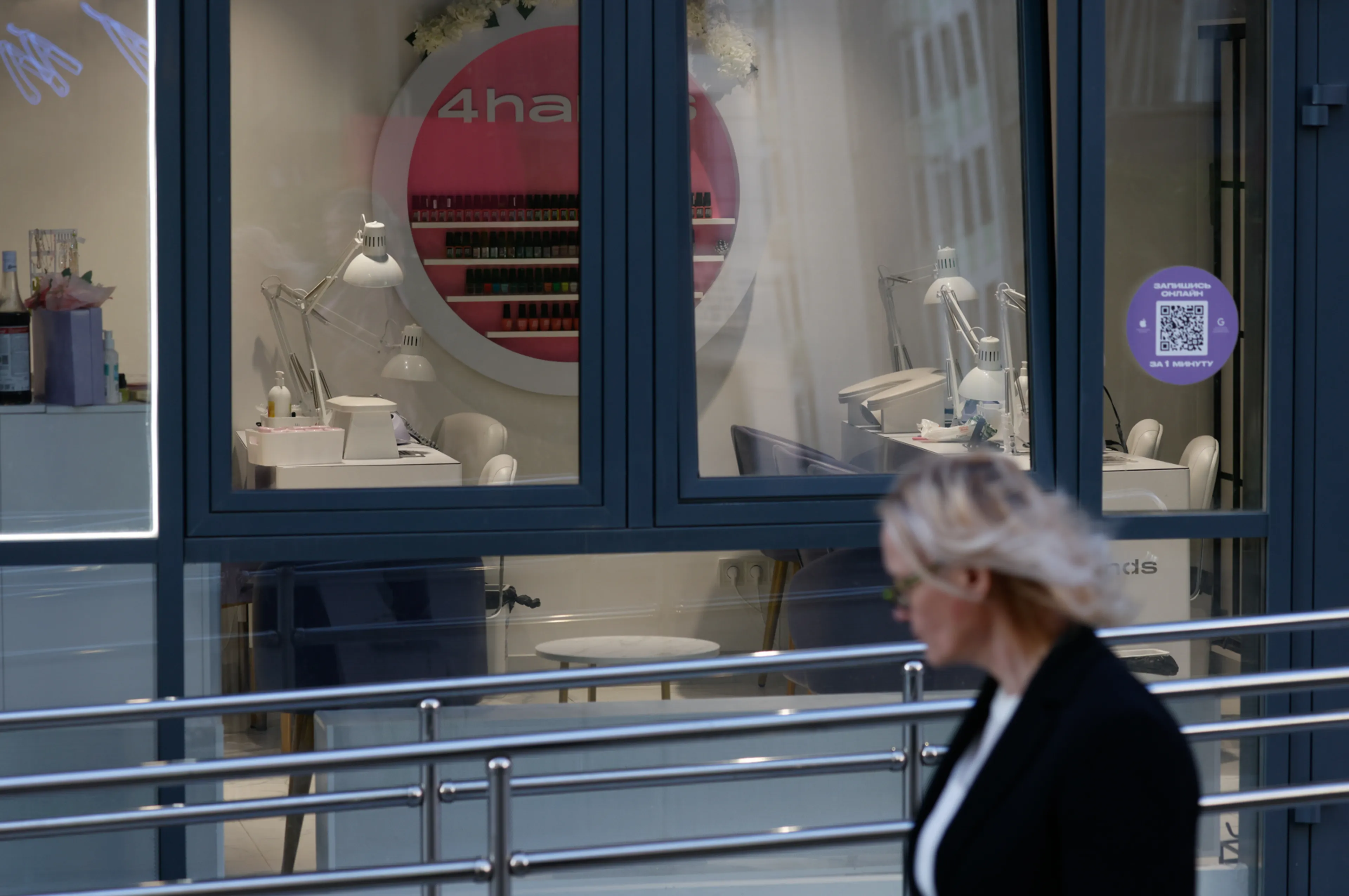
“It’s not very expensive, around 50 thousand rubles, but it creates an additional burden [on the team],” says Ksenia Vasilyeva. “If an inexperienced administrator accidentally does something wrong, you can run into fines.”
Miri from Moscow plans to abandon the display case with products - keeping them is becoming unprofitable. According to the entrepreneur, even now the salon earns practically nothing from the sale of cosmetics - almost the entire markup goes to taxes and a percentage for the craftsmen.
“It turns out that absolutely everyone makes money from us: landlords, employees, the state, suppliers, Internet providers,” lists Ksenia Vasilyeva, the owner of a beauty salon in Barnaul. — У собственника же не остается ничего. И для чего тогда этот бизнес?»
"Shore"