
Translated material
Soft power of the FSB
A Russian woman in the United States faces a wide range of charges: trafficking of girls with reduced social responsibility is not the main one

Nomma Zarubina. Photo: VK page
If everything goes according to schedule (which is not always followed in US courts), then on June 11 federal judge Laura Taylor Swain will sentence 35-year-old Tomsk resident Nomma Zarubina, who pleaded guilty to lying during an FBI interrogation and when filling out an application for American citizenship, in which she hid her promotion of prostitution. The essence of the charges initially brought against the Russian woman was contained in a secret 10-page document, which in English is simply called a complaint, that is, “complaint,” and in Russian in this context is sometimes translated as “statement to initiate a criminal case.”
The document was filed in Manhattan federal court on November 19, 2024, when Zarubina, according to her, had no idea that she was facing arrest, and was sent to the public on November 22, the day after she arrived at 8 a.m. for another friendly conversation at the headquarters of the New York branch of the FBI, where investigators she had known for a long time unexpectedly presented Zarubina with an arrest warrant. One of them, Peter Dubrovsky, whose surname is written in Latin in the Polish way, was the author of the “complaint”, the essence of which will be outlined below.
The next day, Zarubina was released pending trial on bail of $25,000. This is the most modest bail in a federal case that I have encountered in the United States. Zarubina had a guarantor who would have to pay this amount if the Russian woman went on the run. She doesn't mention his name. She didn’t go on the run, but her bail was later revoked anyway and she was imprisoned for drunkenly pestering one of her investigators. More on this later.
The charge that the feds were going to bring against the Russian woman at that moment consisted of two counts. Both involved lying to the FBI. Dubrovsky begins by saying that on April 20, 2021, Zarubina falsely denied contact with FSB officers, when in fact she communicated in Tomsk with one of them, coded in public court documents as “FSB Officer-1.” He instructed Zarubina to carry out assignments for the Russian intelligence service in the United States.
The second charge relates to a conversation that took place on September 20, 2023, when Zarubina lied to the FBI that she had only met with this FSB officer once. In fact, Dubrovsky wrote, she regularly communicated with the FSB officer, at least from December 2020 to 2022, and contracted to carry out tasks for security officers in the United States. At this meeting, “FSB-1 Officer” assigned her the nickname “Alice.”
According to Dubrovsky, who specializes in the FBI's counterintelligence division on Russia,
The FSB official, in particular, asked Zarubina to look for individuals in the United States who could be of interest to Russian intelligence, such as journalists and think tank employees.
In carrying out this task, Zarubina attended seminars, forums and congresses, which were attended by prominent scientists and professors, US foreign policy officials, representatives of the US government and the media. The goal was to expand connections in the US and other countries.
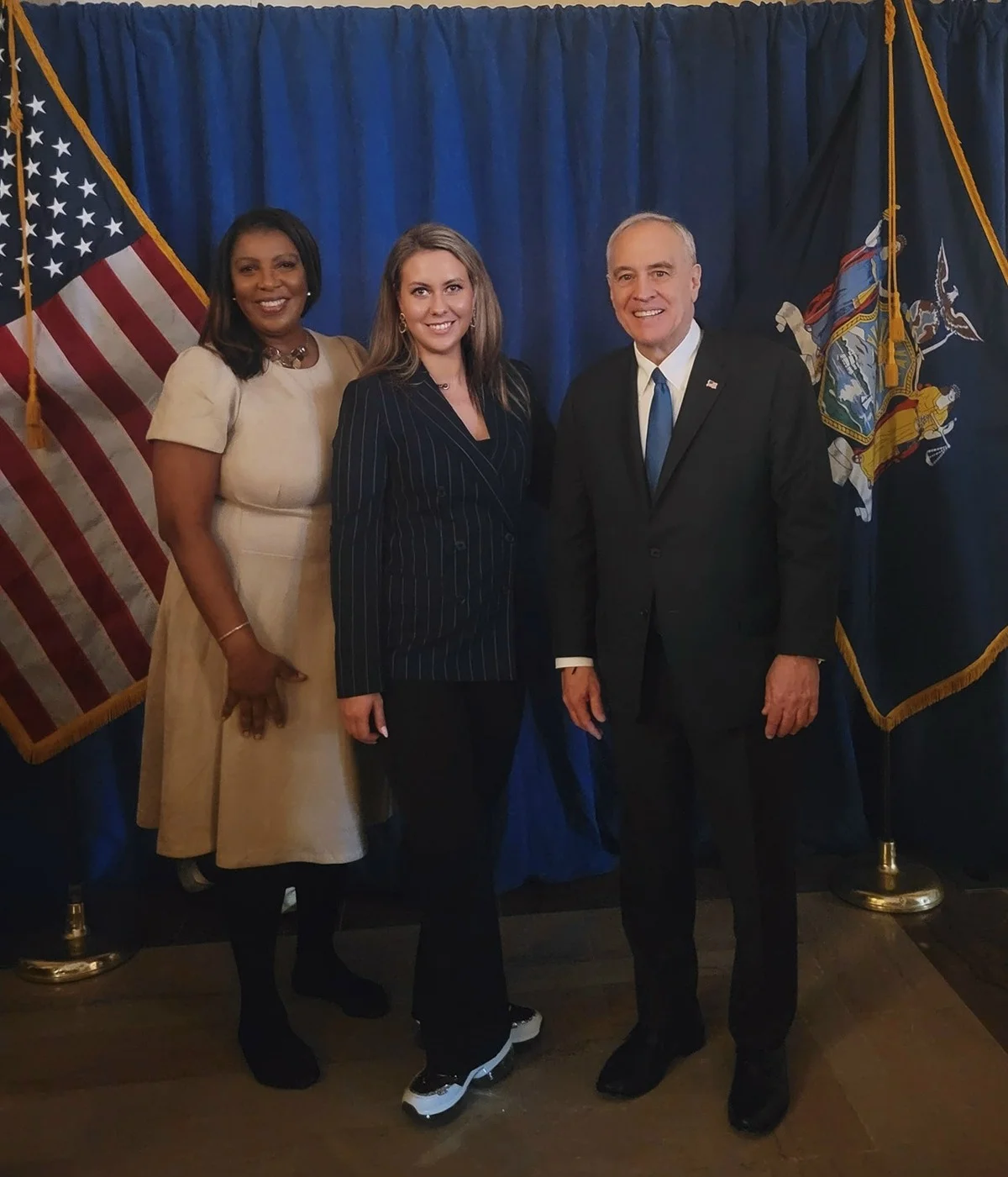
Dubrovsky further writes that “during the investigation, I and other FBI employees had several conversations with Zarubina, aka “Alice,” in which she participated voluntarily and which in part related to her close relationship with Elena Branson and her work for her.” We are talking about a graduate of the Faculty of Mechanics and Mathematics of Moscow State University, whom I know well, who left Russia in 1990 and headed the Coordinating Council of Organizations of Russian Compatriots (KSORS) and the Russian Center of New York in the United States. Zarubina worked there for several years after moving to the United States in 2016 on a student visa. We are classmates: she studied at the City University of New York (CUNY), where I completed my graduate studies
Branson, whose maiden name was Chernykh, changed her last name after her marriage to the famous Princeton economist William Branson, now deceased. She hastily left the United States three weeks after the FBI's first meeting with Zarubina, which took place in October 2020.
As Zarubina told the liberal English newspaper The Independent, she missed the first call from the FBI, who then called her again from some private number. She said she was curious to know what they wanted from her, so she agreed to a meeting at the Tsob-Tsobe Turkish restaurant on Coney Island Avenue in Brooklyn, where her new acquaintances ordered only coffee “and nothing else.”
I don’t know how it was then, but now Mediterranean lamb shish kebab costs $26.36, borscht $11.16, Uzbek pilaf $18, and chicken tabaka $23.
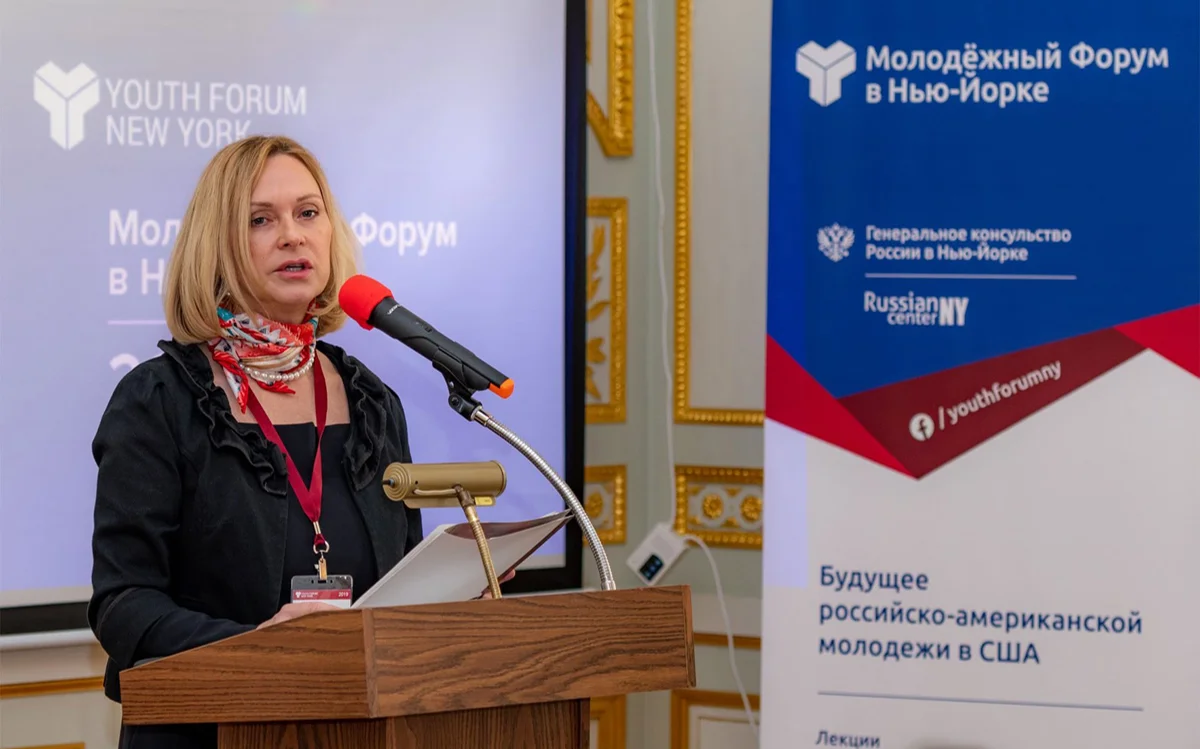
Zarubina stated in this first meeting with the FBI that she ran the Russian Center website and that she had a close relationship with Branson, her daughter's godmother. According to Dubrovsky, Zarubina also said that she had no connections with the Russian intelligence services, other than meeting several classmates who went to work there.
The second meeting took place in April 2021. As Dubrovsky writes, Zarubina again “made intentionally false statements” about her lack of contacts with Russian intelligence services. After this, FBI representatives met with her sporadically a total of eight times, and only in June 2024 did she finally admit that she had previously lied to American law enforcement officers about her connections with the FSB, specifically with her aforementioned officer, and told them about her relationship with him and the assignments she received from him.
The FBI, meanwhile, continued to develop Branson and on September 29, 2020, received a search warrant for the Russian Center, located in her small apartment on the east side of Central Park.
On October 20, Branson flew to Moscow and has not returned to the United States since then. She sold her Manhattan apartment in March 2021, according to the FBI. Her departure to Moscow did not mean that the FBI would close her case: the investigation continued and, in particular, was enriched by the fact that during the search, 34 electronic devices were seized from Branson, including 11 mobile phones. On March 8, 2022, the FBI finally issued a “complaint” against her, which was three times longer than the accusation against Zarubina, and also did not include accusations of espionage. Branson was accused of failing to register with the US Department of Justice as a foreign agent, visa fraud and lying to the FBI.
It is not forbidden to be a foreign agent in the United States if you register. The second charge was that Branson allegedly provided visa support to Russians under false pretenses. Third, she allegedly denied in a conversation with the FBI that she coordinated meetings between American businessmen and representatives of the Moscow government. Again, you can organize business meetings as much as you like, but lying to the feds about it is a criminal offense.
Returning to Zarubina, investigator Dubrovsky writes further that she was born in Tomsk in September 1990 and graduated from the Russian Academy of National Economy and Public Administration under the President of the Russian Federation (RANEPA) in Moscow, after which she moved to the United States in 2016. As is clear from her posts on social networks, she joined the Branson Russian Center in 2016 and worked there until February 2022. The FBI tracked her down during the Bronson investigation.
Dubrovsky notes that she always met with the FBI voluntarily, and often these meetings took place on her initiative. Zarubina asked to continue contacts to share information with the FBI. For example, she talked about the cultural events of the Russian Center, noted that some of them were directly funded by Moscow, and said that she herself spoke at one of them.
At the end of the first meeting with the FBI, Zarubin was asked what charges they planned to bring against Branson and what his capabilities were in terms of wiretapping cell phones. The chronicler Dubrovsky does not say whether the FBI satisfied the Russian woman’s curiosity.
On April 20, 2021, after Branson retreated to Russia and the investigation into her and others was no longer secret as the FBI took statements from witnesses across America, its investigators once again met with Zarubina. She said that she again traveled to Russia and met with Branson there, and asked at what stage the investigation into her former mentor was at.
Zarubina said she received notice of a subpoena authorities had received for access to her social media and email communications, and noted that the subpoena included the same case number for which the FBI searched Branson's home.
The Russian woman was again asked whether she met with anyone from the Russian intelligence service during this visit to her homeland. As before, she replied that several of her classmates had enrolled there, with whom she was not close and did not maintain connections.
On August 15, 2022, the FBI met with Zarubina again and this time heard from her that she was working with two Russian NGOs and that her function was to establish contacts and connections “with important people.” Secondly, she again traveled to her homeland, where she again saw Branson, who asked if she had anything new about the progress of her case and wondered if she could travel around the world. Perhaps Branson was afraid that the Americans would arrest her abroad and take her to their trial.
Zarubina, again, denied contacts with Russian intelligence services, but said that she regularly communicates with Rossotrudnichestvo employees located in Russia. Dubrovsky explains in a footnote that this body is “the main government agency applying the Kremlin’s soft power and hybrid influence.”
In a meeting with the FBI on February 2, 2023, Zarubina said she had read the “Branson document,” referring to the “complaint” about the fugitive that the FBI filed on March 8 of the previous year and is in the public domain. At the next meeting, held on September 20, 2023, Zarubina told the FBI for the first time that she was in contact with an FSB lieutenant colonel, with whom she had become friends at university. The FBI immediately coded him as "FSB-2 Officer."
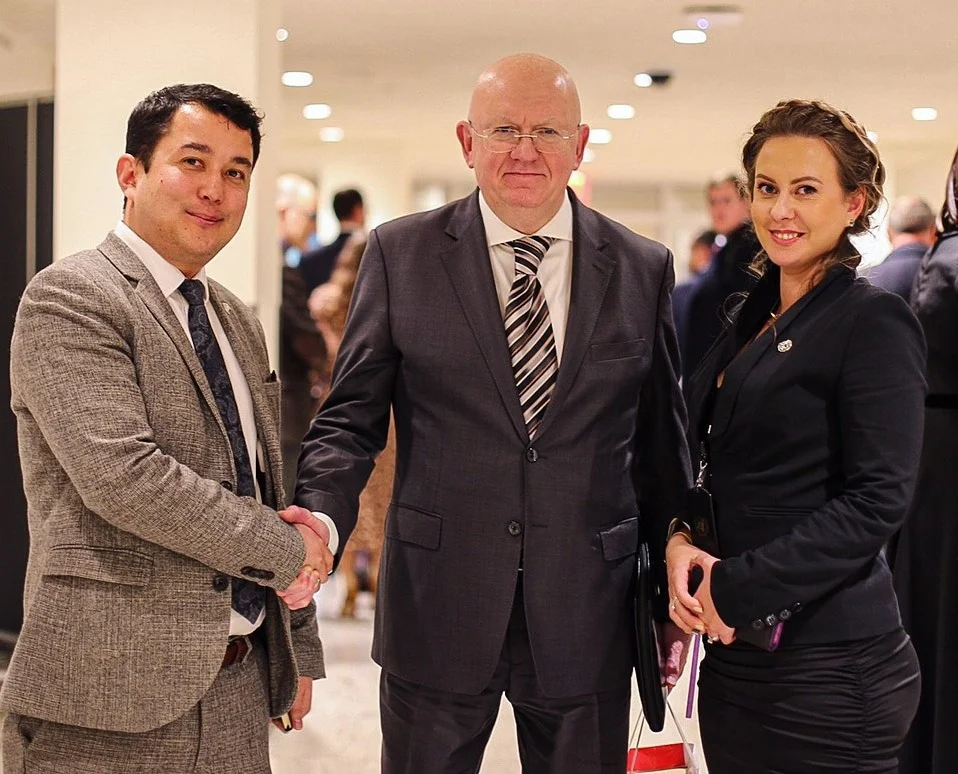
Zarubina also said at this meeting that they communicate with the lieutenant colonel through an encrypted application. According to him, he, in particular, is engaged in interrogating Russians who lived and worked in the United States upon their return.
Zarubina told the FBI that shortly before February 2022, she was interrogated for the first time during her next visit to Tomsk. According to her, the FSB officer asked how she spends her time and what she does in the United States. Zarubina also said she met in 2022 with Branson, who asked her to find out from the FBI whether she was in danger of returning to the United States.
On June 27, 2024, the FBI once again met with Zarubina. This time she admitted that the FSB officer who interrogated her in Tomsk was in fact her acquaintance, whom the FBI subsequently nicknamed “FSB Officer-1.” Zarubina admitted that she previously hid his name from the FBI, but in fact knew him since December 2020. (Here, Dubrovsky notes in a footnote that in addition to her conversations with the FBI between April and May 2024, Zarubina and her lawyer met twice with them and with Manhattan federal prosecutors. What they discussed is not mentioned in the “complaint” quoted here.)
Zarubina testified at a June meeting with the FBI that “FSB-1 Officer” asked her to outline her connections in the United States so that he could further use her useful contacts. It was then that she received the nickname “Alice” and signed a cooperation agreement with the FSB. From December 2020 to June 2022, she met with the “FSB-1 Officer” several times and corresponded through an encrypted messenger. Among other things, the Russian intelligence officer asked her to make acquaintances in the American media and provide him with details.
In 2021, he ordered Zarubina to attend the International Economic Forum in St. Petersburg and asked her to find foreign journalists who would write positive stories about what was happening in Russia. According to Dubrovsky, Zarubina told the FBI that she did not provide her Russian handler with press contact numbers. He writes that he found photographs of her on social networks together with prominent forum participants, including from Canada, and places two of them in the document I quote.
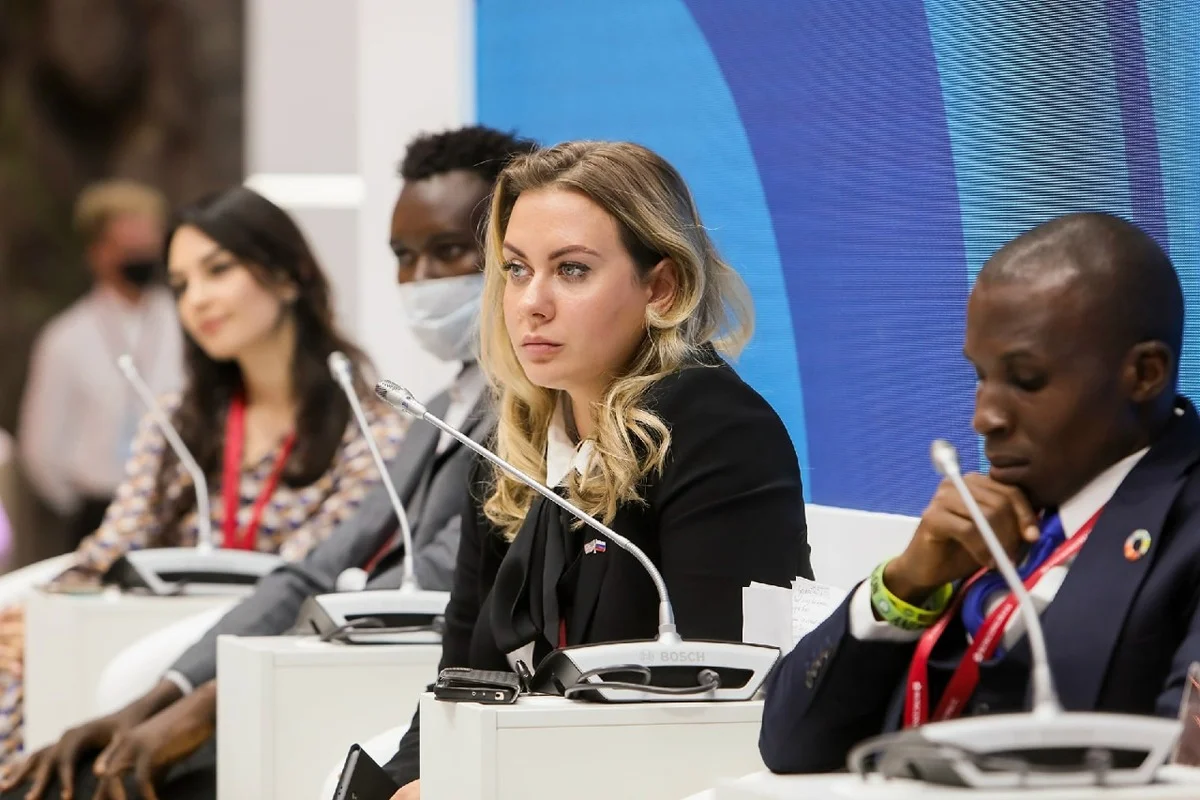
Dubrovsky adds that, as is clear from the contents of Zarubina’s mobile phone, on June 21, 2021, she photographed the contact information of the producer of a German state media company. The FBI investigator notices that this photo fits into the FSB task she received to make acquaintances in the press.
Zarubina met with him and his colleague again on July 24, 2024 and, in particular, reported that, instructing her to make useful contacts in the American press and collect their contact information, “FSB-1 Officer” explained to her that his office would look for excuses to invite Americans to Russia and persuade them to the Russian view of things.
According to her, in May 2021, the security officer instructed her to find one person in the United States and find out something about his mother. Zarubina agreed and reported the results to the curator by phone. She added that all her messages in their messenger automatically disappeared after being sent. She also said that her relationship with the “FSB-1 Officer” eventually soured “for personal and professional reasons.” She began to feel like she was being manipulated. At the same time, Zarubina showed the FBI a photo of a colonel’s shoulder strap sent to her by “FSB-2 Officer.” Dubrovsky also included it in his “complaint” in the Zarubina case.
In the end, she admitted that she had been lying when she previously denied contacts with the FSB, and explained her lie by saying that she was afraid to tell the FBI the truth. The Russian woman added that before she simply did not know her FBI agents long enough to be completely frank with them.
This explanation seemed insufficient to federal prosecutors in the Southern District of New York, and they convened a grand jury, which voted on April 21, 2025 to formally put Zarubina on trial. This time the indictment they signed already consisted of five points.
The first two are already familiar to us and concern lies in two meetings with FBI investigators. The third and fourth relate to violating the laws on prostitution and facilitating it, which, in fact, Zarubina was accused of, and the fifth relates to her lying on the naturalization questionnaire, in which she answered “no” to the question about “were you a prostitute or did you promote someone to engage in prostitution?”
Two prostitution counts accused Zarubina of transporting prostitutes between New York and New Jersey. For example, on January 31, 2024, she allegedly drove someone from a massage parlor in New Brunswick, New Jersey to Brooklyn over the Verranzano Narrows Bridge. On February 7, 2024, she allegedly drove another person from Brooklyn to the same establishment in New Jersey. “Beginning in approximately 2018 and ending in 2024,” the indictment states, “Zarubina drove persons other than those named to massage parlors in New Jersey and Brooklyn “for the purpose of promoting prostitution.”
Zarubina pleaded guilty to counts 1, 2 and 5. Theoretically, she faces up to 10 years in prison, but Judge Swain, I think, will not give her even close to that term.