Artist Vladimir Ovchinnikov from Borovsk: wall paintings, repressions and the struggle for memory • Novaia vkladka • RIMA — Russian Independent Media Archive
Artist Vladimir Ovchinnikov from Borovsk: wall paintings, repressions and the struggle for memory
18+ This material (information) was produced, distributed and (or) sent by a foreign agent Media project “New Tab” or relates to the activities of a foreign agent Media project “New Tab” June 4, 2026 Retro display read: 26 min.
For more than 20 years, artist Vladimir Ovchinnikov painted the city of Borovsk in the Kaluga region, some of his creations were dedicated to the victims of Stalin’s terror. His drawings about victims of repression were destroyed by both local authorities and the residents themselves.
In recent years, Ovchinnikov has often created anti-war graffiti. He was fined twice for “discrediting the army”: once for a drawing in the colors of the Ukrainian flag, where bombs are falling on a girl’s head, the second time for graffiti with a meat grinder grinding people, the letter “Z” and the inscription “1937.”
In May 2026, Vladimir Ovchinnikov died. He was 88. In memory of him, New Tab is publishing material about his work, struggle and personal life, published five years ago on the website of the DocDrama project.
"New Tab" publishes this story under the "Retro Show" section. In it we post materials from already closed independent publications, whose texts we consider still interesting and relevant.
The material “Balamut from Borovsk” waspublishedin July 2021 on the website of the Dokdrama project, which several years ago was invented and implemented by the founder and director of the New Tab, Mikhail Danilovich. The DocDrama website is still working, although the project itself has been frozen.
If you would like to submit your story for the Retro Show, please email someone you know on the New Tab editorial team or hello@thenewtab.io
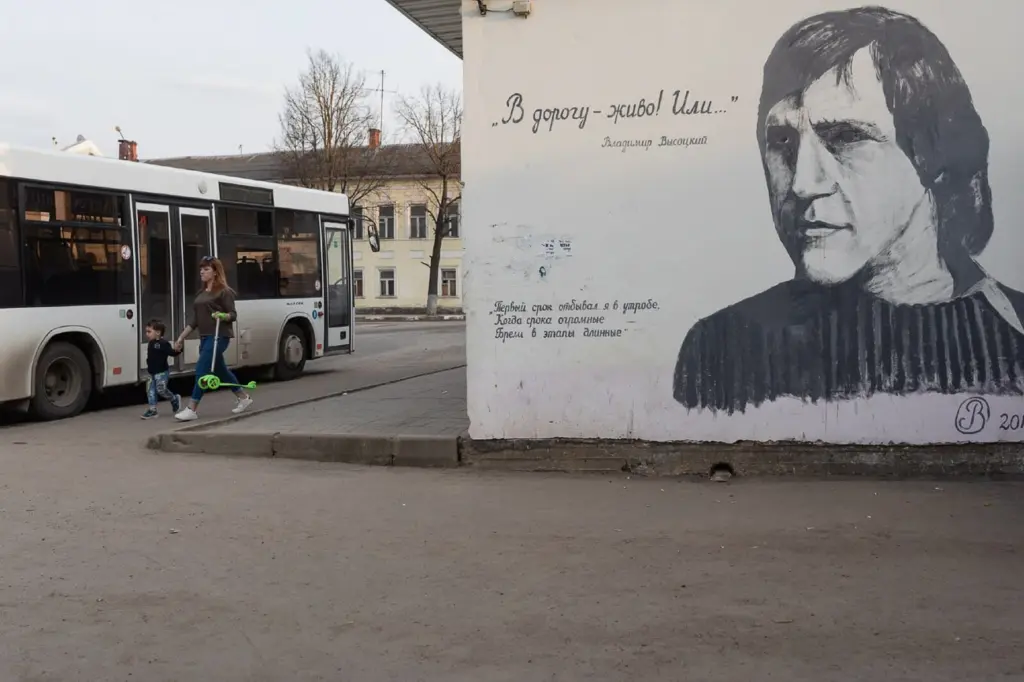
A portrait of Vladimir Vysotsky is painted at the end of the one-story bus station in Borovsk, a city with a population of ten thousand. The image is as tall as the entire wall. “On the road - quickly! Or...” is written next to it. This is a quote from a song by a Soviet author. In the original it ends: “...lie in the coffin.”
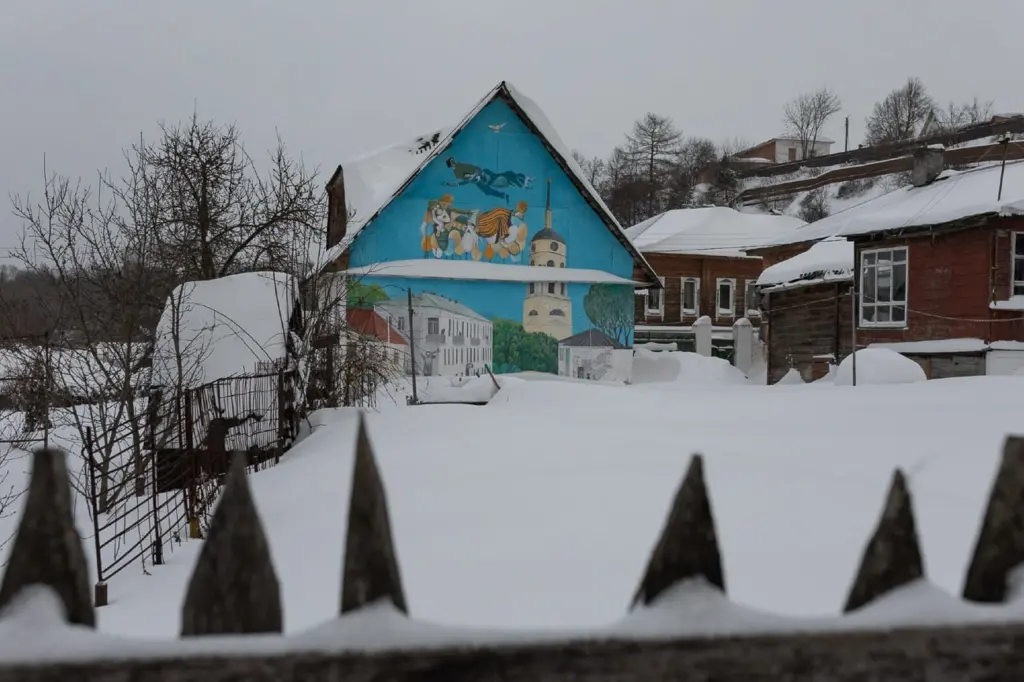
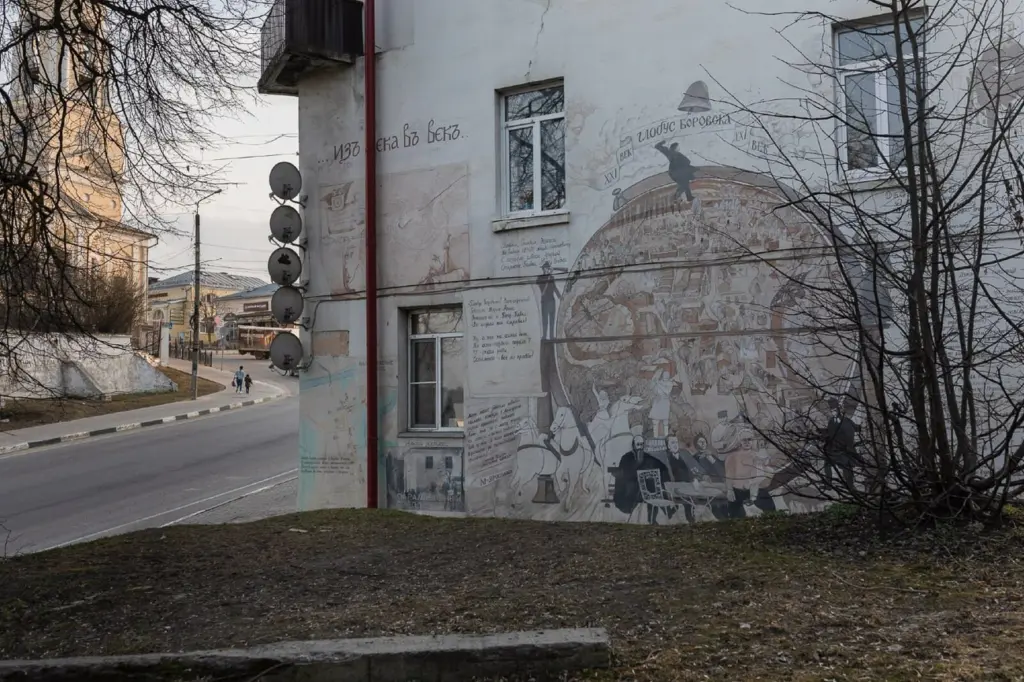
An even larger painting, “Borovsk Globe,” is located on the wall of a three-story residential building. The circle depicts houses, roads and trees. On the side, under the word “Notations”, the main objects are listed. They say about the river: “A river into which you can throw a bottle with a note.” Nearby there is a “square awaiting improvement” and a point “from where there is a picturesque view.”
A diptych of the paintings “Liberation of Borovsk” and “From Borovsk to the West” is painted on the wall of the local military registration and enlistment office. In the first, a column of soldiers - the Soviet army in 1942 - enters the city. On the second, the military leaves Borovsk towards the Moscow region. The drawings are accompanied by a poem, which ends with the words that one of the combatants “will only return to his father’s house after a funeral.”
Vladimir is called the most famous person in Borovsk and the one who changed the face of the city
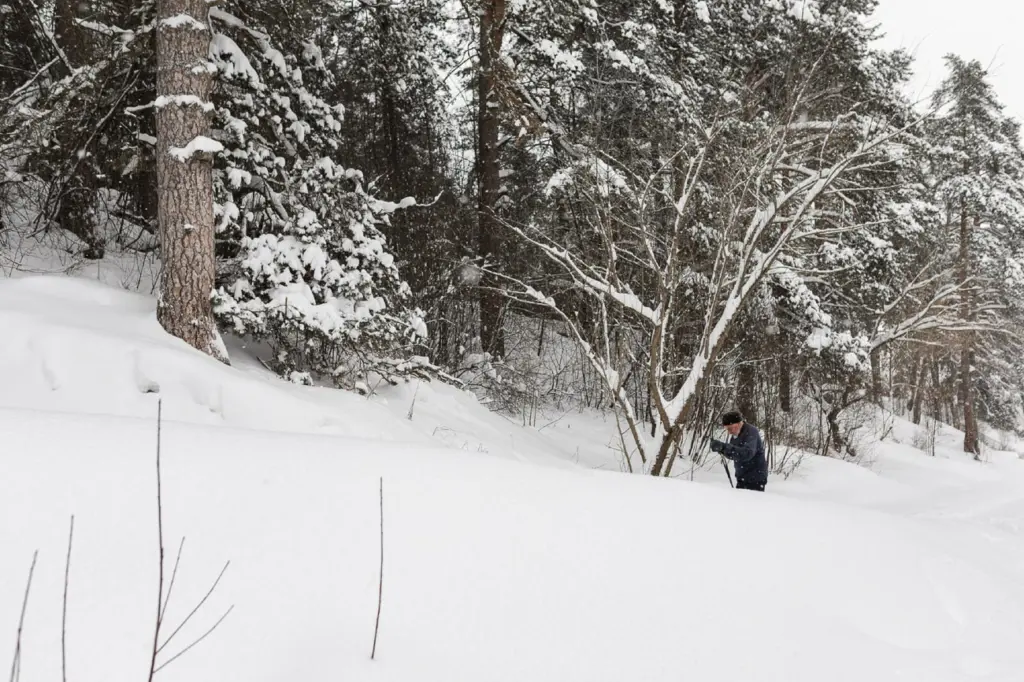
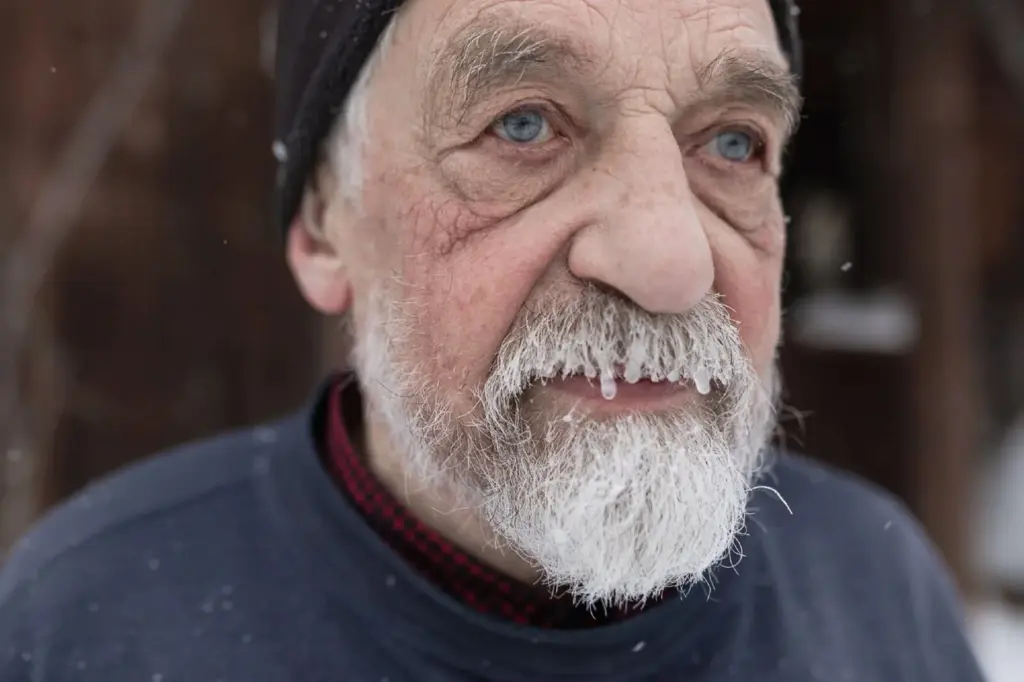
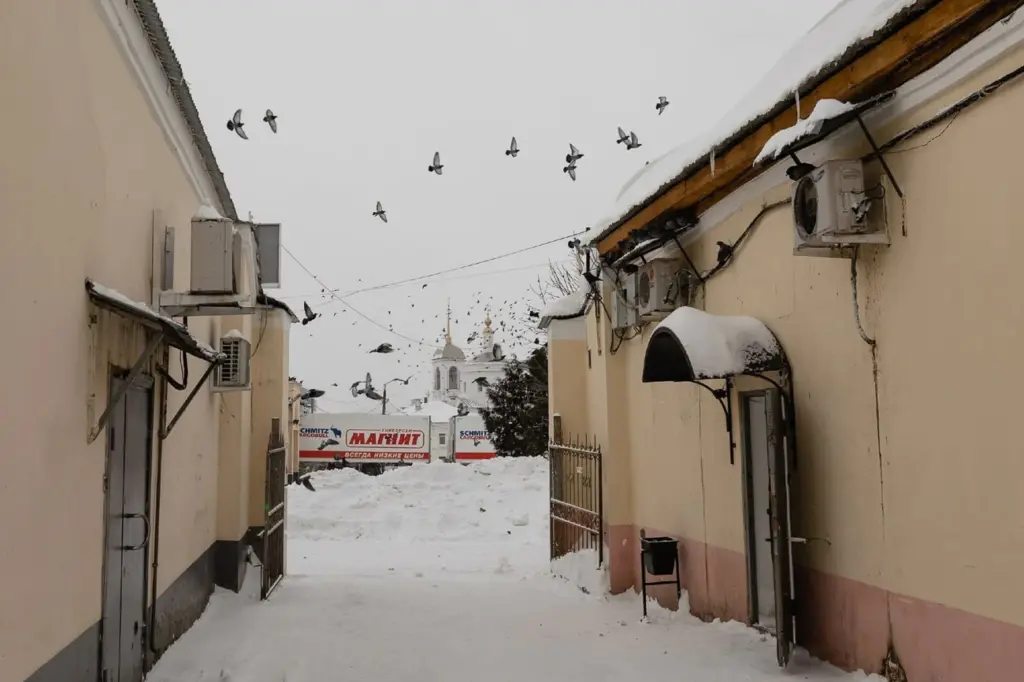
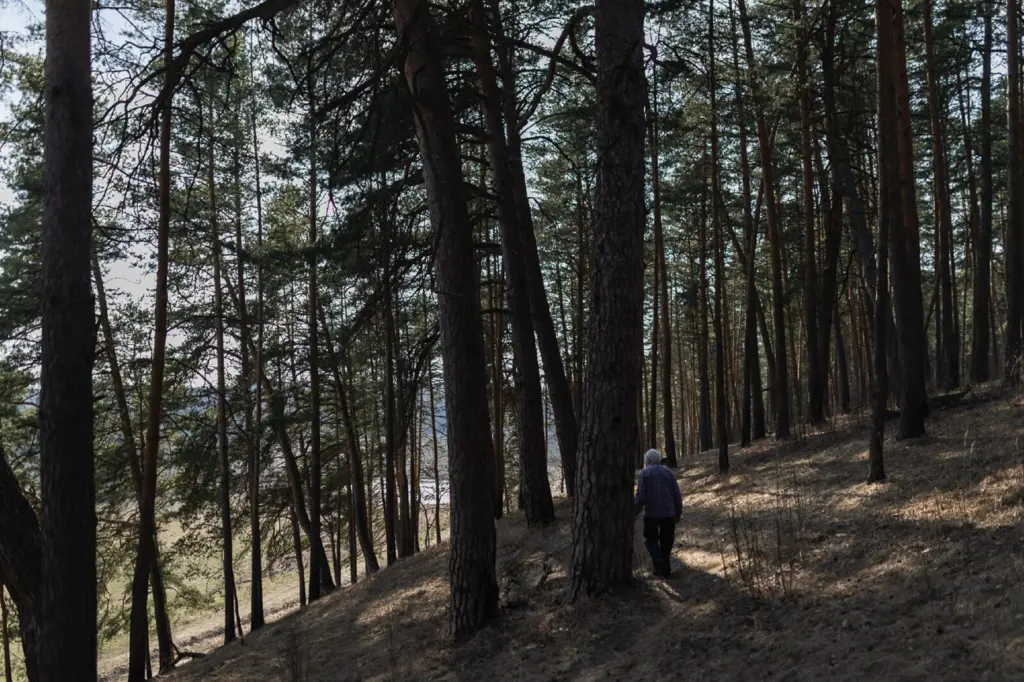
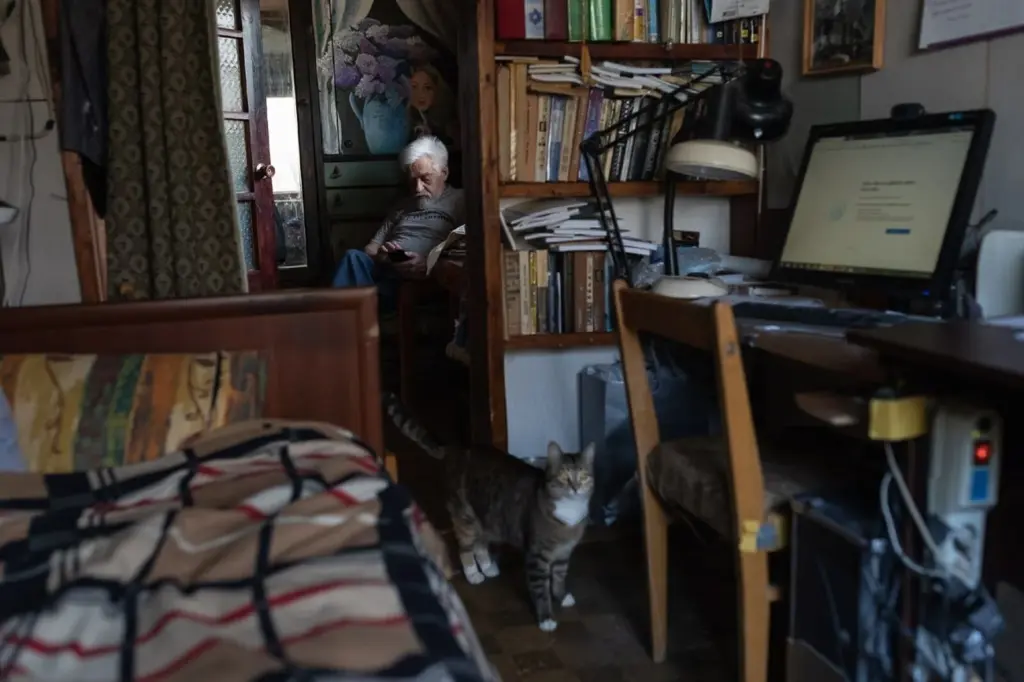
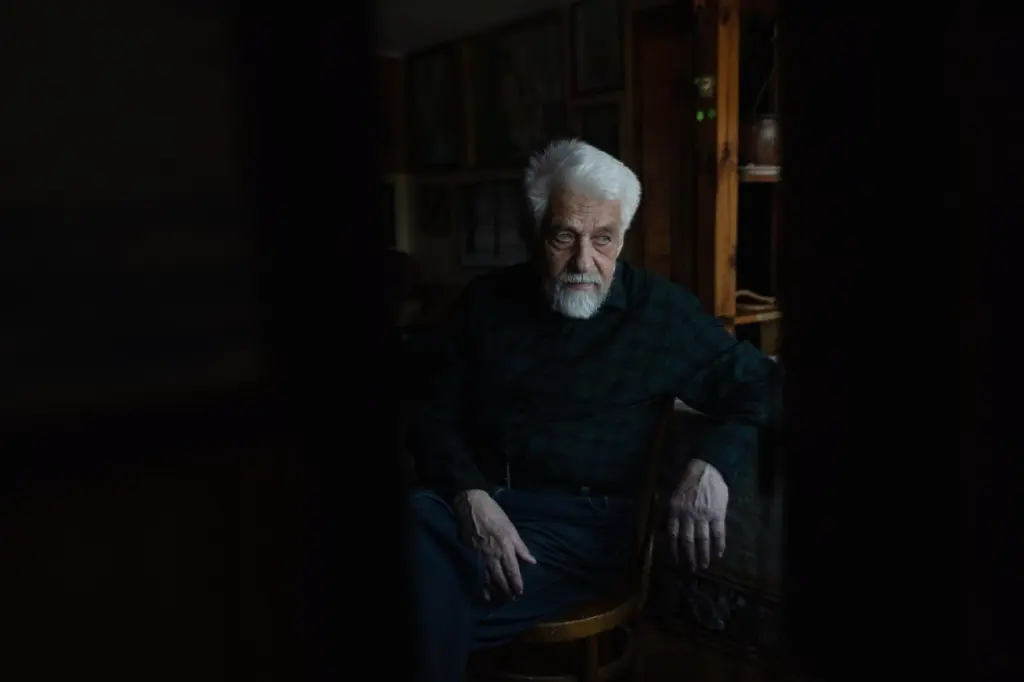
In total, in Borovsk, a city in the Kaluga region with a seven-hundred-year history, there are three hundred wall paintings. So says their author, 83-year-old pensioner Vladimir Ovchinnikov. A man lives in half of a wooden house near the center. You don’t “throw away” a worn-out kitchen set because you “made it with your own hands.” The chairs in the kitchen squeak. I asked them to buy new ones for their daughters, but they didn’t buy them. Vladimir believes that they are afraid not to please him. The ski boot is also worn out - it is sealed with tape at the sole. The man tries to go skiing to the forest near his house every day.
Most of the paintings on the city's walls, he explains, tell local stories. They show Napoleon - he stayed in Borovsk during the War of 1812. A native of Borovsky district, Dmitry Senyavin, a Russian naval commander. Konstantin Tsiolkovsky is a space exploration theorist who at one time lived in Borovsk. There was a place for a resident sitting on the bumper of his car with a child in his arms. Grandfather, who is holding an unnaturally large cucumber. Two women with pots of flowers next to each other.
There are drawings on the theme of repression under Stalin. Because of some of them, pensioners are fined for damaging someone else’s property - sometimes three hundred rubles, sometimes five hundred.
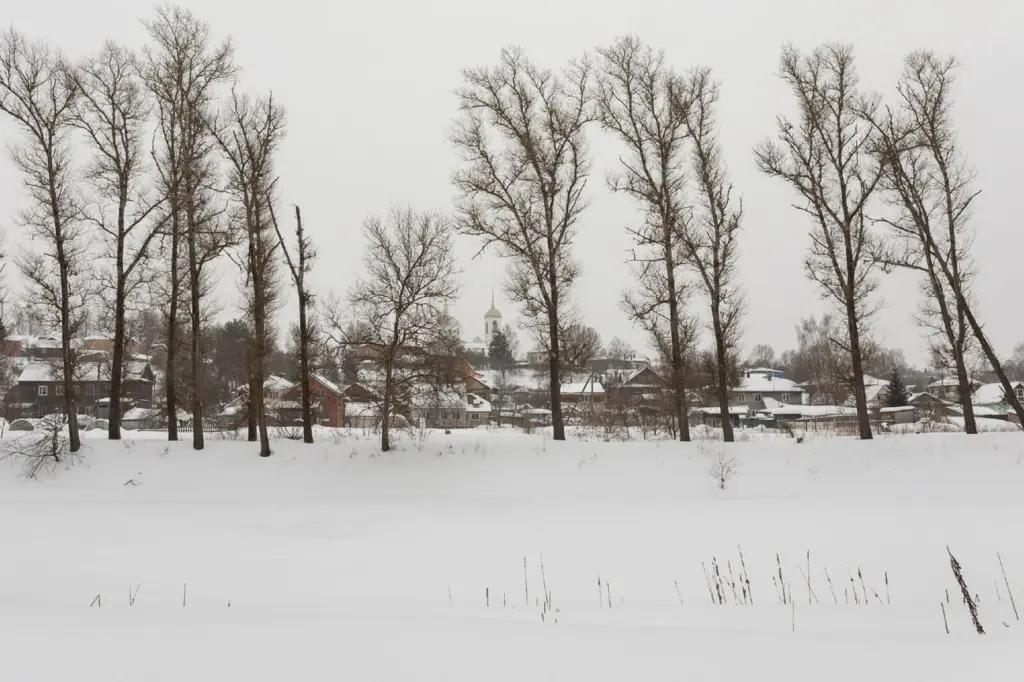
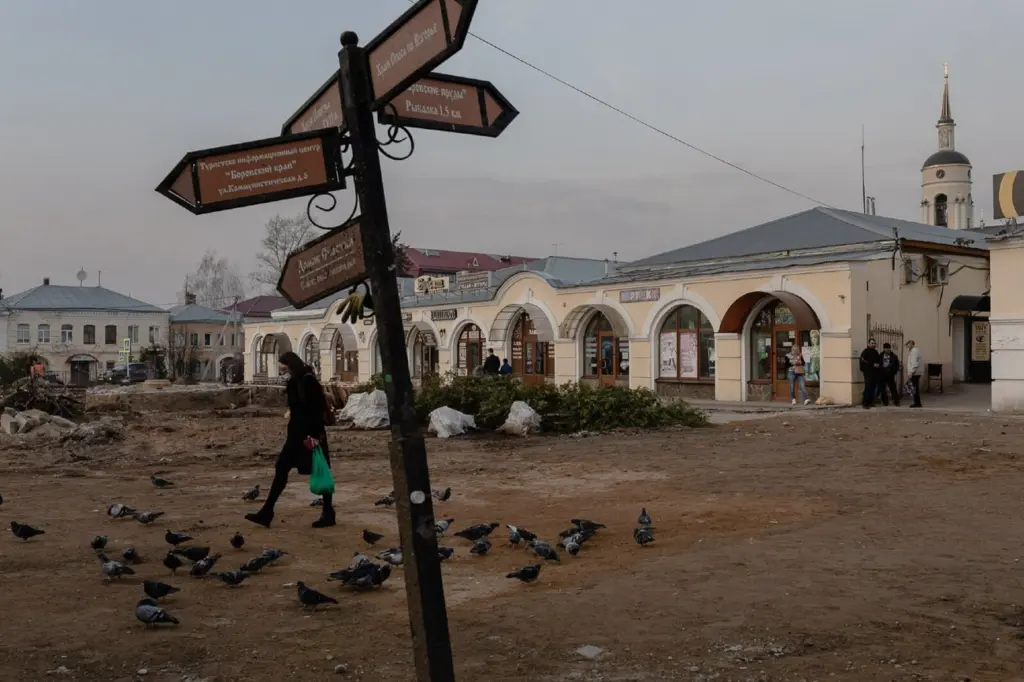
Borovsk is a city in the Kaluga region with a seven-hundred-year history
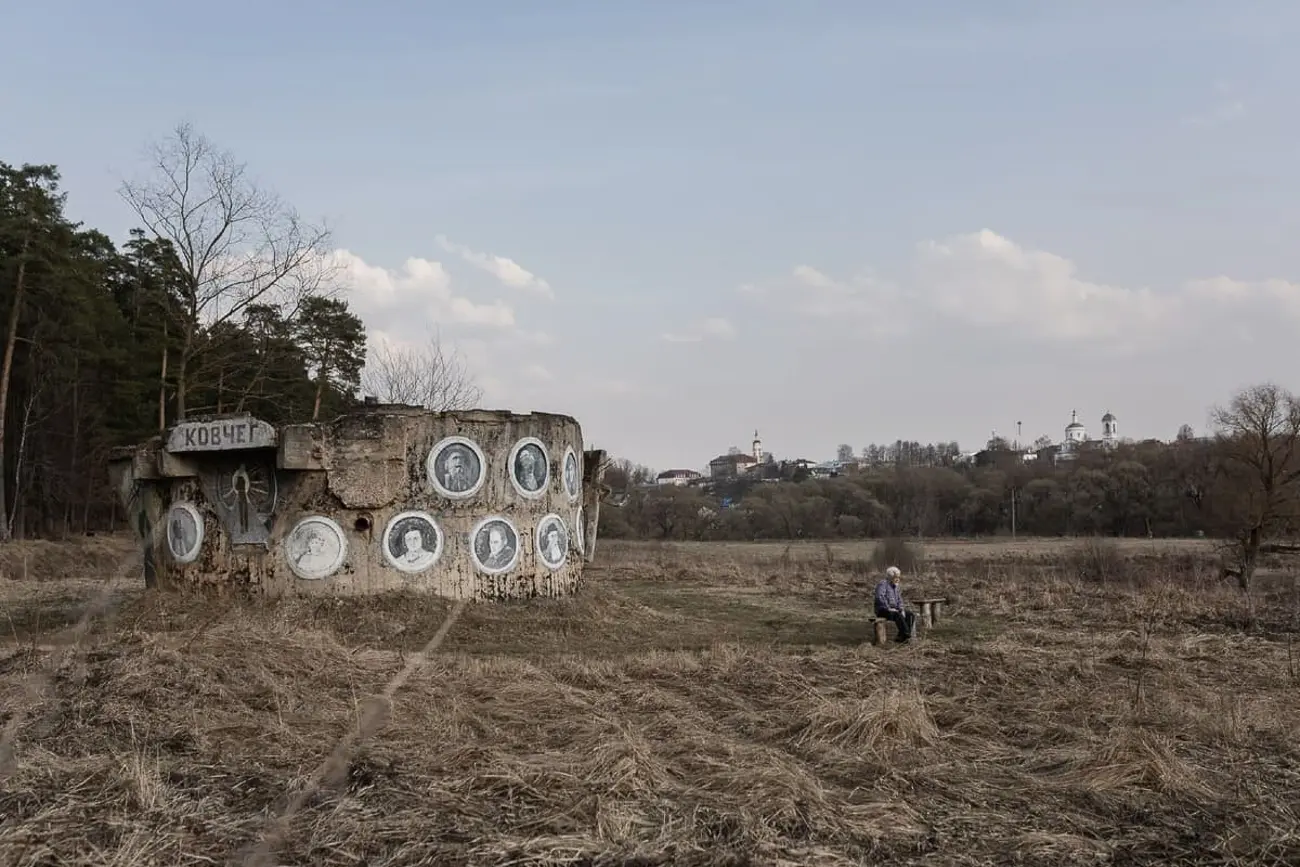
The Tripadvisor website talks about Ovchinnikov's paintings as an attraction on a par with the local monastery, cathedrals and museums. Journalist Yuri Dud called Borovsk a city that, thanks to a pensioner, “unexpectedly became a place of power for Russian street art.” Dudya, for example, was struck by an old round concrete sump, painted to look like a fictional starship. It depicts various people associated with space: Konstantin Tsiolkovsky, Valentina Tereshkova, Elon Musk and others. And the inscription: “No entry allowed.”
Wall paintings do not appear in random places. Ovchinnikov painted a portrait of Vladimir Vysotsky with a quote from his song about the road in 2019 on the bus station building
Dozens of articles and films have been written and filmed about the man. He revises and rereads some of them. “You can’t call it particularly strong,” he says about one piece, “but the newspaper paid a lot of attention—four pages. It’s been discussed in great detail, this in itself speaks volumes about the importance of the issue.” In publications, Vladimir is called the most famous person in Borovsk and the one who changed the face of the city.
But the main thing in the materials was always his creativity and struggle - and not his family life and how it influenced his activities.
Subscribe to the New Tab channel in Telegram. There we talk about how people, animals, and plants live in the regions of Russia
Lack of tenderness
In 1930, Ovchinnikov's father married his brother's widow. He was shot: he hid his origin and fought against the Reds in the Civil War. The brother of the executed man married a woman “according to the traditions of the Cossacks, and in general there are such common traditions,” says the pensioner (the Ovchinnikovs are from the Cossack city of Uralsk in Kazakhstan). Subsequently, the family left Moscow, where they had lived before, and moved to Dushanbe. Ovchinnikov Sr. entered the service as a driver at the headquarters of the Turkestan Military District. Vladimir was born there.
Then the artist’s father was sent to the camps for ten years - as “a member of an anarchist-Trotskyist group and for attempting to commit an act of sabotage.” The mother with the newborn Vladimir and the child from her first marriage left for the Moscow region, closer to her parents. After the war, the woman married again. “Not waiting for my father,” explains the pensioner. “Of course, I didn’t like this, especially since my husband is such a very... Communist, yes.”
The boy learned that his stepfather was not his own father from relatives on his father’s side. “Under the dictation of my aunt, I wrote letters to [my father] in Kolyma,” the man recalls. The child was not told why dad was there.
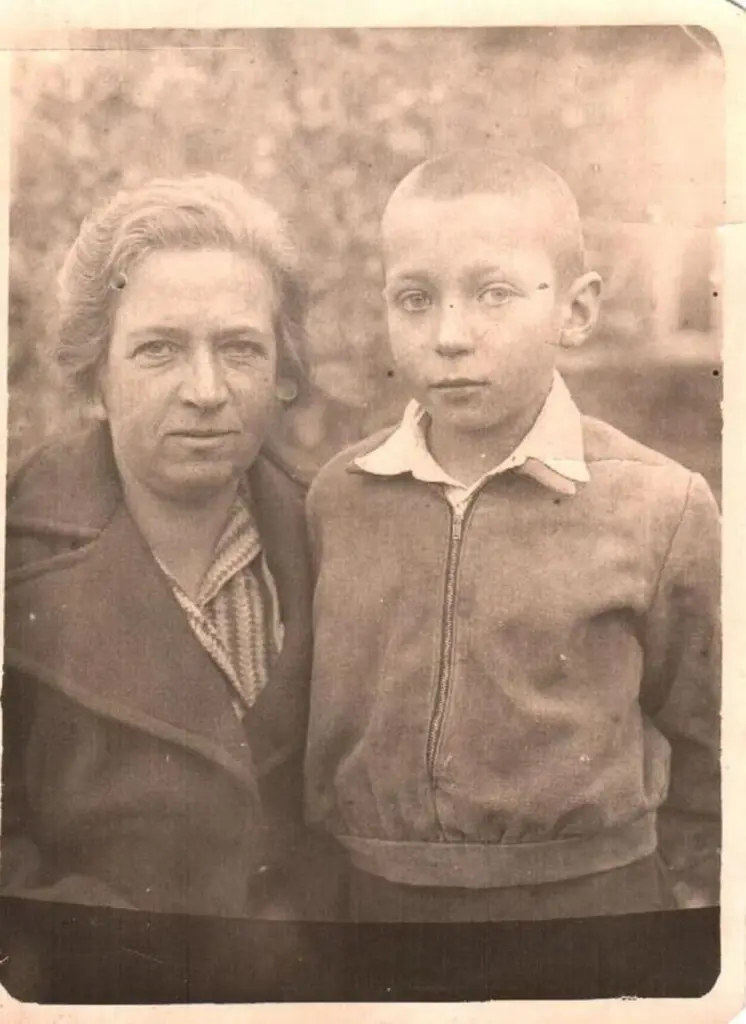
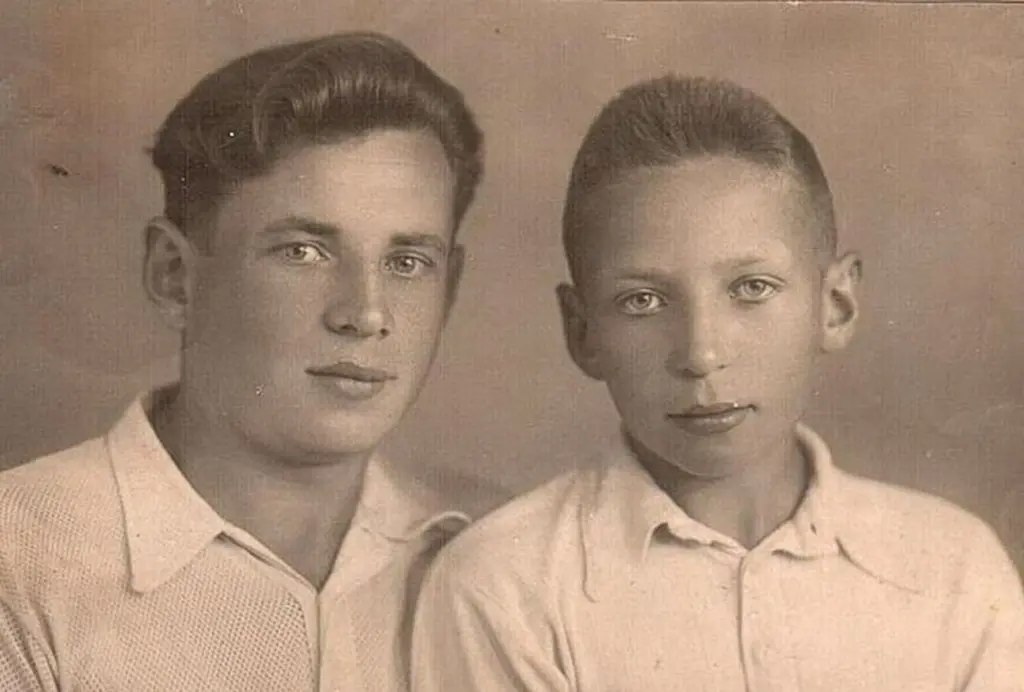
Vladimir with his mother. From the archive of Vladimir Ovchinnikov Vladimir with his older brother. From the archive of Vladimir Ovchinnikov
There was no good relationship with my mother. “My mother had rather primitive methods of pedagogy,” says Vladimir. — Forceful methods. Sit down and teach. What did they ask you? You will sit until you do it.” As a child, Vladimir did not receive enough tenderness, says the artist’s last wife, Elvira Chastikova. In his memories, she says, “there is no warmth for his mother.” “The kind of toughness that he has, of course, comes from there,” the woman continues. His relationship with his mother did not change until her death from cancer when he was 25 years old. The stepfather died twelve years later.
According to Ovchinnikov, his mother’s influence on his character—unlike relatives on his father’s side—“was minimal, maybe even none.” “Positive things have a greater impact,” he explains.
At one time, Vladimir’s paternal grandmother also lived in the Moscow region. She, the man wrote in a book dedicated to his family published in Uralsk, “was never angry, never irritated, but didn’t lisp.” The grandmother called the boy “the future artist.” In high school, he went to an art club, where he was praised. They did this “probably in vain,” the pensioner believes. When that circle closed, he went to another. “[I sit in the first lesson] I draw for myself, and it turns out well. I'm proud of myself. Why won’t the teacher come up to me and praise me? - says Vladimir. - Why did I come? They don’t teach or show anything.”
The second time he did not go to class. Since then I have been drawing “from time to time.” But he went to exhibitions at the Tretyakov Gallery and other places in Moscow, where he “listened with his mouth open to all the guides.”
Not a diplomat
Ovchinnikov’s father, unlike his mother, confesses warm feelings. They first met when Vladimir was 11 years old. Dad then came to Moscow immediately after serving time in Kolyma. Vladimir remembers those events much worse than his father’s final move in 1956.
After the camp, Vladimir’s father lived in Kolyma for several years, this is what he wanted. As in prison, he worked as a driver. In 1956, he and his new wife moved to Borovsk - former prisoners were not allowed to settle closer to Moscow. Vladimir came here to help with the garden and firewood. “We lived in perfect harmony,” says the artist. “We got along very well, there was never a single quarrel.” “He simply found his father, whom he had not seen until he was eleven years old,” says Vladimir Ovchinnikov’s last wife, Elvira Chastikova. “They immediately accepted each other.” And he accepted his father with everything that surrounded him.” That is, he became attached to Borovsk, the woman says.
On the advice of one of his relatives, the young man went to study as a builder - at the Moscow Institute of Civil Engineering. Where to study, it didn’t matter to him then: “I wasn’t particularly interested in anything. It was an amorphous creature."
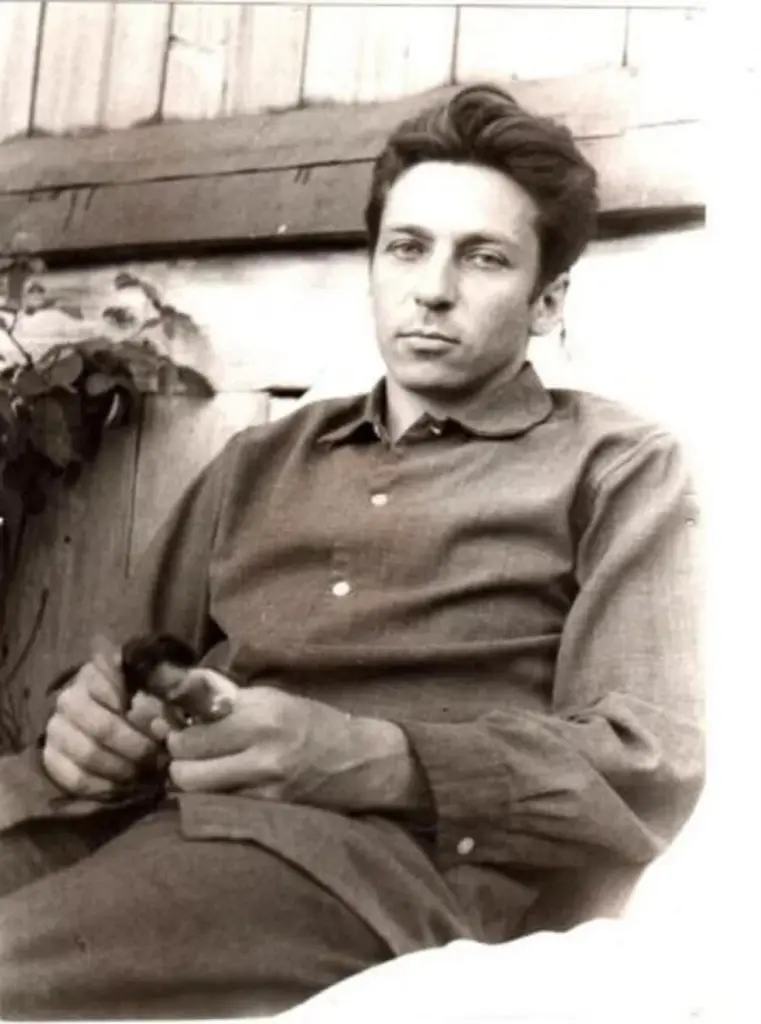
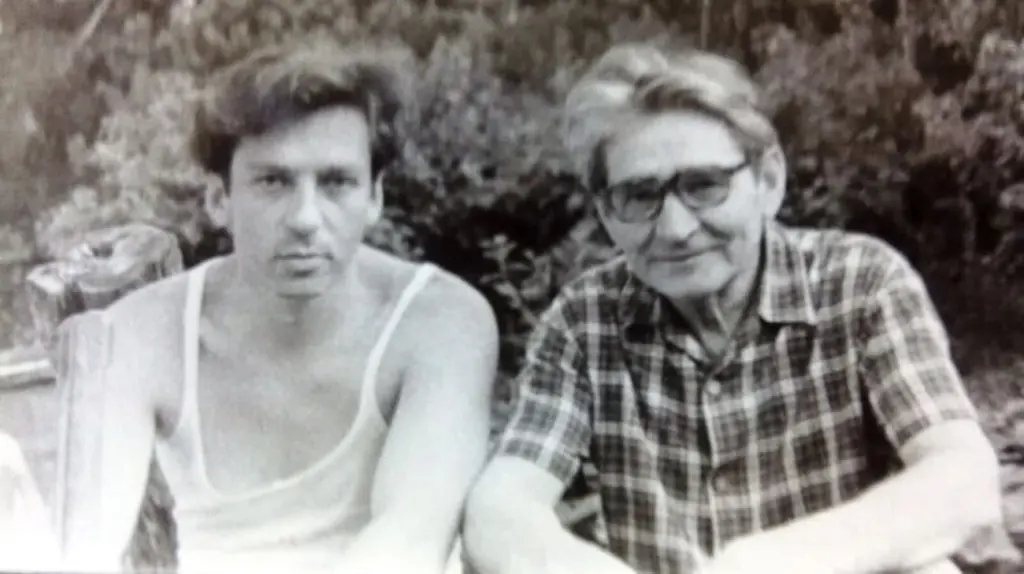
Vladimir. From the archive of Vladimir Ovchinnikov Vladimir with his father. From the archive of Vladimir Ovchinnikov
The artist learned about political repression not from his father, but at the institute. Dad was not allowed to talk about his arrest in letters. “And when I arrived, it was difficult to get any stories out of him,” says Vladimir. “He just said that they didn’t let me sleep—they interrogated, interrogated, interrogated. They interrogated us, but there was nothing to tell.” In 1956, the man recalls, students were gathered in the assembly hall and for an hour they read a report by the first secretary of the Communist Party Nikita Khrushchev on Stalin’s cult of personality. There was also talk about mass persecution: “Like a tub of cold water on your head. Everyone sat in silence."
After university, Ovchinnikov worked as a foreman at construction sites throughout the country. Then he got a job at the Research Institute of Construction Economics of the State Construction Committee, which was first located on Karetny Ryad Street, and then moved to Volodarsky.
When he was about thirty, the first “conflict situation” occurred due to the “desire for objectivity,” says the pensioner. The authorities ordered to check the effectiveness of the new main water pipes made of reinforced concrete. He decided that the development was bad. “I tried with all my might to stop this outrage,” the man recalls. - Started performing. He spoke at one seminar...” The invention was promoted by a high-ranking official, says Vladimir Ovchinnikov. As a result, he, “such a troublemaker,” was sent on a business trip to Mongolia to keep him away.
He calls himself “Balamut” with a laugh. In reality, he says, he always adapted to the circumstances. “Socialism, communism - yes, we will build communism,” the street artist lists. - What did you want? Should we do some restructuring? I'm ready. We must repay our debt to our ancestors, who innocently suffered, and I do so. Everything depends on the place, everything depends on the circumstances.”
Elvira Chastikova, however, speaks of him as “not a diplomat.” She believes that he is “not afraid to mess things up.” “He’s not afraid of fighting,” the woman says. “On the contrary, I would say that she excites him.” He will never do anything he doesn’t want to do.”
The same, in her opinion, applies to Ovchinnikov’s personal life.
Idol
The man met his first wife on one of his business trips to construction sites in the Soviet Union. “I met a girl, her appearance is very good. Ten days later we went to the registry office,” the artist recalls. “It quickly became clear that “we don’t match at all,” and two months later they divorced. “Thank God we didn’t have children,” says Vladimir.
The second marriage also began with a business trip. “I’m meeting an Uzbek woman. “Very smiling,” says Ovchinnikov. “And I’m still in the same pink state.” This relationship ended after four years because “she couldn’t have children” and Vladimir already wanted them.
The third marriage lasted until his retirement. The third wife, he recalls, “conquered by the fact that she was a tourist.” “I probably went on one hike and said that I love tourism,” the pensioner jokes. The relationship was “seemingly normal”; in the early 1970s they had two daughters. But soon “incredible jealousy began towards everyone with whom I come into contact - friends, acquaintances, relatives, acquaintances.” “It was imperative to look gloomy if someone came,” explains Vladimir Ovchinnikov.
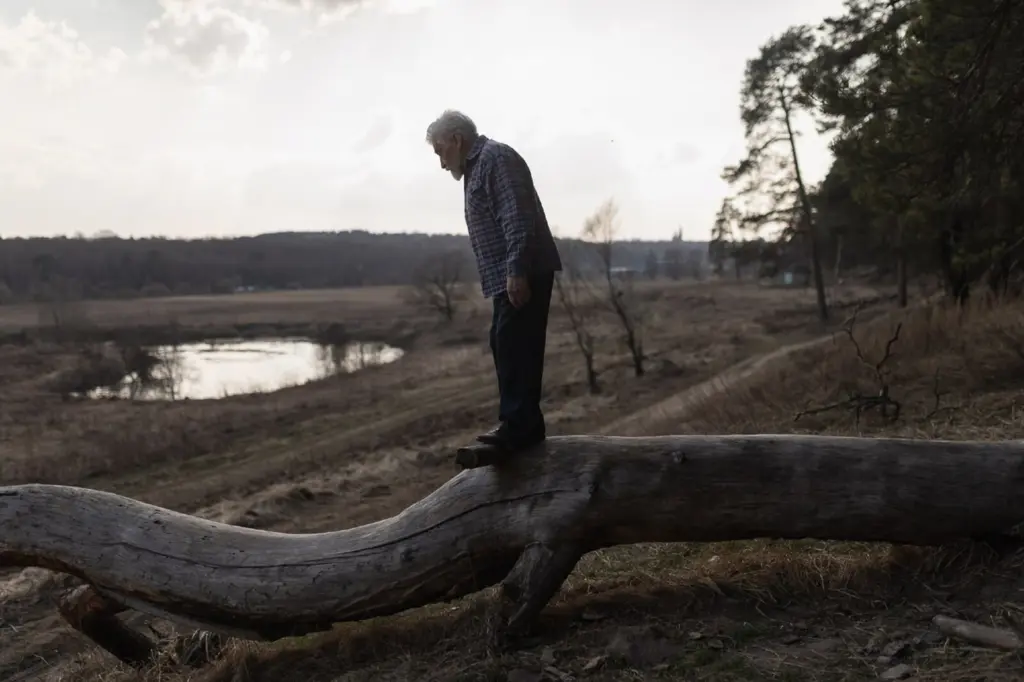
In winter, Vladimir tries to ski every day
The youngest daughter of a pensioner, Olga Ovchinnikova, says about her mother that she is “not a very sociable person, not the soul of the company.” Apparently she likes to control everything. According to Olga, next to Vladimir “there should be a woman who is ready to forget about herself and give her life to another person.” “This is normal,” says the interlocutor. - Because for a man, the main thing is business. Family is important for a woman, because a woman, in fact, was created to give birth to a child and raise him.”
Dad was always an idol for her: “I always considered him the most beautiful, in general the best. And now I’m counting.” Vladimir “was always liberal, and never got into my soul.” “He trusted,” the woman continues. - And I never scolded you. Silently, silently. Silence was enough to understand that you were wrong.”
“For education and self-improvement, he preferred Spartan conditions in everything,” says the pensioner’s eldest daughter, Vera Ovchinnikova. — We overcame difficulties with him under the slogan “There is no word “can’t”, there is the word “must”. To teach us to swim, he swam with us in a rubber boat to the depths and simply threw us into the water, and threw inflatable pillows after us.” At the same time, my father “allowed us to do whatever we wanted.” “Once,” Vera gives an example, “when we were eight or nine years old, we said that we wanted to learn to smoke. My father didn't smoke. He found cigarettes for us, lit them and gave us each a cigarette.” Vera says that after that she didn’t smoke anymore. The youngest, Olga, started smoking in college and quit when she became pregnant. According to Vera, Vladimir did not scold them for their childish pranks, but demanded that they treat others with respect. For example, shuffling slippers on the floor was prohibited.
At the request of Borovsk residents, the artist paints pictures on their houses
Ovchinnikov took his daughters and their classmates on hikes. As his eldest daughter Vera recalls, the children were delighted with him. “The bad things,” the eldest Ovchinnikova lists, “he always put the public before the family, he never asked for us.”
“He is ready to help the whole world and believes that we should do the same,” says youngest daughter Olga. In the 1990s, a man was scammed by street vendors. They said that they were rushing to catch the train and allegedly asked to buy “twenty leather jackets made of leatherette” at a cheap price. In such cases, according to Olga, “he didn’t even have to be persuaded” - he bought it to help. In fact, the clothes were of such quality that they were even cheaper. When Vladimir realized that he had been deceived, he hid the bags with goods on a closet in the corridor. My wife and daughters found the things and started arguing. Then they distributed the jackets to friends.
Borovsk
In 1998, Vladimir turned 60 years old, he retired and moved to his father’s house in Borovsk - he was tired of “hectic city life.” The artist’s father died of a heart attack several years earlier. Vladimir’s last wife, Elvira Chastikova, believes that Vladimir Ovchinnikov left the capital because he needed to care for his father’s sick widow.
In retirement, Ovchinnikov returned to his childhood hobby of painting.
In retirement, the artist recalls, “there was time”: “I thought about what I should do.” I went to the local history museum. “I’m ready to help you, do something in local history,” he retells his words. - They said it’s not necessary. Maybe because I was not yet a well-known local historian.” The director only promised to prepare a list of necessary building materials: Vladimir previously worked on construction sites.
Ovchinnikov returned to his childhood passion for painting. His paintings of that time include views of the city, still lifes and portraits. “Borovsk is where I live,” he explains. “And everything here is interesting to me.” If he lived in another place, he says, he would devote his work to him: “What the artist sees, that’s what he writes.” According to Elvira Chastikova, he studied everything related to his father. He lived in Borovsk - and Vladimir tried to fill in the “blank spots” in its history, until in the end he “appropriated this city for himself.”
According to the artist’s last wife, he “appropriated this city for himself”
In 2000, the Borovsk Art Gallery invited Ovchinnikov to organize an exhibition of his works. As the man explains, by that time he had already become famous.
Then an artist friend had the idea to make together “a collection of poems, or even better, some kind of picture book.” Ovchinnikov agreed, but at his suggestion it became an album with works by three dozen Borovsk artists, including him. Next to the paintings there were poems with a similar mood - also local or by authors from Kaluga. When they were selected, they consulted with a poetess from neighboring Obninsk, Elvira Chastikova, who was then 55 years old. That’s how Ovchinnikov met her.
“She brought criticism,” the artist recalls. - “Not good.” She suggested something herself. Well, I used it to the fullest.” Elvira's task was to approve the selected poems or find others. “There were a lot of random [pieces],” the woman says. “It was necessary to put it in order, to select it more carefully.”
Vladimir is trying to get a memorial monument to the victims of repression to appear in Borovsk
“He came to the library and simply imposed his company on me,” says the poetess from Obninsk. “I tried to fight him off a little. He started coming every day. He ended up getting me into this job.” He argued that “the book needs to be published, how can one refuse to fill a gap in history, in local history, in literature.” “He brought me, drove me,” recalls Chastikova. “And gradually he not only drew me in, but simply enslaved me.”
“As a result, my previous family was destroyed,” says the woman. She divorced her husband, who subsequently fell ill with cancer, and moved to Borovsk to Ovchinnikov’s house. In his green Niva, the man took her to work in the library every day. A year and a half later, in 2003, they got married.
Climbed the walls
In the early 2000s, an acquaintance of Ovchinnikov, with whom he had previously made an almanac with paintings and poems, came up with a new idea. He mentioned that you can paint not on canvases, but on walls. Vladimir asked Elvira what she thought about it. “I say: yes, of course,” recalls Chastikova. - You are the kind of person for whom some canvas is not enough, you need the whole sky. It's yours. He doesn't like to write out any details. He’d better use a big stroke, a big brush.”
They met in January - and in the spring he was already “climbing the walls,” continues Chastikova. Elvira, the artist says, became his “muse.” “Everyone said, muse-muse. “He himself said that I was his muse,” the woman recalls. “And I thought: this is how they are appointed to the muses.” Although she does not argue with this definition: “He needs this to be in his head, to have love, to have something boiling inside him. Even if sometimes it’s uneven, sometimes it’s different. But it still energizes him.”
The man found a building with a flat wall near the center. Without asking anyone's permission - he began to do this only later - he brought a ladder, acrylic paints and in a few days painted a view of Borovsk. “Central Annunciation Cathedral, square, gray day,” he recalls that scene. “Some puddles, reflections in the puddles—cars, pedestrians.” Elvira drew one character, although drawing is “an alien art” for her, she says. “Some kind of pipe,” Chastikova recalls of the original image. “I say: someone needs to walk along this pipe, or something.” He says: then draw it yourself, and I drew this girl.”
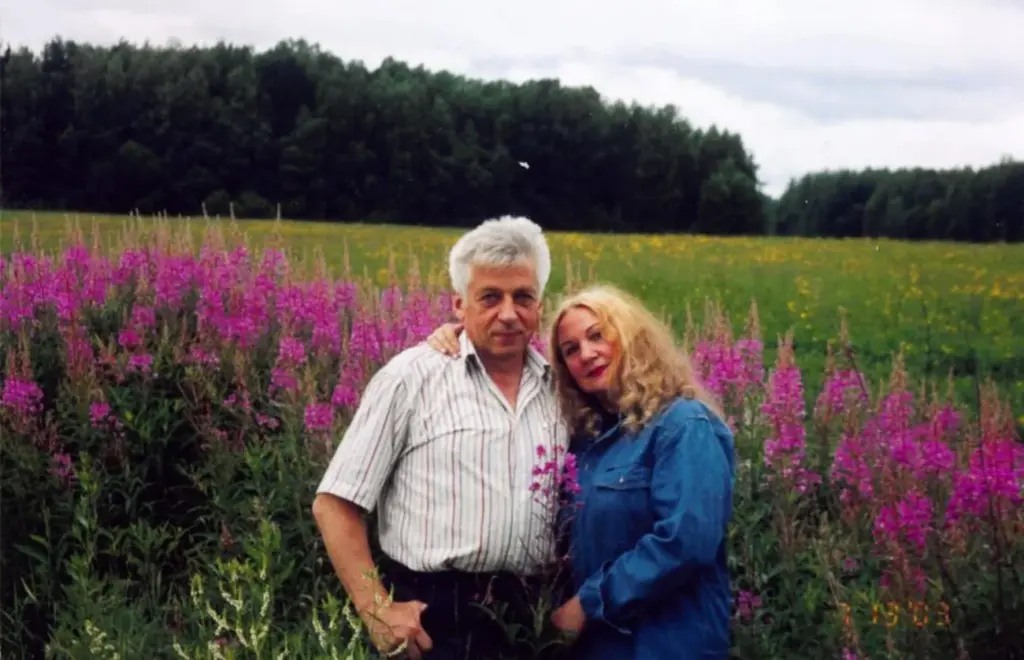
Vladimir and Elvira. From the archive of Vladimir Ovchinnikov
“Immediately there were positive reviews,” recalls Ovchinnikov. - Oh, great, oh, beautiful. And the sanitary and epidemiological station that occupies this building did not say a word against me. I started walking and drawing.” Poems appeared next to the wall paintings, as in the album from which their acquaintance began. They were written by Chastikova. “I say: let’s have such and such a plot,” Vladimir describes the work in their duet. — These are the proportions of this “canvas”, the significance of this building. She writes a poem. I ask her: write shorter, more talented. Because you can’t write too many poems on the wall.”
This is how a “city within a city” appeared on the walls, says Elvira Chastikova. He and Ovchinnikov’s album with photographs of wall paintings is called “Parallel City.” In many paintings there is a red-haired girl, like Elvira. Ovchinnikov does not deny the similarity, but claims that it happened by accident.
“As soon as I get some distance away, he stops drawing,” says Chastikova. In such cases, the man switches to the topic of political repression.
This is the only way I can
Ovchinnikov is seeking to have those executed and exiled for political reasons under Stalin - like his father - declared innocent. He writes complaints to officials in Borovsk, Kaluga and Moscow - that other officials refuse his proposals. The artist also wants a memorial monument to the victims of persecution to be erected in the center of Borovsk.
In the State Archive of the Kaluga Region, he found the names of those whose rights had not yet been restored. These are residents of Borovsk and the Borovsky district who used wage labor, participated in the peasant uprising, or worked for the Nazis during the occupation. The artist wrote down their names in a notebook and then sent the lists to the police and prosecutor's office. After his letters and a lawsuit against the Ministry of Internal Affairs in the Kaluga region, one and a half thousand people were rehabilitated. This is the same number as were found innocent before him.
But the charges against everyone were not dropped. For example, seven people who, even before the Great Terror, were tried for theft, robbery, or escaping from prison, were not rehabilitated. During the mass persecution, they were shot as “socially dangerous elements” - this follows from the police certificates that Ovchinnikov has. What this means is unclear. The prosecutor's office of the Kaluga region explained in its response that these people again committed ordinary crimes. Thus, one “attacked the chairman of a collective farm with a knife” and “in a state of intoxication expressed himself in indecent words, started a row and dispersed the walking youth from the street.” However, the police reports do not mention this. Ovchinnikov wrote complaints about “these additions” to the Prosecutor General’s Office and the President of Russia, but it did not help.
When complaints do not help, the artist paints pictures on the city walls on the theme of the Great Terror.
While he was denied a monument to the victims of political repression from Borovsk and the Borovsky district, he made his own “memorial.” On the reverse side of the monument to those who died in the Great Patriotic War, he painted a silhouette that resembled the Virgin Mary. In place of one eye she had a star, in place of the other there was a bar, a symbol of prison. He painted portraits of convicts on the wall of the store; someone immediately painted over this picture with spray cans. I painted a similar gallery on my neighbor’s fence with her permission. Then the woman painted her faces. “Since then she’s been a nobody to me,” says the pensioner.
Vladimir Ovchinnikov sends complaints to officials, and when this does not help, he paints pictures on city walls
“At this age you already have to be a wise person,” Elvira Chastikova comments on Ovchinnikov’s actions. - And he is not wise at all. Maybe this bully has been in him since childhood, he thinks that in this way he will drive them into some corner. But in this way he drives himself into a corner: knowing that he is a bully, they understand that they have to fight.” “You are acting like a boy. “This is all hooliganism,” the man recounts his conversations with his wife. - But if they are lying. Here's a liar - how to force him to tell the truth? Or act according to the law? This is the only way I can do it."
In 2017, officials were nevertheless “forced,” as Ovchinnikov says, to make a monument to those repressed. A boulder from the Solovetsky Islands, one of the places of exile, was brought to the far corner of the city park, behind the monument to Lenin. There are still no names on it.
A year later, on the wall of the creativity center in Borovsk, as follows from his explanatory police, Vladimir wrote a phrase appealing to the governor: “Artamonov, return the names.” On the back of the war memorial, where the painting of the Virgin Mary had already fallen into disrepair, he put a list of those executed in Soviet times - it was painted over . He later hung a banner with two hundred portraits in the same place, but that too was torn down.
For some of the work, the man was given small fines under the administrative article on damage to someone else's property. “Well, yes, there is a struggle,” the pensioner says about this. - Showing a fight will result in fines. Civil war".
The confrontation is also unfolding in the Ovchinnikov family.
Not a warm relationship
The daughters come to their father’s house in Borovsk from Moscow in turns, because they avoid each other. The younger Olga says about the older Vera that she is always dissatisfied with everything. “We have completely different life paths,” says Olga. “I’m a builder, and she’s a destroyer.” Moreover, both her own life and the lives of everyone around her. Therefore, it is very difficult for us to find a common language.”
Vera Ovchinnikova refused to speak with the journalist by phone or in person. “I wouldn’t like to [tell] a lot of unnecessary things, because then I’ll have problems with him [my father],” she explained.
“They got fixated - you didn’t tell me that, but you said it like that,” says Vladimir Ovchinnikov about the daughters’ mutual hostility. - Well, they offended me - oh well. Well, shut up. Communication ethics suffers.” Women also quarrel with him - for example, because the grandfather makes comments to his granddaughters. Although, according to the youngest daughter, her father “never insulted anyone.”
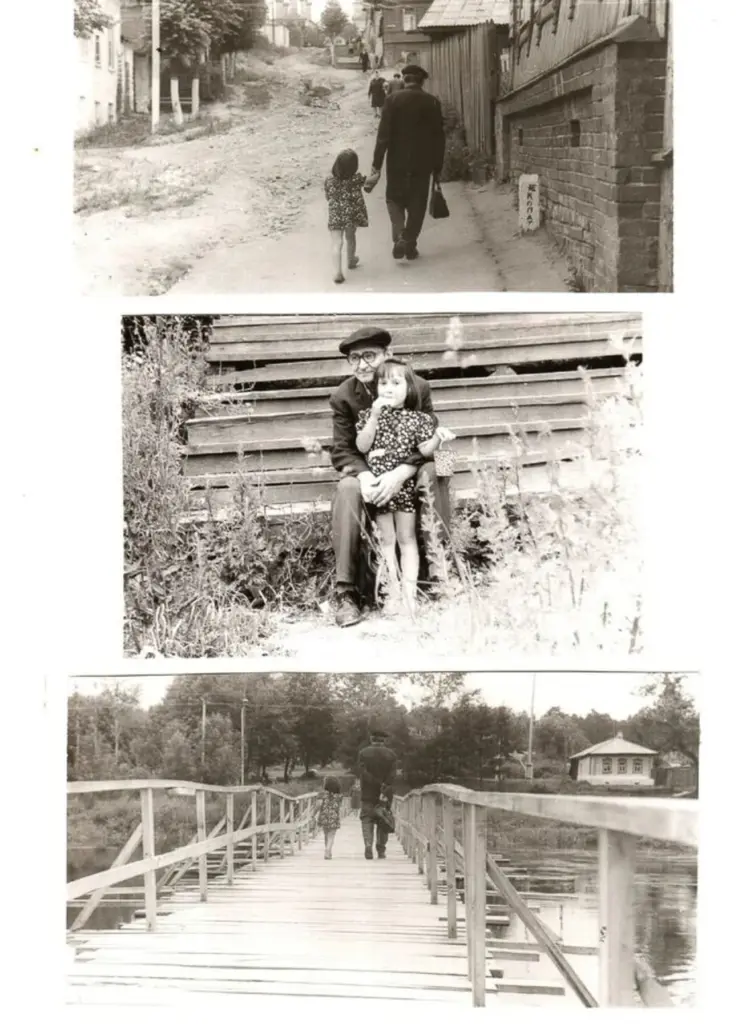
Vladimir's daughter with her grandfather. From the archive of Vladimir Ovchinnikov
Ovchinnikov has claims against both daughters. About the eldest, he says that she “can be loud, eccentric, and uncontrollable.” There are supposedly “not warm relations” in her family. According to Vera herself, she raises her children “toughly, not allowing me to do what my father allowed me to do.” The youngest is “still less advanced than her friends.” That is, he is not interested in his work and does not offer help. At the same time, one of her friends volunteered to make a model of a banner with portraits, which the artist hung on a war monument.
“Dad never tells himself what he is doing,” says Olga Ovchinnikova. “Maybe he wants me to come and tell him: tell me what you’re doing.” But when I get there, I dream of hiding in the back room and going to bed.” At the same time, according to the woman, “later it turns out that dad is right,” “he is always adequate, unlike me.”
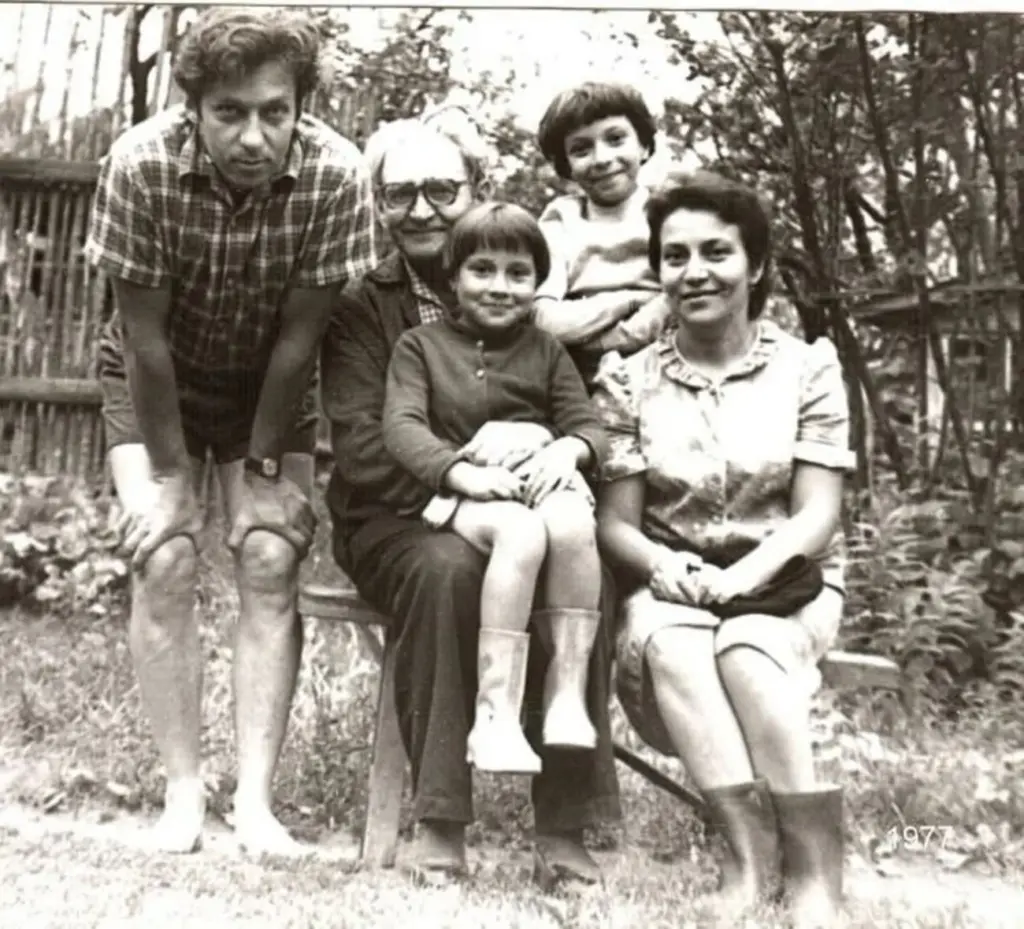
Vladimir with his wife, daughters and father. From the archive of Vladimir Ovchinnikov
His daughters come to him because the house in Borovsk is a “bomb shelter” for them, believes Vladimir Ovchinnikov’s last wife, Elvira Chastikova. “They need to go somewhere,” she says. - One of them has a mother who is sick, she needs to leave the house at any cost. The second one is about the same.” Olga Ovchinnikova, she herself says, really cares for her mother, her father’s penultimate wife, who has Parkinson’s disease. “I count on the support of my loved ones, but to no avail,” adds the interlocutor. The problem with the eldest daughter, according to Chastikova, is that she communicates with few people.
Chastikova wanted “to live separately, regardless of the fact that the children from a previous marriage will come and start some kind of showdown.” Her husband, according to her, responded to this that “everything must be endured.” If she refused, the artist called it pride: “I say: no. There is a personality, and it should never be smeared across the wall.” Ovchinnikov was equally “indifferent” to everyday issues, Chastikova continues. For example, he refused to install a water supply to the house because he could do without it.
Ovchinnikov finally completed the water supply a few years ago. As for his daughters, says Chastikova, Vladimir himself could not stand it and say: since they are like this, he will kick them out. His wife, despite everything, convinced him: “You won’t have other children.”
In the end, he broke up not with his daughters, but with her.
Achieved freedom
In 2014, according to Chastikova, she received a love letter by email. It came from Vladimir, but was not addressed to her: the artist had the wrong address. “I got carried away when I was young for a couple of days,” says Ovchinnikov himself. “The breakup after that,” he continues, “was my fault.” “It was all so frivolous,” says the man. “Both on my part and her reaction is so hasty.”
The work “Globe of Borowska”, created in the 2000s, is dedicated to local history
Elvira Chastikova presented him with a choice. Or he agrees to the divorce, and they continue to communicate. Or she will divorce him anyway, but then they will never see each other again. Ovchinnikov wanted neither one nor the other. The woman recalls his words:
- No, no, not that. Anything but this.
- And what? What are you suggesting?
- You stay.
- And what next?
“I achieved some kind of freedom for myself, or something. — After the divorce, the poetess returned to Obninsk. “I live where I want.” As for the wall paintings, “I still treat creativity with great interest and participation.” They constantly correspond and call each other. "Every day. “In the morning, in the evening,” Vladimir lists. “We celebrated the New Year together.” Discussing television shows: “Have you watched? - a pensioner gives an example. - I looked. I liked this. That’s right, yes, this one on the jury said the right thing today.” The portrait of them together, which he painted the next year after they met, still hangs next to his bed.
Vladimir lives in a wooden house near the center of Borovsk
Chastikova believes that they remained “friends.” “For some reason he imagines everywhere - wife, wife, everywhere - wife,” she says. “Many of our friends have no idea that we are divorced.”
“We believe that we are a couple,” says Vladimir, on the contrary. “Maybe it’s more convenient for her to talk like that, I don’t know.” Maybe she needs me to prove otherwise.”
Follow New Tab on X (Twitter). There we write about how the regions of Russia live. We're still mumbling and swearing
I'm not afraid of anything
The authors of this text visited Ovchinnikov’s house twice - in the summer of 2020 and in the winter of 2021. For the first time, both daughters visited a man at once. “It just happened,” explains the pensioner. The eldest woman opened the door. She said that the father most likely would not communicate.
Когда, по приглашению Владимира, гости заходили в дом, женщина стояла лицом к стене. «У Веры муж, зять мой, помешан на соблюдении карантина», — говорит Владимир. Младшая дочь Ольга тогда, наоборот, наливала в бокалы вино. Она рассказывала, что раньше ходила на курсы сомелье. По словам Овчинникова, Ольга работала в «рекламном журнальчике для поставщиков вин». Там «понабралась, разбирается в винах».
В следующий раз журналисты увидели Ольгу сидящую одну в комнате, с заплаканным лицом. Когда гости переступили порог, женщина встала и ушла в другое помещение. Потом она объяснила свою «истерику» проблемами дома, где нужно ухаживать за больной матерью. «Не высыпаюсь ужасно, — сказала Овчинникова. — Наверное, поэтому у меня с нервишками не всё в порядке. Я стала ужасно плаксивая и истеричная, что вы и наблюдали».
К гостям женщина в тот день так и не вышла. Пенсионер же позвал журналистов за стол. «Мы всё славим наше государство за победу над фашизмом, а я насчитал, что в войне погибло 230 боровчан, — не дожидаясь вопросов, начал он. — А расстреляно по политическим всяким делам и не вышли на свободу из ГУЛАГа — 388 человек». Властям «есть что скрывать», поделился пенсионер и зачитал стихотворение на тему исторической объективности.
Овчинников нарисовал в городе три сотни настенных картин
Его бывшая жена Эльвира Частикова, с которой он регулярно созванивается, однажды спросила его, боится ли он чего-то. «Он долго думал, — вспоминает женщина. — В конце концов ответил: “Нет, я ничего не боюсь”. Я ему говорю: “Как же так? У тебя есть и детки, и всё”. Но он вот такой, ничего не боится. И ни за кого. Как-нибудь да будет». Владимир в свою очередь объясняет журналисту, что «всё не укладывается в этот простой ответ». «Я к своим поступкам подхожу обдуманно, — говорит он. — Я боюсь, например, за то, как мои внуки воспитываются. Мне не удаётся быть с ними в контакте. А то, что они перенимают от родителей, от окружения, мне не нравится. А чего-то другого… Пойти на приём в администрацию — хоть и противно, но я не боюсь».
После разговора о его страхах Овчинников написал журналисту электронное письмо. «Эльвире нельзя верить, — объяснил Владимир. — Вчера она созналась, что она — дура дурой. Наелась вчера на ночь мягкого хлеба со сливками. Ночь не спала, было дурно, рвота, звонили в «скорую». «Это ирония, — объяснил вскоре свои слова про сливки и «скорую» Овчинников. — Не ирония, но юмор такой, чёрный».
В июне Овчинников, по его словам, «схулиганил» и сейчас ждёт новый штраф. На стене жилого дома в центре города — раньше здесь уже закрашивали его работы про репрессии — написал: «Без памяти — нет народа».

 Subscribe to the New Tab channel in Telegram. There we talk about how people, animals, and plants live in the regions of Russia