
Translated material
I went to Germany and am happy
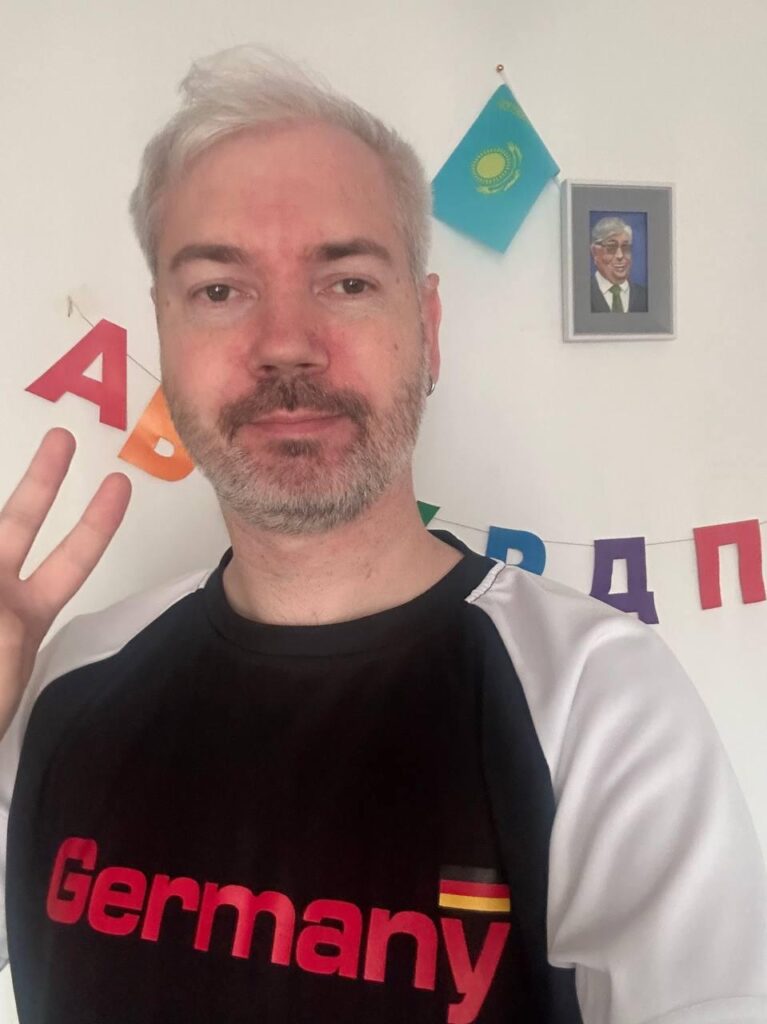
42-year-old Kirill Zhirikhin was one of the leading engineers in the Russian aircraft industry: he worked on projects for domestic aircraft MC-21 and Sukhoi Superjet, and also participated in an international project to create a hypersonic passenger airliner. But working with foreigners in modern Russia turned out to be dangerous - the special services saw treason there, and Zhirikhin decided to leave his homeland. Now the scientist is settling into Germany and hopes that he will be able to move science forward in a new place. He told Kholod how Germany received him and what difficulties he encountered.
Here I am not threatened by the FSB and I feel free, although I had to start everything from scratch 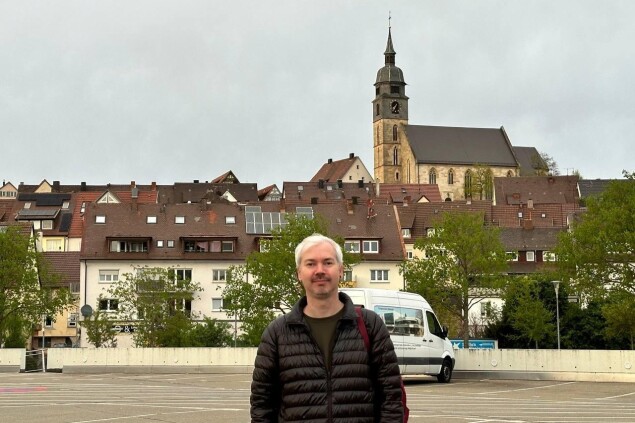
We have been working on creating a hypersonic passenger aircraft that can reach speeds of Mach seven to eight, or eight to nine thousand kilometers per hour. Russian scientists were creating a full-fledged aircraft for testing. Since I am a designer and know a foreign language, I was appointed coordinator between foreigners and scientists of the Central Aerohydrodynamic Institute (TsAGI), so that when they start sending drawings, I could adapt them for our production.
Case of “treason” against TsAGI employees In December 2020, TsAGI scientist Anatoly Gubanov was arrested , and on April 12, 2021, on Cosmonautics Day, professor Valery Golubkin was sent to pre-trial detention center in the same case of treason. According to investigators, they transferred secret information to the Netherlands as part of this hypersonic aircraft project.
After my colleagues were detained, it became obvious that doing science in Russia is not only difficult, but also dangerous. According to the investigation, scientists sent work reports to colleagues from the Netherlands that allegedly contained state secrets. Moreover, before sending these reports, three commissions confirmed that they did not contain any state secrets. Despite this, they received 12 years of strict regime on charges of treason.
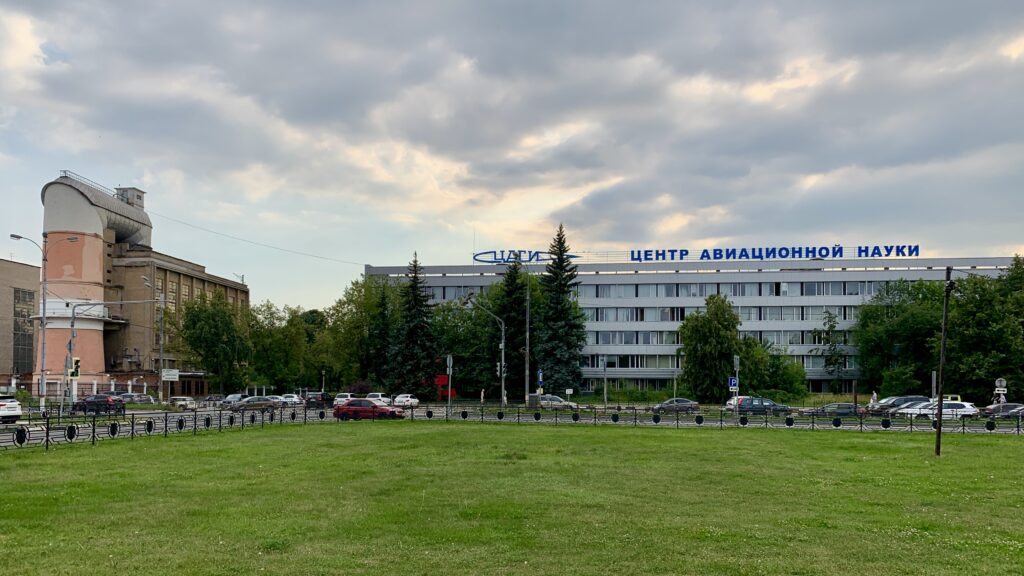
The security forces also came to me: during the search, they showed me for a second a decree that I didn’t even have time to read. The police confiscated hypersound conference brochures and Navalny stickers from me - I regularly participated in protests and spoke out against the war. Therefore, I realized that I had to leave.
Kazakhstan transit
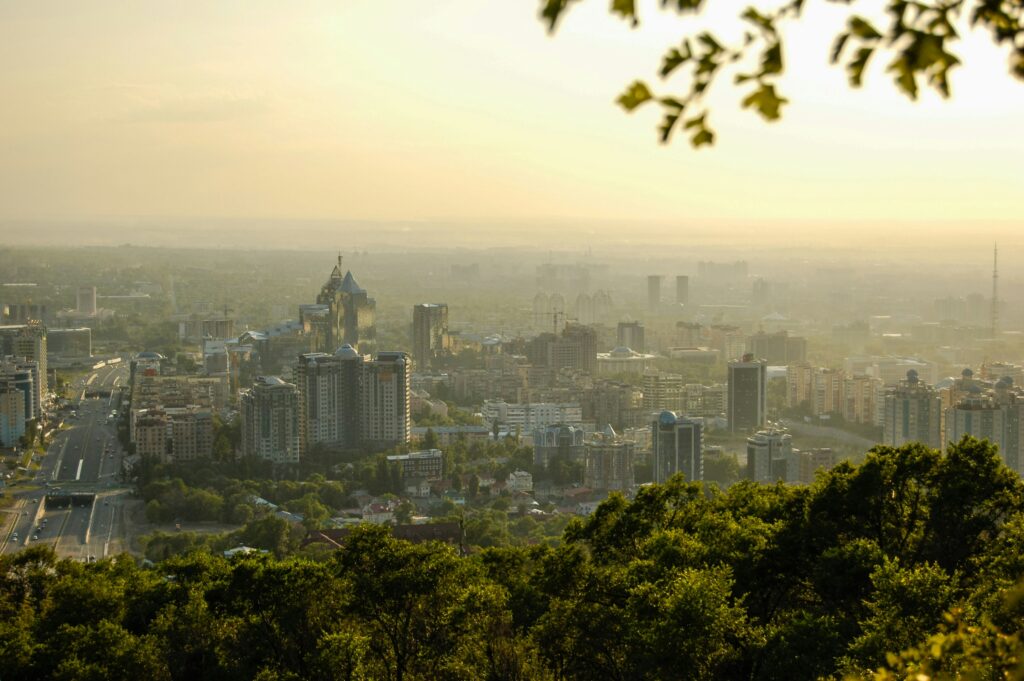
At first I left for Kazakhstan, considering this country as a temporary refuge, but I stayed there for a year and a half. I arrived in Almaty in the fall of 2022 - at the peak of the wave of emigration due to the announced mobilization, so it was difficult to find an apartment at a normal price. Prices reached 300 thousand tenge (about 50 thousand rubles), although later they fell by a third, and I had about 200 thousand rubles with me.
I had to prepare for legalization in Europe and at the same time earn a living, since I left completely “light”: I even had an old, semi-working mobile phone, which my relatives gave me before leaving. Therefore, I had to spend money on a phone and a laptop in order to somehow exist, work and have a “window to the world.”
When I said where I worked, the interview ended immediately - they hired me. I needed a certain “adjustment period” in the new place: for the first three months I just sat and looked at the wall, doing exclusively some household chores “on automatic.” Although at first I had a crazy idea: I had 10 days left on my Schengen visa, and I thought that I could fly to the first European country I came across and apply for refugee. I quickly abandoned it, deciding that it was still too reckless, because they could refuse me and deport me back.
I had to look for a job. I even found a similar specialty: I got a job in a company that produced airplane, helicopter and tank simulators and at the same time worked closely with TsAGI. It must be said that Kazakhstan lags far behind Russia in this area. When I came for an interview with the general director and told him where I worked, the interview ended immediately - they hired me.
“Finally, you’ll teach our idiots something,” he said at the end.
I was immediately hired as the head of the newly opened 3D prototyping laboratory. I defined a work plan, which they then implemented.
But due to rather strange legislation, there was a high turnover at the enterprise: people quit after two or three months. The fact is that you are employed under a civil contract under a certificate of work performed and must report at the end of each month. On this basis you are paid for your work. If the director doesn’t like something, then they simply don’t close the act and don’t pay you anything.
If the director doesn’t like something, they simply don’t close your report and don’t pay you anything. I couldn’t apply for a visa to Europe for a long time - my passport was running out, I had to wait six months for a new one. Only by May 2023 did I receive a new passport and on the same day apply for a humanitarian visa to Germany, which then had a corresponding program.

It was approved for me in February 2024. I ended up in the second wave of gum visa applicants, where the conditions became stricter: if in the first wave documents were issued to almost everyone, in my case they already required more documents and confirmations. For example, I was asked to confirm cooperation with German organizations in the past, although this is not usually asked. This is where my experience at HEXAFLY-INT came in handy: I received a letter from foreign scientists who collaborated with us on this program until it became a crime in Russia.
Although this was not without difficulties: I wrote to many foreign colleagues, two responded, only one wrote a letter of recommendation - an employee of a German institute from the working group on HEXAFLY-INT. But he wrote as a private citizen, and not as an employee of a German institute, because cooperation with Russia, even in the past, is now also not welcome.
They also asked me for confirmation that I was involved in protest activities and that I was in danger in Russia. Despite the fact that they came to search me, I did not have any papers in my hands, but I participated in the observation movement, volunteered during Navalny’s presidential campaign, so I was able to provide letters from various organizations. And I was approved to receive a gum visa.
“A black tinted jeep arrived, and we drove somewhere for an hour”
It took another month to process and paste the visa into my passport, so it was only on March 22, 2024 that I arrived in Karlsruhe. After passport control, I was immediately sent to a refugee temporary accommodation center. The address of the center is provided in the visa approval letter, and then social services find out where they have places and assign them to social dormitories. At the same time, you don’t have to live in the center: if you have the opportunity to stay with friends or rent a hotel, you can take advantage of this.
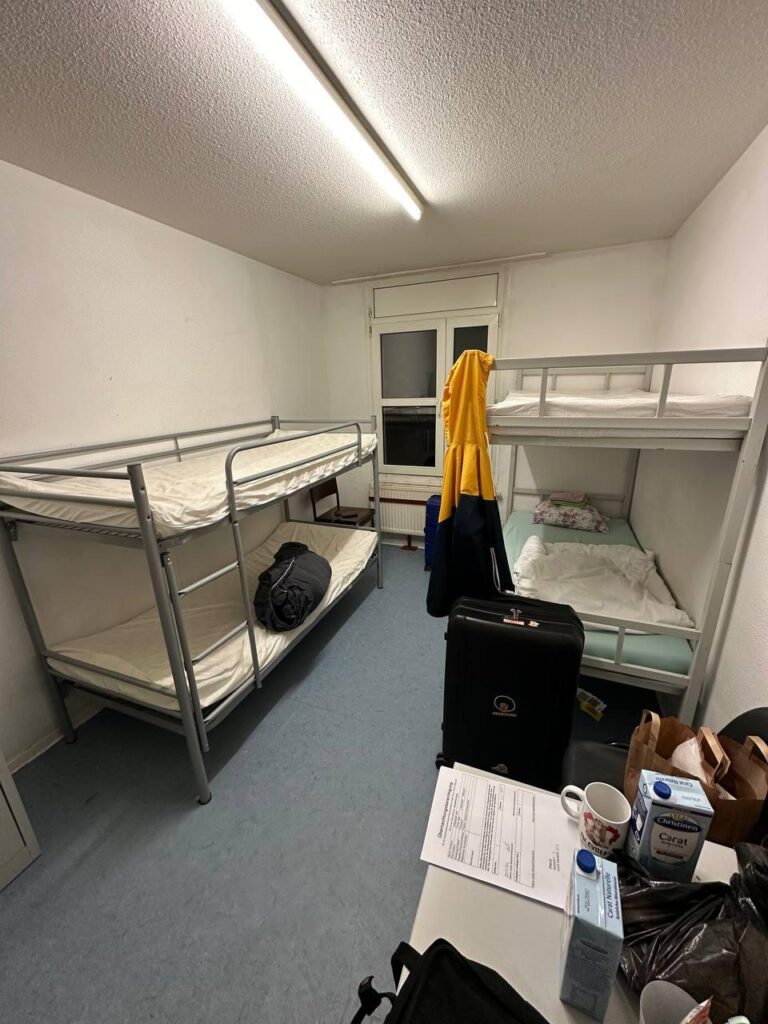
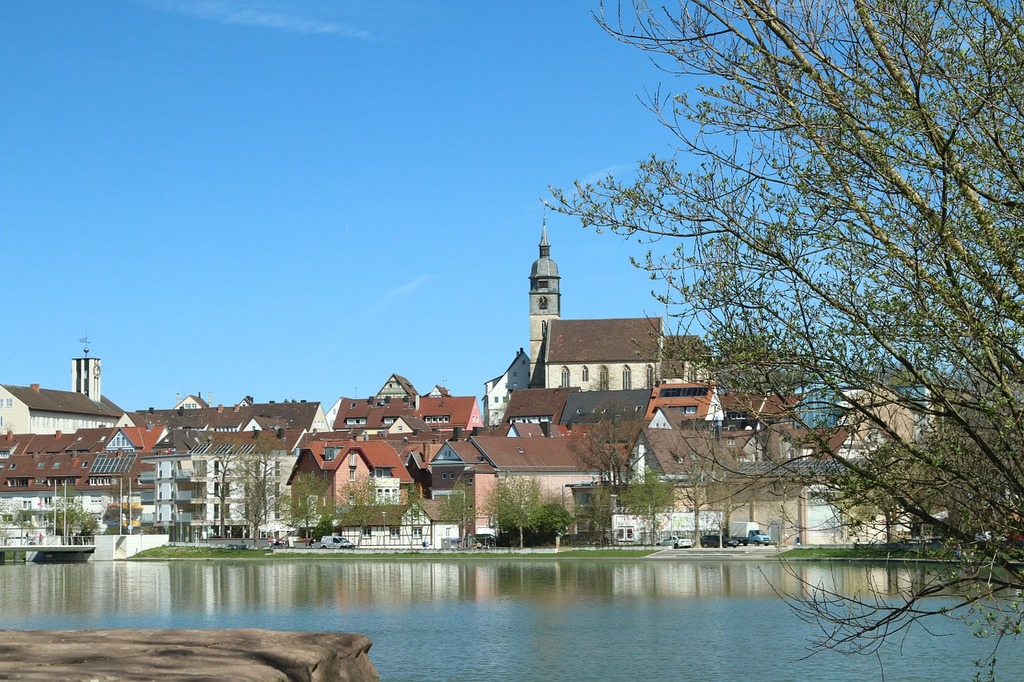
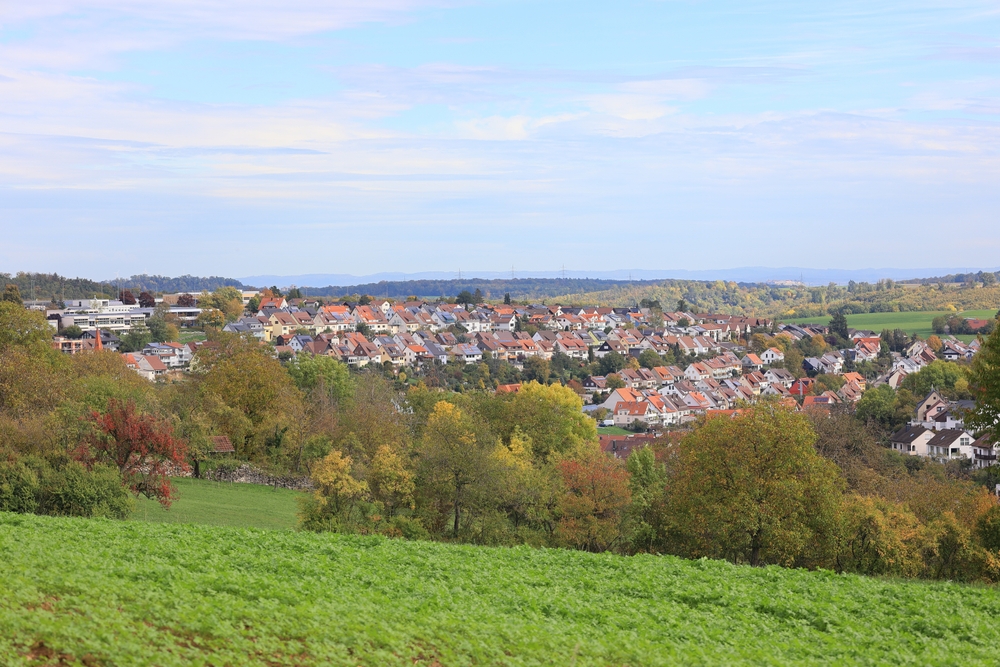
I was assigned to the state of Baden-Württemberg, located in southwest Germany. Three days later I was taken from the camp, and there was complete secrecy, no one said anything: neither where they were taking me, nor what would happen now. A black tinted jeep just arrived and we drove for an hour somewhere. The end point was Böblingen - a regional center, quite multicultural and convenient, it has all the delights of life. Sindelfingen is located in the same area. The combined population of the two cities is approximately 117 thousand people.
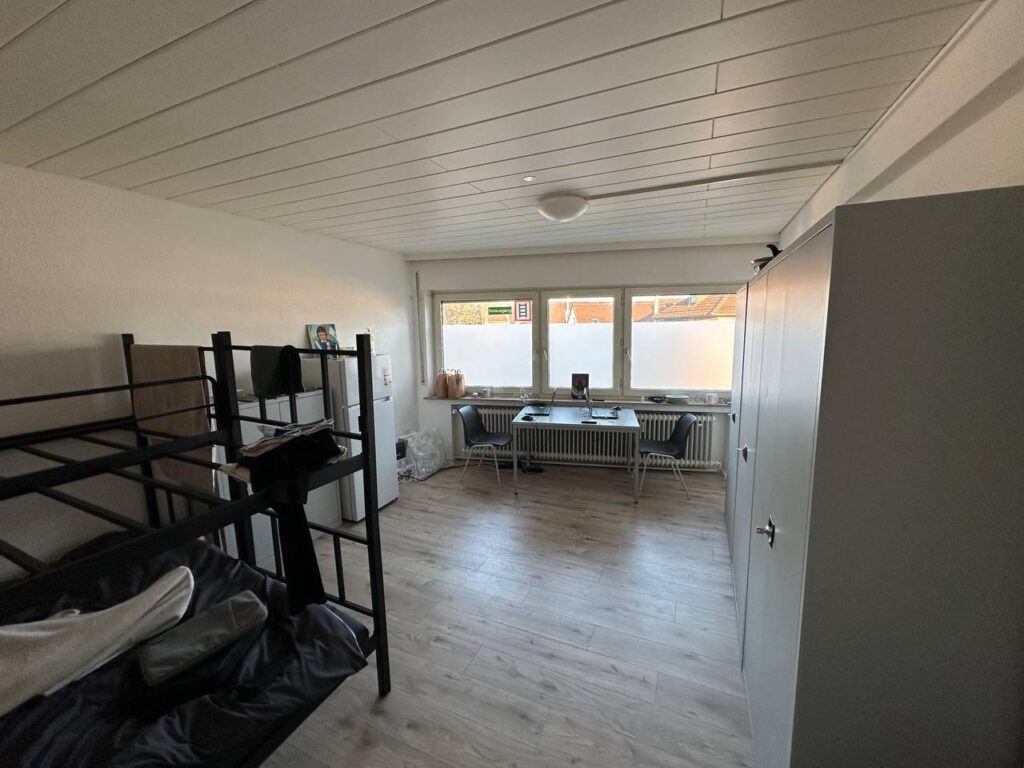
After all, even the old cooperation with Russia is now also not welcome. I was placed in a three-room apartment that resembled a communal apartment: in each room there lived several people who were also waiting for a residence permit. There were Georgians in this apartment with me, so noisy and cheerful that I quickly got tired of this endless celebration of life. Moreover, friends and relatives often came to visit them.
In addition, the building was constantly undergoing renovations, moving people into different apartments, and at one point there were 10 people living in our apartment. Such a hostel is provided to you only for six months, after which you must find housing for yourself. I started looking for an apartment almost immediately, and received a three-year residence permit a month after my arrival.
The adaptation itself took place quite comfortably, with German pedantry. A social worker was immediately assigned to us, who helped us settle in and not poke around on our own like blind puppies. We communicated in English, although there are now many Russian-speaking social workers. But two years ago this did not exist.
If you are not looking for a job, your benefits will be cut. On the very first day we were given cash - about 100 euros for the next five days - and we applied for benefits. A week later I received a notification that everything was approved - and benefits began to be paid.
I am paid “Bürgergeld” - this is a type of benefit for those in need who are able-bodied, which is received by Germans and foreigners with legal status (residence permit, permanent residence). It is 563 euros. The benefit for refugees is much less , since until a positive decision is received they are not entitled to bürgergeld.
The authorities also reimburse expenses for rental housing and housing and communal services, although within certain limits - each city has its own. In my case, the total compensation is about 700 euros per month. Benefits and compensation are renewed every year, but you must provide bank statements for the last three months to show that you are still classified as needy. The costs of confirming documents, vocational training , and in rare cases even obtaining a driver's license can also be reimbursed.
Public transport is no exception. There is the so-called D-Ticket - a single monthly travel card for 63 euros per month, valid for public transport throughout Germany. When I took language courses, since they were five kilometers from the hostel, my travel expenses were reimbursed . In general, you can live on benefits, albeit very modestly.
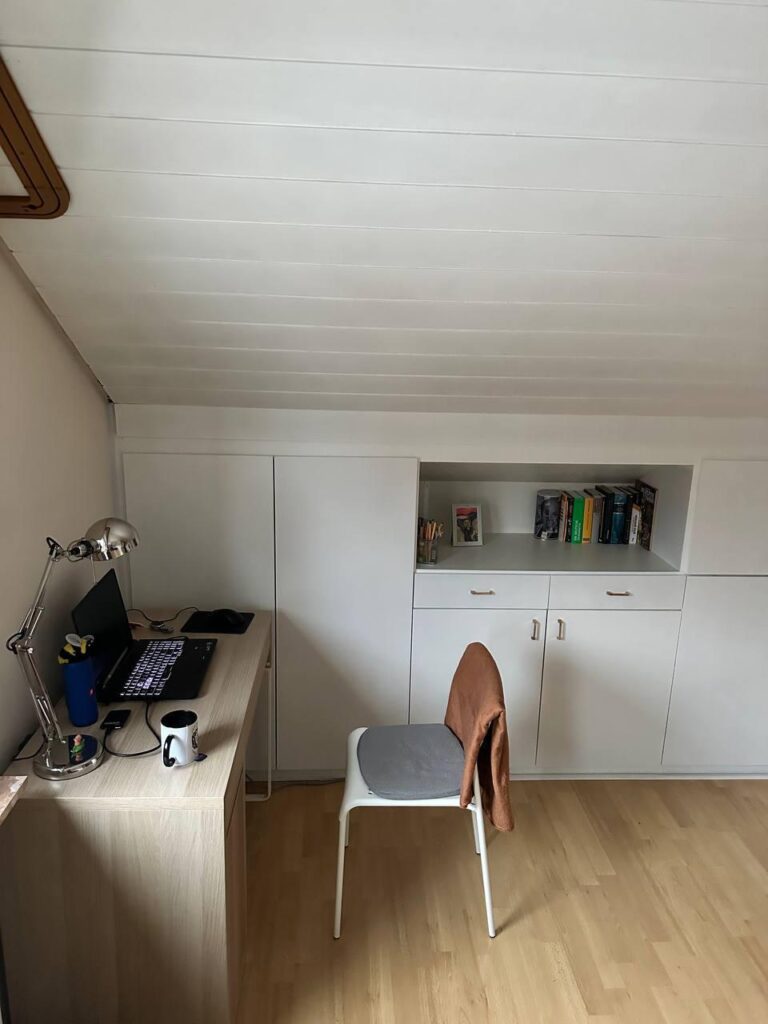
I rent an attic in the suburbs of Böblingen - it’s cheaper. There is a train station nearby, so it is very convenient. True, everything there was initially abandoned, we had to clean it up and make repairs. I was also paid for “original furnishings” as apartments are usually rented unfurnished. To do this, you had to submit an application that you need, after which a social service employee will go to the site to make sure that your wishes are appropriate. For example, at my request, the social worker crossed out the work desk, but at the same time added a sofa to rest on. Although the table costs 50, and the sofa costs 300 euros.
I want to stay in science
The humanitarian visa was valid for three months. During this period you must submit documents for a residence permit. A month after my arrival, on April 20, I submitted a package of documents and two weeks later I already received “plastic” for three years with the right to work. The only restriction: for these three years I must live in Baden-Württemberg.
Conditional leave is granted for 21 days a year, when you can go somewhere after agreeing with social services. I used it to meet my parents in Turkey (they do not have a Schengen visa). I also traveled to neighboring countries for several days. You can find cheap plane and train tickets: I flew to Istanbul for 28 euros, to Barcelona for 30 euros.
On Flixbus you can catch tickets to Munich for three or four euros. There are often some free promotions, mainly for young people . My friend, who is under 28 years old, went to France by train for free in the summer: there was such a promotion for two months in our region, since we border on France. The countries have concluded an agreement for young people to travel on long-distance trains in the summer.
The most difficult thing after moving is to psychologically accept my reset. Next year I will be renewing my residence permit, and the restriction on place of residence will already be lifted . Now I am registered with the employment center, since for now I live on benefits for those looking for work. In Germany, a person must constantly take some steps to find a job: go to interviews, send out a resume. If this activity is not visible, his benefit will be reduced, and in some cases it may even be canceled altogether. It is also very clearly monitored if a person has found a job: his benefits are immediately reduced or stopped.
At the same time, the state can pay for language learning and advanced training courses, the need for which you must justify. Once the course is approved, you must conscientiously perform your responsibilities and not miss classes.
In Germany, everything needs to be confirmed by documents. Everyone takes language courses up to B1: in our group there were Iraqis, Turks, and Ukrainians. Some had just finished school, and three people had difficulty writing at all. Few go further, because these are already professional courses , and not everyone is approved for applications for them. But my qualifications imply a deeper knowledge of the language, like, for example, doctors or teachers. At B1, the teachers are almost all foreigners - we had a Belarusian. At B2 there was already a teacher with a specialized university education.
I am now trying to get all possible preferences in order to enter the labor market as prepared and competitive as possible. I submitted an application to the curator for so-called subsequent training. I found a course similar to the program I used in Russia. It is also in demand in Germany: it is specialized design software. Firstly, this program is in German, so I will immediately learn all the national terms, and secondly, I need to refresh my knowledge, because I dropped out of the process for two years. The course lasts two months, eight hours a day and costs from five to ten thousand euros.
The most difficult thing after moving is to psychologically accept your reset: you start all over again, proving your competencies for the second round. To confirm my qualifications, I wrote down all my experience in scientific development in order to be considered simply an engineer.
In Germany, an engineer is a regulated profession: a person cannot simply say that he is an engineer, even with a diploma attached. We need official recognition from the Chamber of Engineering. My aeronautical engineering diploma itself is highly rated here, but I still need to further confirm my skills. I paid for the confirmation of qualifications myself, but after receiving the document, the employment center compensated me for these expenses.
After completing a special course, I will receive an official certificate from the Chamber of Craftsmen that I have the knowledge to work with design software. Coupled with a confirmed engineering diploma, this will greatly increase my chances in the labor market - after all, in Germany everything needs to be confirmed with documents.
" Don't run ahead of the locomotive "
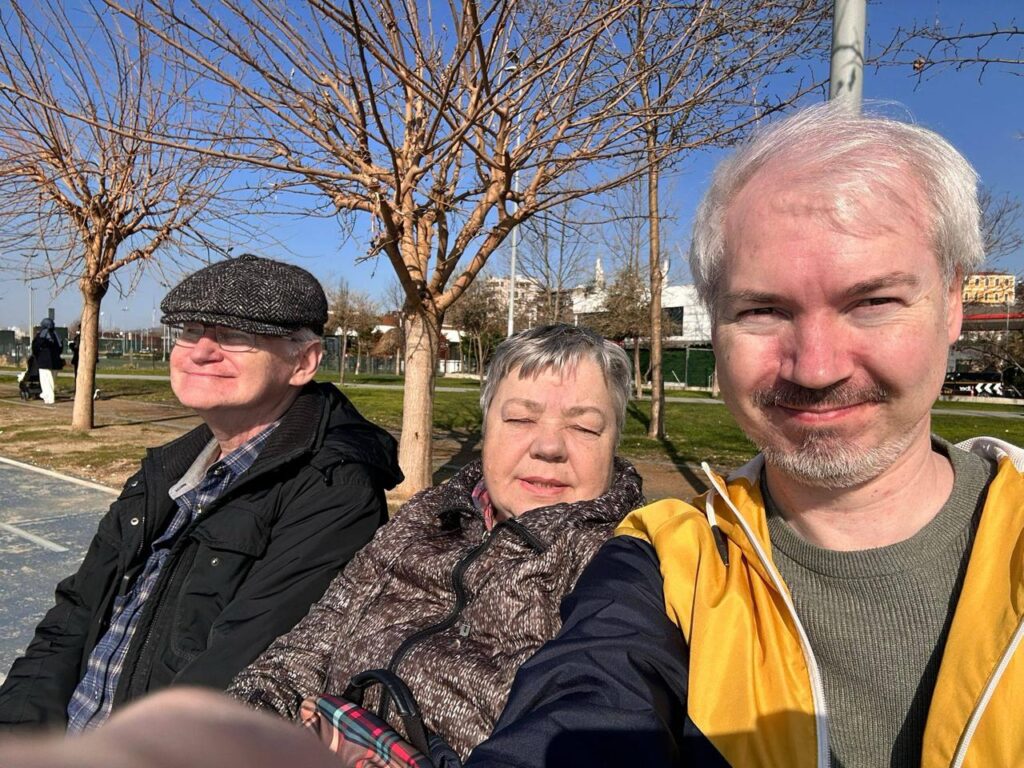
Despite the fact that I have been in Germany for two years, my circle of friends is limited. At the moment, these are my German landlords, who are also neighbors: a very nice and caring couple the age of my parents. They take care of me, treat me to homemade preparations and congratulate me on all the holidays. In addition, I communicate with several people from the party cell die Linke (“left”).
I also continue to communicate with some of the people with whom I lived in the hostel, Ukrainian refugees whom I met at language courses and now meet at events dedicated to integration issues or at political actions. Recently, a childhood friend of mine, whom we haven’t seen for 20 years, moved to Berlin, but it’s not so close to the capital, so we rarely see each other. Here I must also say that I am not very sociable by nature, so my narrow circle of acquaintances suits me quite well.
I’m already acquiring purely German habits: for example, I’ve learned to plan. And have several backup options, if only because trains in Germany refute the very concept of punctuality, and you must always keep in mind that any train can be cancelled.
I also began to attach more importance to formalities and certain procedures. My motto in Germany was the phrase “Don’t run ahead of the locomotive.” Because I have been convinced more than once that when you perform several actions at the same time, there is a high probability that this will lead to bureaucratic confusion, which can take months to correct. But knowing the sequence of actions, you can solve any issue.
Bureaucratic institutions in Germany, despite the abundance of norms and instructions, are quite humane and loyal, if you do not rush the system, do not become impudent and do not conflict. Although sometimes you still need to remind yourself in a respectful tone.
Migrants have lost the opportunity to obtain a gum visa
But the situation with humanitarian visas has worsened: nothing has changed in the law, but the practice of its application has become stricter. Now priority is given only to people with some particularly significant position. But even in this case, there are no guarantees, take at least the case of the Moskalevs , who never received a visa in Germany, and were accepted by France.
The Moskalev case Alexey Moskalev was sentenced to a year and ten months in prison for posts on social networks that “discredited” the Russian army. The initial reason for the persecution was an anti-war drawing by his daughter Masha in 2022. The school principal contacted the police. Alexey tried to protect his daughter, but he was detained, and then a criminal case was opened under the article of “discrediting” the army.
Moskalev was released in October 2024, and after that he and his daughter left Russia, going to Armenia. They planned to obtain a humanitarian visa from Germany, but since May 2025, the country’s authorities have actually frozen the visa program for political emigrants from Russia and Belarus. In March of this year, the Moskalevs received humanitarian visas from France.
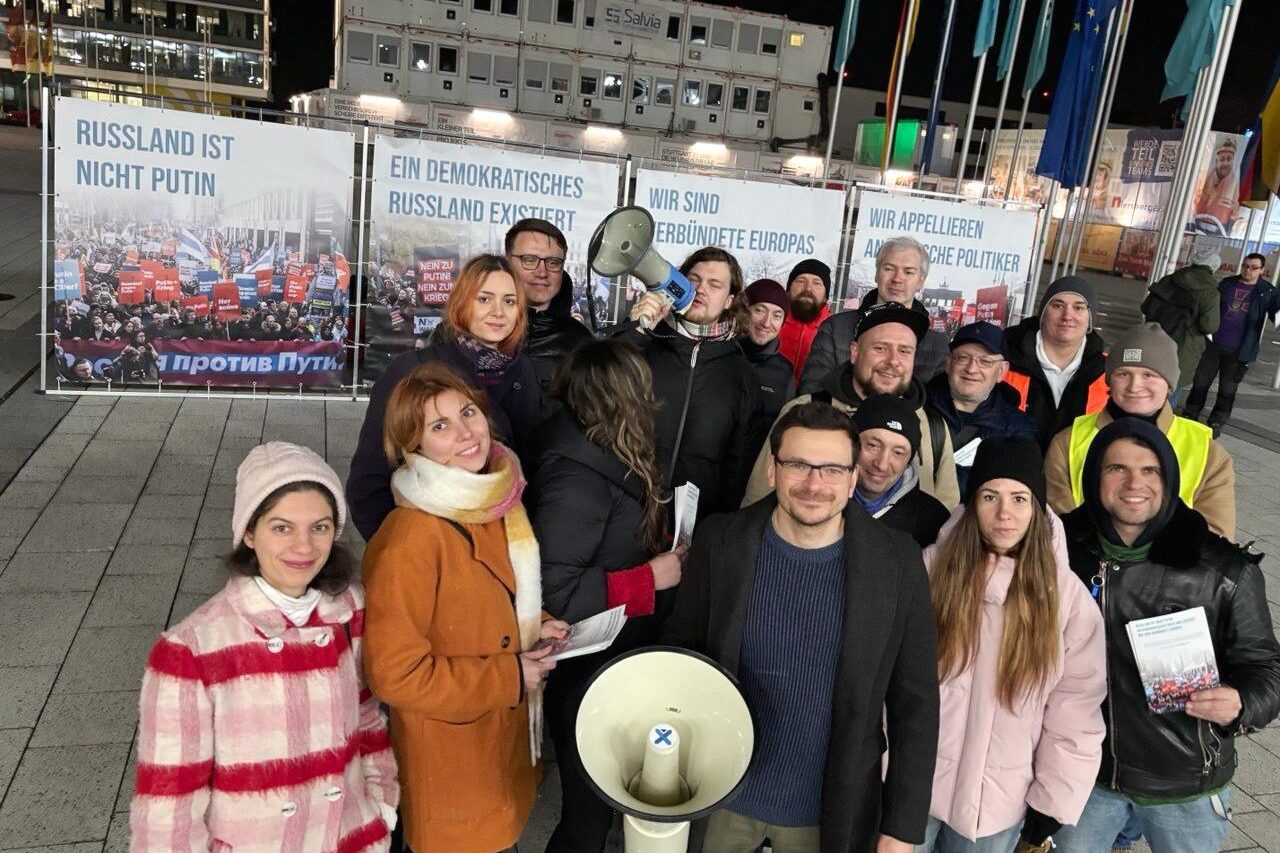
Now movements and activists in Germany are trying to carry out various actions and events to return gumvise to its former functionality. But so far, apparently, the German voter is reacting rather nervously to the influx of migrants. Although, according to research , mainly active people with higher education come on humanitarian visas, so this is an additional resource for the country.
And yet, despite all the obvious disadvantages, this is the first economy in Europe in which I can do science without any threat to myself. Human rights are respected here and I feel protected. Even if I started from scratch, I still move forward and see a large number of opportunities. This is a very realistic path, the main thing is motivation and understanding that zeroing is also a movement, this is life experience that will be useful to me when returning to Russia. If this ever happens.
Author: Ela Znamenskaya
Photo: courtesy of Kirill