
Translated material
5 false statements by officials at SPIEF. We tell you how things really stand in economics and medicine

We tell you how things really stand in economics and medicine
The St. Petersburg International Economic Forum is in its second day in Russia. During this time, officials managed to declare that the incidence of HIV in Russia had reached a historical low, and the situation with childhood obesity and fuel had stabilized.
“New Europe” refutes those statements that do not correspond to reality.
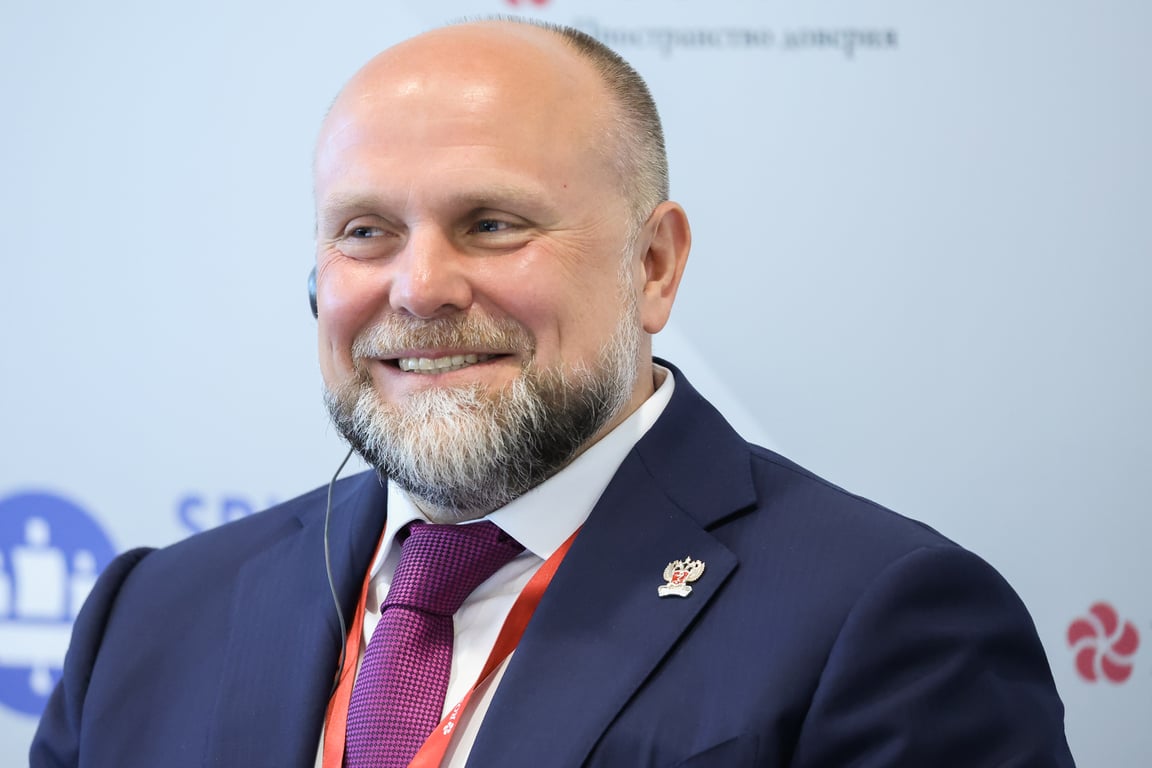
The incidence of HIV in Russia has reached a historical low, Deputy Minister of Health Andrei Plutnitsky said at the SPIEF 2026 session.
“Since 2016... we have reduced the incidence of HIV infections in the country by half and brought it to a historical minimum. Today, there are just over 931 thousand people living with HIV in the country. It’s less than a million,” he said.
He also pointed out that in 2025, 43 thousand new cases of HIV infection were registered. This is 11% less compared to 2024.
Plutnitsky’s words were refuted by the director of Speed.Center, Polina Melnikova. She told Afisha Daily that the real number of Russians living with HIV infection exceeds 1.2 million people.
“There is an important nuance in these figures: 931 thousand are not all people with HIV from Russia, but only those who reached the Ministry of Health and registered at the dispensary.
According to the Federal AIDS Center (Rospotrebnadzor), the real number of Russians living with HIV exceeds 1.2 million people - almost 300 thousand are simply not registered,”
- she pointed out.
Melnikova also emphasized that already in 2016, there were about 870 thousand people with HIV infection in the country. Thus, “the total number of people with HIV has increased over 10 years, not halved.”
“Only the percentage of those whom the Ministry of Health manages to take under observation is growing,” Melnikova noted.
On the peninsula they sell fuel using coupons. How are residents coping with the second gasoline crisis in a year?
On the peninsula they sell fuel using coupons. How are residents coping with the second gasoline crisis in a year?
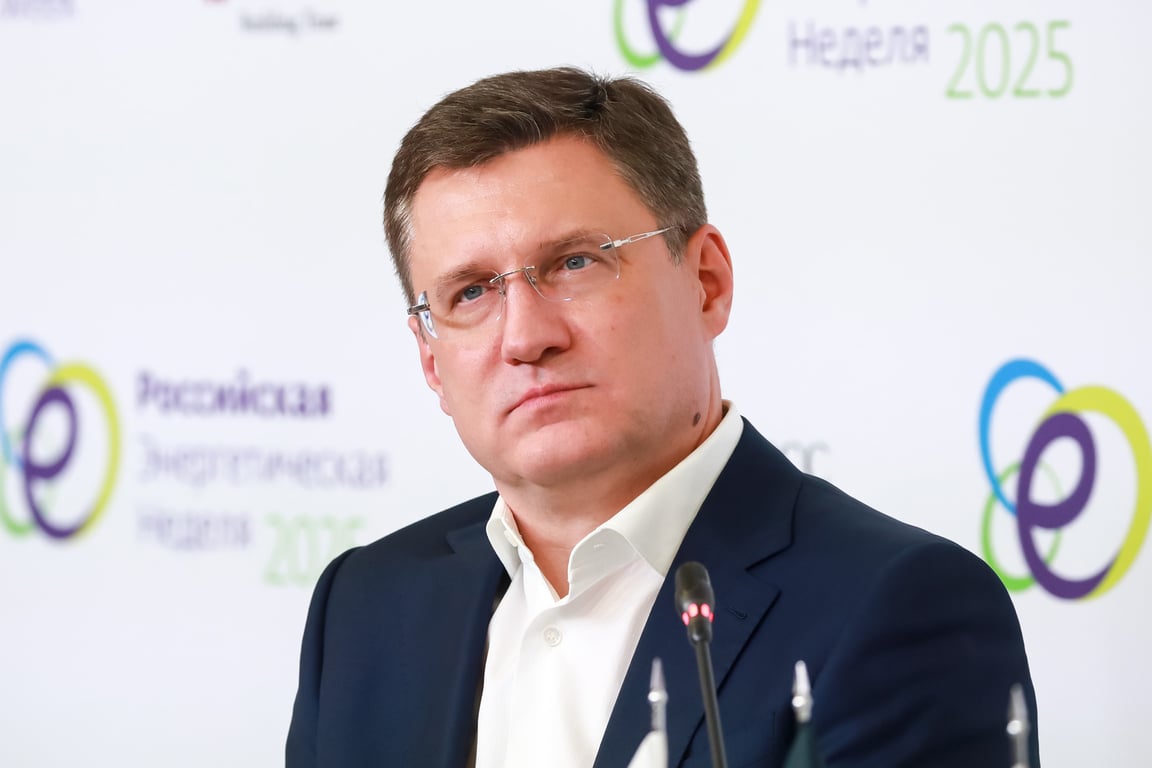
The fuel situation in Russia is stable, Russian Deputy Prime Minister Alexander Novak said at SPIEF.
“Prices at gas stations of vertically integrated companies and most gas stations are rising at a level no higher than inflation. Therefore, the government, together with the Federal Antimonopoly Service, will closely monitor this,” Novak said.
He also noted that there is no need to introduce a ban on diesel exports now, but allowed the introduction of this measure in the future.
Over the past few weeks, fuel problems have intensified in several regions of Russia and annexed Crimea. On May 30, a temporary cessation of fuel sales was announced in Sevastopol; the next day, gas stations throughout Crimea began selling gasoline only with coupons. In addition, at gas stations in the occupied Luhansk region restrictions were introduced on the sale of AI-95, AI-92 gasoline and diesel fuel - no more than 20 liters per person.
In the border Belgorod and Kursk regions, Rosneft gas stations stopped dispensing gasoline in cans “to ensure safety when selling fuel.” Restrictions were also introduced in the Moscow region and St. Petersburg. The restrictions will remain in effect “until the situation calms down.” In St. Petersburg, the situation is also related to logistical difficulties in the supply of gasoline.
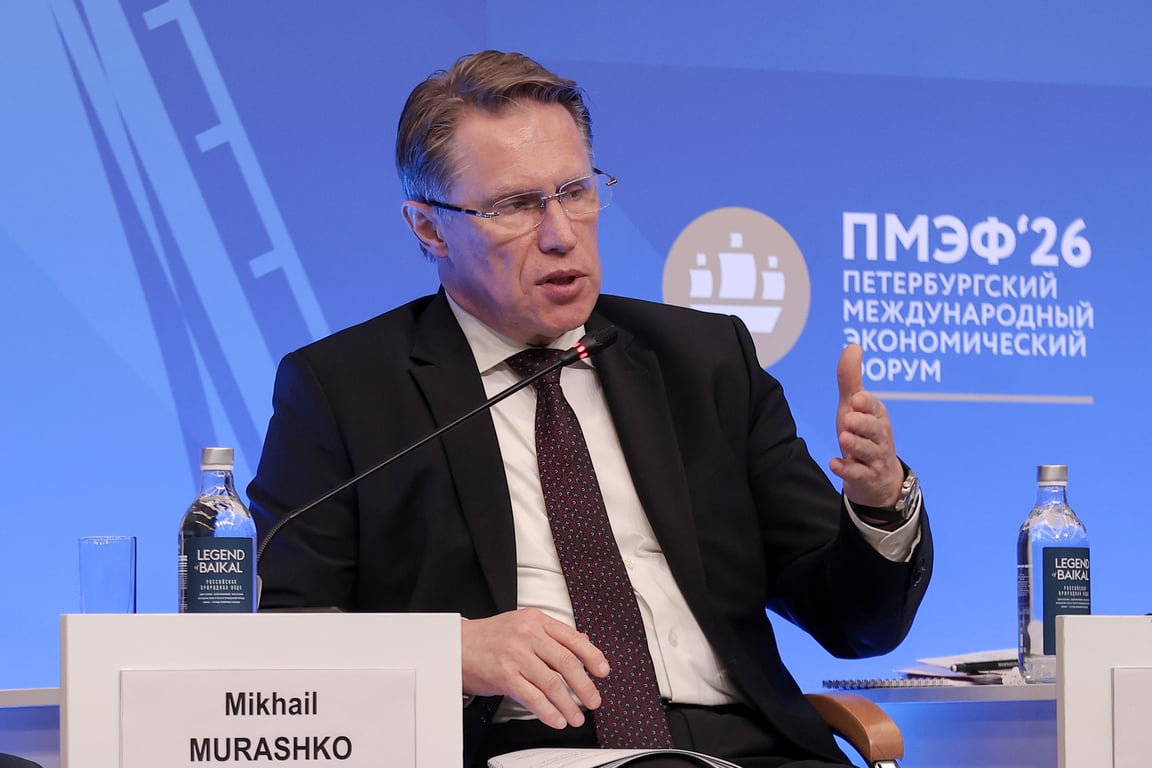
The situation with childhood obesity in Russia has stabilized, said Russian Health Minister Mikhail Murashko.
“There is no increase in the number of obese children. This is probably the first thing that is key. This situation has stabilized. We see this within the country too,”
- he said.
At the same time, he confirmed that the number of obese people among adults is growing.
At the same time, on May 22, Natalya Mokrysheva, director of the National Medical Research Center for Endocrinology named after Academician I. I. Dedov of the Russian Ministry of Health, said that a sharp increase in the number of obese children is being recorded in Russia.
“Now we are very concerned about the trend that we are recording a sharp increase in the number of cases of obesity among children... 80% of them do not have any hereditary predisposition,” Mokrysheva said.
According to her, obesity puts a heavy burden not only on the person himself, but also on the health care system.
“These 80% [of children] enter adulthood already having arterial hypertension, diabetes, vascular disorders, and the risk of heart attacks and strokes. And these are the people who will live a much shorter life and will become disabled from the age of 30,” said the endocrinologist.
Last year, Murashko reported that the rise in obesity rates has only accelerated:
— The 1.6-fold increase in the incidence of obesity in children is alarming. According to statistics, today there are 480 thousand schoolchildren.
According to him, in 2024, the proportion of obese children aged 7–10 years will be 1.67% of the total number of children, aged 11–14 years – 2.79%, 15–17 years – 2.82%.
We talked to them (and experts) about why they need it
We talked to them (and experts) about why they need it
Russia's external debt amounts to 10% of GDP, said Russian Finance Minister Anton Siluanov.
“In general, our external debt is only 10%, which we will soon pay off, and I hope that there will be no such debts left. We are not dependent on external financial infrastructure. We have created our own, it works, and all the shutdowns of [external] financial services have absolutely no impact on the possibility of our payments, financial transactions, and so on,” the minister said.
He emphasized that Russia makes its own decisions regarding budgetary issues, “based on the needs that exist in the country and the priorities that exist in the country.”
According to the Central Bank, in the first quarter of 2026, Russia’s external debt decreased by 3.3% to $308.8 billion. The external liabilities of other sectors and the banking system decreased the most. At the same time, by the end of 2025, the debt increased by 21%.
At the same time, the International Monetary Fund expects that by the end of 2026, Russia’s public debt will amount to 19.1% of GDP. The forecast states that in 2027 debt will increase to 21.2% of GDP, in 2028 - 23.6% of GDP, in 2029 - 25.4% of GDP, in 2030 - 27.2% of GDP, and in 2031 the figure will be 29.1% of GDP.
An exhibition with the faces of Biden and Zelensky, Chinese cars and robots, communication problems - and all this against the background of a column of smoke from drones in the sky
An exhibition with the faces of Biden and Zelensky, Chinese cars and robots, communication problems - and all this against the background of a column of smoke from drones in the sky
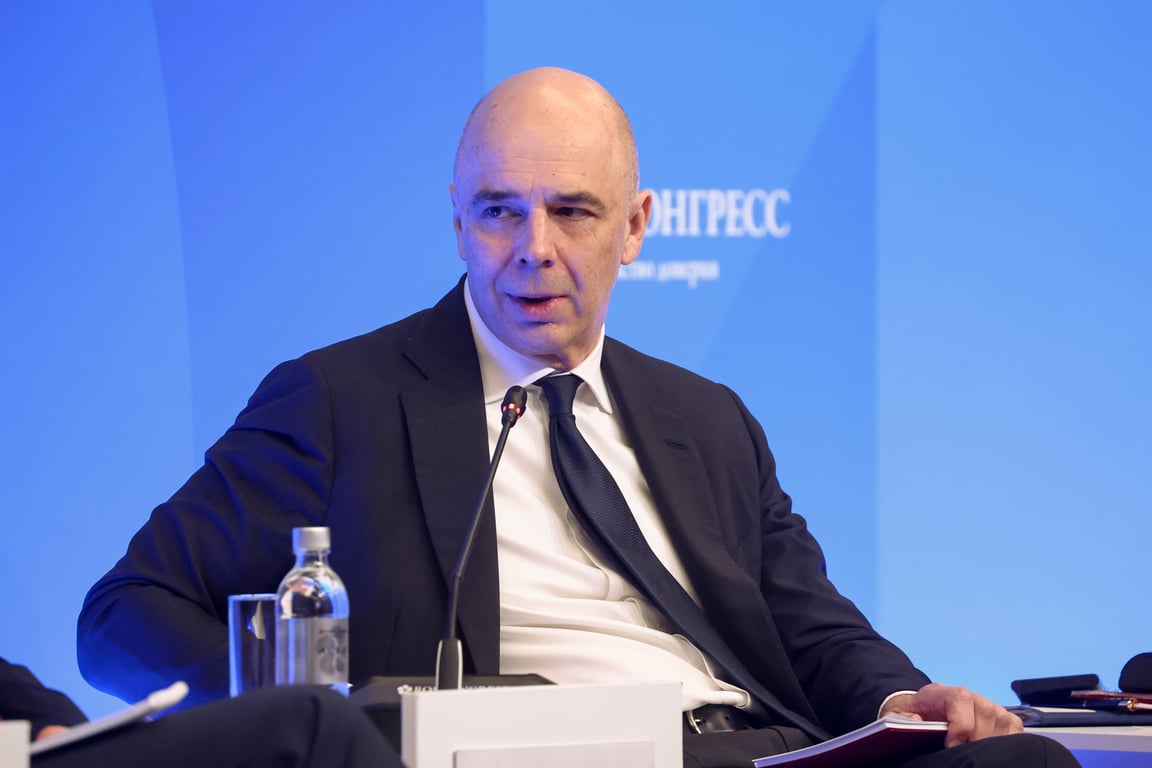
Real incomes are growing in Russia, Russian Finance Minister Anton Siluanov said at SPIEF.
“We see that our population’s real incomes are growing, which is the most important thing. Over the past three years they have grown by more than 24%. And here's the most important thing. The main thing is that we are pursuing our own independent financial and economic policy,” Siluanov said.
Also in May, Deputy Prime Minister Alexander Novak said that over the past three years, real cash incomes of the population have increased by 26.1%. According to him, real wage growth over three years amounted to 23.9%, and poverty fell to its lowest historical levels - 6.7%.
The Center for Macroeconomic Analysis and Short-Term Forecasting calculated that in the first quarter of 2026, the real incomes of Russians decreased by 1%:
— The growth of real disposable income of the population has formally given way to a correction. This is most likely a reflection of lower income from financial assets in a lower rate environment.
The report notes that revenue growth should be expected to resume in the second quarter. The Moscow Times emphasizes that
in January–February, nominal wages in some industries (coal mining, metallurgy, railway transport) “were less than or barely covered inflation, and in fishing they even decreased by 0.4%.”
At the same time, in the areas of tourism, finance and IT they increased by 20% or more. This shows the unevenness of the salary situation throughout the country.
Against this background, public opinion polls show that from January 2024 to May 2026, the share of Russians reporting a deterioration in their family’s financial situation increased from 24% to 33%, while the share of those reporting an improvement decreased from 20% to 15%. Also, among residents of large cities in May 2026, negative assessments of their financial situation (33%) are more than twice as high as positive ones (16%).