
Original Material
‘I could at least get out. They couldn't.’. How a Ukrainian woman found herself working in a Cambodian scam compound
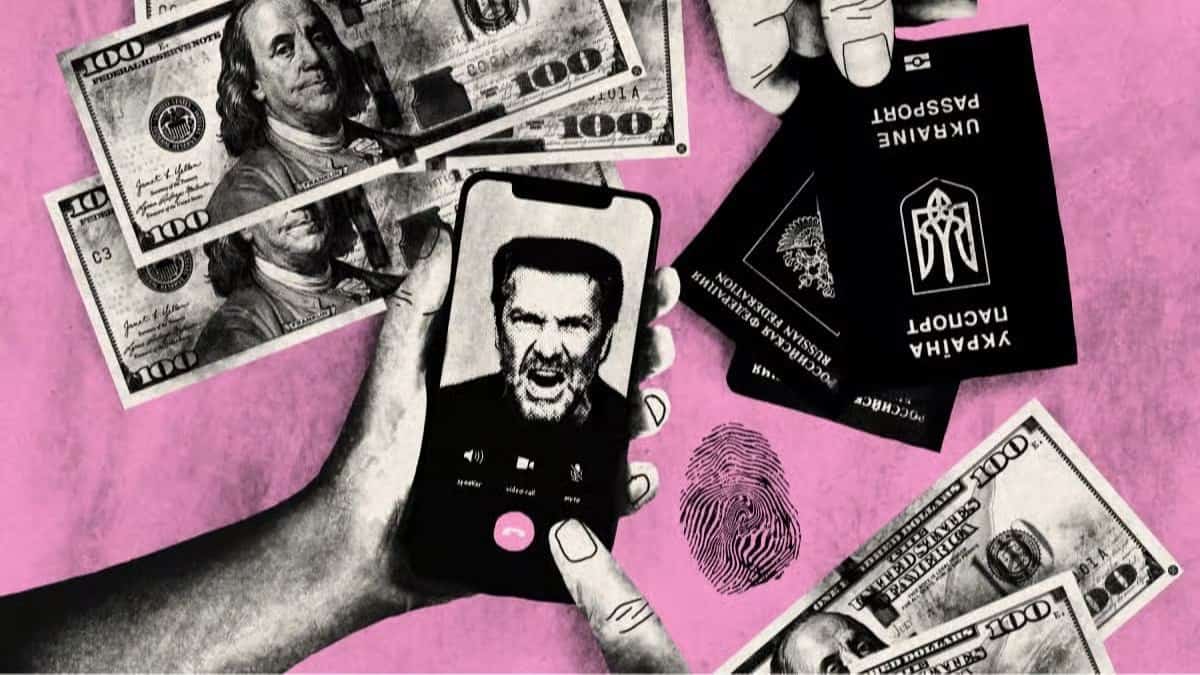
How a Ukrainian woman found herself working in a Cambodian scam compound
Phone scams are a hallmark of daily life in wartime Russia. But these cons are nothing compared to the industrial-scale scam operations based in Southeast Asian countries such as Myanmar and Cambodia. Chinese companies have built entire towns there, home to assembly lines full of people stealing money from victims across the globe by promising them riches through cryptocurrency investment. Many workers are effectively imprisoned there: their documents are confiscated and they can’t leave the premises.
In early 2026, the Cambodian government launched a series of raids on scam centres, announcing that police had shut down at least 200 of them. Russia's ambassador to Myanmar reported that at least 18 Russians had been freed. But some, it turns out, had gone to work there willingly. Journalist Denis Kazakov spoke to Russian and Ukrainian women about their experience in one such scam centre.
Editor’s noteAll of the names in this story have been changed. To verify the identities of the people involved, Novaya Gazeta Europa cross-checked their social media profiles, reviewed their documents, examined photographs taken at the locations mentioned, and analysed screenshots of messages exchanged between the individuals and their supervisors.Katya and Lesha met in Tbilisi. He was Russian, she was Ukrainian. A former entrepreneur with a Master’s degree, Katya had taken a job as a bartender after Moscow’s full-scale invasion — first in Kharkiv, then in Lviv, and then in Kyiv. The long shifts helped her think less about the war, but every week brought news of another friend or acquaintance killed, and eventually Katya decided to move to Tbilisi, where she got another bar job.
In July 2024, Lesha walked in. A 19-year-old with long dark hair and a chain around his neck, he had no education and no job, but his disarming smile drew Katya in: he was always cracking jokes, proposing spontaneous adventures, and striking up conversations with strangers.
Lesha got a job at the bar next door. After Katya finished work at 11pm, she'd stop by and keep him company while he closed up. They would talk, drink the cocktails he invented, kiss, and go off looking for trouble in a city that still felt, at the time, like it was free.
By September 2025, more and more of their friends were leaving Georgia: the pro-Russian Georgian Dream party had consolidated its grip on power, and people feared more restrictions were coming. Georgian gangsters had started dropping by the bar where Lesha worked for “friendly chats”; he'd apparently tried to do some kind of deal with them and ended up in debt.
Meanwhile, the couple began arguing constantly; Katya increasingly found herself irritated by his immaturity. At the same time, the bar's revenue was falling, which meant her paycheck was too. She desperately wanted to pack a bag and fly away.
When some colleagues offered Katya a well-paid office job that was “not entirely legal”, she was receptive. “I understood it was some kind of scam,” she says, “but I didn't know the details.”
She was told upfront that leaving before six months was out of the question — otherwise the colleagues who had recruited her would be fined. A week later she was informed she'd be going to Cambodia. That was when she felt sick. But she told herself that since she’d already agreed, she had to go through with it.
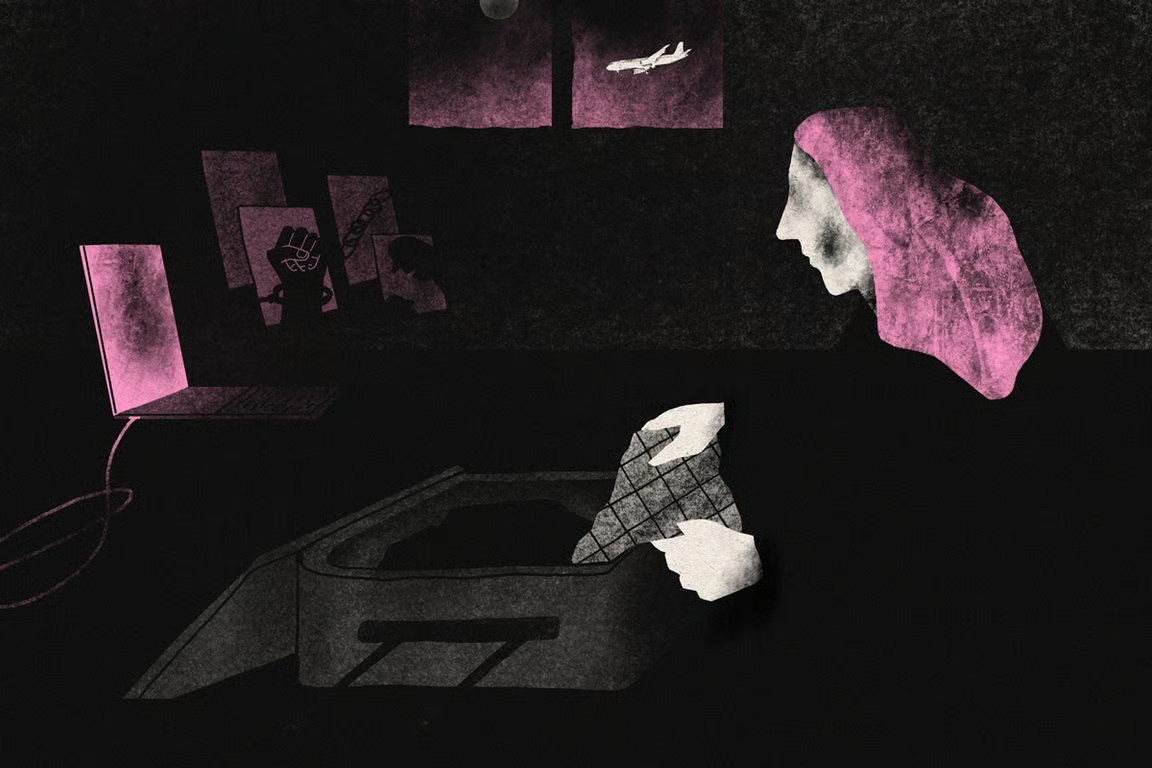
The system drawing her in had grown out of a network of Chinese casinos. As ProPublica has reported, when China tightened casino regulations in Macau in 2014, gambling magnates relocated en masse to Cambodia, Laos, and Myanmar, signing agreements to establish special economic zones. According to a 2023 UN Office on Drugs and Crime report, the businessmen built close ties with local governments and set up money-laundering operations through their gambling structures. When the pandemic cut off tourist flows, the casino owners pivoted to cybercrime.
The industry operates like an assembly line. As a former accountant at one of these conglomerates told the New York Times, scammers befriend victims on social media or dating apps, spend weeks building trust, then draw them into an investment scheme using a fake cryptocurrency trading app.
Once the model proved effective, a group of Chinese businessmen converted large portions of the casinos into offices and dormitories for scam operation workers. Then, according to the UN, large-scale construction of residential compounds began — first near casinos in the special economic zones, where business regulation is lighter, and then throughout the countries’ broader territories. Experts describe these compounds as self-sufficient cities with multilayered security systems.
Running these operations required thousands of workers — and according to the UN, many were lured in through ordinary job ads.
Workers were promised a cut of the stolen money, creating the illusion of a path to wealth; in reality, people were fined and kept perpetually in debt, and those who tried to escape were beaten brutally.
When Katya stepped out of Phnom Penh airport, she was sent a photo of a spot where she was supposed to wait. Officers met her there and escorted her through border control. Katya had been told the office would be in the city, but the minibus she was put into drove steadily further from the capital. Eventually it arrived in a town called Chrey Thum.
“Everything was covered in insects, chunks of meat hanging from hooks, very suspicious-looking people, filth everywhere,” she recalls. “No buildings except barracks, just darkness. I thought I was going to cry.”
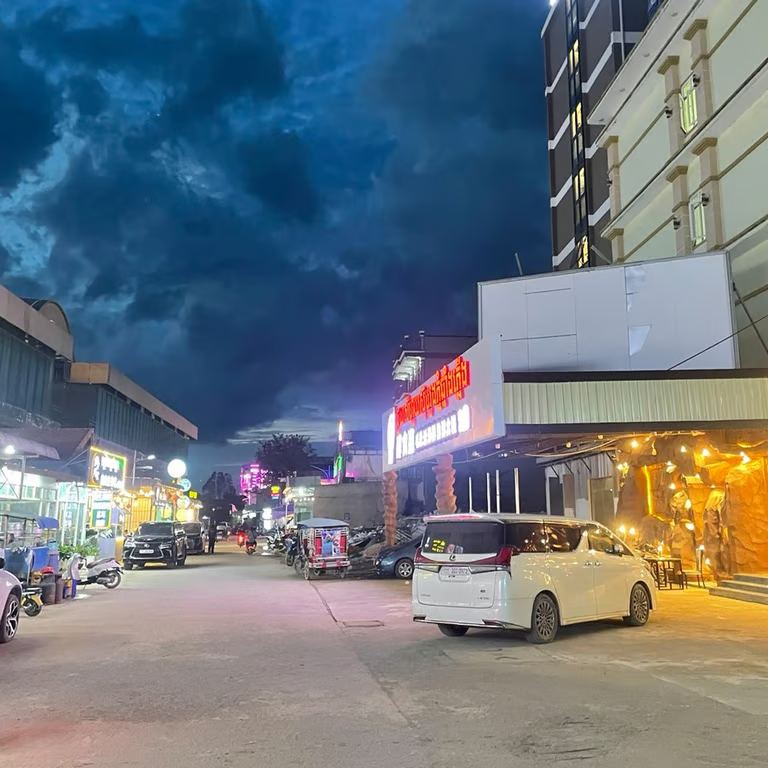
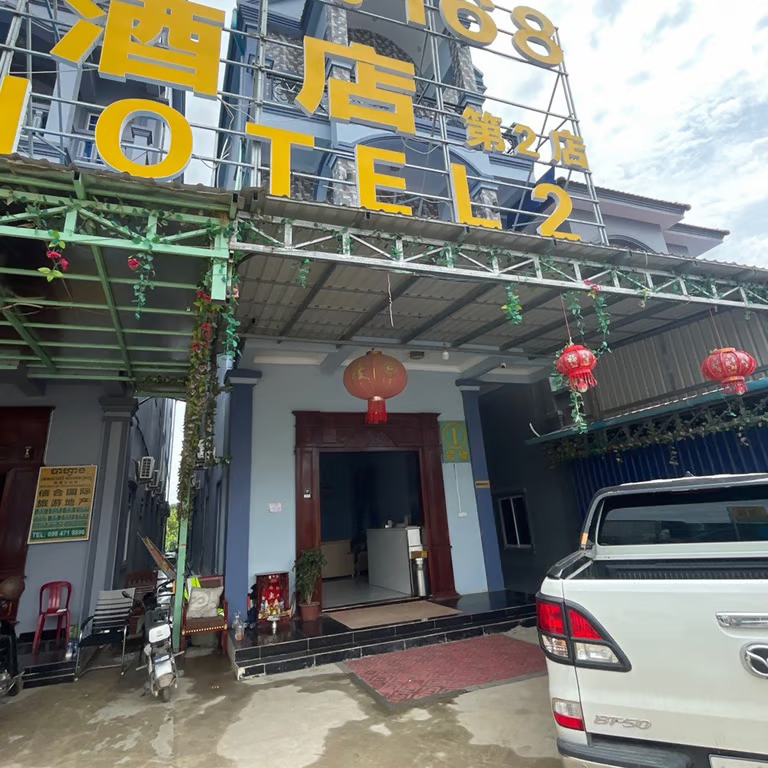
She was dropped at a Chinese hotel where her employer had booked her a room. The room had a bed, a desk, a chair, a small fridge, and a window that opened onto the hallway. The lights were cold and harsh, like a warehouse.
That same night, Katya was asked to come to a compound fifteen minutes from the village. Her future boss met her, led her past armed guards into a small office, and handed her a contract to sign. Then she was photographed for her profile in the app.
The coworkers from Tbilisi gave her a warm welcome, smoking her up and taking her out for dinner. They assured her the work would be easy. Katya was set up as a “model” — her job was to video-call potential victims who had already expressed interest in investing, and, posing as a manager from California, walk them through the earning opportunities. The actual messaging was handled by “typers”, most of whom were Chinese, while Katya served as the face of the operation, there to put people at ease and dispel suspicions. Her coworkers reassured her: white women don't get kidnapped, and she was the most privileged person there.
Katya relaxed. Things didn't seem so bad after all.
Katya soon met Sasha, a 28-year-old model from a neighbouring office. Sasha turned out to be a quiet, calm woman from Russia's Far East who spoke in almost a whisper. She had left Russia for Southeast Asia as a matter of principle after the full-scale invasion of Ukraine began.
Just a few years ago, Chrey Thum was a tiny village. Then the scam conglomerate settled there, rapidly turning it into a small town where country lanes ran alongside modern buildings. A casino had come first, then a block of Chinese restaurants, a Chinese supermarket, two swimming pools, and hotels, all used by the occasional gambler and by scam centre workers who had the right to go outside.
At least five scam centres surrounded the area each one a mini-neighbourhood of residential buildings, offices, and a near-prison security system. Each “park”, as they were called locally, housed several companies, and each company had several teams.
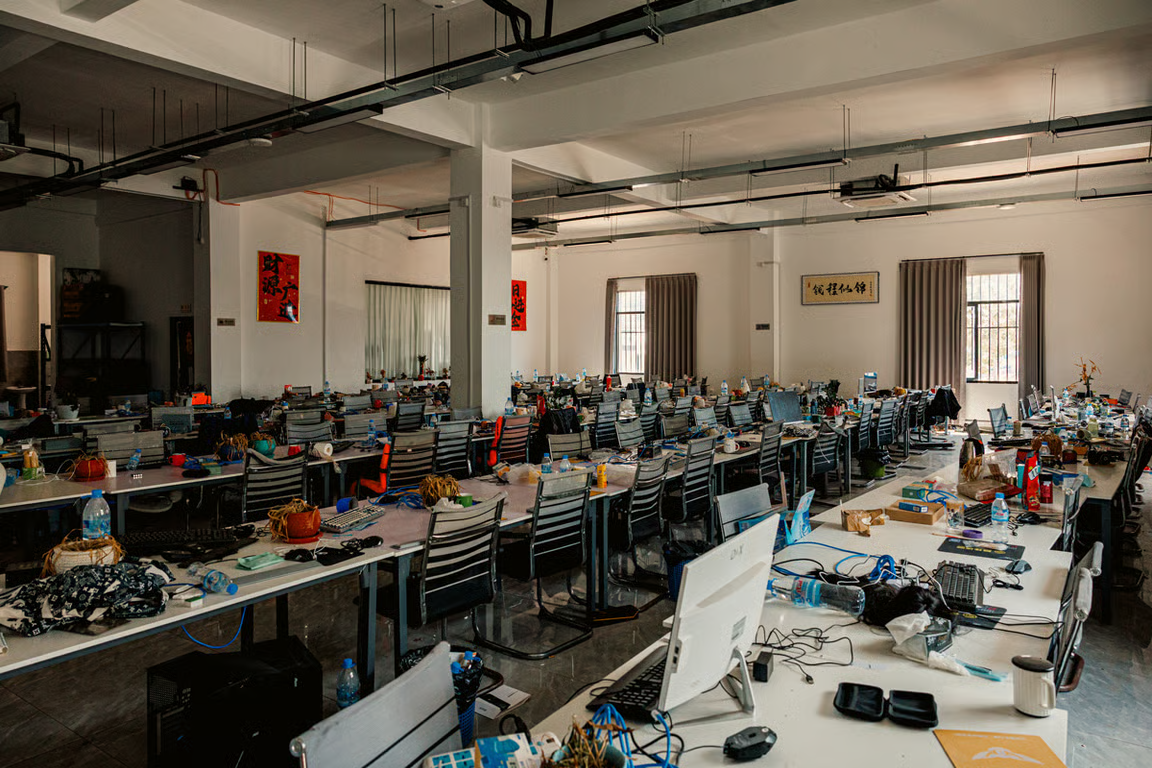
A team is made up of several roles. Typers handle written communication with fraud victims; this is the largest category of employees. Most are Chinese, but there are also Filipinos, Vietnamese, Indians, Kenyans, and people from other lower-income countries. Many don't speak English and run all their communications through ChatGPT. They typically earn around $700 a month but frequently have their documents confiscated and lose the ability to leave the compound, ending up in forced labour.
Call centre operators handle audio calls with clients and are often recruited from countries being targeted by the scheme. They earn between $1,500 and $2,000 a month, but also sometimes lose their freedom.
Next in the hierarchy are models, who conduct video calls while pretending to be company managers, building clients' trust. For the dominant American market, these roles are filled mainly by young women from post-Soviet countries or Turkey.
Above them are team leaders — interpreters who speak Chinese and the language of the operators; they oversee the whole team and earn up to $10,000 a month. The companies themselves are run by lower-level bosses, typically Chinese, who answer to higher-ups about whom almost nothing is known.
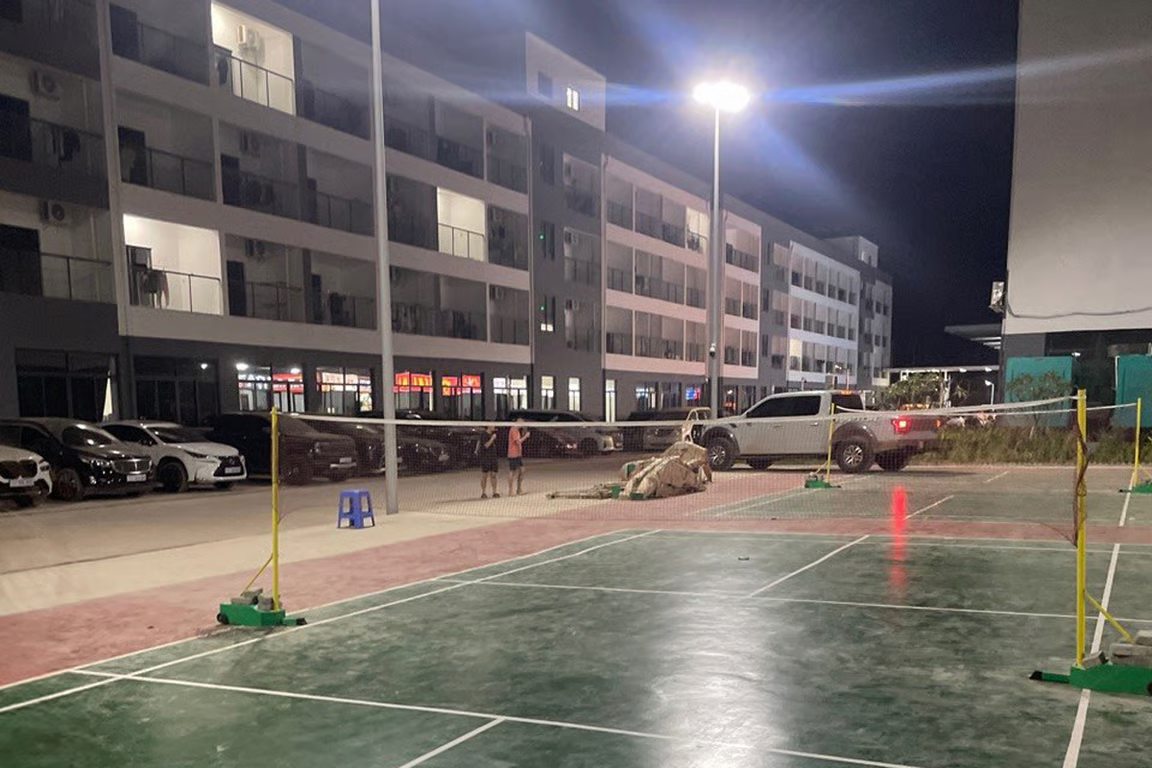
Katya’s compound included three cafeterias; a small gym; a basketball court; a space that combined a massage parlour, a brothel, and a pharmacy; and two shops with vastly inflated prices. Everything was imported from China — even fruit, though the same fruit grew all around them. An apple cost five dollars. The only way to pay was with a special card issued by one’s boss.
Katya and Sasha had come to work as models, at $7,000 a month. They worked 11-hour night shifts, timed to coincide with daytime in the United States. The girls lived outside the park: to get in, they had to wait for their team leader to send the guard photos of their legs or clothing to confirm their identity — no outsider could enter the compound.
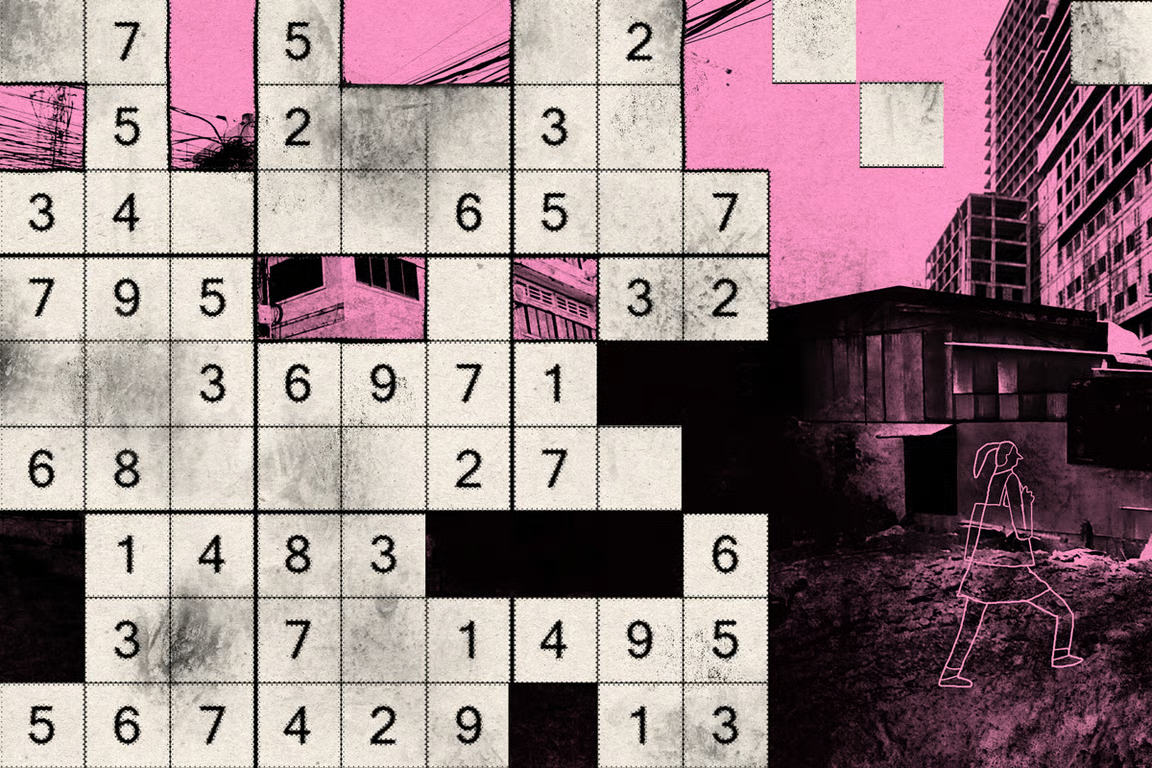
“Nobody explained anything about what you were supposed to do,” Katya recalls of her first days, when she was started off as an operator. “They just said: go sit with someone and listen to how they work. ... There's nothing complicated about it at first — cold calling with no video, nothing personal, just repeating the same thing to people over and over, like a phone ad.”
Katya’s job was to sell users on a product called Astralis AI, an artificial intelligence system that supposedly monitored price movements and helped execute trades. She told them the company needed to train the algorithm on real users, which was why it was offering free access. Every call required a written report.
“By the thousandth call, everything had blurred and my eyes were burning,” she says. “I'd lie down to sleep and hear a phone ringing in my head.”
But all of this was only preparation for the WhatsApp video calls that she'd actually been hired for.
She told herself that these calls would be just like the phone calls. But one of the men she spoke to began asking pointed questions, like where she was from, what university she’d graduated from, what city she was in, and what the weather was like there. “Show me the room,” he said, smiling.
Katya glanced around the two-by-two-metre cubicle. “Here's my notepad; here's a pen; there's my laptop in the back, you can't really see it,” she fumbled, pointing the camera at her legs and a section of desk. “Show me more. Come on, we both know what's going on here.”
Katya ended the call, buried her face in her trembling hands, and went to explain the situation to her team leader. The question running through her mind was how many screenshots the man had taken of her face.
Most clients, however, didn't suspect a thing. Sasha says that in one project they wrote handwritten notes, supposedly from a trading course, and posted them into fake group chats: victims were made to feel they were discussing investment opportunities alongside other real people, when in fact everyone else in the chat was a scammer. Sometimes other centre workers would call the victim, posing as happy clients, and offer advice — usually bad advice. But the most powerful lever was desperation: the most successful targets were people in vulnerable situations.
“One client was clearly struggling — he had maybe $100 he could put in,” Sasha recalls.
“He told me a lot about his life. He had cancer. He showed me where they'd marked him up for surgery, little X's drawn on his body in marker. His house didn't look like much either. He said, 'My friend invested recently and did really well — I'd love to be able to do that too.' The typers would convince people like him to take out loans, borrow from family, put their house up as collateral — they'd always find a way to manipulate someone into thinking the more you put in, the more you get back.”
If someone wanted to withdraw their money, they were told they needed to pay a fee, and to unlock their funds they'd need to deposit even more — a tactic also described by ProPublica reporters. Balances kept “growing”, and people were persuaded to keep going. Each project would generally run for about six months, then disappear.
In late October 2025, Lesha travelled to Armenia for a visa run and was refused re-entry to Georgia. He'd apparently received a draft notice in Russia, and someone convinced him that he risked being deported from Armenia back to Russia. So Katya sent him a job listing: a typer position, for a thousand dollars plus commission, at one of the few companies targeting the Russian market. She quickly realised nothing good would come of it, and deleted the message, but it was too late. Lesha had made up his mind and booked a flight to Cambodia.
“Are you an idiot?” Katya raged. “They'll put you in slavery there. Don't do this, Lesha, it's a disaster!”
He was convinced that nothing there could be worse than Russia, and agreed to the job. The company bought him a plane ticket and flew him to Bavet, a city on the Vietnamese border.
Gradually the work cubicle seemed to grow smaller.
“Sometimes I had this feeling that they were about to find me,” Katya says. “There was a situation at our company where a client recognised one of my coworkers — said he'd been to her hometown and figured it out from a photograph, tracked her down.”
Katya shut down all her social media and even asked her mother to remove photos on her own pages. Discussions of scam companies frequently surfaced on Reddit, and she was constantly searching for her own face there.
Meanwhile, Lesha's situation was deteriorating. He reported that there was no work yet and they were doing “research” on social media. The food was getting worse, but they'd promised a Russian cook. Katya was living in what she called “a hell of fear, panic, and fury”, and eventually asked him not to tell her anything about the work at all. Then he went silent.
He resurfaced after two days. He'd had no internet and had just been sleeping. Katya, furious at his refusal to listen to her, decided to end things.
At work, she felt increasingly awful. Getting through the long night shifts, clashes with clients and management, and the daily terror of being exposed turned out to be far harder than it had looked at first. Every day she passed sobbing coworkers in the hallways.
Despite the breakup, she stayed in touch with Lesha. It was November; he said they weren't letting anyone leave his company until the new year. The bosses were multiplying workers’ fines to prevent them from receiving their wages. “That guy Mark totally screwed me over,” Lesha wrote, realizing the recruiter had led him into a trap. “I told you a million times what happens to typers here,” Katya replied.
Katya proposed convincing her boss to purchase Lesha’s contract and bring him to her compound, where she could help him escape. But Lesha was against it; he was afraid that helping him escape would get Katya in trouble. According to UN data, the price people are sold for when transferred between scam centres varies enormously — anywhere from $3,000 to $100,000.
Then, unexpectedly, Lesha’s entire team was told that unless they paid their fines within four hours, they’d be transferred to another scam centre. Most likely his employers had concluded the project was a failure, and decided to recoup their losses by selling off the Russian-speaking typers they no longer needed. In a panic, Lesha started messaging Katya. Fortunately, his price was relatively low — just $4,000 — and Katya paid the ransom herself, on credit, just to get him out.
A couple of days later, the weekend came, and Katya, Lesha, and their coworkers went to Phnom Penh. At a restaurant, Lesha ordered round after round of vodka on Katya's tab and they all got drunk. Her coworkers found him abrasive and disrespectful toward Katya and took an instant dislike to him; she kept trying to mediate. The evening fell apart.
A week later, Lesha packed his things and flew back to Russia. In the spring of 2026, he was admitted to a psychiatric hospital in Russia's Far East.
On 7 December 2025, armed conflict resumed on the Cambodia–Thailand border. The border had been drawn in 1962 by an International Court of Justice ruling, which Thailand has contested ever since, claiming rights to the Hindu temple complex of Preah Vihear. In June 2025, both sides had reinforced their military presence in the border areas and accused each other of crossing the line of demarcation, leading to escalation and artillery exchanges in July. A US-brokered ceasefire held for two weeks before Thailand accused Cambodia of planting new landmines, triggering another round of fighting.
According to Katya, military funerals began taking place outside their hotel. Several people from the village had been killed, and each one was mourned for days.
“They'd pitch a tent right outside the building and mount a loudspeaker on a pole,” she recalls. “My room was on the second floor, right across from it. Then their local funeral music would start … Since we worked nights, we slept during the day — and now we couldn't anymore. There was no blocking it out, not with earplugs, not with headphones.”
The war lasted three weeks. During that time, Sasha's friend Karina was in a scam centre near the settlement of O’Smach, right on the Cambodia–Thailand border. It had been a wonderful day — a friend named Nina had come to visit her, along with Nina's boyfriend Kostya.
The three of them were the only Europeans in the entire scam centre. When news of missile strikes began circulating, Karina's team leader told her to go to sleep.
“I somehow fell asleep, and then I was jolted awake by an enormous blast,” she recalls. “A shell had hit the room next door. The windows were blown out.”
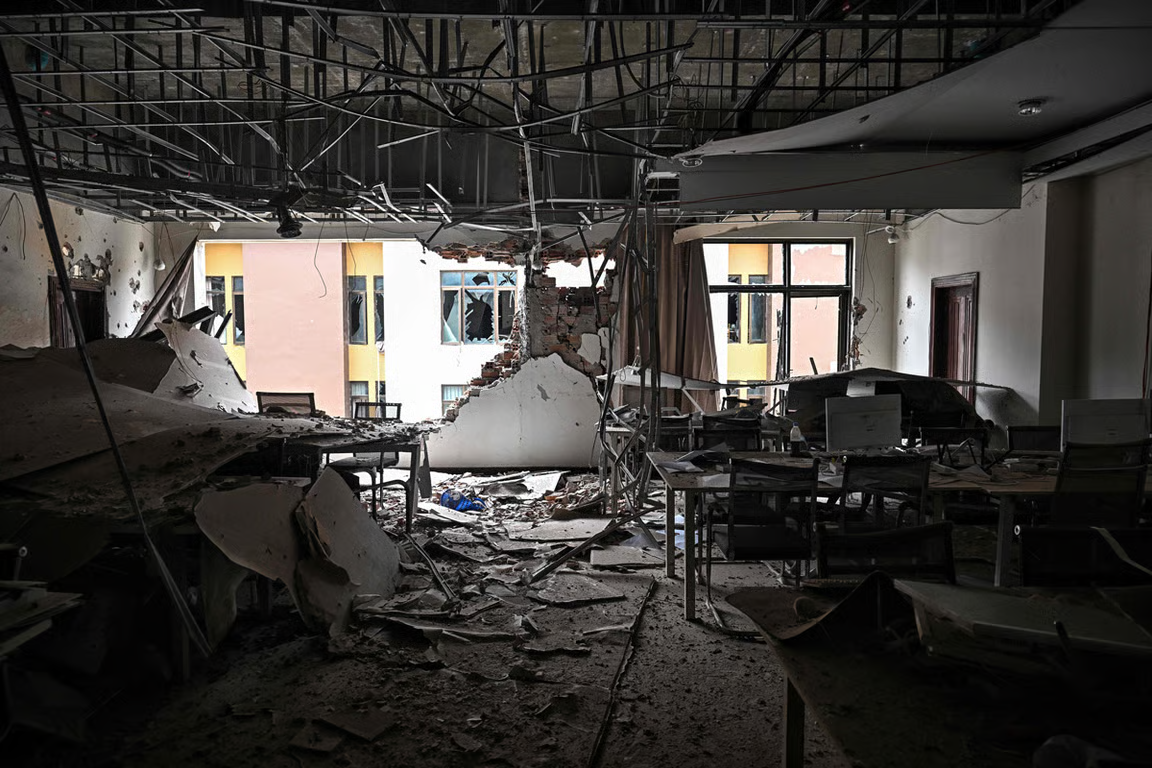
Karina grabbed whatever clothes were nearest and ran downstairs, with shrapnel flying around her. She burst into her boss’s office and found him calmly sipping tea, telling her everything was fine.
Karina decided to pack, but going back up to the seventh floor was terrifying: people were streaming down in a panicked wave, smoke was pouring from the building next door. She made it to her room and crammed her things. More explosions followed.
“I hear another shell land somewhere,” she recalls, “and I think: when there's a moment of silence, that's when I run.” Eventually she made it back to her boss’s office, but he was gone.
Karina ran into the cafeteria, which was packed with Chinese typers. They looked at her almost despairingly. She found Kostya there; he took her arm and led her outside while the explosions continued. The company accountant had also been allowed to leave, and Kostya negotiated to have both women brought along.
“I turned back and saw so many Chinese people who couldn't leave,” Karina says, her voice wavering. “They just couldn't escape. No one was going to release them. I could at least get out — they couldn't. I felt so sorry for them.”
According to Karina, armed guards were shooting at the typers' legs to prevent them from moving toward the gates. Local Cambodian support staff were being let through: they rode out on motorbikes with their luggage. Kostya got Karina out through the gates; they got into the accountant's car, and he floored it. The girls cried the whole way.
During the December conflict, Thailand carried out targeted strikes on five scam centres on Cambodian territory and occupied Osmach along with the park where Karina had been working. She says the Chinese workers were released at the last moment: footage from Chinese Telegram channels shows them running down the roads with luggage. Karina’s boss, she says, was focused entirely on evacuating $200,000 worth of equipment.
On New Year's Eve, the war ended. Even so, the Chinese bosses refused to give anyone a day off. Katya pushed back: “Guys, imagine if someone called you on Chinese New Year and tried to scam you.” Eventually a compromise was reached: 1 January would be a holiday, but New Year's Eve was a working night.
By late 2025, international pressure on the Cambodian government had intensified. US and UK authorities — whose citizens had lost billions to fraud — imposed sanctions on 146 individuals connected to Prince Holding Group, a company belonging to Chinese-Cambodian businessman Chen Zhi, whom US authorities name as a key organiser of Cambodia's scam centre operations. Sanctions also hit Huione Group, which provided the payment infrastructure for the centres: it ran, among other things, the world's largest “dark” marketplace, Huione Guarantee, where scammers could buy anything from fake accounts to trafficked people. China — Cambodia's largest foreign investor — insisted on the arrest of senior figures after criminal cases were opened against company heads in Beijing.
In January 2026, raids of unprecedented scale began. On 7 January, Chen Zhi was arrested and extradited to China, where he faces the death penalty. Within a month, according to Reuters, Cambodian police had shut down roughly 200 scam centres across the country. Mass arrests, however, did not follow. During a raid on the My Casino compound in Kampot, police detained the alleged boss, Lu Quong, while the rest of the workers scattered. “In the whole province we have around 1,000 police and 300 military personnel. Even combining those forces, we still can't stop them, because there were six to seven thousand people there,” the Kampot provincial police chief Mao Chanmotherit told the agency.
By February 2026, Reuters estimated that roughly 100,000 people had left the scam centres as a result of the December war and the January raids. Human rights advocates at Amnesty International described it as a humanitarian catastrophe, with thousands of people stranded in Cambodia, struggling to get consular assistance to leave.
As Forbes reported, overstay fines ran into the thousands of dollars, and workers who had escaped couldn't afford to pay them.
“Before, it had been the occasional show of force — cops took some money and left,” she recalls of early January. “This time it was real.”
When he and Sasha went to their bosses with questions, they were told everything was fine. The next day, Katya was called to a meeting. “There are two good pieces of news and one bad one,” her boss announced. “Your good news: today's a day off. Your second good news: tomorrow's a day off too. The third piece of news: we're moving.”
Katya watched as the Chinese workers loaded endless suitcases into trucks and an entire city packed itself up and changed location overnight. At six in the morning she got on a bus headed somewhere unknown.
The bus took them to Kiri Sakor, a compound still under construction. After a week it became clear this park was going to be shut down too.
On 15 January 2026 — payday — Katya's coworkers started being let go one by one. They came out of the boss's office and announced they'd been paid off. Katya, who had been dreaming of exactly this, walked in. They handed her the previous month's wages and told her she was staying. She nodded, walked out, and silently screamed: I don't want to be here alone! I don't want to be here alone!
With her hands shaking, Katya wrote to her team leader saying she wanted her passport, the remainder of her money, and to leave. He told her there'd be no money. She held her ground. They brought her to a thin Chinese man with very long fingernails. She didn't know who he was, but had noticed he always wore a robe and didn't speak a word of English. The team leader began translating.
”Why do you want to leave?” the man asked.
“You brought me to the middle of nowhere," Katya said. "The water keeps getting cut off. I can't buy vegetables.” She paused, then screamed in Russian: "I am losing my mind!" Both the team leader and the Chinese man were startled. "If you come back for the next contract, we'll pay you very well," the team leader translated. "No,” she said.
The Chinese man walked out without a word. “That's it,” the team leader said, clapping her on the shoulder. “They'll bring you your money and your passport now, and you can go.”
Sasha wasn't fired either, but she didn't have the courage to fight. She hugged Katya and from then on, every day, hoped it would be her last. The offices still weren't finished. Sasha wandered the compound, occasionally asked to take a call. Everyone was drinking: “Wake up, get wasted, pass out.” Sasha's boss was also drinking and would joke, day after day, about sleeping with her. She'd remind him he had a girlfriend — the team leader.
On 15 February, Sasha was finally let go — but there was almost no cash on hand. The boss called her into his room to hand over part of the money. She came in, and he began counting out the bills one by one, with his arm around her. With each new banknote, his hands moved further — onto her hips, her waist, her chest. He tried to push her into a corner.
“It was genuinely scary — he was small, but wiry and surprisingly strong,” she says.
Sasha shoved him, grabbed the rest of the money, and ran. “Why won't you sleep with me? I'm good-looking,” he texted after her. “If you stay, you'll wake up with the new iPhone 17.” “I have a phone,” Sasha replied. “Transfer me the rest.”
Despite the raids, the scam conglomerate's operations haven't stopped. According to estimates from the US Institute of Peace, cybercrime profits in Cambodia alone exceed $12.5 billion a year — roughly half the country's official GDP.
UN experts are skeptical about the significance of the scam centre closures: in their view, the criminals' ties to the government are too deep, and they will continue receiving advance warning of operations, relocating centres within the country and beyond its borders.
In job listing channels, hundreds of positions are posted — in Cambodia, and also in Laos, Myanmar, Malaysia, Indonesia, Pakistan, Sri Lanka, Madagascar, and even Russia and China.