
Translated material
Behind the Brazilian "incense". Metropolitan Hilarion (Alfeev), who became the most scandalous hierarch of the Russian Orthodox Church, is sent to another honorable “exile” - to Brazil, the country of wild monkeys and wild drug trafficking
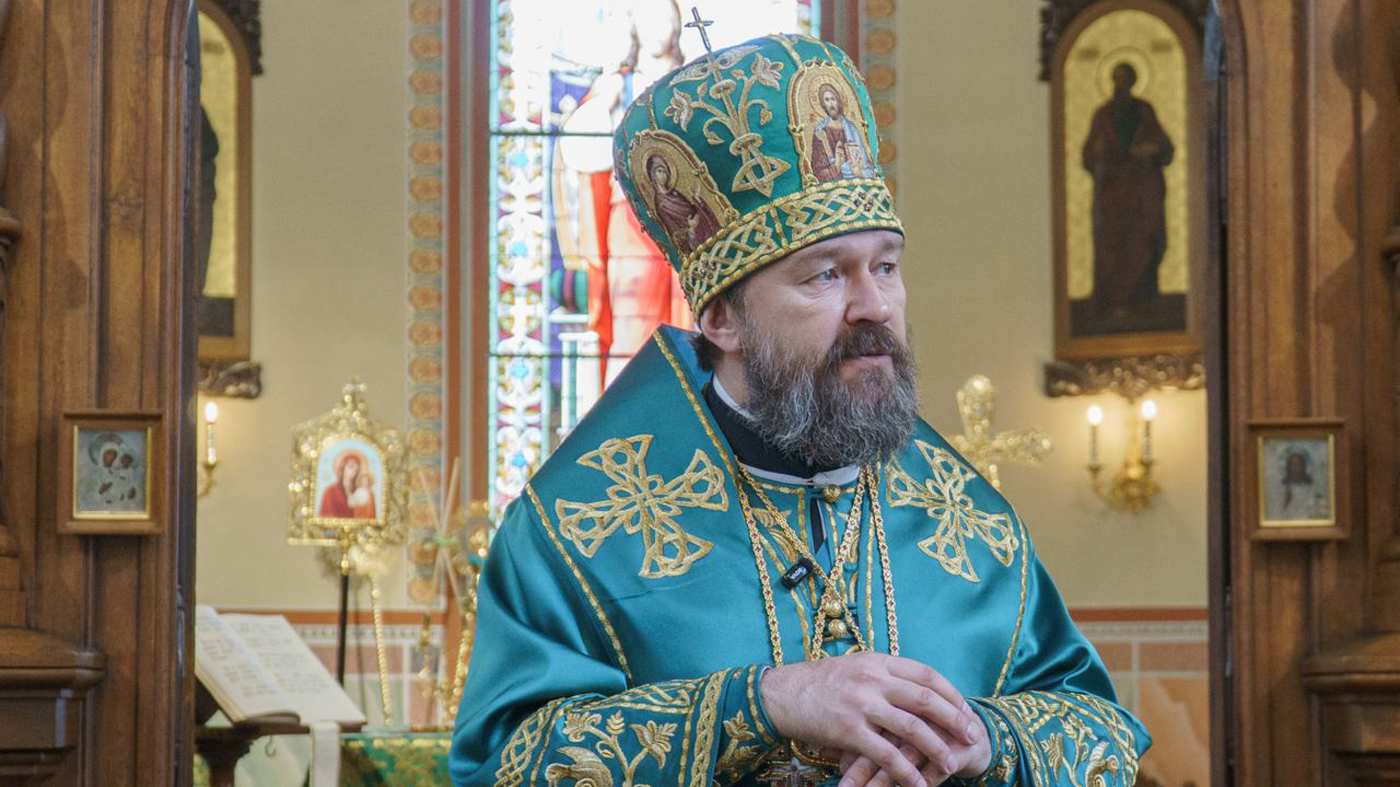
Metropolitan Hilarion (Alfeev), who became the most scandalous hierarch of the Russian Orthodox Church, is sent to another honorable “exile” - to Brazil, the country of wild monkeys and wild drug trafficking
Let us pay tribute to the refined sense of irony of Patriarch Kirill. On June 3, he signed a decree assigning new places of ministry to the “retired” Metropolitan Hilarion (Alfeev). As if out of respect for the fact that the Czech police found cocaine in the Metropolitan’s car on May 24, after which Hilarion spent two difficult nights in the bullpen, the new places of his ministry were the Brazilian parishes of the Russian Orthodox Church on the border with Paraguay and Argentina. “Your place of service is determined by the Church of the Holy Apostles Peter and Paul in the city of Santa Rosa, Brazil, as well as the Church of the Holy Apostle and Evangelist John the Theologian in Campina das Misões, Brazil, where you should stay,” the patriarch’s decree says. According to the UN Office on Drugs and Crime, Brazil ranks number one in international trafficking... of cocaine.
INFORMATION OF "NEW EUROPE": Former permanent member of the Holy Synod of the Russian Orthodox Church and head of the Department for External Church Relations of the Moscow Patriarchate (DECR MP), Metropolitan Hilarion (Alfeev) was born in Moscow in 1966. He will turn 60 on July 24. He studied at the Moscow Conservatory, but did not graduate, entering the Holy Spirit Monastery in Vilnius, where at the age of 20 he took monastic vows. After his ordination to the rank of hieromonk, he served in the parishes of the Lithuanian diocese of the Russian Orthodox Church, and graduated in absentia from the Moscow Theological Seminary and Academy, as well as graduate school. He received his doctorate from Oxford University. Since 1995, he worked in the DECR MP under the leadership of Metropolitan Kirill (Gundyaev), and in 2002 he was ordained bishop. Served in Great Britain and Austria.After Kirill’s election as patriarch, in 2009, he became his successor as chairman of the DECR MP, and also headed the newly created Church graduate and doctoral studies. Gradually, the number of leadership positions held by Hilarion reached ten, and the number of his academic titles exceeded 20. Despite being very busy, he annually published several books, films and musical works under his own name. In June 2022, he was relieved of most posts in Moscow and appointed Metropolitan of Budapest and Hungary (Hilarion himself hinted that this was due to insufficient support for the “SVO” on his part). Using friendly and business contacts with Viktor Orban, three months later he received Hungarian citizenship and acquired luxury real estate in the country. He was released from managing the diocese after Novaya Gazeta Europe published documents from his former cell attendant George Suzuki about Hilarion’s sexual harassment and corrupt connections. He tried unsuccessfully to prove that the documents were falsified and to initiate criminal prosecution of Suzuki. Earlier this year, Hungarian police recognized Suzuki as a victim and began an investigation against Hilarion. In December 2024, the synod of the Russian Orthodox Church dismissed Hilarion and assigned him a temple in Karlovy Vary (Czech Republic) as his place of service.
After the liturgy in this church on May 24, Czech police detained Hilarion’s car, in which bags of white powder were found (expertise later established that it was cocaine), as well as the metropolitan himself and his driver-operator. Thanks to the efforts of the Russian Foreign Ministry, 48 hours later they were released and left the EU. On the feast of Trinity, May 31, Hilarion concelebrated with the patriarch at the Trinity-Sergius Lavra near Moscow. At the same time, the investigation against Hilarion continues in the Czech Republic and Hungary.
It cannot be said that the head of the Russian Orthodox Church was delighted with the adventures of his former favorite. However, being a calculating man with enormous connections in Russian security forces and in international business and political circles, Hilarion managed to build a deeply layered defense around himself. It is very difficult to deprive him of his dignity or bring him into the hands of a criminal court. According to Czech media, the Metropolitan may be a valuable “undercover” agent for the Russian special services. Until April of this year, an equally powerful cover for him was Viktor Orban, who, like Hilarion, studied at Oxford in the 1990s, often met with the Metropolitan in Budapest and lobbied for the interests of the Russian Orthodox Church and personally Patriarch Kirill in the EU. Orban's defeat in the last elections in Hungary, in general, predetermined Hilarion's departure from the EU. As can be seen from the “tapes of Suzuki” - Hilarion’s former cell attendant, who fled from him after sexual harassment - the Metropolitan has extensive incriminating evidence on the Patriarch, which the latter is probably forced to reckon with. Finally, in the episcopate of the Russian Orthodox Church there is a widespread opinion that Hilarion’s “unsinkability” is due to his membership in very influential secret societies (Masonic?), but it is not possible to prove this at the current stage.
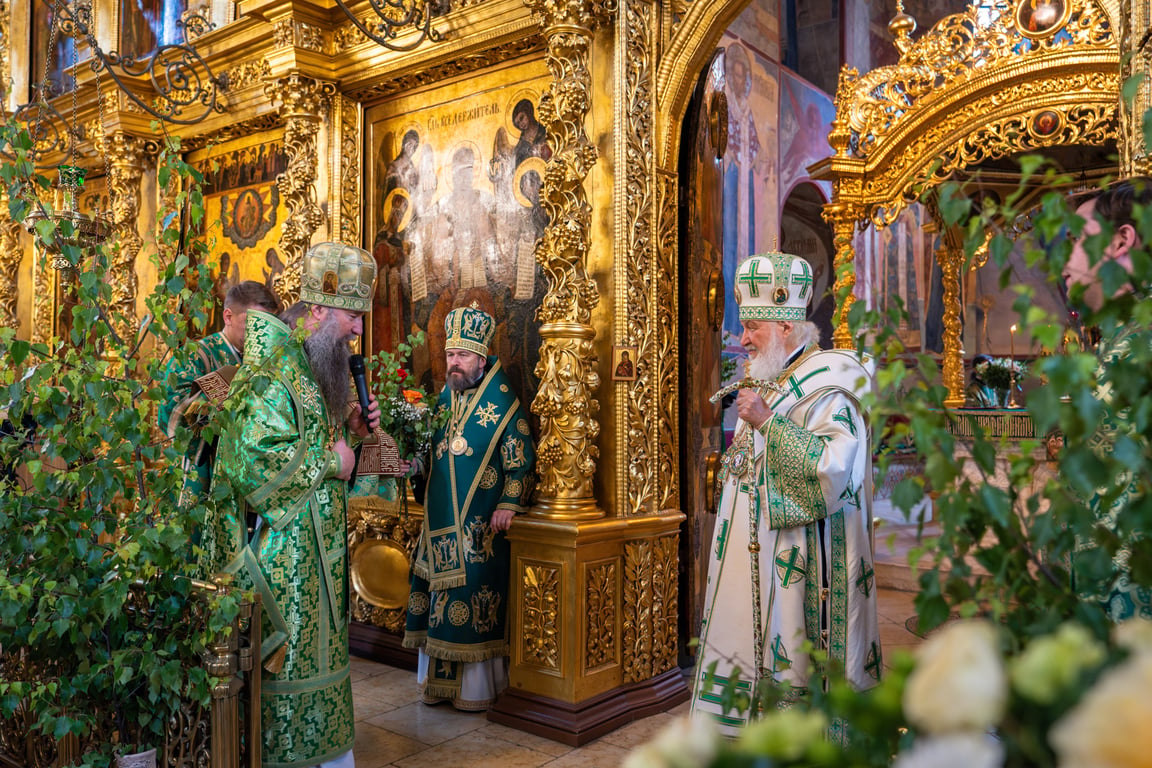
On the same day, June 3, when the Patriarch issued his decree to Hilarion, the Czech publication DenikN published an official statement from the press secretary of the police of the Central Region of the Czech Republic, Martina Richterova, that “the white powder confiscated <in Hilarion’s car> is cocaine.” At the same time, the police representative could not explain why the Metropolitan was released without charges. Czech journalists suggest that the formal reason could be a “too small” amount of a prohibited substance or procedural violations during its seizure. But these versions do not sound convincing enough. Hilarion’s Czech lawyer, Michal Patovski, continues to insist that the substance was planted on his client. Representatives of the Russian parish in Karlovy Vary, in conversations with journalists, try to distance themselves from Hilarion, noting that he was not on the staff of the parish, but only occasionally came to serve in the church, and did not warn the parish in advance about his visits. A New Europe source said that Hilarion left the EU only a day after he was released from the bullpen, on May 27. According to the source, it took him a day to issue powers of attorney to manage his extensive real estate in Hungary, France and Spain. As New Europe found out ,
The metropolitan's dacha on Lake Geneva alone costs more than half a million euros. And the palace near Budapest, for which Hilarion collected money from sponsors under the pretext of “creating a monastery,” is estimated to be four times more expensive.
It is assumed that one of Hilarion’s trusted representatives in managing the property was his former (even before George Suzuki) cell attendant Vyacheslav Lee, who last year transferred to serve from Budapest to the Russian Orthodox Church Cathedral in Paris. In 2022, Hilarion also “gave” him Hungarian citizenship.
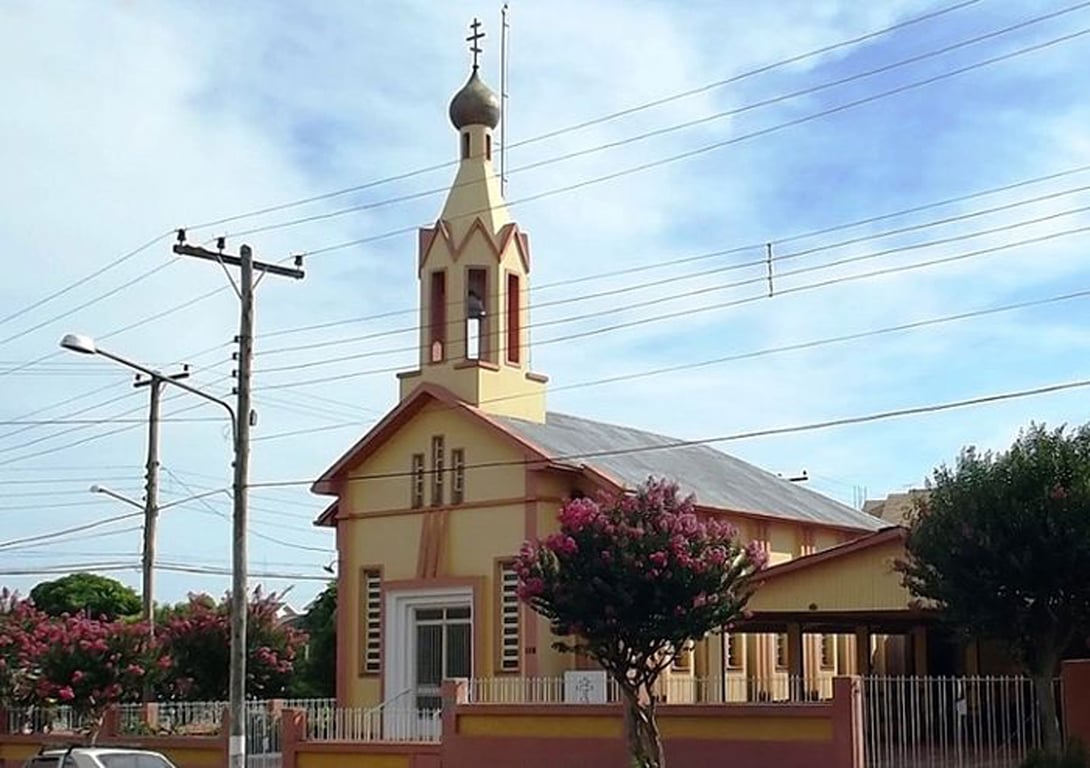
The Orthodox blogosphere reacted quite predictably to the choice of Hilarion’s new place of ministry: “The places are familiar to him)))) And according to the profile))”; “After a drug scandal, he was sent to serve in South America.” From a formal point of view, such a radical “downshift” has never been seen in Hilarion’s biography. Budapest and even Karlovy Vary look like major cultural centers against the backdrop of the towns of Santa Rosa (77 thousand inhabitants) and Campina das Misões (about 5 thousand) lost in the pampas. According to Wikipedia, the population of these cities is mainly engaged in agriculture, and Orthodox parishes in them were formed in the first half of the twentieth century on the basis of the pre-revolutionary wave of peasant emigration from the Russian Empire. The parish of Santa Rosa has switched to the Portuguese language of worship and consists mainly of local converts, and the parish of Campina das Misões is still faithful to Church Slavonic, although there are practically no active speakers of Russian left in it either. This very vaguely resembles the remote parishes in the Lithuanian Telšiai, Kolainiai and Tituvenai, where the career of young Hilarion began in 1988. But still, Lithuania, with its significant Russian-speaking population and European culture, is not southern Brazil. It's clear that
the parishes of Santa Rosa and Campina das Misões will not provide even a hundredth of the level of consumption to which Hilarion is accustomed.
Hilarion himself makes it clear that he is in no hurry to go to Brazil: it will take some time to obtain a visa. She especially worries about her mother Valeria Anatolyevna, a Soviet writer, who gave her only son a surname and a “start in life”: “I will pray that my mother, who will turn 88 years old the other day and has a serious eye disease, will endure the difficulties associated with the move.” Knowing both Patriarch Kirill and Metropolitan Hilarion well, the disgraced deacon Andrei Kuraev, who, by the way, lives in Prague, reads the “signal” of the patriarch in his own way: Hilarion “is not forgiven. I received neither a department nor an abbotship.” Kuraev is ready to respect Hilarion again if he does not make it to Brazil, but jumps off along the road, “somewhere in Amsterdam,” so that in his old age he can begin the simple life of a private citizen. But such hopes sound too romantic, Hilarion is a “man of the System,” and perhaps more than one.
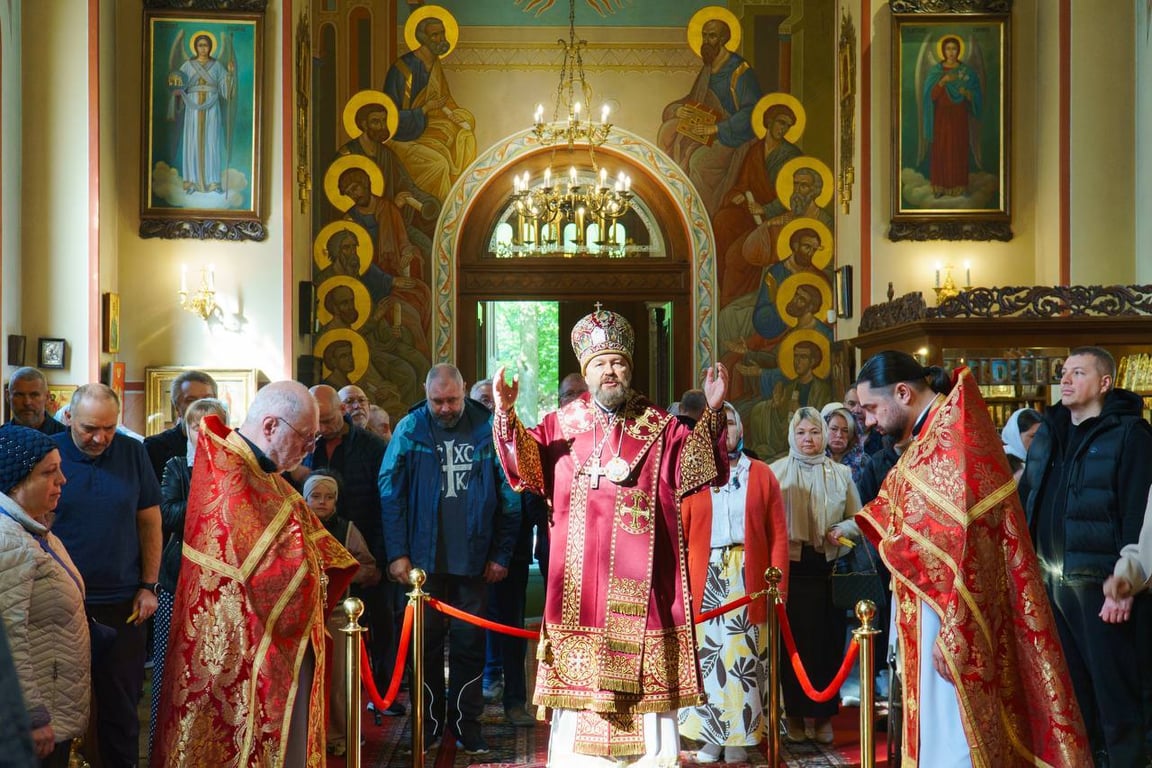
Of course, George Suzuki, who returned to his native Japan, could not help but comment on the new sharp turn in the biography of his abuser. He regards Hilarion’s trip to Moscow as an “evacuation” - a successful special operation by the Russian special services. According to Suzuki, “the issue of evacuation arose immediately after the Hungarian police admitted that the criminal case against me had no basis, and the video recordings, which Hilarion called “fake” and “edited,” are genuine and important evidence in the case of sexual harassment. At this moment, Hilarion for the first time had a real prospect of finding himself in the role of a person who would have to answer for what he had done.”
Obviously,
in his new capacity, the former “Minister of Foreign Affairs” of the Russian Orthodox Church will continue to oversee important foreign assets - both his own and the patriarch’s.
He was probably sent to Budapest on this mission four years ago. Of course, Brazil is a bit far away, but the Internet or SWIFT are not blocked there, so most technical problems are easier to solve from there than from Moscow. We will not risk making any assumptions about possible participation in cocaine trafficking, which is said to be of interest to the Russian elite. But in the Argentine-South American Diocese of the Russian Orthodox Church, the “cocaine case” of 2016–18 is still memorable, when several hundred kilograms of the drug were tried to be sent from Buenos Aires to Moscow by diplomatic mail. The defendants in that case were certain Ivan Bliznyuk and Alexander Chikalo - sponsors of the diocese and leaders of the Foundation of Orthodox Patrons in Latin America.
In any case, one should not count on the fact that the ebullient and passionate nature of Metropolitan Hilarion will not manifest itself in new historical and geographical circumstances. We are waiting for the next sensations from the banks of Iguazu.