
Translated material
Unemployed
Communism from Musk to Marx

Drawing: Pyotr Sarukhanov / Novaya Gazeta
18+. THIS MATERIAL (INFORMATION) IS PRODUCED, DISTRIBUTED AND (OR) SENT BY FOREIGN AGENT GENIS ALEXANDER ALEXANDROVICH OR CONCERNES THE ACTIVITIES OF FOREIGN AGENT GENIS ALEXANDER ALEXANDROVICH.
Musk
The current generation will live under communism.
It was not me or Khrushchev who said this, but Elon Musk - just not in these words that are familiar to us, but not to him. Which does not change the meaning of what has been said: communism is on the horizon, and there is absolutely nothing left before it - it seems like a year, at most two or three.
The richest man in the world announced this to his shareholders, promising not only them, but all of us, a utopian future. The main, as well as, for now, the only intelligible feature of it will be the central temptation of the previous program for building communism. This is abundance. Undeniable, unlimited, for everyone and free of charge. To each according to his needs, from each - nothing, because nothing is needed. Soon we will get for free not only what we need, but also what we want.
“And we,” the first trillionaire of our planet echoes Christ, “will be like lilies of the field, who also “do not work.”
Robots will do everything for us, and there will be more of them than people. The future will be in their calloused hands and in their artificially intelligent brains. This project is being discussed quite seriously by economists and politicians. The former are concerned about who will pay taxes, the latter – who will share the income.
Musk probably has the answers to all the questions, but I still don’t really believe him, because I remember how he treated the Twitter he bought.
Having spent seven billion on the purchase, Musk first decided to optimize the new business and cut costs. Without knowing exactly how, he fired the cleaners. Soon the offices were filled with filth and the restrooms ran out of toilet paper.
This gesture reveals the inherent inferiority of technocrats. They all profess Wittgenstein's maxim: if a part of a machine does not work, it is not a part of the machine. But principled functionalism is suitable in a machine society, not a human one. As King Lear said, “Reduce all life to necessity, and man is reduced to an animal.” Or a robot.
Therefore, before moving on to building the future, reformers try to uproot the present by fighting the bureaucrat. A favorite enemy, he has always stood on the path to utopia. It was not the dictatorship, not the security officers, not censorship, not poverty, not hunger, not terror, but all sorts of “in sitters” that prevented the implementation of plans for happy transformations.
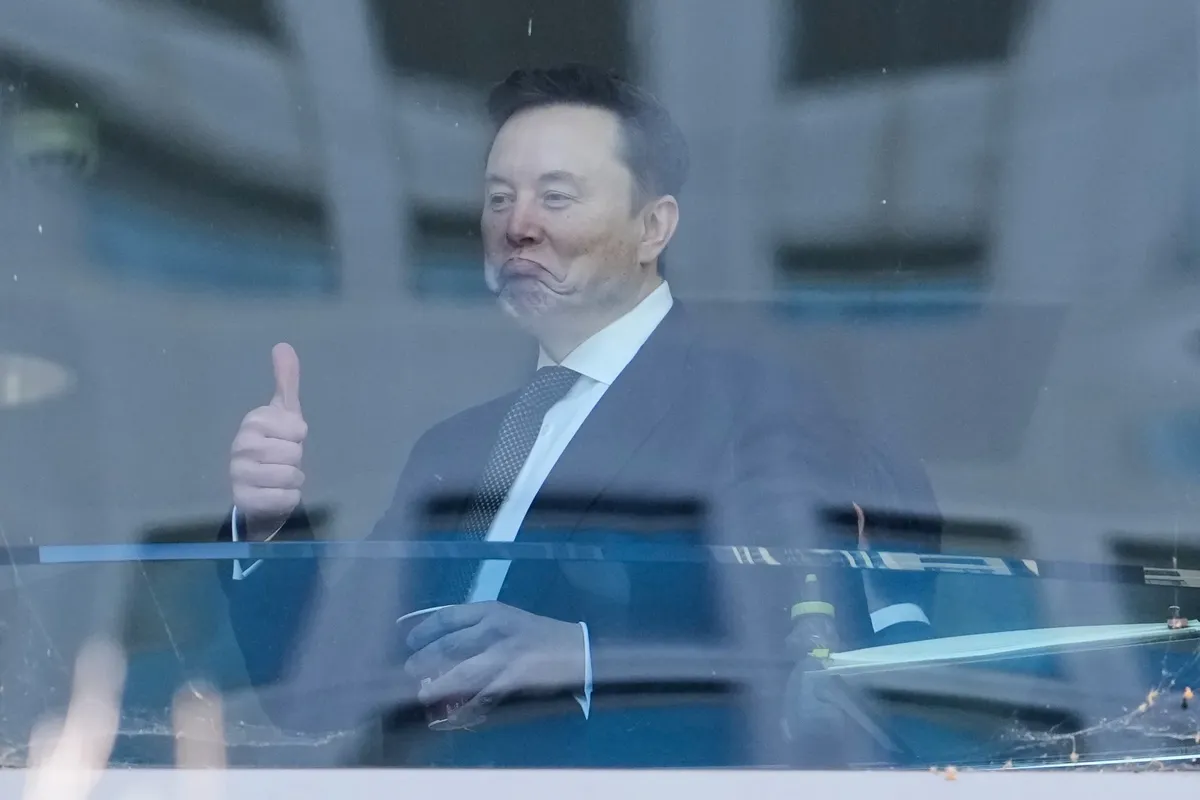
One way or another, having tested his method on his own company, Musk decided to apply it throughout America. Having undertaken to abolish what was superfluous in the country’s state mechanism, he quickly rendered everything he could reach into disrepair. Nothing came of saving either. Instead of the promised trillion for the treasury, Musk earned it for himself and retreated from his career as a power.
All this does not mean that utopia is impossible. I don't presume to judge. But I am passionately concerned about another question: how to live with it and in it if it does happen?
Khrushchev
Communism entered my life around the time I learned to read. Of course, not the Third Program of the CPSU, but the Soviet science fiction that preceded it. The main feature of the future was the same abundance.
The money, these rightly forgotten writers said, will remain only to buy the luxury needed only by academics (I didn’t make this up), namely, carpets.
Capitalism interested them no less. The West occupied a huge place in Soviet science fiction. This was her secret, which the authors looked for on Mars and found in America.
“The alleys looked like stone gorges, the courtyards looked like cages. Nuts, corners in rooms, stocks, opera tickets were sold everywhere. The nuns called a taxi to go about their business to the bank, repair shop or to prayer.”
Reading this as a newcomer, I suffered from the fact that communism, which had defeated its overseas rival, would, although it would come to my generation, only when I grew up to at least the eighth grade.
The more often I did the calculations, the more I wanted to take advantage of the suspended animation invented by the same authors in order to fall asleep and wake up immediately in communism, bypassing the difficulties of growth - both his and mine.
Adults forgave me for my young faith. They themselves dreamed that the future would deal with the past and remove Stalin’s body from the Mausoleum. In hindsight, I cannot imagine anyone who would believe in the feasibility of the notorious CPSU program. And if anyone spoke about communism, it was in circumstance and in lies.
Therefore, when we read from the early Solzhenitsyn that “ communism must be built not in stones, but in people,” this does not mean that the writer believed what his character was saying.
Despite the lack of enthusiasm (at least among the adult population), party rhetoric discussed in detail the stages of building communism. But I stopped believing in it when, instead of the abundance promised to me, the country ran out of white bread. This happened during the Cuban missile crisis over Cuba, which simpletons considered an acronym for “Communism Off the Shores of America.” But the Barbados didn’t get along well with communism either, and they sat on the Russian neck. Then it was believed that Fidel Castro was to blame for everything, having deceived our simple-minded leader. The adults sang an anti-Soviet ditty about this: “Okay, okay, Cuba is eating pancakes.” There weren’t enough of them (pancakes) for us, but at school the children were given a French (a little later renamed the city) loaf a day, and I proudly brought it home for lunch, feeling like a breadwinner.
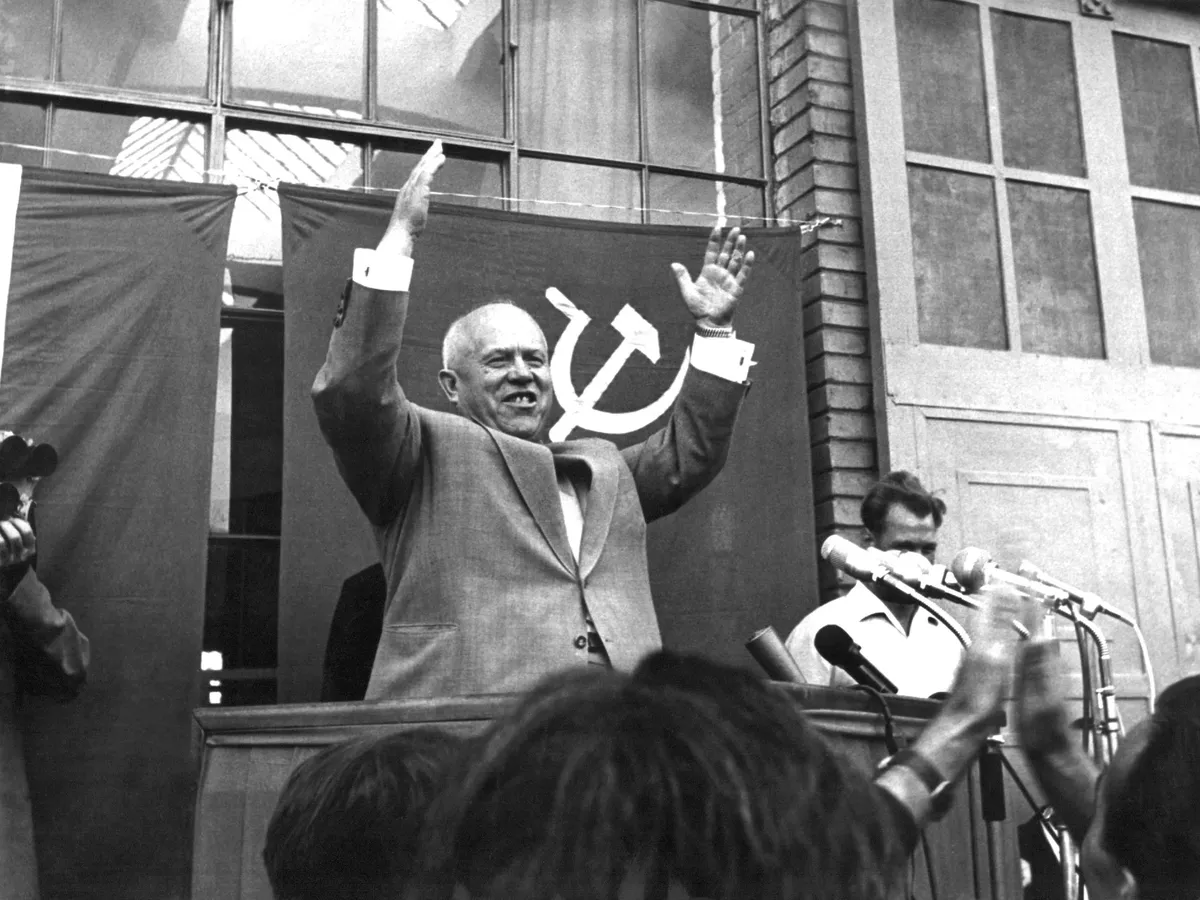
Another thing is that this practice did not fit into the pictures of abundance that Khrushchev promised us, and I stopped believing him and the authors of his fiction. As a result, I had to compensate them with the books “The Adventures of Dunno...”, where communism was adapted for elementary school students: free labor of freely gathered children.
This is, in essence, what communism remained in the books of the only writers who managed to honestly believe in it.
Strugatsky
I suspect that in the entire socialist camp there was no one who would portray communism in such a way that everyone wanted to live with it, including me and the authors. They believed for a long time in what they wrote, because they took seriously the fundamental idea of Marx, who glorified the mystery of labor. Briefly and convincingly, the creed of the early Strugatskys is expressed by the title of their most popular book, “Monday Begins on Saturday.”
The fairy tale, intended for junior scientists, was our Harry Potter, but it promised more than that, because it put work at the center of everything - interesting, exciting, enviable.
The young Strugatskys paid tribute to the legend of communism, furnishing it with Thaw optimism and teenage humor. There was no money in their future, except perhaps for a trip to the capitalists, which the hero of “Trainees” recalls with bewilderment.
However, the class struggle did not distract all of their characters from the case. Depicting the bright “World of Noon” in which they themselves would like to live, the Strugatskys seduced the reader with pictures of the boundless happiness that a favorite job brings to everyone, especially in the company of equally obsessed friends. The ecstasy of labor was communism for them.
However belated this enthusiasm may seem, I still remember it with fondness, for the happiest days of my entire life were spent working in good company. Such labor is radically different from the hard labor with which God punished Adam. Firstly, there is no such thing as too much favorite work. Secondly, it’s scary to lose him. However, this is exactly what the utopia named after Musk promises us, and this cannot but frighten us (at least for us).
Children of the bourgeois revolution, we are accustomed to measuring life by labor, which describes us in detail. We are who we work to be.
“That’s why,” they told me in the first days of emigration, “in America it is tactless to ask a new acquaintance what he does.” We should judge a person not by what he does, but by who he is and beyond his work. And this is more difficult than it seems at first glance. A profession exhausts a person, revealing his best—competitive—qualities. But this, of course, depends on the profession. It’s one thing for a scientist, musician, doctor, artist, athlete, artist, lawyer, politician, another thing for almost everyone else.
When a journalist asked one writer how he became one, he suddenly became angry.
“You’d better,” he shouted, “ask the worker on the assembly line packing frozen chickens how he chose this craft!”
I understand the writer perfectly, because before I became one of them, I spent three months folding jeans in a warehouse, and I never had a worse experience than those 12 weeks in America.
Work can be a great happiness and an equal misfortune, but the trick is that progress promises to abolish both in order to give our work to robots.
Golem
Long before Isaac Asimov, who humanized robots until they became better than humans, the idea of a mechanical servant was mastered in detail by culture. And in Prague.
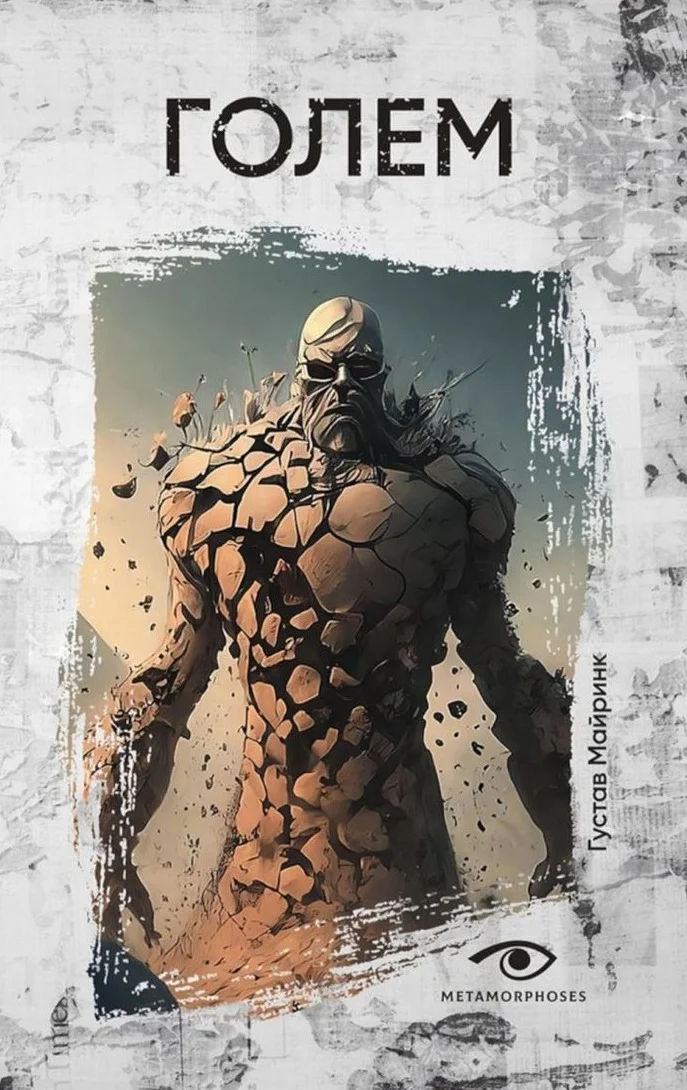
First, the Golem came from here - the prototype of all the robots that our imagination created in its likeness. This is how we recognize them in the Prague monster, described by his best biographer Gustav Meyrink.
“An artificial man, who was once fashioned from clay here in the ghetto by a rabbi who knew Kabbalah like the back of his hand and forced him to act thoughtlessly and automatically by placing a seal with magical signs in his mouth.”
At the same time, the Golem, like a robot, acted only as long as its program worked. Without it, he “at that very second became a clay image if the secret signs of life were extracted from his mouth.”
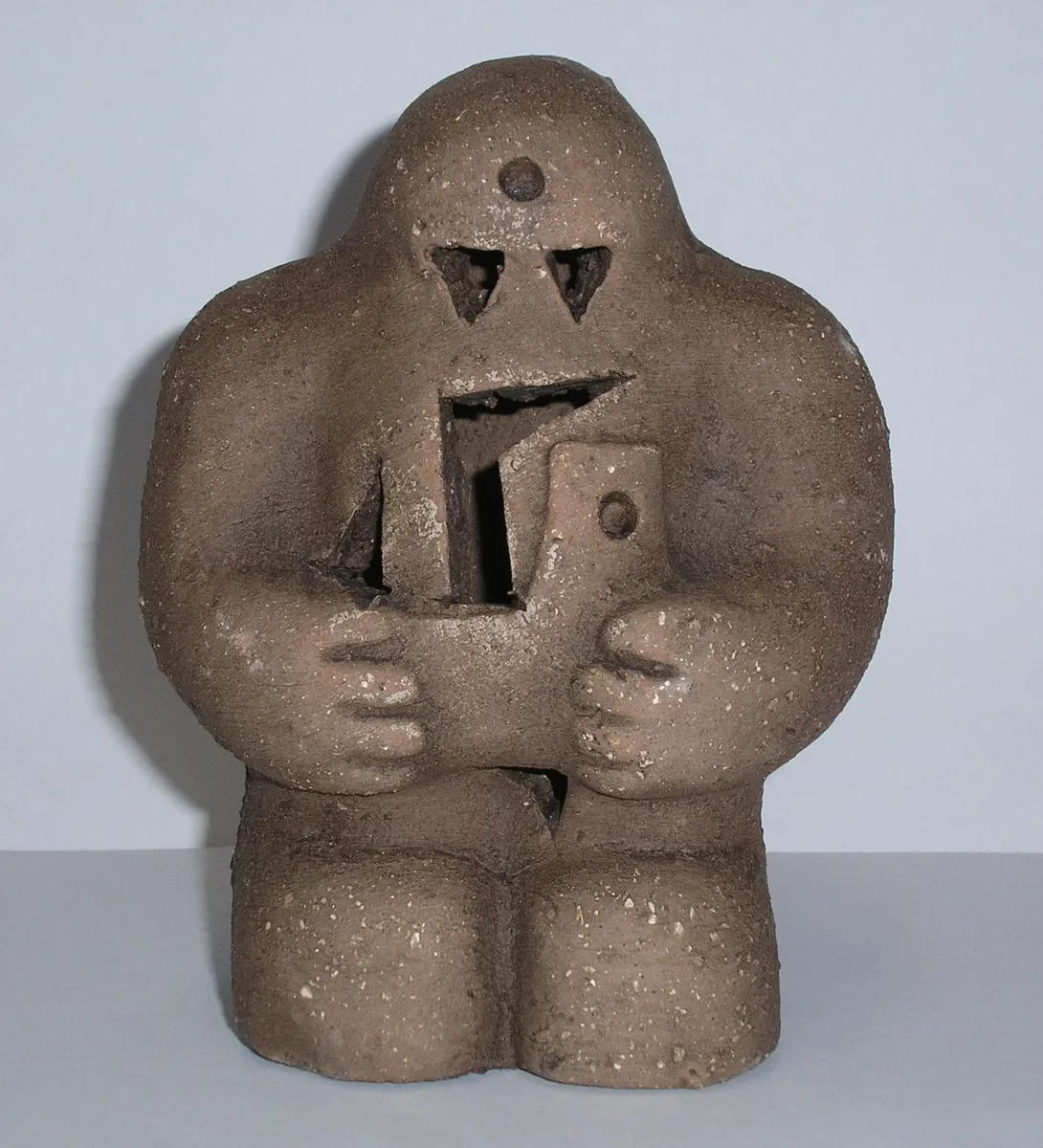
The golem, as befits robots, was created to do what we are lazy: “As an attendant, he helped ring the bells in the synagogue and did menial work.” Doomed to mechanical labor, the Golem, of course, did not become “a real person and only eked out a miserable, semi-conscious existence.” In our language, zombies.
I don’t know if another Prague resident thought about Golem when he invented robots, introducing the Slavic name for hard-working machines into the world dictionary. It is important that from the same idea Karel Capek extracted a drama with extremely relevant conclusions - “RUR”.
We get to know the robots already in the list of characters. They are “dressed like people. They have jerky movements and speech, expressionless faces, and a fixed gaze.” With this machine-like appearance, robots are no strangers to knowledge. One speaks four languages, including Russian.
For others, you can read “twenty volumes of an encyclopedic dictionary, and they will repeat everything to you, by heart. But they will never invent anything new. They could well teach at universities..."
Despite some similarities with us, robots are categorically different from people. They are “not attached to life. They have no pleasures. They are smaller than grass." However, it is they who bring the good news to humanity, promising to free us from labor.
Futurologists have been predicting for quite some time that soon there will soon be two living creatures left in any factory: a man and a dog. The first is needed to feed the second, the second - to keep the first away from the robots, unquestioningly and incessantly, if they are not disturbed, producing all the products without the intervention of outsiders - us.
Everything in the play is about this, like Musk, who has hardly read Capek and echoes him involuntarily. “One robot replaces two and a half workers. The human mechanism is extremely imperfect... Sooner or later it had to be replaced.” Robots will provide abundance, but the main thing is different.
“The service of man and the enslavement of man by dead matter will cease. No one will pay for bread with life and hatred anymore... Living machines will do everything. And the person will begin to do only what he loves. He will live to improve himself."
The burning question that remains unanswered is: What exactly will the people liberated—or displaced—by robots do? After all, as one philosopher said, “we need to kill free time so that it does not kill us.”
In this horror of idleness, the voice of our entire civilization is heard with its priority of the so-called Protestant ethics, which can be called Confucian, and any other of those that created our world, provided it with comfort and made it reliable.
“People are what they do,” our conscience screams! And if they don’t do anything, then they’re not really people anymore.
Brought up in this faith, I myself am more afraid than anything else of being left without a job - my own and my precious one. I, too, like Dickens’s bourgeois, am afraid of life without everyday work. I, like everyone else, am driven by my duty to myself, which requires me not to lay down my hands, no matter what happens. That’s why the prospect promised by Musk is so scary - stopping the conveyor belt, which we either call life or confuse with it.
Consolation should be sought in history: it was not always this way!
Let us remember the eras that were most successful for our family. Did Socrates, by the way, who knew that such manual labor (there was no other kind) consider it the best destiny of a free person? The point is not even that the robots of that time—slaves—were working in his Athens. It is important that the ideal lay in another sphere. Judging by the life that Socrates led, he considered the testing of truth to be the main thing for himself and his students. Only she opened the way to perfection, fulfillment of one’s lot, and, ultimately, to happiness. The hero of Socrates, and even more so of Plato, is not a worker, but a philosopher who even teaches geometry not for the sake of earning money as a surveyor, but for the exercise of ideal perfection.
And so it is with all the mentors of humanity.
Christ did not call the apostles to the bench. On the contrary, he took away the nets from the fishermen, urging them to “catch people” instead of fish and teach them how to save themselves.
Buddha exchanged the important position of a prince for the robe of a monk, begging on the high road, in order to lead students and people he met to enlightenment the rest of the time.
In the best centuries of their history, the Romans considered the career of a politician worthy of a person, in which oratory and rhetorical genius led to victories.
The English gentleman, whom the Victorian era considered the most successful example of our breed, was the amateur par excellence and worked not for duty or money, but for pleasure, like Mr. Pickwick and his hapless friends.
All this does not mean that, having been left out of work, we can return to where we would like. But the memory of former times inspires hope of finding something to do that Mask’s golems cannot take away.
Stoker
The alternative to work is not idleness, but work that is not considered idle.
This is not a paradox, it is an experience, an example and a way of life - whimsical, grateful and worthy of close attention. If only because, in the adobe fence of a mediocre regime, it opened a secret gate that let in the bizarre world of domestic bohemia. Dovlatov described it almost exhaustively, as it happened to him, in the story “The Extra One,” whose heroes go to get jobs as stokers.
“Our audience here is quite unique. Olezhka, for example, is a Buddhist. Follower of the Zen school. Seeks peace in the monastery of his own spirit... Hood is a painter, the left wing of the world avant-garde. Works in the traditions of metaphysical synthetism. He mainly draws containers - boxes, jars, covers...
“The series is called “Dead Truths,” Hood explained in a whisper, purple with embarrassment.
Tsurikov continued:
- Well, I’m a simple person. On my free days I study music theory. By the way, what do you think of Britten’s polytonal overlays?”
The stoker, conventional and universal, and therefore deserving of a capital letter, could be anything - a closet for a watchman, a warehouse for a loader, a fire station for me. The abode of primitive labor, alternating with creativity and drunkenness, Kochegarka was a natural habitat for lumpen intellectuals, who were distinguished by extremely specific features: chamber ethics, scrupulous aesthetics, virtuoso etiquette.
What is bohemia? This is a close circle of like-minded people, the warmth of constant communication, the art of chatter that resonates with the interlocutor, the high skill of a creative feast
and - accordingly - vodka, which generously washed our “ivory tower”, made, however, of unpainted plywood.
Bohemia was a bizarre and cute artifact of Soviet power, a sort of unidentified but flying object that hovered over the gloomy plain of socialism, involuntarily landing in the same Kochegarka.
It was believed that bohemians used art to justify their bizarre existence, full of extravagant, absurd, absurd, if not wild antics. And indeed, talents, celebrities, and geniuses emerged from here into the big world. Which is not surprising. Lack of involvement in the surrounding life often rewarded bohemia with special visual acuity. Actually, she seemed to live for the sake of an aesthetic shift, for the sake of the ability to snatch a phrase or two in the noise of time, for the sake of a line of trochee in the hubbub of the crowd.
But you can also turn the generally accepted judgment around by saying the opposite. Art served as a justification for bohemians only in the sense that it allowed them to lead a bohemian lifestyle. The fruits of creativity, all these poems and paintings are a by-product, moreover, an optional product. Bohemia is not a means, bohemia is an end. And she owes all the best in herself not to art, but to herself.
“The best” is the ability to sit comfortably on the edge of an abyss, not to pay attention to authority, to remain faithful to friends and ideals, but above all to oneself.
In the prose book of the wonderful poet Sergei Gandlevsky “Trepanation of the Skull” there is a paragraph that sounds like a bohemian manifesto.
“You could be a candidate of science, a watchman, an elevator operator, an architect, a boiler operator, a parasite, a laborer, a gigolo, you could cut into locks and peepholes, drink ephedrine, smoke marijuana, inject morphine, translate from anyone to anyone, lend out books in the library, but feeling like a Soviet loser was forbidden. The very air of such failure was abolished, and this, of course, is a victory. Literature was a personal matter for us. The abstract reader, people, country did not fit into the kitchen, the guardhouse, or the boiler room... Civic duty, precisely as an external obligation, simply had nowhere to come from.”
The rabid stubbornness of militant independence turned into continuous drunkenness, extreme poverty, a mental hospital, prison and did not go away, even in America. Having moved into it, bohemia did not change at all.
I knew its brightest heroes and admired them. Among them was Konstantin Konstantinovich Kuzminsky, who walked either naked or in a burka, like Chapaev. He knew all the Russian poetry in the world, wrote them in all languages himself, signing with the initials KKK, for which he was accused of promoting the Ku Klux Klan.
I knew and loved Khvostenko, who, never leaving his guitar for a moment, took root wherever he found himself - either in Paris or New York.
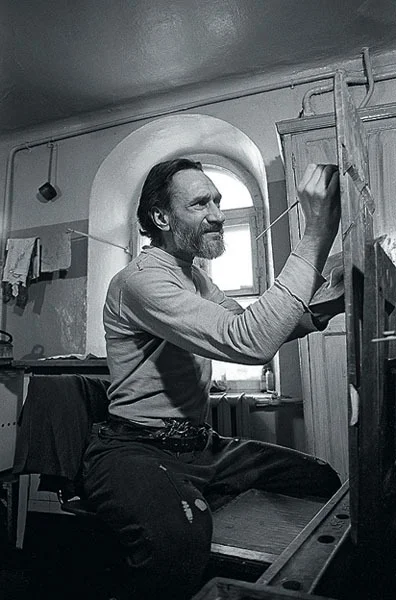
And of course, I knew dozens of avant-garde artists whom even Bakhchanyan respectfully considered crazy. He also argued that a blank canvas, without restraining the author within the framework of notes or grammar, provokes self-will and arbitrariness. The most talented of them was Vasily Sitnikov, who lived in New York, who, following the great Zverev, was also called the Russian Van Gogh. Sitnikov painted bloodthirsty demons, festive landscapes with churches and still lifes of piercing blue from memory. He even walked in the snow in a loincloth, which is why even in New York people looked at him.
Bohemia, of course, is found not only in Russian, but also in ordinary America. Starting with Henry Thoreau's John the Baptist, she got to my favorite beatniks. One of them, Gary Snyder, imitating the Tang Chinese poet Han Shan, wrote poems on rocks, choosing those that were more difficult to reach. I met others, contemporaries, at the university amateur performance “Moscow - Petushki” in an excellent English translation: Moscow Stations.
Homo ludens
I do not insist on the exclusive social and artistic value of the bohemian modus vivendi, I am only looking for an occupation, meaning and justification for us that is not related to labor itself, in view of it, labor, disappearance.
In fact, can collecting stamps, or anything else, be called a job?
How to explain the hysterical craving for self-education, devoid of practical meaning?
Who paid for samizdat and with what?
For whom did the nonconformists paint pictures?
Why do even those who do not hope to publish them write poetry?
Why do thousands of bards sing around the fire with a guitar?
Why are billions on Facebook while millions are on Wikipedia?
We don’t know the answers to these questions, because until now they have been sought on the sidelines of the main—working—life. But if the latter is overturned by progress, we will have to pay much more attention to what makes us Homo ludens on weekends and in retirement.
My friend, the sculptor Jeff Blumis, who built a statue garden in the Catskill Mountains, told me about his neighbor, a successful broker who left New York and began raising sheep.
- Why? - I was surprised.
“That’s the wrong question,” Jeff answered with the self-confidence of a bohemian artist who knows a lot about his way of life. “We have to ask why all his colleagues who dreamed of breaking out of Wall Street didn’t do this.”
All this does not mean that the unemployed fired by Musk will find solace in the global Stoker. In it one can find only one of the examples important for the future - a prototype of that selfless life-creativity, thanks to which bohemia found refuge from the aggressive priorities of society. Anyone and always.
New York, May 2026
* Included by the Russian authorities in the register of “foreign agents”
This material was published in the nineteenth issue of Novaya Gazeta. Magazine". You can buy it in the online store of our partners.