
Translated material
Goliath's mistake
How Moscow and Yerevan prepared for life after the elections

Photo: Olesya Kurpyaeva / Kommersant
Every last move in the endgame of the Armenian-Russian election battle turns out to be the penultimate one. As part of the announced choice between Russia and the West, Nikol Pashinyan is opening an unprecedented “AI factory” - a new generation data center, with an investment of $50 million. The deputy chairman of the board of the Russian association “Rusprodsoyuz” assures Russians that they will not be left without delicacies, and instead of Armenian apricots they will have Azerbaijani ones. At the finish line there is no time for frills, and a person who is obliged to think about commodity flows may not know that the essence of the plan with bans is to help the Armenian opposition, which in fact is also unlikely to be grateful to Rusprodsoyuz for such logistical news. And Rosselkhoznadzor (whose bans now include cherries, cherries, dried fruits, peppers and even fish) was answered by the European Union, which announced the allocation of 50 million euros to Yerevan to cover losses from Russian sanctions.
It is unlikely that Moscow will gain anything in this exchange of blows. At least he won't lose anything. In addition to the widespread confidence that the resources of its pressure on its neighbors are still unlimited.
Intimidation Summit
The decisive act of intimidation in Yerevan was to be the EAEU summit in Astana. The highlight of the program is the planned analysis of Armenia’s personal file. Judging by the collective statement of the EAEU leaders and the informal impressions of witnesses to the event, the compromise was not easy.
The Russian side clearly hoped that, in general concern for the fate of Armenia, which was about to make the wrong choice, Moscow’s partners in the EAEU would “demand” something from Pashinyan, or at least “call for it.” But they, speaking about the referendum, which will determine the future strategy of Armenia, only “shared their position” on its necessity. Moreover, it is not even clear whose – the Russian one, which was proposed, or the Armenian one, according to which a referendum is expected at the right time, regardless of what the EAEU thinks about it.
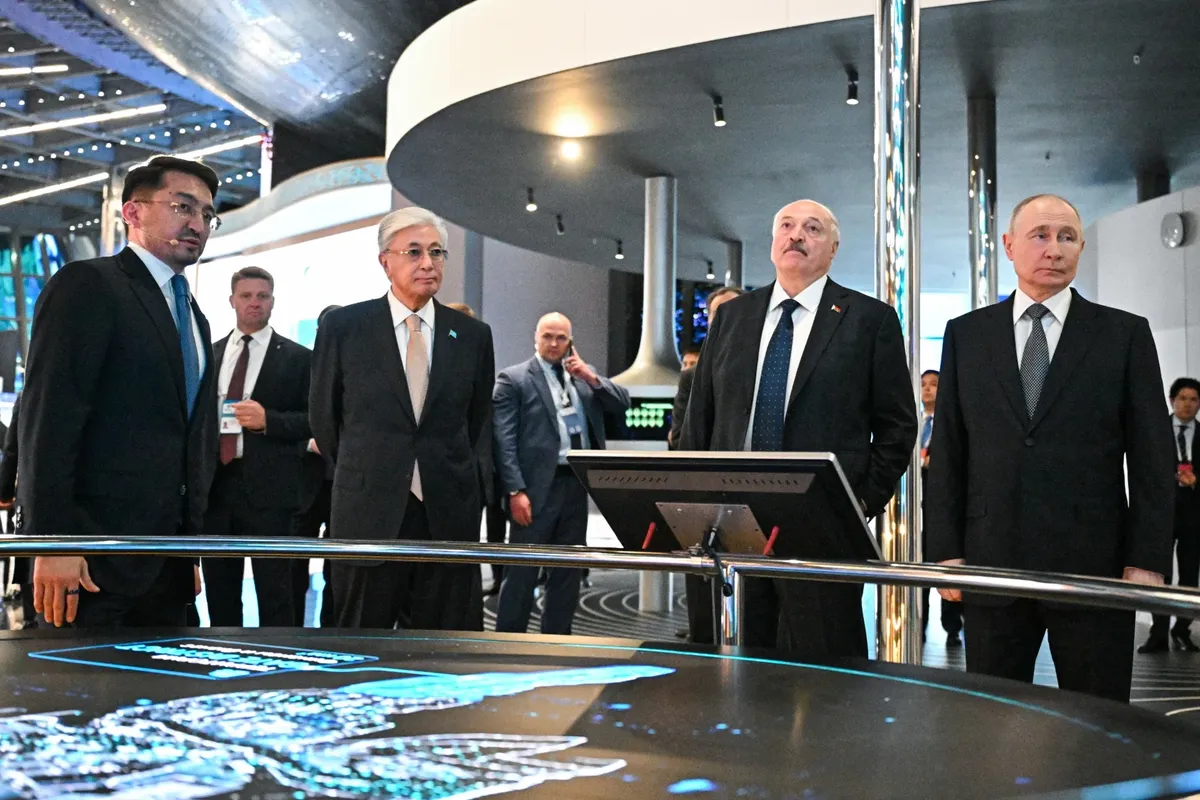
Moscow seemed to have solved one problem in Astana. She managed to catch Nikol Pashinyan in the contradiction of his approach - to demonstrate his readiness to become Europe while remaining in the same political-economic space with Russia. The Armenian leader was forced to admit: the issue of joining the EU is theoretical. But Russia also cannot develop this offensive: if the European integration of Armenia is just an election slyness, then what are we talking about? For Pashinyan himself, this step back is also not fatal, because no one in Armenia was particularly expecting a step forward.
The issue of foreign policy sympathies in the current Armenian electoral conflicts is not a strategic fork in the road, but a continuation of the theme of war and peace, the main electoral motive.
In general, the continuation of a direct attack on Yerevan was only a concomitant maneuver. It was much more important to demonstrate the existence of a common internal interest within the EAEU. This was supposed to be both a sign of its vitality and a way to convey to the world that the matter is not only about Moscow’s imperial ambitions, although it does not mind if someone enthusiastically considers that it is about them.
The partners did not object in principle. There was nothing specific, risky or uncomfortable in these formations. The EAEU, like the CIS, is ready for any collectivism, but only as long as it does not require solidarity with Moscow’s foreign policy initiatives. Everything that happens after February 2022 is taken out of the equation. Within the framework of such neutrality, no one discusses or condemns anything. But for this, partners receive the right not to enter this zone of risky continuations at all.
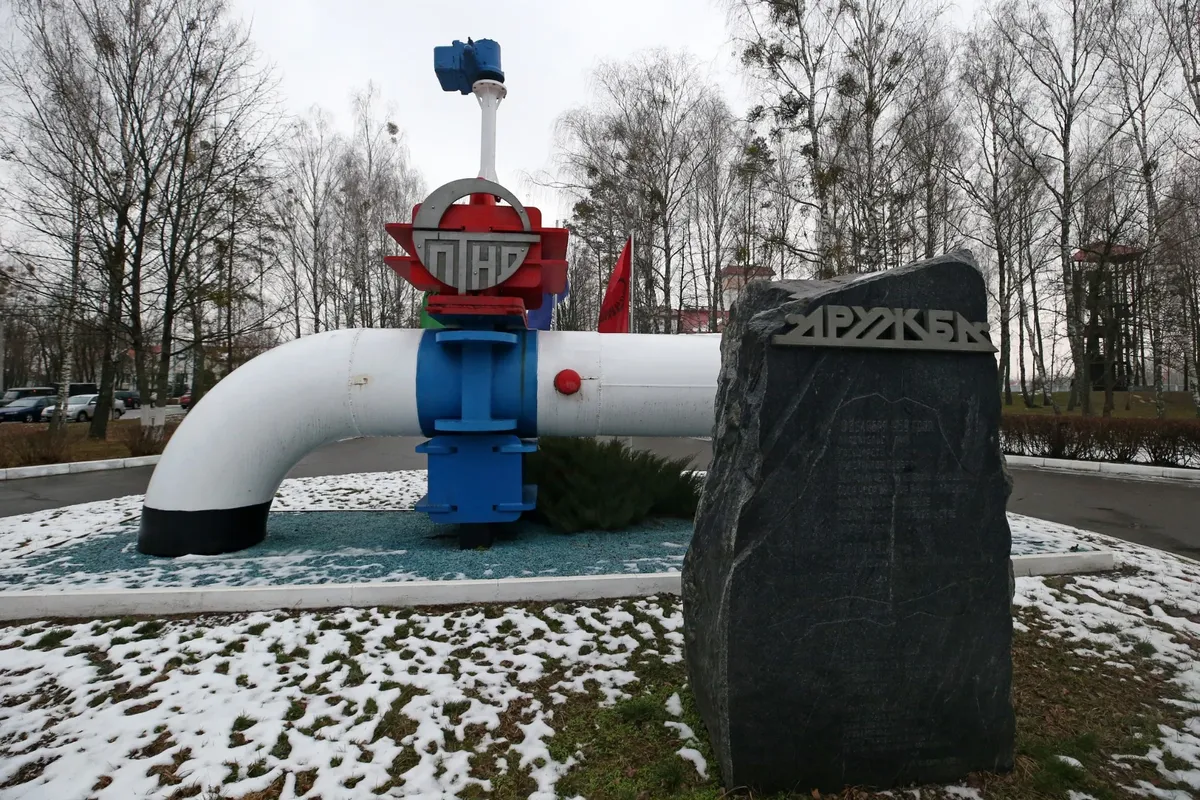
The balance is extremely precarious, the partners are vigilant - no matter how they are gradually dragged into anything, especially since there are grounds for fears even without Moscow’s attempts to tie everyone up with collective indignation. Astana, with traditional accuracy, avoided public discussion of the sensitive story of closing the northern branch of the Druzhba oil pipeline leading to Germany to its oil. Each of the versions (except for the actual technical difficulties cited by Russia) of this ban in one way or another makes Kazakhstan a participant in the confrontation between Russia and the West - and the hypothesis that in this way Moscow is trying to put pressure on Berlin, and the assumption that Moscow, by redistributing Kazakh oil flows to Novorossiysk and Ust-Luga, wants to protect them from regular Ukrainian attacks, provoking controversy between Astana and Kiev.
The reluctance to join in putting pressure on Yerevan is also determined by the fact that Moscow may have the same questions for each of its allies.
Washington, as part of its change of milestones, invites Central Asian leaders to a large friendly gathering, and the question is not that the East is unfolding slowly, but that it does not consider it necessary to check with Moscow on this.
Following the Americans, Europeans are showing interest in the region and are met with reciprocal understanding, albeit cautious and wait-and-see. Russia can hardly be reassured by the fact that to a large extent this interest is dictated not so much by Central Asia itself, but by the space adjacent to China, Turkey and Russia at the same time - on the contrary, this perspective worries it much more.
The less clarity tomorrow brings, the more persistently Lukashenko reminds Russia that his brotherhood with her is actually a symbiosis, the conditions of which are sometimes extremely burdensome for him. That the resources of pressure on Lukashenko are limited by his reluctance to go to the Ukrainian front. Having repeated the Kremlin’s theses about the development of events in Armenia following the Ukrainian model, Lukashenko gently recognized Armenia’s right to make independent decisions, and therefore even the topic of foreign policy choice in his execution acquired a much more tolerant modality than Moscow would like.
Yerevan is responsible for everyone
Meanwhile, the EAEU summit fit into the plot with the prohibitions of Rosselkhoznadzor not only chronologically, but also logically. The entire pre-election attack on Yerevan was ultimately determined not only by the local goal of influencing the outcome of the vote (Moscow probably didn’t really count on this), but also to confirm its leadership in the space where the sun once did not set.
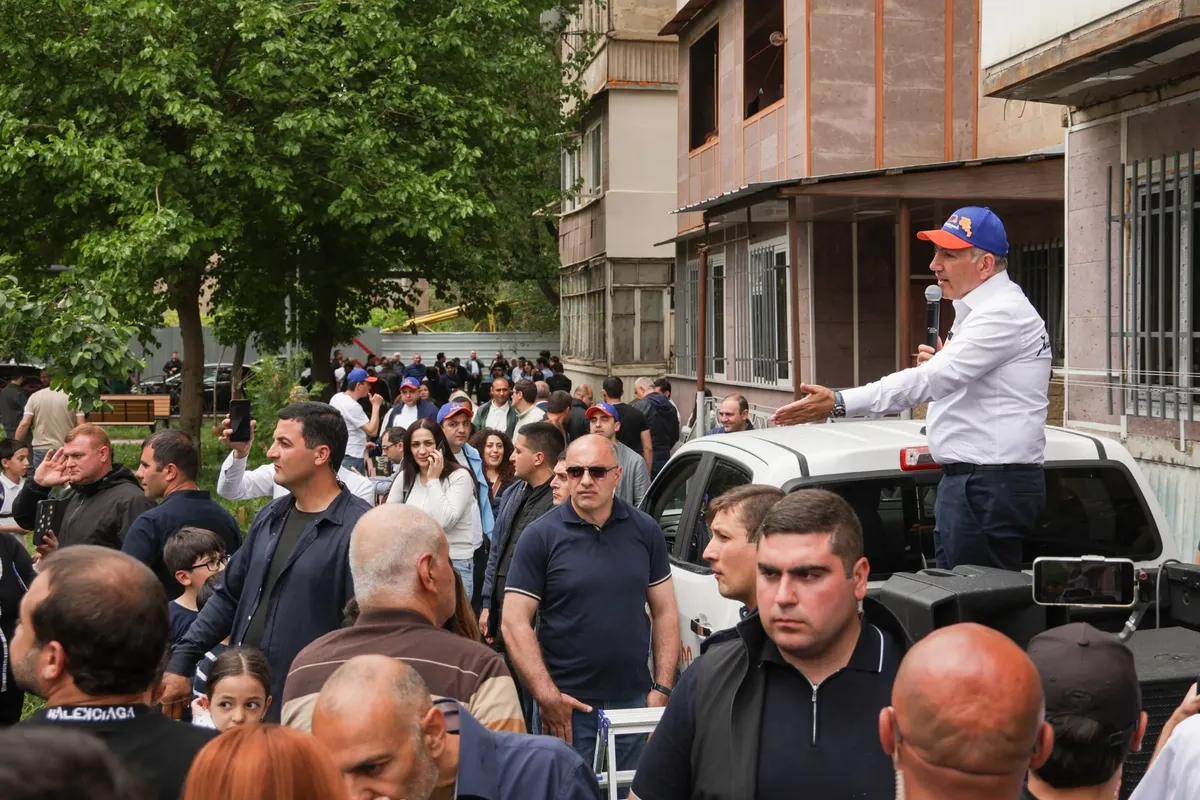
Once Armenia already had to answer for everyone, and strangely, the story about the translation from Ukrainian to Armenian is based on real events. With just one amendment: in September 2013, Armenia was one step ahead of Ukraine in its European aspirations. Unlike Yanukovych, the then President of Armenia Serzh Sargsyan was considered an excellent leader in the upcoming association with the EU, the agreement on which he was going to sign. Moscow ignored this fact for a long time (just as it does today, having joined the pre-election intrigue almost at the finish line), but when events in Ukraine took a decisive turn, it had to turn overnight from the EU to the Eurasian Economic Community and Sargsyan. Now Moscow is trying to repeat history. But the resources that were available thirteen years ago are no longer enough today, and therefore the last of them, which are quite outdated, have to be squeezed out, while others have not appeared.
Any such event must be a combination of service offered and strength demonstrated. The first one is bad.
There is no longer a model where Russia took responsibility for the security of Armenia, which it did not have to bear at all, since no one expected war, and Russia certainly did not intend to fight with Azerbaijan. Pashinyan destroyed this model, albeit at the cost of disaster, and now, from a political point of view, Moscow has nothing to offer Yerevan.
The real punishment of Armenia does not give Moscow any bonuses other than moral satisfaction, and this is not an economic category. In contrast to the same oil and gas tariffs, which Moscow is threatening to revise. Of course, Nikol Pashinyan’s assurances that Armenia can live off gas transit from other countries is akin to promises of a new “AI factory” with an investment of $4 billion (roughly 16 percent of the current Armenian GDP or half of the annual budget). But there is no need for Moscow to agree to a radical revision of the gas agreements. Moreover, the buyer is Gazprom’s subsidiary Gazprom Armenia. Given the small size of the market, such a revision is fraught with losses, albeit small, and Moscow is unlikely to undertake them for a long time and seriously for the sake of illusory political self-affirmation. Moreover, at a time when the effective management of infrastructure resources in Armenia is important for Russia from the point of view of possible large regional projects in the future.
No less fatal than gas prices were problems with private remittances from Russia, the scale of which is estimated at 12 percent of GDP. But here, too, Moscow’s capabilities are limited by the regulations of the same EAEU, and one can assume how nervously other partners will react to such an undertaking.
The total losses from the Rosselkhoznadzor sanctions are estimated at $200–300 million, so the help promised by Ursula von der Leyen looks more like a sign of moral support. Like the 10 thousand Armenian flowers that Latvia, as she promised, was waiting for, Armenia’s annual exports amount to approximately 8 million pieces. But in real terms, all these losses amount to a fraction of a percent of GDP. The calculation here is rather on emotional perception and, perhaps, on people employed in the relevant segments. This may also be sensitive since the Armenian agricultural market is mainly Russia. Yes, the agricultural contribution to the Armenian GDP does not exceed 8 percent, but the political effect is much higher. However, all this will hit not only the Armenian government. The leader of “Strong Armenia”, the flagship of the Armenian opposition, Narek Karapetyan, already has to answer questions about relations with Russia, which is behaving in a way that is not at all allied.
Delayed choice practice
Trying to demonstrate the effectiveness and relevance of the former resource, Moscow, on the contrary, revealed its inferiority and deficiency. Therefore, it forces Yerevan not just to choose between the EAEU and the EU, but to choose as quickly as possible. The political factor is not so much the choice itself as its synchronization with the political moment.
The attitude towards time becomes fundamental. Even if Armenia showed any real signs of its readiness to join the EU today, the process would take decades. About a decade is required for a real, and not declarative, as is the case today, reorientation of exports to other markets. Moscow proposes to make a choice today; its planning horizon is not decades, but at best years.
Both sides understand that Armenia does not face any choice today. Both sides are disingenuous, and this is not about real actions, but about designating a position, which for Moscow remains the most important and, perhaps, the last sign of maintaining leadership in the region. It is on this social contract of external loyalty that recent relations in both the CIS and the EAEU are built, and it is precisely this that Armenia has so ostentatiously violated.
The turn should be slow and imperceptible, like a clockwise movement. Example - Astana. She gives the Russian leader a pompous reception, as if in order not to embarrass him with jealous suspicions about what honors she will show, say, to her Chinese neighbor. Or Turkish or American. Kazakhstan refuses to help enforce the decision of the court of the Astana International Financial Center (created to increase the confidence of foreign investors by analogy with Dubai or Qatar, operating under English law) to recover $1.4 billion from Gazprom in favor of Naftogaz Ukraine. But even here, Astana found a way to avoid the conflict with both Kiev and Moscow, citing the fact that the dispute does not have sufficient connection with Kazakh jurisdiction. Minister of Justice Erlan Sarsenbaev said so: Kazakhstan will not become a transit platform for such penalties. And all this - after Moscow’s obvious demarche with the blocking of the Druzhba oil pipeline. It's all about timing. Reorientation towards Caspian transportation options is not a question of today, although Moscow’s constant reminders of its dependence on it are stimulating Astana to more intensively search for alternatives. And not only in oil.
Moscow needs everything today. Kazakhstan is playing for a long time, it has nowhere to rush. This is not the basis for a compromise, which may be explained to Yerevan. But after the elections.
And perhaps Armenia will agree. Moreover, she not only has no need to rush yet, but also has nowhere to go.