
Translated material
“This is a very old injury.”
Sudeten Germans held their first congress in the Czech Republic

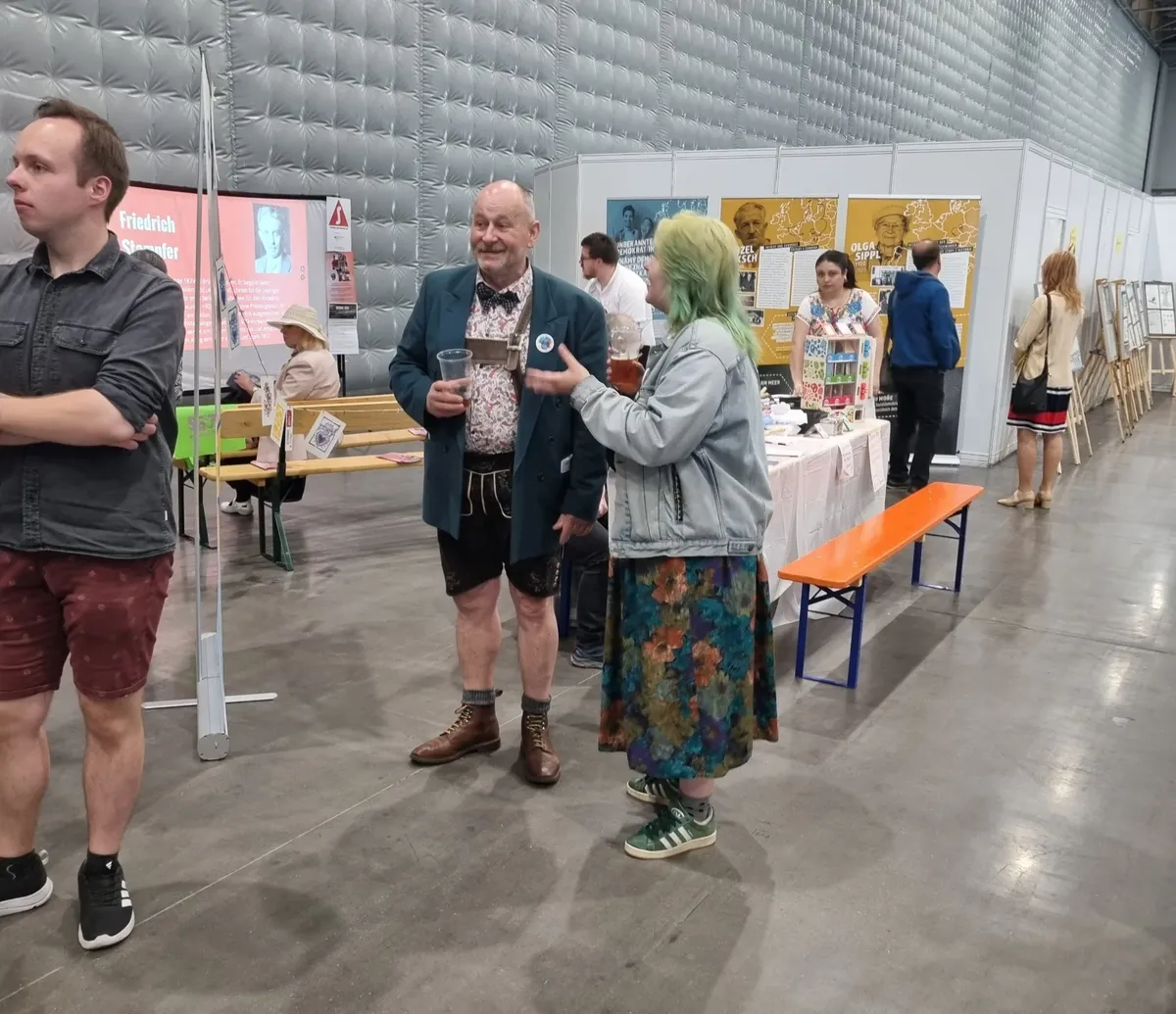
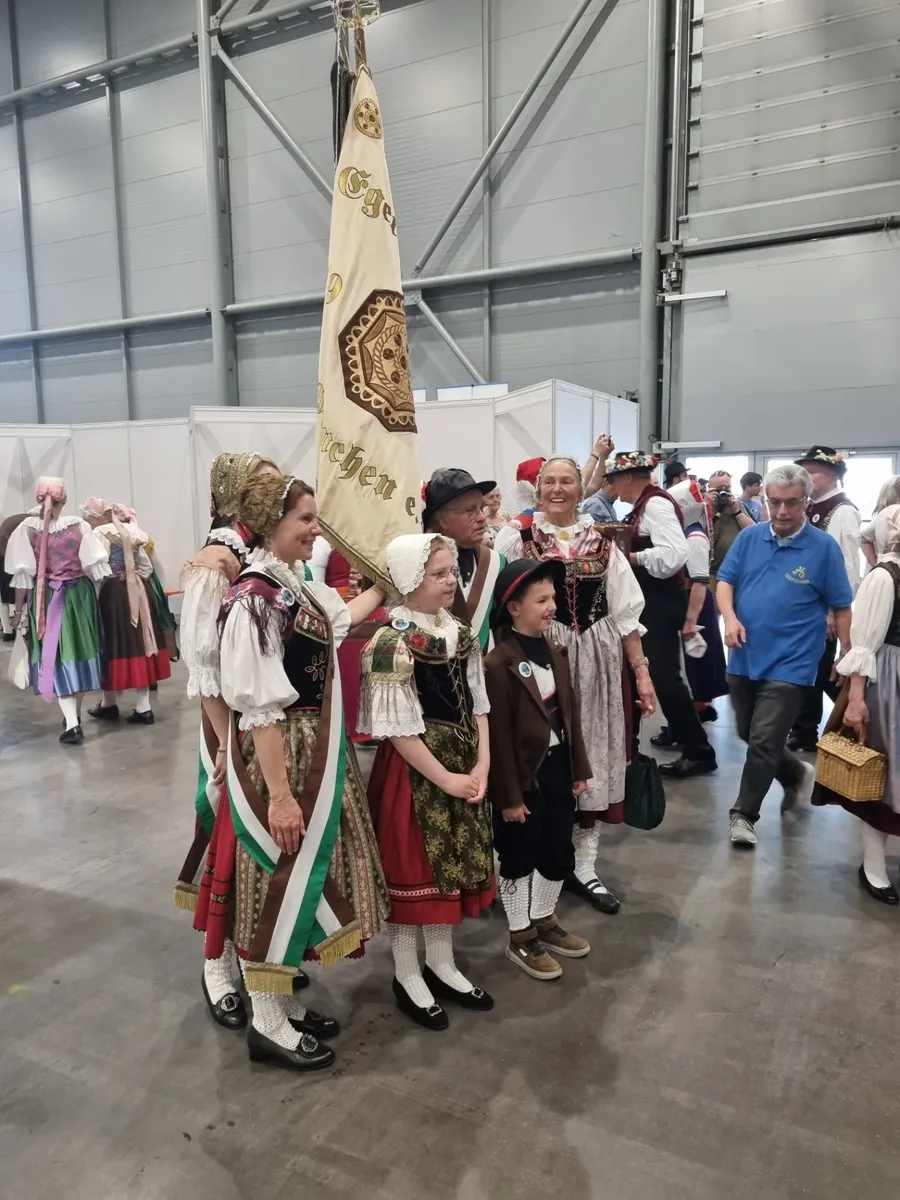
Congress of Sudeten Germans in the Czech Republic. Photo by the author
IT specialist Michael was born in a small town near Frankfurt in the early 80s of the last century. His father was born in a Bavarian village in 1949.
“In general,” I clarify, “is a German like a German?”
“In general, yes,” he laughs and also clarifies: “but Sudeten...
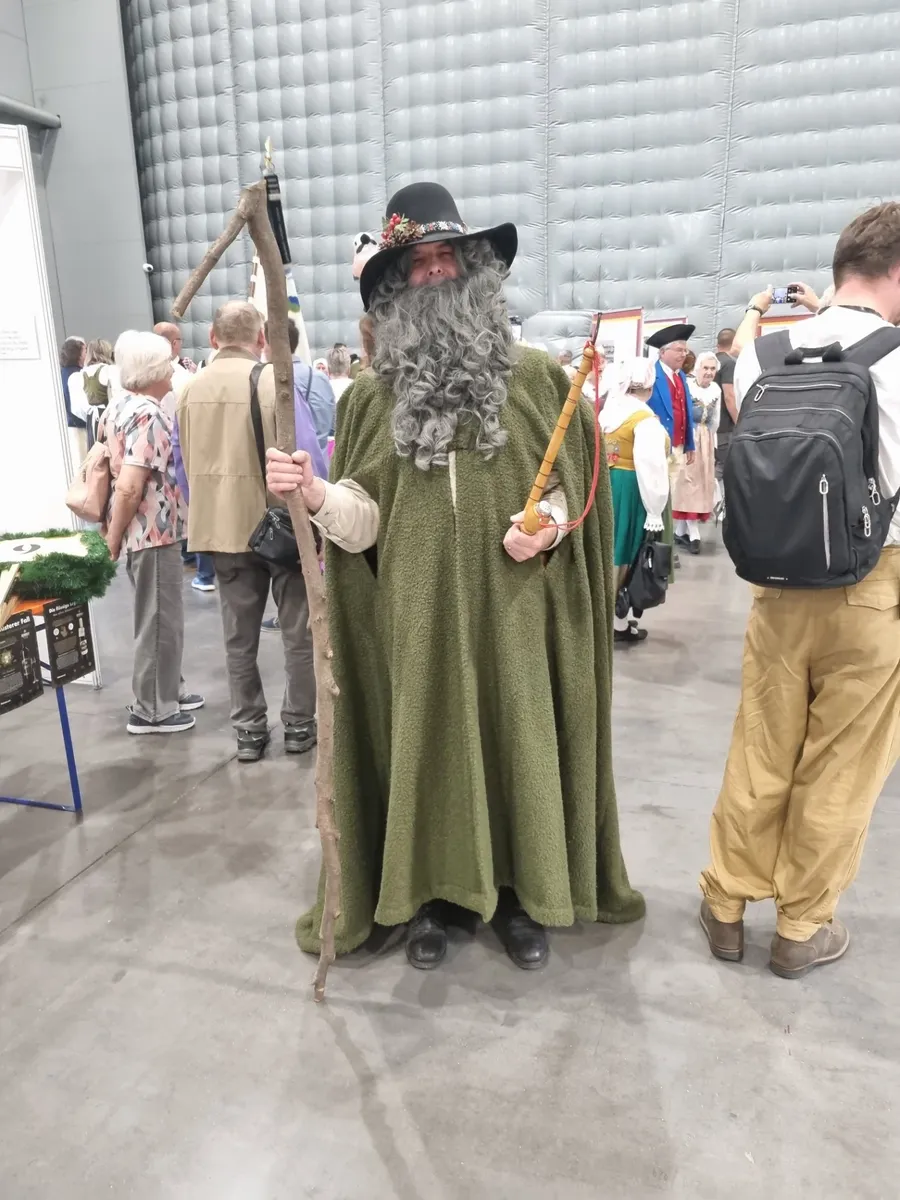
The nuance cannot be understood right away; it cannot be explained in a few words. What is this Brno to him, the endless Exhibition Center on the edge of the city, the only sign of life in which is hundreds of cars with German license plates and dozens of buses with signs “Bremen”, “Cologne”, “Hannover” and, of course, “Munich”. Michael followed my gaze with a smile as I followed the couple, dressed up more for a folk festival than for the congress of Sudeten Germans, to which they first gathered in the place from which their ancestors were expelled.
“They also sell rum in the hall,” he recommended. “According to local Sudeten recipes, they now make it in Bavaria.” Have you seen it?
Saw. And rum, and postcards with pre-war views, and pies that were once baked by German grandmothers in Moravia and Bohemia, and for the last 80 years their recipes have been baked in Bremen, Cologne and, of course, Munich.
— I know the house where my grandfather lived from photographs. But I don't know if he's intact. I don’t know the address, but I know the city,” he checked his smartphone. - Leutmeritz. Is it far from here?
In Czech Litoměřice. The other end of the country. By car - three to four hours. He laughs. “So it’s not fate...”
"Death March". There and back.
The current congress is the 76th. The first one took place already in the fifth year after the expulsion, and then every year thereafter. That is, the fourth generation is already sewing these costumes, teaching dances and brewing rum. And the fifth one rushes between the benches of the forum, not yet quite understanding why he was brought here.
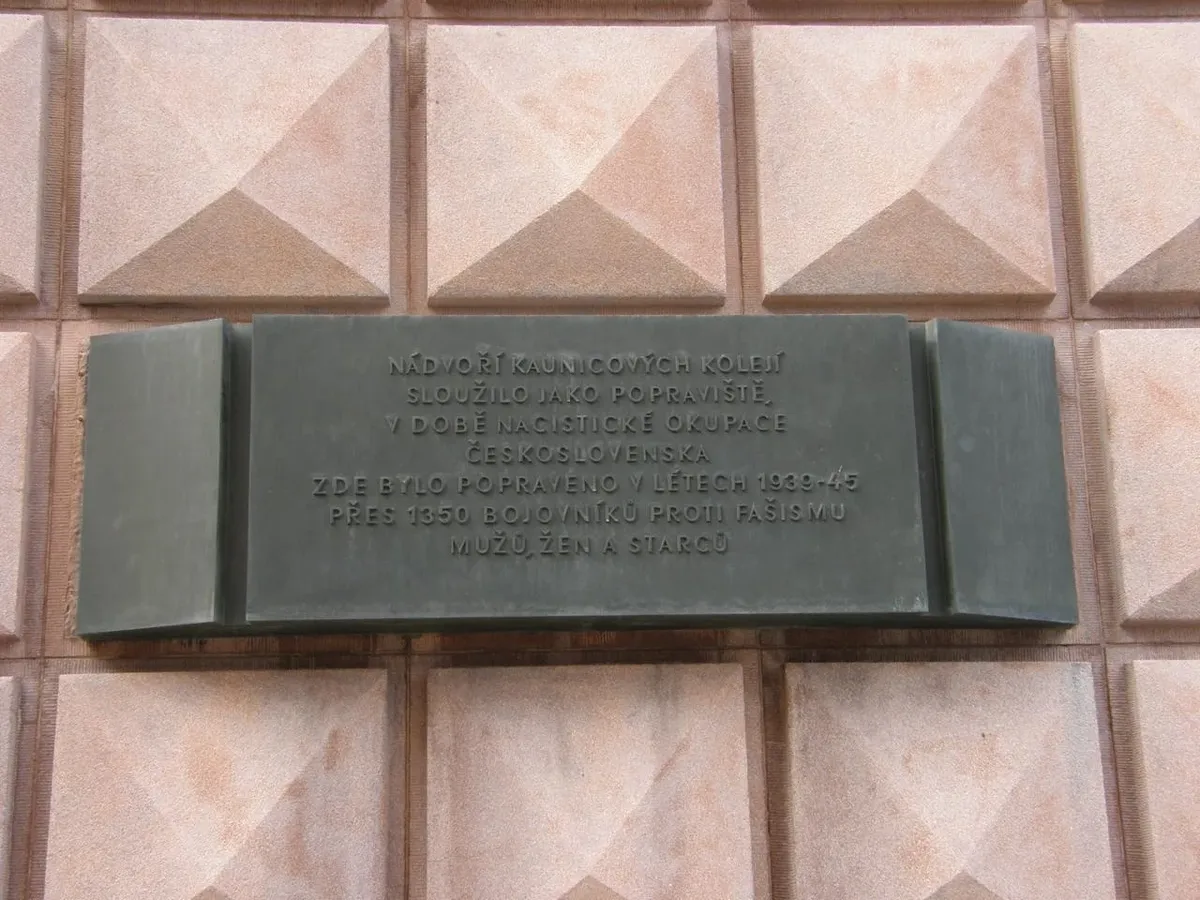
And now - for the first time in the Czech Republic. In Brno, which, strictly speaking, is not even the Sudetenland, which goes around the Czech Republic in the west, from north to south. The mountains gave the name to the region inhabited by Germans since ancient times, and then all other Germans who lived along the entire perimeter of the Czech border began to be called Sudeten. From the Sudetenland after the Munich Agreements, the chronology of Hitler's invasions begins in 1938, and without any sociology it is known how the local Germans greeted them, how the Nazi Sudeten German Party called Hitler as a liberator, and today, far from the tourist paths next to one of the student dormitories in Brno, there is a memorial to those executed in the Kounice barracks, a Gestapo prison, through which tens of thousands of people passed. And it was in Brno, in the victorious spring of 1945, that the most furious story of revenge took place.
The expulsion of Germans from the Czech Republic, approved by the victorious powers at Potsdam, began even before Potsdam and the adoption of the state program initiated by then President Benes. “Citizens of Czechoslovakia of German or Hungarian nationality, who (previously) received German or Hungarian citizenship by order of the occupation authorities, on the day of receiving such citizenship lost the right to citizenship of Czechoslovakia” - a decree with these words concerning almost all Germans in the Czech Republic, he signed in August 1945.
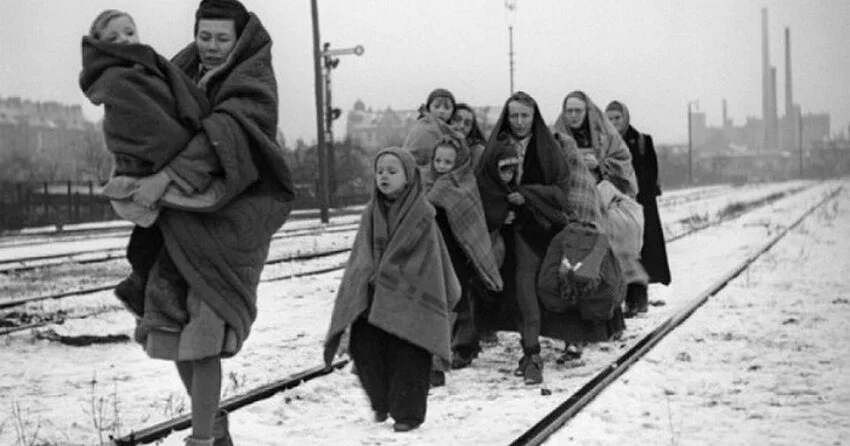
But already on the night of May 30-31, 1945, what would later be called the “Death March” began in Brno, and even the Czechs do not dispute this name. “It was unique in its scale, tragedy and catastrophic consequences. Today we would call it a humanitarian catastrophe,” explained David Kovarzyk, an employee of the Institute of Contemporary History of the Academy of Sciences, in an interview with Radio Prague International. More than twenty thousand people, about half of all Germans living in Brno, were driven on foot in a column towards the Austrian border, more than 50 kilometers.
Along the entire journey, people, mostly women, children and old people, died not only from fatigue and thirst, but also from the impunity of the guards. Historians still debate whether this was a directive from Prague or a local initiative, perhaps dictated by the desire to avoid even more massive lynching that threatened local residents. Halfway, in the town of Pohorelice, the column made a stop for filtration, thanks to which about five thousand people (mostly those who were in mixed marriages) managed to return to Brno. But it was Pogorzelica that was destined to become a symbol of tragedy. From the monument erected at the mass grave at the end of May 2026, another column, consisting of Czechs and Germans, moved back to Brno. This is, in fact, how the congress began.
Not our own among our own
An elderly woman, helped to move by her young grandson, smiling at her own authorial vanity, shows me a photo of a lady's hat.
- A rarity... - I found a respectful euphemism for the assumption that the hat may not even withstand a photo flash
“Yes, I wouldn’t have brought it,” the old lady confirmed, “but I made the same one!” Herself! — She majestically turned her head so that I could appreciate her from all angles, and then, as if unable to bear it, she laughed.
She is luckier than Michael - she knows where her house is in Brno, she has already seen it.
— Would you like to return? — I asked, just in case, like people ask about health. She shrugged and adjusted her hat again.
- For what?
...Sometimes statistics are as much about bad jokes as history. At the time of the expulsion, the Germans in the Czech Republic numbered just over three million, about 30 percent of the population. Few have survived to this day, but together with their descendants there are again about three million of them. There were several thousand of them at the convention, and everyone I asked why he was here answered in much the same way as the old woman answered.
“Mom really wanted to see this house,” she smiled, as if she was thinking about it herself. - Probably because of her...
And Michael came because of his grandfather. “He spoke Czech...” for some reason he remembered. A few thousand out of three million is, of course, a drop in the ocean. But Barbora Spalova, a social anthropologist, believes that among the Sudeten Germans the sense of community is indeed passed on genetically.
— Firstly, they did not leave so far, although the authorities tried not to leave them in East Germany, they were resettled to the west, away from the border, their native places and the temptation to return. But, in addition, they may have retained the memory of how they were unkindly received in Germany itself. Therefore, they maintain special bonds with each other.
Michael confirms: “Ask a German what the Sudetenland is, he won’t even say where it is...” The exception is Bavaria, where the Sudeten community is the largest, they say, traditionally voting for the CDU. Perhaps that is why the Prime Minister of Bavaria was received warmest of all at the congress, and he did not remain in debt - his speech was the brightest and longest.
German question
Barbora Spalova lives in the small town of Krompach, almost on the border with Germany. Even today it is not crowded, but then, after the war, no one was eager to explore the empty German spaces. They lured us, at least temporarily, with summer cottage plots. And so it happened: life in the town glowed in the summer, dying out in the winter. The German Sudetes are to this day often not the most prosperous places in the Czech Republic, and some areas are still not populated even by 10 percent of their pre-war numbers.
— Surely they weren’t waiting for you there? I asked the backpack-wearing, hiking-booted teenagers on an expedition in search of the life their great-grandfathers lived here. They showed a movie about their adventures at the convention and, before answering, looked at each other cheerfully, as befits people who really have something to remember.
— At first, yes, people were wary. No malice, they just didn’t want to talk. And then it turned out that they were interested too. It was no longer we who questioned them, but they who asked us...
...In front of the entrance to the exhibition center they protested by unfurling Czech flags and Hanba posters! (“Shame!”), several dozen people. The expectations of the coldness with which I should have been greeted by the protesters at the entrance to the congress were aggravated by the self-criticism of my Czech, but I was wrong.
- Why are we here? — the girl with blue hair and an earring in her nose asked affably. —Where should we be if the Germans have returned? Have you seen the map of their settlement? We will be surrounded again...
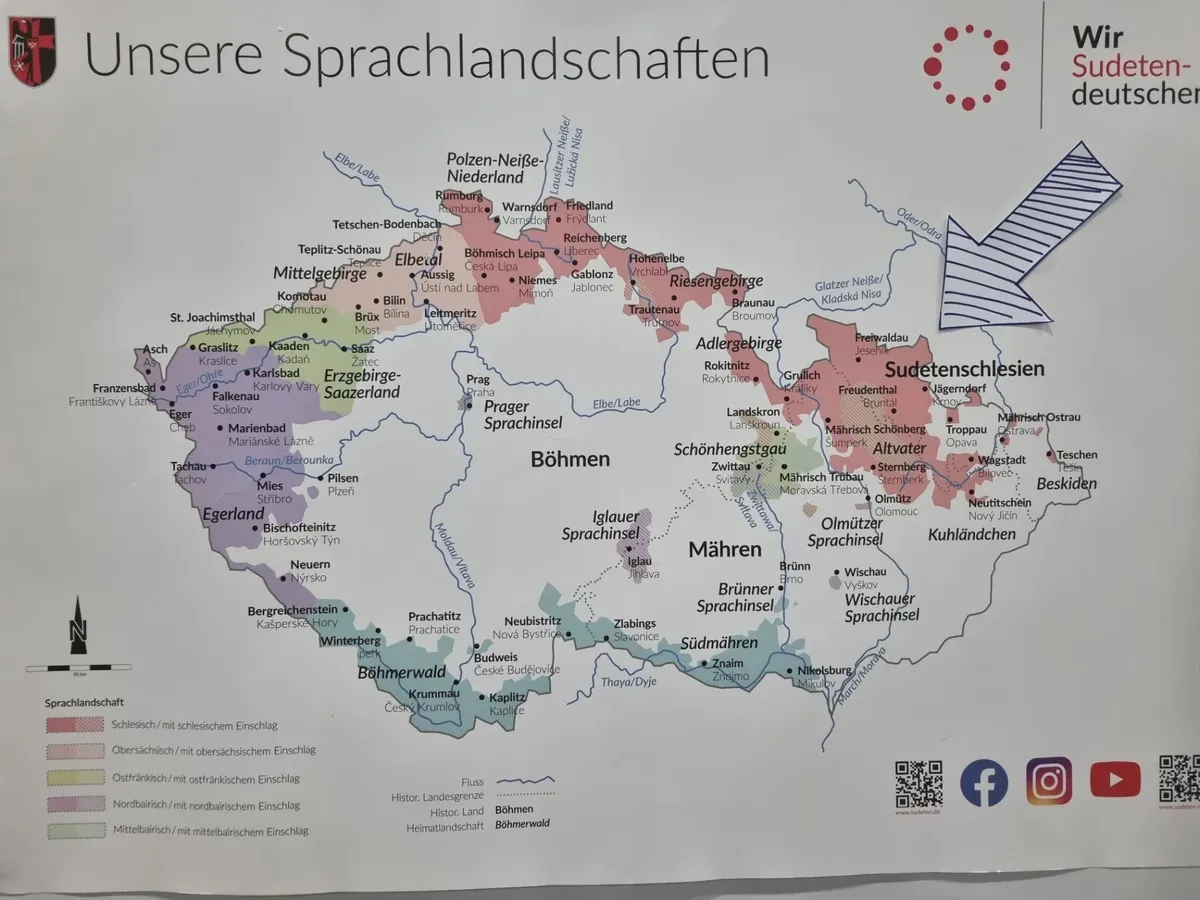
“The Germans are back” is a formula that is as comprehensive as it is salutary in its vagueness. Sociologists have regularly, since the 90s, when it became possible to talk about the Sudetenland, have been asking the same question: “Were the Germans treated fairly?” The number of people confident in this has fallen over thirty years from 70 percent to 40, and in the border areas to 30. A significant part of student youth, liberals, leftists and, by the way, the church are in favor of reconciliation. The year 2015 was a breakthrough year for reconciliation: the Declaration of Reconciliation was adopted in Brno, and the Sudeten Germans officially announced what had long been a given in a spontaneous manner - the renunciation of any property or legal claims. But despite all this, sociologists point out that even considering the expulsion unjust, many make a reservation: the Germans themselves are to blame. Or: yes, it’s unfair - but this is not a reason to revise the history that has already taken shape.
“The Germans are a very old Czech trauma, it cannot be eradicated in 10 years,”
- reminds Barbora Spalova. Historians, recognizing that the Czechs and Germans have never lived in true harmony, trace the beginning of the systemic confrontation to the revolution in Austria-Hungary in 1848, which stirred up Czech national inspiration, albeit in a liberation context. The linguistic division was not fatal before, since everyone spoke German; now it has become national, and then political, with all the consequences that arise in such stories. The memory of those years in the Czech tradition was transformed into a total idea of its inescapable dependence, as if a German Kafkaesque Castle towered over the Czech village. As often happens in stories of doomed neighbourhoods, neither human relations nor common children can save if suddenly the echo of some cataclysm comes from somewhere: some empire will collapse or a madman will come to power somewhere in the neighborhood, or maybe, without any globality, someone will quarrel with someone else in the market.
“Why are they coming back? Ask them,” the girl with blue hair convinces me.
- I asked. They say they are not coming back...
The girl looked at me as if only now she connected the gaping flaws in my Czech with my naivety, quite forgivable, and smiled sympathetically. The Czech protest, as well as the political tradition in general, is alien to any aggression, and therefore, by the way, many are ready to explain even the outbreak of post-war vengeful rage, but very few are ready to justify it.
Opponents of the congress seemed to have miscalculated their strength, spending most of it on artillery preparation and announcements of a decisive protest. The largest protest took place in Brno almost a month before it started - 500 people. A couple of weeks earlier, 200 people came to the city council. And this was rather a tribute to the current political moment and tradition, within the framework of which a common language with enemies should be sought not at congresses in Brno, but at far-right forums somewhere in Budapest. The soul of the protest were Czech nationalists from the SPD (Freedom and Direct Democracy) party of Tomio Okamura. They entered the ruling coalition in the Czech Republic for the first time, albeit as a junior partner, but received the chair of the Speaker of the Chamber of Deputies. Although not so harsh, Prime Minister Andrei Babish, the leader of the ruling coalition, also opposed the idea of the congress. And even President Peter Pavel, who actively opposes the government and parliament, was cautious in his assessments. While he supported the reconciliation process in principle and encouraged open debate on any historical topic, he called for caution in interpretations of the past, just in case.
In short, the congress was supposed to be another political clash, but the fact that it did not happen may have become a much more significant event. History absorbs everything, including tragedy, injustice, and impunity for those who committed it - from any side.
The question is how to live with this further, accepting that other issues are either political speculation or risky reflection. Those expelled do not return - this is a cruel and unjust law that cannot be proven, but which has never been refuted. But you can brew rum, come to the convention with it and bring your children. Or it’s impossible, just as it will probably be impossible for a long time in Baku and Sukhumi, and that’s the only difference. In the evening after the convention, people with Czech flags and Hanba posters! (“Shame!”) they blithely went home or flocked to the train at the Brno station. I didn’t see my blue-haired friend among them. Probably these were other brigades.