
Translated material
Gone wild
From the Amur tiger to the harp seal: who is being hunted in Russia and why?

Photo: Kirill Kukhmar / TASS
There are regular calls to open fire on animals in Russia. They use bullets to save fish from voracious birds, village residents from uninvited predators, and city streets from stray dogs abandoned by people themselves. It comes to unexpected decisions: scaring away cormorants with drones, cooking harp seal sausage and shooting Red Book species.
The Russian hunting law allows for such measures as regulating the number of animals. They resort to it to avoid the transmission of diseases, maintain the population of a species, or protect people and nature. For example, wild boars are shot to stop African swine fever. Or deer multiplied in the reserve and began to trample down their own food supply. Number regulation is being addressed not only in our country: in Latvia, for example, in 2024 it was allowed to shoot the Red Book gray Baltic seal, which scared away the fish and prevented fishermen from getting their catch. In such cases, population regulation must balance the interests of different groups. But in practice, it is not always effective, and the real interests of animal hunting may be hidden. Novaya has collected the most high-profile cases in recent years and tells whose interests may be behind them.

Baikal seal
“If we don’t do this, nature itself will do it: we had sad cases when there was an epidemic and the seal died in large numbers. <...> Indeed, there are a lot of seals on Baikal, indeed [its numbers] have exceeded all reasonable limits, and we will regulate them,” - Minister of Natural Resources of Buryatia in 2017, Yuri Safyanov.

* Whom did I bother?
Hunting the Baikal seal, an endemic species and a key part of the Lake Baikal ecosystem, has been prohibited by law since 2007 (an exception is made only for indigenous peoples). But over the last decade, officials have periodically raised the question of lifting the ban. The reason is that the animal has allegedly multiplied so much that it no longer has enough food supply, so the seal “eats” the Baikal omul. Another argument is that due to the high population density among seals, infections spread faster and animals die en masse. According to the logic of officials, the number of the Baikal endemic, which is already dying, should be further adjusted by the hand of hunters.
- Who called for shooting
The federal Ministry of Agriculture wanted to open the seal fishery in 2018, and it was supported by the authorities of Buryatia and the Irkutsk region. Then the Baikal branch of the All-Russian Institute of Fisheries (VNIRO) proposed regulating the number of animals, citing the mass death of mammals presumably from infection in October 2017. Submitting to the regulator of the country's fishing industry - Rosrybolovstvo; VNIRO, according to former managers of its branches , serves the interests of fishing industry. Under public pressure, the Ministry of Agriculture eventually abandoned the idea of shooting seals, but in the same year the conversation was resumed by Rosrybolovstvo. And in 2023, the government instructed scientists and officials to assess the “negative consequences” of the increase in seal numbers and think about how to regulate them. Today, fishing for the Baikal seal is still prohibited.
- What the experts say
The Baikal seal consumes no more than 10% of the omul caught by humans, and lifting the ban on its catch is beneficial only to poachers. Cases of infections among animals are also not a reason to start shooting them, since nature will regulate itself. According to the general director of the Lake Baikal Foundation, Anastasia Tsvetkova, attempts to encroach on the seal are often associated with business interests, and the species itself needs protection, not shooting.
- What will it lead to?
If hunting is opened, the population of the Baikal endemic could be seriously damaged. Scientists are confident that proposals to open seal hunting are one of the main threats to the species, along with poaching and global climate change.
Cormorant
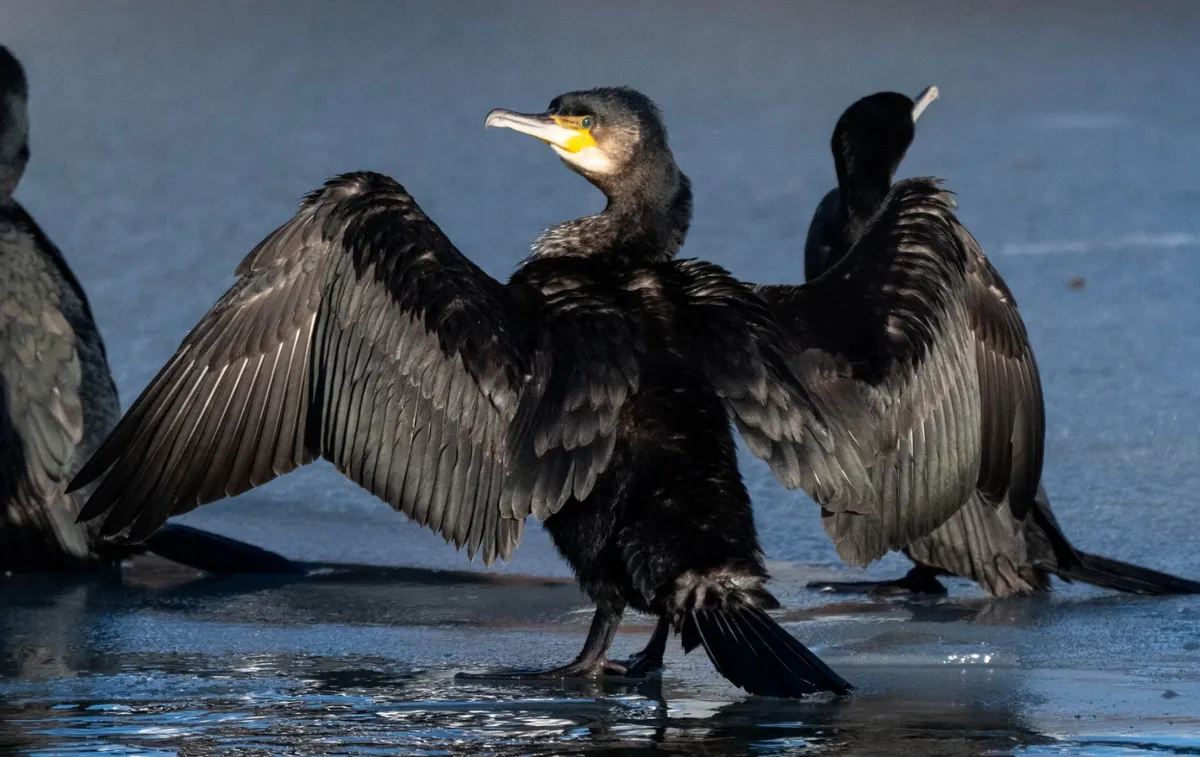
“It may sound harsh on screen, but this is a situation where tough measures need to be taken. <…> I don’t know, even if we fly drones over nests, we should pay hunters an additional fee for each head. By any means, but the situation has already reached the stage when drastic measures are needed,” - Head of Buryatia Alexey Tsydenov, November 2025.

* Whom did I interfere with?
Previously included in the Red Book of Buryatia and the Irkutsk region, the great cormorant has recovered in numbers in recent decades and has begun to annoy fishermen from Tatarstan to Yakutia - they accuse the cormorant of destroying fish. Officials counted the damage from the voracious bird in 21 regions of Russia: last year it amounted to 2 billion rubles just because of the eaten Baikal omul, and in 2021 the Baikal branch of VNIRO lost about 450 million omul caviar. The bird also competes with humans for grayling, sturgeon and carp.
- Who called for shooting
The fight against the cormorant has affected many regions of the country, where local residents and officials advocated hunting the annoying bird. In Buryatia, fishermen proposed to officials to start shooting and destroying cormorant nests, and they supported the idea. People's Khural deputy Vadim Bredniy called it nonsense that the state is spending millions of rubles to restore the omul population on Lake Baikal, which ultimately goes to the cormorant for lunch. There are also supporters of hunting at the federal level: State Duma deputy Nikolai Buduev complained about damage from birds to Deputy Prime Minister Victoria Abramchenko in 2023, calling the cormorant’s “eating” of Baikal’s commercial fish one of the lake’s most pressing problems.
- Where they shoot
Already in 16 regions of Russia, including the Krasnoyarsk Territory, Tyva, Buryatia and the Irkutsk Region. In the latter, the bird corpses are proposed to be made into animal feed.
- What the experts say
Ornithologists and social activists doubt that only one species can cause significant damage to fish stocks (the cormorant actually hardly eats the Baikal omul), but poachers do. Scientists note that, at least on Baikal, the cormorant does not disturb the natural balance: here the species has formed its own niche in the ecosystem and food supply.
- What will it lead to?
The bird is unlikely to face complete destruction; moreover, shooting may be ineffective due to insufficient knowledge of the areas where cormorant colonies are concentrated. However, the normalization of mass extermination of birds leads to degradation of the ecological culture of the population and the potential emergence of new candidates for shooting.
Amur tiger
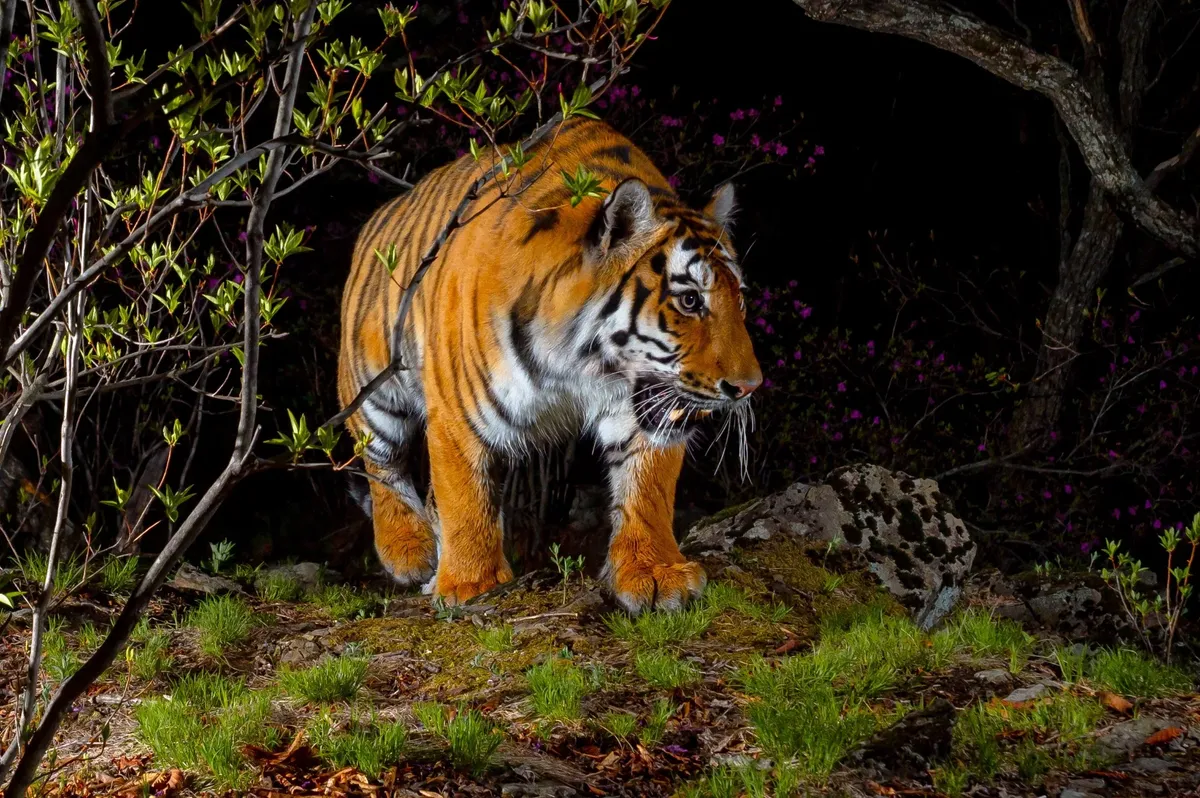
* Whom did I interfere with?
The Amur tiger is listed in the Russian and international Red Books as an endangered species. However, for residents of the Far East, the predator is not such a rare visitor; it keeps entire settlements in fear. In the Primorsky and Khabarovsk Territories, tigers attack people, dogs and livestock and provoke road accidents. According to the Amur Tiger Center, since 2010, the predator has attacked humans at least 22 times, resulting in injury or death. Taking into account attacks on dogs and livestock and other incidents, in the regions of the Far East in 2024 there were only 485 conflicts between tigers and humans. At the same time, most of the animal attacks, as social activists clarify, are provoked by the person himself. This is a consequence of illegal hunting of tigers: a poacher shot a predator, and he, having lost the opportunity to hunt, went to people for easier prey.
- Who called for shooting
Today, shooting a Red Book predator is a criminal offense, with the exception of exceptional cases of self-defense, which must be proven to the investigation. However, due to the increasing frequency of clashes, Primorye deputy Leonid Vasyukevich proposed in 2025 that any entry of a predator into populated areas should be considered a threat to people. This would give the authorities a free hand to catch and shoot a potentially dangerous animal. But Primorye parliamentarians rejected Vasyukevich’s proposal, arguing that poaching would flourish to the delight of trophy hunting enthusiasts.
- Where they shoot
According to the general director of the Amur Tiger Center, Sergei Aramilev, in case of conflicts with people, the predator is caught and then returned to its habitat in half of the cases, the rest are left in captivity. However, in some cases you have to take out a gun: for example, last year an inspector of the Udege Legend National Park in Primorye was forced to shoot a tiger when it attacked a person during capture.
- What the experts say
The causes of tiger problems in the Far East are varied. Deforestation and poaching of wapiti and roe deer, coupled with weak control on the part of the state, deprive the rare predator of its food supply, and the tiger goes after livestock and dogs. The tiger had even less food after an outbreak of African swine fever, which decimated the wild boar population. However, according to social activists, the shooting of the Amur tiger is not promoted by residents of Far Eastern villages concerned about the presence of a predator, but by the hunting lobby. Getting a trophy tiger skin is “the dream of a narrow group of very wealthy people,” Aramilev believes .
- What will it lead to?
Allowing the shooting of Amur tigers, of which, according to official figures, there are about 750 individuals left, could devalue efforts to preserve the species and destroy the population within a couple of years. But nothing has changed yet: you can’t shoot at a rare predator. Instead of shooting, officials need to do more systematic work, in particular, restoring the animal’s food supply, experts say .
All Red Book species in general

* Who was disturbed
Since February, social activists have been fighting a draft government resolution that would allow hunting of Red Book animals “for the purpose of monitoring the state of populations,” including shooting or trapping. Unsuccessfully - the document was accepted on June 1. It became a logical continuation of the amendments adopted back in 2021, which formally allowed the harvesting of Red Book species. This year's resolution finalized this procedure - now it will be possible to shoot rare animals on the grounds provided by law. The Ministry of Natural Resources insists that endangered species are not in danger: hunting permits will be given only in exceptional cases, when there is a threat to human life or it is necessary to prevent mass diseases among animals. However, the department is silent about another permitted reason for hunting rare animals - “monitoring the state of the population”, which has previously been used by trophy hunters.
- Who called for a hunt?
In 2018, State Duma deputy and member of the Mountain Hunters Club Vladislav Reznik proposed to the Ministry of Natural Resources to allow trophy hunting of Red Book animals, and use the proceeds for their protection. The department noted that this approach is indeed used in some countries, but not yet in Russia. There are also supporters of hunting in the ministry itself: last year the corresponding department there was headed by Tatyana Aramileva, who is also the former president of the Russian Hunting and Fishing Union, the largest organization of hunters in the country. A month later, it was Aramileva’s department that was given the authority to maintain the Red Book.
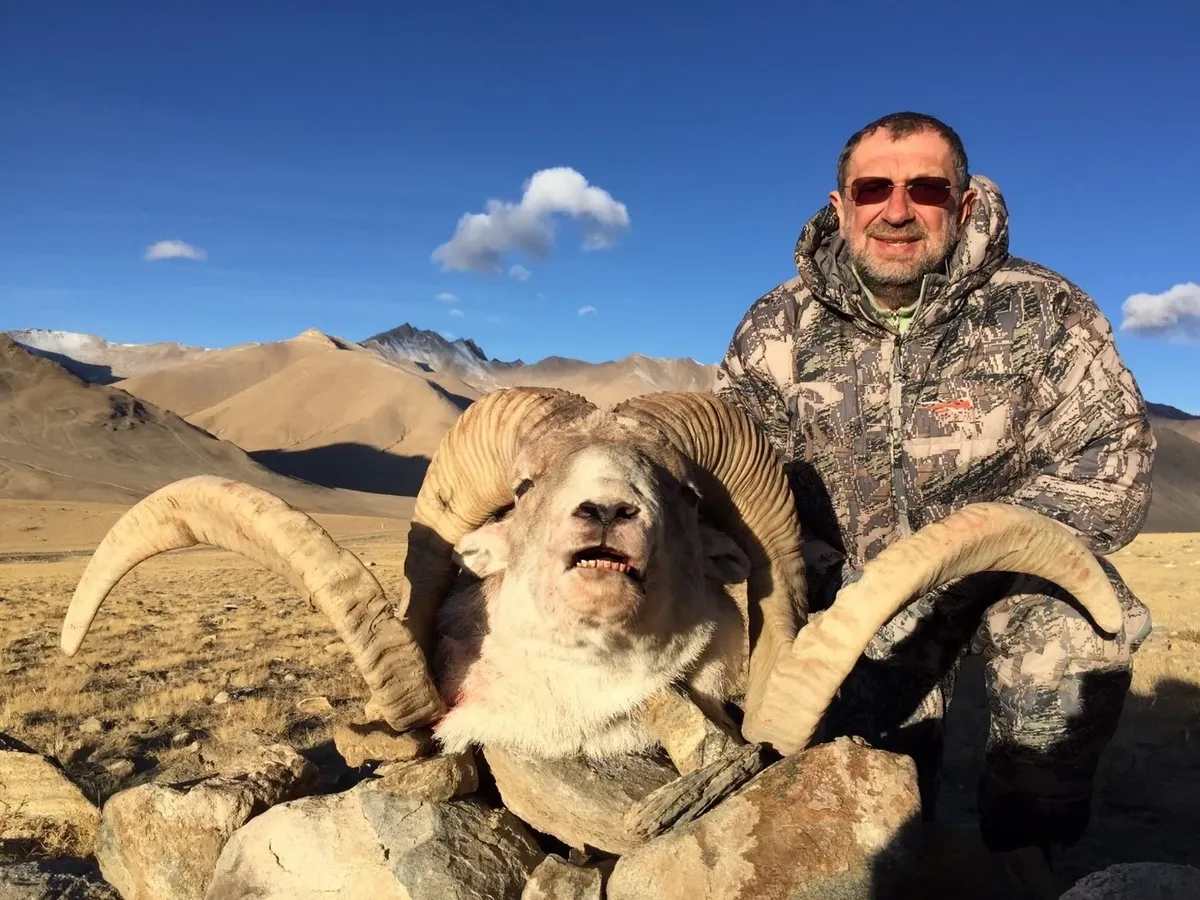
* What experts say
The document will be able to open a long-awaited loophole for fans of trophy hunting. Previously, the Putorana bighorn sheep had already come under the radar of hunters, and also under the guise of population monitoring. The adoption of new amendments could lead to mass commercial hunting of rare animals.
- What will it lead to?
To a reduction in the number of those rare species that will be of interest to hunters as trophies - and these are potentially goats, rams, polar bears, tigers, leopards. The very idea of the Red Book, designed to set strict boundaries for the protection of endangered animals, will also be discredited.
Stray animals
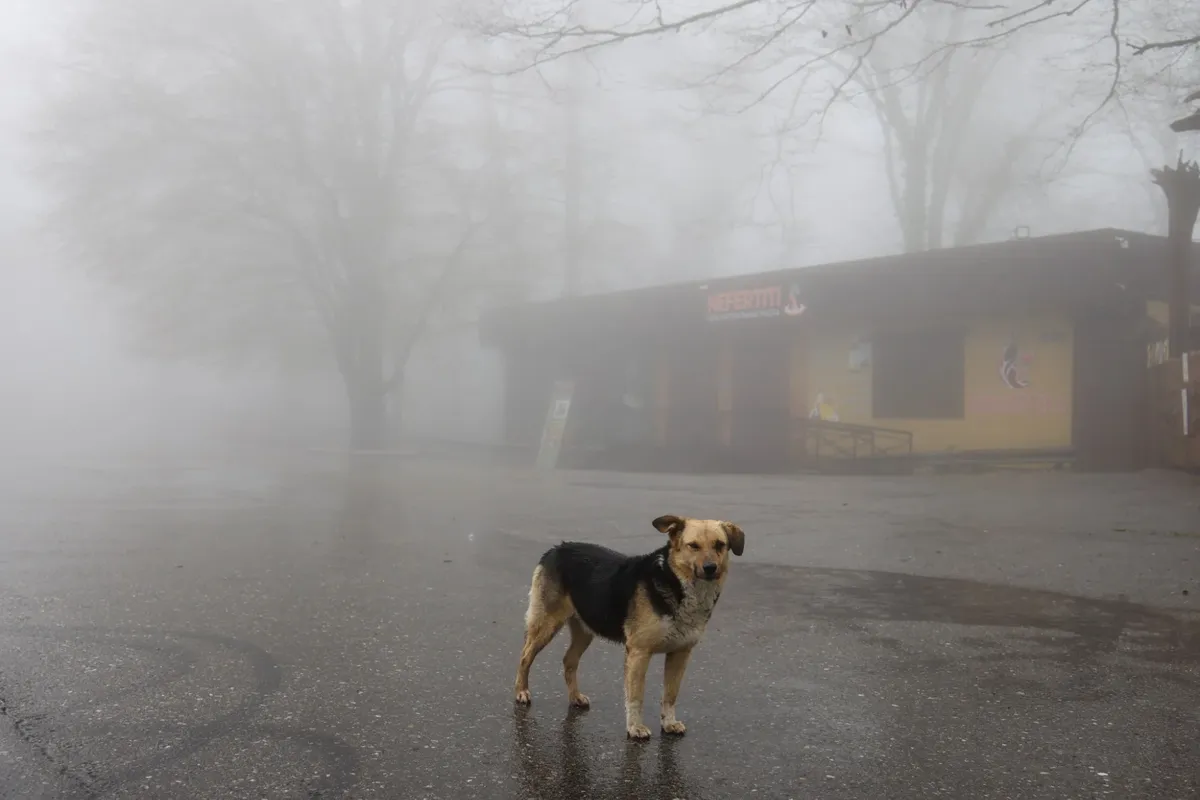
“ All dogs that are caught without collars are all considered invasive. They are all subject to destruction. We will not be able to cope, we will never build the number of shelters necessary to accommodate all the stray dogs in Russia. There is no such money ,” State Duma deputy Nikolai Valuev, 2025.

* Who was disturbed
Stray animals are a different story and their treatment is governed by different laws. Cases of stray animals attacking humans regularly make the news. Dogs bite and scratch hundreds of thousands of Russians every year, sometimes even mauling them to death. Previously, stray four-legged animals were euthanized in Russia, but this practice has been banned since 2020. It was replaced by the catch, sterilization, vaccination and return to habitat (TSRH) program. However, against the backdrop of high-profile attacks on humans by stray dogs and cats, the State Duma backed down: in 2023, parliamentarians adopted a law that allowed regions to decide for themselves how to deal with homeless animals. Now areas can legally return to the practice of euthanasia. There were massive protests against the killing of mongrels. In February 2025, after a pack of dogs killed a 9-year-old girl in the Stavropol Territory, deputies proposed to completely deprive shelters of the right to return animals to the streets: instead, immediately euthanize them after the expiration of the period of detention. Dissenters took to the streets again, and the State Duma postponed consideration of the document for an indefinite period.
- Where they euthanize
As of February, euthanasia of stray cats and dogs is allowed in almost 30 regions of Russia.
- Who called for euthanization
In 2021, amendments to completely abandon the WWTP were presented by three deputies from United Russia, who are not professionally associated with fauna: Galina Danchikova, Marina Bespalova and Nadezhda Maksimova. Since then, State Duma deputy Nikolai Valuev, also an avid hunter who was once caught illegally hunting beaver, has also been a supporter of the idea of killing stray animals. Last year, during a discussion of the topic in parliament, Valuev compared stray dogs with invasive hogweed, calling for them to be treated the same way - to be destroyed. The authorities of some regions from the Astrakhan region to Buryatia also lobbied for euthanasia. Officials, including Val u Eva , say that stray animals that have proliferated are causing damage to wildlife and humans, and there are simply no funds for their sterilization and shelters.
- What the experts say
Dog handlers and animal catchers under the OSVV program believe that it is possible to do without euthanasia, because the program is effective if it is implemented and not cut into budgets. The statistics are still ambiguous: before the innovations, the number of dog attacks decreased in 18 regions with OSVV, but in eight they increased or remained unchanged. In the year after the adoption of the law that paved the way for euthanasia, the number of attacks has remained almost unchanged. Some regions note that more funds are needed for WWW compared to euthanasia, while the number of homeless animals is decreasing more slowly. Social activists are calling to educate the population, because dogs and cats end up on the streets most often because of unscrupulous owners.
- What will it lead to?
It is not yet possible to talk about the mass killing of stray animals in Russia. The authorities of some regions have refused to resort to euthanasia, and where it exists, the law can be sabotaged. Thus, in the Krasnoyarsk Territory, veterinarians refuse to participate in the commission that examines captured animals before deciding on their future fate - doctors thereby do not want to participate in the killing of four-legged animals.
Everything is at risk
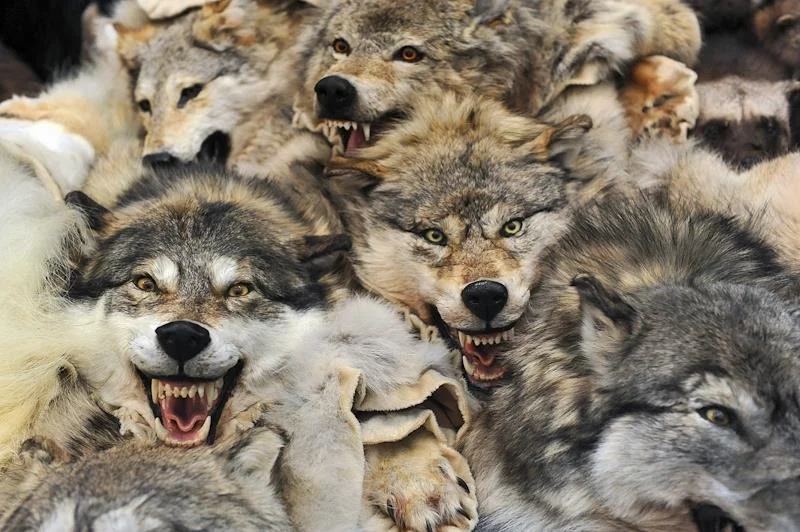
The list of animals caught in the crosshairs of the public eye—and, in some cases, the crosshairs of a gun—does not end there. In the Murmansk region they wanted to revive the Soviet practice of hunting harp seals and preparing sausages and steaks from it. Officials in Tyumen have proposed shooting wolves that bother people, and in Bashkiria they are going to reward hunters for catching bears, wolves and foxes that enter settlements and spread rabies.
Although population regulation may be necessary to combat the same animal diseases or to restore a delicate natural balance, such cases must be distinguished from the use of such arguments for hidden commercial purposes, says one of the Russian experts with whom we spoke on condition of anonymity.
The specialist associates the increasing calls for hunting for certain species with the general weakening of environmental legislation in the country. This allows interest groups to take advantage of certain legal loopholes, and in the future any species may be at risk of being hunted - “nothing can be ruled out.”
“Now there is a feeling that there is a general attack on legislation on wildlife conservation. People feel that the policy is clearly aimed at removing all environmental restrictions, and, naturally, they are trying to take advantage of this,” the expert noted in a conversation with Novaya.
In such conditions, it becomes easier for hunters and fishermen to promote their interests, and for officials to offer the public shooting animals as a silver bullet, instead of systematically solving the problem.
This happens, for example, with the same stray animals or the Amur tiger, where shooting becomes a simple way out of the situation instead of long-term work.
However, in addition to such a head-on solution, you can try to get out of conflicts in other ways, especially if the species is rare. В Латвии уже упомянутых серых тюленей сначала отпугивали от рыбы специальными ультразвуковыми устройствами. И только когда тюлени адаптировались к пугалкам, власти стали выдавать разрешения на отстрел, — но только если доказан экономический ущерб рыбакам, а популяция животного не снижается, а растет.
Кроме того, государство, заинтересованное в сохранении краснокнижных видов, может возмещать людям нанесенный редкими хищниками ущерб. Так поступали, например, в Республиках Алтай и Тыва, где фермерам компенсировали потерю скота из-за нападения снежного барса.
Даже в тех редких случаях, когда регулирование численности нужно в экологических целях, корневая проблема остается в том, что человек вторгся в природный баланс.
В советские времена в Воронежском заповеднике истребили всех волков, и после этого из-за отсутствия хищника там расплодились олени. Тогда уже пришла очередь оленей на отстрел — животных стало настолько много, что они выедали весь сосновый подрос и лес перестал возобновляться.
И если в ненарушенной природе численность видов регулируется естественным путем, то в созданных человеком «полуискусственных» условиях заповедника ему же снова приходится вмешиваться, и получается замкнутый круг. И всё это — результат «не очень разумной хозяйственной деятельности.
Хотя интересы разных групп учитывать необходимо, этические вопросы остаются открытыми. Ведь не все согласятся с тем, что россиянам нужны консервы из гренландского тюленя, а животным на пушных зверофермах — корм из мяса байкальской нерпы.
Если же призывать уничтожать, например, гнезда баклана ради интересов рыбаков, люди могут «еще больше одичать», считает орнитолог Виталий Рябцев: «Представьте человека, который убивает птенцов. Узаконивать разорение птичьих гнезд и требовать массового уничтожения птиц — это показатель низкого уровня экологической культуры населения. Когда природа страдает, гибнет, когда надо прилагать огромные усилия по ее сохранению, мы выращиваем экологических дикарей, которые ее уничтожают».
Лана Коралова