
Translated material
Paper warmth in hands
Lev Shlosberg* - about the first letters in prison and hundreds of strangers on the other side of the walls

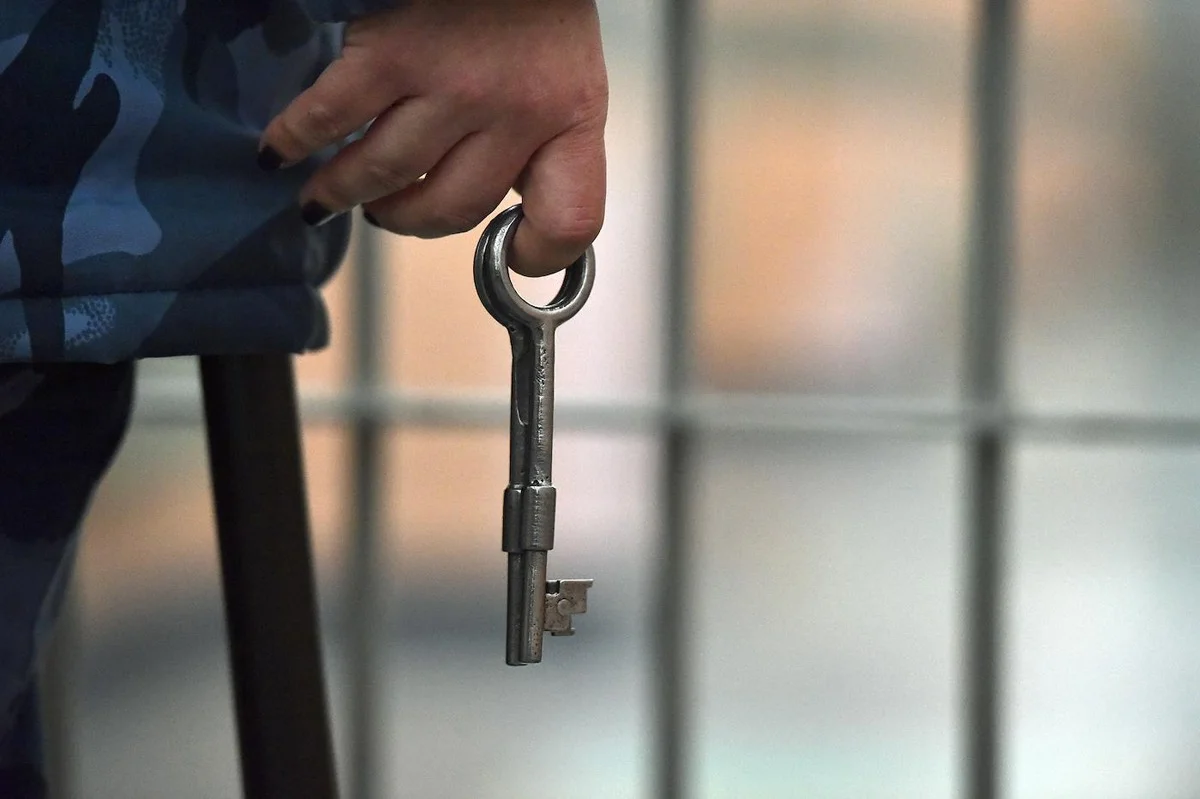
Photo: Roman Naumov / URA.RU / TASS
18+. THIS MATERIAL (INFORMATION) IS PRODUCED, DISTRIBUTED AND (OR) SENT BY FOREIGN AGENT SHLOSBERG LEV MARKOVITCH OR CONCERNES THE ACTIVITIES OF FOREIGN AGENT SHLOSBERG LEV MARKOVITCH.
Chapter from the prison diaries of Lev Shlosberg. Author's title: “Letters in Prison.”
I received the first letters on the fourth day of my stay in prison - printouts of 33 messages received through the Zonatelecom service were given to me on December 9. I took a stack of sheets, sat on the bed and began to sort through them, at first looking only at the names of the senders. A physical sensation of warmth appeared in my hands, which I could not compare with any other sensation. I had never been to prison before or received a letter while in prison.
The pause in connection with the outside world lasted from the evening of December 5th. There was an airless information space around me - I knew nothing, did not receive news, I only thought - about my family and myself, about friends and freedom, about the new part of my life and the life that remained behind the walls of the prison. From there, from behind these walls, from the life that flowed very close by, being now completely inaccessible, letters came to me.
For a moment I forgot where I was. Seven letters at once were from Zhanna. Among others are letters from people I know and don’t know, who already opened the Zonatelecom website on December 5, 6, 7 and 8, found me there and wrote to me.
Today, in the third month of imprisonment, I have several hundred interlocutors, most of whom use ZT, but already in December letters began to arrive through Russian Post. The delivery speed, of course, is not comparable and differs tenfold.
As a congenial person wrote to me in one of the first letters about the Zonatelecom application, “this is what is truly a people's messenger, not Max.”
I never knew most of the people who wrote to me in prison, and if not for the imprisonment (it would be appropriate to write - a misadventure), I would never have known about their lives and fate.
I remember very well the first letter that reached me by Russian Post: it was written by pensioners from a small Porkhov village near Slavkovichi, the name of which I had not heard before, maybe I drove through it if there was a road there: “It’s strange to observe the current situation in our country, when people are sent to prison for actions that are not criminal... It turns out that there are adequate people who have human qualities, logical thinking and can defend your point of view, which is very important for people who think like you. My husband and I support you and fully accept your position.” And then it’s very personal. That is, state propaganda, in some of its Pskov language, reached the Porkhov outback, but caused such a human reaction.
The essence of imprisoning a person is the intention to protect him from society, to sever the personal and social ties that, like threads, connect a person with life. A person is torn out of his natural environment in order to weaken him and make him vulnerable, to deprive him of the oxygen of human communication. Letters to prison connect a person with a life fenced off from him by physically insurmountable walls. Nothing else helps a person in prison to maintain his humanity as letters.
With the advent of the era of electronic communication, letters have disappeared from the everyday life of modern people. We write each other not letters, but messages—short and abbreviated, like telegrams—almost without re-reading the phrases, often without even correcting mistakes, saving seconds and losing invaluable time of human communication.
In the history of Russian and entire world culture, the correspondence of people among themselves has amounted to volumes of deep literature, the reading of which is no less attractive than the reading of world-famous novels and stories.
The culture of correspondence has become an integral part of world culture, preserving for subsequent generations images of people authentic, in the author's execution, and with them - the era in which these people lived.
My home archive contains correspondence with friends (more precisely, of course, letters from friends to me) from the time of my work outside Pskov and my service in the army. These are notebooks of different sizes, hand-sewn with simple threads, sometimes together with envelopes. I remembered these sacred notebooks here in prison, reading letters and answering them. You could say that I now live by letters and responses to them.
At the same time, a technical paradox entered my life: through Zonatelecom, I receive, in fact, emails, blank printouts of typewritten text, and I answer them by hand, with a simple ballpoint pen, i.e. I communicate with people through a 21st century service, having only the writing materials of the last quarter of the 20th century.
When I write to a person I know, I imagine his face, and when I read a letter from him, I imagine his voice. When reading and writing letters, nothing bothers me - neither the sounds of prison, nor the lack of light, nor any extraneous thoughts -
I lose myself entirely in writing, I search and find the necessary words in the same way as a writer selects them for a work of art. Writing letters became a creative activity for me in prison.
Some correspondence from the first wave was just a touch: a person responded to my problem, I responded, there were no new letters yet. At the same time, almost every day a letter arrives from a new interlocutor. The assumption that everyone would write within the first month was not confirmed: letters from new authors are constantly coming.
Some of my correspondents became a discovery for me.
Writes from a native of the North, an engineer who now lives in Moscow, a descendant of political prisoners. His grandfather served time in logging in Komi, and then, as a civil engineer, built Novy Urengoy. His grandmother is from the Volga Germans.
This is written by a mother with many children from the Moscow region, one of whose four children is a special boy, a person with special needs. In the third letter she sends me her story “The Sacred Unicorn Alyosha”, in which there is love, suffering, understanding, despair and joy. If I were a publisher, then, with my mother’s consent, I would publish this confession. And partly - a sermon.
A woman writes from Petropavlovsk-Kamchatsky, a former forestry worker, and then a laboratory assistant at a scientific hunting institute. She writes about her native Kamchatka, her favorite forests, volcanoes and earthquakes, about the people she met on her professional path, about her hobbies (small pets and fish), big snows and fishing trips.
A history student from Perm, completing his master's degree in Nizhny Novgorod, writes with sophisticated topics of scientific research in the history of culture, whose father was a participant in the Afghan War and died before his term, without surviving the shock suffered in Afghanistan.
This is written by a woman from Kazan, whose little daughter writes amazing fairy tales, and whose mother barely has time to write them down for the young author. She dreams of bringing her daughter to Pskov and showing her the city, which (her mother is sure) will be a source of inspiration for the girl.
The director, the son of my close friends, writes filigree letters about the philosophical and cultural foundations of human existence, with reminiscences from classical and modern art of different countries and eras.
A party colleague, a native Muscovite, writes, with whom we were only familiar externally, greeted with a nod of the head, and now from his letters it is already possible to collect two books - one about the history of the family, the other - reflections on Russian culture, mostly literature, but also painting and cinema.
Many public people write completely personal letters, as if we were sitting next to each other and talking. The correspondence gave me a second inner breath in prison. I didn’t know it could be like this, but now I know.
In almost every third letter I come across the same thought: “Thank you for not leaving and staying with us, this is very important for us.” Here I am in prison, and people write: “stay with us.” They do not separate themselves from the prison and the prison from the country. They are not next to me, but with me.
I leaf through eight folders of letters and re-read already well-known lines, sometimes suddenly discovering new nuances in the letter. I love to take letters from one person and read them over and over, from the first to the last, and see how our conversation developed - from acquaintance to broad thoughts and stories. Prison brought the Russian epistolary genre into my life - letters from mind to mind, from heart to heart.
Before my imprisonment, I myself wrote letters and postcards to political prisoners. Some of them sent me warm messages to the prison through their friends and family.
Now I would write a lot more of these letters.
Many of my interlocutors wrote that they had not written large letters for a long time or at all, and now a situation came when they themselves found themselves in need of these letters. These letters embody the need for sympathy and compassion, recognition and trust, the need for action and deed, to justify one’s life here and now, when it is almost impossible to say anything out loud, but you can write to a person for whom, of course, it is more difficult than for you, but you write to this physically distant person, find pure, intimate words and understand: you said something very important to yourself and thereby removed the stone of silence from your heart.
Pskov Prison Castle