
Translated material
Where do the pills go?
More than 90% of patients refuse medical care due to lack of funds for it, survey results show. And this is a distress signal

Photo: Oleg Elkov / TASS
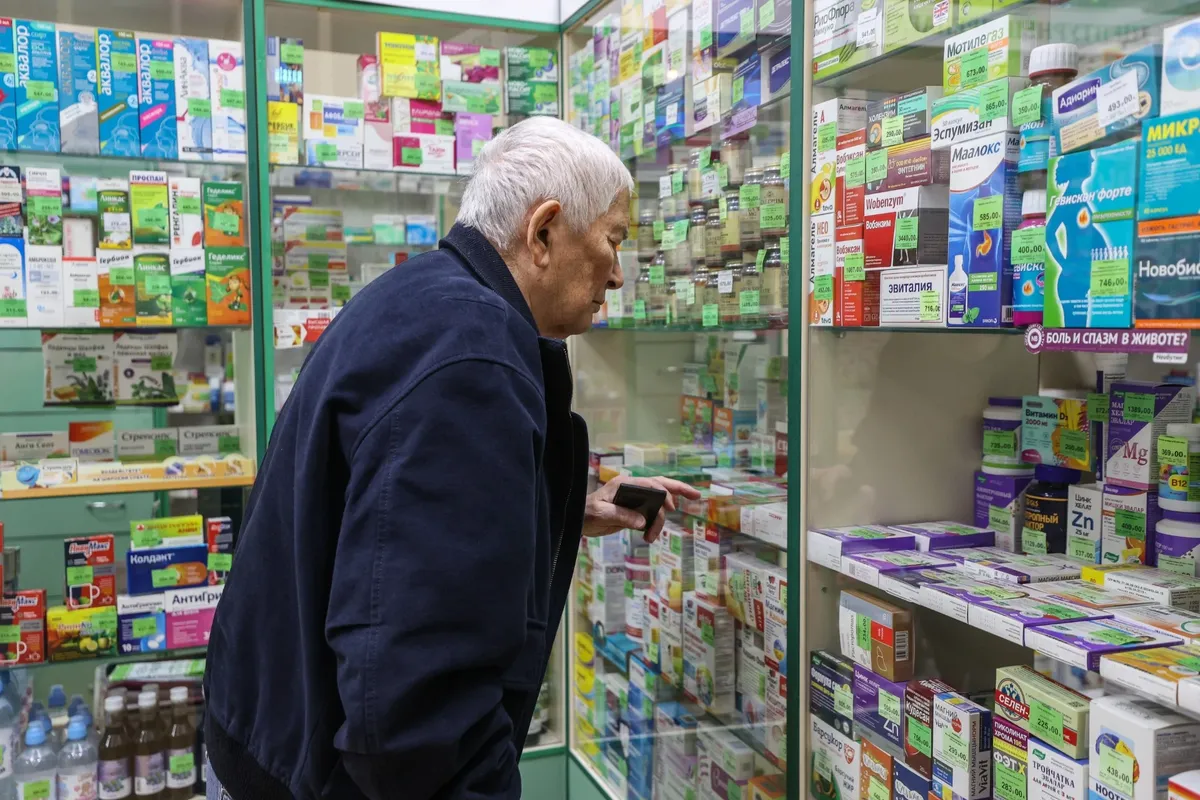
A limited range of medicines, low availability in the state pharmacy network, delays in the supply of already contracted drugs, ineffective control of the availability of medicines and medical products in pharmacies and medical organizations, problems with the analysis of warehouse balances, the lack of issuing preferential prescriptions to persons who are entitled to it - these are just some of the systemic violations of the rights of citizens in the field of drug provision. In addition, patients complain about the rapid growth of paid medical services, the decreasing availability of care in the public sector and the imposition of such services for money. The data from a recent survey conducted by the League of Patients are similar. When asked “are medications becoming more expensive,” only one person surveyed said “no.” 88.5% answered in the affirmative. 90.6% believe that the number and cost of paid medical services have increased.
Go ahead and pay
As a journalistic experiment, I found out from different people how much their last visit to a doctor at a commercial clinic cost them (provided that it was in the current year). The picture is as follows: endocrinologist - 12 thousand rubles, gynecologist - 10, vertebrologist - 10, cardiologist - 4.5, dentist - 8, urologist - 7. Analyzes and studies were not taken into account, only the cost of the visit itself. Absolutely everyone noted the increased prices. And no one called free healthcare a real alternative. Arguments: there is not as much time as it requires; the organization of the process leaves much to be desired.
Participants in the XXII All-Russian Congress “Right to Medicine”, which took place recently in the capital, believe that healthcare is deliberately creating barriers to squeeze patients out of free medicine into the paid sector. What does it look like? And there are a lot of methods. Let's give a typical one. I won’t say anything about other cities, but in Moscow there are definitely no people left who have not received invitations to various kinds of free examinations. As part of a special day, a current city program, a special promotion - you never know the wording that gives special weight to an event with a modest overall efficiency. Nevertheless, the number of people wishing to undergo a check-up of the entire body or examination of a single system does not dry out.
The “free” prefix works wonders. As one very elderly patient said, “It’s possible and useless for free, but if they find something bad, I’ll immediately end up in the hospital without quotas or referrals.”
And a middle-aged Muscovite was offered to master dermatological screening - with the promise “it won’t cost you anything” and a link to some initiative from the Department of Health. The result of the visit was a package of referrals for more complex research and to the Podology Center (already on a commercial basis, of course).
Again, out of professional interest, I myself took part in a similar action “through a neurologist.” But she did not advance beyond the first office. The doctor told me from the door that as part of the examination he would only take, relatively speaking, measurements. And then large-scale work will begin to cure illnesses, for which I will be sent to specialized specialists right within the walls of the institution (which, by the way, turned out to be not budgetary, which was predictably not mentioned in the invitation). It’s strange, but for some reason two alarming facts were discovered a couple of days later and in another hospital. It is not surprising that 63.6% of those surveyed by the patient community say that they have encountered the imposition of medical services.
The district clinic offers citizens to have a cardiogram - a normal approach, the procedure will definitely not be unnecessary. However, people perceive this literally as an act of humanism: they invited you, wrote an SMS, did not require directions. But exactly the same clinic will easily reject a patient if he does not fit into its understanding of public-private partnership. Commercial colleagues are an annoying factor. The head of the department of one of the oldest hospitals in the capital (serves both under compulsory medical insurance and for a fee), I asked why it is impossible to get a referral to them for a consultation at a district medical institution (especially taking into account the ineffective treatment of a particular patient, the constant change of therapy and doctors)? Shrugging her shoulders, she replied that she didn’t understand why. And she suggested: maybe there is some kind of unspoken ban on this... And we will continue this thought: so as not to overload serious institutions with free patients who, if desired, can get into them for money. And without any obstacles.
No unity of approach, no overall picture
Another example shows the lack of unity in the system, and at a basic level. A patient from Moscow receives a list of standard tests that must be taken before hospitalization. At the clinic they answer something like “wherever they put you, hand over there.” I asked one of the medical functionaries whether such a refusal is legal? They tell me that each clinic, in principle, solves such problems at its own discretion. If the laboratory with which she works does not have the necessary reagents, they may refuse. Most likely, they explained to me, there is no single requirement in this regard. The deeper you delve into the topic, the more confusing all these assumptions “probably, in principle, maybe” are - we are talking about government agencies of a single system.
The doctor often does not see the big picture - another problem that is not talked about much, but which patients face more often than we would like. In the presence of EMIAS, this sounds at least strange. But this is a fact. Independent expert Vitaly Dembrowski is convinced that continuity of data along the patient’s route is necessary. One patient - one passport of needs in all areas. Not several cards in different databases, but one link to everything - this is ideal. In reality it’s different. Moscow resident Ilya (one of the congress participants) reproduces a recent conversation with a cardiologist at a very authoritative departmental clinic. At one time, the man was unable to attach himself to her, but he regularly applies for paid services.
“The doctor looks at my blood test,” says Ilya, “then asks: are you taking statins, no?” And it’s necessary for a long time already. How old are you, what bothers you?
- I answer, I’m 52. And the side effects confuse me. There is an alternative among modern drugs, why just statins?
— By the way, they have long been included in the standards of treatment. Old people with whole bunches of illnesses drink, and nothing happens,” the doctor snapped.
- Maybe we should at least do a cardiogram before this? And by the way, I have long-standing problems with the gastrointestinal tract.
— You have a cardiogram here (the study was already eight months old at that time, the interlocutor clarifies). No, if you want, I will send you for a cardiogram, 24-hour monitoring, and duplex scanning.
- And all this, you know, with such a look, like: who is the doctor here? - explains Ilya. “In the end, I was prescribed three drugs, including statins. And this despite my persistent objections. I did not receive any clear explanation of what we are treating, what we are expecting. But they charged me a separate fee, literally: “for studying the results of research from third-party organizations.”
According to the Constitution, free of charge, voluntary - for money
The share of paid medicine in the total market is growing. Today, the private sector already accounts for 35% of all services provided. “And this is with our, I note, free public health care,” says Alexander Saversky, president of the “League of Patients”, member of the Ethics Committee of the Ministry of Health of the Russian Federation. “I wrote letters to all authorities about this, screaming that prices are rising and there is less and less help in the public sector. And he asked the question: “How long?”
We will focus on only one answer - from the relevant department. Thus, the Constitution clearly states that free medical care is guaranteed to citizens. And not selectively, but any - provided in accordance with clinical recommendations (CR*). To which the Ministry of Health clarifies: assistance is indeed provided - but in accordance with the basic program of state guarantees. Which, let me remind you, is accepted by the government.
What follows is even more interesting: officials cite art. 84 of the “Law on Paid Medical Services,” according to which they “are provided to citizens at their request and are provided to patients at their own expense.” This norm is also detailed to us in its own way: “The patient is properly informed of his rights, including the possibility of receiving medical care free of charge within the framework of the program of state guarantees and territorial programs. The conditions for providing both free and paid medical care are explained to the patient. The choice to receive paid medical services is his voluntary expression of will.” Or forced?
The question from Saversky is just as logical: “Listen, who should we take people for? If I have the right to the same help for free, why would I pay? And the Ministry of Health says quite seriously that the patient decided to give the money by choice? This construction of the law looks very strange.” To be sure, we can, of course, clarify: the constitutional norm applies to municipal and state institutions - specifically, they provide assistance free of charge. And the point here, according to the expert, is not what we want. The norm clearly states that institutions subordinate to the state are obliged to provide assistance free of charge. This is not a system of civil law and transactions, explains Saversky, but of an order and an administrative system of management, which is based on direct subordination and implementation of what is written in the Constitution.
Saversky’s letter also raised the issue of pricing. The agency responded that “medical care in state and municipal health care institutions is provided to citizens free of charge at the expense of the corresponding budget, insurance premiums, and other revenues.” The sources are more or less clear. I would also like to understand in what volumes and in what time frame the system is able to provide citizens with that same thing - free?
Six months of waiting to see a specialist or eight months of waiting in line for an MRI is dubious help. Or a way to push it into the paid sector.
“When a person is scared, afraid, when he is in pain, he stops thinking rationally and becomes an ideal target for extorting money,” Alexander Saversky is sure. And the congress participants agreed with him. And the survey data, which we constantly refer to, completed the picture. To the question “is medical care (paid and free) becoming more accessible,” 78% of respondents answered “no.”
Take what you have
According to data presented at the congress, the state spends about 1 trillion rubles on medicines. In this situation, statements that a lack of funds entails problems in providing care, and that there are not enough funds for medicines at the outpatient level, are unfounded to say the least. Maybe the problem is something else - our lack of a law on drug provision?
The Congress, composed of leading specialists and experts, has been insisting for several years on the adoption of a legislative act that will solve the problem of providing patients with medications in accordance with clinical recommendations and doctor’s prescriptions. If the document is adopted, the burden on the budget will inevitably increase. The Ministry of Finance and the regions estimate annual additional costs at hundreds of billions of rubles. And the question immediately arises: who will cover them - the federal center or the constituent entities? And as long as there is no law, there is no such dilemma.
“What is the law on drug provision? This is an attempt to unite defragmented parts,” explains Dembrowski. “We have preventive medicine, curative medicine, rehabilitation medicine, orphan medicine, and palliative medicine... We are missing one thing called “single.” Participants in the system work in fragments, unaware of the whole. I counted: the Russian military aircraft has at least six main carriers. Including a list of vital and essential drugs (VED), high-cost nosologies, the Circle of Good Foundation, high-tech medical care, etc. These are six branches of the same bank that are unfamiliar with each other. A bank client is a patient who has his own account in each branch. Moreover, each branch has its own cashier. And none of them knows that the client has the other five accounts.
When we say the system is broken, this is not accurate. The system was built, it’s just that each builder built his own floor in the bank, without looking at his neighbor’s drawing. And here is the most interesting thing: each floor is functional. But the stairs don't work. And there is no elevator."
Let's focus on the first break point: registration, clinical recommendations, state guarantee program, lists of drugs - they all exist in parallel, without intersecting at planning points. The second gap is planning without a personalized need. In 2025, the Accounts Chamber submitted a report on the audit of state regulation of prices for medicines. It contains one very important, if not key, thing, I quote: “Until now, a methodology for calculating the current and forecast needs of the healthcare system for medicines for all categories of citizens has not been developed. In fact, LO planning is carried out without taking into account personalized information about the real need.”
In this regard, I remembered the dialogue from Roshchin’s play:
- I have everything. - Ha, that's it. What's all this? - What do you need? - What do you want? - What is there!
Ideal scheme! Whatever the system has available is what it is prescribed to the patient. “The country, while providing medicines to tens of millions of beneficiaries, plans volumes not from patients, but from last year’s data plus inflation,” Vitaly Dembrowski develops the topic. - This is false architecture. When a doctor in primary care does not have a tool in which his prescriptions through the patient registry automatically become a line item in the regional application and then the federal budget, no control check will fix this. We need to move from planning based on budgetary inertia to planning based on personalized needs.”
And they won’t ask for consent
Let's take such an obvious and understandable thing as vital and essential drugs. The cost of drugs on this list is strictly regulated. The state sets maximum selling prices for manufacturers and limits maximum markups in pharmacies. However, the list itself, according to experts, is updated in violation of the established procedure. Moreover, even drugs in this segment are disappearing from the market. And the fact that the list often does not correlate with the CPG continues to lead to the inaccessibility of precisely those drugs that are included in the clinical recommendations.
There are already court decisions not to reimburse medical organizations from compulsory medical insurance funds for the cost of drugs that are included in clinical recommendations, but are not on the list of vital and essential drugs. How then to treat patients, experts ask, if the doctor is obliged to do this according to clinical recommendations? Vicious circle.
It’s already storming at the reading stage. A very revealing statement was made within the walls of the Russian State Duma Committee on Health Protection: the regions are not able to fulfill the requirements of clinical recommendations on oncology, since the territorial state guarantee programs simply do not have enough funds for this. A simple calculation revealed the following: if we start treating all cancer patients according to the CR, the budget of the territorial program in this area will have to be increased 19 times. Question: turn a blind eye to the Kyrgyz Republic or raise the budget?
Fanatical adherence to established rules - on the one hand, and substitution of the essence for ease of execution, on the other - this is exactly what judicial practice looks like in medical disputes today. Here are just two examples. The Territorial Compulsory Medical Insurance Fund demanded that the Kirov Regional Perinatal Center return 69.7 thousand rubles and pay a fine. The reason is the purchase of drugs that, in the opinion of the fund, were used for other purposes than their intended purpose. We were talking about multivitamins for parenteral administration. All of them were prescribed to patients insured under compulsory medical insurance and undergoing hospital treatment. Moreover, the drugs are provided for by the current regulations. So what's the problem? It’s just that these medications are not included in the list of vital and essential drugs. And according to the law, when providing specialized care within the framework of the state guarantee program, patients must be provided with medicines made from it. Again the same cycle.
Everything described is still an easy option. In Bashkortostan, for example, authorities and hospitals do not implement court decisions (they change the enforcement mechanism itself). Referring to the impossibility of prescribing a medicine by trade name, new medical commissions are being held that change the prescriptions for patients.
In 2021, the patient wins a lawsuit against the Republican Ministry of Health. The proceedings concerned payment for an expensive drug prescribed to him. The court obliges to provide the patient with Prograf and Mycophenolic acid from the same manufacturer free of charge and without interruption. After a while, this order of things ceases to suit officials: “In 2025,” says Saversky, “the department says: listen, everything is expensive, let’s submit an application to change the methods of executing the decision. That is, the decision itself will remain in force, but let’s change its execution.” The Ministry refers to procurement procedures (No. 44-FZ), within which it is difficult to indicate specific trade names. And asks to exclude them, leaving only international nonproprietary names. The court sides with the officials.
But it is clear that with this approach the meaning of the decision made and the obligations of the defendant completely change. The plaintiff says I sued for specific drugs because they were selected specifically for my case. Substitution may lead to organ rejection after transplantation. We pay tribute to the Oktyabrsk prosecutor's office, which considers the decision to replace vital drugs with analogue ones illegal, unfounded, and in violation of the legislation of the Russian Federation. And he demands its cancellation. But the very fact of such manipulations does not cease to look savage. And, by the way, it falls under the criminal article of negligence.
Patients complain almost constantly about the replacement of drugs provided under benefits. Consent to medications is not required when prescribing them.
According to experts, this is a direct violation of current legislation regarding obtaining informed voluntary consent to medical care. As a rule, this norm begins and ends at the stage of signing a multi-page agreement - in a paid clinic without such a piece of paper they won’t even lift a finger.
The text, like the meaning of the document, raises big questions. In it, for example, it is required to give the go-ahead for certain (supposed and completely unobvious) manipulations. And the time to prescribe medications simply disappears. There is no procedure for obtaining such consent; it has not been adopted by the Ministry of Health. Paid clinics create their own templates in accordance with their own fantasies. In the opinion of the average patient, this is nothing more than a desire to insure from all possible sides.
But drug manufacturers are more secure than others. This relatively new process has overtaken us in the form of meter-long proclamations, which have become instructions for medications. Safety requirements from regulators have become so stringent in recent years that the manufacturer is required to list all possible (even if we are talking about 0.01%) risks, including theoretical and even unproven ones. The instructions themselves are actually a clinical research protocol.
Generics are still longer. Warnings regarding differences in excipients have been added to the original text. Of the two dozen people interviewed only in the inner circle, only one person was able to study what was written in its entirety. It is clear that the instructions are for a doctor. Provided that he finds time to discuss it with the patient and convey the meaning of the prescription. This is also about consent.
The numbers are cosmic, but where is the money?
The amount of consolidated government spending on medicine is very impressive - 7 trillion rubles. Of this, the compulsory health insurance budget is 4.8 trillion (it covers all major healthcare expenses). Add to this the state program and national projects - about another 1.8 trillion rubles a year.
“In addition to the 7 trillion rubles allocated by the state, almost the same amount is spent by the population directly from their own pockets,” says Alexander Saversky. — Despite the fact that our medicine is free, and healthcare is high-cost, you and I also pay ( according to WHO and the Scientific Research Institute of the Ministry of Finance of the Russian Federation, 49% of healthcare costs are borne by the population. - O.P. ). Industry revenues amount to 10.7–13.8 trillion rubles. We get some absolutely cosmic numbers! And in this sense, telling us that there is not enough money for medicines and medical care is somehow strange. It’s logical to ask: where is the money?”
And where are the medicines? Not banal - for cough or heartburn. And vital. Where one or the other disappears with frightening regularity. For example, right now there is a serious shortage of platinum-based drugs in the country, which are used in combination with expensive immunotherapy for cancer patients.
The disruptions started last year. And the Ministry of Health confirms that the release of a number of oncology drugs into civilian circulation has actually decreased - the platinum necessary for their production has seriously risen in price. And after the re-registration of the maximum selling prices, the prices of the drugs in this group themselves increased (by more than 100% for individual dosages). Since the beginning of the year, almost 3.1 million packages were planned to be purchased as part of the announced applications; purchases of 2 million packages were declared unsuccessful. The “Movement Against Cancer” sent a letter to the Ministry of Health asking what measures are being taken? While the answer is being prepared, doctors suggest that patients purchase the drug themselves so as not to interrupt treatment. Why can't medical institutions do this? The question is rhetorical.
In 75 Russian regions, pharmacies do not have anti-Rhesus immunoglobulin, which is vital for the prevention of Rh-conflict during pregnancy. In hospitals, expectant mothers should be provided with free care. The relevant department explains that “the break in the timing of the introduction of the drug into civil circulation is due to the re-registration of the maximum selling price.” And they promise to resume deliveries under concluded contracts in the near future. The deficit is firmly on the current agenda. Only the names of drugs that fall out of circulation change. And 70% of those surveyed by the League of Patients say that medicines have not become more accessible in recent years.