
Translated material
French rebel
Legendary forward Eric Cantona turned 60 on May 24
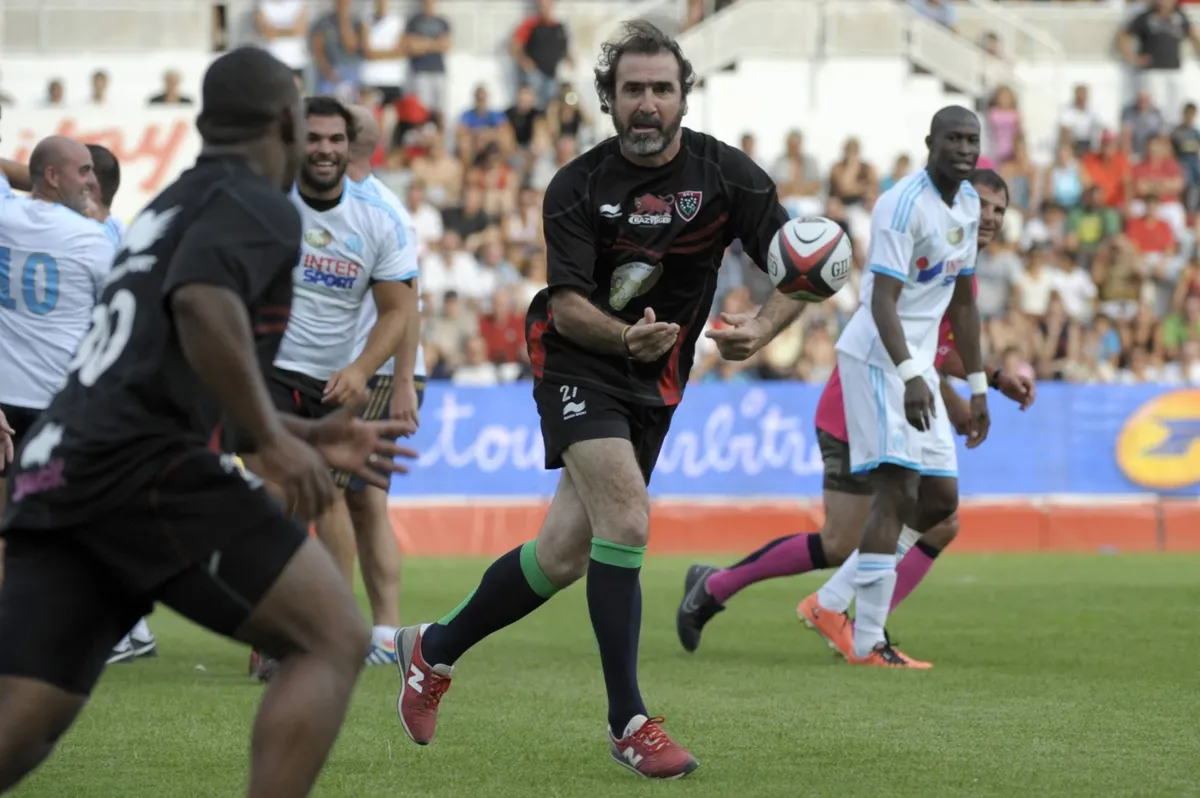
They say that there are no former footballers, like former scouts. I'm not going to argue. However, there are exceptions to every rule. You won’t believe it, but the one who in the mid-90s, wearing a number seven jersey with the collar always turned up, gave crazy performances on green lawns, today is not even aware of the current results of his once beloved Manchester United. The owner of the Bronze Ball doesn’t care about this, excuse me. Like, in fact, all English entertainment.
And for me personally this is not surprising. For people like Cantona, the game of 11v11 is interesting as long as they are in the center of the action and create themselves. And what kind of “like this”, you ask? Not obsessed with just football. For little Eric, his father’s art workshop was as much a magical land as a clearing with a gate. And the canvases of Van Gogh, Camoin and Chabot aroused delight no less than the feints of Tigan and Platini. The boy, for whom the death of his beloved graphic artist Pierre Ambrogiani was the greatest shock (a reproduction of his drawing with views of Marseille traveled with Eric to all the clubs), went to various galleries on weekends and was torn between brushes and a ball.
Already a professional dribbler, on the way to training he could stop at a hotel, take a suitcase with paints from the trunk and lose himself in front of the canvas. “While painting, it was like I was meditating. The world ceased to exist and shrank to the size of the picture I was painting,” admitted Cantona, who believed that everyone and everything in football was against him.
And this was indeed true to a certain extent. France hated the creepy monster that lived in the seemingly quiet and solitary virtuoso who calmly left the team dinner to lock himself in a room and listen to Mozart. But when angry, black-haired Eric Daniel Pierre knew how to rush into a dangerous tackle, throw a boot at a teammate’s forehead, or even just beat up his teammate with or without reason. For example, he gave Auxerre goalkeeper Bruno Martini a hard knock on the head because he refused to help clear the field of snow... And when the opposing fans expressed their “fuck” to the outrageous Eric, he immediately began to look for the offender.
Just think: in Poland he climbed onto the podium (and on the shoulders of coach Guy Roux, who was trying to keep him from lynching) to find out who threw a chicken egg at him...
But the eccentric show-off became especially famous in disputes with judges. At the age of 17, he almost brought the entire French youth team under the monastery, spitting in the face of the referee at a tournament in Leningrad, who unfortunately also turned out to be a former colonel. The conflict was smoothed over with difficulty by diplomats, and Eric soon went to rustle for the army brigade from Joinville. Needless to say, he violated the rules there every day, and everyone breathed a sigh of relief when his “service,” accompanied by smoking (not just tobacco) and other disco antics, came to an end. Cantona exhaled and calmed down. But not for long.
He received a one-year disqualification (it was later reduced) for calling the coach of the national squad, Henri Michel, a sack of crap on live television. And the president of Olympic, Bernard Tapie, who threatened to lock Eric in a mental hospital, eventually sold the unrestrained brutal impudent man to Nîmes after, in a charity (!) friendly match against Torpedo, he, dissatisfied with the replacement, threw the ball into the stands, tore his jersey and threw it at the referee named Delmer. (And how many times his crumpled uniform flew at his mentors, it’s impossible to count...)
In a small town, a skilled demon, who grew up in the suburbs of Marseille, continued his hooliganism: first he threw a ball at the referee who sent him off the court, and then called the members of the Federation’s disciplinary committee idiots, earning a total of 120 days of “freedom” from football. And at the age of 25, the champion of the youth Euro 1988 (by the way, it was his brilliant double at Highbury that brought the little “musketeers” to the final), who, due to his character, changed six teams (Auxerre, Martigues, Olympique, Bordeaux, Montpellier, Nîmes), decided to end his career to the delight of the public, tired of his antics. Although he, who stated that “football is like a woman: when you have nothing more to say, you leave,” no questions about the game arose. Moreover: his magical right foot led Auxerre into the European Cup, kept Martigues registered in league number two, and Montpellier and Olympique, thanks to his accurate shots, won the French Cup. However, I repeat, battles (even victorious ones) on the rectangular emerald stage did not bring exceptional happiness to the brave prankster. “To be on top, I need to do incredible things. Sports disappoint me: the players are banal, they are not allowed to think for themselves. Football is a secondary art, and I dream of painting and living in creative madness...” - this is how the gifted but unbalanced Cantona describes his then state.
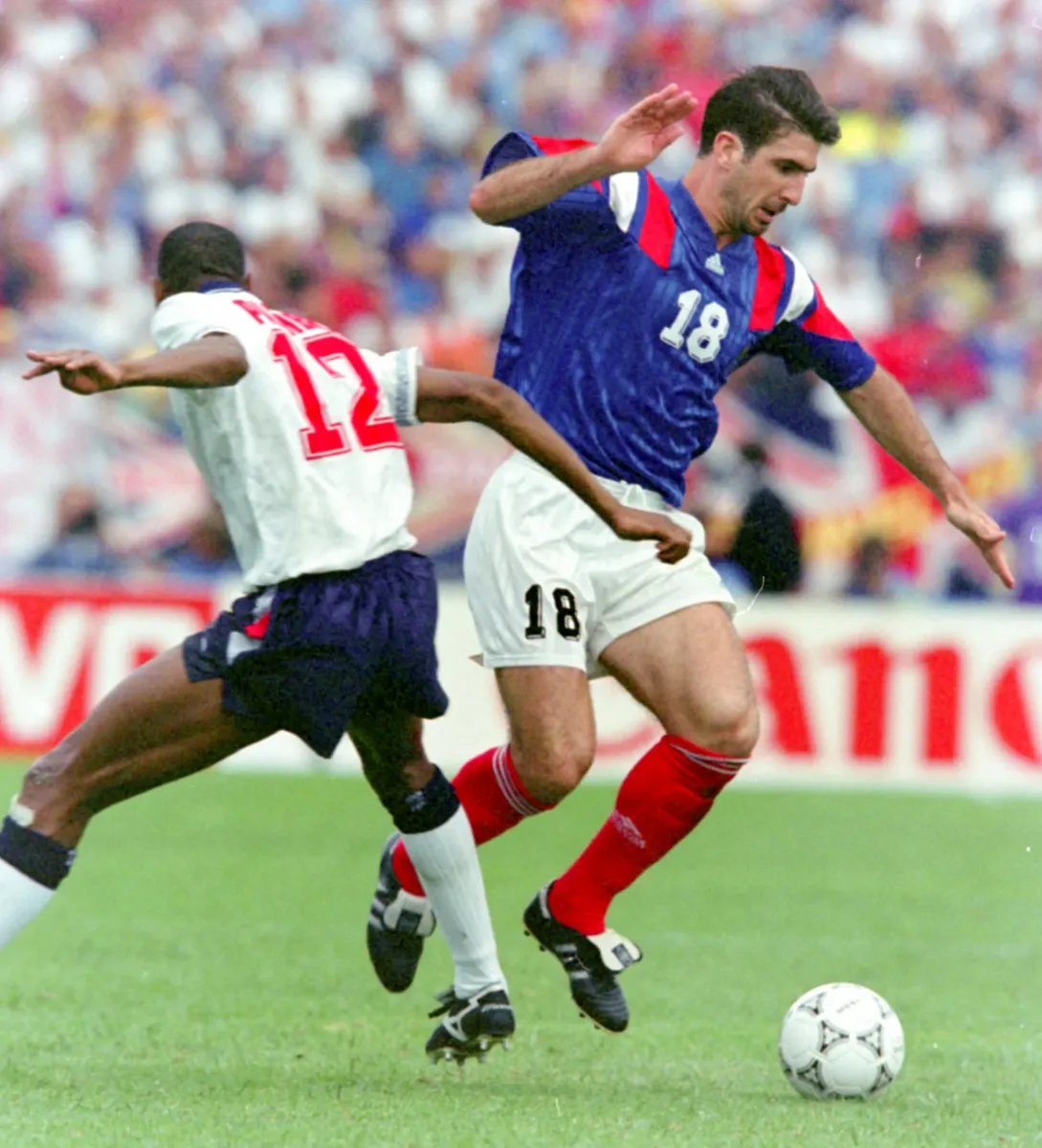
...However, the rash dive into an artificial offside was prevented by Michel Platini, who sympathized with the boorish renegade. He convinced Eric to reboot at Albion and literally forced Leeds manager Bill Fotherby to invite the emotional striker to Elland Road.
The legionnaire immediately contributed to the golden triumph of the “peacocks” in 1992, giving them the Super Cup (the proud legionnaire’s hat-trick against Liverpool in the final match is still remembered by Leeds fans). But he didn’t find a common language with coach Wilkinson the next season, and for £1,200,000 he was sent to Manchester United, where he turned into a real violent King Eric.
He simultaneously promoted both the Red Devils, who had been dreaming of the championship for 26 years, and the newly created Premier League, which lacked just such a raging bull. “Eric was at the right club at the right time,” Sir Alex Ferguson wrote in his autobiography, oblivious to the quirks of a newcomer who was breaking the island’s conservative mold. In Cantonese pubs he ordered champagne instead of beer, wore flip-flops and a robe to official events, and skipped mandatory receptions. Once he invited a famous correspondent to a fashionable bar - and brought the unsuspecting “client” to a brothel... And Eric once beat journalist Terry Lloyd in the Caribbean for photographing his pregnant wife Isabelle...
Cantona criticized his colleagues for buying expensive cars and mansions (he himself bought a modest house in Boothstown, explaining that he did not need ten bedrooms to show off his wealth) and was irritated when he was called a rebel.
However, an avid theatergoer and connoisseur of the work of great musicians jumped out onto the green lawns with one goal - to put the enemy on his shoulder (but put him down beautifully: “If I didn’t get pleasure from the game, then victory didn’t excite me,” the freethinker assured). May fans of Messi and Ronaldo not be offended by me, but the Argentinean and Portuguese, even in their young years, did not have such a magnetic influence on their teams, referees and spectators as the charismatic giant had, who instilled fear in his opponents with one deadly look. “The Frenchman had such an aura that you felt invulnerable next to him,” said his partner Steve Bruce. And Mark Hughes, another of Cantona’s team-mates at Manchester, made no secret of the fact that Eric “expanded our understanding of football for all of us”: after training, he would stay and tinker with understudies and future stars - David Beckham, Paul Scholes and the Neville brothers, showing them how to unexpectedly and lightning-fastly take on an opponent.
Cantona, who never took life too seriously and never got stuck in the past, was somewhat reminiscent of the inimitable George Best. But if it was impossible to play poorly in the company of the iconic showman from the 60s, then not fighting in the presence of Eric, with whom the Mancunians grabbed four titles in five seasons, was simply dangerous to health. I won’t forget how his two penalties helped Manchester United defeat Chelsea in the FA Cup final. After the battle, Cantona, whom the English press dubbed General de Gaul, was asked: “Weren’t you worried when you hit Dmitry Kharin in the same corner?” And do you know what you heard in response? “Those who are nervous should not play football at all.”
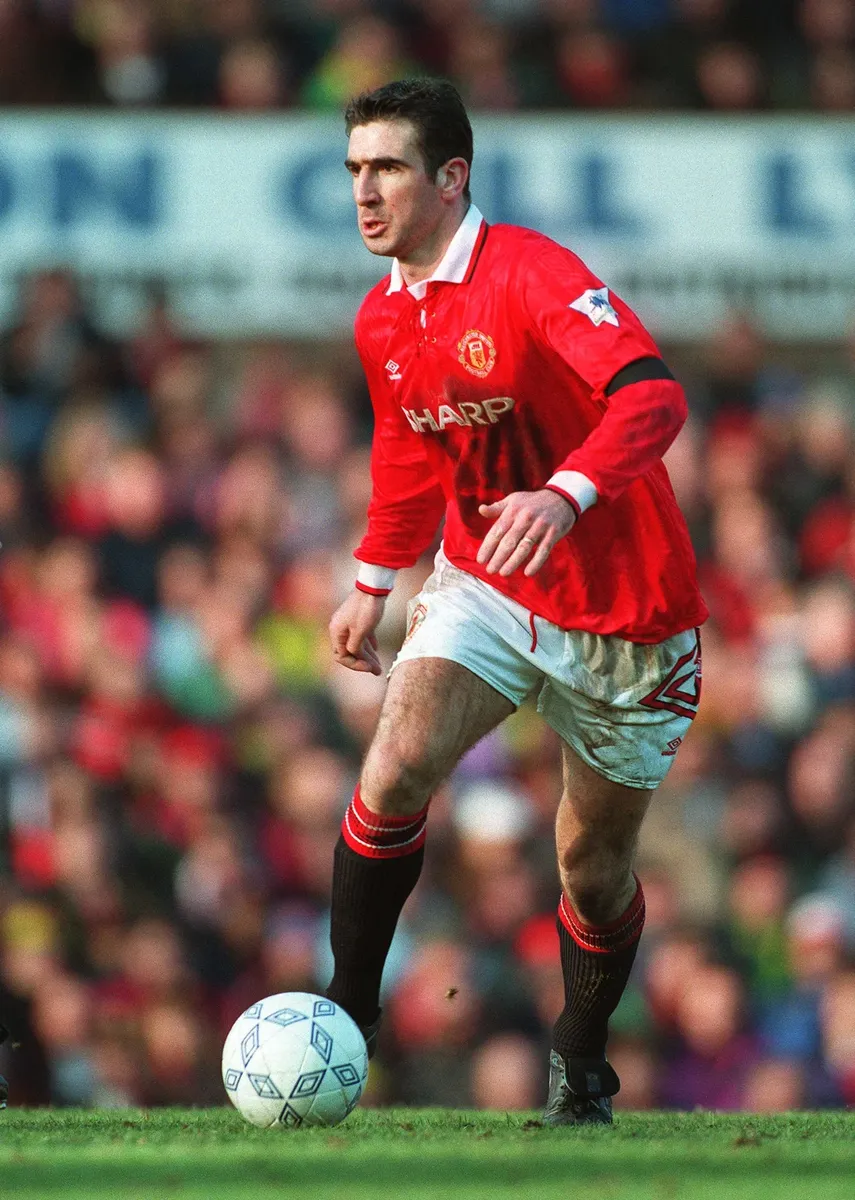
And the hero of the day, who had amassed an impressive collection of red cards, would probably have ironed the current residents of the fildepers “United” right during the battle. “A herd of sheep...” is what he recently dubbed modern Manchester. However, for him, everyone who behaved, in his opinion, incorrectly, was a sheep. Remember how in January 1995, in an away match with Crystal Palace, an angry and out-of-control grenadier, heading to the dressing room after being sent off for a hook on a defender who had rudely played against him, knocked out an Eagles fan who was provoking and insulting him from the Salhurst Park stands? That “shot” with a kick in the chest in the kung fu style and a control finishing move in the jaw cost the owner of the “Bronze Ball” - 1993 very dearly in every sense.
At the same time, during his eight-month disqualification, Eric watched art-house films and mastered the trumpet, managed to appear in the comedy “Love in the Meadows,” enrolled in acting courses and even produced Edward Albee’s play “Who’s Afraid of Virginia Woolf,” simultaneously purchasing the rights to stage it in France. By the way, in 2012, he announced his desire to run for the presidency of the republic, and a little earlier he called on all Europeans to put an end to the criminal and usurious banking system, proposing to close their accounts one day...
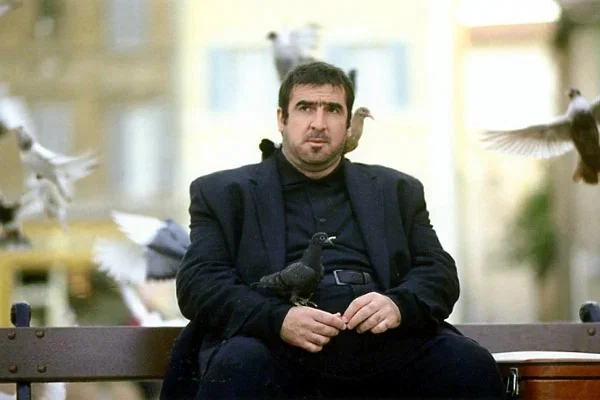
...After serving his sentence, the intellectual aggressor played tricks for another year and a half for the glory of Manchester United and became the first foreign football player to lift the FA Cup over his head as a captain (and it was his magnificent “volley” that brought success to the “devils” in the battle with Liverpool). And at the age of 30, he threw himself headlong into masquerade swimming, citing the fact that he was “tired of following stupid rules and going to bed early.” But the cinema allowed him to frolic limitlessly, because there, according to Eric, the actor has one and only rival - himself...
Fans regret that the man who hit the goal about 200 times and called himself the best French spiker of all time did not play at the World Cup. And only because the quarrelsome artist had a lot of complaints against the bosses of the tricolor Federation...
At the same time, Eric played 45 matches for the national team and scored 20 goals (that is, he scored in almost every second meeting). It’s funny that the technical joker, who was included in the English Football Hall of Fame (and Manchester United fans chose him as the club’s best player in the 20th century) and was included in the FIFA 100 list, said the following: “In today’s soccer, where there are no Vinnie Jones-style tackles, and defenders act with their hands behind their backs, like penguins, I could easily send 60 balls into the net per season.” Who would argue...
But he, who has seen Hollywood in his grave, starred in music videos, advertisements and almost a hundred different films, two of which made a real splash. The role of a 160-kilogram police officer in the film "Glutton" forced critics to apologize for calling Cantona untalented, and Ken Loach's film "Finding Eric", where the forward portrayed himself, was nominated for the main prize at the Cannes Film Festival in 2009. By the way, then everyone started talking about the fact that the father of many children, who had fun playing beach soccer in his spare time (being a player-coach, he led the “sand” team to victory at the world forum), was allegedly going to take his boots out of the closet and return to Old Trafford. However, the film also answered this question: in one of the episodes a ball rolls towards the hero, but he, after thinking for a moment, steps over it and moves on...
This material was published in the nineteenth issue of Novaya Gazeta. Magazine". You can buy it in the online store of our partners.