
Translated material
Nothing but a ghost. Anton Dolin* - about finding his home
We continue publishing stories and essays from the collection “House Number,” which will be published very soon by Vidim Books. The authors of this special “literary issue” of Republic were Dmitry Glukhovsky*, Polina Barskova*, Polina Aronson, Oleg Kashin*, Elena Fanailova, Vladimir Sorokin and many others. All the texts in it are built around the theme of home - and today we offer to read a very personal essay by film critic Anton Dolin, who calls on the entire world culture for help in order to figure out where his home is now.
The frame is motionless, on the screen there is a faceless ruin. Voiceover:
“There is nothing left of the house where I was born but a ghost. Inevitable destruction is the final spectacle that will not excite anyone except the one for whom this house served as the cradle in which he grew up, learning about himself and the world around him. Painful melancholy remains in his soul.”
This is how the film of one of my favorite directors, the Portuguese Manuel de Oliveira, “The Porto of My Childhood” begins. An aristocrat and former racing driver, who went through all the cataclysms of the 20th century, assembled this amazing memoir at the beginning of the new century, as a premature testament (Oliveira lived an incredible 106 years, continuing to film until the last, and died in 2015). Does it really happen that people survive regimes, eras and even buildings? Or is it their memory, their art that shows such amazing longevity?
https://www.youtube.com/watch?v=Bwx70acK2rI
It's probably easier for me than for many. It’s painfully awkward to delve into my own experiences and memories, but I’m used to writing about others. Criticism and autofiction are two incompatible things. Well, the cultural layer is wide and thick: an excellent layer between reality and oneself, a kind of breakwater.
Forced emigration, loss of home, war? I remember that Nolan's Odyssey is about to be released. The second of the four main plots according to Borges’ classification: returning home after the war, therefore. PTSD, atonement for sins - a soldier who comes up with the idea of building a Trojan horse and destroying an enemy fortress loses companions, ships and, in general, himself along the way. He comes home as a different person, unrecognized. Serves it right.
Tongue twister: I-am-not-participating-in-the-war-the-war-is-participating-in-me. We are all at the front, even those who are not, from one side or another of the imaginary no man's land. What kind of a house is this, at most a trench, a dugout, a dugout.
The first, according to the same Borges, plot is the siege of a fortress. Eternal war, “battle after battle.” I’m watching “2000 meters to Andrievka” by Mstislav Chernov, the Ukrainian dock is like a blow to the gut. The doomed platoon walks through a mythological forest to a destroyed, long-deserted village near Bakhmut. Who are they, Achaeans or Trojans? Do they conquer Ilion and return to Ithaca? The spell “Heroes do not die” sounds like a curse of immortality, of endless battle-after-battle for the sake of symbols and words, for the sake of devastated place names. Who started this curse? Yes, my home, my country.
Russia is imagined and dreamed of as an enchanted castle - the same one where the incurably wounded fisherman king Amfortas suffered and at the same time tormented others. Or like a haunted manor, something out of an English gothic novel. Everywhere, in every attic and in every basement, there are the resting bones of the innocently murdered. According to the laws of the genre, they need to be dug up, buried, buried. Then there will be a chance to lift the curse and live in the house again. But it’s not so easy in Rus', the archives of the Cheka-NKVD-KGB-FSB are locked forever (when will these undeserved capital letters end?). Attempts to find a master key and list at least names are severely punished, regardless of the statute of limitations. See the case of Yuri Dmitriev, the destruction of “Last Address” signs, the ban under the ridiculous pretexts of “Return of Names”.
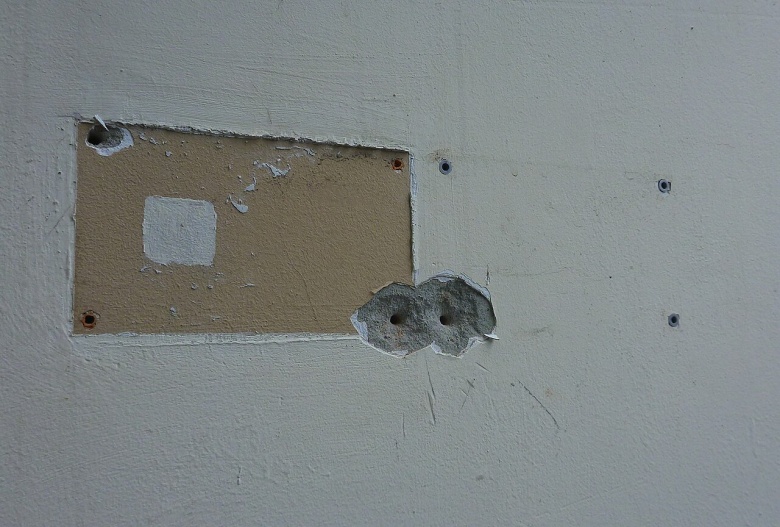
Wall after removing the “Last Address” sign in Yekaterinburg, st. March 8, no. 1, June 11, 2020
Wikipedia commons
It’s a little difficult to live in such a house; the ghosts in it are by no means Canterville’s. This is not a comedy, not a fairy tale, but pure horror. The number of ghosts is growing exponentially, especially in recent years.
All the same, I want to go home and inject myself. It’s especially painful when you see shots of snow-covered boulevards and courtyards. The ratio switches off and becomes sick from melancholy, which the Portuguese call saudade.
However, this same seasonality (my personal Moscow is precisely winter) also contains the answer to the inescapable question of nostalgia. You miss not the place, but the place/time. Not according to Sokol-Airport-Dynamo - my native places - but according to Sokol in early childhood (late 1970s), Airport in the 1980s (adolescence), Dynamo of those times when the old stadium had not yet been destroyed: I don’t like sports, but we went to listen to our favorite group D.A. Medvedeva Deep Purple (no, I'm not ashamed).
Subscribe to read in full
Subscribe to Redefine.Media to read Republic
Subscribe [You can pay with a Russian or foreign card. The subscription is renewed automatically. You can unsubscribe at any time.]
Where does the subscribers' money go?