
Translated material
Pashinyan made elections
Why in Armenia this weekend everything was not what it seemed

Photo: Alexander Patrin / TASS
In one of the villages of the Noyemberyan region of Armenia, Nikol Pashinyan’s “Civil Contract” party won significantly more in the elections than the national average. Supporters of the authorities explained this by the fact that the village is located near the border with Azerbaijan, and therefore citizens value peace more than others. On the other hand, notes local colleague Tatul Hakobyan, due to the same border issues, border guards made up part of the voters. But how many there were is a state secret.
Both explanations are correct. And this is perhaps the best image of the elections, which were previously declared historic.
Life is a struggle. Optional
If the political strategists who organized Nikol Pashinyan’s victory had written memoirs about it, they could have been called “Everything was not what it seemed.”
Like a runner before the finish line, Nikol Pashinyan, on the eve of the denouement, seemed to set out to arouse on himself the fire of accusations that, by some miracle, had not yet been wasted by his opponents. All night a day before voting day, the Central Election Commission was deciding the issue of removing the main opponent of the government, the Strong Armenia party of Russian billionaire Samvel Karapetyan, from the elections. Having accused him of bribing voters, Pashinyan complained that he himself would not be able to file a complaint with the Central Election Commission - his opponents would accuse him of being afraid of defeat. Therefore, with a request to restore justice, he turned to the friendly Republic party, and it immediately fulfilled the request.
The Central Election Commission predictably refused, and it is unlikely that Pashinyan was really ready to risk the legitimacy of the elections and a new aggravation with Moscow, which made it clear that removing its friends from the elections was a real red line. It remains to be assumed that if this episode was not an emotional breakdown, it was probably intended to maintain the degree of confrontation until the last minute.
The current campaign has indeed broken all records, and not only Armenian ones, of political bitterness. Moreover, this anger itself at first seemed completely unnecessary.
Samvel Karapetyan violated the non-aggression treaty with Pashinyan, which both sides strictly observed only when the latter started a conflict with the Armenian Apostolic Church, which, also not feeling any warmth towards Pashinyan, nevertheless made it clear that if it was treated humanely, then it would not strike first. But Pashinyan paid for the opportunity to traditionally play for aggravation by disturbing the balance in which he might have won without the current passions, somewhat repeating the scenario and the acceptable result of the last elections in 2021 - about 53 percent.
Now, in hindsight, it is already difficult to resist the conspiratorial temptation to admit that this was the ultimate goal - to give a completely local and predictable event in not the most key country in the world the scale of a clash of civilizations. Replace the domestic political agenda, in which Pashinyan would be blamed for a national catastrophe, with the theme of preserving peace after it, on which any geopolitics can be strung, bringing it to the fore.
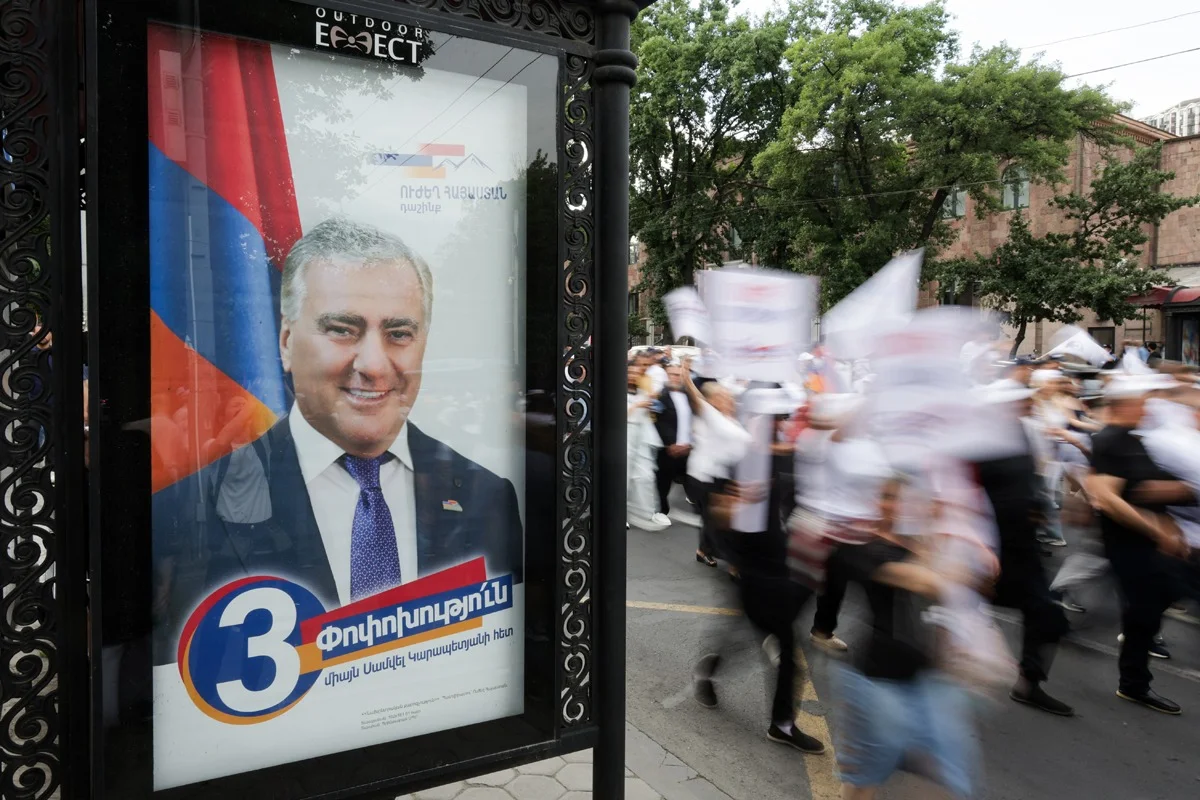
Elections that no one lost
No one lost in these elections - simply because, apart from Pashinyan, no one particularly wanted to win.
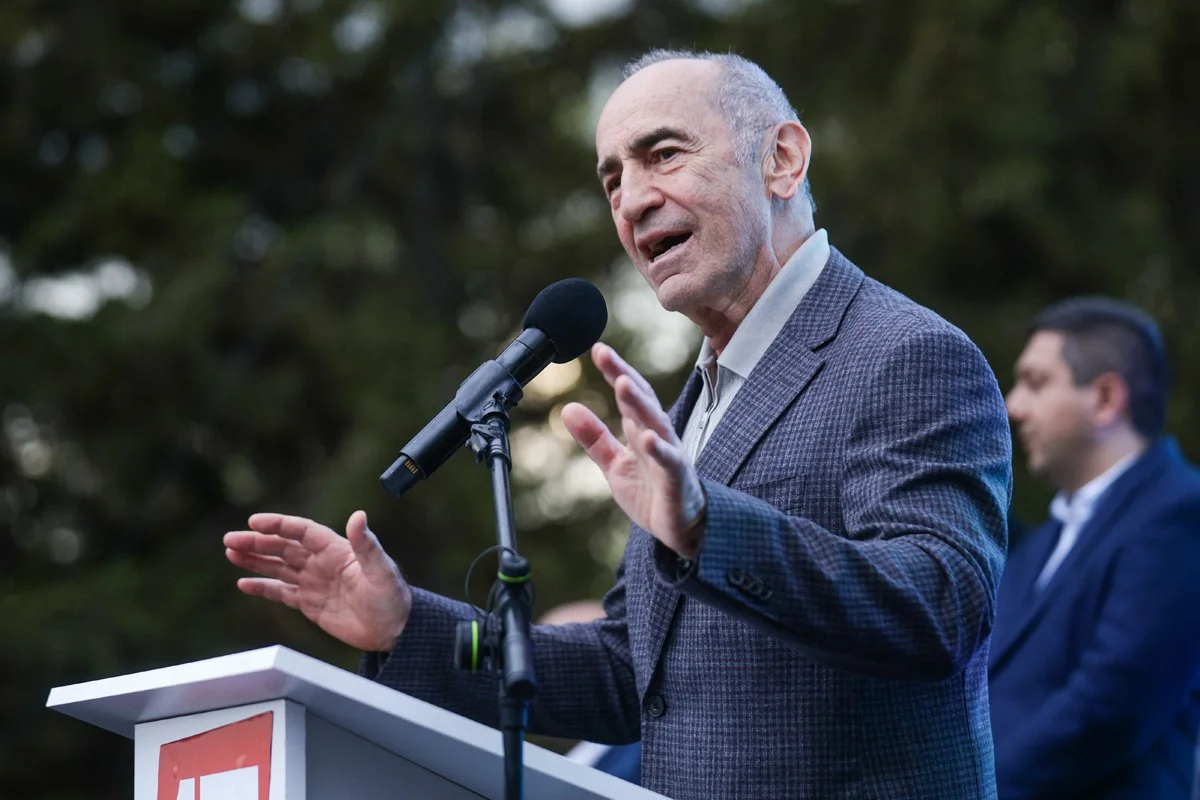
After summing up the results, the losers said all the required words predictably and without passion, confirming the condescending skepticism that they generated on the eve of the elections, promising not to accept the results that they considered a lie. Ex-President Robert Kocharyan (head of Alliance Armenia) appealed to the Constitutional Court with a demand to appeal the election results, but he knows as well as anyone how this appeal will end. Even the unprecedented pressure exerted by the authorities even on election day, when opposition representatives were detained by the dozens, did not cause a surge of additional energy among their leaders.
The slogans and innovations proposed by the opposition have either long been compromised along with their bearers, or are morally outdated. Kocharyan’s assurances that the formula for Armenia’s salvation was still “Forever with Russia” after Karabakh convinced only the most staunch supporters of strategic brotherhood or fans of Kocharyan himself.
Karapetyan’s promises to mutually beneficially restructure relations with Russia so emphasized the absence of at least some political idea and improvisation that they only strengthened the suspicion that “Strong Armenia” also had no plans for victory.
The fear of the return of 300 thousand Azerbaijanis to the Armenian Syunik, from which they were expelled, only strengthened these suspicions. Russia's threats of closing borders or raising gas prices are effective, but from an anxiety point of view they are much more speculative than the fear of a new war, which was fueled more skillfully by the current government.
The system of substituting election conflicts has taken on a life of its own. Someone, of course, believed that Armenia had become a battlefield for world giants. But, consciously, intuitively or without intent at all, Pashinyan, to whom no one is neutral, converted this entire “geopolitical” structure into a fierce dispute about the attitude towards him personally, which for many ultimately became a model of choice: for Pashinyan or against. Without any geopolitics and even war and peace.
Translation from Georgian and back
When, long before any official announcement of the election results, Pashinyan was congratulated by his Georgian colleague Irakli Kobakhidze, many were surprised: it would seem that it was not appropriate for the Georgian prime minister to congratulate the European triumphant. Meanwhile, there is a logic to this.
Nikol Pashinyan challenged the Armenian mythology, within the framework of which any values and ideas are important only from the point of view of their compliance with the interests of the Armenian people. He questioned the sacred - the inescapable “Forever with Russia”. But while proclaiming the Western choice, he also avoids the question of Western values. This also corresponds to the general, and by no means only Armenian, trend, according to which the West is not so much the rules of life as a self-sufficient alternative to Moscow.
But Pashinyan also finds his own instrumentality in the West. The West is skillfully drawn by Pashinyan into his coordinate system, in which those who are against peace with Azerbaijan turn out to be for the war and Moscow.
And Brussels is now forced to follow the given parameters of the geopolitical battle and even insist that Yerevan is Tbilisi today: Europe’s new hope in the South Caucasus.
The irony is that Irakli Kobakhidze may already detect something painfully familiar in Pashinyan’s actions. And not only in promises to finally deal with their opposition after the elections, to imprison someone, to take away someone’s business, but also in the confidence that everyone will be forced to accept this approach, based on the current situation.
...A Lithuanian colleague, who was in Armenia for the first time, painfully tried to reconcile the contradiction she had discovered within herself: the Armenians, as it seemed to her, were very angry with Russia, but at the same time they paid with a Mir card and ordered a Yandex taxi.
Between these observations there is, indeed, a whole world with its own traditions and ideas about what is good and what is bad. Perhaps, thanks to this ideological construct, over the past thirty years a force has not emerged in Armenia that would dare to call itself liberal. Maybe they are angry with Russia. But not so much as to refuse her help in anything, and then not wish Russia good luck in the fight against its enemies. And Pashinyan has to reckon with this.
Be careful, the doors are opening slightly
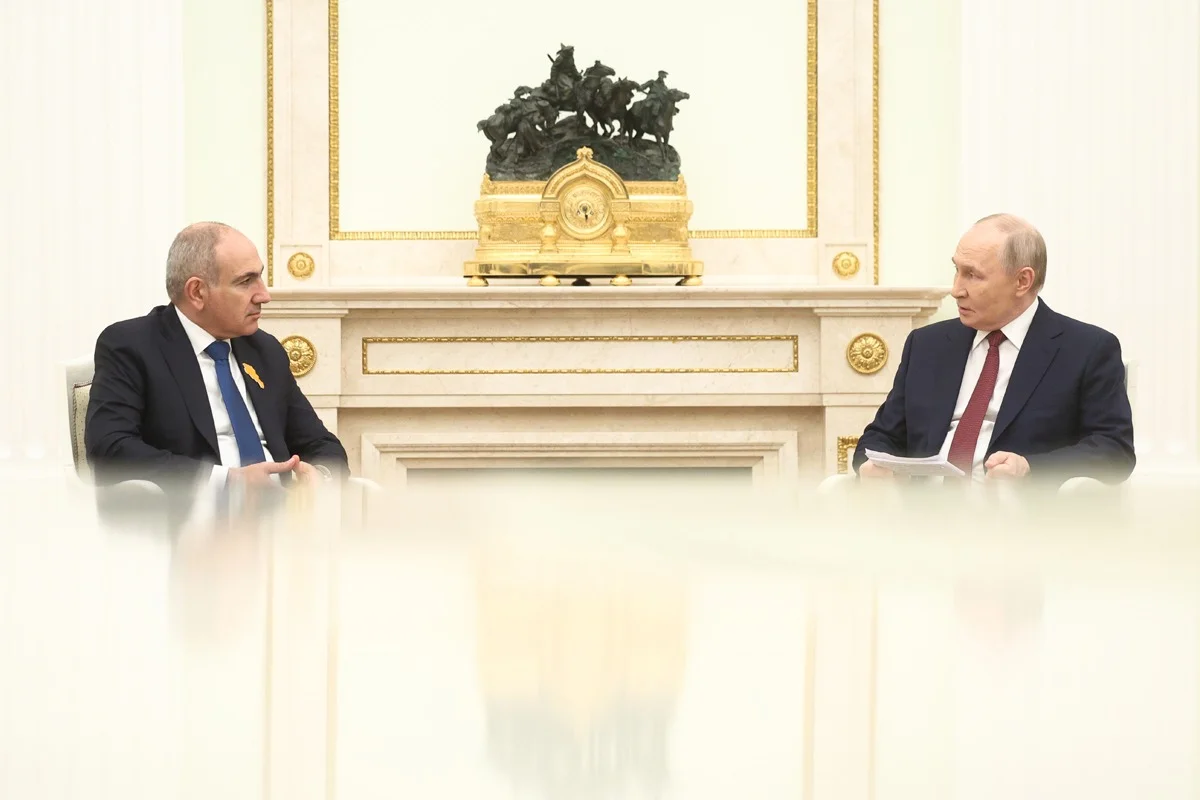
The limits of Pashinyan’s maneuverability, both subjective and objective, cannot but be understood in Moscow. Maria Zakharova’s statement on the election results sounded in such a way that no one would have been surprised in the last paragraph by the announcement of a severance of diplomatic relations or at least non-recognition of the elections. However, instead: “We expect that the Armenian authorities will be guided by approaches based on national interests. As for Moscow’s future line in affairs with Armenia, we intend to build our course taking into account the real steps of the Armenian leadership.” And observers from the CIS, unlike Zakharova, did not find any serious violations in the elections.
That is, the elections are over - not that you completely forget, but the door is ajar.
Moscow, presumably, understood no worse than others that the political speech of Kocharyan and Karapetyan was exclusively indicative, and in the future it would have to deal with Pashinyan. And the Kremlin is not at all afraid of this.
Times have changed. The relations that existed before and were called fraternal will no longer exist, and not only because Pashinyan rushed to the EU. In the model that Serzh Sargsyan once built, Yerevan delegated responsibility for its security to Moscow; Moscow accepted it with pleasure, since it was not going to provide it in reality. Pashinyan destroyed this model, but now Moscow does not need it either.
There is no longer any need for illusions about the last ally in the Caucasus; more important are the issues of using the infrastructures that Moscow controls in Armenia, or the question of who and when will build a nuclear power plant in Armenia.
No matter who leads Armenia and no matter what words this someone utters about the CSTO, the regional combination of interests is important, which is built not by a directive from Moscow, but in complex calculations with Yerevan, Baku, Tbilisi, and Ankara. Moreover, Pashinyan himself is ready for constructive contacts, at least within the EAEU, at least at some congress of ecologists in Altai or, say, philatelists in Karelia. Which he immediately made clear when reporting his victory.
In short, the elections are just a new beginning. And not only in relations with Moscow. Already at the stage of counting votes, an intrigue began, which may turn out to be the second act of the same drama. And all the developments of the election campaign can still be useful, they have been adapted and repeated.
The intrigue must smolder
The Prosperous Armenia Party of veteran Armenian politician Gago Tsarukyan has already celebrated conquering the 4 percent entry barrier. However, during the seemingly cosmetic summing up of the results of electronic voting abroad (several hundred votes of diplomats and other government travelers), the party missed 0.004 percent and at the time of writing this article remains outside the parliament. But this is only the beginning of a much deeper political arithmetic of infinitesimal quantities.
The fact is that Pashinyan’s party lacked exactly two mandates to reach 60 percent of the list of parliament. And she will receive them now - after (or, as skeptics suspect, as a result of) the redistribution of the seats vacated by Prosperous Armenia.
60 percent is a sacred number. It is 3/5 that is required to approve constitutional amendments and call a referendum. The prologue to which, perhaps, will be the past elections.
A new constitution is at stake.
It could have been corrected without a referendum. But Pashinyan, contrary to his stated plans, did not receive a constitutional majority. Theoretically, it is possible to find 5-6 apostates in the opposition factions in order to reach 2/3, and there is such experience. But this does not solve the problem, since we are not just talking about amendments, but about the preamble, which the Constitutional Court considered so significant that it cannot be changed by parliamentary amendments, even by a constitutional majority - only a referendum.
And changing the preamble with a reference to the Declaration of Independence, which talks about reunification with Karabakh, is Azerbaijan’s condition for signing a peace treaty. And if so, then, as Pashinyan has already stated, we are talking about a new constitution, where, presumably, not only the preamble will be changed in his favor.
This is where the main front of the post-election confrontation should now lie.
For the opposition, this is perhaps the last chance to fight Pashinyan on the patriotic field: the Karabakh idea with allusions to revenge against the final abandonment of Karabakh for the sake of a full settlement.
And this agenda will certainly become another act of the global confrontation tested in elections. Moreover, in this case, the interest of neighbors will clearly be much more tangible - Azerbaijan, Turkey, and, of course, Russia.
Another thing is that you don’t have to rush with this. There are questions that are more important to ask than to seek definitive answers to them. Just as inflation expectations are sometimes more significant than inflation itself, anticipation of a referendum is a political factor in itself. Both for relations with neighbors and within the country.
So there is a new political season ahead. For the opposition, it can become a lifesaver from the point of view of new mobilization, without which it may be very difficult for it to preserve itself. And this will certainly become a new challenge for the authorities and personally for Nikol Pashinyan, for whom “Life is a struggle” is not a slogan, but a political technology.