
Translated material
Pensioner with indulgence
The head of the bank's board of directors was not tried for stealing depositors' money. This man is the former operative Kuznetsov, with whom the Magnitsky case began

Illustration: Petr Sarukhanov / Novaya Gazeta
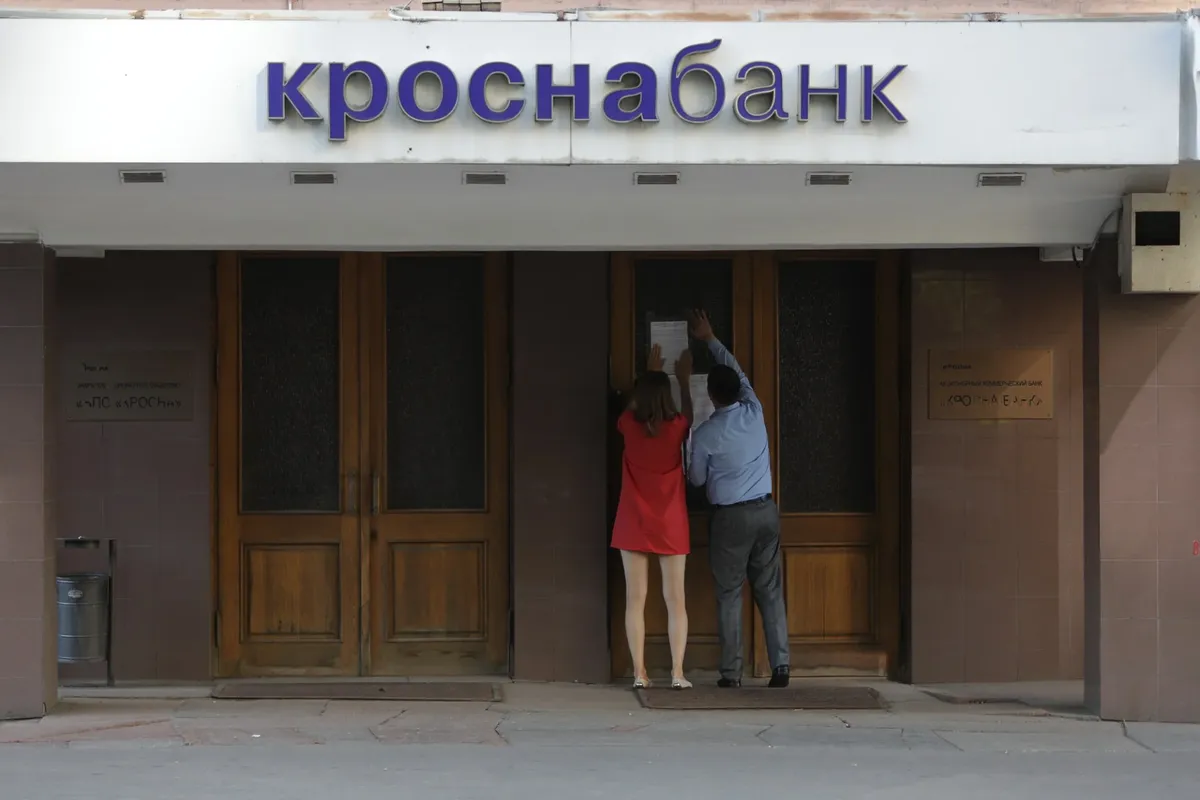
On December 29, 2025, the Presnensky Court of Moscow completed the consideration of a criminal case related to the bankruptcy of the small capital Krosna Bank. There were three defendants in the case: the chairman of the board of the bank Olga Shcherbakova, her deputy Valeria Sattarova and Shamil Mutaev, who was recognized by both the investigation and the court as the main beneficiary of the bank.
The court found the defendants guilty of stealing funds from Krosna Bank under the guise of issuing loans to individuals and falsifying the reporting of a credit institution. And he sentenced Shamil Mutaev to 5.5 years in a general regime colony. Olga Sherbakova - by 4.5 years, Valery Sattarova - by 4 years. The Moscow City Court was scheduled to consider an appeal against this verdict on June 2. But the court hearing was postponed to the 18th.
This seemingly ordinary criminal case initiated by the Deposit Insurance Agency (DIA) after the bankruptcy of Krosna Bank, as well as the bankruptcy procedure itself, for which dozens of judicial acts were adopted in the Moscow Arbitration Court, attracted our attention only because from February 4, 2021 to August 12, 2022, that is, until the revocation of the banking license, Artem worked as the chairman of the board of directors of Krosna Bank Kuznetsov . Former operative of the Ministry of Internal Affairs, retired police lieutenant colonel, who became famous in April 2013.
Of course, the name of Artem Kuznetsov has appeared in the press before in connection with the “Magnitsky case.” But on April 27, 2013, Artem Kuznetsov was shown on all televisions in the country.
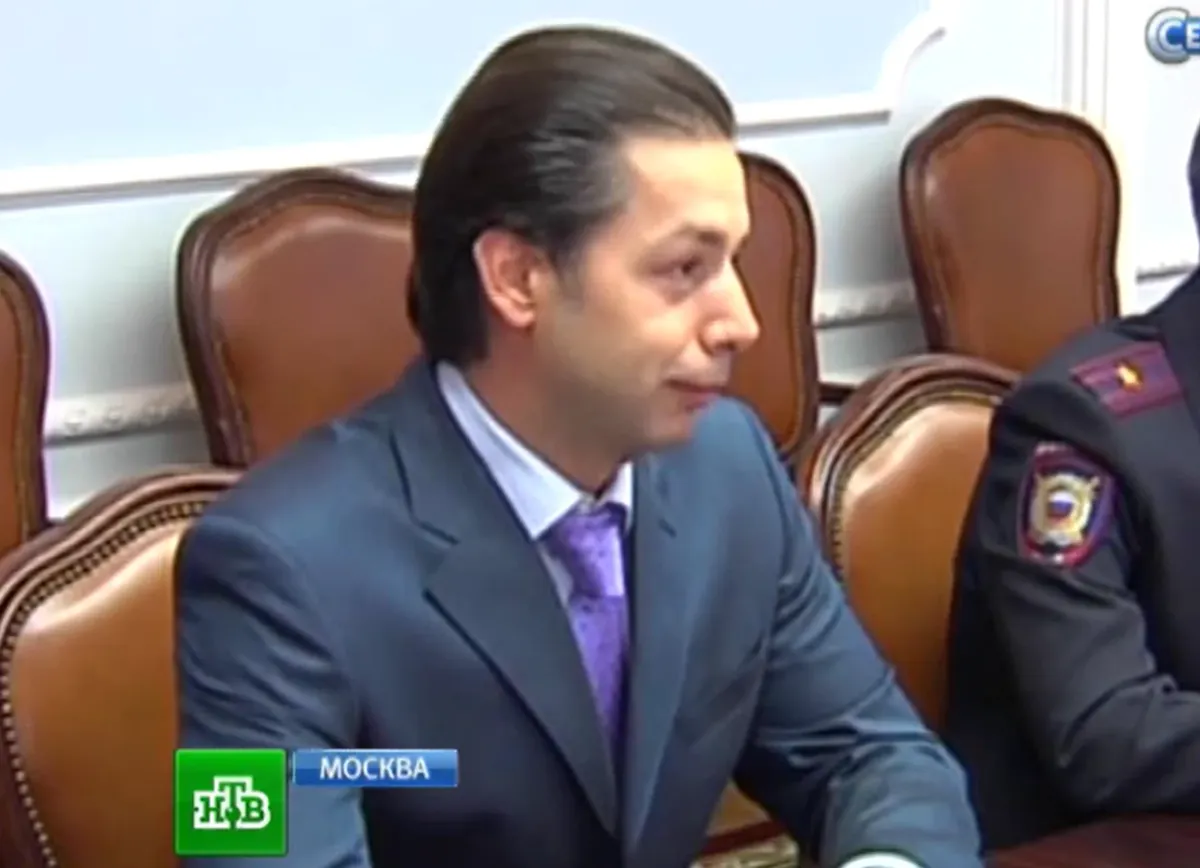
Meeting with the minister
The Interior Ministry pensioner was among those invited to a meeting with Russian Interior Minister Vladimir Kolokoltsev. This event was hastily organized after on April 13, 2013, the United States published the names of 18 Russians originally included in the American sanctions Magnitsky List. Among them was Artem Kuznetsov. He was 38 years old at the time, but had been on a superannuation pension for almost three years. And they didn’t forget the young pensioner, they invited him.
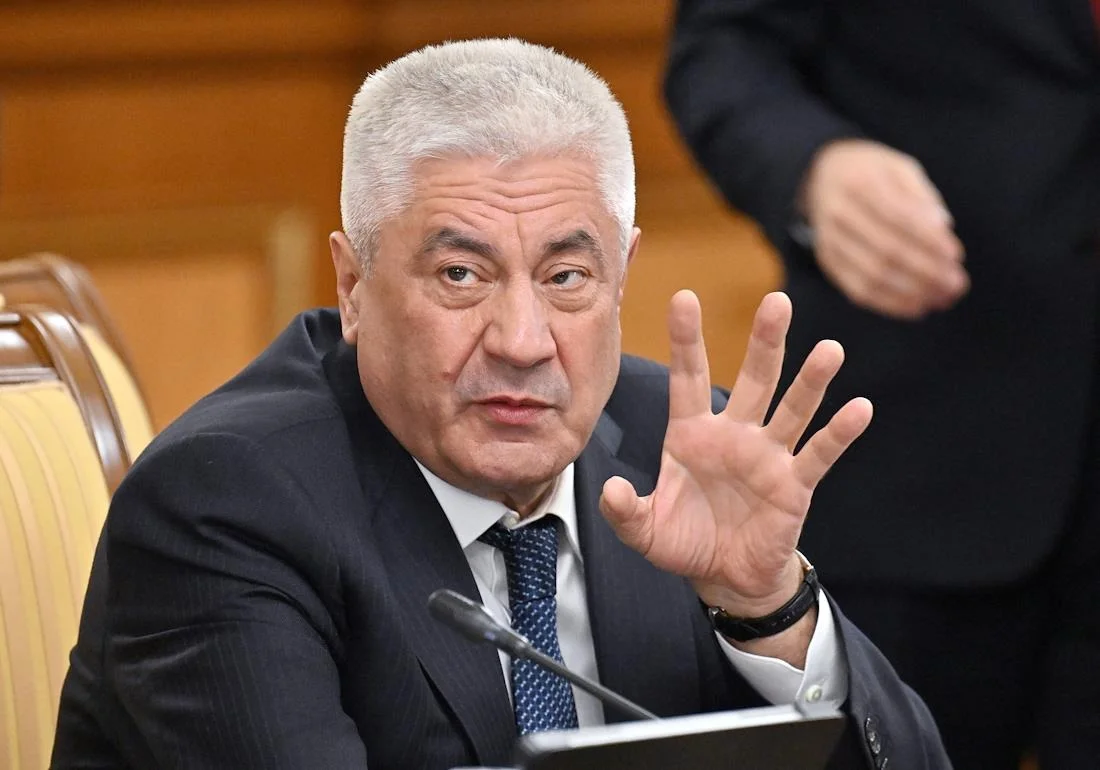
Minister Vladimir Kolokoltsev supported his current and former employees. He advised them not to worry, not to worry.
“I confirm once again: as for our official position, let this kind of decision in no way lead you into any kind of unrest,” Kolokoltsev reassured the meeting participants. And he prophetically added: “How many of these acts will be adopted by representatives of other states, what decisions they will make on these acts—the citizens of Russia should in no way be concerned about this.”
Reports of the meeting of the Minister of Internal Affairs with his current and retired subordinates were preceded by such events. In 2007, the Ministry of Internal Affairs received information from the “K” department of the FSB of Russia that the consulting company Firestone Duncan, which worked in the interests of the Hermitage Capital Management fund, was allegedly evading taxes, like the fund itself. The verification of the received information was assigned to the Main Directorate of the Ministry of Internal Affairs for Moscow, and specifically to Lieutenant Colonel Artem Kuznetsov.
As part of this check, on June 4, 2007, Kuznetsov, accompanied by two dozen operatives and members of the special forces of the Ministry of Internal Affairs, descended on the Moscow offices of Firestone Duncan.
How the “Magnitsky case” began
During the searches, the investigative team removed from the orbit of the Hermitage Capital Management fund the seals and constituent documents of Parfenion LLC, Machaon LLC, and Rylend LLC. Presumably, it was these documents and seals that were later used by the attackers to change the shareholders and managers of these subsidiaries.
Applications for changes in the owners and composition of executive bodies of companies were received by the Federal Tax Service No. 46 in Moscow during the period from September 6 to September 20, 2007. At the same time, changes were made to the Unified State Register of Legal Entities. In fact, Hermitage Capital companies were stolen, and some other persons used them for their own purposes.
On December 26, 2007, the 28th and 25th Moscow tax inspectorates received updated tax returns for 2006, from which it followed that Parfenion LLC, Machaon LLC and Rylend LLC allegedly overpaid a total of 5.4 billion rubles to the Russian budget.
The tax authorities meekly stuck to their guns. And just a day later, on December 27, 2007, the “overpaid” amounts of taxes - those same 5.4 billion rubles, or $230 million at the exchange rate of that time - were credited to the accounts of these companies.
In fact, this budget money was stolen.
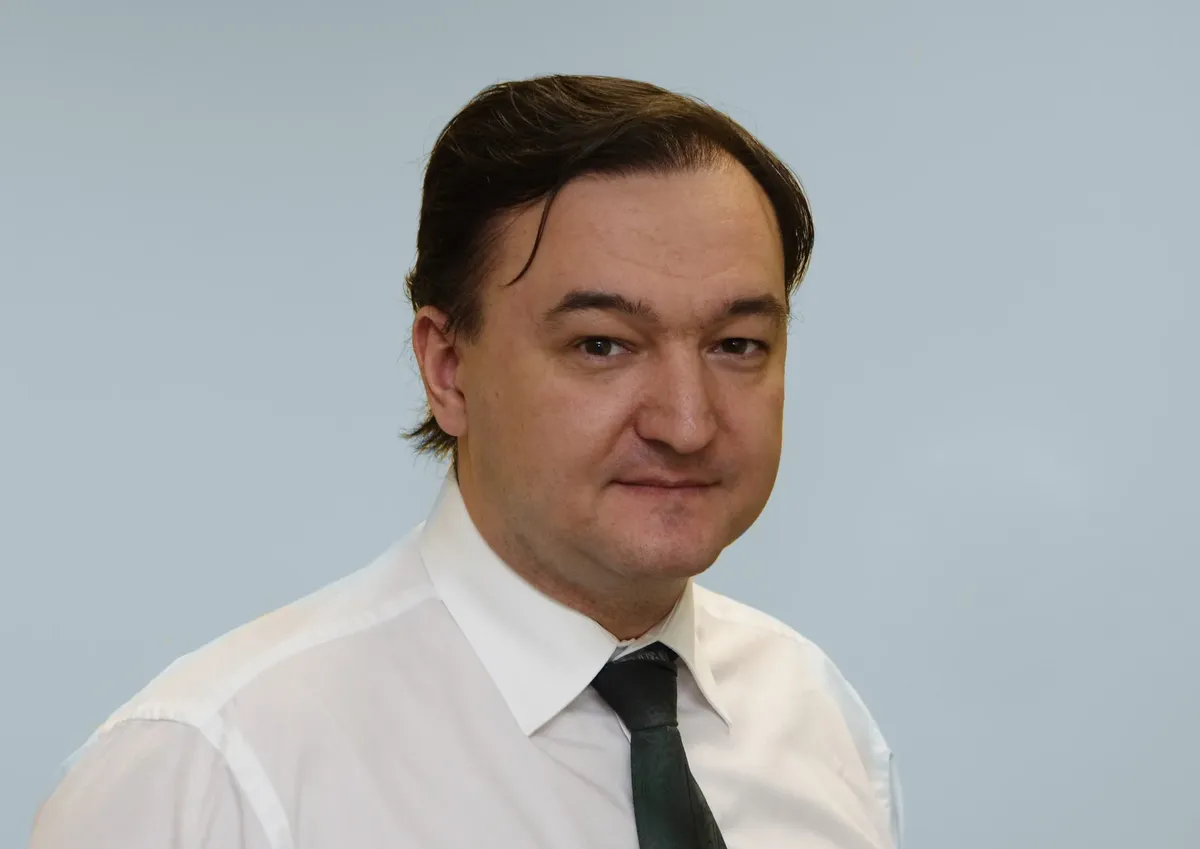
These billion-dollar bank transactions were discovered by Sergei Magnitsky, who worked as an auditor for Firestone Duncan. And he did not remain silent.
At the very end of 2007, Hermitage Capital Management sent a 250-page statement about the crime, compiled on the basis of information collected by Magnitsky and his colleagues, to the Prosecutor General's Office, the Investigative Committee and the Ministry of Internal Affairs.
The Prosecutor General's Office responded quite quickly. I sent a statement to the Moscow prosecutor's office, from where it was sent to the Main Directorate of Internal Affairs of Moscow, and from there it was forwarded to Pavel Karpov, the investigator who, by a strange coincidence, also led the investigation into the criminal case of tax evasion by the Firestone Duncan company. (The Investigative Committee began its own investigation.)
Immediately after the celebration of the New Year, 2008, investigator Pavel Karpov called Magnitsky as a witness. And he issued a resolution to initiate a new criminal case into the theft of 5.4 billion rubles from the Russian budget.

In 2008, during interrogations in this criminal case, Magnitsky named operative Kuznetsov as one of the alleged participants in the theft scheme. For which he paid.
On November 27, 2008, Magnitsky himself was arrested, accused of assisting the Hermitage Capital Management fund in evading taxes on a particularly large scale. But even in his prison cell, he did not renounce his testimony, insisting that budget money was stolen by an organized criminal group, which could have included Lieutenant Colonel Kuznetsov.
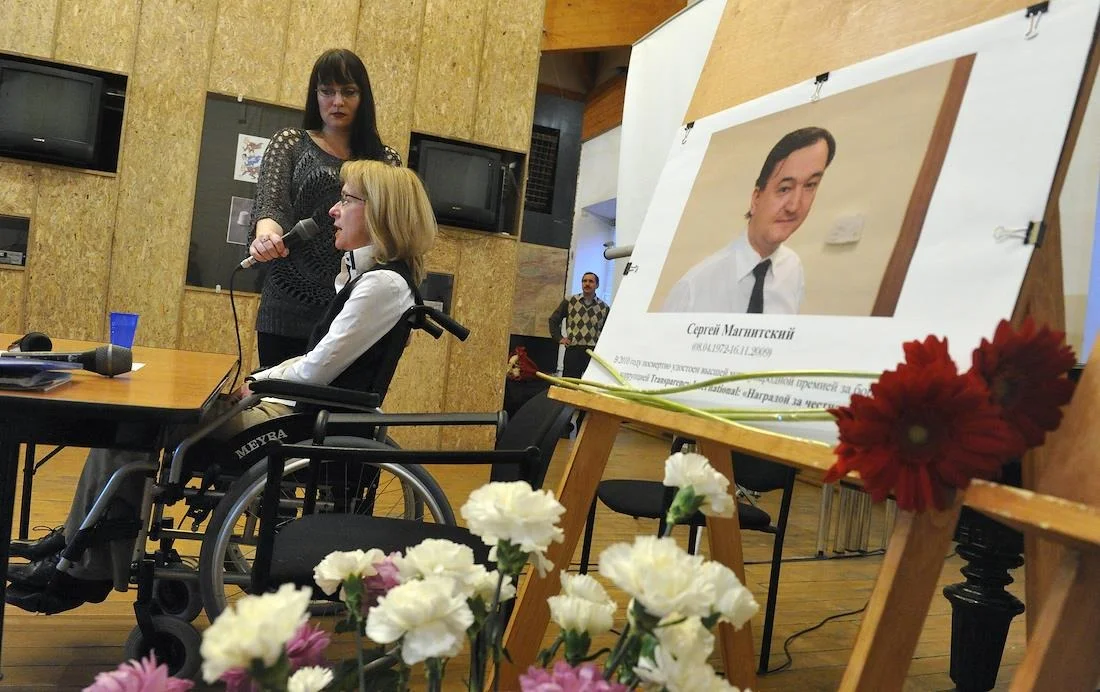
In the pre-trial detention center, Magnitsky was created under torture conditions, was not provided with medical care, and on November 16, 2009, he died under circumstances that are not fully clarified.
A week later, on November 24, the President of Russia, who at that time was Dmitry Medvedev, received the chairman of the council for promoting the development of civil society institutions and human rights. This position was held at that time by Ella Pamfilova, the current head of the Russian Central Election Commission. Pamfilova asked Medvedev to look into the circumstances of the lawyer’s death.
In the wake of billions
On December 28, 2009, the Public Commission for Monitoring Ensuring the Rights of Prisoners published a report concluding that the death of Sergei Magnitsky was led to “the creation of inhuman, degrading conditions of detention, comparable, in essence, to torture.”
Meanwhile, investigative journalists and lawyers from many countries around the world continued to search for 5.4 billion rubles stolen from the Russian budget. And they established, for example, that the family of Artem Kuznetsov, within several years after the theft of this money, perhaps by coincidence, became several million dollars richer.
An American lawyer, one of the founders of the Firestone Duncan law firm, Jamison Firestone, in the summer of 2010, again appealed to Russian law enforcement agencies with a statement about unlawful actions by employees of the Ministry of Internal Affairs. The document stated that Lieutenant Colonel Kuznetsov could allegedly organize the seizure of documents with the help of which 5.4 billion rubles were stolen from the Russian budget. At the same time, Kuznetsov himself, according to Firestone, allegedly got 93 million rubles from this amount. In addition, the application contained a whole list of real estate objects, cars, land plots, the owners of which, in the opinion of the applicant, were members of the family of operative Artem Kuznetsov.
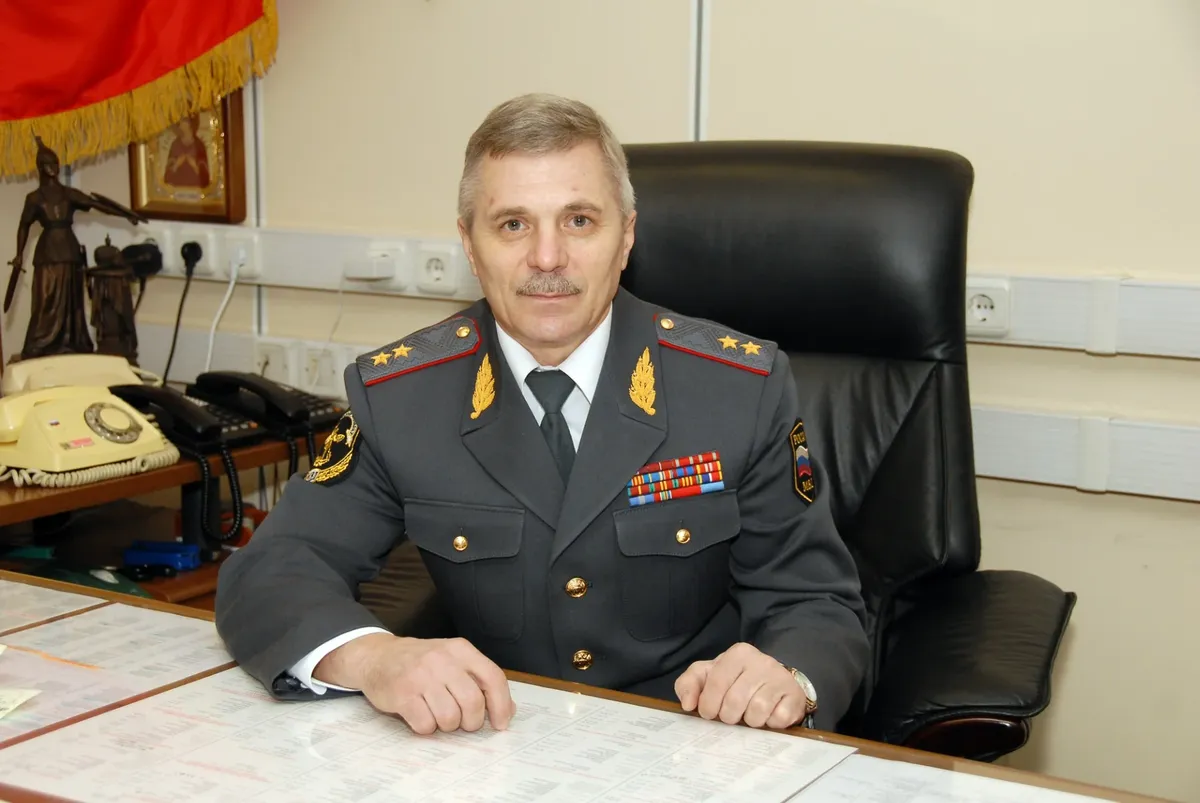
Based on this statement, the Department of Internal Security of the Ministry of Internal Affairs of Russia organized an inspection, and on August 11, 2010, Lieutenant General Yuri Draguntsov, who at that time headed the department, personally approved the “Conclusion of the inspection on the appeal...”.
The document records: Kuznetsov did not admit that he owned apartments, land plots, foreign cars, explaining that all these assets were acquired by his parents. At the same time, the lieutenant colonel did not provide “documents confirming the legality of the acquisition by close relatives...” of these valuables. And he “refused to conduct a polygraph test without explanation.”
Immediately after the end of this inspection, 35-year-old Lieutenant Colonel of the Ministry of Internal Affairs Artem Kuznetsov retired. In May 2011, further official investigation into the theft of billions was completely stopped.
Opera in a jar
But in November 2023, an official document appeared, from which it became clear why Artem Kuznetsov refused the polygraph. Because then, in the summer of 2010, the lieutenant colonel openly lied to inspectors from the internal security department of the Ministry of Internal Affairs. This directly follows from the ruling of the Moscow Arbitration Court in the bankruptcy case of Krosna Bank, issued on November 9, 2023. This decision is about interim measures in connection with the bankruptcy of Krosna Bank and the seizure of the assets of the founders and managers of the bank. This included Artem Kuznetsov, who in February 2021 acquired 10% of the bank’s shares and moved into the office of the chairman of the board of directors of the credit institution.
The former operative came to Krosna Bank not alone, but as part of a close-knit team. Which, over the course of a year and a half, seems to have become such a storm that the bank collapsed.
Krosna Bank was created back in December 1993. And for almost 30 years it worked quite successfully and stably. With assets of 2.02 billion rubles. occupied 283rd place in the Russian banking system. But on August 12, 2022, the Bank of Russia revoked the license of Krosna Bank and explained its decision this way: “The Bank of Russia has repeatedly sent instructions to the credit institution with requirements for an adequate assessment of the risks taken... In addition, Krosna Bank carried out suspicious transactions aimed at withdrawing funds abroad.”
On October 31, 2022, the Bank of Russia filed a claim with the Moscow Arbitration Court to declare Krosna-Bank LLC bankrupt. On December 13, 2022, the court upheld the claim and imposed external administration on the bank. The state corporation “Deposit Insurance Agency” (DIA) was entrusted with carrying out the bankruptcy procedure.
On November 9, 2023, the Moscow Arbitration Court issued a decision on interim measures. It was then that the property of former MIA operative and former chairman of the board of Krosna Bank Artem Kuznetsov was seized.
The court decided:
“Take interim measures in the form of seizure of Artem Konstantinovich Kuznetsov’s property, including movable and immovable property, funds in accounts opened with credit institutions, shares, shares in organizations in the amount of 1,162,265,000 rubles, with the exception of the subsistence level of the defendant and his dependents.”
Among the seized real estate belonging to Kuznetsov, there were just several objects indicated in Firestone’s statement, the relation to which in 2010 Kuznetsov categorically denied. We are talking, for example, about three premises located at the address: Moscow, Novoryazanskaya street, building 16/11, building 1.
The court found that Kuznetsov is the owner of these premises. And he rented out these premises. At the time of the decision of the Moscow Arbitration Court, a Georgian restaurant called “Old Town” was operating there.
In addition, in November 2023, the arbitration seized an apartment with an area of 154.5 m2 located on Davydkovskaya Street. In 2010, during an internal inspection, Kuznetsov claimed that this apartment belonged to his parents.
Well, perhaps the most expensive Kuznetsov asset, which was seized on November 9, 2023, is an “unfinished construction project” with a cadastral value of 1 billion 129 million 634 thousand 15 rubles 81 kopecks, located on the same Davydkovskaya Street.
The facility, which in November 2023 was listed as “construction in progress” in a court decision, was in fact a luxury fitness club that had been operating quite successfully for many years, the website of which stated that it offered clients “a spacious gym with premium equipment, a functional training studio, cycling and yoga, a martial arts studio with a training ring and tatami... Children’s club, fitness bar, solarium, SPA studio and summer playground with a sandy beach and sun loungers, equipped for beach volleyball and crossfit. The heart of the club is a complex of 3 swimming pools. There is free underground parking."
As part of the bank bankruptcy procedure, on December 25, 2024, the arbitration court made another decision on interim measures: to temporarily restrict members of the bank’s board of directors from traveling outside the Russian Federation until the completion or termination of the proceedings. Among those who were prohibited by the court from leaving Russia was Artem Konstantinovich Kuznetsov.
Kuznetsov appealed this decision, stating that such a measure as a ban on traveling outside the Russian Federation is not provided for at all by the current procedural and bankruptcy legislation.
In addition, the former operative claimed that he “needs to provide assistance and accompany his close relatives, namely his minor children and elderly father, on trips abroad.” Artem Kuznetsov literally begged the court to lift the ban on leaving Russia, assuring that he needed to fly to Germany in order to accompany his father to a medical clinic in Dusseldorf.
But the court did not show humanism. The court decision stated:
“...The court proposed to Kuznetsov A.K. submit to the case file evidence indicating the relevance of the foreign clinic’s offer, evidence of replenishment of the clinic’s deposit, information about tickets purchased, reservations, hotel payments, evidence of the father’s illness, evidence of the absence of other persons who have the opportunity to accompany Artem Konstantinovich to foreign countries. At the same time, the applicant presented in the case materials only a notarized copy of the response from the University Hospital of Dusseldorf about the balance of funds in the client’s account…”;
“...In the case materials there is no evidence of agreement with the foreign medical clinic on the treatment plan or its schedule. The case materials also do not provide evidence of the impossibility of accompanying the father and minor children by other persons”;
“...The above also refutes the arguments of A.K. Kuznetsov. about the need to accompany the applicant’s minor children on trips to foreign countries in order to participate in sports camps.”
As a result, on April 3, 2025, the arbitration court refused to cancel the interim measures, Artem Kuznetsov remained banned from leaving Russia. But not for long. Just a month and a half later, on May 27 last year, the Moscow Arbitration Court lifted all restrictions on Artem Kuznetsov, recognizing him as not involved in the bankruptcy of the bank. Despite the fact that Kuznetsov worked in this bank as chairman of the board of directors.
The court decided: “Kuznetsov A.K. did not actually determine the activities of the Bank; his position on any issues could not influence decision-making. The information he had regarding the Bank's activities was incomplete, and his participation in management implied exclusively involvement in a limited range of decision-making issues by the Board of Directors. Kuznetsov A.K. was not the initiator and did not benefit from any of the transactions that were declared as leading to the bankruptcy of the Bank. <…> The fact that Kuznetsov A.K. was the Chairman of the Board of Directors, did not in any way expand his powers.”
This was the end of the troubles associated with the bankruptcy of Krosna Bank for Ministry of Internal Affairs pensioner Artem Kuznetsov. And he can fly to Europe again.
All the same faces and the same banks
Meanwhile, in parallel with the bank bankruptcy procedure, a criminal case was also initiated. The defendants in this case, as I already said, were three people: the chairman of the board of Krosna Bank Olga Shcherbakova, her deputy Valeria Sattarova and the main beneficiary of the bank Shamil Mutaev.
Even in the decision of the arbitration court it was recorded that “the bankruptcy trustee submitted to the case materials decisions to bring V.G. Sattarova, Sh.M. Mutaev as defendants. and Shcherbakova O.V. From these decisions it follows that Mutaev Sh.M. chose the Bank to implement its scheme for systematic theft. It was Shcherbakova O.V. and Sattarova V.G. were part of the group that assisted Mutaev Sh.M.”
And one more quote from the decision of the Moscow Arbitration Court dated May 27, 2025:
“Also Mutaev Sh.M. was a shareholder and chairman of the Board of Directors (until 2010) of CJSC JSCB Benifit Bank, where O.V. Shcherbakova also worked as an advisor during the period from January 23, 2008 to June 30, 2009. and was actually a subordinate of Mutaev Sh.M.”
"Benefit Bank"! This is the same bank that Novaya Gazeta wrote about back in April 2012! Because “...the “leader” in the list of banks to which billions were transferred from the budget as VAT refunds is Benifit Bank CJSC. Of the 11 billion rubles that left the budget in 2009–2010, 5.5 billion went to the accounts of companies in Benefit Bank.
The same publication also named Shamil Mutaev as the head of Benefit Bank, through which billions stolen from the budget flowed. This is exactly the same Shamil Mutaev, whom the Presnensky Court of Moscow sentenced to 4.5 years in prison for embezzling funds from Krosna Bank under the guise of issuing loans to individuals.
The chairman of the board of directors of Krosna Bank, Artem Kuznetsov, turned out to be not involved in the crime. It was Shamil Mutaev who deceived him and dragged the Ministry of Internal Affairs pensioner into corruption, appointing him to a position with a sonorous name, but without giving him any powers.
Maybe pensioner of the Ministry of Internal Affairs, retired police lieutenant colonel Artem Kuznetsov has an indulgence? Issued on April 27, 2013 by the head of the Ministry of Internal Affairs Vladimir Kolokoltsev? The minister then clearly said that those on the “Magnitsky list” should not worry or worry.