
Translated material
Final Slavs
At Roland Garros, women's tennis spoke Slavic again

Mirra Andreeva and Maya Chvalinska. Photo: Imago Sport and News
A week ago, she was looking for money for extra nights in a Paris hotel. On Saturday, Philippe Chatrier left the court with a six-figure check and the air of a person who believes that the main victories are still ahead.
When 24-year-old Polish Maja Chwalinska arrived in Paris for the Roland Garros - the French Open, one of the four Grand Slam tournaments (the most prestigious and high-status competitions in the world), her plans were modest. Qualification, several matches, attempt to earn rating points. In the world of tennis, where the top 100 is already considered elite, and a place in the second means a constant struggle to finance a career, no one books a hotel two weeks in advance without the certainty that they will stay at the tournament.
Then something happened that sports editors love more than any forecast. The 114th racket in the world, a girl from Dąbrowa Górniczy, an industrial town in Polish Silesia, began to win. First - qualifications, then - main draw matches. She defeated nine rivals - the world's leading tennis players, who, in terms of ratings and income, were in a completely different part of the tennis universe.
And then she ended up in the finals of the main clay tournament on the planet.
Chwalinska doesn't look like your typical modern women's tennis star. She does not overwhelm her opponents with the power of her blows and does not base her game on physical superiority. Her weapons are patience, changing rhythm, cutting balls and the ability to destroy someone else's pattern.
One of the French commentators recounted her opponent’s impressions almost with bewilderment: “It seems that the point has already been won, but she still returns the ball. You don’t understand how, but she brings him back.”
For the reader who is far from tennis, it is worth clarifying one detail. Maja Chwalinska did not come to Paris as one of the guest stars. To get into the main draw, she had to go through a qualifying tournament. In professional tennis, this is a kind of additional exam for those whose rating is not yet high enough for automatic participation. Of those who start the tournament from these sporting bottoms, usually no one makes it to the finals.
That is why the current result of the polka looks almost incredible. In the entire Open era of tennis (the so-called period after 1968, when professionals gained the right to compete at major tournaments on an equal basis with amateurs), only one tennis player has previously managed to go from qualifying to winning a Grand Slam tournament - Briton Emma Raducanu at the US Open in 2021. Chwalinska came second.
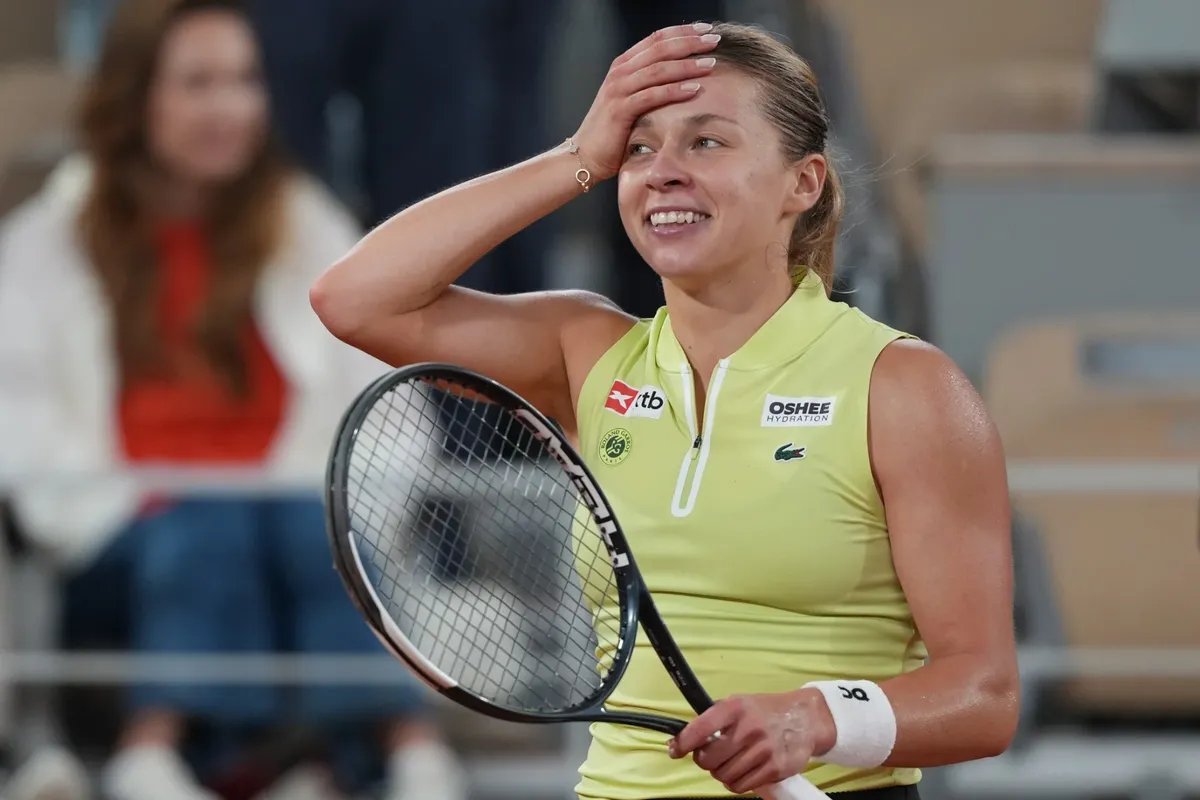
Maya herself takes this story much calmer than the journalists. After the final, she pointed out one thing that, perhaps better than any commentary, explains the structure of modern sports: “I know a lot of great players outside the top hundred. The difference is now very subtle. A lot of things need to come together.”
Perhaps this is exactly what happened in Paris.
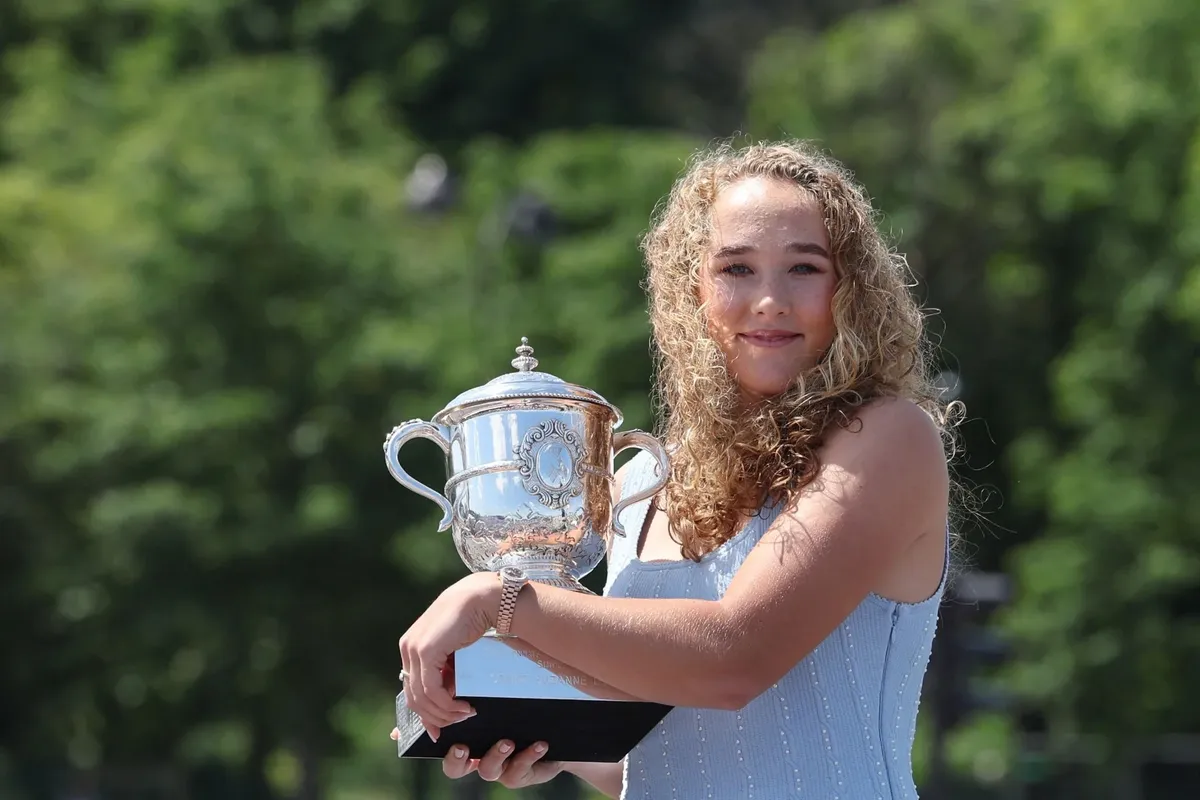
And the winner? After the awards ceremony, Russia's Mirra Andreeva looked less like a champion and more like a very young girl who has yet to get used to her own success.
She is 19 years old. She was born in Krasnoyarsk, trained in Moscow and Sochi, and then moved to France. Her mentor is Conchita Martinez, a former Wimbledon champion and one of the most respected figures in world tennis. After the victory, Andreeva unexpectedly thanked not only the coach, but also the sports psychologist, admitting that on the way to the title she had to cope with her own inner demons.
In this sense, there was more in common between the winner and the loser than it might seem. Several years ago, Chwalinska experienced a severe psychological crisis and herself spoke openly about depression. It’s just that one of the tennis players that day was holding in her hands the main prize of the tournament and a check for 2.8 million euros, and the second was only the finalist’s check for 1.4 million euros. But both left the court not only as athletes. First of all, as people who had to overcome something within themselves.
If you look at the history of women's tennis in recent decades, you get the feeling of a kind of family chronicle of Central and Eastern Europe.
Czechoslovakia gave the world Martina Navratilova, an athlete whose influence on the game is still felt today. Then came the great Monica Seles from Yugoslavia, who changed the very speed of women's tennis. Next came Martina Hingis (originally from Czechoslovakia, who played for Switzerland), Russian Maria Sharapova, Victoria Azarenka from Belarus, Czech Petra Kvitova, Agnieszka Radwańska from Poland. In recent years, this list has been supplemented by the world ranking leader Polish Iga Swiatek, Arina Sabalenka from Belarus and Ukrainian Elina Svitolina. Now Mirra Andreeva is confidently approaching this row.
Why exactly this region has been regularly producing world-class champions for almost half a century has not been fully explained until now. There are enough versions. They talk about sports schools of the socialist era, about family discipline, about the role of tennis as a social elevator, about the specific psychological preparation of children. But none of these theories seem exhaustive. The fact remains: states disappeared from the map, political regimes changed, borders collapsed, new countries emerged, and the flow of outstanding tennis players from this part of Europe did not stop. Perhaps this is one of those rare cases when statistics are more convincing than any explanation.
The history of sports knows many examples when a sensational breakthrough turned out to be the pinnacle of a career, so it is difficult to predict the future trajectory of Maya Khwalinskaya’s sporting destiny. After the final, she herself only spoke about the need to rest a little, take a short vacation, and then begin preparations for Wimbledon, which begins on June 29. However, due to strict application deadlines, her new ranking (21st racket) does not guarantee automatic entry into the tournament. Maya will either have to make her way through the qualifications again, or hope for a wildcard - a special invitation that the organizers issue to the player, bypassing the standard selection rules; in the women's draw of the Wimbledon tournament there will be only eight of them for 128 participants. For her chance, she will have to compete with very big names, but Maya will most likely get the “wild card”: she provides enormous attention from the audience, and it is profitable for the organizers to issue her a special invitation in order to capitalize on their commercial interest.
Vasily Vermensky, specially for Novaya