
Translated material
Elections for balance
Reporting from Yerevan polling stations where they know how to respect differences

Polling station 4/41 in Yerevan. Photo by the author
(18+) THIS MATERIAL (INFORMATION) IS PRODUCED, DISTRIBUTED AND (OR) SENT BY FOREIGN AGENT NOVASHOV ANDREY VALERIEVICH OR CONCERNES THE ACTIVITIES OF FOREIGN AGENT NOVASHOV ANDREY VALERIEVICH.
On June 7, parliamentary elections took place in Armenia. Novaya's correspondent spent the entire day at polling stations to talk with voters, observers and election organizers. Their rhetoric, as it turned out, is far from the reasoning of political scientists. In addition, he noticed new sentiments in Armenian society, alarming for Russian-speaking emigrants.
"Calm and silent"
This district of Yerevan is called Arabkir. Beginning of nine in the morning. Polling station 4/19 at the secondary school named after the writer Raffi. A three-story school building, the kind that was built in probably all the union republics in the late USSR, only, like many houses in Yerevan, it was decorated with brown tuff. Above the porch is the national flag of Armenia, on the door is the plot number. Everything is the same as in any Russian city on election day, except, of course, for the colors of the flag and the language in which the inscriptions are made.
Just outside the door is a table at which two police officers are sitting. They call out to me as I pass by. Since everything is still like in my homeland, I am preparing that they will ask for a long time who I am and what, and look for an excuse not to let me in. I remember how many years ago in Russia they proved to me that my journalist ID was of “an unknown type.” But the Armenian policemen smile and say that I took a wrong turn. We need to go left. A member of the election commission, without any questions asked, copies the name from my press card into the magazine.
The presence of an unfamiliar journalist does not bother anyone. Both in this area and in others that I visited that day, there were typical Yerevan vibes. Everyone is friendly and relaxed. Voters who wake up earlier than others take their time in fulfilling their civic duty. They approach commission staff and observers to say hello and exchange a few words.
The chairman of the commission is called Nazeli. She is a history teacher and has been working in elections for ten years. Reports that there are 1,754 registered voters in this precinct.
— Do falsifications and violations often occur in elections in Armenia?
- I don’t know about that.
— Have you heard of anything like this in ten years?
- No. We're doing well.
— In Russia, many people believe that nothing depends on the elections. Does it depend in Armenia?
- Of course, a lot. Maybe after the current elections everything will be fine. I think so.
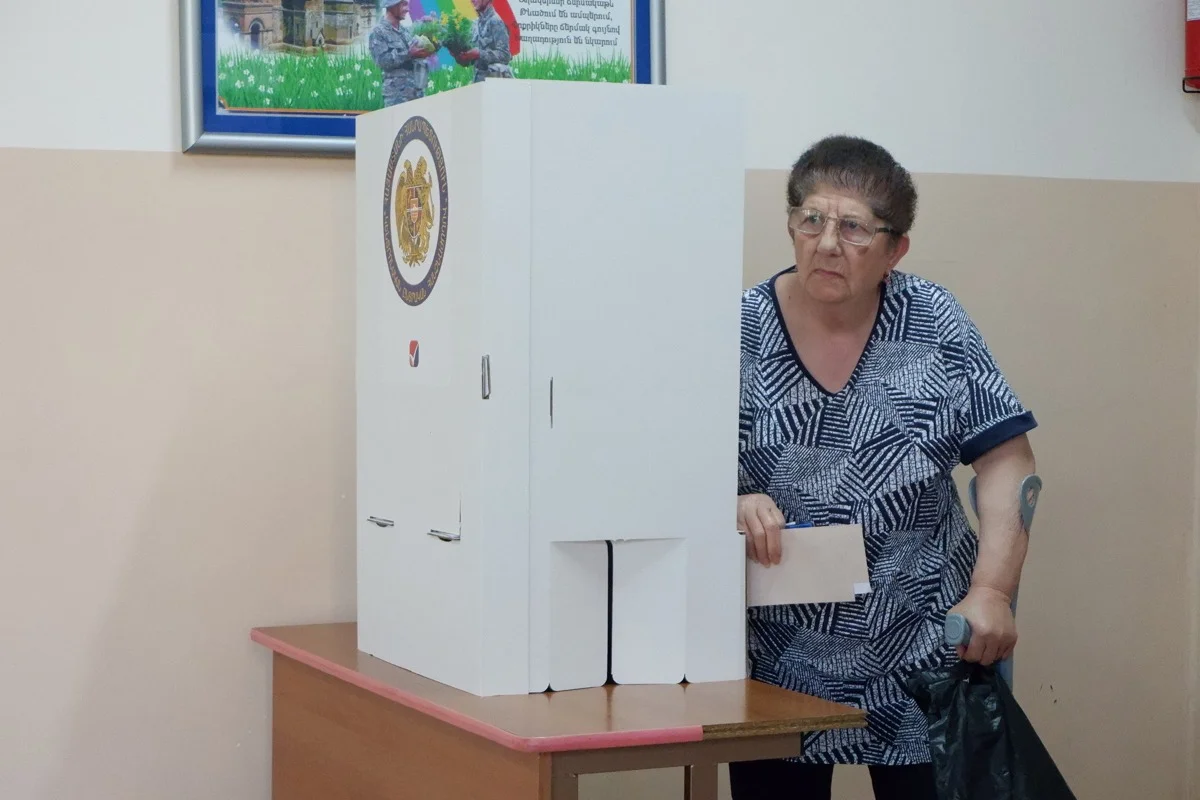
Realizing that I won’t get detailed answers from the chairman, I try to talk with an elderly man whom I identified as an observer. He introduced himself as Poghosyan, and clarified that he was not an observer, but a trusted representative from the “Meritocratic Party of Armenia”. This party did not enter parliament in the previous and current elections. Armenian meritocrats do not cooperate either with Pashinyan’s Civil Contract party or with the leaders of the anti-Pashinyan opposition, positioning themselves as a “third force.” As far as Poghosyan understands, he is not the most active supporter of the party, but considers it necessary to ensure that elections are held according to the law. He has been doing this for more than twenty years, and he also assures that there are no violations in Armenia.
“Have you really not seen any violations in twenty years?”
- No. Now everything is fine, calm?
- Yes. But it's still morning.
- Doesn't matter. We have this mentality. Everything is always calm and silent.
Out of spite for the Kremlin
The responses from the chairman and trustee were discouraging, to say the least. There is a lot of information on the Internet about election violations in the Republic of Armenia in past years, even in Russian. These two seem to be from a parallel reality - improved and conflict-free.
Tigran, a Yerevan university teacher and researcher, agrees to spend a few minutes with me. He has just voted. We go out into the street so that the conversation is not considered campaigning, which is prohibited on election day. It's nine in the morning, but the sun is already shining. Tigran suggests stepping into the shadows.
— The text will be published when the election results are already known. Can you tell which party you voted for?
“That’s not the point,” he avoided a direct answer. — I will say this: I did not vote either for the current government or for the opposition, which is pro-Russian. I am, of course, for a pro-European future for Armenia. I am for normal relations with normal Russia. But now our relations with Russia resemble colonial or post-colonial ones.
I'm a realist. Armenia is a small country. Armenia's independence may lie in its being in equidistant relations with all major world players.
As far as Tigran understood, he cast his vote for a party whose chances of getting into parliament are illusory. I asked whether this choice would benefit the Armenian opposition. The interlocutor is sure that no. He understands that his tactics mean some scattering of votes, “but this scattering is still in favor of Pashinyan, not the opposition.”
— How fair are elections in Armenia in recent years?
— It’s too early to talk about the current elections. Even under the previous authorities, the situation was not tense on the morning of election day. Any regime, even an authoritarian one, will prefer not to falsify if it is clear that the current government is already satisfied with the result. Falsifications can be expected in the late afternoon, when the picture becomes more or less clear. By the way, it is possible to falsify the results during the counting of votes,” explains Tigran.
Unlike previous interlocutors, he remembers that in the modern history of Armenia there were scandals due to numerous violations.
— In the 2017 elections, when Serzh Sargsyan last won, there was a lot of falsification. ( After these elections, protest rallies took place, in the wake of which Pashinyan came to power. - Ed. ) Now we see black PR both from the party in power and from the pro-Russian opposition. This means that our political culture has not yet matured,” says Tigran.
Later, however, he softens and says that in today’s Armenia democracy is at the same level as in Eastern Europe.
At the current elections, Sargsyan is not on the list of party leaders vying for a seat in parliament, but the Armenia Alliance, led by the country’s second president Robert Kocharyan, was running. The interlocutor assessed his chances with skepticism.
In 2008, when during the presidential elections (at that time Armenia was not a parliamentary, but a presidential republic), numerous violations were also recorded. Protesters took to the streets. The police opened fire. At least nine people died, more than 200 sought medical help. Tigran was a member of the monitoring group that observed the elections and saw this conflict with his own eyes. The clashes took place near the office where the group worked.
— Kocharyan is the author of this execution. Citizens of Armenia understand that his place is not in parliament, but in the dock, Tigran is convinced.
His indignation is likely not shared by everyone. In the elections, Kocharyan's alliance again entered parliament, taking third place in terms of the number of votes.
Tigran says that in Armenia voters were and continue to be bribed.
— Criminal cases are being opened, but details have not yet been disclosed. Information about bribery is at the level of rumors, but there are so many of these rumors that it is no longer possible to brush them aside,” he says.
According to Tigran, compared to last elections, prices have increased by an order of magnitude. They pay 50–100 thousand drams for a vote (at the current exchange rate, 1000 drams is about 2.35 euros). His friend, whom Tigran trusts, reported that they were even offering 300 thousand.
I still doubted the last figure. Tigran explained that on the eve of the elections prices jump sharply, and that the leaders of the Armenian opposition have that kind of money - they are all billionaires.
The trade restrictions that Russia introduced against Armenian agricultural products on the eve of the elections played, according to Tigran, a dual role. On the one hand, Pashinyan’s main constituency is rural residents, who have been hit hard by these restrictions.
But some, fearing Putin’s anger, will be afraid to support Pashinyan, while others, on the contrary, were previously hesitant, and now will vote for the leader of the “Civil Contract” to spite the Kremlin.
As for Pashinyan’s staunch supporters, Tigran is confident that neither trade restrictions nor Kremlin propaganda will dissuade them.
“That says something”
Nearby is a sports school where polling station 4/18 operates. I approach a pensioner who has already voted. His name is Eduard Karapetyan, he is a former engineer who worked in Russia most of his life. I cast my vote for Robert Kocharyan, who is so hated by Tigran, or rather, for his alliance. Eduard is friendly in Armenian, but speaks in Soviet newspaper cliches.
- I graduated from the Leningrad Institute of Light Industry named after Kirov - a man with a capital letter!
Believes that the USSR was a country of prosperity, abundance and internationalism. His main dream is the revival of the Union.
“I am for socialism, but for correct socialism, when words do not diverge from deeds,” Eduard clarifies.
But the reincarnation of the Union is the maximum program, but for now, according to the pensioner, Armenia should focus on Russia. Edward considers those who disagree with this to be idiots.
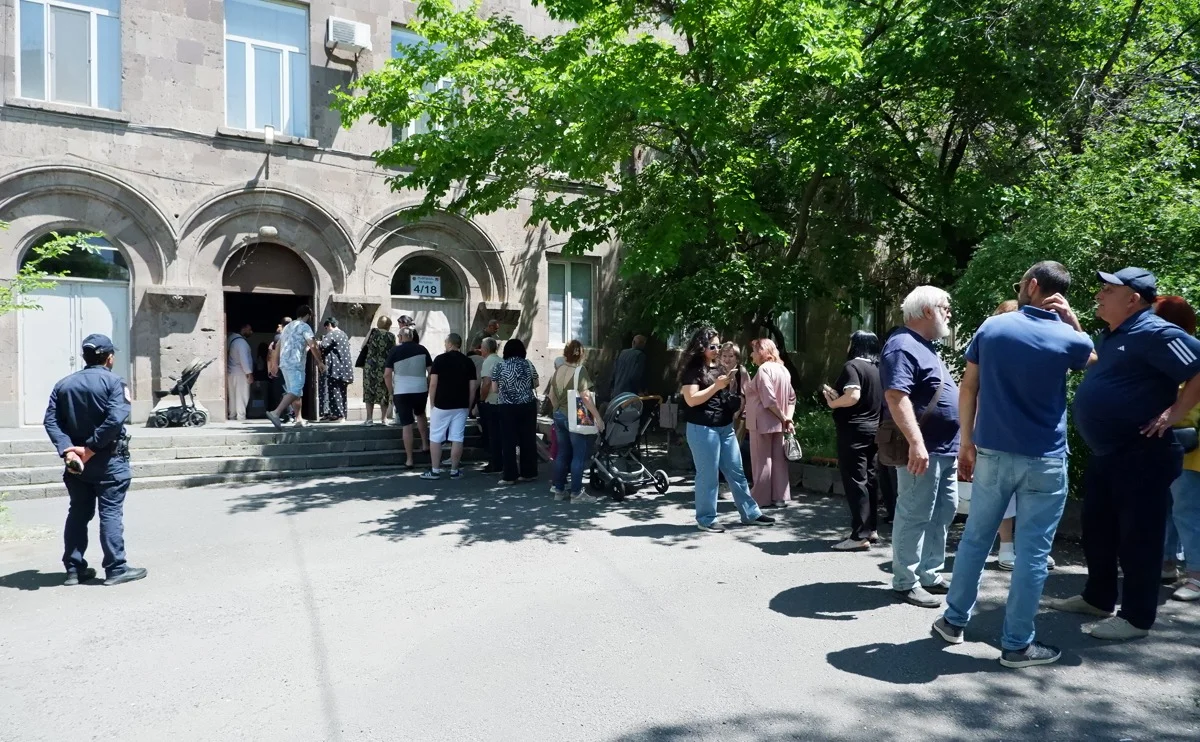
A supporter of socialism remembers with nostalgia how he went to the May 9 parades in the USSR, and is horrified that young people can go to gay pride parades. He spoke about this without any connection with my questions. Apparently, for him, pride parades symbolize the EU, as Russian propagandists conveyed this to him.
— Robert Kocharyan is also for the revival of the USSR?
- I think not. But I can say one thing. As far as I know, in his youth he worked as secretary of the Komsomol organization. This says something! - emphasizes the pensioner.
Eduard is also impressed that Kocharyan, unlike many politicians, does not change his views.
Kocharyan in the USSR was indeed a Komsomol member and then a party functionary. As for the immutability of views, the pensioner is mistaken. Kocharyan said goodbye to communist ideals and switched to a nationalist platform.
“If the stamp disappears, we’ll sit!”
I'll tell you about the voting mechanism. I have never seen anything like this in Russia. The voter is given a pack of slips. On each is the name and serial number of the party or alliance. The voter goes behind a high cabinet, which is equipped with a box with a slot. He throws all the sheets, except one, into this slot. He leaves only a sheet with the name of the party for which he casts his vote. He puts it in an envelope. The election official then places a stamp on the envelope, and the voter places the envelope in the ballot box.
As the chairmen of the election commissions explain, such a mechanism has been practiced in Armenia since 2017. Ballots with checkboxes were abandoned because these checkboxes could, for example, be erased and put a mark in another box. Those who pressured or bribed voters demanded to see a photograph of a ballot with a checkmark. Now there is practically no room left for fraud directly during the voting. Demanding to take a photo of a piece of paper that does not have any pen marks on it is pointless.
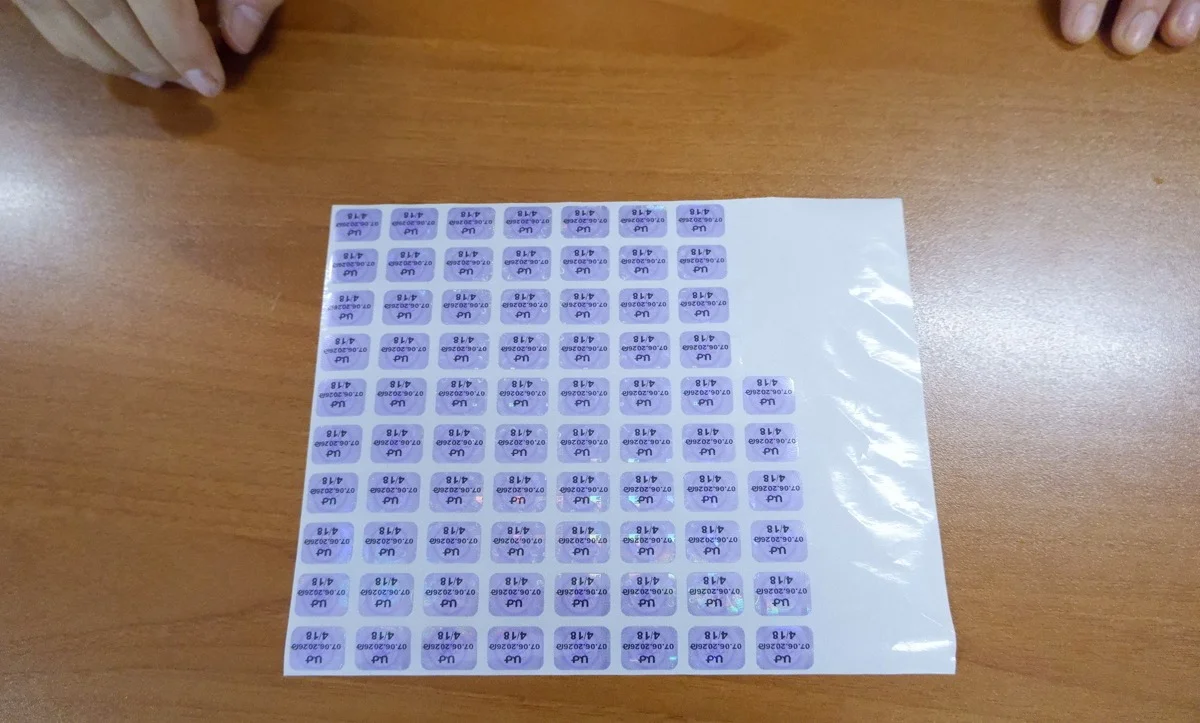
The brands mentioned have been counted. A certain amount is allocated to each site. After voting is completed, the number of remaining stamps is subtracted from this number. The resulting number must match the number of ballots cast in the ballot boxes.
- Now it is impossible to falsify. Even if one stamp disappears, we will all be sitting! - says Vahagn Ayvazyan, the chairman of polling station 4/18, where Eduard voted.
Vahagn exaggerates, but only slightly. During the last election, at another polling station, one stamp accidentally stuck to the table. I had to take part of this table to the Central Election Commission to report.
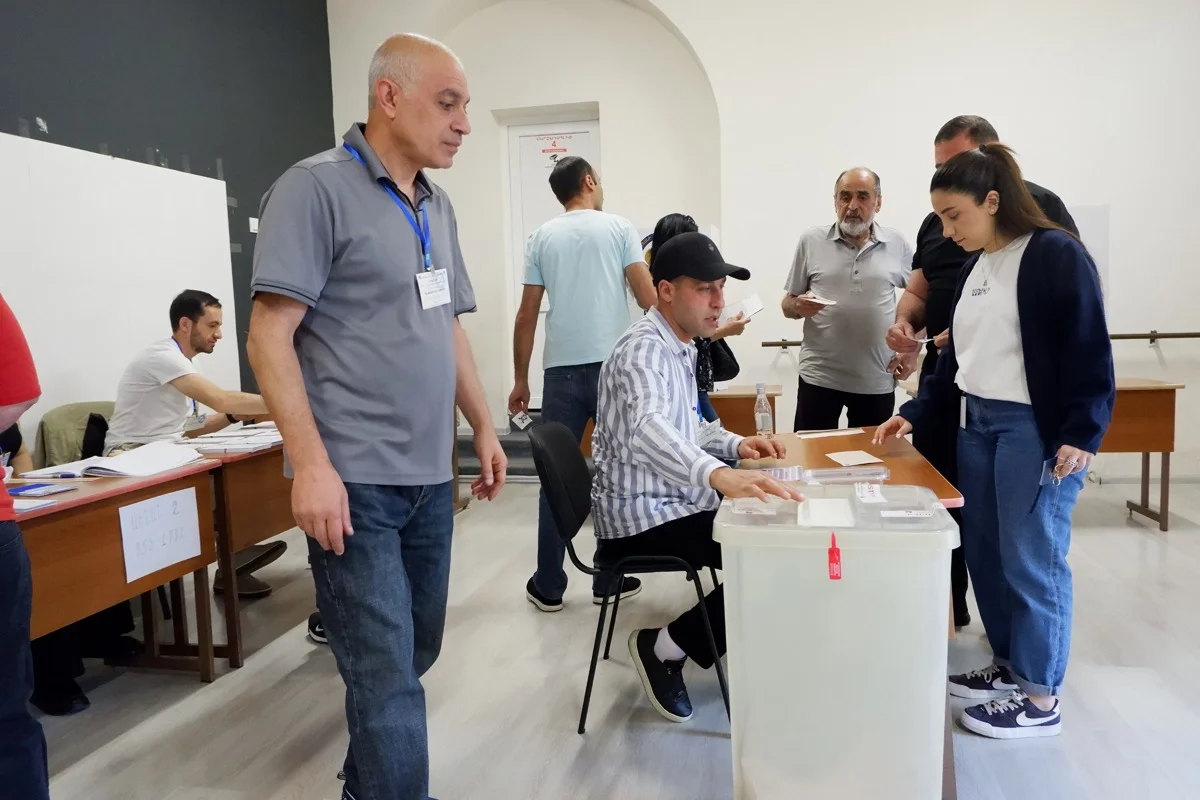
In addition, all voters receive something like checks with a photograph and passport information on them. Checks are also placed in separate transparent containers and counted. Their number must also coincide with the number of ballots thrown into the ballot boxes.
Multi-level control.
Like many with whom I spoke that day, Vahagn refused to answer for whom he voted, although we talked on the street and not at the polling station, and I explained that the text would be published after the elections.
“I can only say that I am for peace and stability.”
He also did not want to discuss how widespread falsifications are in Armenia in general: he is only responsible for his own section, he has complete order.
“Speak Armenian!”
It's already noon. The room where the Vahagn polling station is located is very small, and a queue of people wishing to vote forms nearby. I go to the next one, 4/22, where I witness the incident.
The police ran through the door and detained the elderly man at the moment when he was calmly standing behind the cabinet and choosing which party to vote for. Everything happened quickly. As members of the election commission explained later, the man came with his wife, who presented his passport. The passport was scanned as expected. The man probably did not understand this and showed the employee who was nearby his ID card. The card was also scanned. You can vote on any of these documents, but only on one.
“It’s just a misunderstanding,” explained the commission members.
I think so. I mentioned this because of the dialogue I had with the policeman. I asked him to explain what happened.
“Speak Armenian, I don’t understand Russian,” he answered rudely. He answered in Russian, of course. Russian emigrants often hear this kind of thing in other countries, but for Armenia it is rare.
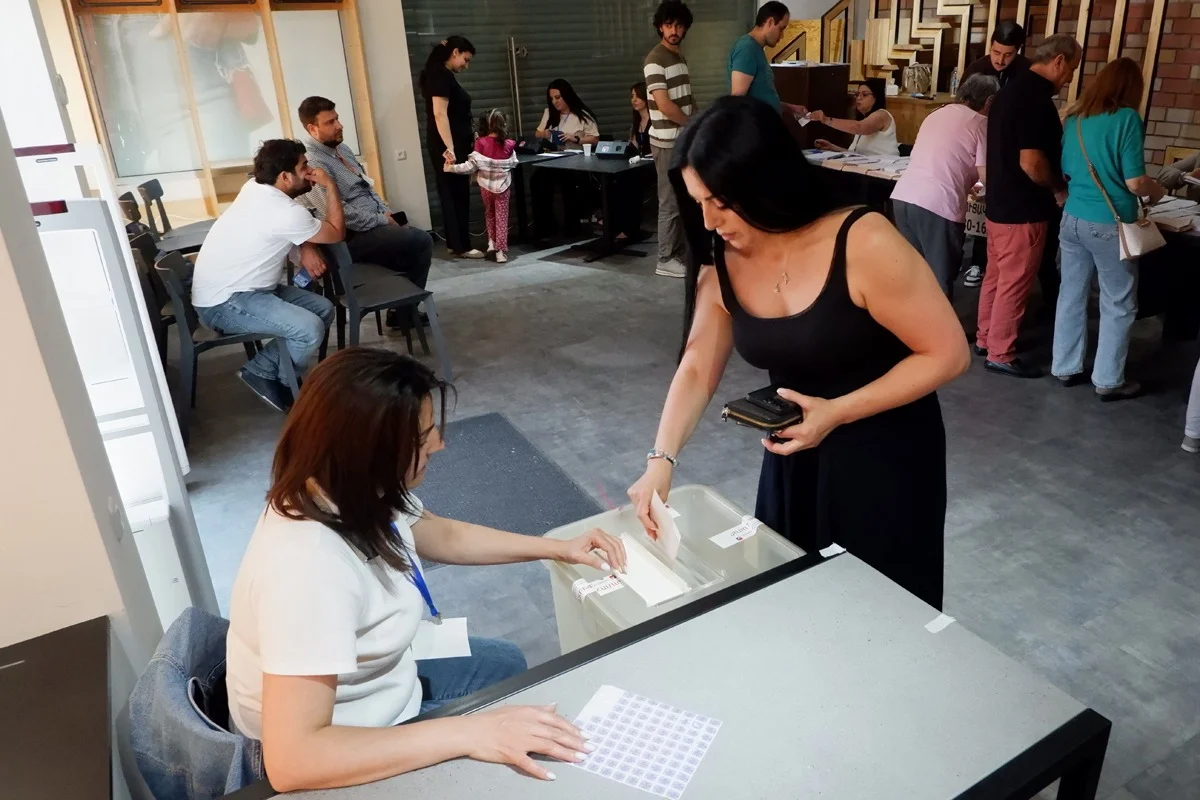
The detainee was taken to a separate room. The police returned, but he did not. Plot in a store building. Perhaps the pensioner was taken out through another entrance. It was not possible to talk to him.
Another school where two sections work at once. On the one at number 4/40, I talked with Lilya. She is a housewife and observer for the party of Russian and Armenian businessman Samvel Karapetyan, who is now under house arrest. She said that she went as an observer for the first time because she was outraged that “Pashinyan surrendered Artsakh in Brussels behind Putin’s back.” I think Novaya readers watch and read reviews of speeches by Russian television propagandists. All this sounds like a retelling of the favorite theses of Solovyov and company. Another observer who worked at this site fervently tried to dissuade Lilya from communicating with me - she was very afraid of provocations.
At the same school I talked with 29-year-old programmer Arthur.
— Until 2018, in Armenia, election results were known before the elections. Now this is not the case. Probably, civil servants vote for the party in power so as not to lose their jobs. But in general, you don’t know who will win,” says the IT specialist.
Arthur voted for the “Against All” party. Yes, that's exactly what it's called. Perhaps the youngest and most unknown party in this election. As Arthur explains, it was not organized by professional politicians, but by people who have succeeded in a variety of fields and who do not like either Pashinyan or his main opponents.
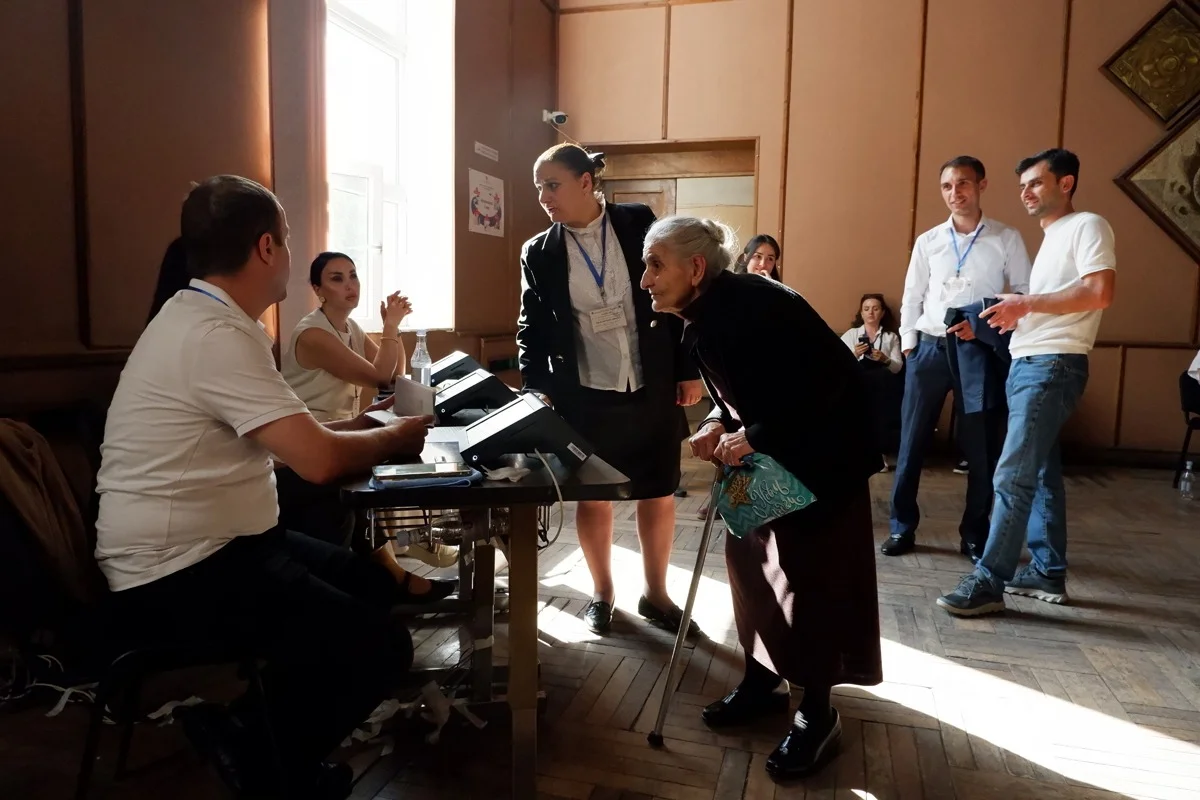
As far as I understand, “Against Everyone” is not even a party, but rather a political project, almost a performance. The goal is to gain a majority in the elections and radically reform the parliamentary system, lowering the entry barrier for parties from 4 to 1 percent. Pass laws so that the very concept of “parliamentary majority” will never again exist in the Armenian parliament. And resign.
The interlocutor explains that this is only possible if “Against All” has more than 50 percent of the votes. “Against All” does not intend to enter into coalitions with other parties. As is now clear, the project failed to be implemented, but, according to Arthur, such a “protest” - literally - vote is something like a roll call for those who do not like any of the players in the political arena.
It seemed to me that the main dilemma of these elections is: the EAEU or the EU? The interlocutors either did not want to talk about this or answered vaguely.
Arthur said that it would be nice to stay both there and there.
“There are political forces in Armenia that can maintain this balance,” he hopes.
Relocants, on their way out?
4/38 is the last section in my epic, located in a music school. They vote in a foyer with an unusual layout. The space is small and elongated. Next is a short and steep staircase, above which observers sit. Review - it couldn't be better.
The chairman of the site, whose name is Razmik, says that everything goes without incident. The only trouble was that one of the stamps accidentally tore when it was glued to the envelope. I had to draw up a protocol.
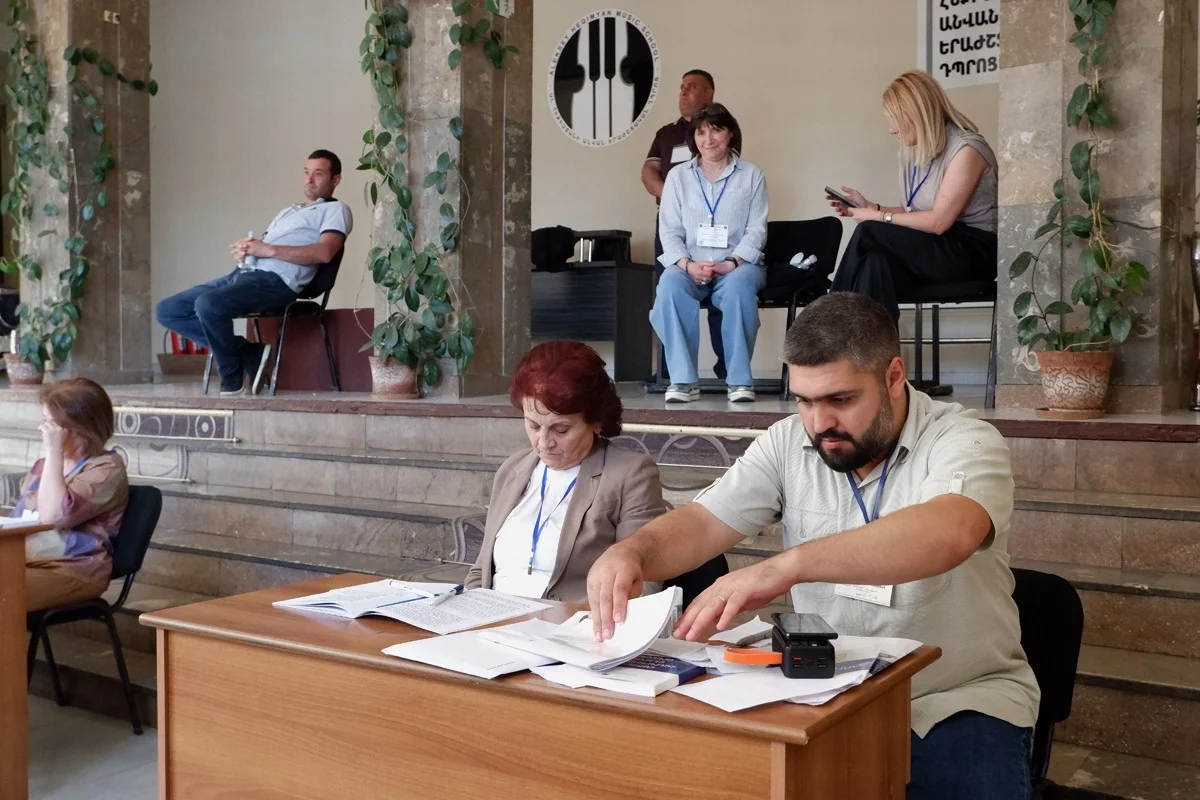
Razmik said that he is from the Dashnaktsutyun party, but warned that he could only answer questions regarding the progress of voting in his precinct.
There were 1,226 people registered at the polling station, of which 685 had voted by 6 p.m. According to Razmik, the turnout was significantly higher than in the last elections.
“People have come out of their apathy. All political parties called for people to come to the polls and vote for those they consider worthy. This has borne fruit,” says the chairman.
At other polling stations I accidentally learned that in Armenia there is no voting at home. Видел много пожилых людей с проблемами опорно-двигательного аппарата, которые приходили с детьми и внуками, и одного избирателя, как мне показалось, инвалида по зрению, который зашел за тумбу, где оставляют только один листок, вместе с сопровождающим. Как объяснил Размик, в Армении нет ресурсов, чтобы обеспечивать и контролировать надомное голосование, но есть несколько участков, оборудованных специально для инвалидов.
И еще об одном открытии. В России я привык, что в участковых избирательных комиссиях работают педагоги тех самых школ, где эти участки расположены. О том, какую роль сыграли учителя в фальсификациях на российских выборах, написано немало, в том числе и «Новой». И я по привычке всматривался в членов избирательных комиссий и пытался угадать: вот эта строгая женщина, конечно, завуч, а тот крепкий мужчина, похоже, физрук.
Но, как объяснил Размик, в Армении всё не так. Например, из заседающих на его участке нет ни одного сотрудника музыкальной школы, где этот участок расположен. Участковые комиссии формируются из членов партий, прошедших в парламенте. Таких партий и блоков всего три. Каждая выдвигает двух партийцев на каждый участок. В участковой комиссии должно быть восемь человек. Двух оставшихся назначает ЦИК. Теоретически сотрудник школы может оказаться в избирательной комиссии, которая в его школе работает, но это большая редкость.
Предвижу вопрос: «Текст почти закончился. Где же интервью с избирателями, поддержавшими партию Пашиняна, набравшую больше всего голосов?» Отвечаю: они от меня убежали. Во всяком случае, другого объяснения не нахожу.
Понимаю, что и Лиля, которая за Самвела Карапетяна, и Эдуард, проголосовавший за Роберта Кочаряна, поговорили со мной только потому, что уверены: все русские — за Путина.
Но, похоже, так считают и сторонники демократизации Армении и сближения ее с ЕС.
Большинство избирателей, с которыми пытался поговорить на улице после того, как они проголосовали, либо отвечали кратко, невнятно и стремительно ретировались, либо сразу наотрез отказывались беседовать с русскоязычным журналистом.
Когда мне, спасаясь от второго уголовного дела, пришлось экстренно эмигрировать из России без загранпаспорта, выбирать страну не приходилось. Кроме Армении, не было вариантов. Таких релокантов здесь много. Два года я, при всех эмигрантских сложностях, удивлялся, насколько тепло к нам относятся здесь. И в день выборов армянское гостеприимство никуда не делось. На участке, где беседовал с Лилей, угостили минералкой из холодильника: один из наблюдателей, с которым даже не общался, просто достал бутылку и протянул мне. На последнем участке хотели даже накормить. Но, боюсь, что-то начинает меняться. Конечно, с журналистом никто, кроме должностных лиц, не обязан общаться, но впервые в Армении я столкнулся с неприязнью, раздражением и грубостью в мой адрес. Если Армения превратится для российских политэмигрантов в условную Эстонию, 7 июня 2026 года я запомню как день, когда этот перелом начался. И кому сказать «спасибо» за это думать не придется.