
Translated material
Alexey Reznikov: “It is in Russia’s interests to stop the war”
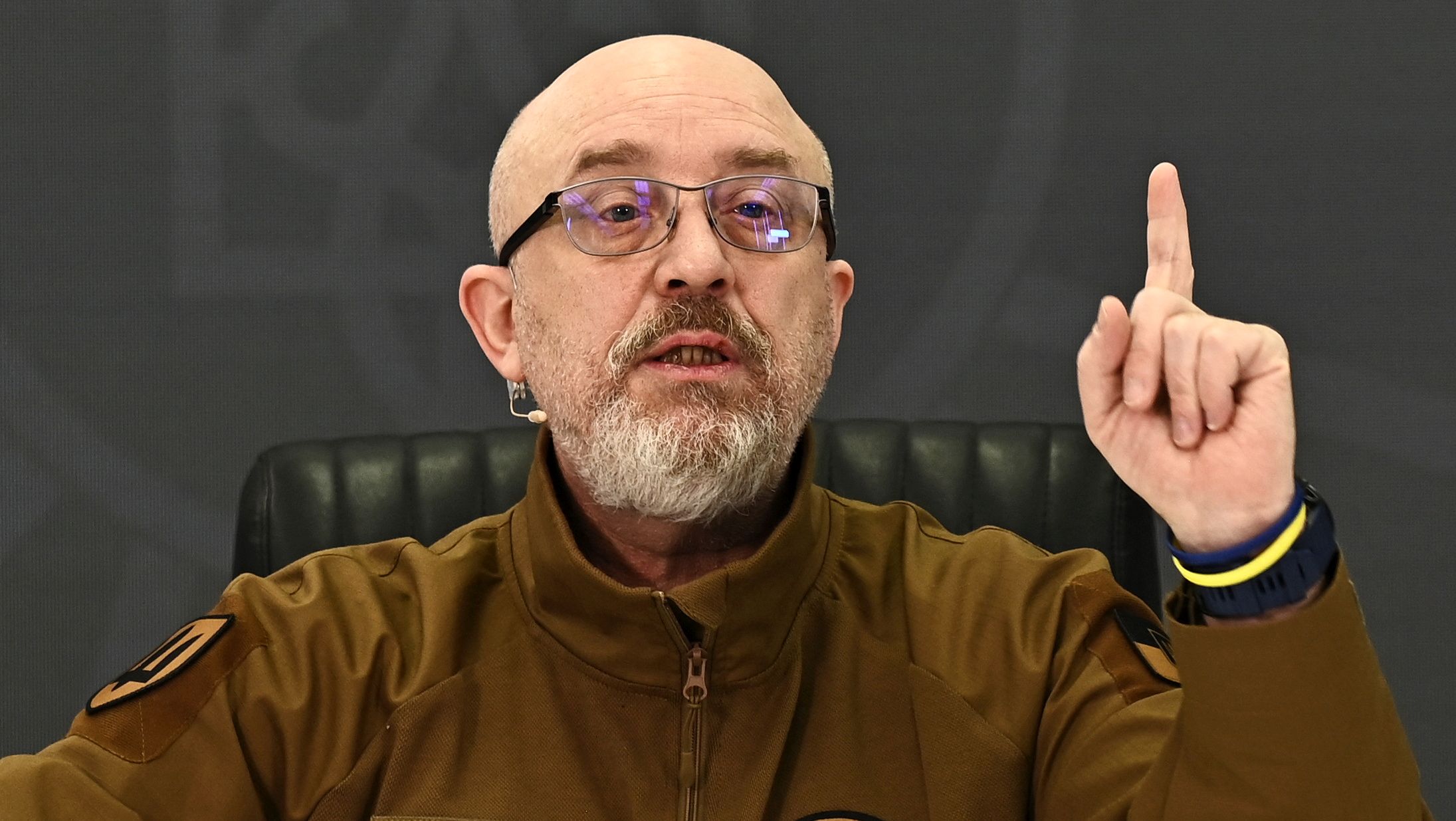
Alexey Reznikov – Minister of Defense of Ukraine in 2021-2023, Minister for Reintegration of Temporarily Occupied Territories of Ukraine in 2020-2021. He gave an interview to Present Time on the sidelines of the GLOBSEC security conference in Prague. Reznikov talks about the development of the Ukrainian military-industrial complex, the chances of peace negotiations between Russia and Ukraine and a permanent end to the military conflict, as well as how Ukraine can help ensure security in Europe.
“The one who launched the plot “Kyiv will fall in three days” should receive the star of the Hero of Russia”
– Ukrainian Foreign Minister Andrei Sibiga said at a recent NATO meeting that a turning point has come in the war in Ukraine and Russia is losing its advantage. This thesis has often been heard recently by military analysts. Do you agree with this assessment?
– The concept of a “turning point” in any war occurs many times. Many, especially those who are far from the war, believe that war is a series. Naturally, any movie has its own rules of genre, and the plot must change in order to keep the viewer at the screen.
In the fall of 2021, the war in Ukraine looked like a blitz. Moreover, it looked like this in the windows of the Kremlin, and in the windows of Washington, the White House, and in the windows of the Elysee Palace, and in other key windows of the Western world. There was a cognitive bias everywhere: “Kyiv will fall in three days” or “Kyiv will fall in 72 hours” - it began to sound in the fall of 2021, and clearly continued into the early winter of 2022. I am convinced that whoever started this story should at least receive the Hero of Russia star. This went through a report by US intelligence representatives and the Pentagon at a closed meeting of a Congressional committee, and then went to the media, and everyone believed it.
And no one will invest in a neighbor who has a terminal diagnosis from doctors. Maximum condolences will be expressed to him.
Therefore, no one believed that Ukraine would survive. And the first so-called “turning point” occurred at the 73rd hour of the Russian invasion. When, relatively speaking, Kyiv did not fall in three days, and it turned out that Kyiv stood for 3 weeks, 3 months, 3 years, and today it has stood for the fifth year. This was the turning point. Because the Kremlin’s plans were to place its “proxy” in the chair of the President of Ukraine, to assemble a new parliament, a new government, so that Ukraine would again become a pro-Russian part of the empire, and then there would be a movement to restore the Berlin Wall. But this did not happen. Therefore, the first turning point happened right then.
– Are you saying that any moment when Russia does not dominate the war is a turning point?
- Yes. And when the balance of power changes in one aspect or another. At the beginning there was a prejudice that a country of 140 million would easily absorb a country of 40 million. But the turning point occurred when it turned out that the mass could no longer crush them.
The next turning point is the appearance of NATO-standard artillery in Ukraine. The hunger for Soviet 152 and 122 mm shells was satisfied by convincing our partners to give us 155 mm shells. This proposal was made in March-April 2022. And already at the first meeting of Ramstein - here’s another turning point - this decision is made
Today, if you look at the statistics of losses, and this is confirmed by our partners, Russia has approximately 35 thousand casualties per month in killed and wounded. According to our estimates, they are contracting (recruiting for a contract) until a comprehensive mobilization is announced, 30 thousand people a month. 30 thousand new recruits must be trained, dressed, shod, armed and sent into the next meat grinder. And Russia already has an imbalance of minus five thousand people minus.
This can also be assessed as a turning point. Next, the Kremlin needs to make decisions: either declare mobilization, which it really doesn’t want to do, or look for other ways [to recruit to the front]. How to motivate 40 thousand people to come to a recruiting center every month?
And we will have the task of increasing the number of weapons, which today are cheap drones. That's it.
– The American Institute for the Study of War in one of its latest reports says that the Ukrainian Armed Forces are restoring tactical initiative in various sections of the front line. At the same time, it seems that the front line in Donbass continues to move: slowly, but continues to move to the West. What, in your opinion, is the main problem at the front now?
– In my first incarnation in the government, I was Deputy Prime Minister, Minister of Reintegration of Temporarily Occupied Territories. I was in Marinka, on the outskirts of Donetsk, we were opening another school. Today, if you look at the map, it turns out that the Russians have not advanced very far from it. There is a meme and joke about how they once again captured Malaya Tokmachka , as Russian generals reported about this 100 times. And as for “we will go to the borders of the Donetsk and Lugansk regions,” I heard this particular quote from the lips of the Russian delegation back on February 28, 2022, at the first meeting with them at negotiations on the Pripyat River in the hunting reserve of President Lukashenko.
Negotiations between Russia and Ukraine are often called the “Istanbul negotiations.” This makes me happy, because I visited Istanbul once and only for an hour and a half. And all the real meetings took place in Belarus, for example the first meeting on the fourth day after the invasion of Ukraine. And there the head of the Russian delegation said: “We will go to the border of the Lugansk and Donetsk regions tomorrow.” And then we told them: “Come out, we’ll meet the day after tomorrow.”
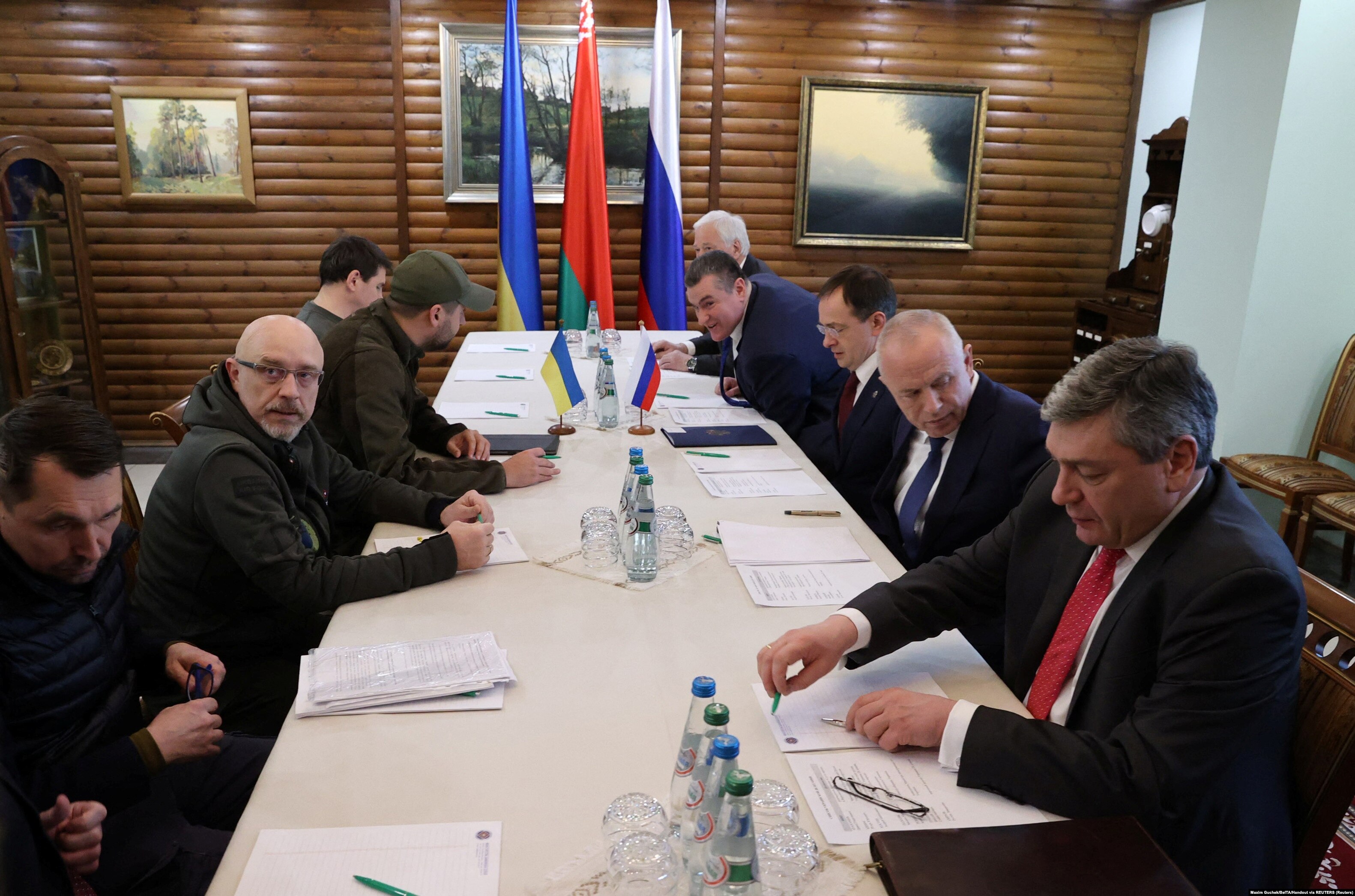
As a result, we met with them the day after tomorrow, and they didn’t go anywhere. And since then, for a long time, I have been hearing this song about “we will go to the border.”
What does a change of several tens or hundreds of meters mean to a soldier at the front? Nothing. Because you can advance, you can destroy the enemy’s stronghold, you have captured this territory, you control it, but what next? There are logistics roads, cargo delivery - all this matters for the military, because the entire front line begins to depend on whether it is a stronghold or not.
Why did we spend so much time holding this or that small settlement? Because it was a so-called “stronghold”, an outpost. Today’s line of contact on the battlefield looks roughly like this: a thousand kilometers long, plus another 2000 km of unfriendly border, including part of the Russian Federation and part of Belarus. And the width of this zone is from 20 to 50 km. Think about it: a tape 20–50 km wide is the so-called “gray zone” or “kill zone”, where no one can survive, because there are drones on both sides, both the Ukrainian and the Russian.
"We faced this war 95% with Soviet-style weapons"
– You wrote a column in the Washington Post, in which I really liked the wording that “Ukraine has turned from a requester for Western help into a co-author of Western defense capital.” Why do you think so?
– Because we faced this war 95% with Soviet-style weapons. The remaining 5% were sniper rifles, a few machine guns, a few short-range weapons, MANPADS, ATGMs, a few Stingers, Javelins and other NATO standard weapons.
Then there was the first “game changer” - artillery, Highmars, tanks, infantry fighting vehicles, Patriot-type air defense, NASAMS, SAMP/T (anti-aircraft missile systems made in France to protect the territory from aircraft and cruise missiles), IRIS-T infrared search and tracking systems, and ultimately F16 aircraft. Now we will also have French Mirages, Swedish Gripens, and so on. But these are all also weapons of the last century, albeit of the NATO standard. "Stingers" were used in the war in Afghanistan.
But where the main turning point occurred was when Ukraine began to produce its own modern weapons. Starting from anti-ship missiles - it was two Ukrainian "Neptunes" that sank the cruiser "Moscow", and not some Western missiles; it was only later that we were given "Harpoons" for this purpose.
And today we are becoming not a recipient of European assistance, but a sponsor of European security, or rather, we have already become.
– Do you feel that Western colleagues and partners also see how you have changed places?
– I don’t just feel it, I know it for sure – from those with whom I communicate at my level, starting from former ministers of defense, my colleagues in the Ramstein Club, let’s call it that. A number of colleagues, ministers of defense of European countries with whom we maintain relations, generals, experts - they are already turning to us for advice. They ask how and what is best to do.
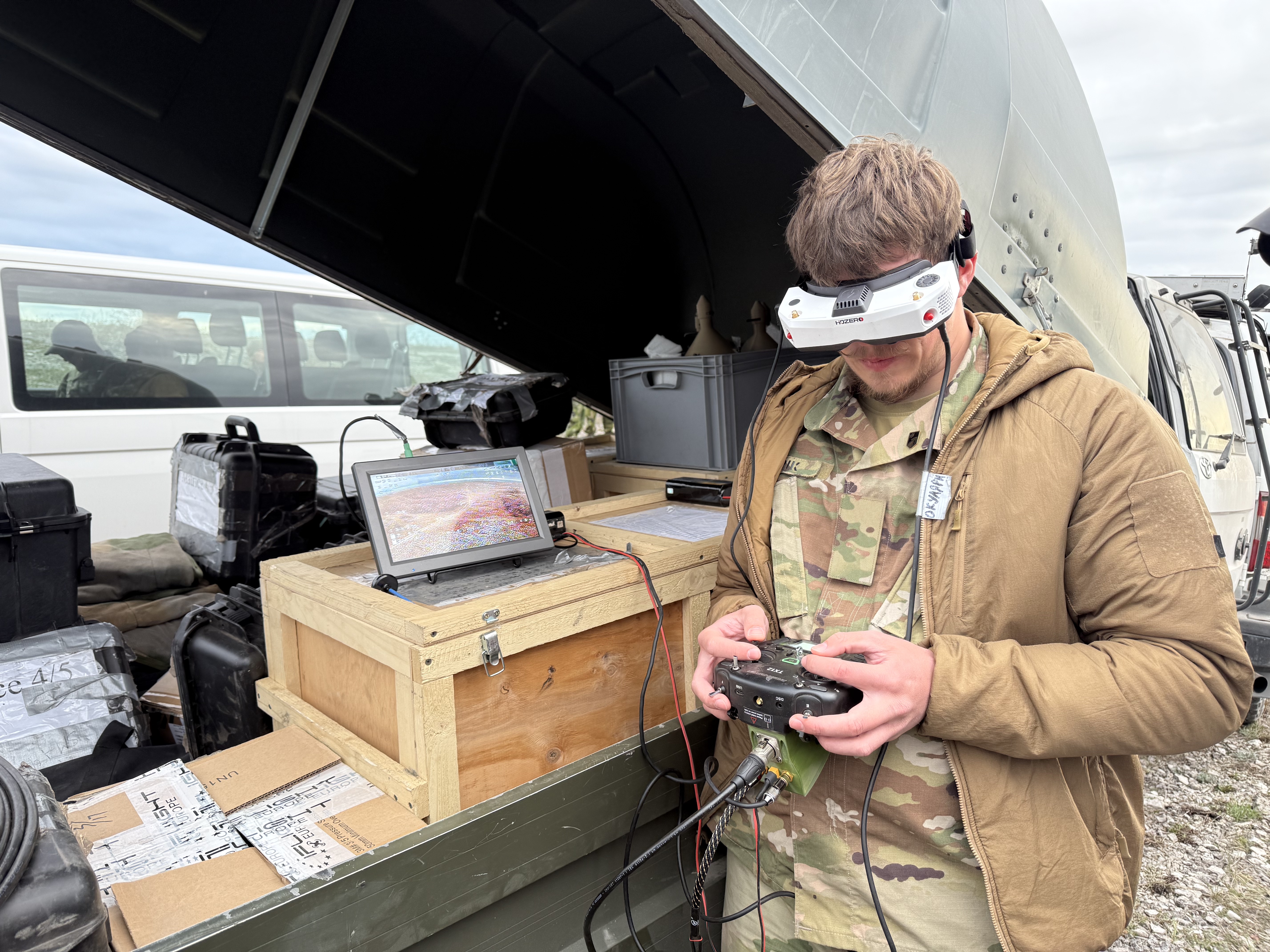
The second question that we are always asked is which Ukrainian company that produces certain types of robotic systems should we choose for joint investment? They ask me this question because they understand that I can use my expertise, acquaintance, knowledge of how successfully our boys and girls fight, that they use Ukrainian production, so that other countries can also start doing this to protect themselves. That's the importance of the moment.
by Radio Liberty Text copied width px height px The URL has been copied to your clipboard
No media source currently available
– Ukrainian military expert Anatoly Khrapchinsky, with whom we also spoke, complained that European legislation very often interferes with the transfer of this experience. Is there really such a problem?
- The problem is twofold. Firstly, Ukrainian legislation, especially during war, naturally limits the possibility of technology transfer. You need a special license to export something abroad. This is absolutely logical: we are defending ourselves, which means we cannot just take and give any weapon. It is needed on the battlefield.
But if these are some conditional opportunities to produce in the West for their money and then return these weapons back to Ukraine - okay, it works.
The second thing: European legislation that regulates procurement was built for peacetime. It is very bureaucratic, and this is absolutely understandable. In peacetime, society, of course, must control any expenditures of state budgets; this is absolutely normal. We need tenders, special inspections, special procedures and a search for the best supplier of a particular service for months and years.
I spoke with the Deputy Secretary General of NATO on one of my visits, when I was a minister. And he honestly, quietly, off the record, admitted to me: “We are terrified, if God forbid, now we will have to include article No. 5 The NATO collective defense principle: an attack on one NATO country is recognized as an attack on the entire alliance, other NATO members are obliged to defend the affected country, using any means, including military force. , because we will be legally obliged only after two months to announce the first application that we want to buy something.”
I tell him: “Yes, in two months everything will be demolished. You don’t have time for public procedures provided for in peacetime.” But this is the bureaucracy that exists now.
There is one more thing - the legislation on weapons purchases was written by large mega-companies, manufacturers of large expensive weapons. And they, of course, hold this market, because it is a lot of money. Therefore, it is very difficult for a young startup to break into the market, both in America and in Europe. And the bureaucratic system simultaneously protects the interests of both sides. On the one hand, there are public interests, the use of public money, which is logical, but at the same time it protects the interests of mega-companies, weapons manufacturers - and this is what they will have to change.
– You said “according to the laws of peacetime” several times. Do you think Europe is still living in peacetime?
– In Europe they must admit that today this is no longer a time of peace, even if the war itself does not seem to be happening on their territory.
But remember Munich airport , Copenhagen airport . In what areas is the war taking place? Everyone thinks that it is in the air, on land and at sea. But there are other areas as well. Space weapons that have not been canceled. And another kind of territory is information wars, where the enemy is obviously hunting for the minds, souls and heads of the enemy. The cognitive impact of the same Russia in Europe has been happening for a long time. There were explosions of warehouses in the Czech Republic , in Bulgaria , poisoning of weapons manufacturers , all these “Novichoks” and so on. These are all elements of war, as well as financial support for political leaders of pro-Russian movements in European countries.
"There will be political compromises. It will be easy for Russia to sell this to its population through propaganda"
– Bloomberg writes that Putin wants to end the war against Ukraine by the end of 2026, but on conditions that he considers victorious for Russia. Various analysts, including you, also say that 2026, the second half, is essentially the last window of opportunity to freeze the conflict.
– Not the last one, but one of them. There is a kind of “Harvard school”, the theory of negotiations - it is known to everyone. When you understand that there is a conflict, and you still need to negotiate in order to end the conflict with some kind of peace, some kind of agreement, then the first thing you need to do is to identify the interests of the parties. And if you identify the interests of the parties and your own, then you will understand what the “zone of possible settlement” looks like. If interests are outlined, you begin to move within it, looking for a compromise, maybe not 50 to 50, but 75 to 25, this can also happen. And then there is a chance to reach an agreement.
And now we are looking to understand whether there is a window of opportunity in the negotiations between Russia and Ukraine, and what interests each side has.
Russia's interest is clear: Kyiv did not work out in three days, the “special military operation” did not work out. But it turned out to be 1000 new kilometers of border with NATO countries, because Finland and Sweden, violating many years of neutrality, joined NATO, and the Baltic Sea after that became NATO’s “internal lake”. Of the Russian regions, only Kaliningrad and St. Petersburg today have access to it - all the rest are NATO countries.
The “demilitarization of Ukraine,” which was demanded in the Kremlin, has turned into the fact that in Ukraine today we have at least one and a half million professional military personnel with more than four years of war experience. We make our own modern weapons. But Russia has stopped selling its weapons and is losing money because its S-300, S-400 do not work, as the war in Syria, Iran, and so on showed. That is, no one buys anything from them anymore. I'm not even talking about financial and economic failures.
It is in Russia's interests to actually stop this war somehow and somehow sell it while saving face.
It is in the interests of Ukraine that all Ukrainians want to live in peacetime. But naturally, we have the issue of protecting our interests. It is clear that we have a territorial interest in returning our territories to the internationally recognized 1991 borders. But we understand that this is impossible now. But it is possible to somehow freeze, stop, and then wait for the right moment to regain their territories. And they will return peacefully. I have no doubt: the fall of the Kremlin regime will lead to the return of the temporarily occupied territories today
– Will Russia use this pause in reverse – to build up its strength?
- Naturally it will be. But look again: Russia understands that it has lost its most important military asset, its military professional “bone.” These are people who were trained, served, fought, trained for at least 15 years. Today, people without war experience are fighting for it: they were thrown into camps, they were given weapons, they went, what’s the use of them? There is no motivation or skill.
Therefore, it will take at least five years for Russia to restore its own more or less combat-ready army. Plus we need to increase reserves, etc., etc.
But we are also moving. We are also developing technologically. Therefore, they will decide with whom they want to fight next, if the regime wants to. Suwalki corridor? Lithuania to access the Baltic? Narva, Estonia? Use the same pretext as with Crimea? This is what they will come up with if the goal of the empire is to restore the “Berlin Wall”. This is such a global crazy goal, but it seems to me that the Kremlin has one.
What is America's interest in ending the war in Ukraine? Now it's very simple. They have midterm elections in the fall. Political competition: Democrats and Republicans [in Congress], Republican president. We need a big example where they are really effective. So, of course, today the priority for President Trump and his team is a deal.
It is also in Europe’s interests to stop this war, stop investing in it and more or less breathe out. That is, everyone’s interests coincide, except China. In my opinion, China benefits from this war, because the longer Russia fights, the more Chinese goods everyone buys, which are then used in the war: drones, engines, blades, batteries, etc. But the most important thing is different: Russia is under sanctions, and because of its problems it is selling its resources cheaply to China, weakening. What else does China need?
Once again: the interest of Ukraine this year – yes, Russia – yes, America – yes, Europe – yes. That is, all the main key participants in the possible negotiating table are interested, because Ukraine will not sit down on its own, alone, at the negotiating table with Russia. We will sit down at the negotiating table and next to us, on the right and on the left, Europeans will sit, and the Americans will call themselves moderators, mediators. Как, кстати, президент Трамп на той известной первой встрече сказал: "Я брокер, я посредник, я не на чьей-то стороне".
Но мы за стол сядем с теми, кто будет говорить о гарантиях нашей безопасности. Может быть, даже Китай сядет на той стороне, очно или заочно, и, кстати, гарантиям Китая мы бы даже больше поверили, если он будет гарантировать поведение России.
Поэтому я вот так вижу окно возможностей для мирных переговоров именно в этом году. Interests coincide. But the question is the conditions. Если условия будут глупые, с позиции силы, они не будут реализованы. Если они будут с позиции интереса – они могут быть реализованы. Да, будут политические компромиссы. Но, особенно России, легко будет это продать своему населению через пропаганду.
– Что будет, если этого сейчас не произойдет?
– Надо смотреть. Во всех переговорах, в любых конфликтах есть свой тайминг, свое время. Оно опять наступит. Зима холодная, морозная. Россия будет рассчитывать, что они нас снова заморозят, что мы станем слабее. Но мы уже не одну зиму прожили, и даже вот эту, с холодами минус 25, минус 28 градусов. Я очень хорошо помню эту зиму, она прям жуткая была, и снегопады были такие, каких раньше не было. Но мы смогли, мы справились.
В Украине есть такое очень популярное сегодня суждение среди очень простых людей: "Без газа, без света, без воды, без тепла, но главное – без вас, москали". И это - реалия. Потому что [россияне] так хотели, чтобы украинцы их полюбили, что сегодня появилось большое количество людей, которые их ненавидят. Даже не то что просто не любят, а ненавидят такого соседа.
"Цели специальной военной операции Россией достигнуты с точностью наоборот"
– Сейчас украинские СМИ активно цитируют главу офиса Зеленского Кирилла Буданова, которыйговорит о том, что Россия была вынуждена пересмотреть свои военные цели в Украине и каким-то образом их переформулировать. Относится ли это и к тому, что окно возможностей для остановки войны существует?
– В принципе я абсолютно согласен с Кириллом Будановым. Потому что цели войны Россией были озвучены еще, наверное, в 2021 году. И если помните, было даже публичное проведение Совета национальной безопасности РФ перед атакой, где члены Совета национальной безопасности России путались в показаниях – поддерживать, не поддерживать, интегрировать, не интегрировать. Ну и в итоге потом появилось это заявление ночное, где были озвучены цели "специальной военной операции".
Эти цели не то, что не достигнуты, я бы даже сказал: "достигнуты" с превышением, но с точностью до наоборот. Потому что изначально [со стороны России] речь шла о том, что НАТО не ступит ногой в Украину, мы воюем с НАТО, которое приближается и России страшно угрожает – со слов Кремля это так звучало. И они хотели подвинуть НАТО на границы 1997 года, и было официальное требование с декабря 2021 к Брюсселю и Вашингтону: заберите натовские базы из условной Румынии, Болгарии, Литвы, Латвии, Эстонии, Польши, Словакии. А в результате в альянсе НАТО появляются еще две страны, добавляющие 1000 км новой границы НАТО непосредственно с Россией.
– Причем страны, которые изначально не хотели в НАТО вступать.
– Которые сильно не хотели, Швеция, Финляндия хранили нейтралитет сколько декад? И тут бам: Швеция с Финляндией в НАТО, а Балтийское море становится внутренним озером НАТО.
Хотели сократить вооруженные силы Украины, хотели минимизировать так называемую "угрозу"? Что в итоге мы имеем? Уверенных полтора миллиона, а то и больше людей с опытом того, как реально воевать с использованием всех видов оружия, в том числе современного, с опытом того, как убивать. А ведь морально-этически любому солдату, который служит хоть 30 лет, но не воюет и не умеет убивать – это морально, психологически сложно в начале. А у Украины сегодня опыт убивать людей и хотеть убить врага – неимоверный, его на сегодняшний день нет ни в одной армии Европы.
– Это довольно печальное достижение.
– Смотрите еще раз: если вы воспринимаете нас как своих врагов, то вы просто развили нас до той степени, что теперь мы действительно опасны.
Хотели защитить так называемое "русскоговорящее население" в качестве одной из своих якобы целей? В итоге получили самую сильно ненавидящую россиян часть Украины, людей, которые не говорят на русском языке или перестали говорить на русском языке. И дети в русскоязычных семьях тоже начали принципиально говорить на украинском языке. То есть оттолкнули Украину от себя так далеко, как даже не предполагали.
Если раньше могли играть в Украине в пророссийские политические проекты, иметь дружественно настроенные "культурные дома", иметь массу других решений, то сегодня этого в Украине не получат. В парламенте или в местных советах не будет при следующих выборах ничего подобного. То есть цели "специальной военной операции" Россией достигнуты с точностью наоборот.
Так что конечно же Кирилл Буданов прав: им придется пересмотреть эти цели, озвучить своей аудитории: "Ребята, спокойно, нет паники". Ообенно Z-патриотам сказать: "Мы всех победили, мы молодцы". Потому что представителям кремлевского режима нужно сохранить лицо. Какой бы сделка на самом деле для них ни казалось постыдной в их внутреннем восприятии, они будут продавать то, что "мы красавчики" и "мы победители". This is obvious.
– Если я не ошибаюсь, в свою бытность министром обороны, вы не хотели никакого мирного соглашения с Россией?
– Нет, это неверно, потому что я никогда не озвучивал такой мысли – хочу я мирное соглашение или не хочу, меня даже по-моему и не спрашивали. Я никогда не был воинственным человеком, потому что я гражданский человек, я же не был офицером, у меня воинское звание "сержант запаса". Я получил его, служа в Советской армии как призывник, дослужился за два года до сержанта. У меня есть какой-то небольшой опыт, 163 армейских парашютных прыжка, больше трехсот погружений с аквалангом, у меня была очень интересная служба. Но я не военный – я гражданский, я юрист, адвокат, переговорщик.
Поэтому для меня окончание любого конфликта за столом переговоров – это норма. Более того, я же провел два года как замглавы украинской делегации в Минском процессе. Я два раза в месяц лично участвовал в переговорах с российской стороной, мы еще ездили в "нормандском формате" в Париж и в Берлин, встречались с представителями российской делегации – с Грызловым, Козаком и всеми остальными. И это происходило два раза в месяц два года подряд.
Поэтому да, я помню, что такое переговорный процесс. И когда мы приехали 28 февраля на первый раунд переговоров в Беларусь, то, что нам предлагалось, выглядело для нас смешно, это я в вежливой форме скажу. Российская делегация вела себя очень вежливо и корректно, это были реально дипломатические переговоры. Но озвученные условия – я сразу сказал, что это был вежливый вариант капитуляции.
– Как вы думаете: дело против Андрея Ермака может каким-то образом сказаться на том, каким будет, если будет, переговорный процесс ближайшего будущего?
– Он был одним из ключевых игроков президента Зеленского именно в переговорных процессах, в том числе с россиянами, потому что он был политический советник в "нормандском формате". Поэтому у него экспертиза очень сильная.
Я его видел первый раз на переговорах в Париже на встрече в Елисейском дворце в декабре 2019 года, когда еще Сурков был ответственным с российской стороны, до увольнения Козака. Сурков там бегал по потолку, нервничал и психовал. Это было очень забавно наблюдать. А Ермак был как удав: спокойный такой, хладнокровный. Французы с немцами потом это отметили, сказали, молодцы, что не ведетесь – ну, в лице конкретного представителя. Поэтому, безусловно для переговорного процесса – это потеря, как минимум, сильной позиции президента с точки зрения знания оппонентов или визави.
 Read us on Telegram