
Translated material
Tax stick. What Finance Minister Siluanov is silent about
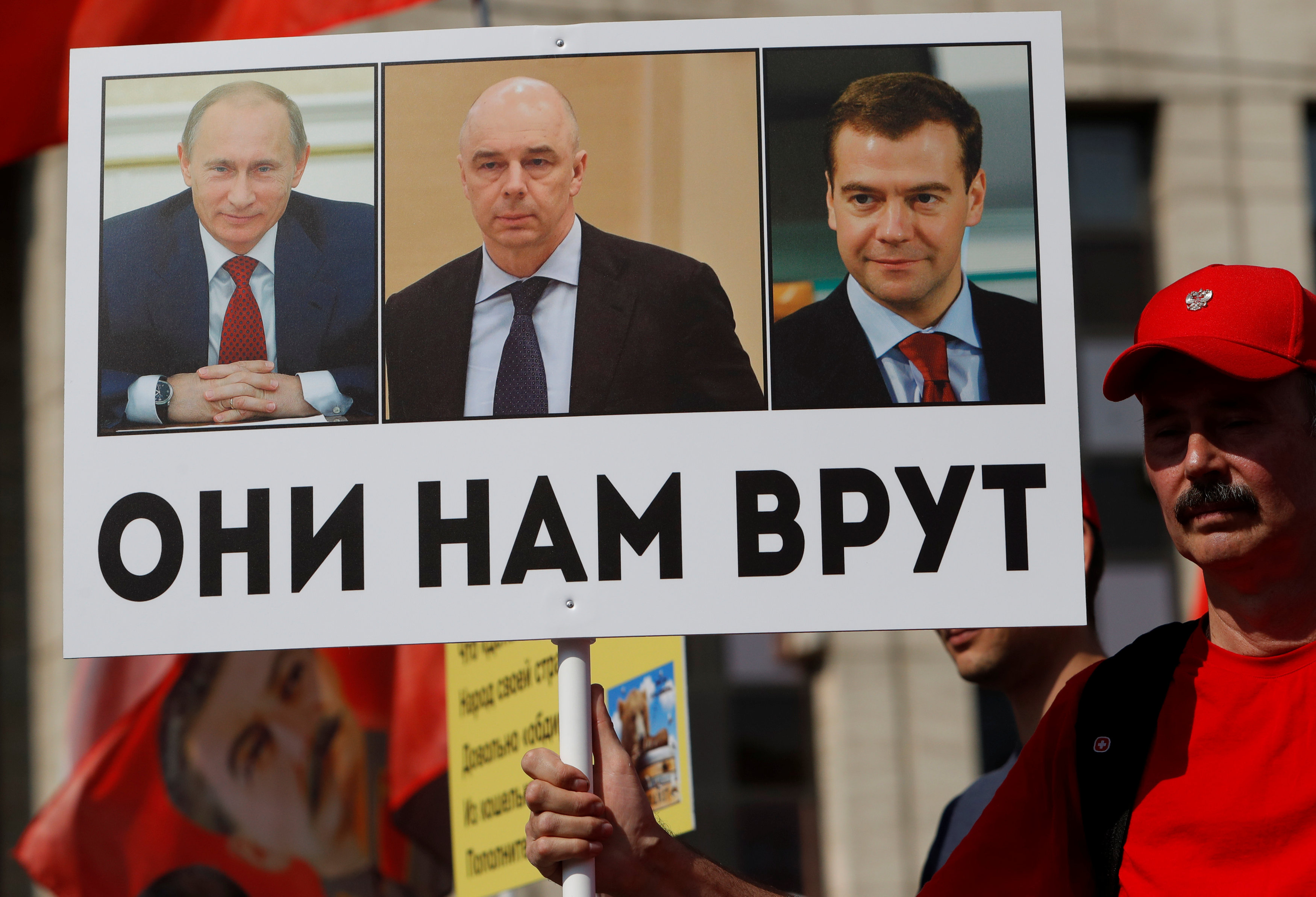
After the optimistic speech by Russian Finance Minister Anton Siluanov at the St. Petersburg forum, there was a feeling that in May the budget was finally executed with a surplus. However, this is not so: the hole continued to expand, although the process slowed down. Revenues for five months were a symbolic plus compared to the same period last year against the backdrop of a 17 percent increase in expenses due to the continuation of the war.
The Ministry of Finance has published preliminary data on the execution of the federal budget for the first 5 months of this year. The first thing that catches your eye in this report is that the deficit continued to grow in May. And this is, to put it mildly, surprising. Especially after the confidence that literally oozed at the macroeconomic session of the St. Petersburg International Economic Forum, Finance Minister Anton Siluanov , speaking about the growth of tax revenues after two consecutive years of tax increases: “Value added tax [collection] is growing more than planned. What does this mean? This suggests that we will see larger growth figures than initially planned, taking into account the adjustment of forecasts. This is the first time. And the second thing this means: despite two packages of tax changes - taxes are growing - there were risks that we might go too far somewhere. No, we did not go too far. The budget execution indicators for five months eloquently testify to this.”
From what has been said, only one conclusion can be drawn: with non-oil and gas revenues in May, everything turned out well for the Ministry of Finance. There is nothing to say about oil and gas - they were paid based on the April 94 and kopecks dollars per barrel. We can't even dream of anything better. In addition, May is far from the beginning of the year when, according to established tradition, the Minister of Finance explains the deficit by advancing the state order, within the framework of which we know what is being produced. All advances are issued in January-February, and by May the financial department usually reduces the deficit, so that later, in November-December, there is an opportunity to get back into the red with the final fulfillment of the state’s annual obligations prescribed in the budget law. As for other expenses not related to advance production or the purchase of who knows what, the Ministry of Finance has been diligently “prioritizing” them since the first months of this year, which has already affected the physical condition of the transport and utility infrastructure and the financial condition of the companies that support this infrastructure.
The "hole" reached six trillion in five months
And after all this, there is a shortage again. Let it be relatively small - a little more than 110 billion. But firstly, the fact itself is indicative, and secondly, the “hole” reached six trillion in five months. At the same time, income in the first five months actually (for the first time since the beginning of the year) increased compared to the same period last 2025. Not as much as one might think when listening to the Minister of Finance, but by a modest 0.3%. But “prioritized” expenses jumped by 17% compared to last year. Moreover, government procurement compared to 2025 (also, by the way, a war year) increased one and a half times (by 49.5%). And the gap between budget expenditures and 2025 indicators is accelerating: according to April results, the excess over last year’s figures was 15.7% versus the current 17%.
As for the confidence of the head of the financial department that they did not go too far with the tax increase, not everyone shares it, including in Russia. At the Sber Business Breakfast, they conducted a survey about what is hindering business development today. 29% of those present in the hall and 55% of the broadcast viewers chose the option “Strangled with taxes, impossible to work.”
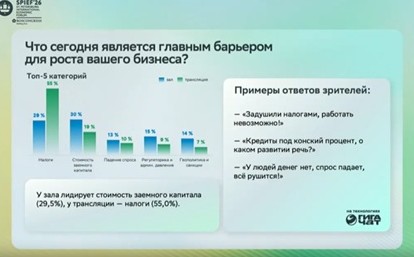
And Deputy Speaker of the State Duma (who, by the way, also voted for raising taxes) Alexander Zhukov commented on this: “I think that everyone noticed that during the first poll, the opinion of the audience was very divided with the opinion of the television audience. If here in the first place there were issues related to the credit rate, then there were taxes. Because large businesses sit here, and mostly small and medium-sized ones watch us, as I understand it. Today nothing was said about this. At the session, dedicated to finance and economics, Siluanov said that a month ago, “it seemed to us that we had gone too far with the increase in personal income tax and the reduction of the threshold for paying VAT for small and medium-sized businesses.” In my opinion, this is the most serious issue. But he said that a month has passed, and “we believe that we have not gone too far.” "The whitewashing of the economy is one of the goals. But ask entrepreneurs whether it is possible to whitewash the economy by raising taxes. I think the answer is 90% no."
Nobody discusses military spending
It is curious, of course, that no one discusses military spending, to finance which one has to raise taxes (and then argue whether they have gone too far with this or not). This is a given, predetermined from above. And that is why the discussion loses all meaning. After all, even if you didn’t go too far today, you will have to go too far tomorrow - the war continues.
Read Freedom on Telegram Make Freedom a priority source on Google  Install the Mobile application
Radio Liberty