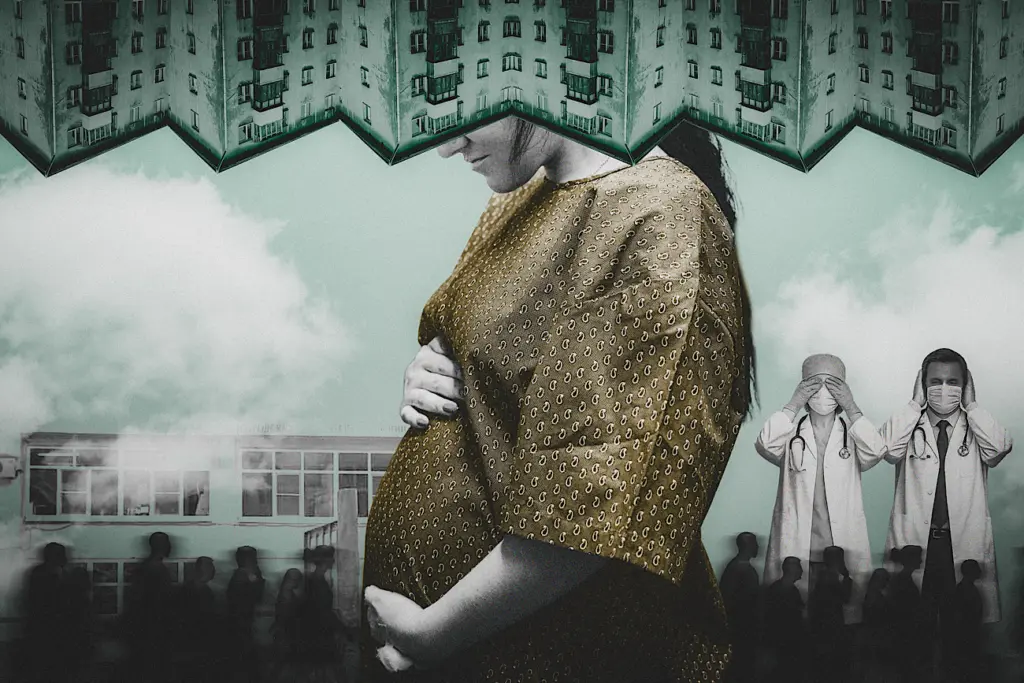
Why are pregnant women in Russia forced to buy vital medications themselves?
18+ This material (information) was produced, distributed and (or) sent by a foreign agent Media project “New Tab” or concerns the activities of a foreign agent Media project “New Tab” Author Lena Katina June 10, 2026 diaries read: 6 min.
Recently, the media have written a lot about supporting young parents: they promise to pay 200 thousand to student families, in some regions they have introduced a one-time payment of 100 thousand rubles to female students. But in order to receive these payments, the child must first be given birth, and this is not easy given our level of medicine: some medications have to be literally fought out, others have disappeared from pharmacies due to sanctions. Over the past two years, I have realized that parenthood is a privilege that is not available to all families, especially in regions with budget deficits and low salaries.
My husband and I have wanted children for a long time, but since February 2022 the moment always seemed to be inappropriate. After a couple of years, it became clear that the fertility train could go into the sunset, and the war would never end. We made up our minds.
I’ll skip the gloomy year of trying to get pregnant - with miscarriages, visits to doctors, tests for 200 thousand rubles and scrupulous collection of information in thematic women’s blogs. Let me just say: even before the current pregnancy, I knew that during the entire gestation period and for some time after it I would need expensive therapy, which is included in the list of vital drugs and is legally provided under compulsory medical insurance. Without it, the risks of losing a child are very high.
Vital and Essential Medicines (VED) is a list of medicines approved by the Government of the Russian Federation for the purpose of state regulation of prices for them.
A miscarriage specialist from St. Petersburg told me that the necessary medicine should be given free of charge: all her patients from this city receive this drug from gynecologists in antenatal clinics. But there is a nuance: I do not live in St. Petersburg, but in the North-West region with an eternal budget deficit.
Subscribe to the New Tab channel in Telegram. There we talk about how people, animals, and plants live in the regions of Russia
Having struggled through the meat grinder with paid specialists and waiting for the coveted “two stripes”, I plunged into the world of pregnancy management in an ordinary state antenatal clinic. Its corridors were deserted: there were few people willing to carry a child to term and give birth in 2026. I came to the appointment with a stack of tests and reports, hoping to get that same free medicine. But first it was necessary to pass the first test - rudeness.
The doctor, a strict blonde about sixty years old, began the appointment with a question about the beginning of sexual activity. Having learned that it was before the age of 18, she clasped her hands and began to scold me: “Where are you in such a hurry?” Then I was reprimanded for my chronic illnesses. Then they scolded my husband for his tests (which were normal). In response to my modest question about free medications, I heard: “You still have to live to see them, the fetus does not have a heartbeat yet.” I failed the test: I cried all evening and, it seems, lost hope for a successful outcome.
But yay! In due time, a heartbeat appeared, and I received a supply of medicine for the first month. If I bought it at my own expense, it would cost our family budget 7,500 rubles. But the joy did not last long - in the second month I was not given the treasured ampoules. The nurse confusedly stated that birth certificates do not cover the cost of this drug. Although it should be issued at the expense of compulsory medical insurance, without a certificate. Apparently, the region doesn’t have money for poor people like me. Maybe they hope that the pregnant woman will spit on all this from a high bell tower and will not go to write complaints.
A birth certificate allows medical institutions that observed a woman during pregnancy to receive payments from the Social Insurance Fund for quality medical care provided (maximum amount - 12 thousand rubles).
A girl for her own How the guardianship authorities of two regions allowed an orphan to be transferred to an official’s family, bypassing relatives and other candidates
I didn’t want to give a damn: I studied the law and knew that I wasn’t asking for too much. Then began the ordeal that the heroes of my texts usually went through before contacting journalists: call the Ministry of Health hotline, write there, get an unsubscribe, and consult with two lawyers. The latter praised my knowledge of the law and confirmed that I was provided with medicines free of charge.
In a sophisticated response from the Ministry of Health, I was recommended... to go to a hospital to receive the necessary medication in injections until the end of pregnancy. Absurd! After all, keeping a woman in a hospital costs the state many times more than dispensing this medicine without hospitalization. But, as the lawyer said, they did not formally refuse to extradite me.
As a result, I buy the medicine myself. As lawyers say, then I will be able to go to court and recover the entire amount spent from the Ministry of Health - this is about 100 thousand rubles. If in this way it was possible to create a precedent that would help other women, then I would go for it. But we all have to overcome this bureaucratic hell on our own. It seems to me that women with babies in their arms simply do not have time for courts. And the regional Ministries of Health understand this very well: every now and then the media comes across news about a shortage of medicines for pregnant women, but these problems are never solved.
For example, after 2022, anti-Rhesus immunoglobulin, necessary for couples with Rh-conflict blood, disappeared from pharmacies (this, in addition to my main disease, is also our case). The blood transfusion station in Ivanovo, the only manufacturer of this drug in Russia, produces about 4% of the immunoglobulin required in the country - the rest was previously provided by foreign manufacturers. The Ivanovo station cannotcope , so pregnant women order medicine through friends in Turkey, travel to Belarus, or buy it for future use. My two doses are stored on the top shelf of the refrigerator. My husband and I knew about the shortage, so in the spring of 2026 we went to Moscow, where immunoglobulin was sold in six pharmacies for 12 thousand rubles per pack. A check of the packaging at Honest Sign showed that my medicine had already allegedly been injected into someone in a hospital. This is the shadow pharmacy economy.
Rh conflict is an immune response of the body of a pregnant woman with a negative Rh factor to the red blood cells of the fetus with a positive Rh factor. The mother's body recognizes the fetal protein as foreign and produces antibodies that destroy the red blood cells of the unborn child.
The “Honest Mark” system is a state register for mandatory labeling of goods.
Or you can remember the “Dopegit” tablets, which are prescribed to pregnant women with high blood pressure: this only drug approved in such cases disappeared from all pharmacies in the spring. In chats of pregnant women, girls agree on how to send medicine to each other via SDEK from Kazakhstan, Belarus, and Turkey.
A friend of mine diagnosed with ICI complained that she bought a pessary at her own expense. Other patients in the hospital warned her that the device issued by the state was so uncomfortable and painful that it was better to spend 6 thousand rubles than to suffer for the rest of the pregnancy.
ICI (isthmic-cervical insufficiency) is a pathology of pregnancy in which the cervix and isthmus are prematurely shortened and dilated before the onset of labor. The condition is dangerous because it is painless and can lead to miscarriage or premature birth in the 2nd–3rd trimester.
A medical device made of hypoallergenic silicone or plastic that is inserted into the vagina. In pregnant women, it supports the cervix to prevent premature birth.
Follow New Tab on X (Twitter). There we write about how the regions of Russia live. We're still mumbling and swearing
Pregnant women diagnosed with gestational diabetes mellitus also have problems: my friends and I are not given free test strips for a glucometer and insulin. Pregnant women are provided with cheap Chinese continuous blood monitoring sensors, which often show incorrect data. Therefore, my friend came up with a life hack: buy a good glucometer and look for test strips with an expiration date on Avito - this way they cost two to three times cheaper.
Gestational diabetes mellitus is a type of diabetes that occurs in women during pregnancy due to hormonal changes in the body.
In our antenatal clinic they can’t even find a full-time endocrinologist. “Nobody wants to come to work for these pennies,” the gynecologist explained to me. But in this clinic there is a prayer room where you can ask higher powers to send pregnant women all the medicines they need. I haven't tried this method yet.
During these two years that we have been moving towards parenthood, I have realized that our children are not needed by anyone but us. I hear this phrase clearly from women who are faced with incompetent doctors, lack of medications and miscarriage. At the same time, the media colorfully talk about measures to support families in Russia, and the Minister of Labor and Social Protection set Russian women the task of giving birth to three or four children. Some deputies are calling for three to be acquired before the age of 27.
But children today are a privilege: to give birth to them, you need to earn a lot and have good health. In six months, my husband and I have already spent about 200 thousand rubles on paid specialists and medicines. I think that since the state does not even have money for medicines for pregnant women, it is worth leaving women at least a reproductive choice and not prohibiting abortion, which is already under an unspoken ban in a number of regions .

 Subscribe to the New Tab channel in Telegram. There we talk about how people, animals, and plants live in the regions of Russia