
Translated material
What they do with civilian prisoners from Ukraine in Russia
html
This material (information) was produced and distributed by a foreign agent, Project Trait, or relates to the activities of a foreign agent, Project Trait. 18+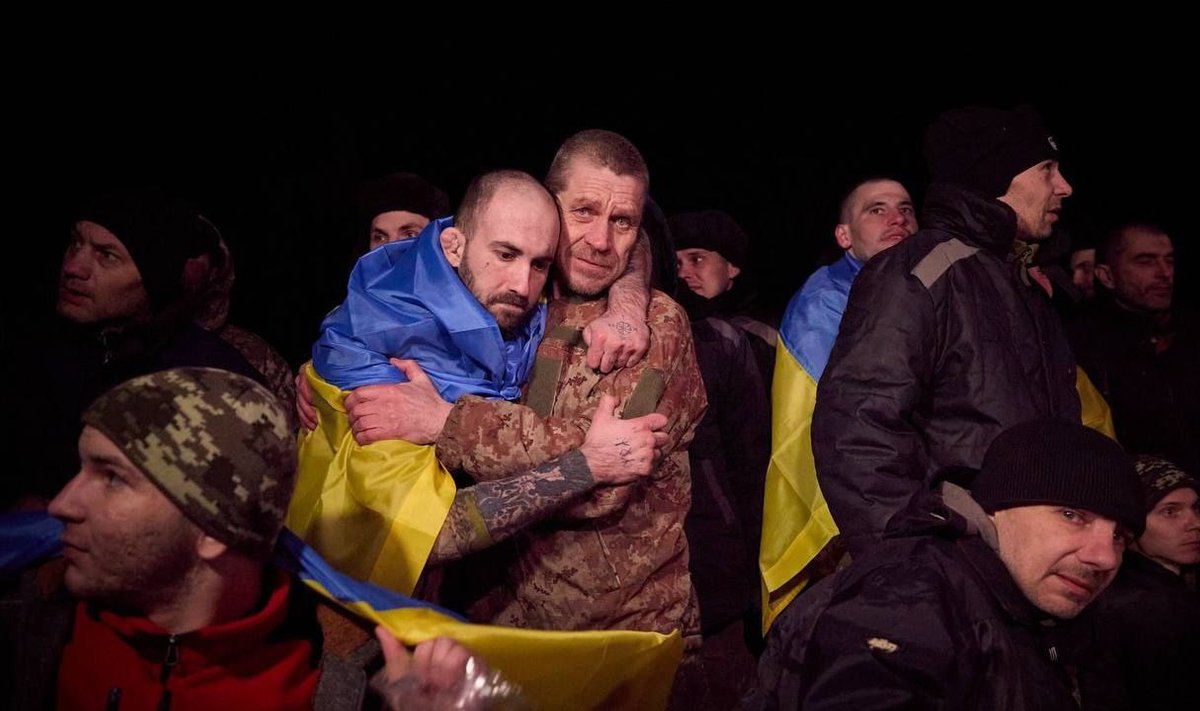
How the system of treatment of civilian prisoners from Ukraine is changing Russia
Not only military personnel, but also civilians may end up in Russian captivity. According to human rights activists, during the years of war, thousands of Ukrainian citizens were kidnapped from the occupied territories - activists, enterprise workers and those who simply “came into the hands” of the Russian military. Human rights activists and researchers from the Civic Evidence group studied criminal case materials and eyewitness accounts to understand what is happening to those abducted in Russia. Why Ukrainian civilians have been in illegal prisons for years, unable to contact relatives and lawyers - and why this is dangerous for Russians - a representative of a group of researchers told in an interview with Cherta.We all know about thousands of Ukrainian and Russian soldiers in captivity. We understand how they ended up there, and, moreover, we see regular exchanges of prisoners. But at the same time, there are thousands of Ukrainian civilians in Russian prisons and colonies and almost nothing is known about them. Who are these people and how did they end up in Russia?
When the Russian military occupied territories, they detained “unreliable” people. In their logic, these are people who either could give out important information if pressure was placed on them, or who posed a threat to the occupation authorities.
First of all, these are those who were once associated with law enforcement agencies: former military personnel, police officers, and special services. Neighbors snitched on someone, someone was in the database, someone had something found on their phone during the so-called filtration . Filtration is a forced check of Ukrainian citizens in occupied territories and when entering Russia. People's documents, phones, correspondence, photos were checked, and questions were asked about connections with the Ukrainian army and attitude towards the war. After such a check, some people were released, while others were detained, interrogated, subjected to violence, or sent to detention centers. .
Employees of local administrations, civil servants, and critical infrastructure workers, such as engineers, were also detained . Engineers at the Zaporozhye Nuclear Power Plant were convicted of “terrorist activity” or “espionage” after refusing to cooperate with the Russian-appointed plant administration. Women who worked as cooks in the boarding house of the Azov regiment were convicted of participation in a terrorist organization, despite performing exclusively domestic functions.
From the Civic Evidence report of the Zaporozhye Nuclear Power Plant. Volunteers who carried food, medicine, transported the wounded from front-line areas, and many random people who simply came to hand were also detained.
For example, in the report we described the case of Snezhana Kozlova. Her husband was once a military man, but she separated from him. She was detained at a filtration point on April 12, 2022, when she was taking her son with a shrapnel wound to his eye out of Mariupol; they were going to a hospital in Donetsk. Mother and son were separated, and since then nothing has been known about Snezhana. The grandmother managed to take the boy to her place.
How many such people are there?
The Russian side does not provide any figures about detained Ukrainian civilians. In the report we mention the figure of 16 thousand - these data are voiced by the Commissioner of the Verkhovna Rada of Ukraine for Human Rights Dmytro Lubinets. It is common practice in the human rights community to refer to this figure.
Are there any Russian civilians being held in Ukraine?
In large numbers, no. There may be a small number of people the Ministry of Defense reports that there were Russian civilian prisoners in Ukraine. According to the Ministry of Defense, as part of the exchange on May 23, 2025, 270 military personnel and 120 civilians returned from Ukrainian captivity. TASS only reports that among the civilians there were civilians from the Kursk region captured by the Ukrainian Armed Forces. , taken from the Kursk region, but they have already been returned home. There are also Ukrainians who are detained for collaborating with Russia. There are several hundred of these people. There is even such a project - “I want to join my own people”, it maintains a list of Ukrainian citizens convicted of collaborating with Russia, who have expressed a desire to leave for the Russian Federation. Previously, human rights activists hoped that people from this list could be exchanged for Ukrainian civilians held in Russia, but this idea was not developed. In general, it seems that the Russian authorities are not particularly interested in these people.
You call civilians who were captured kidnapped. Why this particular definition?
The fact is that agents of the Russian state or structures under their control who detain Ukrainians do not introduce themselves, do not present documents, and in some cases hide their faces under masks. Next, the detainee actually “disappears,” that is, he is held without any procedural status, without notifying relatives and without access to lawyers . We call these actions kidnapping because they correspond, for example, to the “resolution” From the resolution of the Plenum of the Supreme Court of the Russian Federation “On judicial practice in cases of kidnapping” dated December 24, 2019:
“ within the meaning of the criminal law, the kidnapping of a person should be understood as his illegal capture, movement and subsequent retention for the purpose of committing another crime or for other reasons... The capture, movement and retention of a person can be carried out using threats, violence, taking advantage of the helpless state of the victim” Plenum of the Supreme Court of the Russian Federation “On judicial practice in cases of kidnapping” dated December 24, 2019.
What happens to a person after being kidnapped?
He or she is being held in an unknown location, without contact with relatives, a lawyer or the outside world. This is called incommunicado mode.
Even if the missing person has relatives who are looking for him, send requests to the Russian authorities themselves, or try to search through lawyers, they are most often told that the Russian authorities do not have such a person. We have described cases where people were incommunicado from several months to more than three years.
In fact, Russia has created a parallel system of detaining people outside the framework of procedures provided for by law and outside official places of detention.
From the point of view of Russian law, these people simply do not exist. Their arrest has not been formalized, they have not been charged, they have not been provided with a lawyer, and they do not have visits from their relatives. In reality, they are most often kept in existing prisons. Ukrainian colleagues counted about 300 such places of detention.
 More on the topic Decommissioned people, jars of jam and a Russian passport: how older people live for years in a Russian temporary detention center
How will you find out about them then?
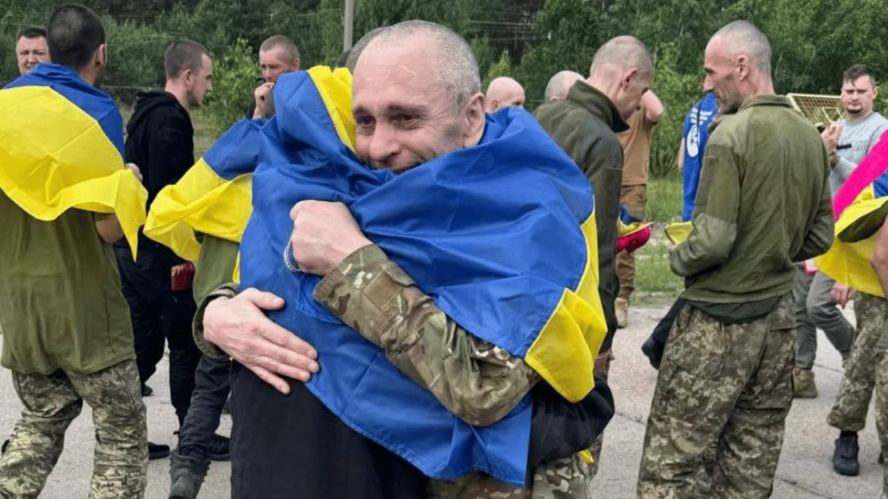
Human rights activists can obtain information about places of illegal detention when prisoners of war are exchanged. They are often held with civilians, and when they are returned to Ukraine, they can tell who was in the cell with them.
Another way is through the International Red Cross. But this does not always work; unfortunately, the ICRC often does not respond to relatives. According to their mandate, they can only interact with immediate family or a lawyer by proxy. The Red Cross manages to visit some of the detainees; some of the relatives receive short notes written in the prisoner’s hand. But in most cases, relatives do not receive any answers.
Even under Moskalkova, there was a mechanism for exchanging letters through authorized representatives. Now, under the new Commissioner, it is unknown whether this practice will continue.
What do you know about the conditions of detention of civilians?
Conditions for prisoners of war and civilians are almost the same. We recently received evidence from an exchanged prisoner that where he was held, people fainted from hunger due to very poor nutrition. Prisoners lose 30–40 kilograms in custody. Starvation is a fairly common phenomenon. They are also forced to stand from 6 am to 10 pm. They stand in the cell, facing the wall. Go to the toilet twice a day with permission. You can't talk to each other or sit down. The prisoner, who had recently been released, said that for the last three months before the exchange he dreamed of committing suicide. I was thinking about how to do this so that I could be sure. I was going to jump headfirst from the second floor of a bunk because I couldn’t stand it anymore.
While a person is kept in an illegal place, he is not registered, torture and various forms of humiliation are actively used against him. He receives virtually no medical care and is not provided with basic needs for clothing and hygiene items. The cells are very crowded, it is very cold in winter, and unbearably stuffy in summer, prisoners are regularly beaten and humiliated.
For example, they are forced to sing the anthem of the Russian Federation 20–30 times a day, insult the President of Ukraine Volodomir Zelensky in chorus, or learn by heart Putin’s article “On the historical unity of Russians and Ukrainians.” Those who refuse are beaten. Or they hit the whole cell.
The evidence we have studied indicates the systematic use of physical violence (beatings, electric shocks), sexualized violence, psychological pressure, threats against relatives, mock executions and other forms of intimidation.
The story of a Ukrainian woman who survived torture. TW: there are descriptions of scenes of violence. If you are not ready, do not open.“These are sadists in the strict clinical sense of the word... Because how to take pleasure in inflicting pain on a naked tied up woman and performing all sorts of perversions... not every person is capable of this... Evdokimov personally sawed my teeth with a file, twisted my nipples and tried to shove a bottle into the vagina... Meanwhile, his Arkharovites dealt sudden blows from different sides... They undressed me, tied me up with tape, doused me with water, connected an electric current, into the anus inserted a stick. If she didn’t scream enough, they increased the current discharge, and the blows became more frenzied...”
Natalia Vlasova, testimony in court. From the Civic Evidence report.
Based on the case materials, it is clear that during the period of incommunicado the behavior scenarios of prisoners are very typical. Usually, the prisoner allegedly “does not want” to contact his relatives, “agrees” to an appointed lawyer and, in front of him, voluntarily gives “confession” to the commission of serious crimes in Russian. Although the majority are charged with particularly serious charges and at the same time claim that they allegedly hate Russia and everything Russian, including the language.
Unfortunately, some of the prisoners die in incommunicado conditions. The most famous example of a “journalist” In 2023, Ukrainian journalist Victoria Roshchina went to the occupied territories to find places where kidnapped Ukrainians were being held. In the Zaporozhye region, she was detained by representatives of the occupation authorities. On October 10, 2024, it became known that Roshchina died during the transfer from Taganrog to Moscow. The journalist reported about electric shock torture, and her cellmate talked about traces of torture on her body. Victoria Roshchina. She died under torture. Such cases happen regularly.
What if relatives file a missing person report? The police aren't looking for him anyway?
There were cases, literally a few, when the lawyers received an answer that the person was not missing, but was being held in a specific colony. But most often no one is looking for anyone.
It is obvious that the Russian authorities are keeping some kind of records of people. Apparently there is a separate list, and it is not integrated into the general FSIN system. Some time ago, one exchanged prisoner said that he was in the same cell with a specific person whom they had been looking for for a long time. A lawyer comes to this institution. And the employees open the lists right in front of him and say: “You see, there is no such person here.”
And how do the police, for example, in Moscow know that this is a disloyal Ukrainian kidnapped by law enforcement agencies, and not some kind of criminal? And why can they not start checking?
Apparently they have a verification mechanism, because they perfectly understand who is who. They find out through their own channels, and if they understand that these are kidnapped Ukrainians and they are assigned to another structure, then they do not conduct any meaningful check.
A large number of people are involved in this shadow system of holding people: FSB officers, FSIN officers, seconded employees, supervised lawyers, special forces, doctors.
But some prisoners then appear in official places of detention?
Yes, it happens that after some time, the authorities report that the missing person is accused in a criminal case. In law enforcement jargon, this is called “unfreezing”—when a prisoner held incommunicado is charged.
Most often, legalization occurs like this: FSIN employees draw up a report on the discovery of signs of a crime in the actions of a person who is already in their custody. This makes it possible to retroactively give the kidnapping the appearance of a legal detention.
Usually, the time of detention is counted not from the date of the actual disappearance, but from the moment of “unfreezing”, legalization of the prisoner’s presence in the institution. At the same time, several times the courts in the sentence counted the period from the date of actual detention.
And if there had been a normal court, an independent lawyer, then, of course, they would have asked the question: what happened in the period between the actual detention and the moment of legalization, where was the person these few months, on what grounds was he detained?
But no one asks these questions. And even if a lawyer asks, the court does not recognize the fact of illegal detention without registration as a violation.
Moreover, the evidence obtained during this period forms the basis of the accusation. This evidence was obtained through illegal methods, torture and threats, which means it should be declared inadmissible in court. But the court does not respond to allegations of torture, and no checks are carried out.
 More on the topic “Crazy answer - and we’ll stay here.” How the Belgorod region survives under shelling and without heat
Can lawyers record these violations?
Lawyers hired by relatives are admitted after “unfreezing”. And the most cruel tortures occur before this, while the person is incommunicado. By the time an independent lawyer appears, the signs of torture have already passed and there is nothing to document. Although it happens that lawyers see all the abuse, obvious signs of torture, but do not record them and sign evidence illegally obtained under torture. Typically these are appointed lawyers who collaborate with law enforcement agencies. They are also part of this fabrication system.
Further, when a prisoner is transferred to a pre-trial detention center, to a legal field, he is also often beaten. But such as torture with electric shock, beating so that a person is already a half-dead corpse - this happens much less often at this stage. This usually happens if a person takes too active a position in court and needs to be intimidated or at the stage.
By the way, a designated lawyer can also be a decent person and help. Often such lawyers contact relatives and help convey something. The problem is that relatives from Ukraine cannot officially send parcels to Russian prisons. In war conditions this is impossible.
As a result, the prisoners have nothing after “defrosting”. Rags instead of clothes. Some were wearing the clothes in which they were taken a few months ago, others were given something by their cellmates, usually of different sizes, old, dirty rags.
There is no toothpaste, no sanitary pads, no repellent for cockroaches, of which the cells are full. It happens that appointed lawyers also help with this: they will bring some things or food, they will convey news from home. And this news for the prisoners is the most precious and important.
Most lawyers do not want to work with this category of cases. Try calling some ward and inviting them to visit a captured Ukrainian—not even to protect him, but simply to visit him for humanitarian purposes. There will be few people willing.
Don't want to clash with the FSB?
They don't want problems. Moreover, it is often useless. If a person is incommunicado, then it is almost impossible to get to him. Because even if the lawyer arrives, he will kiss the lock, and no one will allow him further. It is also impossible to win a Ukrainian’s case in court; everyone knows that the cases are politically motivated, and the verdict will be what the security forces want.
I think that a very small number of lawyers and Russians generally know that such people exist in Russia. and understand what is happening to them in the dungeons. Therefore, the main goal of our report is to tell how this system works.
What are they judged for after “unfreezing”?
Military personnel are most often tried for terrorism, international terrorism, attacks on the constitutional order of the Russian Federation, and for sabotage - bombings, attempts and murders of Russian military personnel and representatives of the occupation authorities. Civilians for spying very often. For example, they are accused of handing over data on the movements of Russian troops to the Ukrainian intelligence services.
Why does Russia generally judge Ukrainian citizens, even if they collaborated with the intelligence services of their country or fought as part of its security forces?
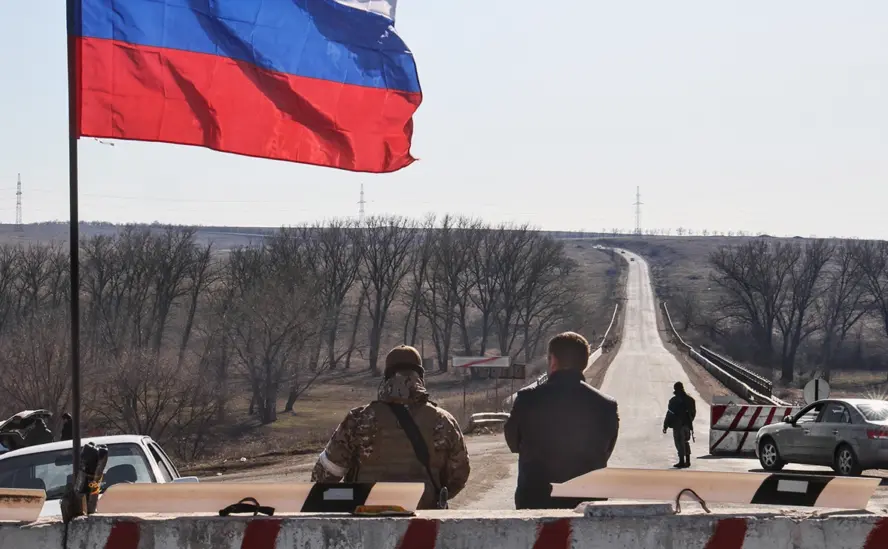
The Russian authorities extended their criminal and criminal procedural law to these territories. Although, according to the Geneva Convention, the occupying power must maintain local legislation. It can introduce its own criminal rules only in limited cases - for example, if it is necessary for security.
And here we get a legal conflict: from the point of view of Ukrainian law, the person did nothing illegal, but Russia retroactively begins to consider these actions a crime. This is one of the schemes that is used in falsifying cases.
What is the purpose of your report?
We wanted our Russian and international readers to understand what is happening to Ukrainian prisoners in the Russian judicial system - not in general, but with specific examples and mechanisms.
The abducted civilians suffered severe suffering and torture. Captivity destroyed their physical and mental health—and the health of their families.
And our task now is to inform society, including Russian society. So that when the voice of human rights defenders is heard openly in Russia, something can be done about these crimes. Investigate them, bring the kidnappers and torturers to justice. Condemn them on behalf of the state, as Stalin’s repressions were once condemned.
In this case, our materials will also be useful. Maybe they will help us realize, rethink and change something in our society.
Is Russian society now ready to sympathize with the Ukrainians affected by this war, while more and more Russian regions are being shelled?
It's not just about sympathy. The system of kidnappings, forcible detention of people, fabrication of criminal cases retroactively concerns not only Ukrainians. This system involves a large number of Russians who get used to the fact that this is possible: torture, not following legal procedures.
We saw this in Chechnya. All the same schemes with kidnappings, torture in basements, and “legalization” after long periods of incommunicado - all this was already used there. For many years, employees of the Ministry of Internal Affairs and the FSB were brought to Chechnya on a rotation basis.
Then they returned from business trips and brought these illegal practices into their regular work at home. Now the generation of Chechen veterans is aging - but now the new generation is socialized into this cruelty.
While thousands of Ukrainians are in this situation: the prosecutor’s office and the courts allow them to be treated this way, ignore complaints, and not carry out any investigative actions while criminal cases are being fabricated against them, and the courts are stamping out illegal verdicts. While torture conditions are deliberately created for them in prisons, our legal system is decomposing even more. And the Russians will inevitably also be its victims.
Then I’ll ask differently: why does society need to know about these horrors?
Because it's about us. This is done by our state on our behalf. We need to know about what is happening in our country. This is our responsibility and our crimes. Moreover, those who are part of this machine are part of our society. Their children study with ours, they are our neighbors, they live in the same space with us. Their cruelty becomes part of our society, spills out in it at various levels, and we continue to live with this cruelty.
One of the recommendations of your report is the release of civilians without preconditions. What is the problem with this now, why can’t they be exchanged?
According to the Geneva Conventions, only prisoners of war can be exchanged, which happens regularly. But civilians can only be released.
And if a person already has an article on terrorism and has been sentenced to 20 years, then how can they be changed? Are there any legal barriers to sharing?
Prisoners of war were taken away with deadlines. And straight from the courtroom, and under investigation. Today this is not an obstacle.
 More on the topic Crows and coffins. Cemeteries and tragedies of four years of war
Are forced disappearances still continuing in the occupied territories?
It is very difficult to analyze what is happening in the occupied territories. This is such a gray area where little independent information comes from. People are very intimidated. Almost all the activists who could somehow cooperate with human rights activists left there. Russian lawyers have now begun to travel there, but the information still comes in is quite fragmented.
According to our data, there are now fewer cases where people are simply kidnapped and held incommunicado. Still, arrests occur more often according to some kind of quasi-legal procedure.
Чаще всего задерживают тех, кто выказывает нелояльность российским оккупационным властям. Например, был один кейс, когда мужчина что-то критическое сказал в частном разговоре, а через полчаса к нему приехали маски-шоу.
Или, например, задержаны родители, у которых сын состоит в каких-то партизанских структурах.
Механизм может быть такой: сначала происходит административный арест, чаще всего за нарушение комендантского часа. Дальше человека привозят «на подвал» — одно из незаконных мест содержания. Там кому как повезет — кого-то бьют, кого-то нет, но условия содержания там плохие.
А дальше — или депортация, или, если у человека уже есть российский паспорт, возбуждение уголовного дела. В таком случае чаще всего по госизмене. И тогда получить информацию о деле уже очень сложно, потому что дела закрытые, суды идут в закрытом режиме. А независимые адвокаты не хотят работать по таким делам, потому что на них накладывают серьезные ограничения.
Зачем вообще задерживать и удерживать годами гражданских? Если их даже нельзя обменять на россиян. What's the point?
Good question. Возможно, в начале хватали максимальное количество людей, чтобы создать обменный фонд. Чтобы потом торговаться — территории в обмен на людей. Это такой элемент давления на украинское общественное мнение.
Понимаете, это же тысячи людей, у всех есть семьи. Соответственно, если у тебя, не дай Бог, брат, муж или отец в плену уже несколько лет, а обмененные пленные рассказывают, в каком жутком состоянии их там содержат, то ты будешь готов на все, только бы твой близкий человек поскорее вернулся. Сейчас эта практика в основном направлена на запугивание несогласных и нелояльных людей на оккупированных территориях.
редакция «Черты»