Date
Author
Материал Демагог Иллюстрации София Хананашвили
Source
Preserved copy
Translated material
Food is more relevant. Why did book circulation in Russia fall by 26% over the year?
A few days ago a conference was held in Moscow on bookselling in Russia. The speakers spoke about the depressing situation of the book market: book prices are rising, buyers' salaries are falling, circulations have decreased by a quarter, and the number of bookstores in Russia is declining - now we are almost back to the figures of 2015.
The demagogue collected all the most important data from the conference and the recent large report by the Russian Ministry of Digital Development on the state and trends in the book market. In addition, we talked with the author of the telegram channel “Words and Money”, technical director of the Freedom Letters publishing house and director of the Free University publishing house Vladimir Kharitonov and prepared a large analysis of what is happening with the book industry in Russia today.
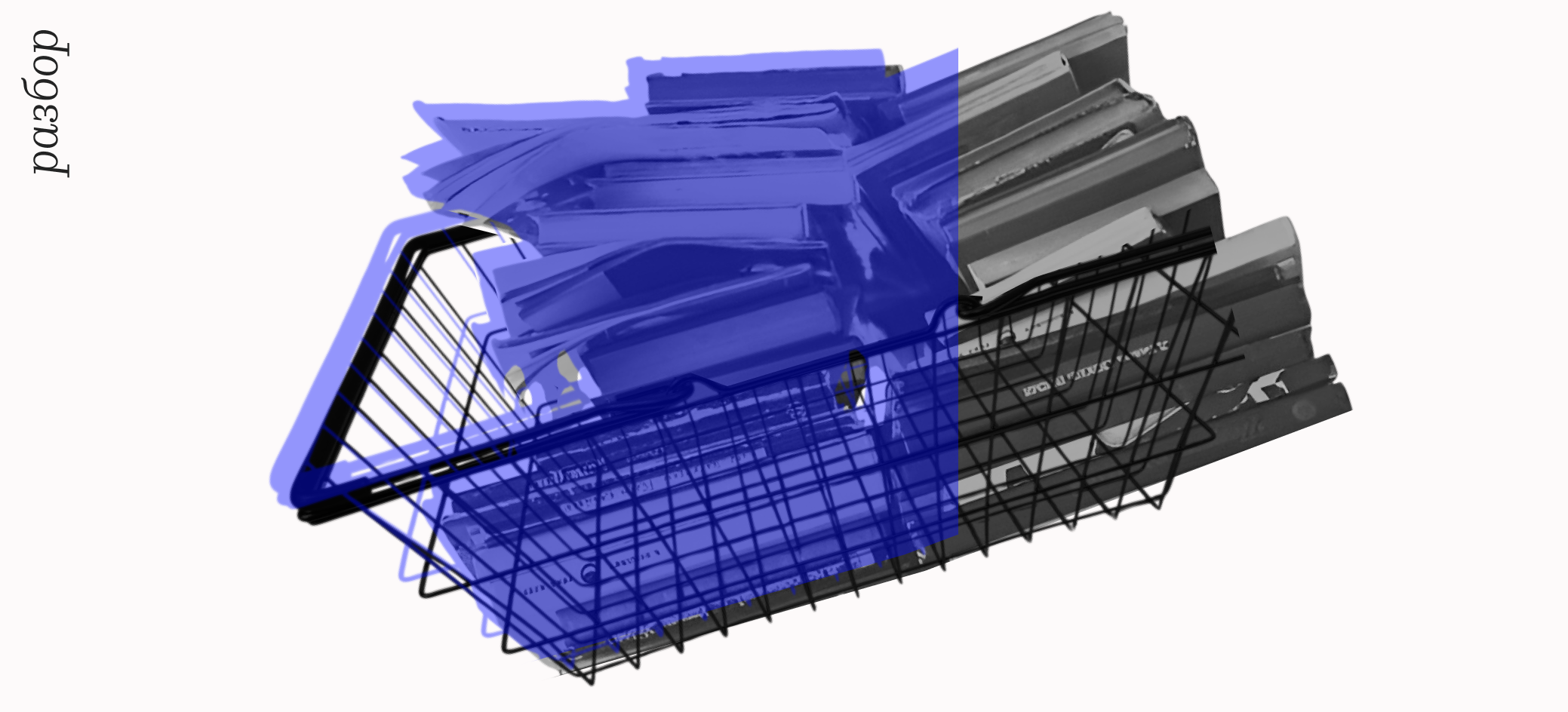
A few days ago, on June 4, a conference “Russian book industry - time of consolidation: results of 2025 and development prospects” was held at the Red Square book festival in Moscow. At it, the Russian Book Chamber presented statistics: in the first quarter of 2026, the circulation of books and brochures was 26% lower than a year ago.
The demagogue spoke with Vladimir Kharitonov, author of the “Words and Money” telegram channel, technical director of the Freedom Letters publishing house and director of the Free University publishing house. He told us that he had never seen such a sharp drop in the Russian book market before: “There were steep declines in 2009, after the then oil crisis, during Covid, when it was simply difficult to organize production and distribution, but for a quarter of the circulation to be lost - no, I don’t remember.” Most likely, as Kharitonov suggests, this is a consequence of the general economic crisis: rising printing prices, decreasing purchasing power of readers - “books are never a priority in the shopping basket, because food is more relevant.”
President of the Association of Book Distributors of Russia Svetlana Zorina, in her report at the conference, noted that offline retail turnover in 2025 was the minimum over the past seven years. The reasons for this crisis at the conference were explained by “a significant increase in the costs of publishing, selling and promoting books,” “a drop in purchasing power and a decrease in economic efficiency,” and “working under new legislative restrictions.” Roughly speaking, production costs more, people have less money, and the government only prohibits it. Another influencing factor, according to Evgeniy Kapyev, general director of the EKSMO publishing house, is the demographic crisis: “Fewer children are being born, and if they still read little, it will roll across the entire book industry very quickly.”
As the speakers reported, bookstores in Russia are becoming an unprofitable business - in 2024 and 2025 alone, their number in the country decreased by 286, that is, by more than 10%. Selling books online is much more profitable - the profit tax for bookstores is 25% - this is five times more than for marketplaces, where more than half of all books are now sold (bookstores sell only a third of the total). From 2021 to 2025, the book market actually turned upside down: book retail saw sales decline, while online sales more than doubled over the same period. And based on the results of the first ten days, by 2026 it is predicted that a third of the branches of chain bookstores will close and circulation will decline by 15%.
The closure of stores affects not only small towns: a recent federal report from the Department of State Support of Periodicals and the Book Industry of the Russian Ministry of Digital Arts states that in 2025, 63 stores closed in Moscow. This is the largest figure; in total, 338 stores closed in Russia last year, and 135 opened. Today, the number of stores has decreased to approximately the 2015 level.
Moreover, as our interlocutor Vladimir Kharitonov reports, this speaks specifically about the Russian situation on the book market, and not the global one: “Nothing like this is visible in the world. In England there was a market growth of 7% over the past year. By seven percent! This is a lot for an already very large (approximately 7.5 billion pounds, that is, five times larger than Russia) market.” In addition, statistics show that samizdat is also growing in Russia.
Vladimir Kharitonov believes that Russian processes do not affect tamizdat: “There is no particular damage or profit for emigrant book publishing from this fall, because there is little economic connection with Russia. Not a single Russian publishing house in Europe, naturally, lives off sales in Russia,” says our interlocutor.
As part of the report on the first quarter of 2026, the conference reported that the most frequently published author of fiction was Stephen King - we recall that at the end of 2025, his novel “It” was withdrawn from sale in Russia due to denunciations of “LGBT propaganda.” Second place was shared by F. M. Dostoevsky and Anna Jane, a Krasnoyarsk writer and author of youth novels. Among the main trends in the thematic preferences of Russians in 2025, a report by the Department of State Support of Periodicals and the Book Industry talks about “high interest in novels that raise philosophical questions about the meaning of life and death (top sellers are “If All the Cats in the World Disappear” by Genki Kawamura, “The Sorrow of Satan” by Maria Corelli, “God Travels Incognito” by Laurent Gounel).” And in addition, the authors of the report claim that interest in books dedicated to the full-scale Russian invasion of Ukraine is growing: “This segment is developing dynamically, and the key feature has been the active involvement of a young audience and the emergence of new authors - direct participants in the events.”
In its recent investigation, “Verstka” calculated that 259 books about the North Military District were published during the war: “The most Z-books were published in 2025 - 108. In 2022, only 4 similar works were published - among them Sergei Zharikov’s fantasy “On the Road to the Stars,” the story of a reserve officer who returned to service after the start of mobilization. In 2023 there were 21 of them, in 2024 - 62, and almost the same number have already been published this year - 59. The circulation of books is often small - on average two to three thousand copies.” However, these are 254 books, not 259.
The publication writes that such Z-literature is not very successful commercially, but the books are supplied to budgetary institutions - schools, universities and libraries, and in June 2026, the Ministry of Education included works about “heroes of the Northern Military District” in the list of compulsory reading for schoolchildren for the summer. That is, the trend noted by the Ministry of Digital Development of the Russian Federation, the supposedly growing interest of young people in books about a full-scale invasion, can be created artificially.