Translated material
How footballers are persecuted for politics
Offside. How footballers are persecuted for politics in Russia (and not only in Russia)
The FIFA World Cup kicks off today in Mexico City, which is also hosted by the USA and Canada. The Russian team misses the tournament due to international sanctions. At the same time, the state is increasingly using repressive mechanisms against athletes whose civic position diverges from the official course.
“The First Section” tells how Vladimir Putin’s regime persecutes unwanted football players, what methods of pressure were resorted to in the USSR and the 1990s, as well as similar examples of political reprisals against players abroad.
Persecution due to the war in Ukraine and modern repression
After February 2022, statements against the war or support for Ukraine are equivalent to state crimes.
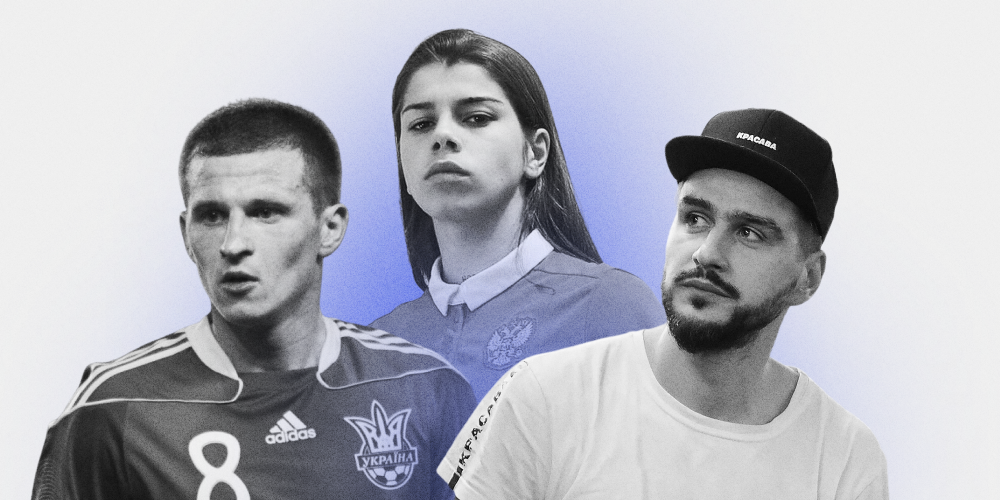
Evgeniy Savin (“KraSava”)
Former forward for a number of RPL clubs and the Russian national team, creator of the popular YouTube channel “KraSava” and founder of the football club of the same name. In the spring of 2022, Savin released a large-scale video with Ukrainian football players condemning the Russian invasion, after which he left the country and moved his club to Cyprus. An administrative fine for “discrediting” the army was followed by a criminal case under the same article (Part 1 of Article 280.3 of the Criminal Code of the Russian Federation) - the reason was his interview with Ksenia Sobchak. The Tverskoy Court of Moscow arrested Savin in absentia and put him on the wanted list.
Alexander Aliev
Former midfielder of Lokomotiv Moscow and the Ukrainian national team. He was born in Khabarovsk, but has Ukrainian citizenship. With the outbreak of the war, Aliyev joined the ranks of the territorial defense of Kyiv. The Main Investigation Department of the RF Investigative Committee for Moscow opened a criminal case against him under a harsh article - public calls for terrorism (Part 2 of Article 205.2 of the Criminal Code of the Russian Federation). The reason was an emotional video message on social networks, where Aliyev called on the Ukrainian Armed Forces to strike the Kursk region. He is wanted.
Nadezhda Karpova
Striker for Spanish Espanyol and former Russian national team player. She has become one of the few Russian athletes who openly and regularly condemns the Kremlin’s policies and the war in Ukraine. Due to her strict anti-war posts, returning to Russia is impossible and unsafe for her: her statements fall under articles about “fakes” and “discrediting” the army.
Vasily Vasilenko: Ukrainian ex-football player who played in the 1990s and early 2000s for clubs in the lower leagues of Ukraine (Tavriya, Torpedo Melitopol). Vasilenko came to Moscow on personal business and was detained back in October 2019. Initially, he was charged with smuggling, but later the FSB reclassified the charge to Art. 276 of the Criminal Code of the Russian Federation (“Espionage in favor of Ukraine”). In December 2020, the Moscow City Court, in a completely closed regime, sentenced the ex-athlete to 12 years in a maximum security colony. The details of the case are still classified.
Andrey Shevchenko and Andrey Pavelko
Persecution by the Russian Investigative Committee also affected the leadership of Ukrainian football. The former head of the Ukrainian Football Association (UAF), Andrei Pavelko, and the current head of the association, legendary forward Andrei Shevchenko, became involved in criminal cases for “inciting hatred and enmity.” Pavelko is being persecuted for successfully lobbying for the sports isolation of the Russian Federation in FIFA and UEFA, and Shevchenko for global fundraising for Ukraine through the United24 platform, which Russian security forces are trying to classify as “financing of terrorism.”
1990s
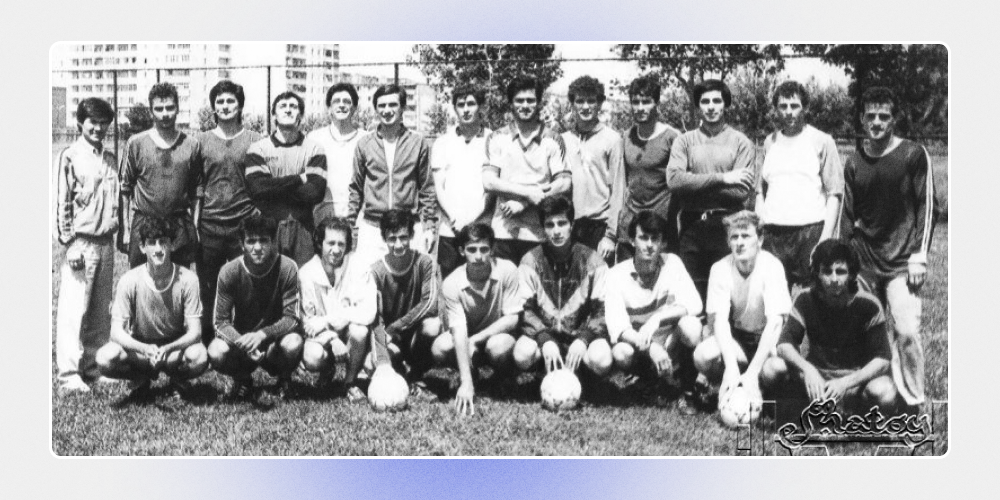
The main political factor in the persecution of football players in the 1990s was the ethnic issue of the Chechen wars and the redistribution of criminal assets.
Askhab Alsultanov and FC Erzu
Chechen defender, known for his performances for Grozny Erza and Nalchik Spartak. During the First and Second Chechen Wars, football players of Chechen origin in Russia were under enormous pressure from security forces - they were regularly detained by the RUBOP and checked for “connections with militants” simply based on their origin. The Erzu club, which almost reached the Major League in 1993, was virtually destroyed by the state, since Moscow viewed its leadership as a financial support for the separatist regime of Dzhokhar Dudayev. Many players were forced to go into hiding to continue their careers.
Examples from the USSR
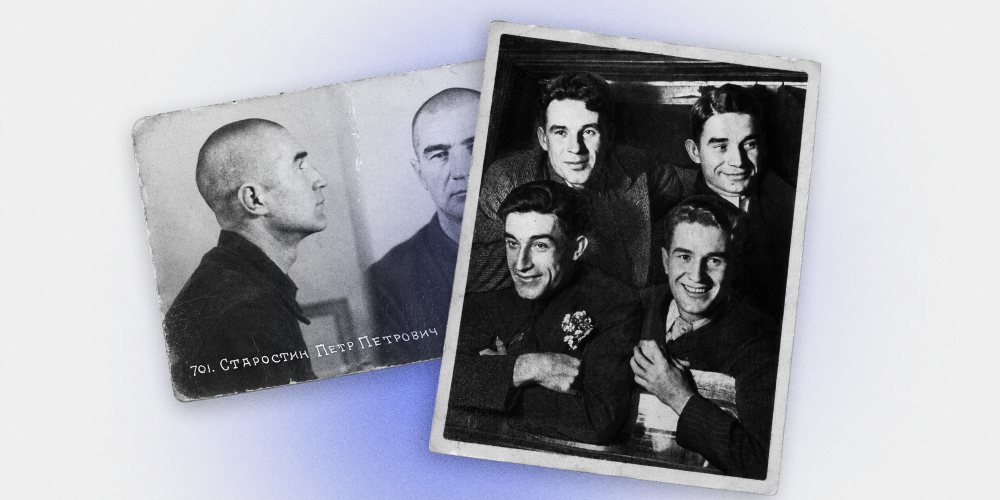
In the Soviet Union, sports were part of the state machine, and football players were military personnel or departmental employees. Any attempt to show character or independence was punishable by prison.
Starostin brothers (Nikolai, Alexander, Andrey, Peter)
Founders, players and leaders of Moscow Spartak. In March 1942, all four brothers were arrested personally by order of the head of the NKVD Lavrentiy Beria. Beria oversaw the departmental Dynamo and was sensitive to the successes of the “people's team”. The brothers were faced with absurd charges - from anti-Soviet agitation to espionage for Germany and plans to carry out a terrorist attack on Red Square. As a result, they were sentenced to 10 years in the camps. Nikolai Starostin survived the Gulag largely because the camp commanders were football fans and forced him to coach local teams.
Disbandment of CDSA (1952)
There is a precedent when an entire club was subjected to repression. CDSA (“Team of Lieutenants”) was the hegemon of Soviet football and the base club of the USSR national team, which lost to the Yugoslav national team at the 1952 Olympic Games in Helsinki. Relations between Stalin and Yugoslav leader Josip Broz Tito at that time were hostile. The defeat was perceived by the Kremlin as high treason and a blow to the prestige of the USSR. By personal order of Stalin, the CDSA team was disbanded, deprived of all titles, and the leading players and coach Boris Arkadyev were severely disgraced, deprived of the title of Honored Master of Sports.
Foreign experience
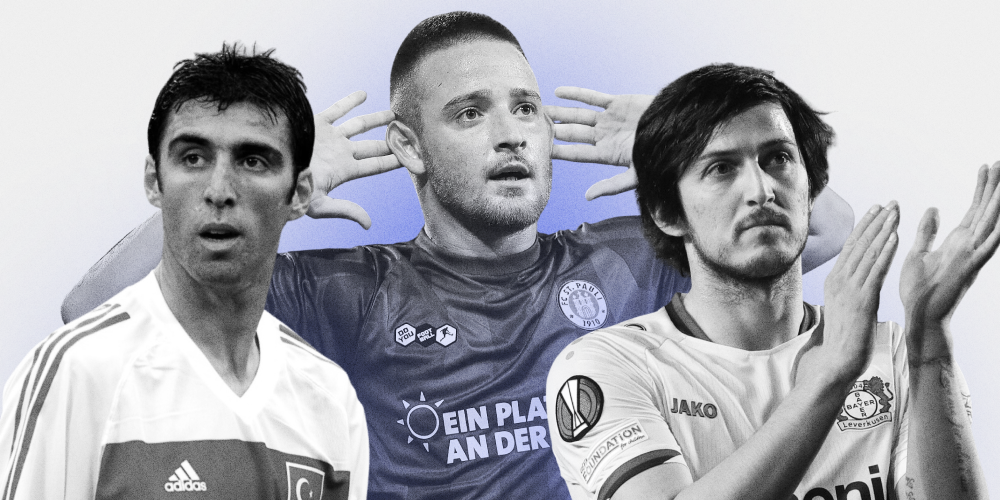
The mechanisms of political pressure on sports outside of Russia work according to the same patterns of intolerance towards other people’s opinions.
Serdar Azmoun (Iran)
The Iranian football star and former striker of St. Petersburg Zenit fell under the skating rink of the local justice system. The Golestan provincial prosecutor's office accused him of "collaborating with the American-Zionist terrorist enemy" and began the process of confiscating his property in his homeland. The reason for accusations of disloyalty to the ayatollah's regime was his publication on social networks of a photograph with the emir of Dubai (Tehran considers the UAE an ally of the United States). Previously, Azmoun openly supported anti-government protests in Iran, which is why he was temporarily suspended from the national team.
Hakan Sukur (Türkiye)
The best scorer in the history of the Turkish national team and the hero of the 2002 World Cup, after finishing his career, he went into politics and became a deputy. Following the 2016 military coup attempt in Turkey, President Recep Tayyip Erdogan declared Şükür a member of a terrorist organization for his ties to disgraced cleric Fethullah Gülen. All of the football player’s property in Turkey was seized, his father ended up in prison, and Şükür himself fled to the USA, where he was forced to work as a taxi driver.
Denise Naki (Germany / Türkiye)
German footballer of Kurdish origin who played for the Turkish Amedspor. In 2017, he received a suspended sentence in Turkey for “promoting terrorism” on social networks: Naki openly spoke out in defense of the Kurdish population and criticized military operations of the Turkish army. The Turkish Football Federation banned the player for life, after which an attempt was made on his life on a track in Germany. Naki decided not to return to Turkey anymore.