
Translated material
How I dined with the left-wing militant who kidnapped the ex-Prime Minister of Italy
Alexander Vorobiev
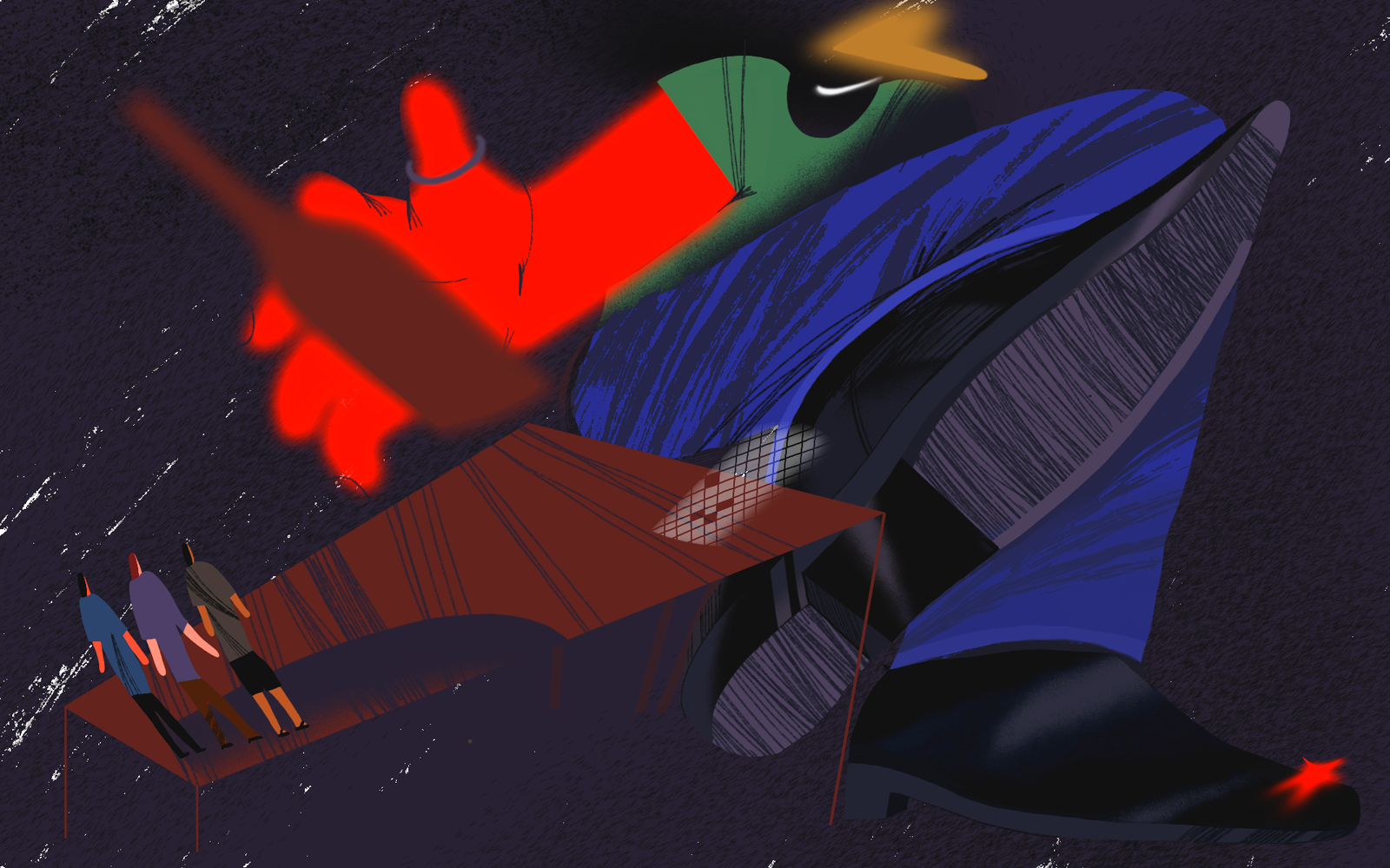
On the outskirts of a Latin American city there is an inconspicuous restaurant serving Italian cuisine. Its owner smiles broadly at guests from Russia, drinks rum with them, boasts of his success in diving and admits his sympathies for Putin. Almost 50 years ago, he was a member of the Italian radical left organization and participated in the kidnapping and murder of former Italian Prime Minister Aldo Moro.
Historian and journalist Alexander Vorobyov met with a man who is still wanted for one of the most notorious political crimes of the 20th century, and talked with him about the leftist movement, violence and life after the riot.
Based on real events
Latin American evenings have a way of leading you astray. They take seekers into the dark quarters of city streets, into unlit and wild roads, which, as if no human had ever set foot. You walk, wander, but the road seems to never end. The street lights are not lit, you can only hear the hum of monkeys, the clatter of birds and the measured whisper of grasshoppers hidden in the thick, long grass. And then you come to a place: a tall mansion on the edge of the city, fenced with metal bars and high walls. The estate guards ask:
- Who are they?
- We are Russians, we came to Alessandro.
- Come on in.
What do the high walls protect?
Alessandro is a former member of the Italian Red Brigades, one of the participants in the kidnapping and murder of ex-Prime Minister of Italy Aldo Moro on March 16, 1978. After the crime, he was able to leave his native Rome and moved to Latin America, where he still lives. In Italy, he was sentenced in absentia to six life sentences, he is wanted by Interpol, and from the stands of the European Parliament there are calls from time to time to hand Alessandro over to justice.
Upon arrival in the country, I heard that somewhere in the outskirts there lived a member of the old radical leftist organization that in 1978 kidnapped and then killed Italian Prime Minister Aldo Moro. But I never thought that I would meet him. Unknown Russian journalist and Cold War fighter. Months have passed since I came here and heard this story, I had already forgotten about him. But one evening the phone rang...
On a December evening, I was sitting over a glass, talking on Zoom with my friend from Milan, Arseniy. He is the editor of the left-wing publication Rabkor, an excellent publicist and scientist, but for me, first of all, he is the best friend with whom I have been connected for many years of communication and joint work. We shared our impressions of life abroad, jumping from everyday observations to politics, until our conversation was interrupted:
— There is an opportunity to go to Alessandro’s restaurant today, are you with me? - came the voice on the phone.
I immediately started turning over in my mind: what do I even know about the “Red Brigades”? Terrorist tactics against capitalism in the 1970s, the Italian Communist Party's attempt to form a government with the Christian Democrats and the failed coalition after the kidnapping. I have a basic set of knowledge, I can start a conversation. Arseny was much deeper immersed in the topic, he is an expert on the history of the “Years of Lead.” He managed to enlighten me before the meeting: neo-fascist and communist groups were exploding bombs and shooting at each other. Hundreds of civilians were killed in the terrorist attacks. The neo-fascists wanted to provoke with terrorist attacks the introduction of a state of emergency and the radicalization of the right-wing government in Italy in order to suppress the leftist movement. The left declared electoral tactics, but this does not mean that civilians did not die from communist bullets.
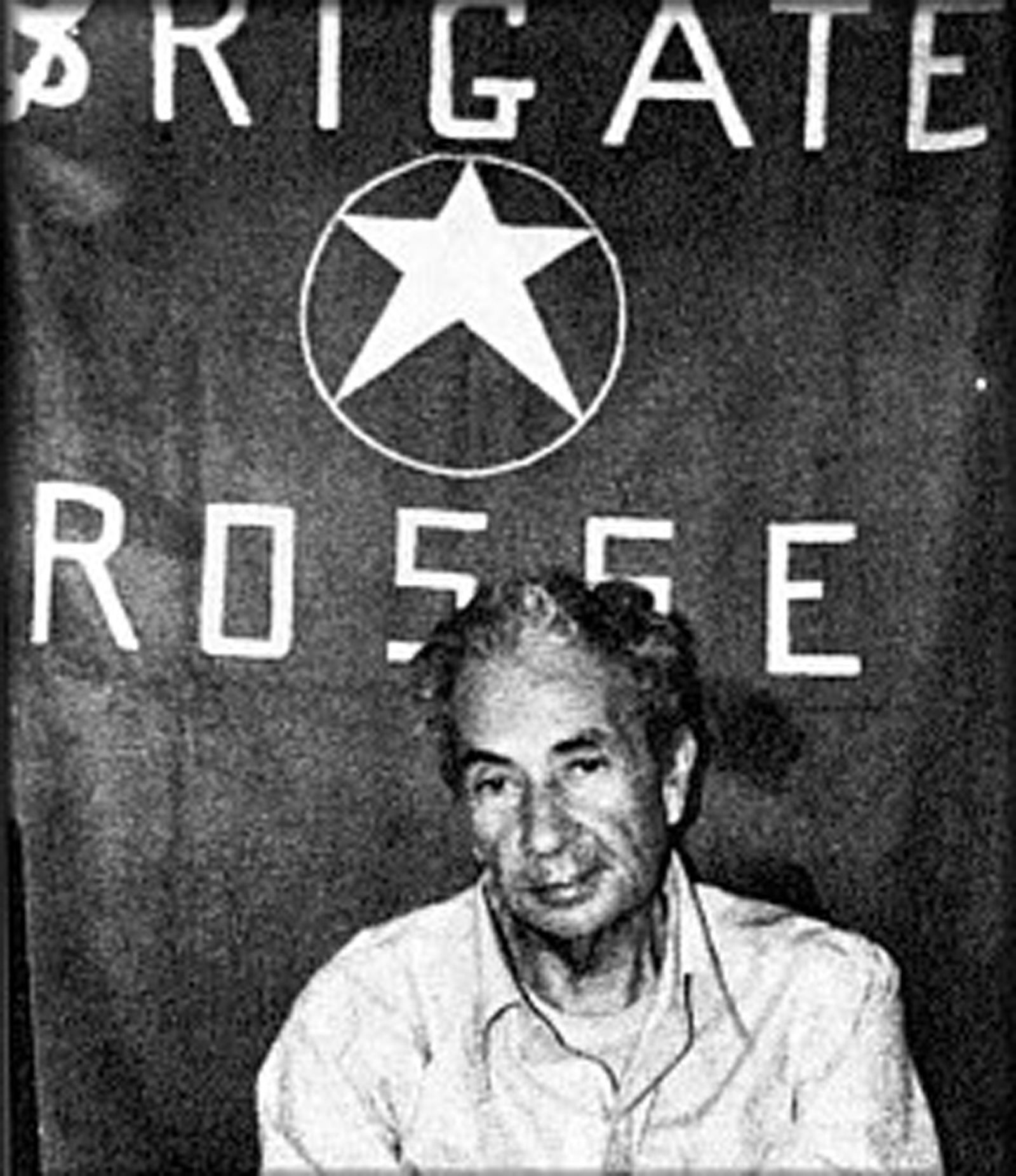
The Red Brigades kidnapped the chairman of the Christian Democratic Party, Aldo Moro, after trying to form an alliance with the Communist Party: they considered this a betrayal and wanted to put pressure on the government to release their fellow communists from prison in exchange for the release of the prime minister. The kidnapping took place quickly: five members of the “Red Brigades” blocked the path of Moro’s motorcade on the road, shot the guards and kidnapped him.
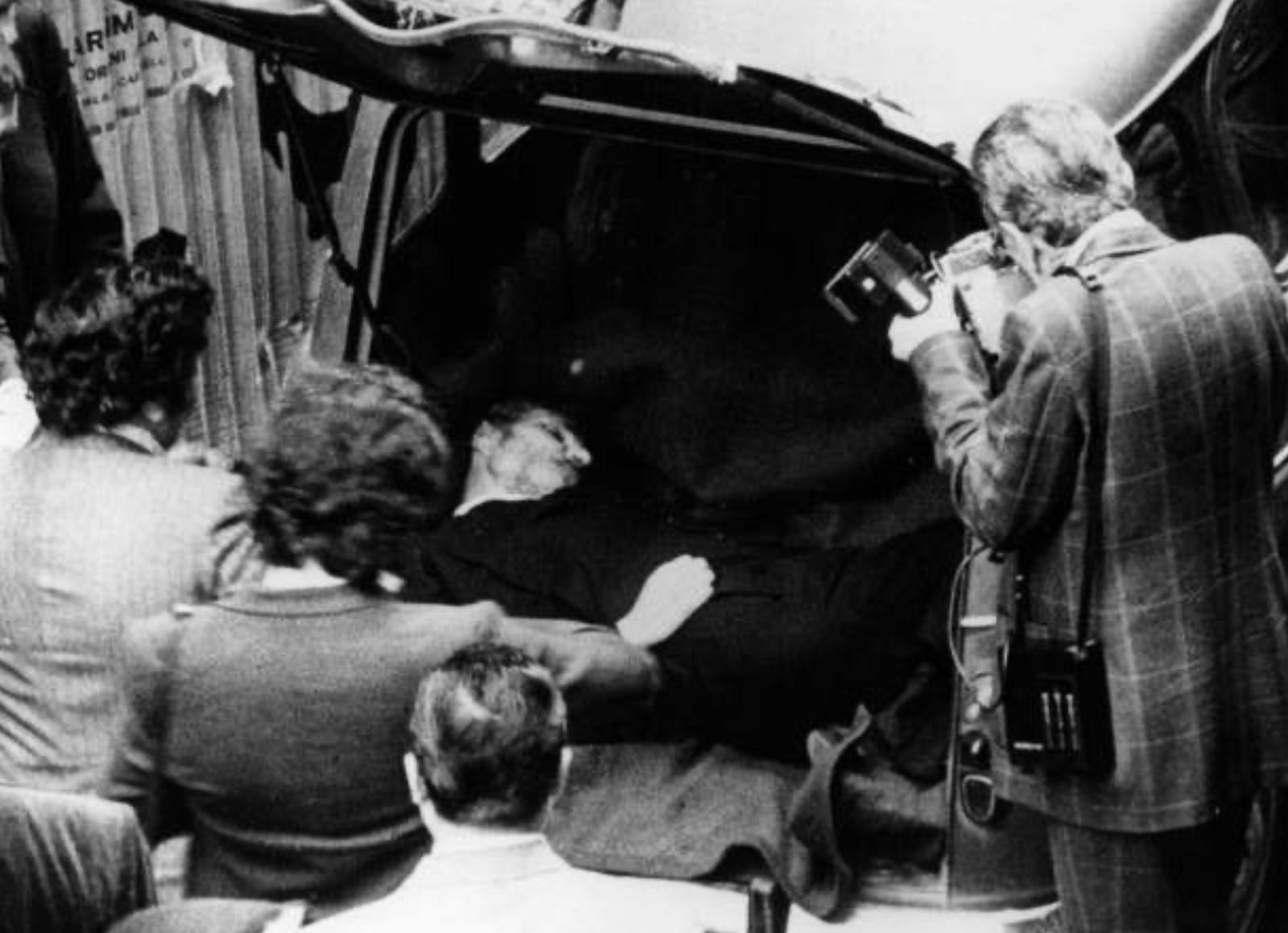
The politician was kept for 55 days in the “people’s prison” - a safe house in Rome. The Christian Democrats did not agree to carry out the exchange, and therefore militants from the Red Brigades killed Moro. His body was placed in the trunk of a car, and the car itself was parked at the entrance to the party office. Alessandro was one of those who took part in the kidnapping.
After a long enlightenment of Arseny, I said goodbye to him, it was time to go to the meeting. And I, together with my friend, went to meet Alessandro: in a restaurant on the outskirts. All of Alessandro’s youth and hobbies are connected with the ideals emanating from the USSR, so he did not refuse to meet me. We stopped by his large estate: high walls, a huge house and his restaurant attached to the villa.
Italian music was playing - funny, the first song was the soundtrack from the movie "The Godfather", and shortly after that the romantic song Il Mondo started playing. Behind the bar hung photographs of Father Alessandro: he was the Italian ambassador to the Vatican, close to the Pope. Also in the photographs were St. Paul's Cathedral and Castel Sant'Angelo, views of Florence and small Tuscan towns. The guards took us to the table.
A retired member of the Red Brigades took up molecular gastronomy in Latin America, so the restaurant offers more than 50 dishes to order. Italian desserts, ice cream, fish foam, artificial caviar and dozens of names that are completely unfamiliar to me. Previously, the restaurant was open to everyone, but everything changed after the assassination attempt on Alessandro. A couple of years ago, unknown people shot at his car. Then - Covid. As a result, only close relatives can now enter the restaurant.
Alessandro is the only one of the kidnappers who escaped prison. He managed to hide from the state, settle in a new place, start a family, and it seemed that he had been forgotten. Could the assassination attempt be related to his life sentence in absentia?
After a few minutes of waiting, we saw him: Alessandro was walking towards us at a brisk pace, holding a bottle of 12-year-old rum in his hands. Short, stocky, with a wide, sly smile, he was dressed in simple clothes: a dark green T-shirt, dark trousers, and on his head was a light baseball cap, hiding his bald spot. Without undue emphasis, he said loudly:
- Buenas noches, amigos!
And we began to drink the rum we brought.
Alessandro began the conversation with an unexpected topic: he was interested in the Mossad. I experienced mixed feelings: on the one hand, in the current context of the war in Gaza, talking about Israel sounds quite natural. On the other hand, I still did not expect that the Mossad would become the first topic of our meeting. He suspects that Israeli intelligence is actively penetrating Latin America, introducing its agents in order to destroy critics of the Jewish state. He’s afraid that he too will be kidnapped or killed, I thought to myself. Yes, the Italian authorities are looking for him, but does Israel need him? I suppose these are fears of old age: unless, of course, it suddenly turns out that Aldo Moro was a Jew.
Then Alessandro talked about his hobbies: he is a professional diver, diving tens of meters deep into the ocean. Another passion is shooting. And for good reason: the “Red Brigades” mostly shot accurately. Now this hobby is limited to hunting and the training ground.
A little about shooting. He recalls an episode from his youth. Still very young, having just joined the communist movement in Italy, together with other communists he came to his university in Rome - all in dark masks and with pistols. There are dozens of them. They occupy the university and occupy offices. The police arrive at the university. There are only a couple of armed employees. As soon as they showed their weapons and came out to meet them, the police fled. The triumph of his youth. They kept the university under control for a day, and then left without opposition from the authorities.
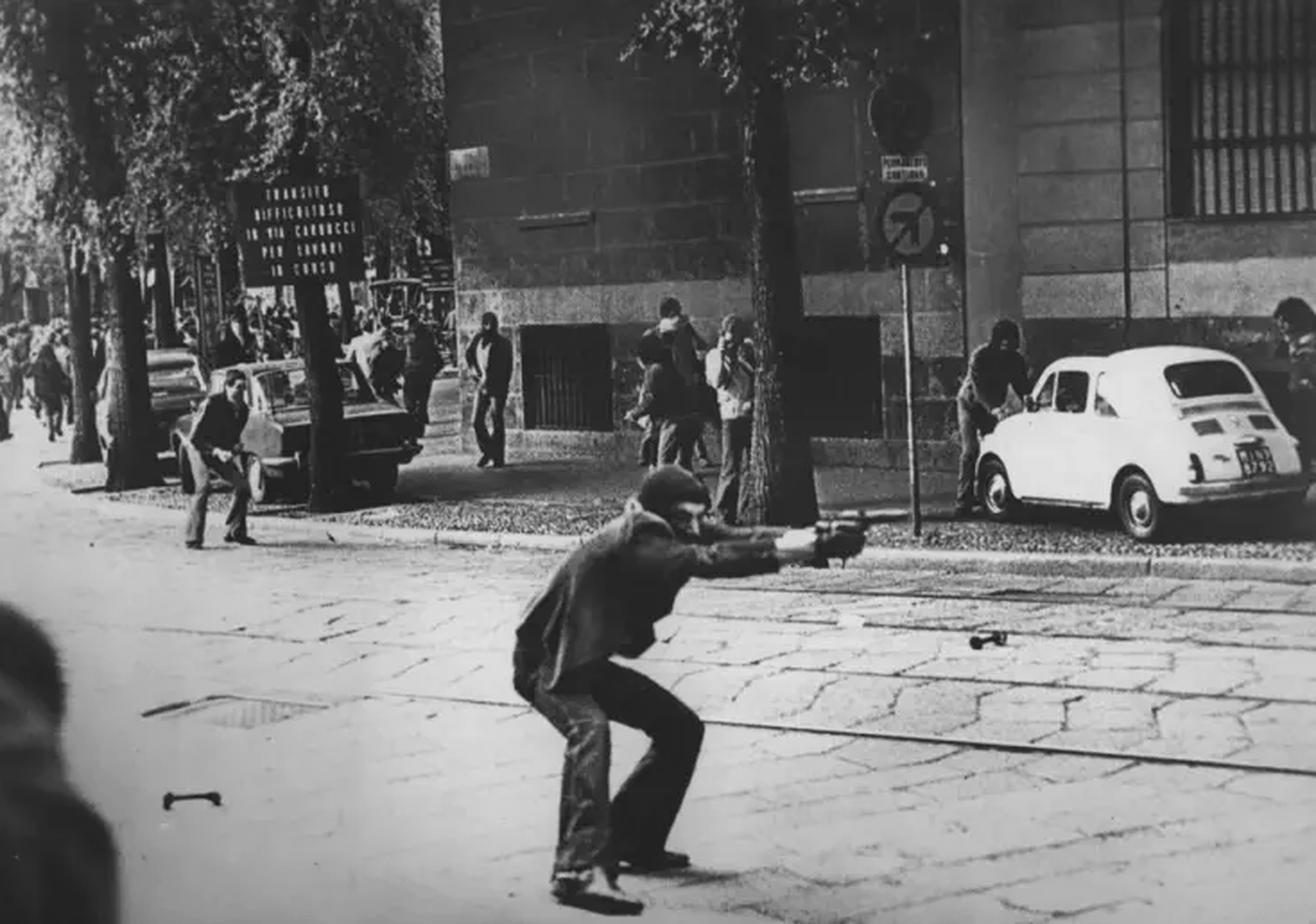
Another memory is later. The fateful March 16, 1978 is the day of Moro’s kidnapping. Alessandro says he complained about his uniform: the body armor he was wearing put pressure on his back, and “his balls weren’t protected.” If the guards knew about their vulnerability, he says jokingly, they would have a better chance of repelling the attack. He didn't say much about Moreau himself. He was already in the “people's prison” when Moro was awaiting his fate, but claims that he did not take part in his execution - his comrades did it.
I have never been able to fully understand how he views the murder of Aldo Moro today. What prevented me from having a deep conversation with him on this topic was not so much restraint as the language barrier. I understand Spanish, but I still find it difficult to talk about complex political and moral issues in it. And yet I noticed one thing. When it came to the story of Moro, Alessandro seemed reluctant to go into detail. He was not embarrassed or trying to renounce the past - on the contrary, his words conveyed pride in being a member of the Red Brigades. But now he lives a completely different life. In front of me was no longer a young militant who dreamed of a world revolution, but an elderly man embedded in an ordinary, petty-bourgeois way of life: a restaurant, diving, Italian songs.
In Alessandro himself, the history of the leftist movement from the 1960s to the present day seemed to emerge: from great hopes to fatigue and measured life. Much of the 20th century's rebel left was either mothballed or retreated into defensive nostalgia. Perhaps the left really needs to recapture its youth. But without the romanticization of violence, without the cult of victimhood and without the moral blindness that once led part of this generation to political terror.
Drinking rum without food is no fun, so soon we are served molecular dishes. First we eat molecular caviar. Expensive treat. Then - carpaccio. And after that - meat. What Italian wouldn't bring ice cream after that? They bring us a huge glass of gelato.
Finishing his ice cream, Alessandro turns to a savory topic - Stalin.
“The best ruler of the USSR is Stalin, a strong and wise leader, whom I came to understand only over the years,” says Alessandro.
He said that in his youth he was critical of Stalin. Nevertheless, in those years, Antonio Gramsci was popular in the Italian left movement, who treated the “leader of the peoples” without reverence. The new leftists, in principle, believed that it was with Stalin that the period of bureaucratic Thermidor and the destruction of the revolution as such began in the USSR. But over the years, views often change.
Then he continued to talk about other rulers of Russia - he also mentioned Putin. Alessandro assessed him with restraint, although, obviously, more with sympathy.
Speaking about the USSR, our interlocutor also mentioned that the “Red Brigades” hated the Italian Communist Party for revisionism and “believed that it was necessary to support the USSR” - but here he is disingenuous. Yes, the Red Brigades were critical of the Italian Communist Party, but they also criticized the Soviets for attempts at reconciliation with NATO and for moving away from the revolutionary line. It seems that this thought of Alessandro was attached to his ideals of the present.
Behind the conversations about the turbulent past, Stalin and Italy, night quietly fell. Alessandro decided to walk us to the car. The farewell was not routine: he shook my hand and, it seems, with sincere interest, suggested that one day I should come to his villa somewhere far away in the mountains, where he grows coffee. At that moment it seemed to me that our meeting was not just an accident for him either. Perhaps he was pleased to see a man from Russia who came not for an incriminating interview, but to listen to his story and talk a little.
As we drove back, along the road I thought about the phrase attributed to Churchill that in youth it is honorable to be a revolutionary, but in old age it is important to be a conservative. Alessandro is pretty much on the same path. He is not a reactionary who has sold his soul forever, but also not a revolutionary who is now ready to die for his views at any cost. Family, age, comfort have done their job and this is a logical consequence of this everyday string. Some friends, the next day, when they found out that I had a drink with Alessandro, began to talk as if I had eaten with Osama Bin Laden. In fact, everything is more prosaic. The revolution fizzles out and is replaced by routine. And the past becomes just a series of crumpled contradictions and events of mutual violence.
By midnight there was nothing on the street that resembled the calm of a Latin American road. Cars made noise, music sounded from neighboring houses. It seems that the city is now beginning to come to life, having previously taken a short break for a siesta. Even despite this revival, here you feel like you are in exile. Around you are sad tropics - majestic, proud, but at the same time monotonous.
A good place for exile. Good place for old ideas.