
Translated material
Nuclear (safety) danger during war
What if a drone flies into a nuclear power plant?
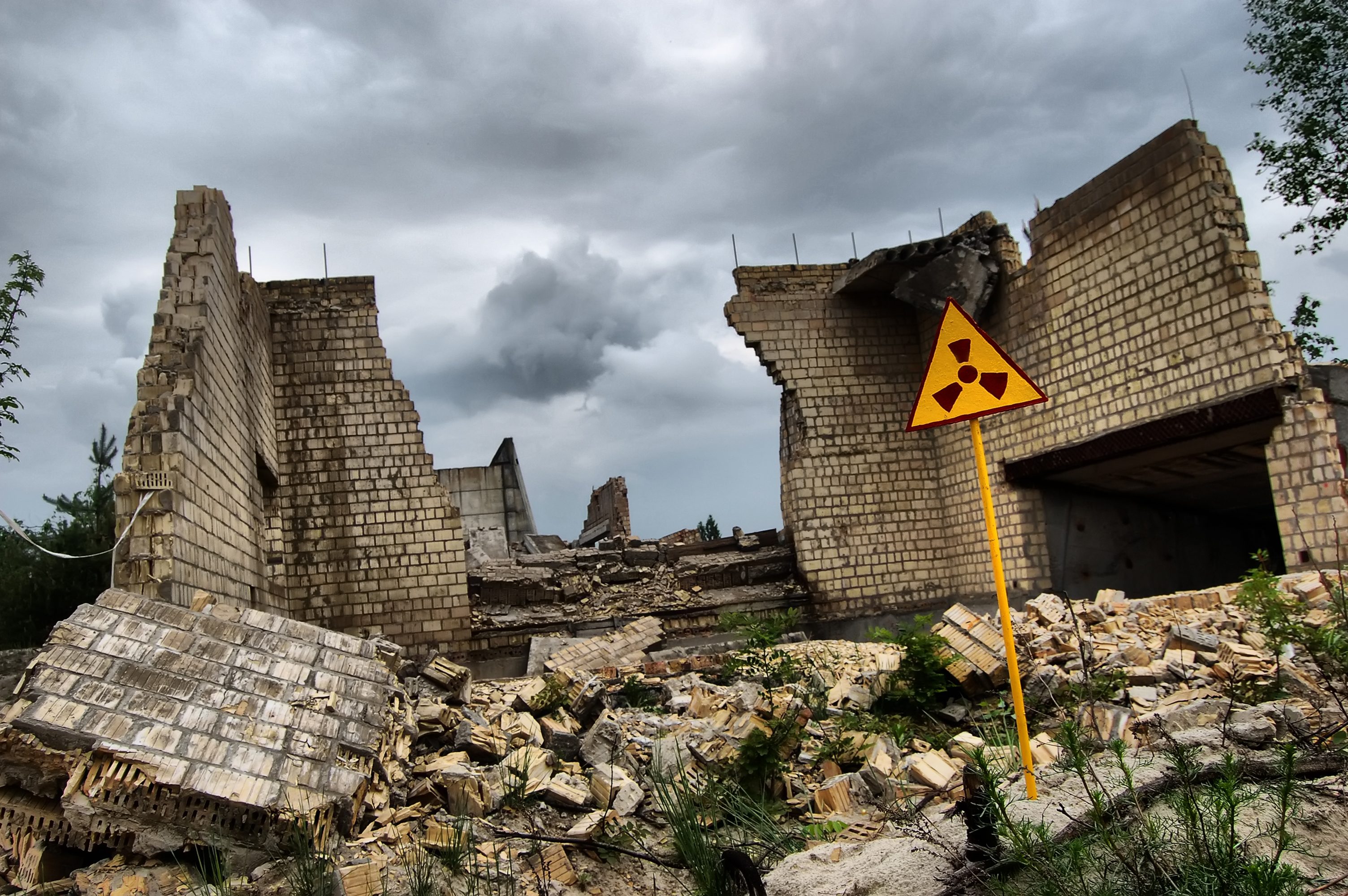
Ukraine accused Russia of deliberately attacking a nuclear facility - the territory of the Centralized Storage Facility for Spent Nuclear Fuel in the Chernobyl Exclusion Zone. In this regard, the International Atomic Energy Agency (IAEA) expressed deep concern and sent representatives to assess the consequences of the strike. Previously, Russian authorities accused Ukraine of attacking nuclear facilities, in particular, the Zaporozhye nuclear power plant. It is located in currently occupied territory. Moreover, in May, the IAEA recorded the 16th case of complete loss of external power at the Zaporozhye NPP since the beginning of the war.
What if a drone flies into a nuclear power plant?
by Radio Liberty Text copied width px height px The URL has been copied to your clipboard
No media source currently available
0:00 0:57:40 Download media file
Also in the issue: Parents kidnapped in Chechnya . How are relatives of those who criticize Ramzan Kadyrov treated? Human rights activist Abubakar Yangulbaev comments. MAX and scammers . How data and money are stolen using the national messenger . Cyber lawyer Sarkis Darbinyan comments.
Pavel Podvig , head of the Russian Nuclear Weapons project, spoke in the “Man Has the Right” program about how serious a threat drone strikes on such objects are and how war affects nuclear security.
– Is the recent incident with a drone hitting a facility in Chernobyl really alarming or is it more of a local incident?
The very fact that a drone hits one of the structures of this storage facility is, of course, a very bad sign
- Of course, such an incident is alarming, it should be alarming. Actually, I think there was no immediate danger of any radiation incident there, and, as I understand it, it is quite difficult to arrange a real radiation incident in this storage facility, since this is a spent fuel storage facility, the fuel is in containers that are quite well protected, and it is quite difficult to damage them. But the very fact that a drone hits one of the structures of this storage facility is, of course, a very bad sign. And he reminds us that military operations around stations and facilities where spent fuel is stored are extremely dangerous.
– What types of damage and at what nuclear facilities can really lead to the release of radiation? After all, in addition to the Chernobyl storage facility, there is also the Zaporozhye nuclear power plant, and in addition to this, there are many nuclear power plants on the territory of Russia itself, where Ukrainian drones can also fly. How serious is this?

– The situation with the Zaporozhye station is still a little, probably, less dangerous than the situation with the operating stations, precisely because the plant in Zaporozhye was stopped in 2022, the reactors have been in cold shutdown mode for a very long time, that is, the energy release is already, if not minimal, then noticeably less than at the operating unit. A cooling system is still needed, but I still think that it is very difficult to arrange an accident with some significant release of radioactivity, even if you try hard. It is clear that as long as there is fuel there, which still releases some energy, of course, there is a danger. And there the spent fuel is stored, and there are scenarios in which danger may arise. But I still believe that a large-scale accident with a large-scale release of radioactivity will no longer happen there, fortunately.
An accident the size of Chernobyl is quite difficult to arrange
Of course, any operating station, be it in Ukraine or Russia, is a much more serious object in this sense. And although any station has a protection system, each reactor is closed with special protective structures, nevertheless, if the reactor is working, then options exist in which a fairly serious incident can occur. I still estimate that, say, an accident the size of Chernobyl is quite difficult to arrange. But it is quite possible to imagine an accident similar to the one that happened, for example, in Fukushima in 2011 , when the electricity supply systems were disrupted. Therefore, of course, it is extremely important to establish the principle that no military activity should be carried out around the stations and in relation to the power lines that feed them. And this principle must be defended and insisted on as far as possible.
– And if such a serious incident occurs, what could be the real risks to human health and the environment? In case such an object is damaged, is it working or not?
– It’s difficult to say with certainty. I am not a nuclear engineer, but, as I understand it, if some kind of incident occurs, that is, a violation of some support systems or something else, then you can look at the scenario that happened at Fukushima - that is, when some kind of release of radioactivity may occur, perhaps some local spread of this radioactivity. And it can be serious enough for people to be evicted from there. In my assessment, what I discussed with experts is that it is still very difficult to arrange an accident similar to Chernobyl, when you had an active release of radioactivity into the atmosphere for a long time. I will not undertake to say that this is completely impossible, but it must be done specially. It is quite difficult to imagine a scenario in which this would happen as a result of an accidental hit or an accidental malfunction of some system.
There should be no military activity around the stations or in relation to the power lines that feed them.
– How quickly can the consequences of radiation incidents in a combat zone be identified and localized in war conditions?
– Of course, any work in a combat zone is extremely difficult, if not impossible. We see what is happening now around the Zaporozhye station, when the power supply to the station is periodically disrupted, power lines are damaged, the station is left without external energy sources, and switches to its own diesel generators. Now, with the help of the IAEA, they are trying, but, in my opinion, they have not yet restored the supply along one of the two transmission lines. This is very difficult, because it turns out that the damage happened exactly in the place where the river bank was mined, it needs to be cleared of mines, there are also difficulties there. Of course, you need to understand that the fact that there are military actions going on around us does not add, but on the contrary, it exclusively complicates any task of repairing or restoring some kind of functionality.
– You mentioned the IAEA. What is the current role of this and other international organizations in such a situation? Does the international community now have any real tools to prevent attacks on nuclear facilities in Ukraine and Russia, or are they now worried about the situation in Iran? Could the IAEA somehow influence this?
– Unfortunately, there really are no such organizations. If we look at what the IAEA does and the role that the agency plays, then even the very presence of the IAEA , inspectors, and IAEA personnel at the Zaporozhye station is not supported by any mandate. The agency does not even have the authority to monitor security conditions. And the fact that the IAEA mission is present is a very great achievement of both the Secretary General of the agency and the agency itself, and in fact requires a certain courage from those inspectors who work there. And it should be noted that both Russia and Ukraine agreed to the presence of this mission; this is also a very important step. But the IAEA does not have any tools to somehow influence the situation. They cannot come to the Russian leadership and say: you have certain obligations that you must fulfill. Or to the Ukrainian leadership, for that matter. Because there are no such obligations. The agency has formulated seven basic safety principles , they are correct and good, but this is a declaration, as they say, no one has signed up to them. However, the IAEA has a very important role. The fact that they are simply there is also very important. As can be understood from the reports of the IAEA Secretary General, they are participating in negotiations to establish a local truce to repair these same power lines. That is, they still enjoy a certain authority. But, on the other hand, we must understand that their capabilities are limited. I know, for example, that a lot of reproaches towards the IAEA are related precisely to the fact that the agency cannot identify or say whose drones or projectiles are arriving at the station. And Russia expresses its dissatisfaction, and Ukraine expresses its dissatisfaction about this. But that's the way the agency is structured, they can't do that.
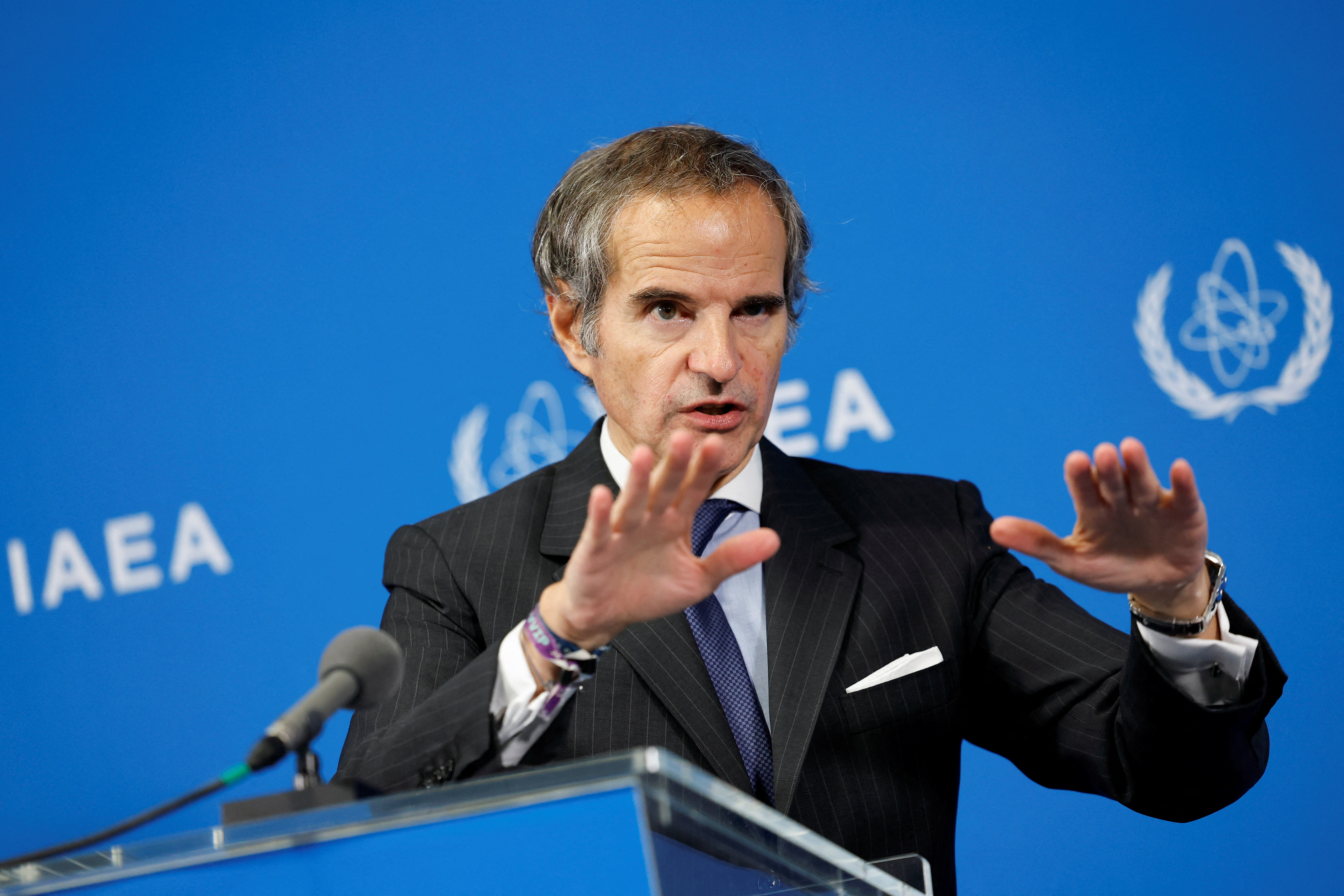
The IAEA is doing what it can, but its capabilities are very limited
One of the reasons why an agency has some credibility is that they do things that they know and can do. But attribution of drones is not part of their tasks. And here some steps are already needed from the member states of the IAEA and the UN, which should try to bring greater clarity to this situation. And we have seen that certain steps can be taken. For example, a week ago there was a joint statement by the UN Security Council that condemned the attack on a nuclear power plant in the United Arab Emirates. The conviction was, as they say, unanimous. In principle, one could count on the members of the Security Council and all parties to the conflict to jointly develop some kind of procedure and some way to influence the security situation in Ukraine, at the Zaporozhye station. But this is a political issue, and politics does not yet allow this to be done. The IAEA is doing what it can, but its capabilities are very limited. And so far it does not appear that anyone is ready, so to speak, to provide the agency with any greater opportunities to control the situation.
– In your opinion, is the situation around nuclear facilities now heating up, or are the arrivals of drones in the Chernobyl zone and at the Zaporozhye nuclear power plant random incidents?
“I, of course, strongly hope that this is an accident, since it would be a very negative development of events if someone deliberately sent a drone to that very storage facility. There was a flight to Chernobyl last year, when a drone damaged the protective coating of the reactor. But there seems to be every reason to believe that it was an accident. And now I also think it’s an accident.
Unfortunately, according to reports of incidents around the Zaporozhye station and Energodar - this is the city where the people servicing the station live, lately there has been a feeling that the situation there is becoming more complicated. And I know that Rosatom is expressing concern about this. The problem is that there is a lot of mistrust in relations between Russia and Ukraine, and it is difficult to establish the real scale of the events that are taking place there, and even more so to somehow mobilize both the world community as a whole and the Security Council to somehow mitigate this tension.