
Translated material
"Rethink the system." Elections, democracy and artificial intelligence

In this year's US election campaign, concerns about the rapid and uncontrolled development of artificial intelligence have come to the fore. For many Americans, it has resulted in a deterioration in the quality of life, and some see AI as a threat to democracy.
With pitchforks on the oligarchs
In the summer of 2014, American entrepreneur and venture capitalist Nick Hanauer published an appeal to “fellow zillionaires” in Politico. This is how in the USA, since the 20s of the last century, owners of untold wealth have been called - today they are multi-billionaires , primarily techno-oligarchs. After summarizing his business career, in which his successes were rewarded “with indecent generosity,” Hanauer continued:
But let's speak frankly to each other. I'm not the smartest person you'll ever meet, nor the hardest worker. I was a mediocre student. I don't understand technical issues at all - I can't write a single line of code. I think the only thing that sets me apart from others is my tolerance for risk and my intuition about what will happen in the future. The ability to see where things are going is the essence of entrepreneurship. And what do I see in our future now?
I see pitchforks.
If we don't change our policies, we will end up in France at the end of the 18th century. Just on the eve of the revolution
At the same time that people like you and me are prospering in a way that no plutocrats of the past could ever dream of, the rest of the country - 99.99 percent of the population - is hopelessly lagging behind... The problem is not that we have inequality... The problem is that today this inequality has reached an all-time high and continues to worsen every day. Our country is rapidly ceasing to be a capitalist society, turning rather into a feudal society. If we don't change our policies radically, the middle class will disappear and we will end up in late 18th century France. Just on the eve of the revolution.
By that time, examples of high-intensity social tension were abundant. The Occupy Wall Street protest in the fall of 2011, the Black Lives Matter movement in the summer of 2013, accompanied by mass riots, violent clashes between right-wing and left-wing radical groups... Hanauer warned the “0.01 percenters”:
If we don't take action to correct the gross inequalities in our economy, they will come after us with pitchforks... Everyone wants to believe that when the situation reaches a critical point, when the situation of the masses ceases to be merely bad and becomes dangerous, we will somehow know about this shift in advance. Anyone who is even a little familiar with history knows that this does not happen. Revolutions, like bankruptcies, approach gradually and then suddenly collapse. Someone commits self-immolation, then thousands of people take to the streets, and before you know it, the whole country is already on fire. And then we won't have time to get to the airport, jump into our Gulfstream Vs and fly to New Zealand.
"The Dirty Secret of Capitalism." Nick Hanauer's famous July 2019 TED talk.
“I am a capitalist. In a 30-year career in the world of capitalism, I have changed three dozen companies and created tens of billions of dollars in market value; today I am not just in the top one percent of people, but in the top 0.01 percent of those who earn the most. How do we do it? How do we manage to grab a larger share of the economic pie every year? Are rich people smarter than they were 30 years ago? Or are we working harder? work? Maybe we have become taller or more attractive? Alas, no. It all comes down to one thing: economics. There was a time when economics served the public interest. But in the current era of neoliberalism, economists work exclusively for large corporations and billionaires, and this gives rise to certain problems."
Since then, the pitchforks with which they are about to come for the oligarchs have become a common meme. “The pitchforks are here,” California Gov. Gavin Newsom , a likely Democratic candidate in the 2028 presidential election, said recently. “It’s impossible to save democracy unless we democratize the economy,” he continued. “The whole system needs to be rethought.”
Why Americans don't like AI
Social inequality is rapidly becoming one of the main themes of this year's election campaign. And since the basis for the prosperity of today’s “zillionaires” is exorbitant investments in the development of neural networks, the main target of advocates of social justice is artificial intelligence, the development of which has turned into a new “gold rush.”
According to pollster Gallup, seven out of ten Americans oppose the construction of massive data centers near their homes. This figure - 71 percent - exceeds the share of those who disagree with the construction of nuclear power plants (53 percent). And it's not just about possible job loss.
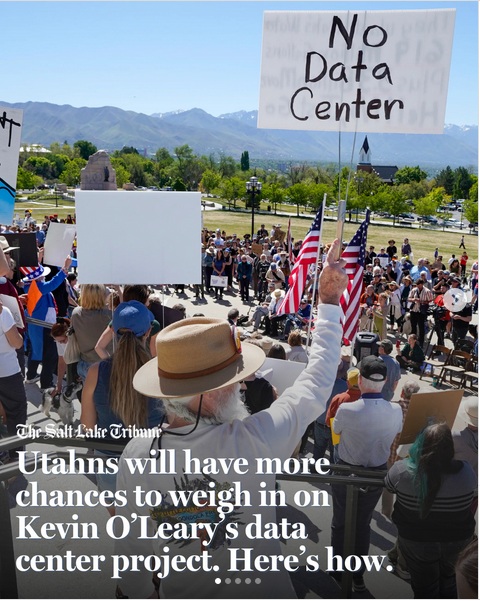
One of the most important reasons for dissatisfaction is the rising cost of electricity. Data centers consume it in huge quantities. Last year, electricity suppliers received requests to connect new centers with a total capacity of over 700 gigawatts. This is more than all the electricity produced in North America in 2024. To accommodate this energy consumption, electric companies are updating infrastructure. This leads to higher electricity prices for households located near data centers. At the same time, the centers themselves pay for electricity at wholesale rates based on long-term agreements. For them, the price per kilowatt-hour ranges from 9 to 11 cents, while households pay from 17 to 19 cents. In Virginia, where data centers are particularly dense, the price of electricity for residential customers has increased by 267 percent over the past five years.
Another reason is ecology . The main source of energy for data centers is gas turbines. They release harmful nitrogen oxides and fine particles into the atmosphere, which leads to respiratory problems. Data centers use water to cool equipment. A large center uses between one and five million gallons of water per day (a million gallons of fresh water equals 3,785 metric tons)—the same as a city of 50,000 people. This leads to depletion of local groundwater supplies. Not only does the water in the tap now flow in a thin stream, it is also polluted: biocides and corrosion inhibitors that are harmful to health are found in the wastewater of data centers. In addition, the constant modernization of data centers generates huge volumes of electronic waste, which cannot always be properly disposed of - toxic substances such as lead and copper enter the soil and poison it.
Water and electricity consumption are interrelated. In the case where a closed-loop system is used for cooling, in which the same water circulates (as Google claims, exactly such systems operate in its data centers), this water must be cooled and the heat removed outside the center building. This is done using air cooling, which consumes much more energy than evaporative cooling systems.
“In an effort to allay concerns about environmental impact,” says one recent study, “data center operators often promise that their facilities will eventually switch to clean energy, including from new generation sources such as small modular reactors (SMRs). However, these SMRs remain largely a theoretical concept, with no commercially viable model currently in operation.”
Data centers have no weekends, no holidays, no breaks for lunch or sleep
Finally, people living near data centers complain about the noise generated by cooling systems, diesel generators and fans. This background noise increases blood pressure, leads to lack of sleep and decreased cognitive abilities. And all this happens around the clock: data centers have no days off, no holidays, no breaks for lunch or sleep.
Enthusiasts for the construction of data centers usually indicate non-economic opportunities for the territories in which they are located: the creation of a large number of jobs, the general revival of the economy due to related businesses, tax revenues to the local budget. However, their opponents counter that jobs are created only for the short term while the data center is built, and sales and property taxes typically come with tax breaks.
AI and politics
The problem is given additional political urgency by the fact that the Donald Trump administration considers business deregulation to be its particular merit - in particular, the weakening of controls over the quality of water, air and soil. In plain sight, of course, is the president’s patronage of AI entrepreneurs. As recently as May of this year, he delayed signing an executive order on AI safety measures after being pressured by Elon Musk, Mark Zuckerberg and his own adviser David Sachs. Donald Trump explained his decision by his reluctance to create obstacles to the development of the industry in its competition with China.
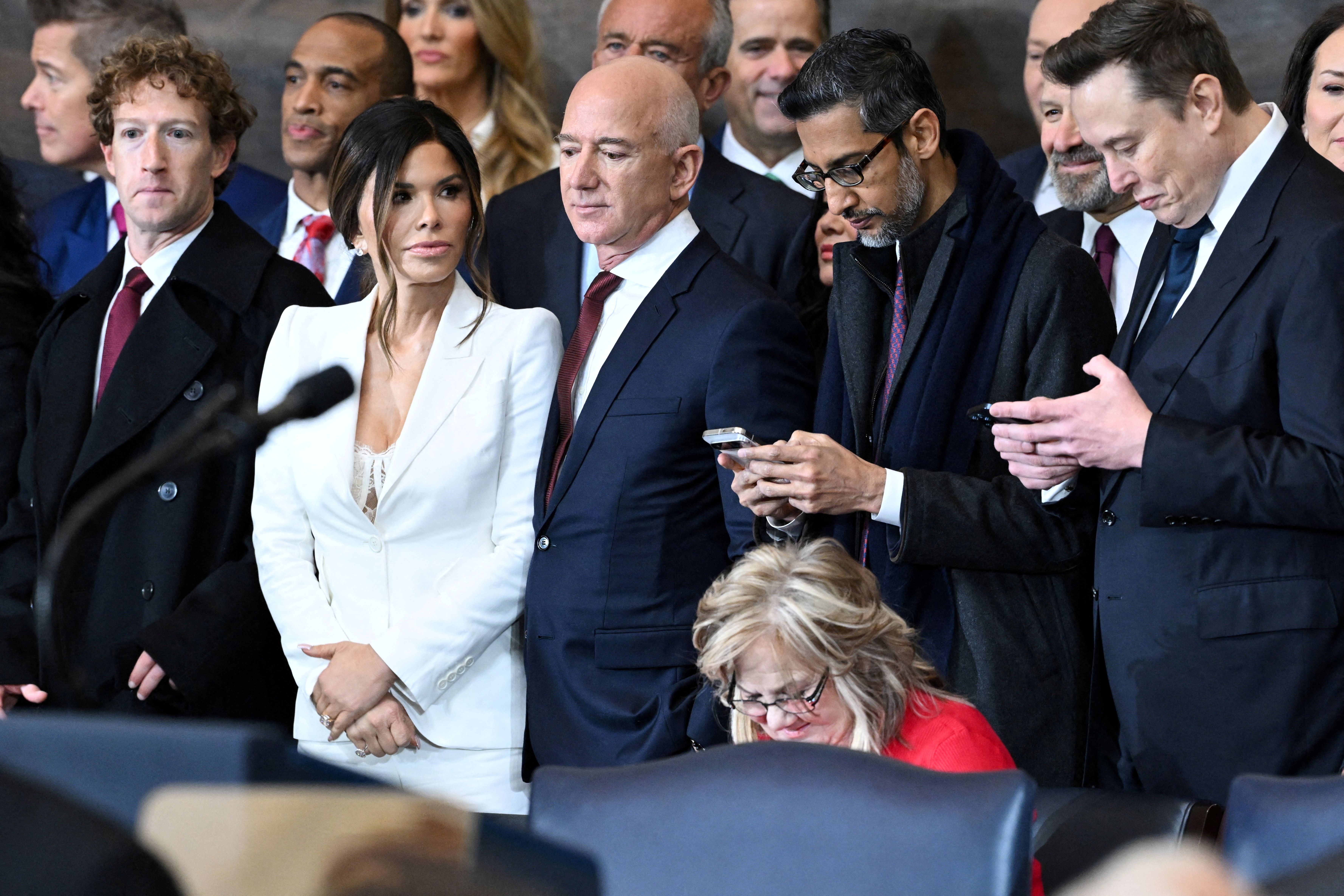
On June 2, the president signed a decree in a different, softer version, and the text of the document especially emphasized that we are not talking about mandatory requirements from the state, but only about the voluntary provision of new AI models by developers for evaluation by government experts. Industry leaders, the very people the government should control, make up the President's Council on Science and Technology.
All this creates a platform for a campaign that has been waged by the progressive wing of the Democratic Party for several days. Its leaders, Senator Bernie Sanders and Congresswoman Alexandria Ocasio-Cortez , a likely candidate in the 2028 presidential election, have introduced legislation in Congress to moratorium the construction of data centers. They call it "a reasonable pause in the development of AI to ensure the safety of humanity."
We cannot sit back and allow a handful of billionaires to make decisions that will reshape our economy, our democracy and the future of all humanity.
Artificial intelligence and robotics are giving rise to the largest technological revolution in human history. The scale, scope and speed of these changes are unprecedented. The Congress is hopelessly behind the level of understanding of the nature of this revolution and its consequences at which it should be. We cannot sit back and allow a few billionaires to make decisions that will reshape our economy, our democracy and the future of all humanity.
This is how Sanders explains the meaning of the moratorium. Ocasio-Cortez showed off jars of muddy, rust-colored water at a recent hearing in the lower chamber. The following dialogue took place between her and EPA Assistant Administrator for Water Resources Jessica Kramer.
“A few weeks ago, during a recess in Congress, I visited Morgan County in Georgia, where Meta is building a large complex of data centers. They are clearing forests and have begun active construction work, including using explosive methods. As a result, local families begin to face problems: not only does the water pressure decrease, but also household appliances break down, as construction catastrophically deteriorates the quality of water. They now have to rely on bottled water for drinking and cooking, and residents' water bills are expected to rise by 33 percent. In fact, I have a sample jar with me here. This is what drinking water looks like in Morgan County, Georgia, right after the Meta data center was built there. I have another sample. This is what drinking water looks like next to this data center now. And I think we can both agree that neither of these samples are drinkable. These families - living, mind you, in rural areas - now have to arrange for water to be delivered to their homes in order to be able to cook food and maintain personal hygiene. In this regard, I would like to know: does the Environmental Protection Agency plan to conduct investigations into how data centers affect the quality and availability of water resources?
– As soon as I return to my office, I will certainly begin to study exactly the issue that you just talked about. Because in any situation – no matter the location or type of construction activity – our priority is to ensure compliance with water quality standards set by the EPA. So we will certainly check on this.
Who does AI vote for?
But artificial intelligence in this year’s elections is not only a subject of public discussion, but also an active participant. Tech moguls are pouring tens of millions of dollars into election campaigns. Funds go to political action committees (PACs). These tax-exempt organizations are not formally associated with candidates' campaign committees, but can campaign for them or against their opponents, as well as for or against certain initiatives, projects and ideas. If private donations to a candidate’s campaign fund are limited to a certain amount ($3,500), and corporate donations are generally prohibited, then the RAS limits are much softer. So-called super PACs raise a lot of money in particular. They have the right to raise unlimited funds from individuals, corporations, trade unions and other groups.
AI models write speeches for candidates, determine campaign strategies, and “conduct” polls (professional pollsters, of course, consider them fake and urge you not to believe them). The New Yorker recently profiled New York congressional candidate Adam Boars , who used a chatbot to prepare for debates. Usually, a sparring partner is invited for this purpose, having carefully studied the opponent’s habits; It's practically a separate profession. Boars used Anthropic's Claude Coworks. He suggested creating several auxiliary agents to collect information about rivals, and a few minutes later he reported that one of these agents refused to carry out the task because, in his opinion, it violated the systemic ban on collecting incriminating evidence. Boars was surprised and replied: “This is a candidate forum. We all speak publicly and expose ourselves to everyone. Maybe you could explain that to him?” Soon Claude reported: the agent found this argument convincing.

The use of deepfakes in election campaigns is regulated, in the absence of federal legislation, by state laws. They take two approaches: either a complete ban or labeling indicating that the material was generated by AI. However, these laws have not been tested for compliance with the Constitution. But a precedent has already been created. In July 2024, conservative satirist Christopher Kohl created a deepfake of presidential candidate Kamala Harris using AI. Elon Musk reposted the video on his blog, where it received 129 million views. After this, the California State Legislature passed a law prohibiting deepfakes in the election campaign. But Kohl went to court, complaining of a violation of the right to freedom of speech. The court agreed with him. The same thing happened in the state of Hawaii at the suit of the same Kohl.
AI is invisibly involved in the campaign in the form of chatbots and algorithms that are capable of generating messages on a massive scale in real time aimed at a specific social media user, using the so-called hyper-personalized persuasion based on information about that user. This allows campaign organizers to reach undecided voters with incredible precision, who ultimately determine the outcome of the vote. Chatbots are adept at creating and promoting false narratives, and they don’t even necessarily do so intentionally. There is an algorithmic bias : AI models were trained on a data set created mainly in the West. These data are subject to historical biases and distortions. Some experts call this “data grab” a new form of colonialism: we all know about the Mamaev massacre, but it doesn’t occur to us to look for sources “on the other side,” if there are any at all. In addition, the Internet is full of all sorts of garbage - AI is not able to distinguish it from a benign information product.
At the same time, chatbots are incredibly self-confident and persistent in defending their “point of view.” Они перегружают собеседника лавиной фактов и статистики – этот прием получил название "галоп Гиша" – и берут его измором. При этом сами факты могут быть вымышленными или порожденными галлюцинациями , свойственными ИИ – опять-таки не корысти ради, а просто их "так учили": прогнозировать наиболее вероятное продолжение текста, а не проверять его истинность. О том, как алгоритмы создают эхо-камеры, они же информационные пузыри, говорить излишне – каждый из нас каждый день сталкивается с этим произволом в соцсетях. Политик-демагог у всех на виду, его можно не слушать. Алгоритмы действуют скрытно и помимо нашего желания.
Возникает вопрос о доверии к институтам власти
Все это вместе взятое создает обширное поле для манипуляции общественным мнением, деформации воли народа. Ответить на этот вызов демократии должны законодатели. Однако Конгресс в его нынешнем составе и нынешней политической атмосфере практически парализован и не способен к работе на двухпартийной основе. Ни один из внесенных в Конгресс законопроектов о регуляции ИИ не прошел даже обсуждение в профильном комитете. Зато аппарат Конгресса активно пользуется инструментами ИИ, причем внутренний регламент на эту тему отсутствует в открытом доступе. Используют ИИ в своей работе и Белый Дом, и федеральные ведомства. Как установила Washington Post, недавний доклад Министерства здравоохранения США "Сделаем Америку здоровой снова" написан с помощью ChatGPT и наполнен "галлюцинациями" – ссылками на несуществующие исследования и утверждениями, искажающими выводы существующих. Возникает вопрос о доверии к институтам власти.
Всю систему менять надо
"Переосмыслить систему" пытаются сами техномагнаты. Крис Девор , основатель и управляющий партнер крупнейшего на Западном побережье венчурного фонда, опубликовал в прошлом месяце статью под названием "Сделай демократию капиталистической снова". Он тоже обеспокоен сбоями американской политической системы и винит в этом прежде всего вождей Демократической партии.
Сегодня партия, которая неустанно трудилась, защищая и совершенствуя американский эксперимент, основанный на возможностях, справедливости и равенстве всех перед законом, либо лишилась рассудка, либо утратила память о той движущей силе, которая делает эти идеалы возможными. Отнимите обещание лучшей жизни (иммиграция), средства для его осуществления (капитализм) и уверенность в том, что плоды вашего труда не будут произвольно конфискованы (верховенство закона), – и тот двигатель, который сделал Америку самой богатой, самой могущественной и вызывающей наибольшее восхищение в мире страной, заклинит, и весь этот грандиозный эксперимент подойдет к концу.
Девор называет "трагической ошибкой" убеждение американцев в том, что экономическое благополучие страны существовало всегда и будет существовать вечно.

Любой существующий бизнес – от скромнейшего кафе на углу вплоть до таких гигантов, как General Motors и Amazon, – обязан своим существованием лишь тому, что небольшая группа неразумных людей на протяжении многих лет преодолевала невероятные препятствия, создавая нечто из ничего.
Что же произошло с американской политической системой? По версии Девора, она погрязла в беспринципной борьбе за власть.
Чтобы заполучить рычаги власти, необходимые для продвижения своих целей, обе партии неизменно полагались на очевидную "морковку" в виде законодательных подачек – средства, позволяющего заручиться поддержкой целых электоральных блоков: фермеров, профсоюзов, владельцев бизнеса, девелоперов; этот список столь же бесконечен и разнообразен, как и сама экономика. Результатом стала нормативно-правовая и налоговая система, настолько перегруженная стимулами, налоговыми льготами и особыми преференциями, что любой гражданин – даже (и особенно) тот, кто сам пользуется преимуществами, дарованными ему законом, – может указать на представителей другой группы и воскликнуть: "Несправедливо!", "Недемократично!", "Коррупция!". Именно этот всепроникающий дух фаворитизма и коррупции – медленно накапливавшийся на протяжении 250 лет взаимных услуг и поблажек, которыми обменивались партии по обе стороны политического спектра, – и привел нас к нынешнему кризису.
И хотя виновны в кризисе, как он сам же пишет, обе партии, Крис Девор обращается к демократам как к своим былым единомышленникам:
Как убежденный демократ, всю жизнь преданный этой партии, и страстный сторонник изначальной доброкачественности американской идеи, я обращаюсь с одной простой просьбой к партии, которую по-прежнему считаю наиболее способной обеспечить дальнейшее развитие нашего национального эксперимента: признайте капиталистическое предпринимательство той движущей силой, которая сделала возможным наш выдающийся успех, и возродите капитализм в качестве одной из центральных опор нашего национального идеала.
Девору ответил уже знакомый нам Ник Ханауэр. Его статья называется "Какой капитализм мы защищаем?". Он соглашается со своим другом в оценке действий вожаков Демпартии – они "действительно сбились с пути".
Недавние попытки превратить штат Вашингтон ( в котором живут и Ханауэр, и Девор. - В. А. ) в наименее привлекательное место в стране для состоятельных граждан спровоцировали массовый исход в другие штаты: практически все мои обеспеченные друзья либо уже уехали, либо планируют это сделать. This is a real disaster.
Не существует такого понятия, как "капитализм"
Однако он считает ошибочной аргументацию Девора.
Не существует такого понятия, как "капитализм". Крис рассматривает капитализм как нечто единое. Движущую силу. Power plant. То, что либо принимают, либо демонизируют. Но капитализма в единственном числе не существует. Существует множество форм капитализма... Вопрос никогда не сводится к "капитализм или нет". Единственный вопрос, который когда-либо имел значение: какой именно капитализм, как он устроен и для чьих интересов?
Далее Ханауэр приводит впечатляющие примеры неравенства, существующего отнюдь не вследствие нежелания граждан работать. Откуда же взялся этот бич современной Америки?
Это произошло не путем прямого воровства, а посредством неуклонного накопления правил, написанных таким образом, чтобы отдавать предпочтение капиталу перед трудом, акционерам – перед рабочими, а активам – перед заработной платой.
В отличие от Девора Ханауэр винит в создавшемся положении нынешнюю администрацию, которая "реализует экономический курс, наименее ориентированный на свободный рынок".
Администрация, которую поддержали наши коллеги по цеху, не является капиталистической ни в каком осмысленном значении этого слова. Это государственный крони-капитализм (crony – закадычный друг. – РС) – тот самый тип системы, который выхолостил экономику целого ряда стран от Аргентины и России до Венгрии, управляют же им люди, усвоившие простую истину: самый быстрый способ разбогатеть – это держаться поближе к власти. Невозможно написать убедительную защиту свободного рынка в 2026 году, не назвав при этом режим, который в реальном времени занимается его демонтажем.
Призывая "сделать демократию капиталистической снова", Крис Девор, по мнению Ханауэра, меняет местами причину и следствие.
Именно тот капитализм, который мы строили, и разрушил нашу демократию. Невозможно одновременно иметь и функционирующую демократию, и вышедшую из-под контроля олигархию... Когда система перестает приносить пользу большинству людей, это большинство перестает ее защищать. И то, что приходит ей на смену, редко оказывается тем, что предпочли бы люди, находящиеся на вершине существующей системы.
Но есть точка зрения, что защищать уже нечего – нет больше ни демократии, ни капитализма. Левый экономист, экс-министр финансов Греции Янис Варуфакис назвал новый строй технофеодализмом , в который превратился капитализм благодаря "мутациям в его ДНК". Новые сюзерены – это владельцы цифровых платформ и облачных сервисов. Все остальные – вассалы, вынужденные платить сюзерену ренту в виде комиссионных за доступ в "облачные феоды". Ну а мы, простые пользователи – "цифровые крепостные", они же "облачные пролетарии", публикующие сообщения и размещающие фотографии и видео в соцсетях ради общения и тем самым даром предоставляющие сюзерену и его вассалам свои личные данные и возможность мониторить наши привычки, вкусы и политические взгляды. Добавим к этому, что, лишившись возможности трудиться на благо феодалов, мы недовольны и требуем, чтобы нам вернули доступ к сети.
Никакой рыночной экономики с присущей ей конкуренцией здесь нет: Amazon ничего не производит, он лишь предоставляет торговую площадку. При этом потребитель лишен возможности полноценного шопинга.
Алгоритмы облачных капиталистов успешно изолируют каждого покупателя от любого другого покупателя и продавцов друг от друга. В результате только алгоритм наделяется концентрированной властью сводить между собой покупателей и продавцов, что является полной противоположностью тому, каким должен быть рынок: свободным и децентрализованным.
Варуфакис пишет, что прообразом технофеодализма для него стала планета Ардана из сериала "Звездный путь", "где правящий класс ведет роскошную жизнь в Стратосе – городе, неподвижно парящем над облаками, окутывающими планету. При этом вся физическая работа выполняется на поверхности планеты и в подземных туннелях троглитами, чей мозг постоянно травится ядовитым газом, который успокаивает и притупляет их разум и чувства". Но можно вспомнить и летающий остров Лапута из "Путешествий Гулливера", который управляет государством Бальнибарби и в случае неповиновения подданных применяет действенные средства:
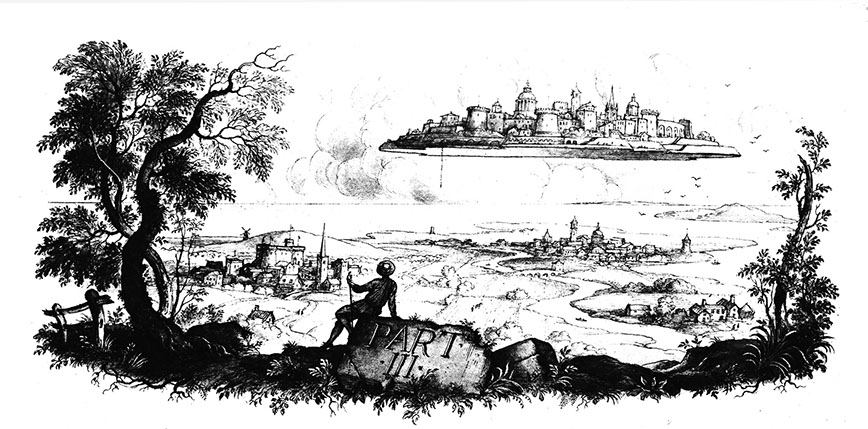
Если в каком-нибудь городе внизу вспыхивает восстание и он отказывается вносить налоги, то король располагает двумя средствами привести его к покорности. Первое и более мягкое из них таково: король приказывает остановить остров над таким городом и прилегающими к нему землями; этим он лишает непокорных благодетельного действия солнца и дождя, и в их стране начинается голод и болезни.
Чем не лишение доступа к сетям, которым усердно пользуются государство и сами сети?
Read Freedom on Telegram Make Freedom a priority source on Google  Install the Mobile application
Radio Liberty