
Translated material
“I don’t know how long my left eye will last”
A young man from the Moscow region, who was rapidly losing his sight, managed to get eye treatment prescribed, but the drug purchased by the state turned out to be too expensive. “Such Things” tells the story of Kirill Bubnov, who may become blind forever due to delays by the Ministry of Health.
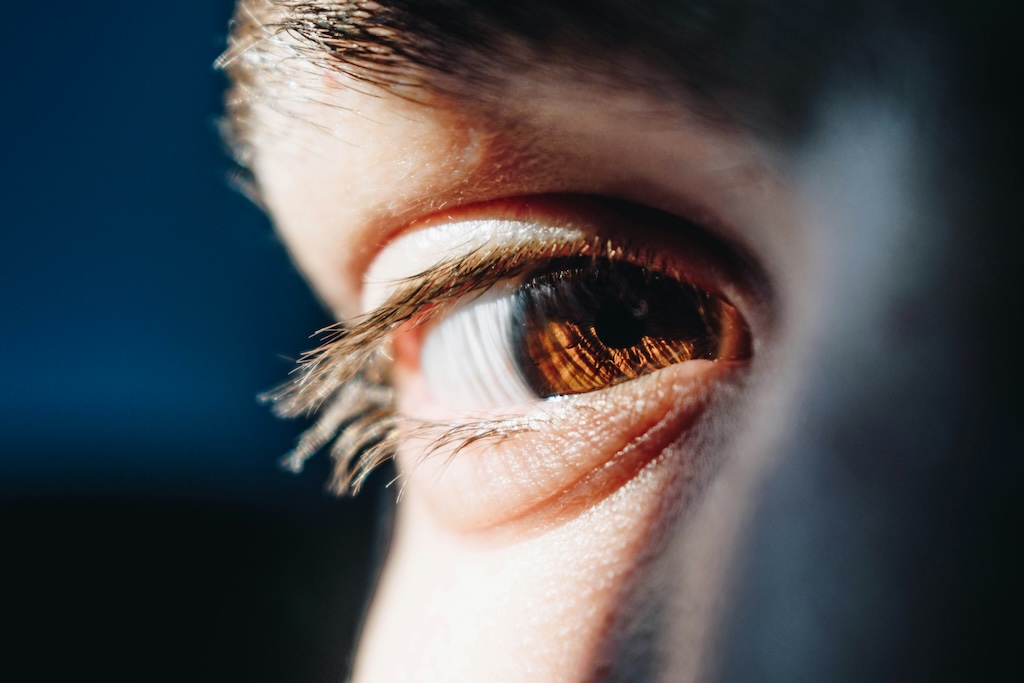 Photo: Unsplash.com
Kirill Bubnov lives in the city of Chekhov, Moscow region and works as an IT specialist. Now he is 23, but his hopes and worries are not connected with his career or relationships - he is afraid of completely losing sight in his left eye.
In infancy, Kirill was diagnosed with Leber amaurosis type 2, a genetic disease of the retina that leads to progressive deterioration of vision and even complete loss.
At about three years old, Kirill developed his first color perception disorders, one of the symptoms of the disease. “I had a beautiful book from which my parents taught me colors. The child had to distinguish the colors of the figures—dragons woven from fabric—but I remembered the colors not by perception, but by the sequence of pages,” says the young man.
The disease also resulted in nystagmus, a condition in which the eyes make involuntary movements that make it difficult to focus. “The image before my eyes literally jumped, and it was very difficult. At such moments, only sunglasses saved me,” says Kirill.
At the age of 11, the young man was diagnosed with a visual disability. After graduating from a school for visually impaired children, Kirill independently entered a technical school and received a diploma of education. But all this time the young man noticed that his vision continued to deteriorate.
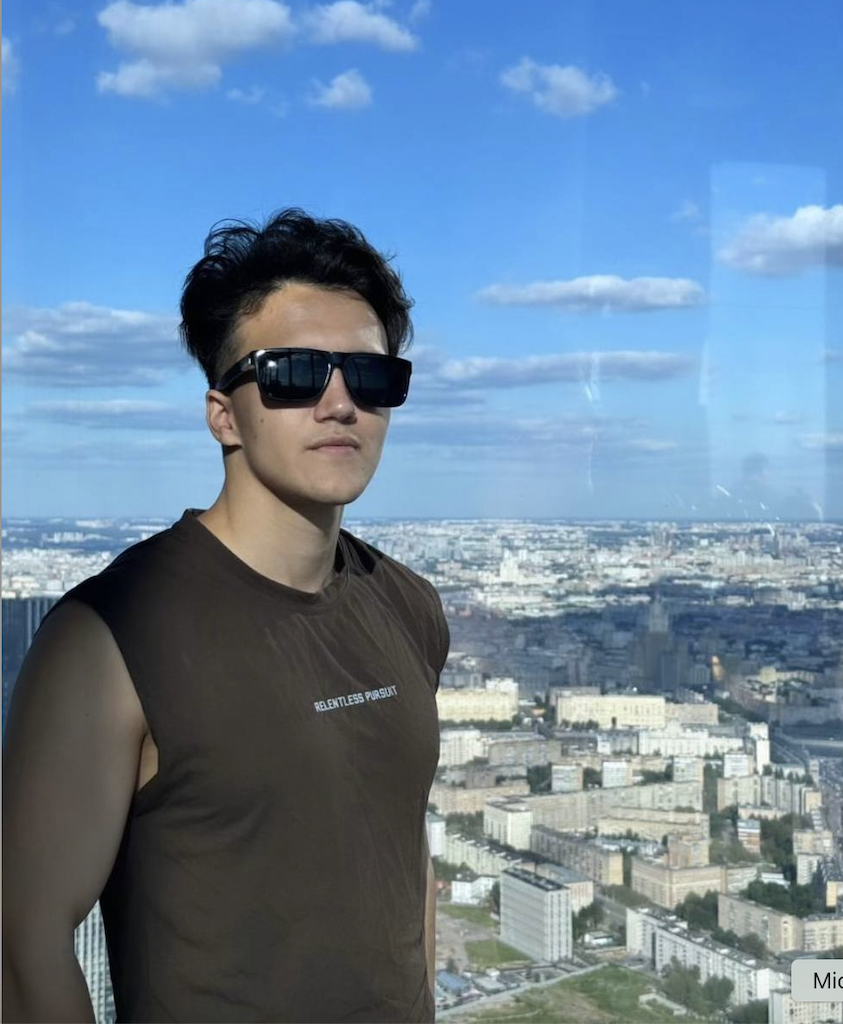 Kirill Photo: from personal archive
“Absolutely everything depended on the lighting - how I move, how I travel in public transport. For example, there are metro stations in Moscow where it is very dark: “Revolution Square” or passages at “Kievskaya”. The main thing there is not to bump into anyone,” explains the young man.
As a student, Kirill began to study in detail ways to improve his failing vision. He underwent examination, after which doctors confirmed his hereditary genetic mutation in the RPE65 gene. In February 2025, a medical consultation at the Medical Genetic Research Center named after. Bochkova recommended Luxturn to Kirill, a gene therapy drug registered in Russia aimed at correcting this particular mutation.
“The left one meets the criteria, and if the result is good, it will be possible to operate on the right eye,” says Kirill.
This gave him hope and strength to cope with constant everyday difficulties. In addition, the young man found a clinic that agreed to perform microsurgical surgery on his eyes with the introduction of Luxturna. All that remained was to obtain the drug, but difficulties arose. The cost of treatment is more than 31 million rubles.
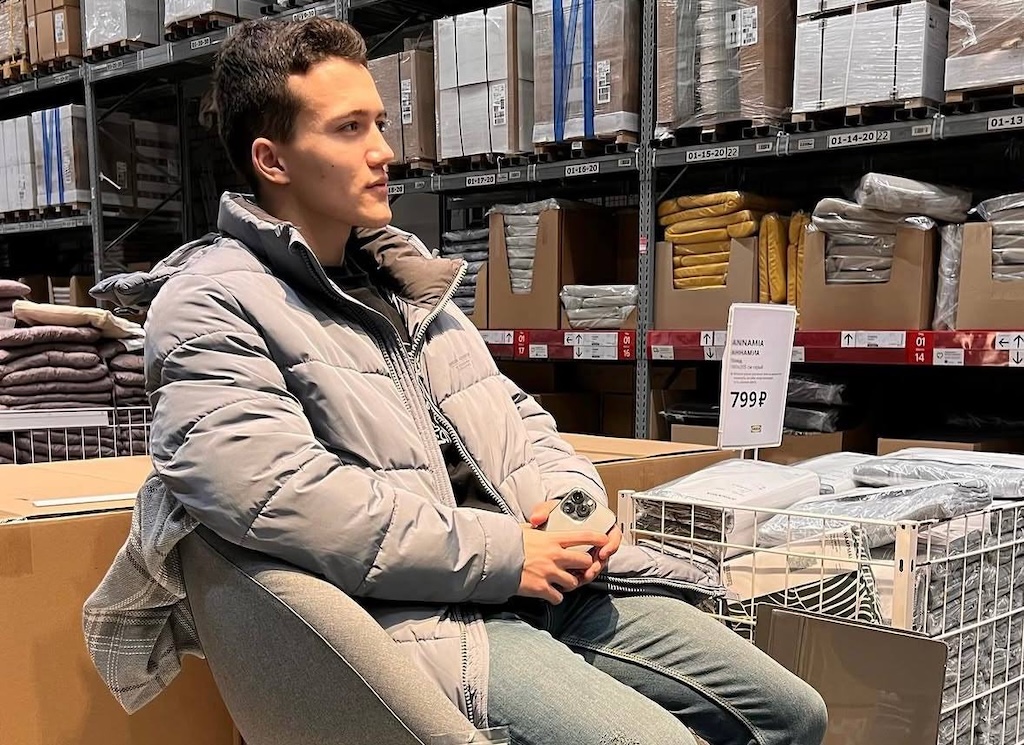 Photo: from personal archive
In October 2025, the Ministry of Health of the Moscow Region informed Kirill that it was planned to purchase Luxturna for him, but soon the department received information that difficulties had arisen in coordinating treatment with the clinic. There were no details about this, and Kirill continued to wait.
In February of this year, the application for treatment was approved, but already in May the Ministry of Health wrote to Kirill that 31 million rubles were not in the budget for his treatment at Luxturnaya.
The young man sent complaints to all possible departments, including Roszdravnadzor and the Investigative Committee, with a request to check the actions of the Ministry of Health, but received no answers.
A representative of the Ministry of Health of the Moscow Region did not respond to a request from Such Affairs.
“For four months now, my application has been hanging in editing status, no one is doing anything,” Kirill laments. The worst thing for him is to miss time, along with which his vision goes away.
“At such moments, one gives up. I don’t know how long my left eye will last; very soon it will no longer be suitable for surgery,” he says.
With Leber amaurosis of the second type, photoreceptors are affected, which convert light entering the eye into electrical impulses, explains ophthalmologist Elena Nam. Due to a genetic mutation, this mechanism is disrupted, and the person begins to see worse, especially in low light.
If left untreated, the disease progresses: first, central vision is affected, then peripheral vision, which can ultimately lead to complete blindness, Nam says. At the same time, she emphasizes that Leber amaurosis of the second type is successfully treated: “The drug used in therapy helps to normalize the production of the protein necessary for converting light into an electrical signal.”
“This improves the functional state of rods and cones and increases light sensitivity.”A single injection of a healthy copy of the RPE65 gene is performed under the retina of each eye, which repairs the broken mechanism. “A prerequisite for such an operation is the preservation of the photoreceptors - the drug cannot restore already dead photosensitive cells,” the doctor clarifies.
A refusal to provide a drug to a person with an orphan disease violates his right to high-quality and affordable medical care, and also contradicts the principle of priority of the patient’s interests, enshrined in the federal law “On the Fundamentals of Protecting Citizens’ Health,” explains medical lawyer Anna Chernyaeva.
According to her, such a violation can be qualified as the provision of poor-quality medical care and entails compensation for moral damage and harm to health. “Also, inaction in the form of delaying the issuance of a drug or a complete refusal to provide it can be classified as negligence , including with the onset of criminal liability,” adds Chernyaeva.
To receive the medicine, the patient needs to check how the medical documentation is completed, and also contact the medical organization at the place of residence and clarify the timing of the individual purchase of the drug.
“If there is no medicine, it is necessary to receive written answers from the department, after which you can contact the insurance company, the prosecutor’s office and the regional health department,” the lawyer concludes.