
Translated material
Collection of dilapidated pearls
In 2014, Vologda entrepreneur German Yakimov, at the whim of the administration, lost his retail outlet and was looking for new premises for his flower shop. At a city auction, the family bought an old wooden house and began renovations. A few months later the building was recognized as a cultural heritage site. The repairs had to be stopped and started again - this time as a restoration, with completely different costs. If only Yakimov and his wife knew then that this was only the first sign...
House with lilies
In Vologda, there was a crowd of about thirty people near the house on Chernyshevsky Street, 17. They gathered in a semicircle, in the center - the guide: her voice is clear, with a deliberate Vologda voice, which she slightly enhances - as part of the game.
“This is a convenient place to meet,” the girl chirps. — And also, by the way, a friend-or-foe check. Every Vologda resident knows where it is if I write: “Meet at the house with the lilies.”
She speeds up:
— There is a flower shop on the ground floor, so you can always go in and look at the beautiful things. For furniture. Dishes... Let's be honest, the standard of living in Vologda is not the highest, right? But you can look at the beautiful! “We’re also learning,” she narrows her eyes. — We are learning to pronounce the last name of the last owner of the house. Wait, let's get together.
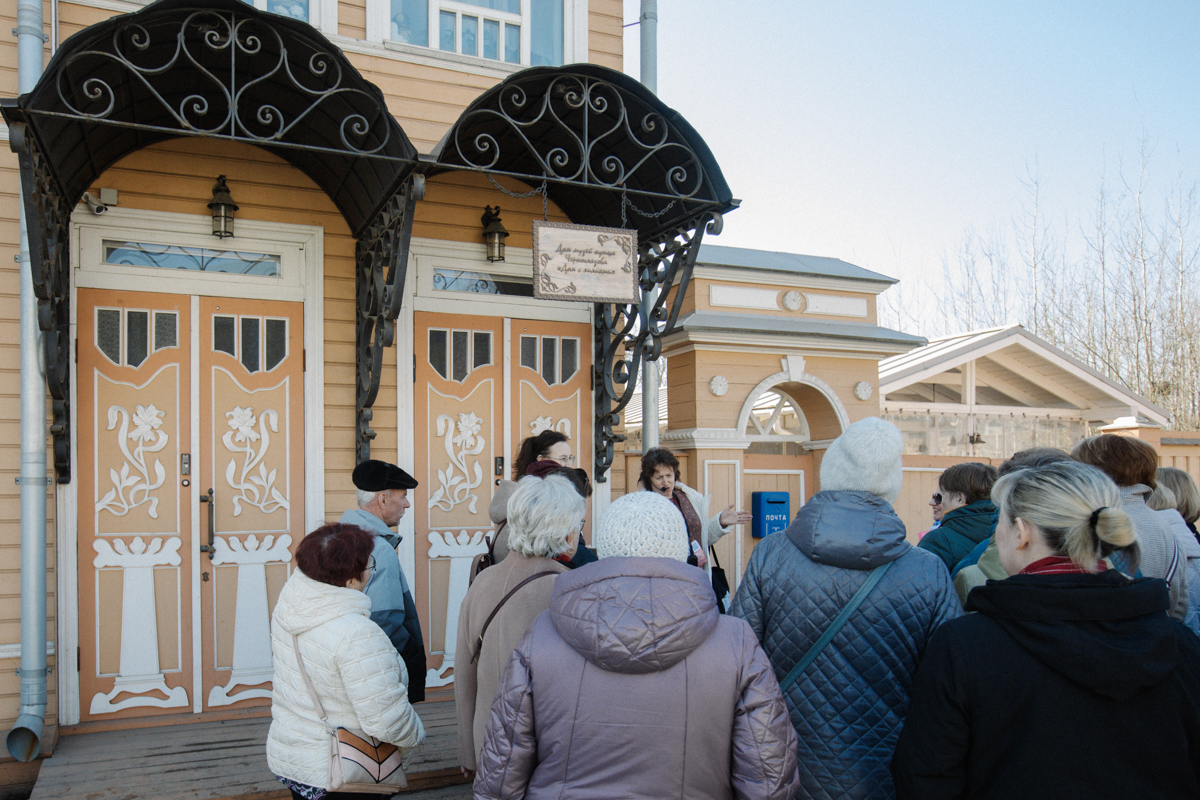 Excursion near the house with liliesPhoto: Anna Shulyatyeva for TD
Someone is unsure:
- Vaclav...
- Adolfovich...
- So! Already good! - the presenter rejoices. - And your last name?
Silence for a second. Then someone from the crowd:
- Pazdersky!
The guide applauds. And yes, there is now always a crowd of people near the house with lilies: they make appointments, bring tourists. But a few years ago no one was sure that he would survive at all.
The future is in doubt
In the dashing nineties, Vologda was burning. Not metaphorically - literally.
The old wooden houses disappeared one after another, up to ten per year. They were burned quietly, at night, to make way for new construction. In place of historical log buildings, shopping centers, hotels or neat models grew up, only vaguely resembling what stood here before.
German Yakimov was born in that still wooden Vologda in the sixties of the last century.
“When I was little, everything around was made of wood,” recalls Yakimov. — I was born on Zosimovskaya Street — it used to be called Kalinina. We lived in a small house without amenities. I carried water - about two hundred meters away, from a pump. The stove was heated with wood. But they lived happily. They gathered in the yards from all the houses, shoveled the snow, flooded the playground, and played hockey.”
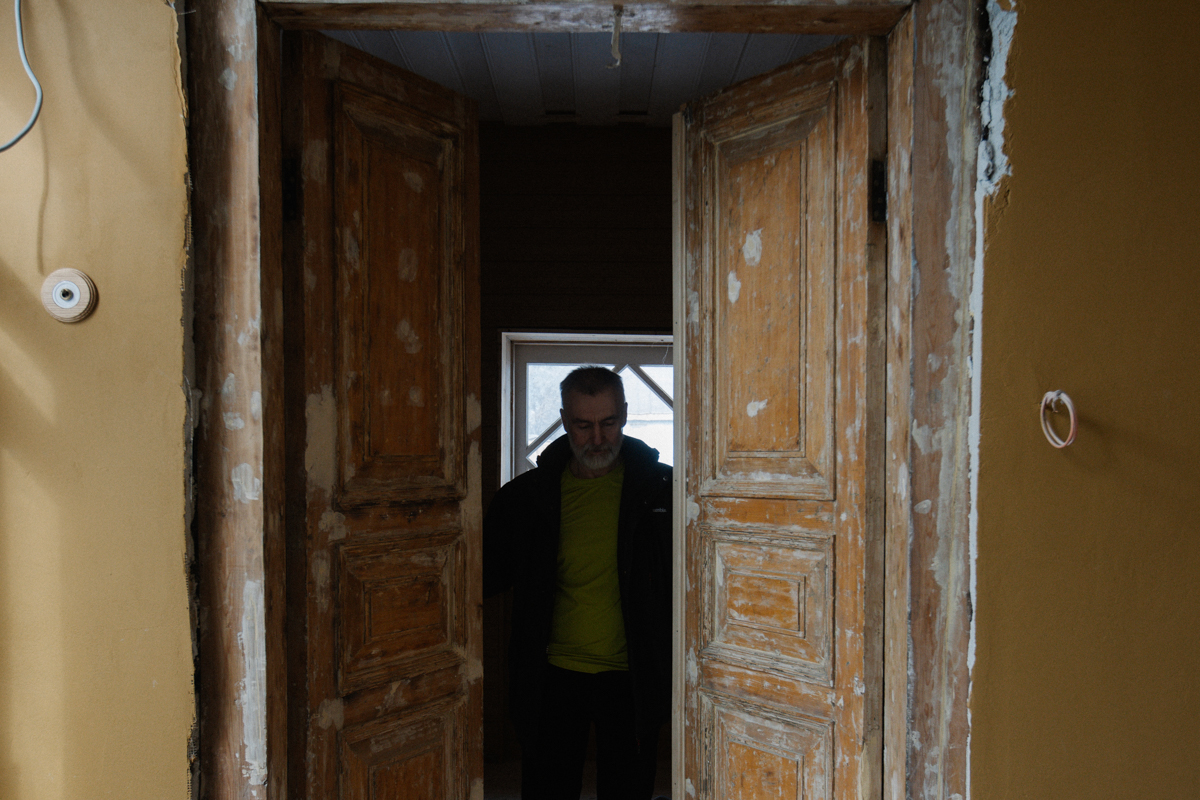 German Petrovich in the Zasetskys’ house Photo: Anna Shulyatyeva for TD
Herman's father worked as a foreman at a factory, his mother as a seamstress. The boy was thirteen when his father died at work - he fell absurdly, in the rain, from the slippery running board of a truck. And my son’s childhood ended.
The family was left on the mother's salary alone. In the tenth grade, German graduated from TV master courses, began working, and two years later entered the institute to study physics and mathematics.
The guy liked to study, he even went to graduate school. But at that moment the country changed dramatically. Perestroika, according to Yakimov, was a slap in the face for everyone. I had to quit graduate school because it became impossible to live on a graduate scholarship.
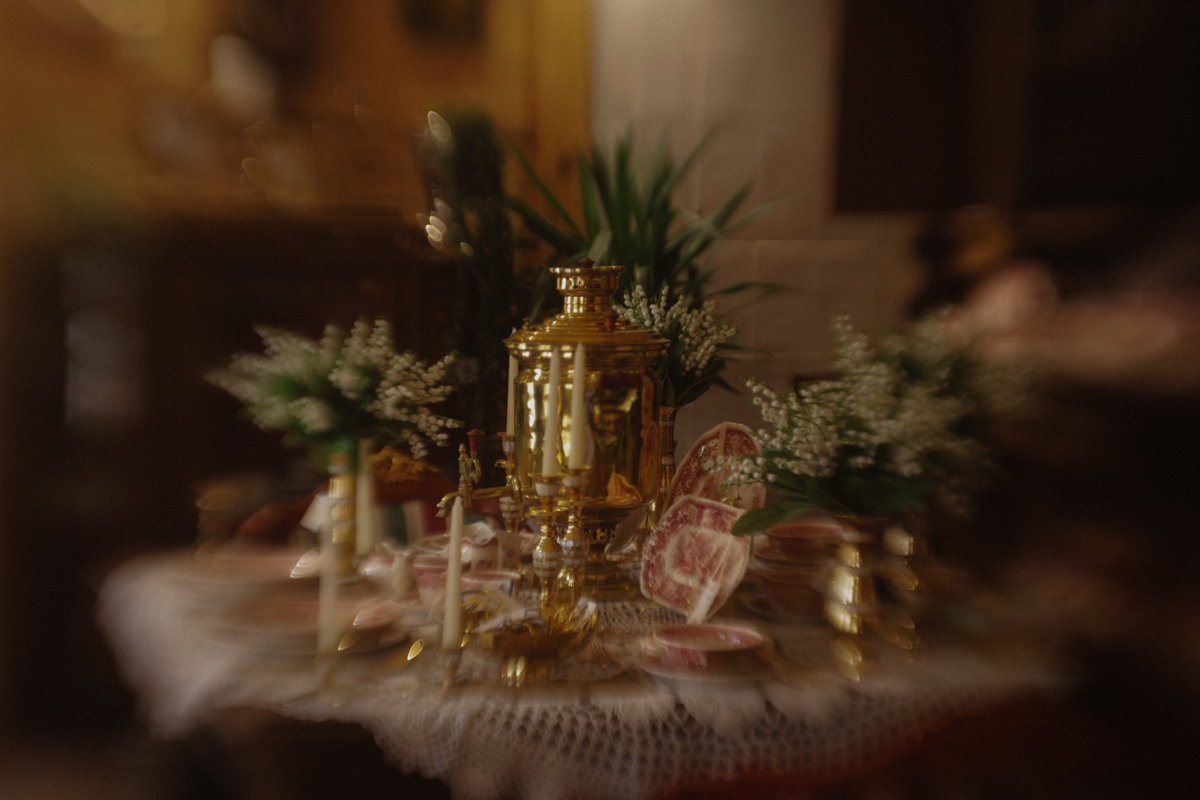 Interior of a flower shopPhoto: Anna Shulyateva for TD
Herman began teaching computer science and mathematics at a vocational school. Perestroika was gaining momentum, and confidence in the future was waning.
Yakimov characterizes the nineties with the words “everything was not easy.” I had to make decisions quickly and just as quickly take responsibility for them. German and a friend opened a cooperative in Arkhangelsk for the production and installation of gypsum ceiling tiles. A chance meeting took place in Arkhangelsk, almost anecdotal, which Yakimov would later call the most important.
“Where is nophelet?”
Herman was returning from the cinema with a friend - they were watching the then popular film “Where is Nophelet?” In the story, two friends meet girls by asking them this very question. The mysterious nophelet is just an inverted word “telephone”.
Two girls walked ahead.
“We’re rolling up,” recalls Yakimov. “Girls, do you know where the nophelet is?”
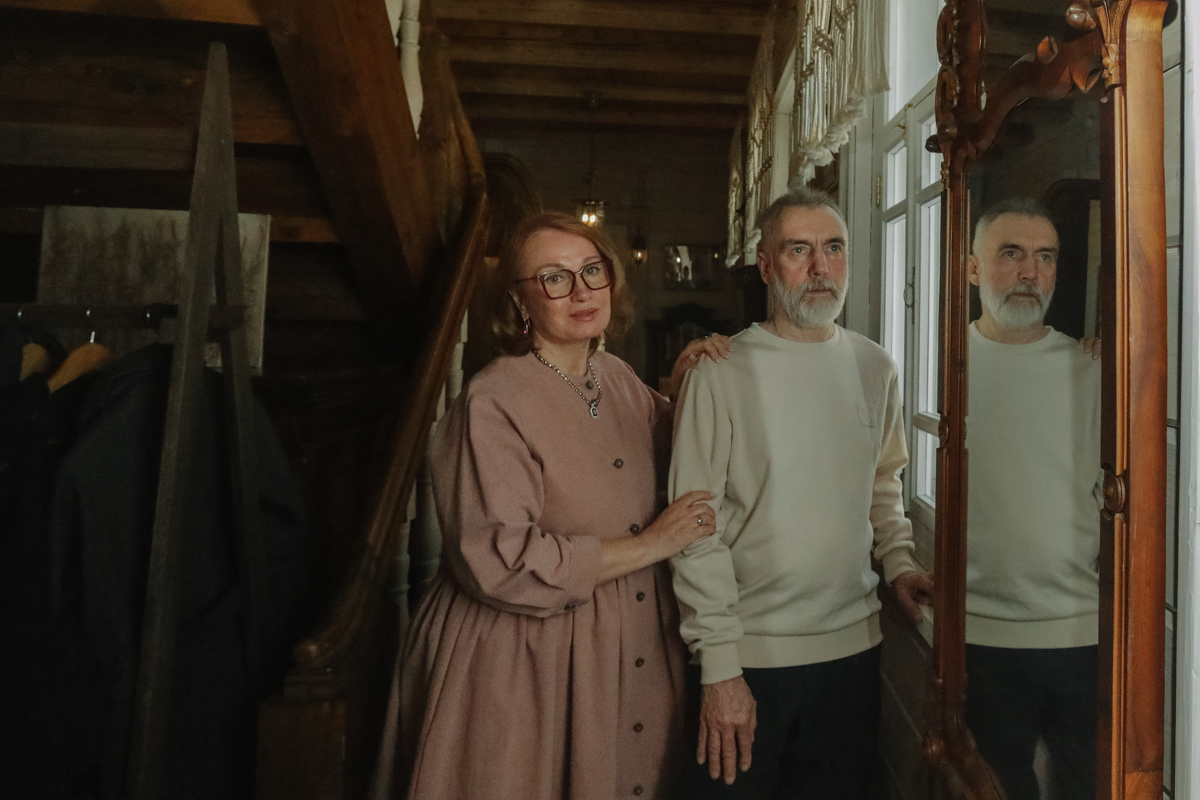 German and Larisa Yakimov Photo: Anna Shulyatyeva for TD
They immediately understood everything and smiled. One of them was called Larisa.
Larisa moved to live with German in Vologda. I couldn’t find a job in my profession and got a job at the city market, selling flowers. Her next step was to have her own 24-hour flower selling point at the railway station.
By the beginning of the tenth, the family had a strong flower business: shops, supplies, logistics. Until one day this seemingly well-built path failed.
Point of no return
The pavilion where the Yakimovs sold flowers had to be closed by decision of the administration. There was an urgent need to look for a new place. And then an old wooden house was put up for auction in the city - a dilapidated building, favored by the homeless, there were a lot of them in Vologda.
The Yakimovs bought the house, hired a construction crew and quickly began renovations. And after six months it became clear that it wouldn’t work “quickly”. They called from the prosecutor's office with the news: “You are breaking the law - the house is recognized as a cultural heritage site.”
Later it turned out that there was another contender for the house - a high-ranking administration official who planned to build a shopping center on this site.
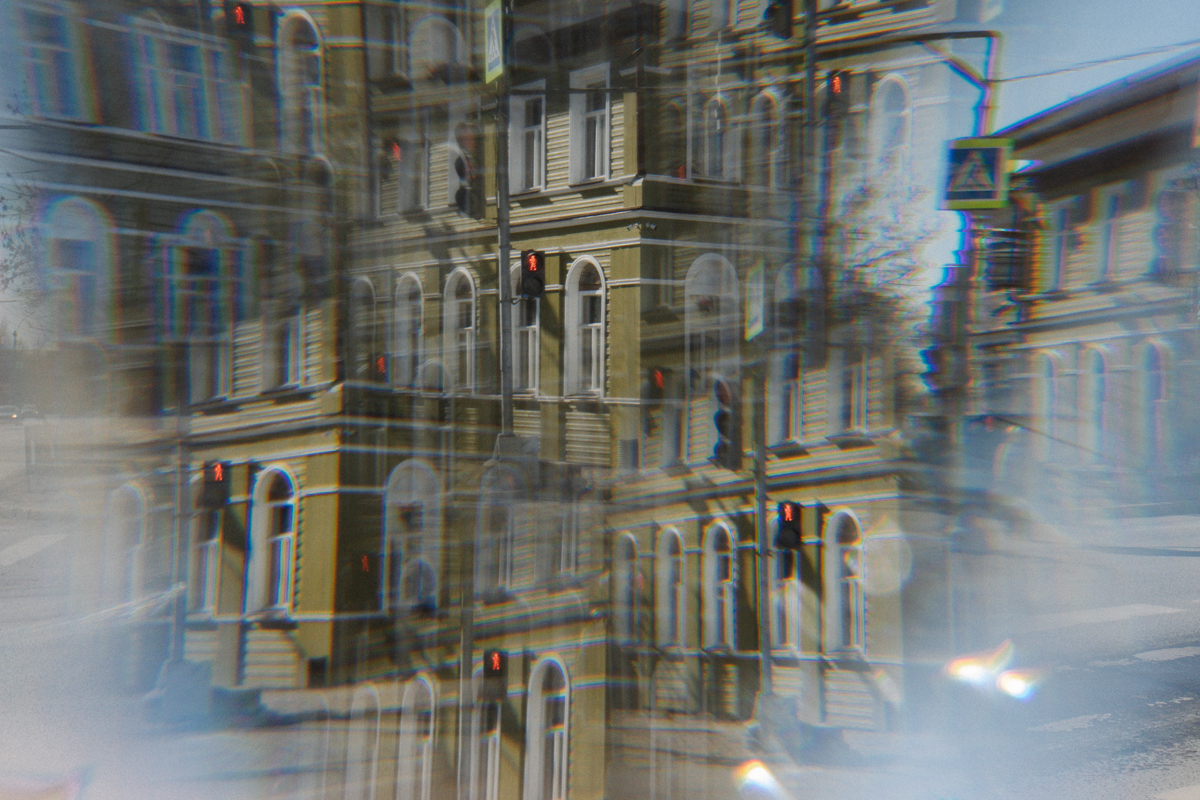 House of the merchant KrasilnikovPhoto: Anna Shulyatyeva for TD
Yakimov's car was set on fire. They tried to set fire to the purchased house. At night, two people climbed into the building of a 24-hour store already operating there - they were scared away by the saleswomen. A can of gasoline was left at the escape site.
“The first thought was to sell everything,” recalls Yakimov. - But I have already invested five million rubles in the purchase. It was impossible to get rid of her for the same money. And to continue is even more expensive.”
It seems that it was then that something that is immediately readable today was ingrained in him.
“If I am confident in something, I am not afraid of anything,” says Yakimov. “And I don’t negotiate with anyone anymore.”
The entrepreneur disbanded the usual team and began looking for an architect and restorer. They were Vladimir Lukin (famous Russian architect-restorer, general director of the Vologda Architects organization) and Vladimir Novoselov (head of the Vologda Restorers workshop).
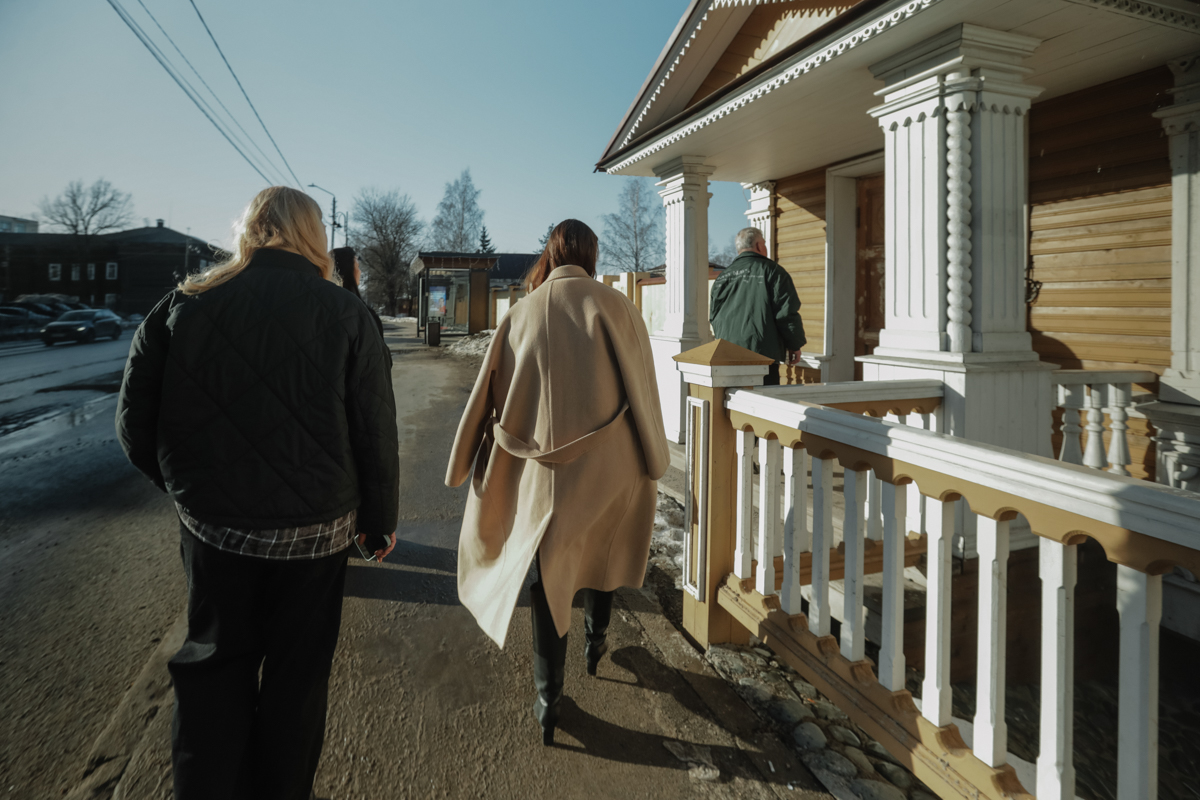 Anna Yakimova and her guests are heading to the Zasetskys’ house. Photo: Anna Shulyatyeva for TD
The project was prepared for almost a year - it alone cost 1.3 million rubles. The restoration itself took another three years. During the work, old doors with carved ornaments - lilies - were found under the floor. This is how the house got its name.
“In Christianity, the lily is the flower of the Virgin Mary, a symbol of purity,” says guide Irina Abduevskaya. “In the Annunciation scene, lilies are depicted next to the Virgin Mary.”
“It’s as if the stars have aligned here,” smiles architect Vladimir Lukin. - The Yakimovs are engaged in flowers - and buy a house with lilies. Apparently, Herman’s purpose is to restore houses.”
“This madman has taken another house!”
Yakimov purchased the second historical house - the merchant Izvoshchikov's - from a reseller. Secret from the family.
“If this deal had not happened, the house would no longer exist,” he recalls. “The person I bought it from just wanted to get rid of it.” And I liked the house. It was a pity. There are no such people anymore."
The house is truly unusual - an Art Nouveau complex of two parts: a stone shop from 1884 and a wooden residential building added in 1915. Before the purchase, restorers examined the building and gave it a rating of “good condition.” They convinced us that no major investments would be required.
In reality, everything turned out differently. When the sheathing was removed, it became clear: due to the complex structure and leaking roof, most of the logs had rotted. The house had to be completely dismantled. It was transported to the Semyonkovo Architectural and Ethnographic Museum, and the main stage of restoration took place there.
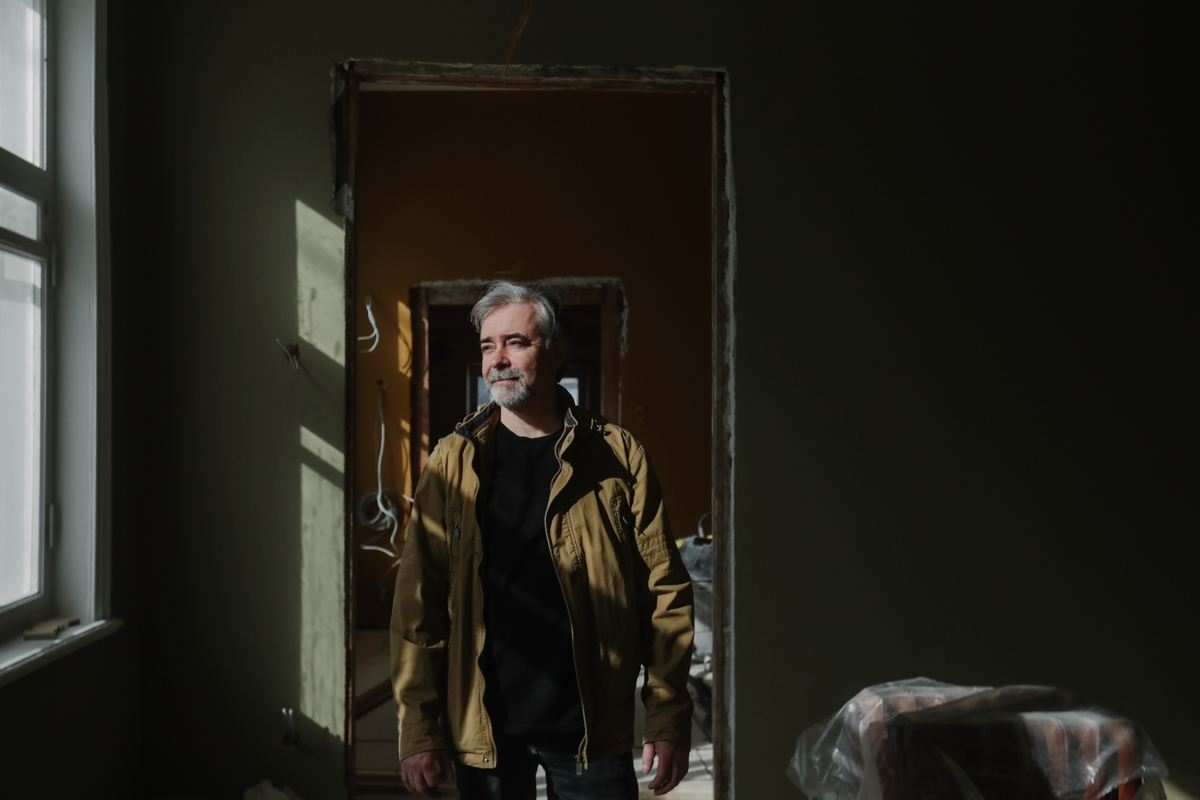 Architect Vladimir Lukin in the Zasetsky housePhoto: Anna Shulyatyeva for TD
“The restoration was very expensive. But the house turned out to be a real box of secrets,” says Yakimov.
There is an old legend associated with Izvoshchikov’s house: as if during the revolution, the housewife hid an expensive Chinese set in the yard. In the process of work, they actually found fragments of Kuznetsov porcelain and another, finer, unidentified one.
The surprises didn't end there. Three stoves have been preserved in the house, two of them are tiled. And when they removed the plywood from the ceiling in the brick part, the Monier vaults were revealed.
The wife of a keen businessman found out about the purchase of a second house after the fact.
“Journalists arrived and asked to talk,” recalls Larisa Yakimova. “And from the slips of the tongue, I suddenly understand that we no longer have one, but two houses.” I’m standing at the shoot with this face... I think: “Okay, wait, you’ll get it at home from me!” Received. But I found arguments in my favor.”
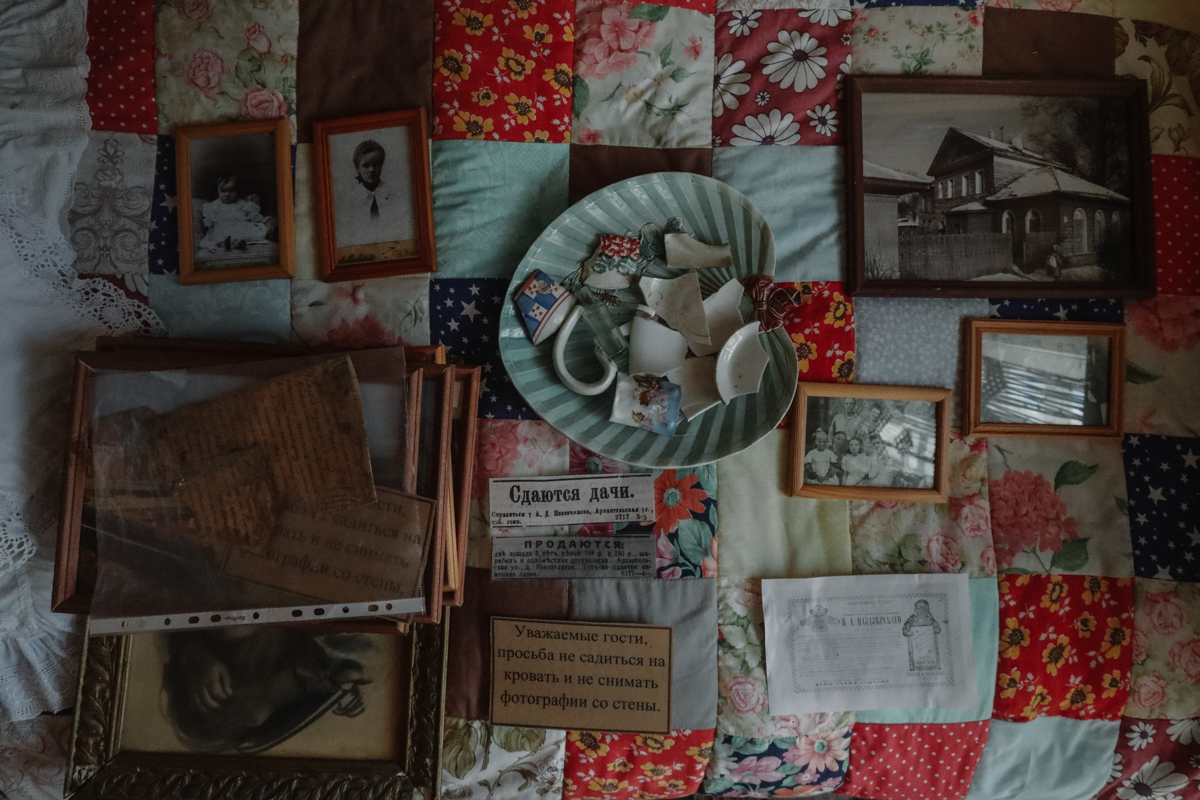 Fragments of Kuznetsov porcelain and a finer unidentified service found during the restoration of the Izvoshchikov house. Photo: Anna Shulyatyeva for TD
After this incident, fateful decisions began to be made at family councils.
Investing in the restoration of buildings without experience, guarantees and clear economics seemed crazy.
“Nobody understood why I was doing this,” recalls Yakimov. And he admits that even he himself didn’t understand why at first. But I couldn’t stop anymore. The owner of the flower chain did not plan to collect houses. But that's exactly what started to happen.
He chose them not by calculation, but by feeling: this house cannot be lost.
“When German Petrovich took the first house, then the second, then the third, the people reacted the same way: “Ugh, rotten things!” - says architect Lukin. — One day a journalist I know calls me. I say: “I can give you information - Yakimov took the third house.” And I hear her screaming in the editorial office: “Listen, this crazy man has taken another house!” The word “crazy” sounded kinder, but still.”
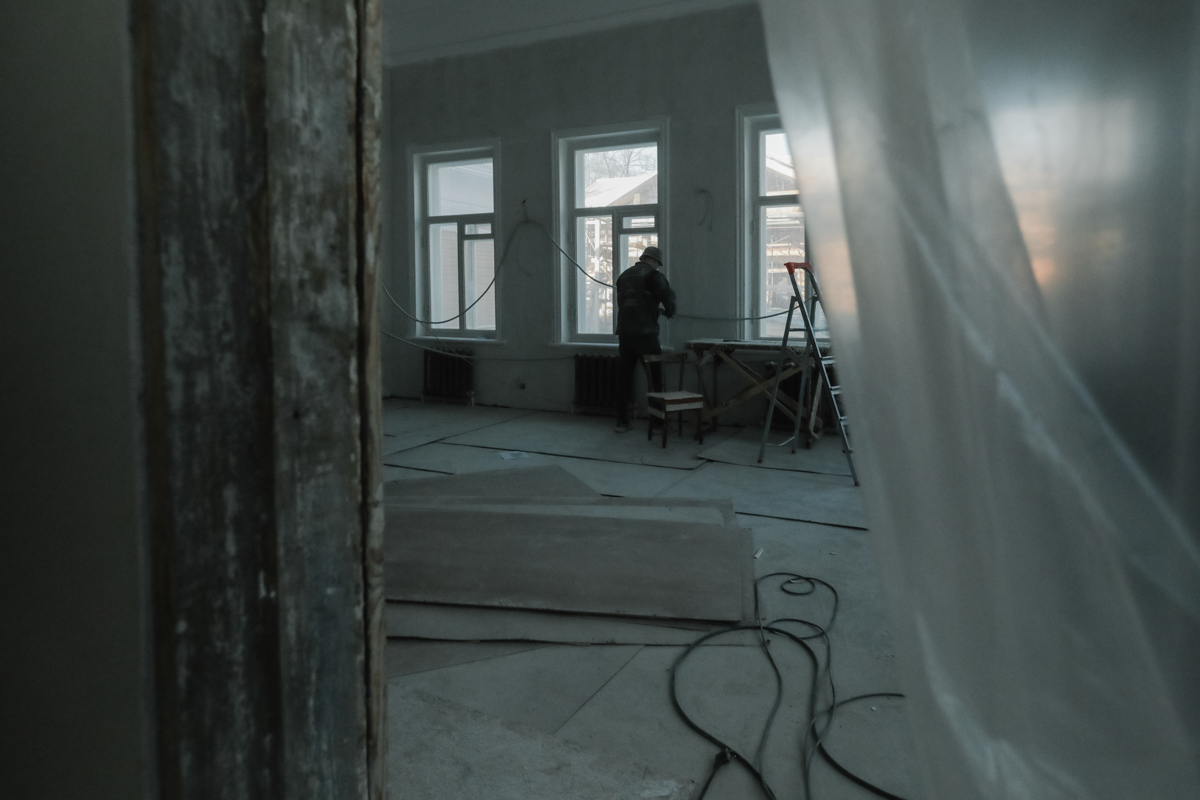 Restoration of the Zasetsky housePhoto: Anna Shulyatyeva for TD
Larisa Yakimova does not hide the fact that at the beginning of this whole story she was irreconcilable.
“I'm normal. I think about family, about children. And restoration is a pit. Our flower business, our only source of money, started feeding people at home. And then suddenly it became clear that it was not enough to restore the house, it needed to be filled with life. That’s when I got hooked,” Larisa laughs.
Larisa Yakimova is a hairdresser by training, but in recent years she has completed dozens of educational courses. And she took upon herself everything related to the atmosphere of the house: collecting interiors, looking for antique objects, building exhibitions, figuring out how the space will live.
Her husband claims that he truly fell in love with the houses during the very first restoration. When he stopped being just a customer and began to delve into technologies, materials, design features.
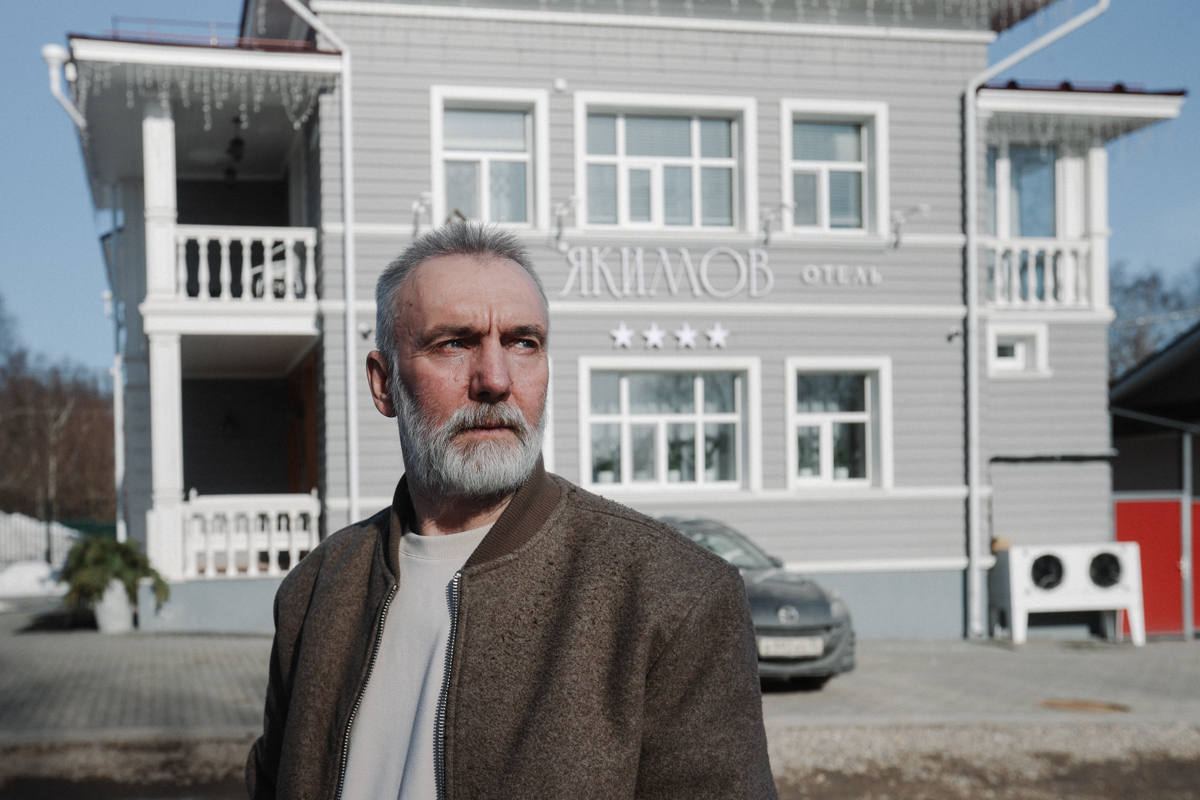 German YakimovPhoto: Anna Shulyatyeva for TD
“I, probably, even more than restorers, try to delve into everything,” Yakimov grins.
Over time, this became his separate competence. Other entrepreneurs began to come to Yakimov for advice. They show houses and ask what they are getting into.
Exciting attraction
Now the Vologda chain of flower shops Lara operates under the slogan “Preserving history.” And once Yakimov became the first private entrepreneur in the city to start restoring houses.
Following Yakimov, others began to buy “monuments”.
In 2018, entrepreneur Alexey Zenkov bought the house of merchant Ershova on Sovetskaya Street - later a hotel with a restaurant serving Vologda cuisine was opened there.
In 2019, Viktor Chuchin purchased a house on Chernyshevsky Street and created a bar and museum complex “Zarechny Quarter 1840”.
In 2021, Moscow investor Semyon Yakovlev purchased several wooden mansions at once.
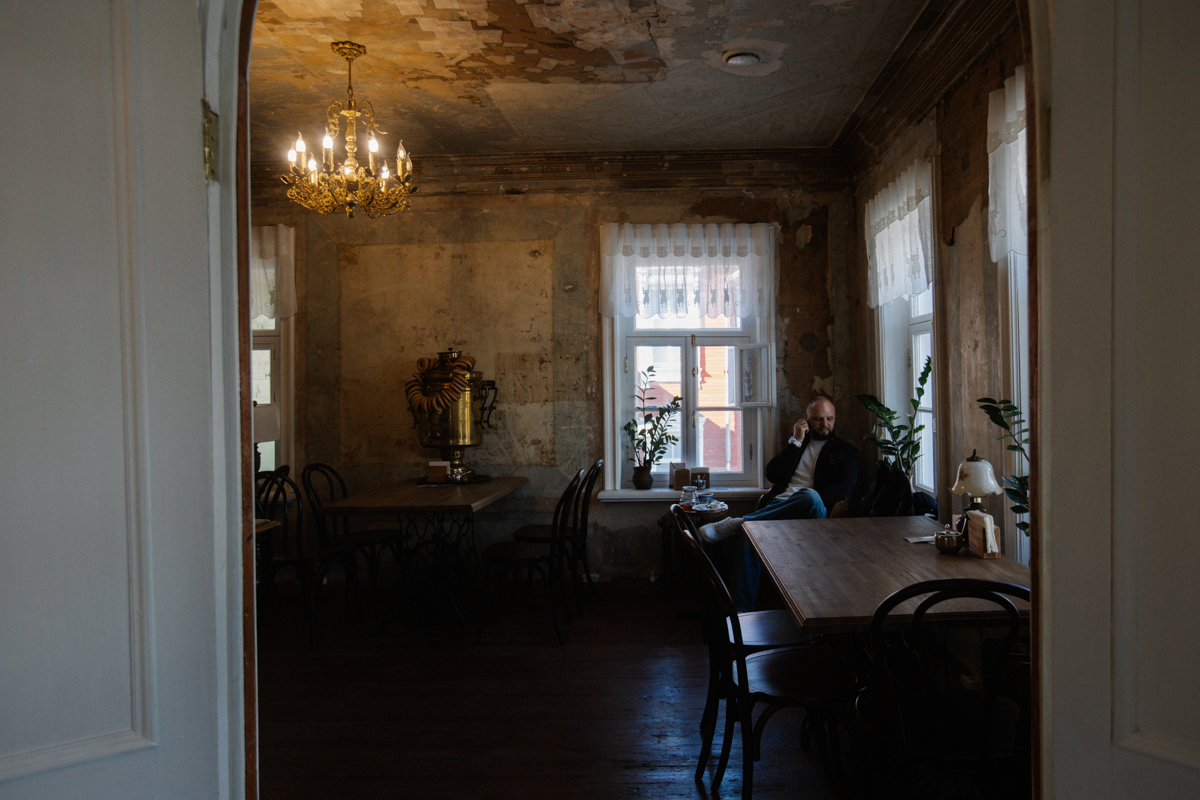 A regular visitor to the Buro coffee shop in the former Panovs’ house. Photo: Anna Shulyatyeva for TD
“It’s contagious,” smiles restorer Vladimir Novoselov. - German Petrovich even infected us. We also took a monument for ourselves - me and Lukin.”
“This is an exciting attraction,” Yakimov grins.
Architect Vladimir Lukin calls Yakimov a collector: “Some people collect stamps, others collect stones. And German Petrovich has buildings. Collection of monuments of wooden architecture of Vologda. And it is priceless."
But, according to Lukin, it’s not just the houses themselves.
“Usually personal collections are closed and hidden. Nobody really sees them except the owners. And here the buildings live in the city. You can go into them, examine them, touch them, literally touch history.”
Namesakes
Before the revolution, the house with lilies was owned by the Pazdersky family. In addition to him, the family had two more houses, three pharmacies and a photographic store. After 1917, the property was nationalized, and the family left for Poland.
Only the youngest daughter, Klara, remained in Russia; she married a certain Kruglikov and, the only one of the Pazderskys, did not leave for Poland. The Kruglikovs moved to St. Petersburg and settled there.
Almost a hundred years later, Clara’s granddaughter, Kira, came to Vologda. Kira Borisovna was already over eighty when she decided to visit the homeland of her ancestors.
Before the trip, she wrote to the Vologda archive - she wanted to understand what had survived from family history. First I came to the neighboring house, where there used to be a photographic shop.
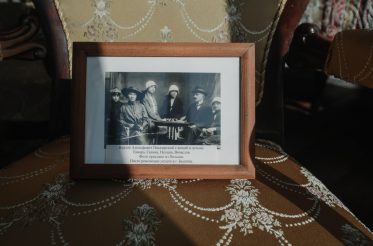
There they told her: “ We are glad to see you, but you need to go to the neighbors” - and they took her to the house with lilies.
Kira Borisovna knew nothing about the Yakimovs and their restoration project.
“She was very touched,” recalls Larisa Yakimova. “Because I saw that the house had not disappeared.” He is safe, he lives."
The women talked for a long time, drank tea, and the conversation accidentally turned to surnames. “ What is your last name now, Kira Borisovna?” - “Yakimova...” There was a pause in the room for a second. “We are simply Yakimovs too!”
“It seems like my jaw even dropped,” Larisa recalls with a laugh.
Later it turned out that there was no relationship between them. Just a coincidence. But the meeting turned out to be no coincidence.
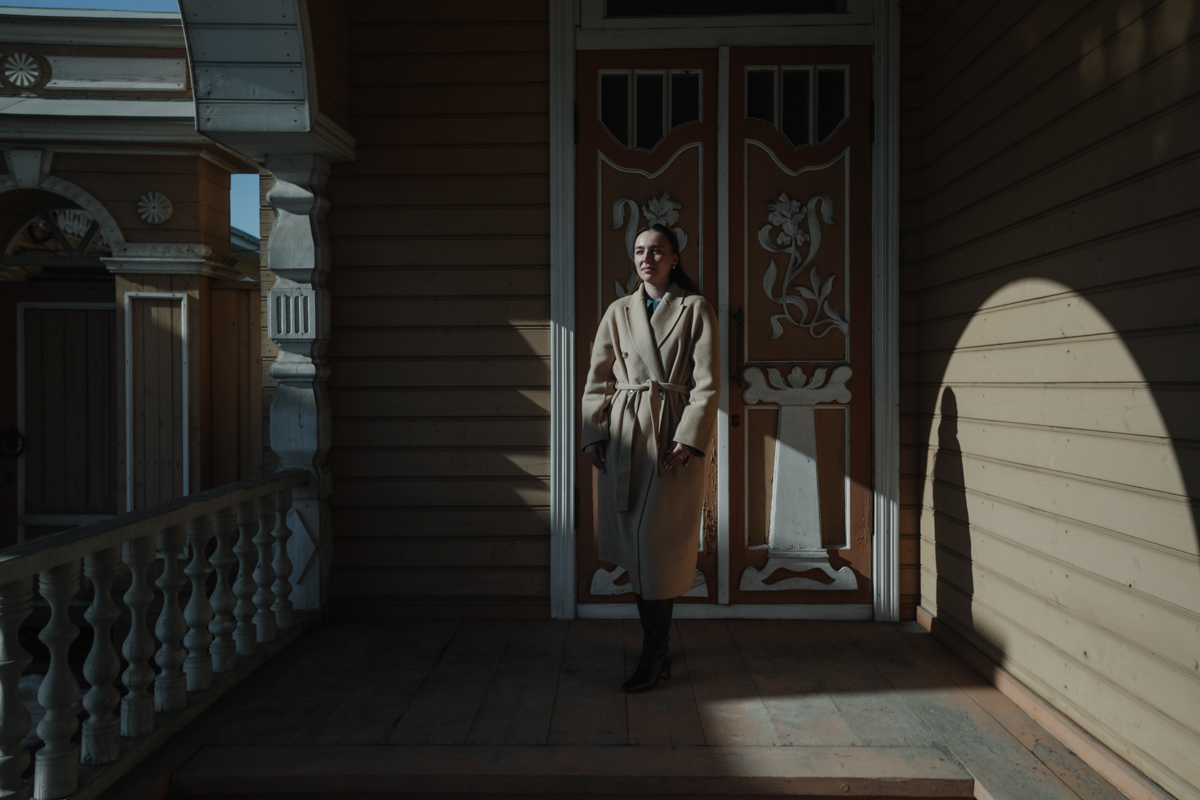 Anna Yakimova on the porch of a house with liliesPhoto: Anna Shulyatyeva for TD
Kira Borisovna was so moved that she invited the Yakimovs to visit St. Petersburg and presented photographs and old pharmacy supplies - as a reminder that for decades there had been a pharmacy in the house, books on pharmacognosy and antique furniture belonging to the Pazdersky family.
“We already had a small exhibition then,” says Larisa. “But it was about restoration.” And they added the main thing - the history of the house and family.”
Similar “accidents” began to happen to other houses.
When the restoration of the Izvoshchikov house began, descendants almost immediately came to know the Yakimovs. It turned out that they still live in Vologda - however, the last name has changed: according to the new rules, they became the Izvozchikovs.
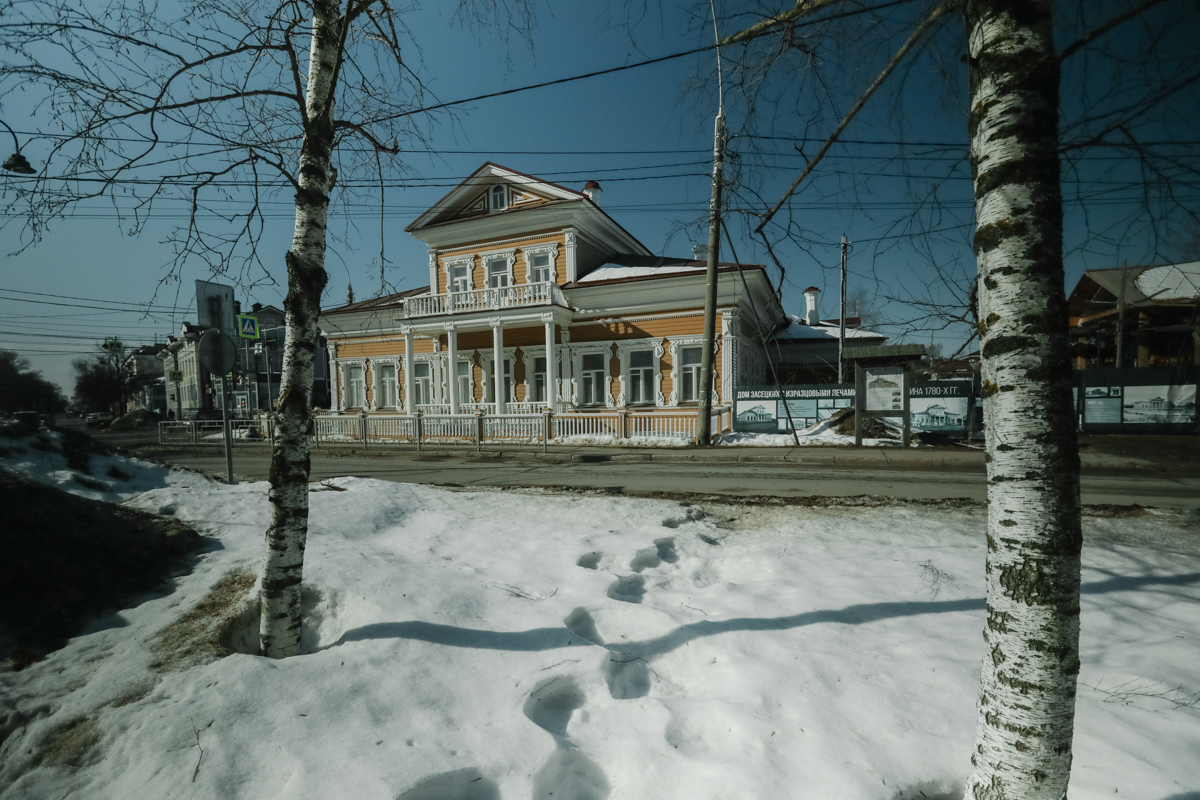 House of ZasetskikhPhoto: Anna Shulyatyeva for TD
One of the descendants said that his great-grandmother lived in this house until the seventies and died here. He gave the Yakimovs family photographs.
Then the story happened with the Zasetsky house.
A girl, a descendant of the first owners of the site, wrote to the owners of the coffee shop that was in the house. She happened to be in Vologda on business, went into a coffee shop and started asking about the house.
She was given a link to Larisa Yakimova’s page on VKontakte. Larisa met her on the same day - she opened the house, showed her through the rooms...
Two prostheses
Sometimes buildings begin to speak to their new owners not through descendants, but through objects.
The richest in finds was the Zasetsky house, where a whole set of artifacts were discovered during the work.
While removing the paneling, workers noticed an unusual object sticking out of the wall. At first they didn’t understand what it was. Later it became clear - a prosthesis. And they found a second one in the attic. The findings gave rise to many versions. They thought that this was connected with the hospital, which was located in the building during Soviet times. But the version was not confirmed: there was a pre-revolutionary mark on the product. A few years later, the story unexpectedly received a continuation, and almost a literary one.
It turned out that in the middle of the 19th century, inventor Rafail Chernosvitov lived in Vologda. Perhaps he rented accommodation in the Zasetskys' house.
During the Polish uprising, Chernosvitov lost his leg and began making prosthetics himself. He developed an artificial leg on hinges - an advanced solution at that time. Even in Dostoevsky’s novel “The Idiot” the phrase appeared: “with Chersvitov’s leg, they say, you can dance.”
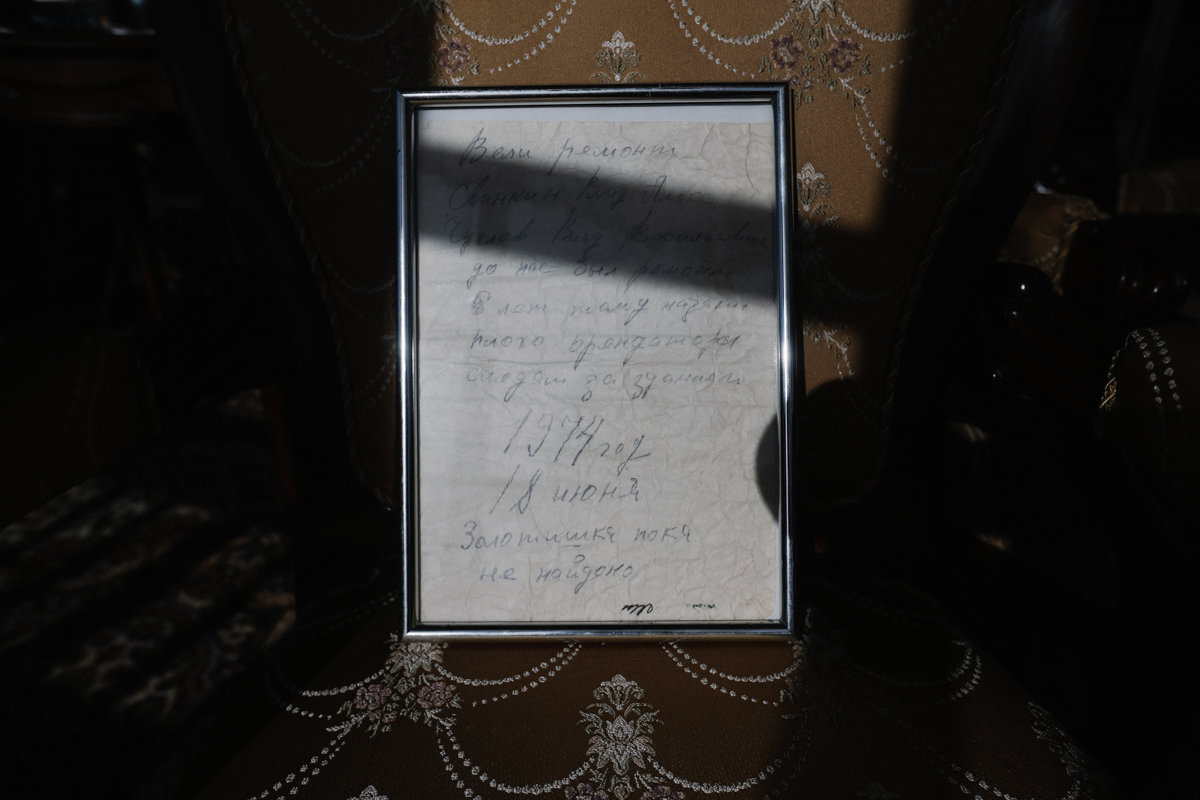 A time capsule in the form of a vodka bottle with a note: “Vlad Svinkin carried out the repairs. Alex. and Chuglov Vlad. Vasilievich. Ours was renovated 6 years ago. Tenants do not take good care of the building. The gold has not yet been found” Photo: Anna Shulyatyeva for TD
 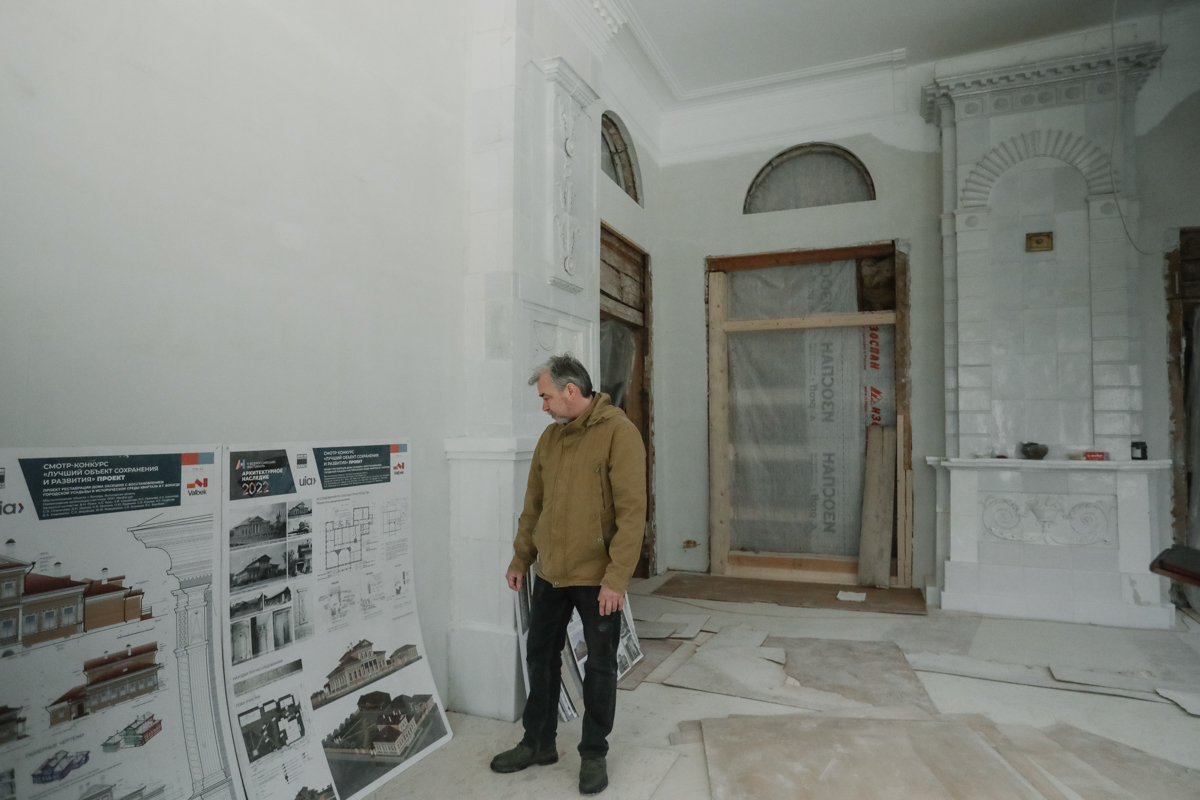 Architect Vladimir Lukin in the Zasetsky housePhoto: Anna Shulyatyeva for TD
 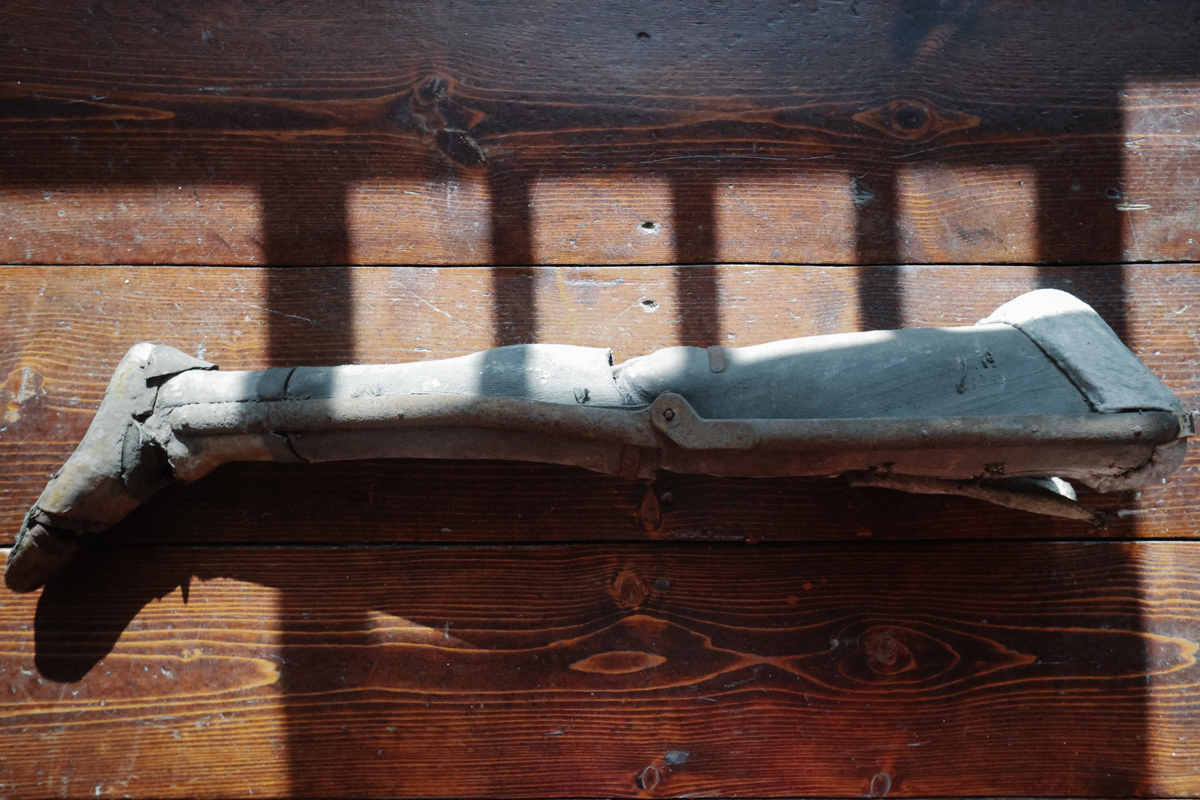 Chernosvitov’s prosthesisPhoto: Anna Shulyatyeva for TD
The story received final confirmation when the inventor’s great-great-granddaughter Elena Malysheva, who is studying family history, came to Vologda. Elena confirmed the connection of the find with Rafail Chernosvitov. The Yakimovs gave one of the found prostheses to Chernosvitov’s descendants, the second was left for future exhibition.
Another find, from Soviet times, was discovered under the stairs to the second floor. Time capsule in the form of a vodka bottle with a note.
The repairs were carried out by Vlad Svinkin. Alex. and Chuglov Vlad. Vasilievich. Ours was renovated 6 years ago. Tenants do not take good care of the building. The gold has not yet been found. 1974, June 18
“We decided to continue the tradition,” laughs German Petrovich.
В процессе реставрации Якимовы заложили свою капсулу времени.
«Через сто лет наши потомки откроют ее и оценят качество реставрации, — говорит он. — Дому тогда уже будет 340 лет».
Place of power
Красный автобус медленно катит по городу. На боку крупными буквами написано: «Вологда — место силы русского мира».
К этой пафосной фразе в городе давно привыкли. Ее почти не замечают.
«Вологда держится на трех туристических китах: масло, кружева и дома, — говорит Герман Якимов. — Но сейчас уже все не то. Масло не то, кружева больше так не плетут… Остались только дома».
Вологда — ровесница Москвы. Но Москву можно представить без деревянной застройки. А Вологду — нет.
Еще недавно старые дома воспринимались в городе как обуза: аварийные, требующие вложений, без очевидной ценности. Их проще было снести, чем придумать, что с ними делать.
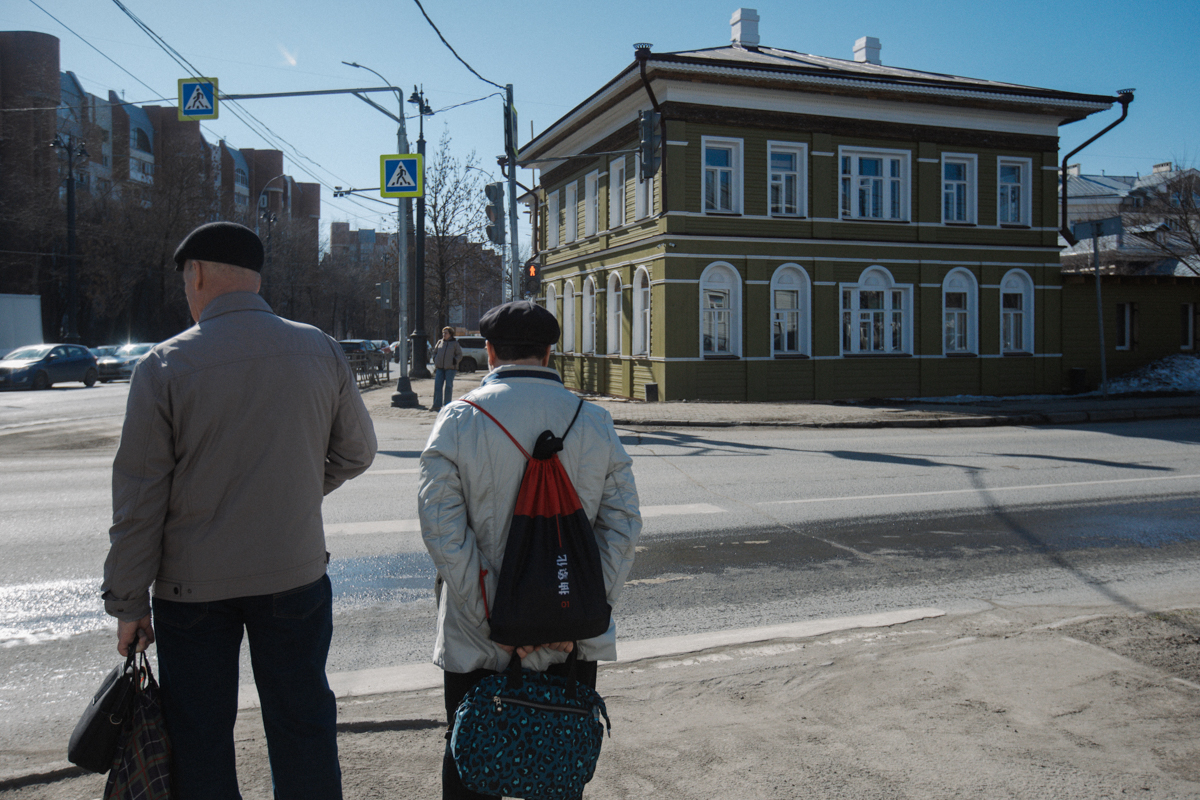 Дом купца КрасильниковаФото: Анна Шулятьева для ТД
«Администрация умело скинула неликвид инвесторам, — шутит архитектор Владимир Лукин. — Реставрация позволила продать то, что никому не было нужно».
Дома, которые тянули ресурсы из города, начали работать на город. В них открываются новые пространства, туда приходят новые люди. За 10 лет Якимовы восстановили шесть домов. Каждый — с историей и характером.
Дом с лилиями на Чернышевского, 17, — бывший дом Черноглазова. Когда-то здесь работала аптека, куда ходили поколениями. В том числе и сам Якимов.
Чуть дальше — дом купца Извощикова.
На Мальцева, 18, — флигель усадьбы Дружинина. Дом с длинной биографией, от дворянской жизни до художественной школы и театральной студии.
Дом Пановых на Герцена — редкий случай, когда главный акцент не в конструкции здания, а внутри. На стенах сохранилась альфрейная живопись — пейзажи, похожие на Швейцарию, Италию. Единственный в городе деревянный дом с росписью.
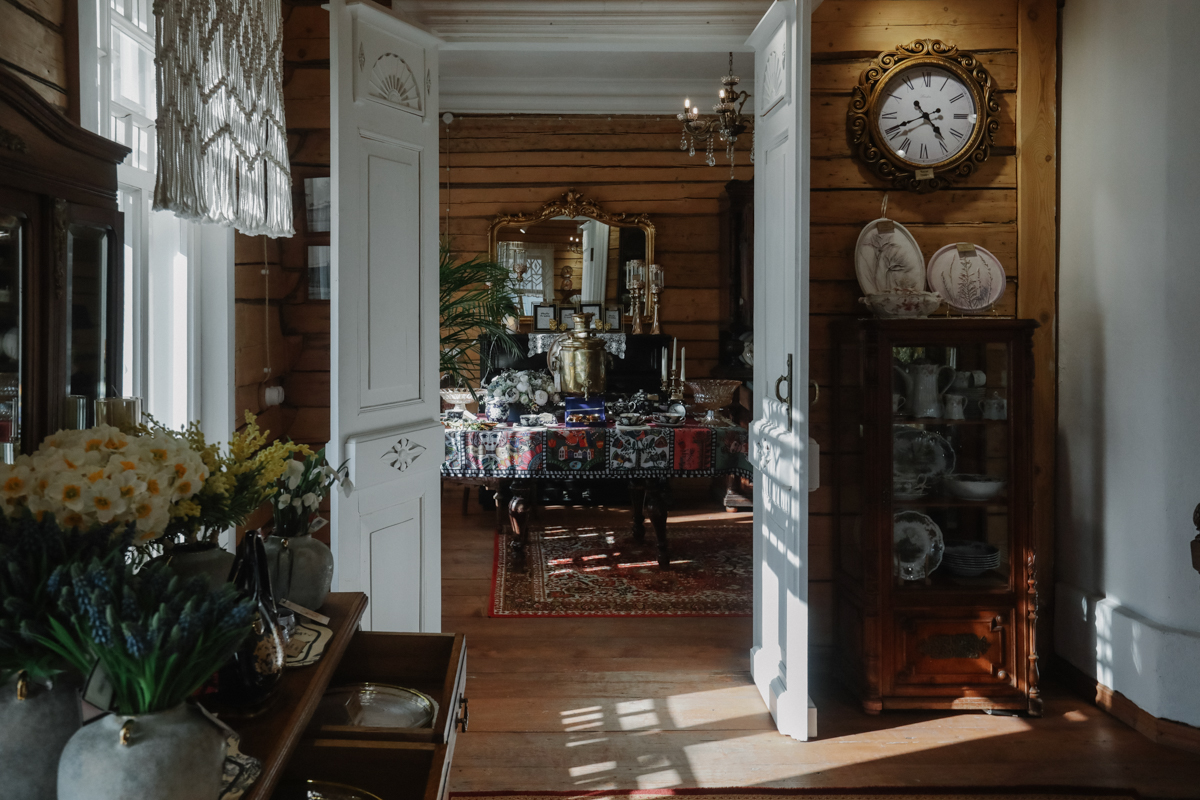 Интерьер одного из цветочных магазинов «Лара»Фото: Анна Шулятьева для ТД
На Ленинградской — сразу два дома. Дом Красильниковых (его также называют домом купцов Васильевых) все еще в процессе реставрации. И дом Засецких — самый старый деревянный дом Вологды, городская реликвия. Ему около 250 лет.
Все дома разные. По стилю, судьбе, по тому состоянию, в котором их находили. Но объединяет их одно — все они должны были исчезнуть.
Реставрация у Якимовых занимала годы. Иногда три, иногда пять лет. Менялись решения и детали, работа останавливалась и начиналась снова.
И за этим стоит то, о чем редко говорят вслух, — цена. Посчитать точную сумму, потраченную на реставрацию домов, невозможно, считают владельцы. Не потому, что учет не ведется, а потому, что процесс растянут во времени и состоит из сотен мелких решений, переделок, доработок.
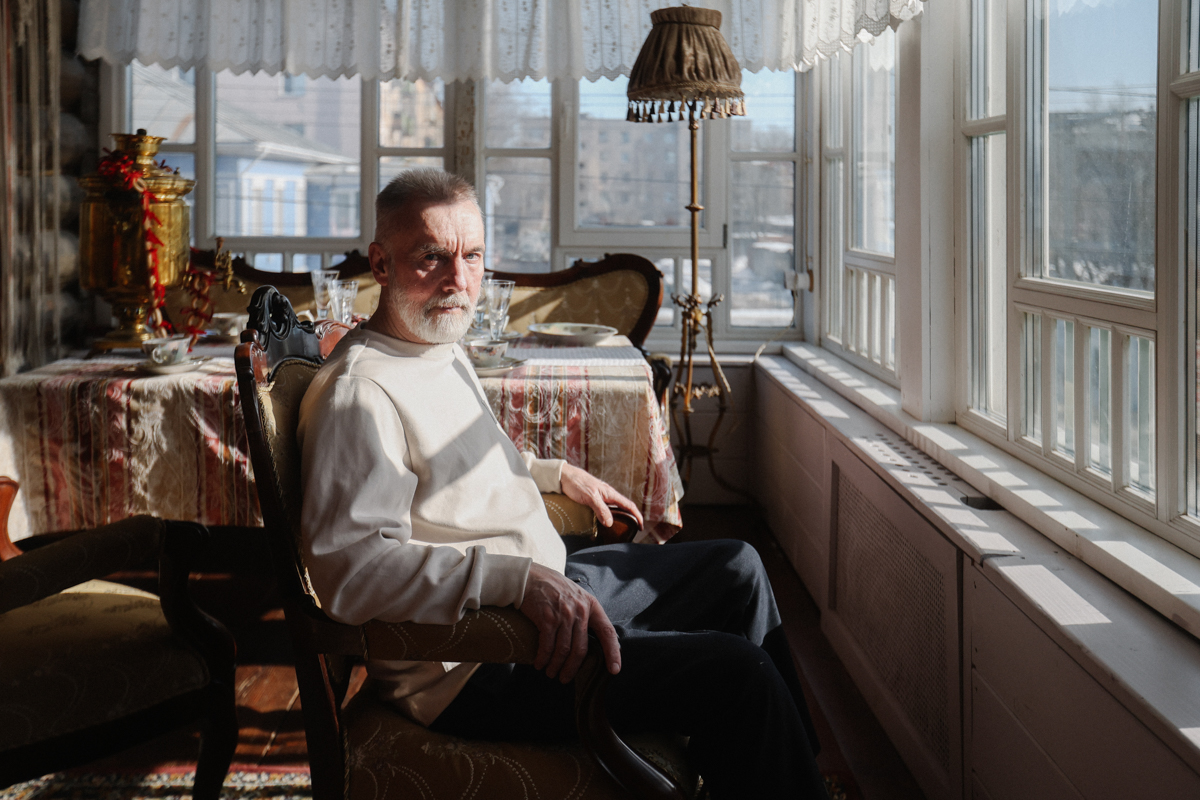 Герман ЯкимовФото: Анна Шулятьева для ТД
«Деньги на реставрацию уходят постоянно, — говорит Лариса Якимова. — Вся выручка с наших цветочных магазинов идет туда».
Лариса замолкает, будто пытается в уме посчитать.
«Только зарплаты реставраторам — около трех миллионов в месяц. Просто умножьте это на годы. Плюс материалы… Этот вопрос все задают: сколько реставрация стоит? Но на него никто не может ответить. Мой муж любит повторять: “Мы сохраняем наследие для потомков, и здесь не важно, чтобы вложения вернулись”».
Реставрация — это не про удачную инвестицию, а про историю о том, как старые деревянные дома перестают быть «ветхим фондом». И становятся тем, ради чего в город приезжают люди со всего мира.
И надпись на автобусах начинает звучать правдиво.
Дом с лилиями, Чернышевского, 17, — примерно три года (2015–2017) с проектной документации (+ год).Дом Извощикова, Чернышевского, 55. Один из самых «плотных» проектов: дом полностью разбирали, увозили на площадку в Семёнково, восстанавливали и возвращали примерно три года (+ год с проектом).
Флигель дома Дружинина, Мальцева, 18, — чуть больше года. Самый быстрый объект, дом ранее уже фактически пересобирался.
Дом Пановых, Герцена, 38, — примерно два года. Основная работа — живопись, сам дом был в хорошем состоянии. Реставрация живописи продолжается.
Дом Засецких, Ленинградская, 12, — примерно пять лет (с перерывами).
Дом купца Красильникова / купцов Васильевых, Ленинградская, 34, — в процессе реставрации.
Срок работ зависит от состояния дома, сложности объекта, методики (разборка или аккуратная реставрация), размера бригады, пауз в работе.