
Translated material
Trust non-humans
How artificial intelligence is penetrating politics at all levels and what is the problem with neuropower

Illustration: Petr Sarukhanov / Novaya Gazeta
Neural networks have long entangled all world politics and economics, even Russian ones. Analysis of a huge amount of data, which previously took days, is now done in five minutes, the work of government agencies is partially automated, and the behavior of real voters and buyers is very accurately modeled based on the behavior of AI agents. But maybe the world should think about neurodeputies - working 24/7, having no personal interests and free of charge? Or replace the “living” voter with an incorruptible IVoter who certainly won’t make a mistake? Novaya talks about this and more with Vyacheslav Belyakov, political consultant, founder of the Sistema Institute of Intelligent Technologies. This is an autonomous non-profit organization that is engaged in research in the field of artificial intelligence, its implementation in various spheres of social, political, and economic life in modern Russia.

The whole story in five minutes
— It is clear that AI has long been helping in writing texts, including in developing theses for election programs. But talking about this would be boring.
— In politics, there are several basic areas in which artificial intelligence is strong. What's on everyone's lips is content creation. Although this is the smallest and simplest part. It’s just that everyone is trying to use it: draw pictures, try to write some texts, make videos. It all works, and there are tools that allow you to do very interesting things. Legislation is now trying to regulate this.
The second big part is actually analytics and data processing. This is something that artificial intelligence is very strong at. Its use significantly speeds up and simplifies work. Anyone - the election headquarters and political strategists, including. If earlier you spent a lot of time processing data, studying electoral history, tables with thousands of precincts and election results, now all this is done in a minute. You load the data into the neural network, ask it to upload the necessary statistics: find correlations, anomalies, dependencies that otherwise would have to be looked for mathematically, building a bunch of formulas.
Studying electoral history is one of the significant parts of the analysis that any political strategist does before elections. See how people voted, what it depended on over several years. Even if there are no anomalies, the information is still important. Throughout the last elections, I analyzed the tables using artificial intelligence.
— Have you compared the results of AI analysis with “manual” calculations and the real situation?
— In the analysis of mathematical data, neural networks are precisely accurate. When does artificial intelligence mostly hallucinate? When you ask him to come up with something or tell him about something. After all, he “guesses”, predicts the most likely next token ( sequence of characters - V.F. ) in the linguistic model. Roughly speaking: what will most likely stand behind this letter, behind this word, behind this letter combination. Thus, the AI generates text based on its vectors and probabilistic statistics.
People sometimes imagine ChatGPT as a kind of database of “foreign agency” or “Western” texts, from which it pulls information and lies about Russia. Well, perhaps, but the point is that it does not take facts from some knowledge base, it is not essentially a search engine. Although there is a search part there too. He “predicts” what will be written with high accuracy, sometimes hallucinating. Therefore, you need, on the one hand, to always double-check the data, and on the other, to have a good understanding of what you are working on, so as not to look stupid later.
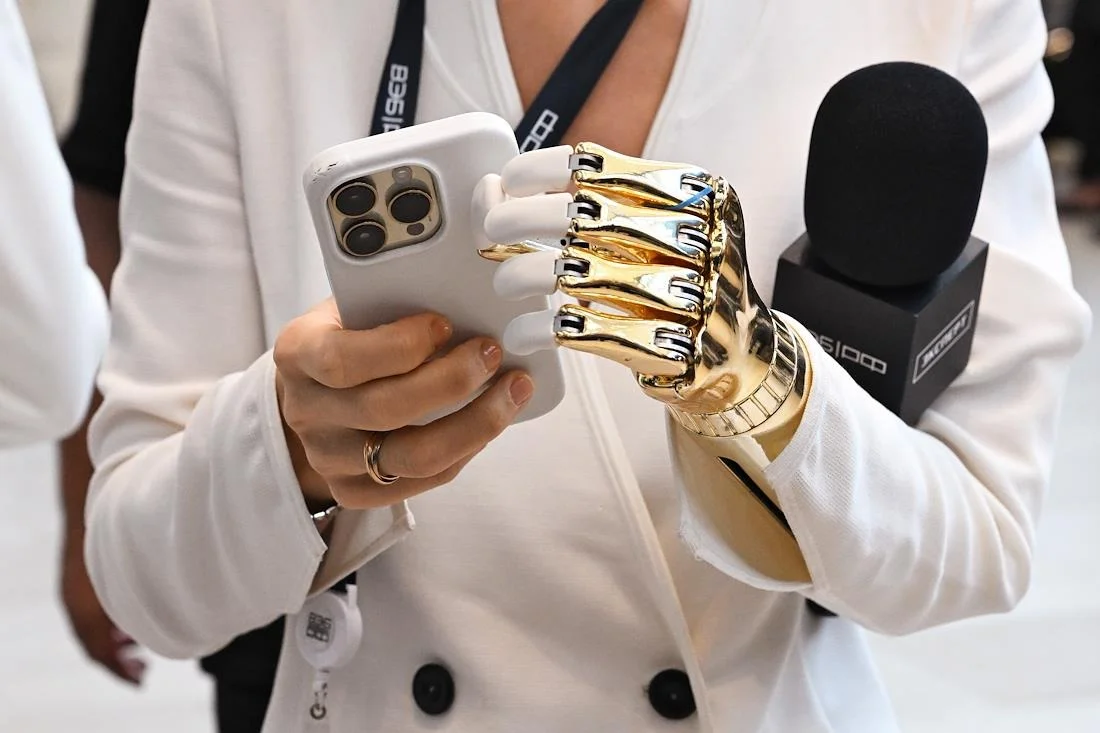
As for mathematical calculations, he does them with fairly high accuracy. There are certain limitations of the context window. But models are constantly evolving, and if a few years ago it was difficult to process a large table in chat mode (you had to register a special “agent” for this), now it has become possible. Context windows have increased greatly, to millions of tokens - this is, roughly speaking, about three million characters. That is, you can process huge texts.
I do content analysis of various speeches for my channel. For example, the President's direct line. As soon as you receive the transcript - and it is immediately published - you can analyze it. Frequency phrases, their connections, position in sentences, emotional connotation, etc. You get tables as output, immediately ask them to draw a beautiful diagram, and five minutes later you publish it in the tg channel. I've been suffering from this for several years now, and it's a lot of fun.
Excellent neurodeputies of the future
— Tell us about the “neuropolitical strategist” project. You wanted to create an AI agent that would imitate the work of a real political strategist.
— Jokes aside, I don’t yet believe in artificial political strategists. But now there is a trend in the labor market all over the world when various routine tasks are replaced by agent systems. Writing notes about the weather, describing the results of football matches, processing documents, etc. Where, in general, you don’t have to think too much. These processes can be easily automated.
You can build complex automatic chains - for example, write an agent who will read news on the Internet, select the most relevant ones, rewrite them, draw a suitable picture and post it to your feed or social network immediately. You can teach an agent to write “cart” posts for you in your style. And theoretically, train a neurotechnologist based on the knowledge of a large number of specialists, specialized literature, some cases - and see what decisions and advice he will give in real situations. But the problem here is that the work of a political strategist is very creative, there are many nuances in it. It is difficult to assess the current situation even based on past experience. But yes, we have such a project. Although this is more of a joke.
“But AI can and should help in parliamentary work.”
— There are a lot of projects from different organizations, including parties, to create AI assistants. He can prepare documents for you, for example. The regulations are loaded into the neural network, and the “electronic assistant,” for example, automatically writes an appeal to all authorities for you. This is a very formalized structure; there is no need to invent anything. State Services also uses artificial intelligence to create appeals.
After all, how does a person usually appeal to power? He comes and begins to tell: so, I was walking along the road, a brick fell, but I dodged, but because the 23rd bus does not run, I tripped over a hole, fell, and in 1937 it was better, and why are there no places in kindergartens? Such a request ends up in the system. The same thing happens with deputies at receptions. What does artificial intelligence do about this? He reads and says: very good, but what is your name, and where do you live? Having received the answer, he analyzes the database and understands: does that mean you mean kindergarten number such and such? When did you apply? Then. Was it statement number such and such? Having received the answers, the AI writes in normal bureaucratic language: such and such an appeal was received, there was no response, please look into it - and sends it to the right authority. Very convenient. There is no need to maintain a staff of people who will endlessly write this by hand.
Let's move on. What does a typical deputy of the municipal Duma or Legislative Assembly do in our country? He raises his hands all the time - this function, in principle, is very easy to automate. Install laptops, and the screens will simply “raise your hands.” And since almost no one ever votes against us anyway... Well, instead of some eternally dissatisfied deputy, install a laptop who will always be against it, and nothing will change. In a situation where deputies are not involved in political activities, they can easily be replaced by a neural network.
What else does a deputy do? He works with appeals and orders from citizens, in an amicable way, endlessly sending these appeals for all reasons to the competent authorities. In principle, a bot can do all this. You can automate an agent who will receive messages from citizens, automatically clarify information from people, rewrite it in the required format and forward it to the appropriate authorities.
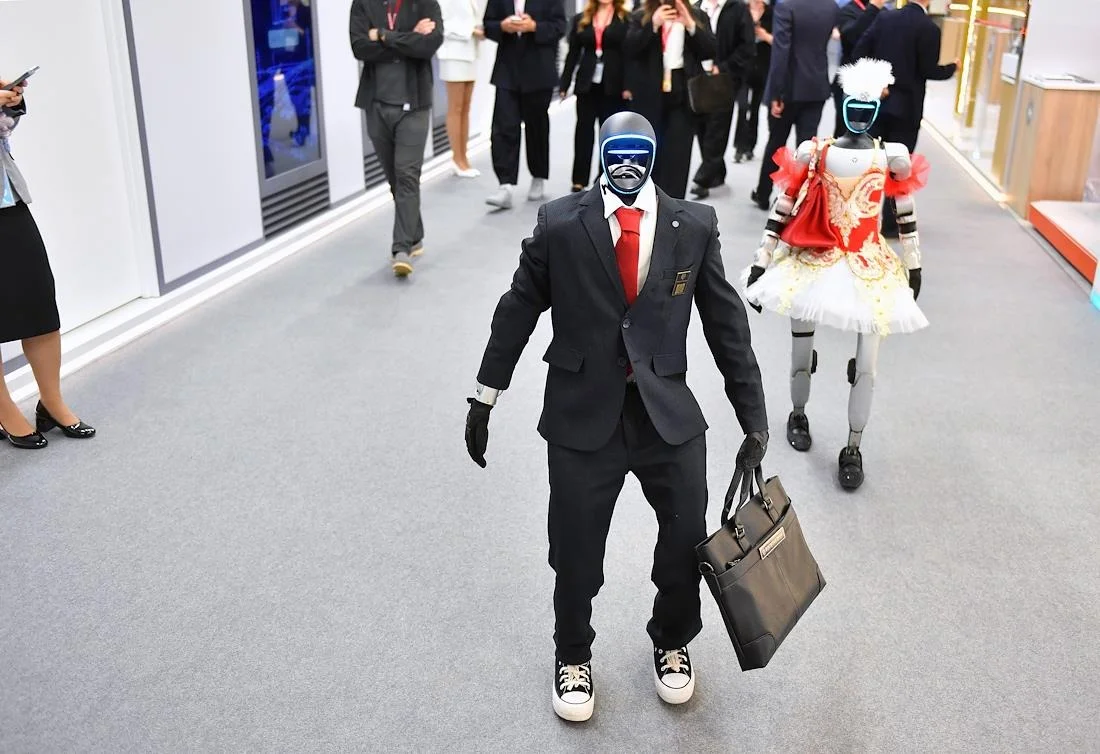
— It turns out that neurodeputies are wonderful! We will remove all expenses for them, their laziness, their “personal affairs” and “personal interests”...
— And, unfortunately, we will also remove the institution of legislative power.
Are we ready to delegate responsibility for our own lives to artificial intelligence? This is just one of the ethical questions that everyone who is involved in artificial intelligence in one way or another asks.
The main question is: how does a person differ from artificial intelligence? A person makes decisions and is responsible for them. Artificial intelligence is not responsible for anything. What can you do with it? Turn it off?
Theoretically, a deputy could be sent to prison without being re-elected. But in general, I’m talking about something else. Of course, it is a joke that you can completely replace a deputy with a chatbot (although it is possible). But how much does such a system simplify the work of the deputy himself? An endless number of assistants, limited working hours, labor costs for reading and writing appeals. With such an assistant, work will speed up and efficiency will increase significantly.
How to “decipher” personality
— You model focus groups in election campaigns. How relevant are they to live focus groups?
— This is our flagship project - neurosociology. In the last few years, a large number of researchers in different parts of the world have started working on human modeling using large linguistic models. The greatest success in this was achieved by one university with the letter “C”, banned in Russia. This was done both in Europe and in China - at Wuhan University. The general meaning is this. There is a hypothesis that a person’s personality can be “encoded” using a narrative. And if so, this means that it can be decrypted back.
We take a certain, fairly large, narrative corpus of a particular person, including his self-description, attitudes, various projective models, and “feed” it to artificial intelligence in a certain format. And artificial intelligence can reproduce the behavior of this person.
Many different experiments were carried out. One of the most interesting is Wuhan. The Chinese modeled respondents based on socio-demographic data, their voting behavior and electoral history. So they predicted Trump's victory down to the state.
Another interesting and perhaps most important thing in this area. It was conducted by the same “forbidden university.” This is the so-called “thousand agent study.” They took 1,052 “meaningful” interviews with Americans and turned them into AI agents. One per person. And then they began to compare their behavior. They tested people and the agents created from them separately through questionnaires, psychological tests, and economic games. And they found out that 80 to 90% of the answers, which were in no way related to the topic of the interview, coincided. It turns out that it is possible to reproduce human behavior in an artificial intelligence environment.
It's the same story: if a person's personality can be contained in a narrative, then it can be deciphered. A large linguistic model can do this because it has narrative coherence - it can reproduce from linguistic patterns how a person will behave.
We decided to go further and reproduce group dynamics based on large linguistic models. They created an experiment in which they interviewed people, created agents out of them, but then tested them not individually, but assembled a virtual focus group from them. According to the same scenario, a focus group was collected from the same real people. And they compared. Again - up to 90% coincidence.
Thus, in principle, both qualitative and quantitative research can be carried out using AI agents.
This, like everything else with artificial intelligence, speeds up and reduces the cost of processes. To assemble a live focus group, you need to find a sample of people who match the characteristics, gather them together somewhere, conduct this focus group with them, pay them... What do you do with a neurofocus group? Yes, you search for people in a sample, but only once to interview. And it is possible in virtual mode. And then gather these people in a virtual focus group. Moreover, you can thus study a foreign audience (for example, the Armenian one before the presidential election) without leaving home, because the AI speaks any language.
— That is, we can predict the result of this or that candidate in the elections in this way?
— It was possible to predict the outcome of the elections earlier, in much simpler ways. These technologies are more likely not for predicting the result, but for predicting public opinion, modeling the reaction to some decisions, testing some hypotheses. For example, the recent decision of the Vladivostok administration to send SMS messages to citizens about drowned children. For example, you think that this will not raise the level of anxiety in society, but everyone will think about it, become vigilant, and fewer children will drown. To test your hypothesis, you can gather a focus group, for example, of parents of minor children and ask them a question. And based on the reaction, you will already decide whether it is worth sending out such text messages.
During elections, we can test election programs, posters, photographs, and printed campaign materials. Previously, to do this, they either spent a lot of expensive focus groups or relied on their intuition. Now we can test this very cheaply using artificial intelligence.
— So, it’s possible to give a good part of the management of, for example, a city to artificial intelligence?
— Creative processes with the help of artificial intelligence are automated with great difficulty. Even when you make a video using ChatGPT, you need to write a script. Or - for the text - plan, structure, main meanings.
But routine tasks such as data processing and accounting can indeed be transferred to artificial intelligence. Techno-optimists, for example, even believe that artificial intelligence will make it possible to revive the planned economy in a new quality. The main problem of a planned economy, conditionally of the Soviet type, is that even a huge planning institute will not take everything into account - but artificial intelligence theoretically can. If not now, then in the near future.
Legitimate and incorruptible?
— If you dream up your imagination, you can come to such a concept as a neurovoter. Less money for organizing elections, the impossibility of bribery, everything is fair. The quality of the electorate will also improve: neuropeople will definitely not fall for empty promises and will study the candidate’s biography and connections.
“You can imagine anything, but the question is, why are we holding elections?” If only to find the best leader for a particular position - this is one situation. But it’s as if all political philosophy, all world political history suggests that this is not what elections are needed for. What is the main thing in the representation system? What is its main parameter? Legitimacy. What is legitimacy? This, in a sense, is the feeling: this government represents my interests. By my decision, I went and delegated to one or another character the ability to manage on my behalf. And artificial intelligence is not suitable for delegating my rights to someone. And in this sense, in my opinion, such a replacement is impossible. Although, for example, the selection of officials for a certain position should be entrusted to AI - why not?
As for deceiving the voter, unfortunately, artificial intelligence, just like “natural” intelligence, can be fooled. Or bribe them with some incentives.
Do you know how ChatGPT security is broken? He is fundamentally protected from, for example, telling you how to make explosives or drugs. This is achieved by the fact that the model received positive and negative reinforcement in certain cases during training. However, there is something for which the AI “got hit on the virtual head” even more during pre-training. AND
if you ask Promt in a certain way, it will tell you whatever you want. The same can be done with artificial intelligence, which chooses someone from you.
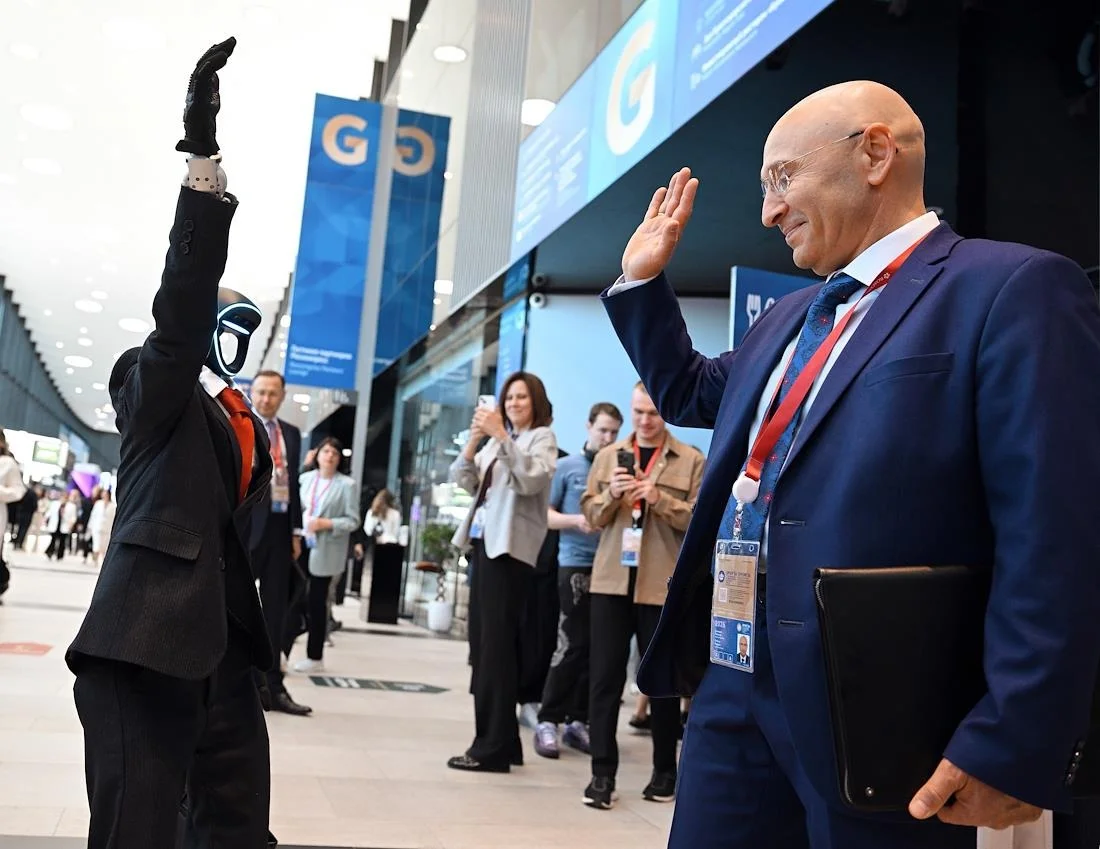
What are the benefits of mass elections? When you have millions of voters, on the whole they still present a fairly objective picture of society. And by voting for this or that candidate or party, they really demonstrate this function of representation. But “chat”, unfortunately, is not there.
If we are not talking about placing people in places in accordance with functionality (that is, rigid technocracy), but about politics, then we mean that politics is needed not only and not so much by politicians, but by ordinary people. They may not always realize this, but in fact it is so.
People stop believing
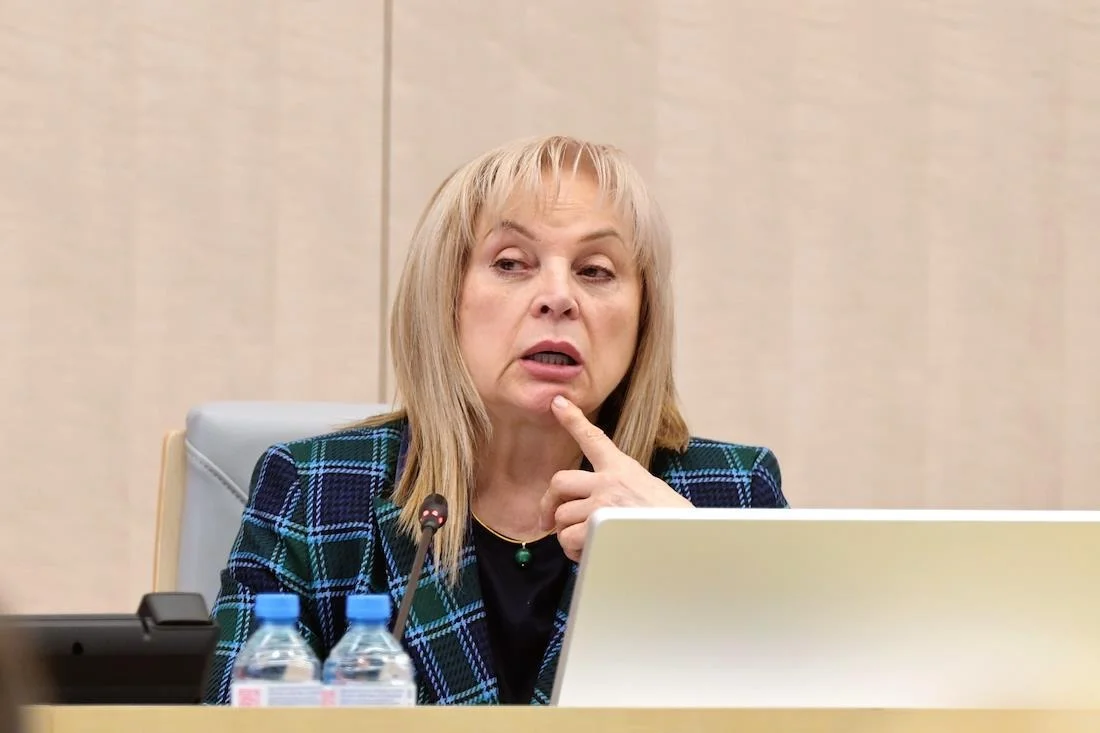
— Та же Элла Памфилова говорила, что есть «черная сторона» в использовании искусственного интеллекта на выборах. Но, допустим, фейки — сильно уж не новая история, и, напротив, нейрослоп люди сейчас способны различать. А в чем еще, на твой взгляд, может состоять опасность?
— Во всем есть, наверное, черная и белая сторона. Даже консервным ножом можно открывать консервы, но у него есть еще и «черная сторона» — им же можно убить человека, да? Обсуждать дипфейки нет особого смысла — действительно, есть проблема: подделывают голос, изображение. И это приводит, кстати, к тому, что люди перестают верить вообще всему аудиовизуальному контенту. Возникает ситуация информационного перегруза.
Искусственный интеллект позволяет генерировать огромное количество информации. Больше половины контента в интернете сейчас — нейроконтент. Тексты, картинки, видео, всё подряд. Люди перестают верить — и, на мой взгляд, это главная проблема использования ИИ. Поле настолько перегружено, что ты, в общем, с нормальными идеями уже зайти туда не можешь. Это уже даже не баннерная слепота, это просто абсолютная слепота к любым источникам информации.
А вторая проблема — в том, что во всем мире использование ИИ слабо урегулировано. Сейчас это всё «серая зона».
Искусственный интеллект усиливает такой феномен, как цифровое неравенство. Когда кто-то — будь то страна, регион, группа людей или даже отдельный человек — не имеет доступа к технологиям, возникает неравенство возможностей.
Конечно, использование зарубежных платформ в российской политической жизни — это в том числе трансграничная передача данных. Готов ли я, чтобы личные данные, какие-то мои наработки использовались потом условным Госдепом в свободном режиме? Понятно, что с этим делать: можно разворачивать нейросети локально, например. Или использовать российские модели, хотя непонятно, что опаснее…
Напомню также, что в связи с последними изменениями в нашем законодательстве искусственные голоса и изображения запрещены в предвыборной агитации. И если в случае Ленина и Жириновского этому можно найти объяснение (например, этическое), то почему нельзя использовать какого-нибудь несуществующего человека, непонятно.
Но нейросети дают и огромные возможности, упрощая работу. Например, мы делаем боты для наблюдателей за выборами. Раньше как происходило? Приходит наблюдатель, у него пачка жалоб каких-то, ему еще это всё нужно самому написать. Тут еще избирательная комиссия его начинает грузить нормами закона, он ответить ничего не может, потому что один раз обучение прошел и ничего не помнит, а юристу не дозвониться. А с ботом всё очень просто: ты пишешь, что комиссия делает то-то и то-то, а бот тут же отвечает, как должно быть — со ссылками на закон.
У нас на самом деле во власти много технооптимистов. Главный — наш премьер-министр. Бесконечно создаются какие-то комиссии, говорится, что мы должны возглавить внедрение искусственного интеллекта в мире. Правда, я не видел пока ни одной российской модели.
- Why? У нас же «Алиса» почти в каждом доме.
— Искусственный интеллект — это огромное количество микрочипов. Россия не делает чипы по новейшим технологиям. Точнее, делает, но не для производства современных компьютеров, телефонов, видеокарт. Ведь чипы, которые стоят в телефонах, — это не те же, что в ракетах. Но их на самом деле и у китайцев-то не особо много. Один из способов ограничить развитие Китая в области искусственного интеллекта, собственно, — ограничение на поставки видеокарт, современных чипов. То, что США сейчас и делают. КНР не так-то просто купить для своих дата-центров современное оборудование, ведь в континентальном Китае оно тоже не производится.
Однако у Китая есть собственные разработки генеративных моделей — у нас же таковых нет. Ведь в чем был прорыв «Дипсика»? Китайцы смогли сделать модель, сопоставимую, условно говоря, с ChatGPT, использовав для этого кратно меньшее количество ресурсов. У нас пока, к сожалению, о таком прорыве говорить нельзя. Мы используем опенсорсные модели, разработанные кем-то другим, которые дообучаются. Но, кажется, технооптимизм побеждает. При этом есть страх — насколько я вижу, власть считает опасной использование иностранных моделей. Не только американских, но и китайских, например.
HELP "NEW"
Разработку нейросетевых платформ на основе китайских опенсорсных моделей, осуществляют российские IT-гиганты: Сбер (GigaChat), Яндекс («Алиса»), VK, Лаборатория Касперского, Т-Банк.
И тут смотря что иметь в виду под опасностью. Если ты будешь с помощью чатика GPT обрабатывать планы секретных военных операций, то, пожалуй, да, опасно. Или загружать бесконечное количество данных избирателей — ну, я бы, скорее, делал это в закрытом контуре. Это и незаконно, скорее всего. Передавать данные большого количества людей, тебе не принадлежащие, не очень этически верно и, возможно, небезопасно. А если ты используешь для обычной аналитики всё это, то нет никакой опасности.
И потом — нейросети учатся в том числе на наших текстах. Почему нейросети так хорошо говорят по-русски? Потому что это один из главных языков интернета по-прежнему.
Ведь когда мы говорим об опасности — это же не про буквальную смерть или физический вред. Эта технология позволяет вывести технологическое превосходство на колоссальный уровень. Вся современная экономика, производство зависят исключительно от скорости обработки данных. ИИ позволяет тебе обрабатывать данные на порядок быстрее. И если ты обладаешь этой технологией, то, конечно, опережаешь. Поэтому опасно, когда у тебя нет искусственного интеллекта… Опасно им не пользоваться. Опасно ли пользоваться западным? Well, I don't know.
— Как в этом смысле влияют ограничения интернета и запреты на использование ряда сервисов?
— Любое технологическое ограничение, конечно, негативно влияет на развитие этих самых технологий. Пока нейросети, в общем и целом, использовать можно — и, напомню, это не Россия запретила западные нейросети, а наоборот. А вот если, условно, Open AI объявят экстремистской организацией, — возникнет реальная проблема. За ChatGPT уже будет не заплатить. А мы понимаем, что уровень западных моделей, по понятным причинам, несравним с уровнем российских. Для бытовых нужд — да, хватит и «Алисы», и GigaChat. Но вайбкодить мы где будем? Где мы будем проводить серьезную аналитику? Очевидно, это уже совершенно другого уровня задачи. И пока, к сожалению, у нас нет возможности делать это патриотично.