
Translated material
Is Putin changing his favorite? Why does Siluanov need expanded powers?
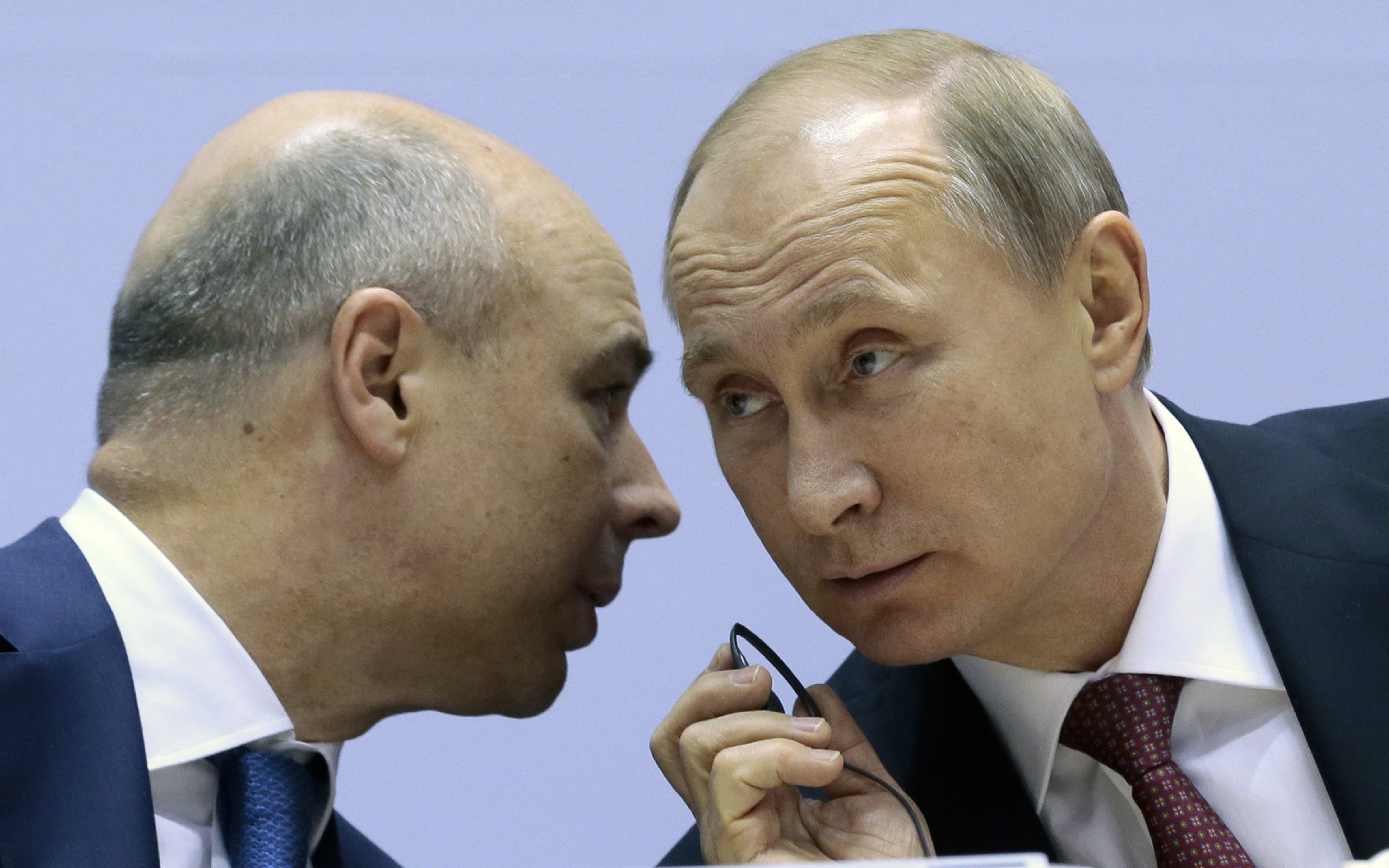
The State Duma quickly adopted the amendments to the Budget Code introduced by the government in three readings at once. They give the Ministry of Finance the right to increase federal budget expenditures without any approval and to borrow any amounts on the domestic market for this purpose, without regard to the budgeted debt limit. Among other things, this may mean a change in the informal leader of the financial and economic bloc, whom Putin trusts to determine the economic course.
On Wednesday, June 10, the State Duma quickly and without unnecessary noise in the Russian press, in three readings at once, adopted amendments to the Budget Code introduced by the government two days before the vote. They fundamentally change the entire budget process. There are many innovations, but there are two main ones. Firstly, the government (and in fact the Ministry of Finance) received the right, without approval or amendments to the budget law, to spend more than what is provided for by this law. And secondly, the Ministry of Finance can now borrow in the domestic market as much as it deems necessary, not paying attention to such “nonsense” as the upper limit of state internal debt established by law.
Evening Newsletter - Subscription widget compact
The Russian federal budget has long ceased to be a binding law: only last year it was rewritten twice, each time gathering deputies to approve radical changes, as a result of which the budgeted deficit increased 5 times. However, the current amendments finally turn the budget law into a “fifty letter”, which, if anyone needs it, is only as a “declaration of intent”, which has nothing to do with the harsh reality. The deputies who vote for the budget, even on formal grounds, cease to play any significant role and influence at least some economic processes in the country.
Deputies who vote for the budget cease to influence at least some economic processes in the country
They are, of course, no strangers to it. But it’s one thing to have an established practice, which can change, and another thing to vote with your own hands to legislate your own worthlessness. However, it is possible that many people’s representatives did not understand how the amendments they adopted would change their status. No one gave the deputies time to comprehend and discuss them: about two days passed from submission to the Duma to adoption in the third, final reading.
Finance Minister Anton Siluanov did not honor the Duma, which essentially gave him carte blanche, with his presence. At that moment, he was sitting at a meeting with Vladimir Putin and listening to about Russian achievements in the field of organizing children's recreation. Siluanov’s deputy, Irina Okladnikova, went to answer questions from deputies. She reassured them that there was no budget crisis, and the amendments were needed precisely to prevent it from happening. The deputies obediently believed.
If we look at this whole story as a continuation of other events, starting with the illness of the head of the Bank of Russia, Elvira Nabiullina, which prevented her from taking part in the St. Petersburg International Economic Forum, and ending with Putin’s meeting on economic issues , where no one from the Central Bank was present, we can assume that the balance of power in the financial and economic bloc is changing. From the very beginning of his rule, Putin singles out one of the officials in economic matters, who is given broader powers and who actually determines economic policy, enjoying relative independence. A sort of direction-setting “root trotter” in the Russian troika. The rest play the role of “tie-downs”, helping to pull the sled to the best of their ability.
Siluanov’s special feature is a clear understanding of what (and who) you can save on, and what you cannot save on under any circumstances.
Position does not play a role in this. Initially, such a “indigenous” was the “super minister” of economics and trade German Gref, then the Minister of Finance Alexei Kudrin. In recent years, the head of the Bank of Russia, Elvira Nabiullina. It’s just that her ideas about beauty, on the basis of which she makes decisions, seem to have finally ceased to fit into the consequences of the war for the Russian economy. But there is the reliable Siluanov, who maintains an excellent mood no matter the state of the federal budget. Actually, his appointment took place after the high-profile resignation of Kudrin, who at that time was Siluanov’s immediate superior. The resignations were accompanied by a public squabble between Alexei Kudrin and Dmitry Medvedev over a 20 trillion ruble rearmament program for the Russian army. And now the amount is not small, but in the fall of 2011 it looked completely crazy. Kudrin said that the state does not have that kind of money and refused to redraw the already drawn up budget for the next three years. But his deputy Anton Siluanov promised to find the necessary money. And ultimately he found it, although for the Russian economy this resulted in a “lost decade”: after the rapid growth of the “2000s,” the 2010s will be remembered for stagnation and stagnation (in Putin’s interpretation, “stability”). To say that the decision then ultimately led to the current war would be an exaggeration. However, the expensive army rearmament program certainly played a role in where Russia finds itself now.
Having received Kudrin's ministerial post, Siluanov inherited neither his authority nor the status of a “super minister.” Nevertheless, since 2011 he has been the permanent Minister of Finance and a permanent player in the financial and economic team. Its distinctive feature is the “correct” (from Putin’s point of view) prioritization and a clear understanding of what (and who) can be saved on and what cannot be saved on under any circumstances. Thus, in 2014, Siluanov actually buried the pension reform begun in the “2000s”, first spending frozen individual savings on the “integration” of annexed Crimea, and then declaring that future pensioners would not receive any compensation, since there was no money for this in the budget. It is characteristic that in this case we were talking about an amount that was two orders of magnitude less than the cost of the rearmament program.
This kind of “understanding” and the ability to show miracles of resourcefulness to solve immediate problems for the long-term development of the economy are not very useful. However, Putin’s long-term development (due to age and other circumstances) is no longer too concerning. So Siluanov has every chance of finally becoming a “super minister”.
Read Freedom on Telegram Make Freedom a priority source on Google  Install the Mobile application
Radio Liberty