
Translated material
What kind of insurance will Russian residents buy in 2026?
html
This material (information) was produced and distributed by a foreign agent, Project Trait, or relates to the activities of a foreign agent, Project Trait. 18+
What kind of insurance will Russian residents buy in 2026?
Russians are increasingly saving on goods and services, but not only are they not giving up insurance, but, on the contrary, are mastering new types of insurance. Over the past year, insurance companies' income from the sale of policies increased by 6.9%, and in the first quarter of this year - by 11.4%. And this is not due to mandatory compulsory motor liability insurance and insurance of borrowers - the first increased by only 1%, and the second decreased by a quarter. “Cherta” studied what Russians are afraid of losing the most and due to which insurance the market continues to grow.Over the past two years, the war with Ukraine has been creeping deeper into Russia. Previously, Ukrainian drones attacked mainly military targets and industrial enterprises in the border areas. Now every morning begins with news reports about which region was hit, how many people were injured, where the drone crashed. Often these are not only ammunition depots, oil facilities and military factories. Residential buildings and cars are damaged by UAV debris.
You can receive compensation for damaged property. But there is no single mechanism at the federal level: each region has its own rules and payment amounts. They often don't even come close to covering the cost of repairing or restoring the property.
 More on the topic “Crazy answer - and we’ll stay here.” How the Belgorod region survives under shelling and without heat
In November, a drone exploded near Svetlana Mikhailova’s house in Ramenskoye, Moscow Region. A fire started and was extinguished only three hours later. The Investigative Committee opened a case of terrorist attack, Svetlana was recognized as a victim. Experts from the administration estimated the renovation of a house with an area of 450 square meters at 4 million 50 thousand rubles.
“This is just a fiction. It was only enough to restore the roof,” Svetlana told Novaya Gazeta. “In this examination, the prices are simply ridiculous: boards for 1,570 rubles per cubic meter, plaster for 200 rubles.”
An independent examination estimated the damage at 19 million rubles. But this did not convince the administration, and the amount of compensation assigned was not increased by a ruble. At a personal meeting, the head of the district responded to the woman’s claims: “If you are unhappy with our help, contact the Armed Forces of Ukraine.”
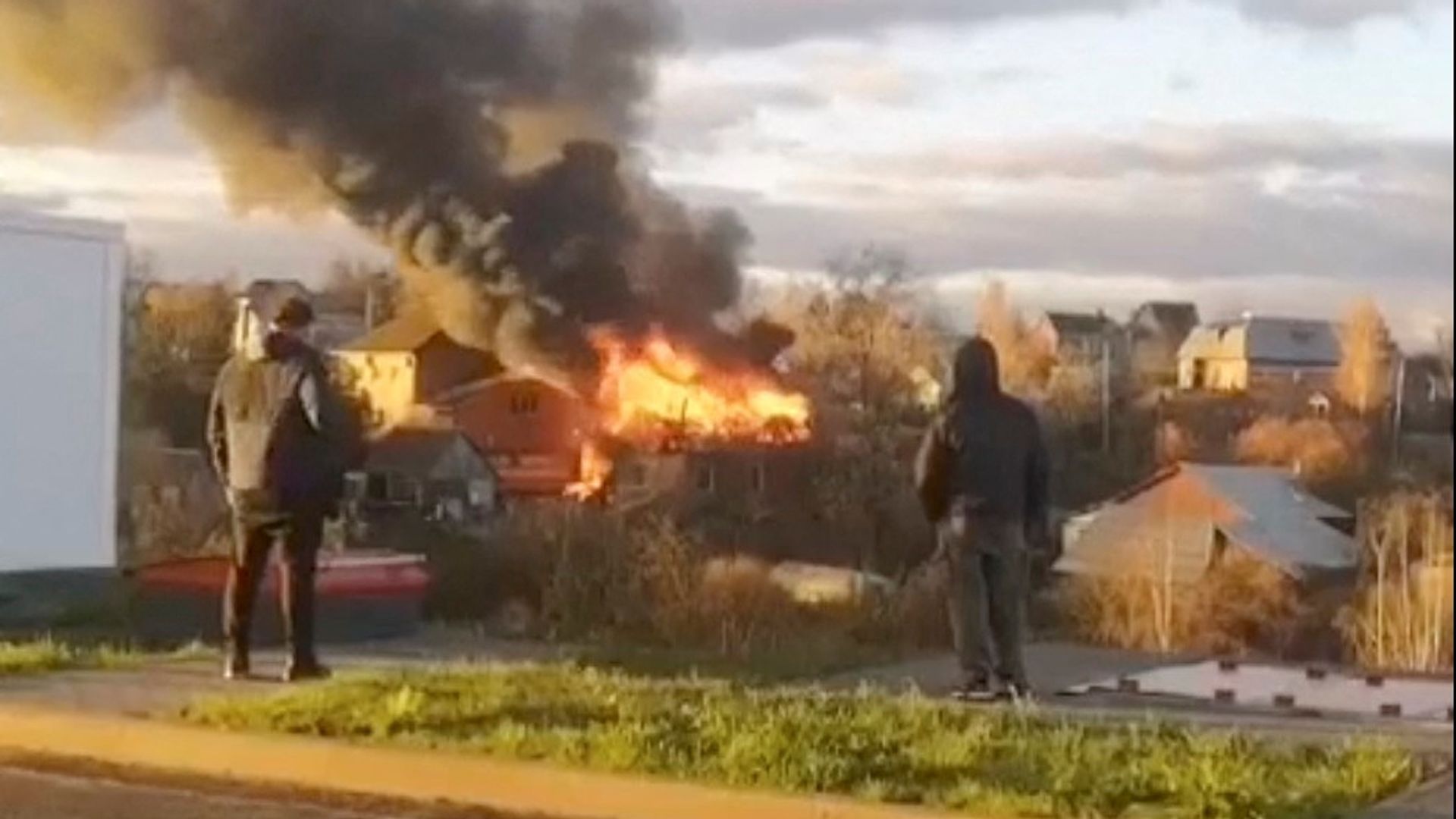
In border regions, residents who lost their homes due to shelling have repeatedly complained about non-payment of compensation or poor quality repairs in restored houses. And in April, the authorities of the Belgorod region completely stopped paying compensation for cars damaged by shelling. The fund, which paid compensation through donations from big businesses, has run out of money. Later, the authorities promised to resume payments until the end of June.
For Russians, the fear of drone attacks is no longer abstract. The national anxiety index reflects these sentiments: in the first quarter of 2026, drone attacks ranked second after internet restrictions.
When government compensation is unstable and does not always cover damage, people begin to look for ways to protect themselves.
One of them is property insurance against the consequences of drone attacks. There are no official figures on UAV insurance sold. But the fact that there are more of them is indirectly evidenced by the growth of the entire property insurance segment. In the first quarter of this year, collections from property insurance for legal entities increased by 14%, and for individuals - by 18.7%.
Financial analyst Andrei Barkhota believes that hundreds of thousands of such insurances could be purchased in border regions, and tens of thousands in more distant regions. According to his estimates , back in 2025, insurers sold such policies for 25–40 billion rubles. At the same time, the entire proceeds from property insurance, according to the Central Bank report, amounted to 57.9 billion rubles. That is, we can talk about almost half of all property insurance policies sold.
On average, the cost of a policy starts from 2–3 thousand rubles for an apartment worth 5 million rubles. In the border region the price is higher - from 11 thousand rubles.
Muscovites now also insure themselves against drones
Another indirect evidence is the increase in search queries. According to Yandex Wordstat, if a couple of years ago only a few dozen people a month were interested in property insurance against UAVs, now there are already seven thousand such requests.
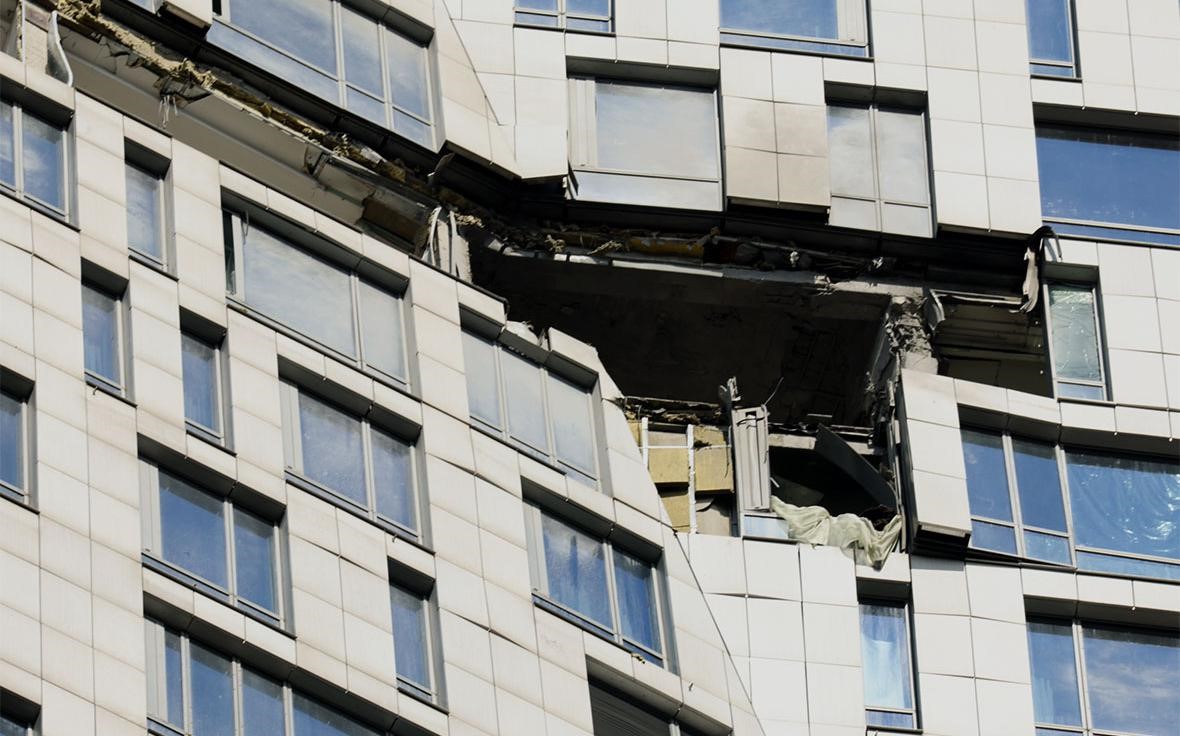
Moreover, Moscow is the leader here - the richest, most advanced and populated region of Russia, which no longer feels completely safe. Moscow and the Moscow region account for about 30% of all search queries. According to data provided by the insurers themselves, the frequency of purchasing policies in the capital is indeed higher. In 2026, 35% of Muscovites who insured apartments with RESO-Garantiya included the risks of terrorism or UAV arrival in their policies. Two years ago this figure was only 15%. And Sovcombank Insurance said that this year every second request for apartment insurance in Moscow concerns UAV risks.
The other day, Kommersant reported that large insurance companies began to include military risks in their policies: damage or loss of insured property as a result of “military actions, maneuvers, exercises or military operations of any kind”, “the use of any type of weapons - missiles, shells, mines, bombs and other ammunition, as well as the actions of air defense systems, the impact of a shock wave.” This will increase the cost of property insurance by an average of 10–12%.
However, there may be difficulties with payments. It is important what risks are specified in the contract. So, if it talks about the fall of flying objects, and the authorities recognize a specific incident as a terrorist attack, the insurance company may refuse compensation. For example, a court in the Krasnodar Territory refused to recover almost 140 million rubles for damage from a UAV attack on an oil depot near Anapa, recognizing the attack as a terrorist attack and not an insured event. The court separately indicated that there were no military operations in the region.
Business owners will find it more difficult to insure their property. Currently, insurance companies are lobbying for changes to the law that would allow them not to cover risks associated with production downtime after UAV strikes.
However, the general increase in anxiety among Russians is realized not only as an awareness of the risks directly associated with the war.
Fear of crazy bills at veterinary clinics
In Russia, more than half of families have pets. But the cost of their maintenance has increased significantly in recent years. Thus, the average bill for an appointment at a veterinary clinic and vaccination increased by a third. As Izvestia calculated based on Rosstat data, a visit to the veterinarian this spring has risen in price by 34% compared to the same period last year. And the price of one vaccination increased by 30% - to 2022 rubles.
Despite the rise in prices, Russians are not ready to abandon their pet in trouble: according to the analytical center “Check Index” , the number of purchases in veterinary clinics this year decreased by only 1%.
To protect themselves from an unexpected large bill at the veterinary clinic, Russians are also interested in insurance for pets.
According to Rosgosstrakh and RuStore, in 2026, pet insurance was in second place in popularity among those who buy policies from a smartphone - 55%. Ingosstrakh shared similar statistics .
They even specified the most popular breeds for insurance: Chihuahua, Labrador Retriever, French Bulldog, Pembroke Welsh Corgi, Yorkshire Terrier and Pomeranian Spitz. Among cats, outbred cats are most often insured. It is also interesting that women are more often policyholders.
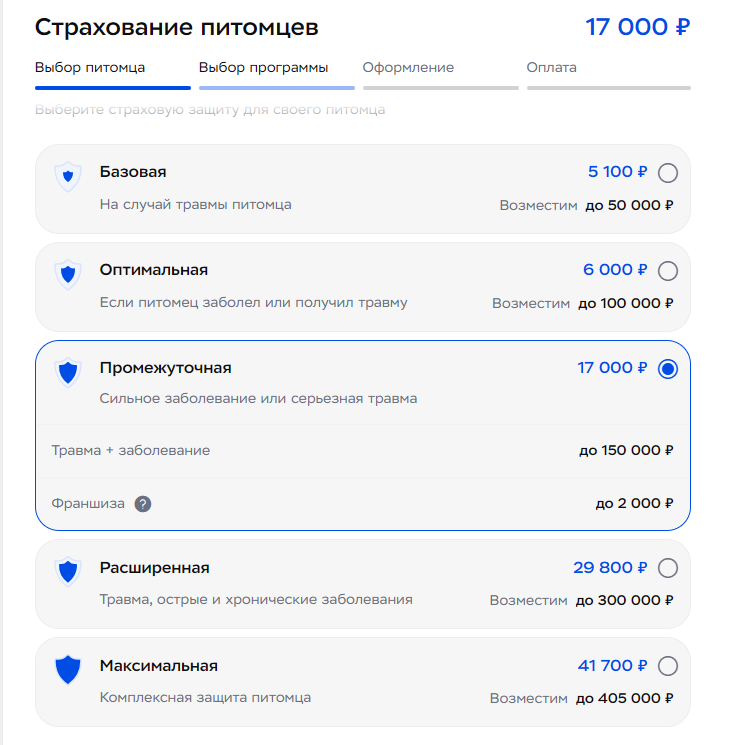
Insurers separate claims for animal injury and illness. People often buy basic - the cheapest insurance, but they only cover treatment for minor injuries. At the same time, the majority of insurance cases - 90% - are related to pet illnesses and only 6% - to injuries. There are also separate insurances for civil liability and against tick bites.
Ticks are more scary than cancer
The situation with insurance of your own health and life is much more complicated. In the first quarter of 2026, accident and illness insurance began to be purchased less frequently: the entire segment fell by 8.6%.
However, the oncology risk segment continues to grow steadily, which began in 2023. In Renaissance Insurance, sales of cancer insurance policies increased by 35% in 2025 - up to 150 thousand. In 2024, the company issued 110 thousand such insurances, and in 2023 - 72 thousand. In Sogaz, in the nine months of 2025, more than 20 thousand peopletook out such a policy, and the increase in the number of contracts compared to the same the period last year amounted to 9%.
 More on the topic: To whom is war, and to whom is mother dear. Who and why was the beneficiary of the war in Russia?
However, tick bites scare Russians much more than cancer. Millions of Russians buy such insurance.
Ingosstrakh said that in 2025, more than 1.4 million clients were insured against tick bites. This is 15.3% more than a year earlier. And by the beginning of the current season there are already more than 1.1 million people. In Soglasiya: in 2025, 323 thousand people were insured . Of these, 6.5 thousand clients applied for compensation.
The policy usually covers emergency immunoglobulin administration in the first 72 hours. In some regions, this drug may not be available in clinics under compulsory medical insurance, and the cost in pharmacies starts from 5 thousand rubles. The policy also covers laboratory testing of ticks - this is also not included in the compulsory medical insurance. In addition, insurance may cover treatment and rehabilitation.
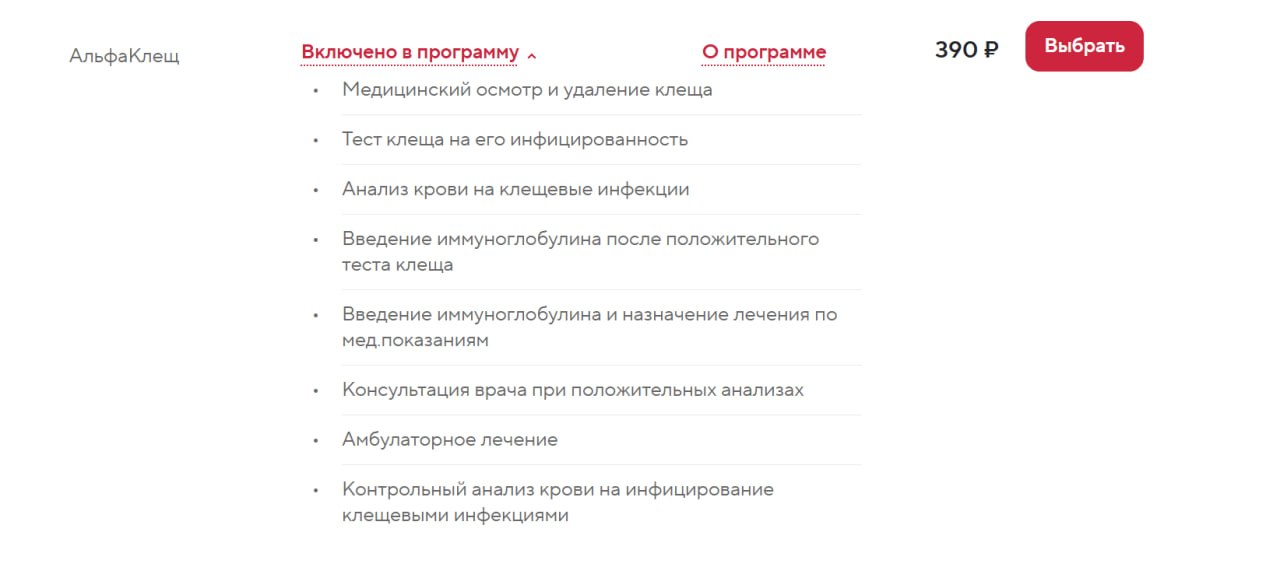
Prices for policies at Rosgosstrakh start at 399 rubles per year. In case of a bite, they promise compensation of up to 3 million rubles. At Ingosstrakh, the cost depends on the region. In Moscow, a policy with coverage of 2 million rubles will cost 340 rubles, and in the Tver region - already 410 rubles. Other companies have similar prices.
Life as an investment
Life itself is most often insured in conjunction with loans and mortgages. Last year, such policies began to be purchased less frequently due to stricter requirements for borrowers and high lending rates. As a result, the credit life insurance segment fell by almost a quarter - by 23%.
Other products in the life insurance segment are more likely a way to preserve and increase savings, rather than insurance in its pure form.
 More on the topic “Many doctors, little use”: how Russian doctors survive and why they have big problems with education, salary and burnout
The most popular last year was investment life insurance - ILI. This is a hybrid of insurance and investment product: the client deposits money for several years, the insurance company promises life protection and the opportunity to receive investment income. But profitability is not guaranteed: if the strategy works poorly, the client can only receive the deposited amount or a minimum increase.
ILI became more popular after the Central Bank began to reduce the key rate. At its peak, from October 2024, it stood at 21%, and deposits were a profitable and simple tool for savings. But in June 2025, the Central Bank began to reduce the key indicator. Following this, Russians began to look for alternative ways to save and increase money.
In modern Russian realities, another important advantage of funds invested in ILI is their legal status.
They are not subject to arrest, confiscation and are not divided in divorce proceedings.
From January 1, 2026, ILI policies left the Russian market and their sales ceased. However, the old contracts are still in force, and at the end of last year there was a real boom in sales of these policies - an increase of 60-65%, according to Expert RA.
Endowment life insurance (NCL) grew more slowly, by 7.9%. This is also a long-term product, but with a different logic: the client regularly deposits money, and by the end of the term receives the accumulated amount and, possibly, additional income. Typically, such policies are purchased for several years - for example, to save up for a large goal and at the same time have insurance protection.
Now insurers expect that after the departure of the ILI, part of the demand will transfer to the ILI and a new product - shared life insurance. This is also a hybrid of insurance and investment, but it is more transparent: the client’s money is invested in shares of investment funds, and the income depends on how much these shares increase in price.
In essence, the client receives a life insurance policy and at the same time an investment product. If the strategy works, you can earn income by the end of the term. If the market falls, returns are not guaranteed and the investment risk is effectively borne by the client.
editors of "Traits"