
Translated material
Billion dollar loophole. How Russian oil products continue to reach Europe bypassing sanctions

How Russian oil products continue to reach Europe bypassing sanctions
Russia still makes money from the supply of petroleum products to Europe, despite all the bans on sea shipments of fuel to these countries. In 2026, EU states through third countries bought fuel made from Russian oil for almost 1 billion euros, CREA analysts calculated . How “gray re-export” works is explained in a report by the Cedar analytical center.
On January 21, 2026, a ban on supplies to the EU of petroleum products produced from raw materials extracted in Russia came into force. This “gray re-export” scheme looks like this: refineries in third countries buy Siberian oil, process it and send it to end customers, bypassing restrictions. January sanctions reduced Russia's ability to circumvent the oil embargo, but failed to fully close the loophole.
According to the CREA analytical center, in January-May 2026, 929 million euros worth of petroleum products made from Russian oil were shipped to the EU through refineries in Turkey, India and Georgia. On an average monthly basis, this year the flow of gray re-exports fell by 45% compared to the last quarter of 2025. In October-December 2025, approximately 1.01 billion euros worth of petroleum products of the same origin passed through the “oil loophole”.
At first glance, this is not so much - about 1.8% of the total imports of oil and petroleum products by EU countries (219 billion euros for the full year 2025 ). But even such small volumes can improve the financial performance of Russian oil producers, who suffer from a strong ruble and cheap (until March 2026) oil. Although they supply raw materials for processing to refineries in third countries, the market believes that part of these shipments may be sold by traders close to companies from Russia. Petroleum products are a high-margin product that is in great demand on the world market, especially diesel fuel. Thus, part of the proceeds may ultimately go to Russian oil exporters.
CREA found that in 2026, 49 tankers from refineries that process Russian oil were sent to EU countries through such a loophole.
These consignments, as the center writes, “are considered a high-risk group in accordance with EU recommendations” - we are talking about the risks of violating sanctions. 36 such cargoes left Turkish ports, 6 tankers each were sent to refineries in India and Georgia - in the latter, the new plant in Kulevi received the first batch of Russian oil in the fall of 2025.
Cedar in its report cites two facts that may serve as evidence that some fuel exports to the EU from third countries may fall into the “risky” category. From February 2023 to February 2024, about 5.16 million tons of petroleum products were sent to EU countries from three Turkish ports - Ceyhan, Marmara Ereglisi and Mersin. The total value of such imports amounted to about €3.1 billion. At the same time, Türkiye sharply increased its own purchases of Russian petroleum products: over the same period, their volume increased by 105%. A significant portion of these shipments were likely re-exports of Russian products: the ports listed do not have their own refineries and received 86% of all petroleum products they imported (in monetary terms) from Russia.
The second sign: in 2023, Turkish domestic consumption of petroleum products increased by only 8%, while maritime exports from this country increased by 56%. “It is important to note that petroleum products imported in this way were not reflected in official EU trade statistics as imports from the Russian Federation,” Cedar writes.
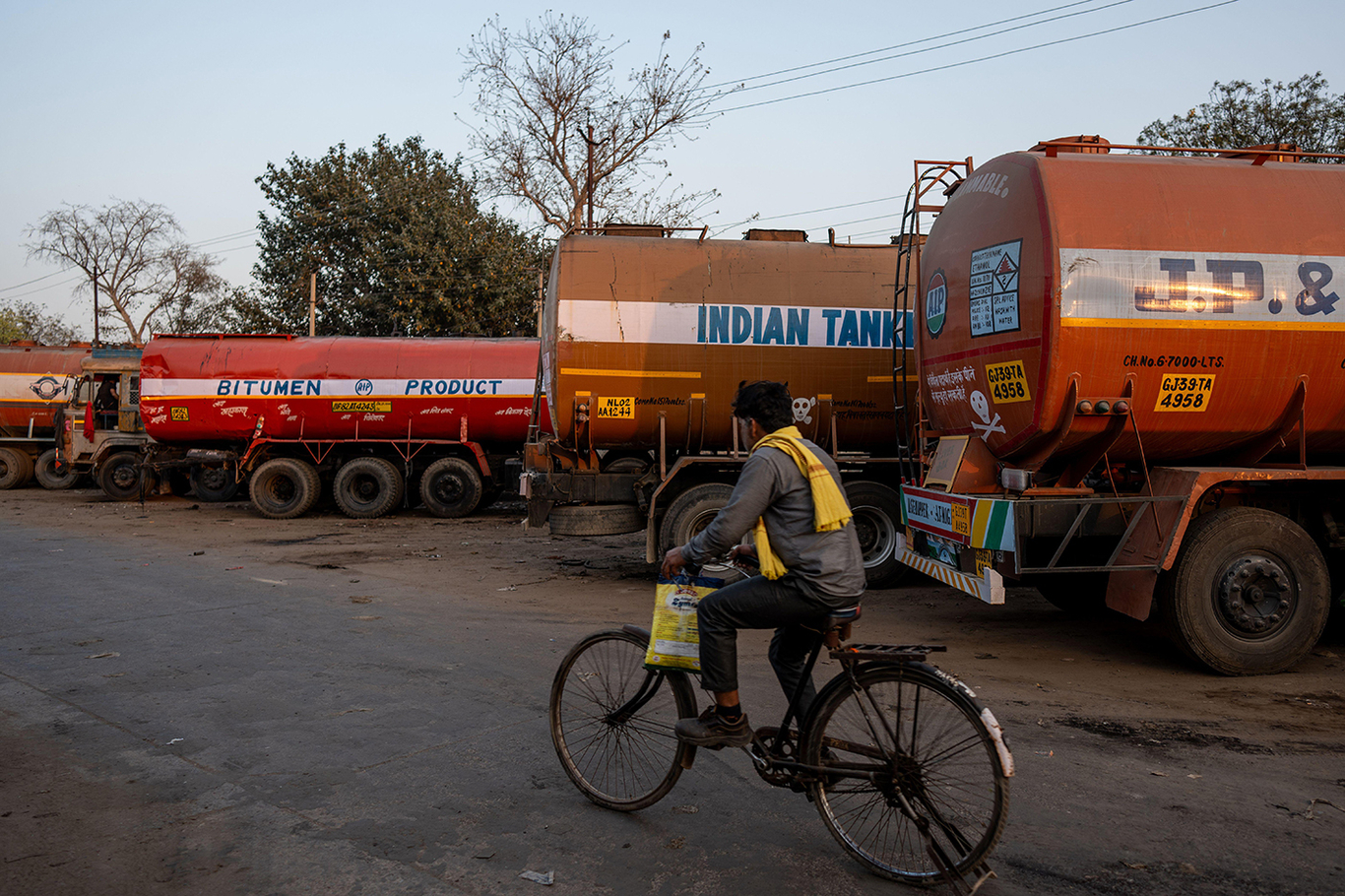
India, after the start of Russia's full-scale invasion of Ukraine, has become another important re-export center. “Until 2022, Indian refineries mainly relied on crude from the Gulf countries, but with the advent of deep discounts on Russian oil, these suppliers have faded into the background,” writes Cedar.
As a result, India's exports of petroleum products to the EU more than doubled , from $8.7 billion in 2021-22 to $19.2 billion in 2023-24. At the same time, in the winter of 2026, these shipments fell against the backdrop of the Donald Trump administration demanding that New Delhi reduce purchases of Russian oil - and they fell by half. But after the outbreak of the Gulf War, Washington introduced temporary permits for the purchase of Russian oil, and since April, India has increased its average daily purchases by 70% - this is a sign that shipments of petroleum products to Europe may begin to grow again.
For traders and processors, the economic incentives to use cheap Russian raw materials still outweigh the regulatory risks,
Tatyana Mitrova, an expert at the Center for Global Energy Policy at Columbia University, told New Europe. “The margin is very tempting. Sanctions have clearly narrowed these flows, but have not stopped them completely,” she added.
In general, according to CREA estimates, 7 oil refineries in Turkey, India and Georgia, which are partially loaded with Russian oil (but process raw materials from other producers), reduced shipments to the EU threefold in January-May 2026 - to 1.4 billion euros after 4.55 billion euros for the same period in 2025. This is further proof that sanctions are working, but only partially.
CREA calculates each refinery's degree of dependence on Russian oil by using import data from the previous three months and making the assumption that the petroleum products exported in each month are produced from feedstocks with the same proportions of countries of origin as the crude oil imported in that period.
To estimate the cost and volume of petroleum products produced from Russian oil and exported from third countries to the G7+ states (G7 countries and states that have joined the sanctions), data from the analytical company Kpler and government data sources were used.
The European Union's measures against the oil loophole are not fully working for several reasons, experts told New-Europe.
Firstly, control over the implementation of sanctions does not work, says Sergei Vakulenko, a senior fellow at the Carnegie Berlin Center for the Study of Russia and Eurasia.
This applies to the greatest extent to oil refineries in Georgia, which is due to the pro-Moscow orientation of this country in recent years. And the rest of the factories, the expert explains, may have a formal justification: “They, for example, can say that they have several production lines, Russian oil goes only to one of them, and the product from the others is exported to the EU. Most likely, this is not true, but it creates plausible deniability.
From the point of view of sanctions control, oil refining products are legally and commercially much less transparent than the raw materials from which they are made, says Mitrova. “EU sanctions since January 21 have targeted fuels made from Russian oil, but in practice control of origin relies on declarations, supply chain tracking and separate processing regimes, which always leaves room for manoeuvre,” she adds.
Therefore, Export explains, when the ban came into force in January, Indian diesel exports to the EU essentially stopped and Turkish supplies fell noticeably. But bypass schemes have not completely disappeared.
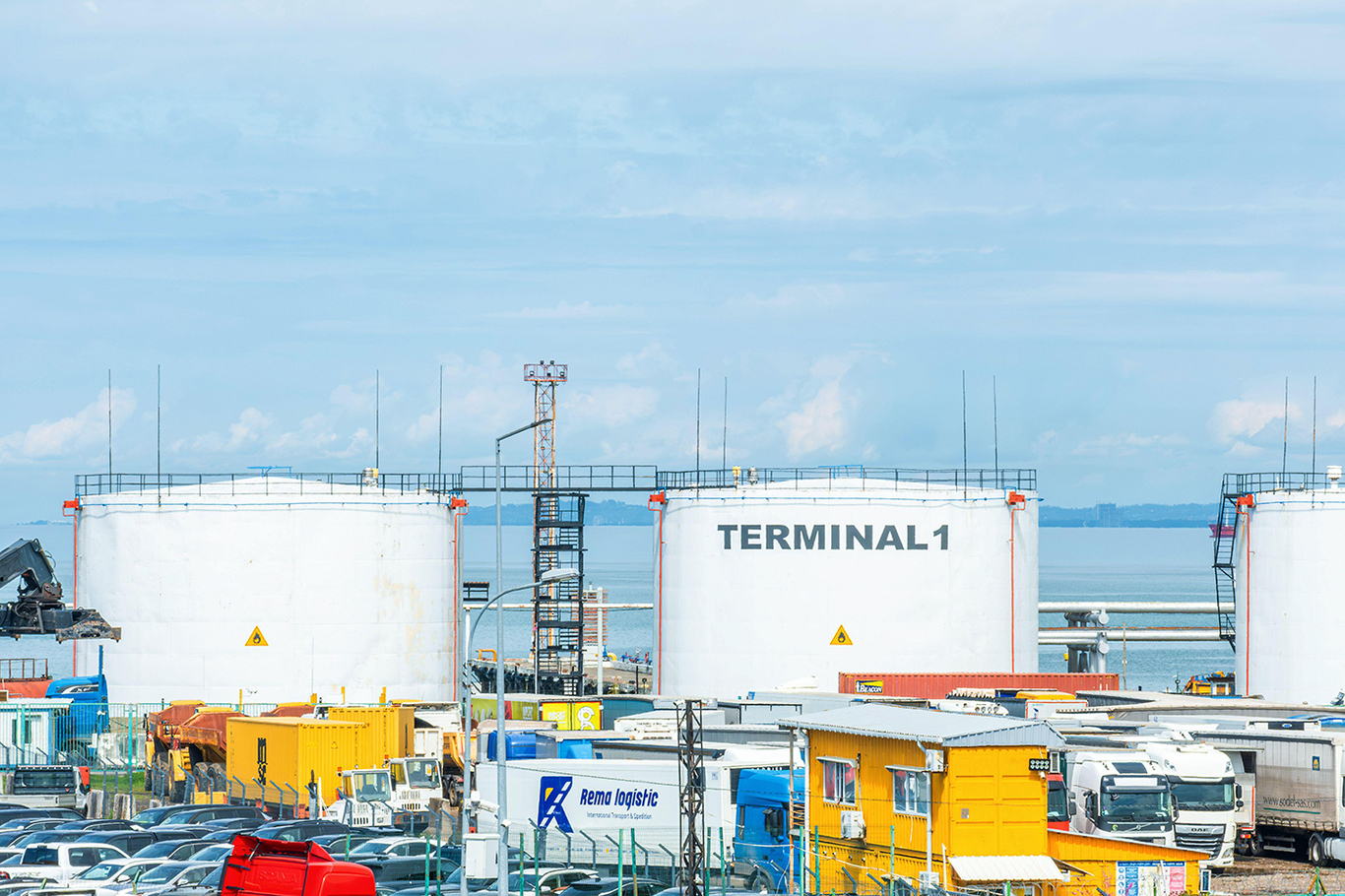
As Mitrova notes, it was only in February 2026 that the European Union for the first time proposed sanctions against infrastructure in third countries - in particular, against the port of Kulevi in Georgia - precisely for working with Russian oil. “This means that before this, much of the external infrastructure was simply not directly affected by the sanctions, which meant that traders still had space to continue operations,” she added. Measures against Kulevi were discussed as part of the 20th package of sanctions adopted in April 2026. These restrictions were not included in the final version of this document, but the EU did not officially confirm that it had abandoned them.
The second reason, Vakulenko adds, is that all EU laws do not have direct effect in the bloc states - in order for them to work (and therefore, in order for European sanctions to be implemented), national legislation must be adopted in the EU countries. And not only accepted, but also implemented. “I think not all countries are in a hurry with both the first and the second,” he notes.
According to CREA, tanker cargo from refineries that process Russian oil in January-May 2026 was most often unloaded at the ports of Cyprus (16 shipments), as well as Spain and France (7 shipments each). These petroleum products also came to Bulgaria, Croatia, Ireland, Italy, Romania, Greece, Lithuania and the Netherlands.
Finally, Mitrova states, the economic incentive remains very strong - relatively cheap Russian oil continues to give refiners in Turkey, India and other countries a price advantage.
“And as long as this discount exists, traders and consignees have a natural motivation to look for ways to preserve some of the flows - by any means:
through changing export directions, redistributing batches, blending, or through more creative documentation of the origin of the fuel,” says the expert.
Thus, already in February, India was able to send the first shipment of jet fuel to Europe after the ban, declaring the non-Russian origin of the raw materials.
The fact that the ban on the use of the “loophole” only reduced gray re-exports by 50% is further proof that sanctions against Russian oil only partially work and have not been able to significantly weaken the funding of Putin’s war machine.
The authors of the Cedar report calculated that the average annual total oil and gas revenue of Russian exporters decreased moderately over the years of sanctions: in 2023–2024. - only about 3.3% compared to 2018-2019 (official data on such revenue for 2025 has not been published, and estimates vary widely). The most important thing is that these revenues are still largely determined by global energy prices and the ruble exchange rate, and the effect of sanctions shocks is short-term.
The report provides such an example. In 2025, the Russian oil and gas industry experienced two shocks: at the beginning of the year after Gazpromneft and Surgutneftegaz were included in the US SDN-list, and in November after the introduction of blocking sanctions against Lukoil and Rosneft. Both times, the effect was short-term and was quickly overcome, and Russian suppliers were able to rebuild supply chains to continue exporting.
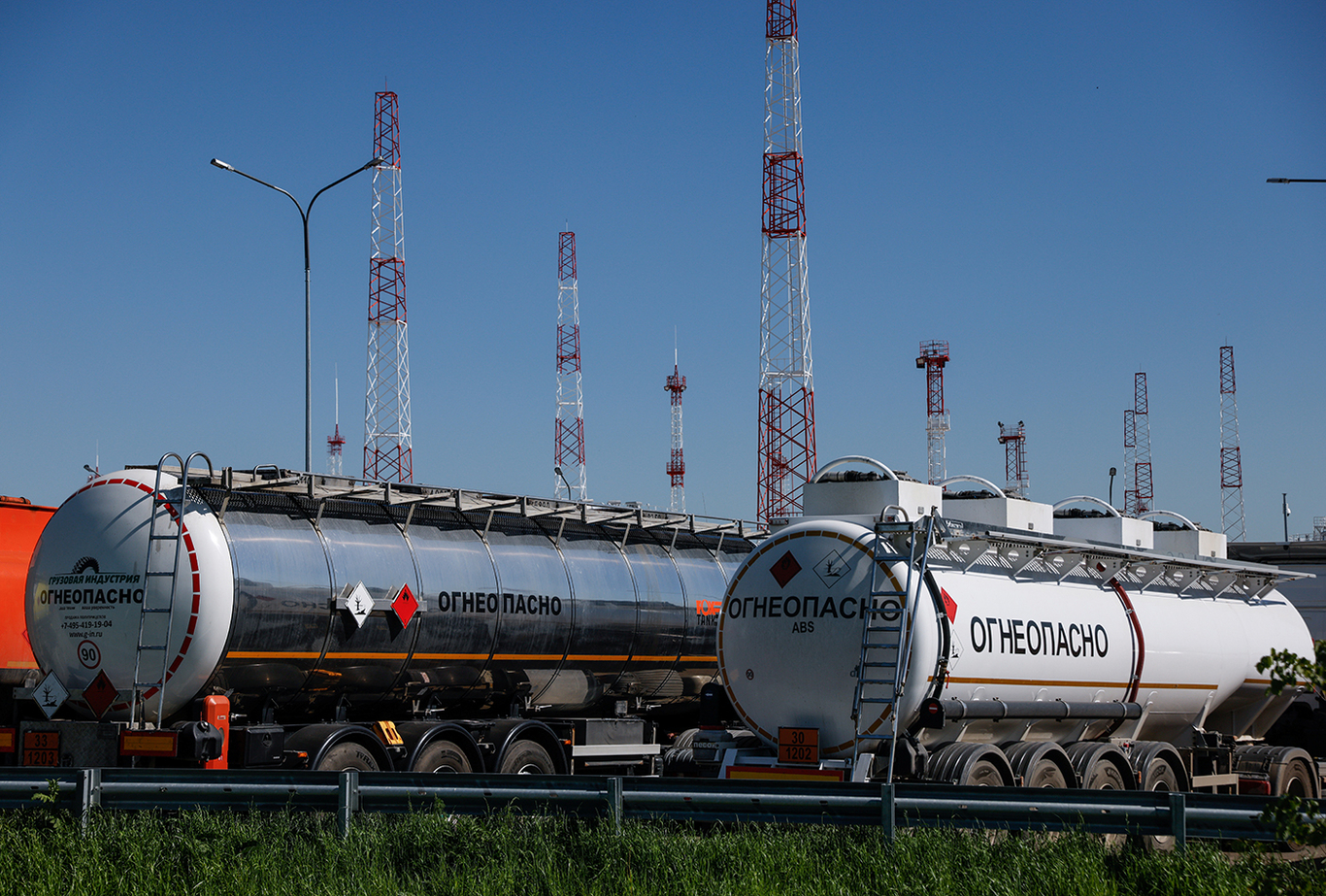
However, oil and gas revenues in 2025 decreased by 24% - but primarily not because of sanctions, but because of the fall in oil prices and the strong ruble.
And already this year, the strong ruble offset the benefits of the doubling in price of Russian oil after the start of the war between the United States and Israel with Iran and the blocking of the Strait of Hormuz.
Oil and gas budget revenues increased 2 times in April and 1.5 times in March and May compared to the monthly averages in January and February 2026. However, over six months, in January-May 2026, they fell to 2.9 trillion rubles - almost a third lower than the same period in 2025. This was largely due to the strong ruble, Cedar notes in the report. If in the first 5 months of 2025 the average exchange rate of the national currency was 88 rubles, then this year over the same period it fell by 15% to 75 rubles.
“Based on the current factors, we can conclude that high oil prices will not solve the problem of federal budget expenditures and will not increase funding for the military-industrial complex,”
- write the authors.
According to analyst consensus , the average oil price in 2026 will remain at a high level of $90 per barrel, which implies a Urals price of approximately $70 per barrel. But the average annual ruble to dollar exchange rate is unlikely to increase much - for example, according to the forecast of economist Dmitry Polevoy, it will be about 75–76. In this case, even according to the official forecast of the Ministry of Finance, the federal budget deficit may be close to 2.5% of GDP - that is, significantly higher than the 1.6% provided for by the budget law for 2026.