
Translated material
What The Hague decided on the ten-year maritime dispute between Russia and Ukraine. Moscow won the dispute over the shipping regime, Kyiv won the environmental part of the matter. Why are both sides talking about victory?

Moscow won the dispute over the shipping regime, Kyiv won the environmental part of the matter. Why are both sides talking about victory?
The Arbitration Court in The Hague has rendered a verdict in the case concerning the rights of Russia and Ukraine relating to the Black Sea, the Sea of Azov and the Kerch Strait. The main conclusion of the almost ten-year dispute: the court confirmed that the Sea of Azov and the strait are internal waters of Russia and Ukraine, and not international. This deprived the Ukrainian side of the right to demand transit passage and challenge inspections of ships. However, the court sided with Ukraine on the issue of marine environmental protection and found that Russia violated international environmental standards during the construction of the bridge and laying of cables.
Both sides seem to interpret the decision in their favor: Russia called the result a “convincing victory,” while Ukraine called it a confirmation of its rights as a coastal state. International law lawyer Gleb Bogush emphasizes: the arbitration made a compromise decision on technical issues, but the main dispute - about the annexation of Crimea and military aggression - remains outside its jurisdiction and has not actually been resolved.
Can anyone really be considered a winner in an argument? “New Europe” talks about the results of the trial.
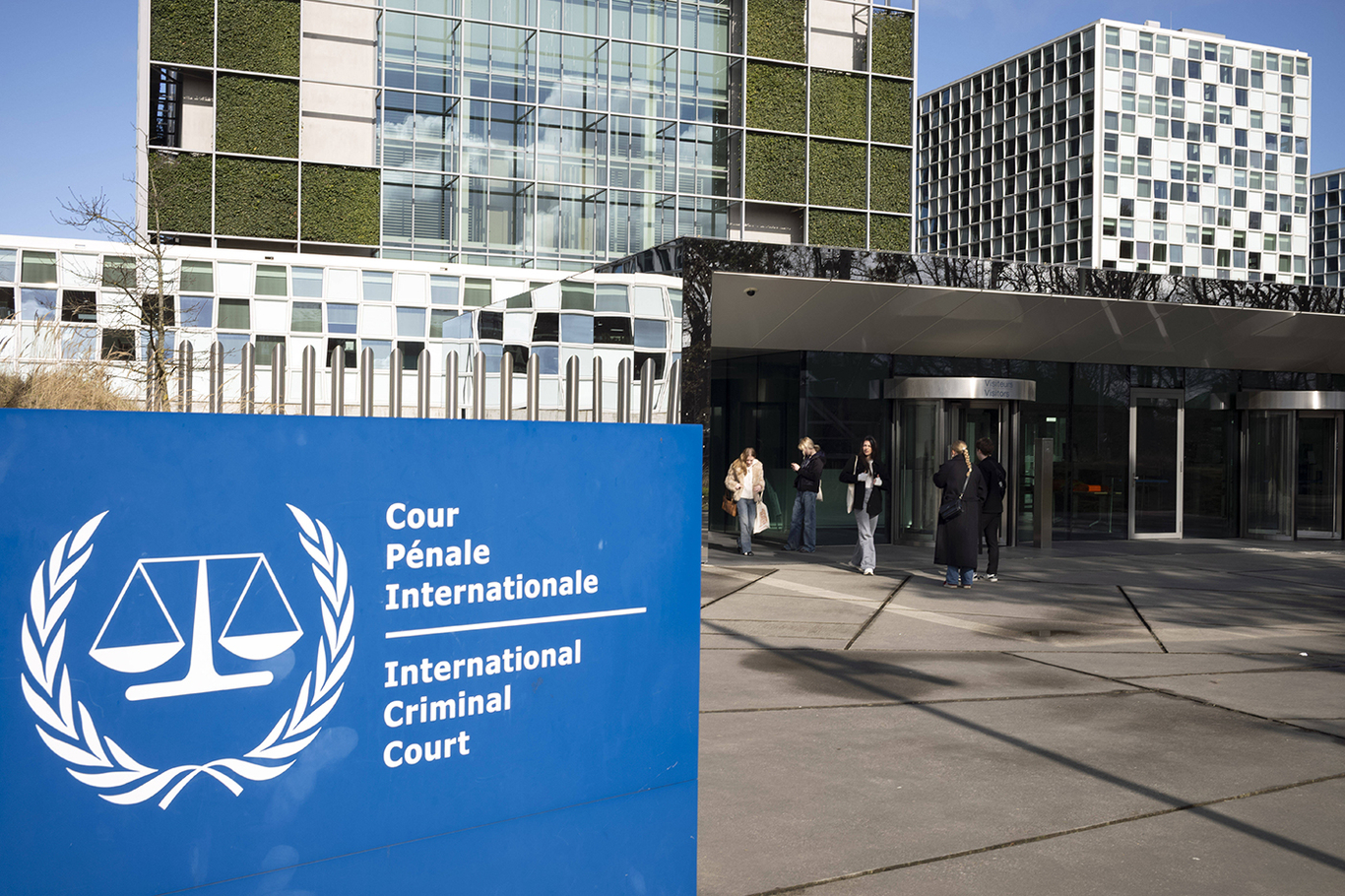
The arbitral tribunal, sitting in The Hague under the auspices of the Permanent Court of Arbitration (PPCA), ruled on a dispute between Ukraine and Russia concerning rights in the Black and Azov Seas and the Kerch Strait ( Case No. 2017-06 , decision dated April 22, published June 15).
Ukraine filed the lawsuit almost ten years ago—in September 2016—based on the 1982 UN Convention on the Law of the Sea. The Tribunal immediately limited itself to the framework of this Convention: in its decision it constantly emphasizes that it cannot decide the question of the ownership of Crimea and that it cannot consider absolutely everything related to military actions. However, he acknowledged that not every dispute related to the peninsula automatically falls outside the scope of the Convention.
As a result, Kyiv achieved recognition of environmental violations by Moscow, but all its key claims regarding navigation and the status of waters were rejected.
The central issue was the legal status of the Sea of Azov and the Kerch Strait. Ukraine has insisted that the Kerch Strait is international because it leads from the Sea of Azov to the Black Sea, which in turn is part of the open ocean. Accordingly, all ships, including Ukrainian and other countries, had an inalienable right of transit passage through the strait. Any obstacle - a low bridge, searches or delays - was to be considered a violation.
However, the court ruled that the Sea of Azov and the Kerch Strait are internal waters of Russia and Ukraine based on their 2003 bilateral treaty, and the transit passage regime does not apply to such waters.
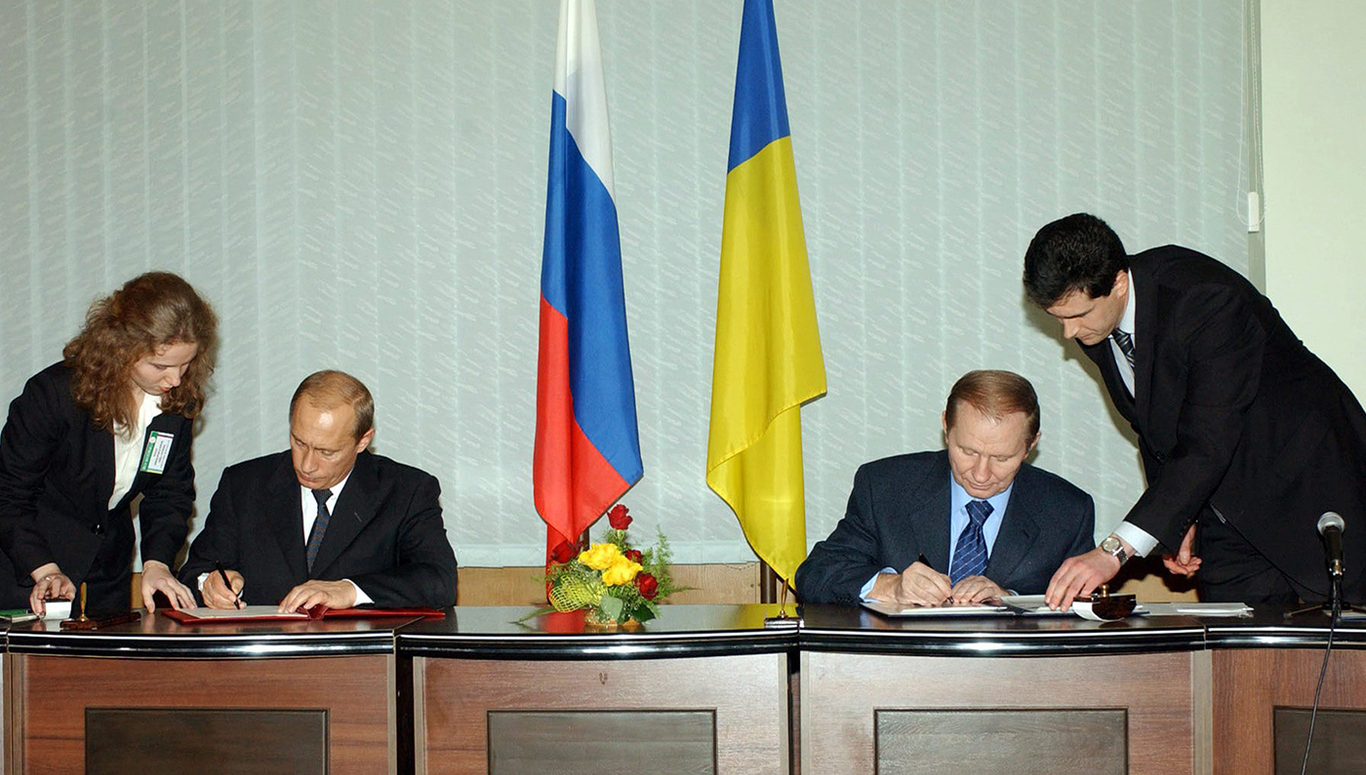
This is an agreement on cooperation in the use of the Sea of Azov and the Kerch Strait, signed by Vladimir Putin and Leonid Kuchma on December 24, 2003 in Kerch. The parties wanted to regulate the legal status of the waters after the collapse of the USSR, when they ceased to be the internal waters of one state.
The most important principle of the treaty is that the Sea of Azov and the Kerch Strait are historically internal waters of the Russian Federation and Ukraine.
The agreement was valid until 2023; in March, Ukraine terminated it unilaterally. Then, on June 1, Russian parliamentarians did the same. However, the arbitral award expressly states that the denunciation does not have retroactive effect.
This decision automatically deprived Ukraine of the opportunity to invoke the rules of free passage through international straits. It was because of this conclusion that the court rejected almost all of Ukraine’s claims related to navigation.
The Ukrainian side said that the construction of the Kerch Bridge, its low height, as well as systematic stops and inspections of ships heading to Ukrainian ports violate freedom of navigation. However, the court decided that since the waters are recognized as internal, then foreign ships do not have the right to transit passage and the conditions for entering ports are determined exclusively by coastal states. The court also did not find a violation of the Convention in connection with Russia’s temporary closure of part of the Black Sea to foreign warships in 2021 and considered that this was an acceptable temporary security measure.
Another question concerned two Ukrainian jack-up drilling rigs. We are talking about the Tavrida and Sivash installations . Before the 2014 annexation of Crimea, they were registered as Ukrainian vessels.
Ukraine claimed that Russian forces took control of them during their service off the peninsula and then re-registered them under the Russian flag.
The tribunal refused to consider the issue of the seizure itself and said that this was a problem of property law, not the interpretation of a maritime convention. Also, as stated in the decision, Ukraine did not respond to the request to remove these platforms from Ukrainian registration, and then Russia did this according to its internal rules. As a result, Ukraine failed to get the installations returned to it.
Since the proceedings lasted for many years, the parties also referred to more recent cases. For example, Russia pointed to Ukrainian strikes on the same drilling rigs in 2022 as actions that it believed were worsening the dispute. But the tribunal focused on issues directly related to the Law of the Sea Convention.
A separate part of the decision is devoted to cultural heritage on the seabed. Ukraine has accused Russia of mishandling sunken World War II planes, ancient ships and other historical sites. However, the tribunal decided that more convincing evidence was needed to substantiate the charges.
At the same time, Ukraine won a victory in the issue of protecting the marine environment. The Tribunal found that Russia, when starting to build a bridge and lay a gas pipeline and cables across the strait, violated the rules of environmental inspection. The work was carried out in a hurry, deadlines were compressed, and most importantly, reports on how construction would affect nature were never made public, they were not sent to international organizations, although this is directly required by the Convention. The court decided that such a rush did not meet the standards - Russia did not show due concern for the environment and did not cooperate with neighboring states as it should have. At the same time, the oil spill near Sevastopol in 2016 was recognized in court as insignificant and did not require notification to Ukraine.
The tribunal also explicitly rejected the Russian theory that the Sea of Azov and the Kerch Strait are a “historical gulf” or are under a “historical title.” If the court recognized this, the dispute would automatically fall out of the tribunal's jurisdiction.
Although most of Ukraine's claims were rejected, the court's decision confirmed that even in its internal waters the state is obliged to comply with international environmental rules - conduct full checks and share the results. The parties, as stated in the decision, must pay their own legal costs.
The representative of the Russian Ministry of Foreign Affairs, Maria Zakharova, responded to the court’s decision with the phrase: “We were promised “The Hague” - we got it.” In a press release from the ministry, the results of the proceedings were called “a convincing victory for the Russian Federation.”
“The Russian side is satisfied with the outcome of the proceedings. This arbitration decision is a sensitive defeat for Ukraine and the West in the “legal war” they unleashed against Russia,” they said.
The statement also said that “Kyiv’s efforts to challenge the sovereignty of the Russian Federation over the Crimean Peninsula and adjacent maritime spaces” “failed.” At the same time, the fact is omitted that, according to the agreement of 2003, the waters of the region were recognized as the internal waters of both Russia and Ukraine.
The Ukrainian Foreign Ministry, in turn, emphasized that, in accordance with the court decision in The Hague, Ukraine invariably remains a coastal state in the Black Sea, the Sea of Azov and the Kerch Strait and retains all the rights vested in it.
“In the final decision, the Arbitration Tribunal did not establish that the Sea of Azov and the Kerch Strait are the so-called “Russian lake,” confirming their status as the internal waters of two states - Ukraine and the Russian Federation,” it added.
The decision of the Arbitration Tribunal, according to the Ukrainian side, confirms that Russia systematically neglects the norms of international law, and “its attempts to impose the global consequences of criminal aggression as a “new reality” are not recognized.”
The arbitration in The Hague could not and did not consider the issue of Crimea’s ownership, Gleb Bogush, a lawyer in the field of international law, noted in a conversation with Novaya-Europe. As the expert emphasized, the law of the sea contains the principle that maritime disputes do not resolve the issue of sovereignty over land territory - if it were otherwise, everyone would simply go to maritime courts and resolve territorial issues there. Therefore, the tribunal, as the interlocutor of New Europe says, could not say anything about the ownership of the peninsula, not because it sympathizes with someone, but simply because of the architecture of the Convention on the Law of the Sea.
The central issue was the status of the waters - the court confirmed that the Sea of Azov and the Kerch Strait are internal waters of the two states on the basis of a 2003 treaty. However, as Bogush emphasizes, this does not mean unanimous recognition of them as exclusively Russian, as Moscow is trying to present in the press - these are the internal waters of precisely two countries - Russia and Ukraine.
As for environmental violations during the construction of the bridge and laying cables, the court actually recognized them on the part of Russia, but, according to Bogush, these violations do not entail the payment of compensation.
— Rather, this is a compromise result: Ukraine received confirmation of its role as a coastal state and a positive environmental signal for itself, but all the main claims regarding shipping were rejected.
It is difficult to call this a complete victory for Russia, but for Ukraine it is not a total success. I would say that the judges have reached a certain balance - all parties can be satisfied, and in this sense, this is really the case when everyone is happy,” says the interlocutor of “New-Europe”.
As Bogush emphasizes, the most important issue now between Russia and Ukraine is that Russia has used force, illegally occupied and is trying to annex territory that belongs to Ukraine. But it is impossible to consider it in existing international courts, the expert notes. There is no court that has jurisdiction over such proceedings, due to the fundamental principle of international justice: no state can be compelled to participate in proceedings without its consent.
“That is why Ukraine turns to those courts where such an opportunity exists, that is, where Russia’s consent in one form or another was ever given. However, these proceedings are only partially related to the main issue, but do not directly concern it, says the interlocutor of New Europe.
Bogush believes that the international justice system that states have created does not allow such disputes to be resolved on the merits, since many cases end up in procedural and technical matters. And Russia acts skillfully in this regard - it skillfully uses procedural barriers to prevent consideration of the case on its merits, the expert says. According to Bogush, Russia’s legal strategy is not aimed at proving the case on the merits (for example, proving that Crimea belongs to Russia would be absurd and impossible from the point of view of international law), but at declaring a lack of jurisdiction, incorrect status, or citing other procedural points.
“As a result, we see that even after ten years of proceedings and huge costs for legal teams, nothing has been fundamentally resolved - Crimea remains occupied, the war continues. But we must remember that judicial mechanisms make it possible to resolve international disputes if there is political will. And international law not only prohibits war, but also offers options for the peaceful resolution of disputes, the most ideal of which is judicial proceedings. Use it! - says the interlocutor of “New Europe”.